

Global Textile Yarn Market Set for Steady Growth Through 2028
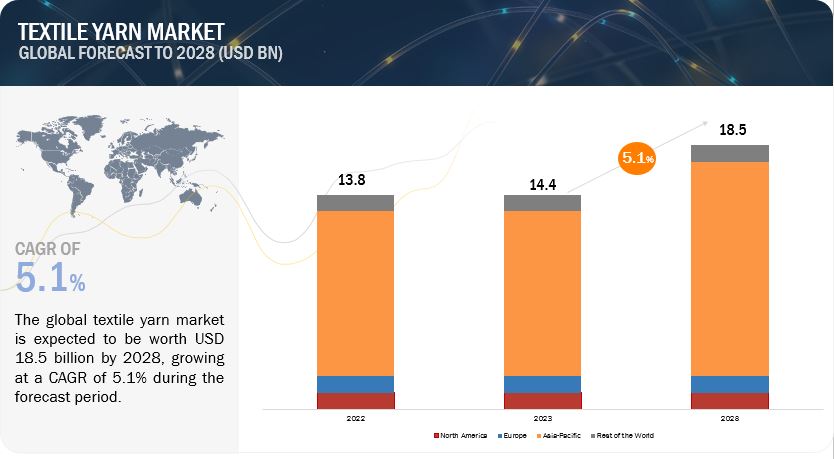
The global textile yarn industry is weaving a story of transformation and steady expansion. Valued at USD 14.4 billion in 2023, the textile yarn market size is projected to reach USD 18.5 billion by 2028, growing at a CAGR of 5.1%. This reflects the rising global demand for textiles across apparel, furnishings, and industrial applications.
Asia remains at the center of this growth, as its expanding middle class drives increased spending on fashion and lifestyle goods. With more disposable income, consumers are investing in better-quality clothing and home textiles, boosting yarn consumption across regions.
Growth Drivers Fueling the Market
One of the major factors driving textile yarn market growth is the world’s growing population. As more people require clothing and textile-based products, manufacturers are scaling up production. At the same time, sustainability has become a defining influence. The industry is shifting toward recycled and organic fibers as consumers and brands prioritize environmentally responsible materials.
The rise in sustainable fashion, combined with increased awareness of environmental impact, is encouraging companies to innovate with biodegradable and low-impact yarns that appeal to conscious consumers.
Supply Challenges and Market Restraints
Despite its strong performance, the market faces challenges tied to raw material supply. The industry’s dependence on cotton, wool, silk, and synthetic fibers exposes it to price volatility and supply chain disruptions caused by weather events or geopolitical issues. These fluctuations can influence manufacturing costs and profitability.
In addition, environmental concerns surrounding waste generation and chemical usage in production have led to stricter regulations and higher operational costs, urging producers to adopt more sustainable manufacturing practices.
Innovation Creating New Opportunities
Innovation continues to define textile yarn market trends. Modern yarns are being engineered with enhanced properties such as elasticity, moisture control, antibacterial performance, and temperature responsiveness. These innovations are expanding yarn applications across sportswear, healthcare textiles, and smart fabrics.
Manufacturers investing in advanced spinning technologies and performance-based materials are well-positioned to capture new opportunities. The diversification of product portfolios and focus on regional customization are helping companies stay competitive in an increasingly dynamic marketplace.
Request Custom Data to Address your Specific Business Needs
Regional Highlights
North America: Rise of Artificial Yarns
North America is witnessing strong demand for artificial yarns, particularly polyester, nylon, and acrylic. Their durability, versatility, and affordability make them ideal for use in apparel, automotive, and home furnishing sectors. The growing preference for vibrant, design-forward fabrics has further boosted their adoption across fashion lines.
Europe: Sustainability Leading the Way in the U.K.
The U.K. remains one of Europe’s most prominent centers for textile production. With a legacy of craftsmanship and innovation, the country is integrating automation and eco-conscious manufacturing methods to produce high-quality, sustainable yarns. British manufacturers are focusing on organic and recycled fibers to align with evolving consumer values around ethical and responsible production.
Competitive Landscape
The textile yarn market share is shaped by global manufacturers competing on innovation, sustainability, and product performance. Leading textile yarn companies include:
- Celanese Corporation (US)
- Asahi Kasei Corporation (Japan)
- TORAY INDUSTRIES, INC. (Japan)
- Indorama Ventures Public Company (Thailand)
- KURARAY CO., LTD. (Japan)
- PARKDALE (US)
- Vardhman Textiles Limited (India)
- Huvis (Korea)
- Grasim Industries Limited (India)
- Raymond (India)
- Weiqiao Textile Company Limited (China)
- Arvind Advanced Materials (India)
- Masood Textile Mills Ltd (Pakistan)
- Hengli Group Co., Ltd. (China)
- Kipas Holding (Turkey)
These companies are strengthening their global footprint through sustainable sourcing, automation, and continuous product innovation.
Outlook: A Sustainable Future for the Yarn Industry
As sustainability, technology, and consumer awareness continue to evolve, the textile sector is entering a new era of responsible production and smart design. The focus on recycled fibers, digital spinning methods, and performance-driven materials is expected to define the next phase of growth in the global yarn business.
The global textile yarn industry will remain a vital link in the global value chain — weaving together innovation, ethics, and economic opportunity.
FAQs
1. What are the key factors driving the global textile yarn industry?
Rising population, growing fashion demand, and the shift toward sustainable materials are key factors driving market growth worldwide.
2. What challenges influence the textile yarn market size?
Volatile raw material prices, environmental regulations, and high production costs continue to impact overall market expansion and profitability.
3. What trends are shaping the textile yarn market growth?
Advances in eco-friendly yarns, smart fabrics, and sustainable spinning technologies are reshaping how manufacturers operate and innovate.
4. How are textile yarn companies differentiating themselves?
Manufacturers are focusing on innovation, developing yarns with moisture control, stretchability, and antibacterial properties to meet diverse industry needs.
5. Which regions dominate the textile yarn market share globally?
Asia leads the market due to its strong manufacturing base, while North America and Europe are key centers for synthetic and sustainable yarn production.
80% of the Forbes Global 2000 B2B companies rely on MarketsandMarkets to identify growth opportunities in emerging technologies and use cases that will have a positive revenue impact.
- Food Packaging Market Size Set for Strong Growth Through 2030 Amid Rising Demand for Convenience Foods
- Crop Protection Chemical Market Size, Share & Growth Forecast (2025–2030)
- Mulch Films Market: Driving Sustainable Agriculture Through Innovation
- Agricultural Adjuvants Market Analysis, Trends, and Growth Outlook (2026–2031)
- Japan Enterprise Asset Management Market Growth: AI and Smart Infrastructure Drive Demand

