
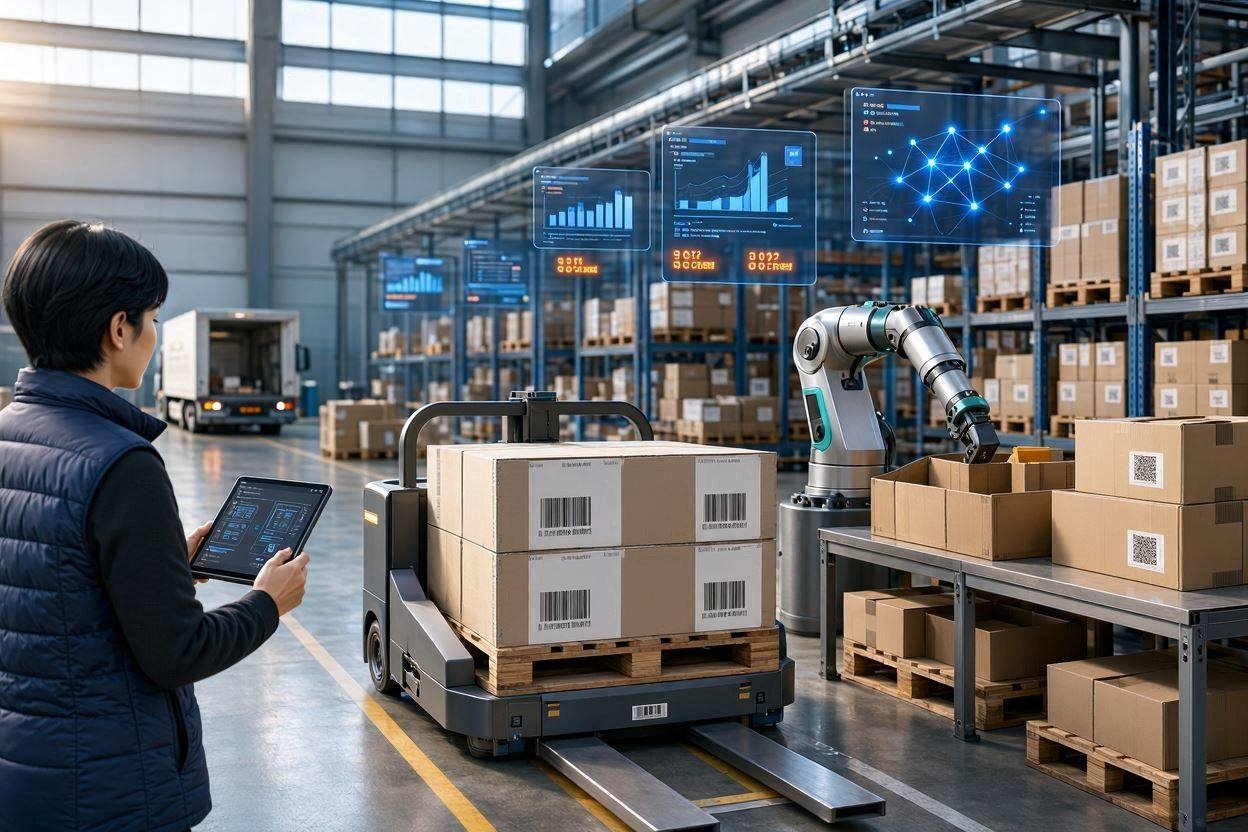
AI in Supply Chain Technology Innovation: Key Trends, Growth Drivers and Opportunities
Introduction to AI in Supply Chain Technology
Artificial Intelligence (AI) in supply chain technology is revolutionizing the way organizations manage the flow of goods, services, and information across global networks. By integrating machine learning, predictive analytics, natural language processing, and automation, AI enables enterprises to enhance demand forecasting, optimize inventory management, streamline logistics operations, and mitigate supply chain risks. As supply chains become increasingly complex due to globalization, e-commerce growth, and shifting consumer expectations, AI-powered solutions are becoming essential for achieving real-time visibility, operational efficiency, and resilience. The technology empowers organizations to transition from reactive, rule-based planning to intelligent, data-driven decision-making, ultimately reducing costs, improving customer satisfaction, and building agile supply networks capable of adapting to market disruptions.
History of AI in Supply Chain Technology
The application of AI in supply chain management has evolved significantly over the past two decades. Initially, supply chain operations relied on basic statistical methods and rule-based systems for forecasting and inventory management. The early 2000s saw the introduction of advanced planning systems (APS) and optimization algorithms, which laid the foundation for more intelligent decision-making. With the rise of big data, cloud computing, and the Internet of Things (IoT) in the 2010s, organizations began leveraging machine learning models to analyze vast amounts of structured and unstructured data from suppliers, logistics providers, and retail channels. Today, AI in supply chains encompasses predictive and prescriptive analytics, generative AI, digital twins, autonomous planning systems, and real-time visibility platforms. Continuous advancements in AI algorithms, computing power, and data integration are enabling end-to-end supply chain orchestration, transforming traditional operations into intelligent, automated, and resilient ecosystems.
Benefits of AI in Supply Chain Technology
AI-powered supply chain solutions provide significant advantages over traditional approaches by delivering greater accuracy, speed, and adaptability. These technologies enable organizations to harness the power of data to make informed decisions, anticipate disruptions, and optimize processes across the entire supply chain network.
Key Benefits Include:
- Enhanced demand forecasting accuracy with reduced prediction errors and better alignment with market needs.
- Optimized inventory management by reducing holding costs, preventing stockouts, and minimizing overstock situations.
- Improved logistics and transportation efficiency through intelligent route planning, fleet management, and delivery scheduling.
- Real-time supply chain visibility across suppliers, warehouses, and distribution channels for proactive decision-making.
- Automated procurement and sourcing processes to streamline purchasing decisions and optimize supplier relationships.
- Predictive maintenance for equipment and infrastructure, reducing downtime and operational disruptions.
- Risk mitigation and resilience through early detection of potential disruptions and scenario planning.
- Cost reduction and operational efficiency by automating repetitive tasks and optimizing resource allocation.
- Enhanced customer satisfaction through faster fulfillment, accurate order tracking, and personalized experiences.
- Support for sustainability initiatives by optimizing routes, reducing waste, and improving energy efficiency.
Current Market Size and Growth Trends of the AI in Supply Chain Market
The AI in supply chain market is experiencing robust growth as organizations across industries recognize the transformative potential of AI-driven automation, predictive analytics, and intelligent decision-making platforms. Increasing supply chain complexity, rising demand volatility, and the growing need for real-time visibility are accelerating adoption worldwide. Enterprises are investing in AI-powered software and cloud-based services to enhance demand planning, inventory optimization, logistics efficiency, and risk management. Digital transformation initiatives, expanding e-commerce activities, and the focus on supply chain resilience post-disruptions are further fueling market expansion.
According to MarketsandMarkets, the global AI in supply chain market is estimated to grow from USD 13.93 billion in 2025 to USD 50.41 billion by 2032, registering a CAGR of 20.2% during the forecast period.
Download PDF Brochure: https://www.marketsandmarkets.com/pdfdownloadNew.asp?id=114588383
Key Market Growth Drivers
- Rising supply chain complexity and increasing demand volatility across global markets.
- Growing adoption of AI-powered software and cloud-based platforms for demand forecasting and planning.
- Need for real-time visibility and data-driven decision-making in logistics and operations.
- Expanding e-commerce activities and omnichannel retail operations driving AI adoption.
- Focus on supply chain resilience and risk mitigation post-disruptions.
- Digital transformation initiatives and investments in big data analytics and automation.
- Integration of AI with IoT, cloud computing, and digital twins for enhanced operational intelligence.
- Growing implementation of autonomous planning systems and predictive analytics.
Key Drivers and Factors Influencing the Future of AI in Supply Chain Technology
The future of AI in supply chain technology is being driven by the increasing need for intelligent, automated, and resilient supply chain operations across retail, manufacturing, healthcare, logistics, automotive, and other industries. As organizations prioritize operational efficiency, customer experience, and sustainability, AI-powered solutions are becoming critical enablers of end-to-end supply chain transformation. Continuous advancements in machine learning, generative AI, computer vision, and edge computing are expanding the capabilities of AI systems, enabling more sophisticated use cases and wider adoption. The convergence of AI with complementary technologies such as IoT, blockchain, and 5G is further accelerating innovation and creating new opportunities for intelligent supply chain orchestration.
Key Growth Drivers
- Growing implementation of big data and AI technologies to generate accurate insights and improve decision-making across supply chain processes.
- Rising need for enhanced visibility and transparency in complex, multi-tier supply networks.
- Rapid AI integration to improve customer satisfaction through faster fulfillment and personalized experiences.
- Shift toward cloud-based supply chain solutions offering scalability, real-time data processing, and seamless integration with existing enterprise systems.
- Emphasis on supply chain resilience and risk mitigation post-disruptions through predictive and prescriptive analytics.
- Increasing demand volatility and the need for agile, responsive supply chain operations.
- Continuous advancements in AI algorithms, computing power, and data integration capabilities.
- Government initiatives promoting digital transformation and AI adoption across industries.
Emerging Trends in AI in Supply Chain Technology
AI in supply chain technology continues to evolve rapidly as organizations move from rule-based planning and reactive operations toward intelligent, data-driven supply chain orchestration. Innovations in predictive and prescriptive analytics, generative AI-enabled decision intelligence, autonomous planning systems, and real-time supply chain visibility are reshaping customer business models. Increased integration of AI with cloud platforms, IoT, and digital twins is enabling faster decision-making, improved resilience, and enhanced customer experience across retail, manufacturing, logistics, and distribution networks.
Key Emerging Trends
- Predictive and prescriptive analytics for proactive decision-making and scenario planning.
- Generative AI enabling real-time decision intelligence and automated planning.
- Autonomous planning systems for self-optimizing supply chain operations.
- Real-time supply chain visibility platforms offering end-to-end transparency.
- Digital twins for simulating supply chain scenarios and optimizing operations.
- AI-powered demand sensing and dynamic inventory optimization.
- Intelligent warehouse automation using computer vision and robotics.
- Generative AI for supply chain risk management and supplier intelligence.
- Integration of AI with IoT, edge computing, and 5G for enhanced operational intelligence.
- AI-enabled sustainable supply chain solutions for carbon footprint reduction and waste minimization.
Opportunities and Challenges in the AI in Supply Chain Market
The AI in supply chain market presents significant opportunities as industries continue to invest in digital transformation, automation, and resilience. AI-powered solutions are enabling organizations to achieve unprecedented levels of efficiency, visibility, and agility across complex supply networks. However, realizing the full potential of AI requires addressing challenges related to data integration, skilled workforce availability, and implementation costs.
Key Opportunities
- Surge in demand for intelligent business processes and automation across supply chain functions.
- Improved operational efficiency through AI-driven decision-making and process optimization.
- Emergence of generative AI for real-time decision intelligence and autonomous planning.
- Expansion in retail, e-commerce, and omnichannel operations driving AI adoption.
- Growth opportunities in healthcare and pharmaceuticals for AI-powered supply chain visibility and traceability.
- Increasing adoption in automotive and manufacturing for production planning and logistics optimization.
- Rising demand for AI-enabled sustainability solutions for carbon footprint reduction.
- Significant growth potential in Asia Pacific due to rapid industrialization, manufacturing expansion, and e-commerce growth.
Key Challenges
- Difficulties in seamless data integration from multiple sources such as ERP, WMS, TMS, and external partners.
- Inconsistent data quality and availability limiting the accuracy and effectiveness of AI models.
- Shortage of skilled workforce capable of managing AI models and advanced analytics platforms.
- Security and data privacy concerns related to AI deployment and data sharing.
- High implementation and integration costs for AI-powered supply chain solutions.
- Data silos and inconsistent data formats across complex supply chain networks.
- Competition from other emerging technologies and the need for continuous innovation.
Innovations and Advancements in AI in Supply Chain Technology
Continuous innovation is strengthening the commercial adoption of AI in supply chain technology by improving performance, reliability, and integration capabilities. Advances in machine learning algorithms, generative AI, edge computing, and data integration are enabling organizations to develop more sophisticated and scalable supply chain solutions. These innovations are supporting the transition toward intelligent, automated, and resilient supply chain operations across global industries.
Recent Innovations
- Development of role-based AI agents for enterprise planning workflows, converting natural language into structured planning models.
- Integration of Physical AI for warehouse automation, fleet optimization through multi-agent AI modeling, and embodied-AI-enabled 3D reality capture.
- Bi-directional, zero-copy data sharing between enterprise platforms for rapid access to trusted, AI-ready insights.
- AI-driven warehouse management systems with real-time inventory tracking, analytics, and mobile integration.
- Blockchain-based platforms for end-to-end traceability and verification in pharmaceutical supply chains.
- Advanced predictive and prescriptive analytics for demand planning, inventory optimization, and logistics efficiency.
- Generative AI-enabled decision intelligence for real-time supply chain orchestration.
- Digital twin technology for simulating supply chain scenarios and optimizing operations.
Future Applications and Industries That Will Benefit from AI in Supply Chain Technology
AI in supply chain technology is expected to play a pivotal role in the future of global commerce as industries increasingly demand intelligent, automated, and resilient supply chain solutions. Its ability to analyze vast amounts of data, predict disruptions, and optimize processes makes it an ideal technology for applications requiring real-time visibility, agility, and efficiency. As electrification, digitalization, and sustainability initiatives continue worldwide, AI-powered supply chain solutions will become critical components across multiple high-growth industries.
Key Future Applications
- Retail and E-commerce: Optimize inventory management, demand sensing, omnichannel fulfillment, and customer experience through AI-powered planning and execution platforms.
- Healthcare and Pharmaceuticals: Enhance supply chain traceability, reduce drug shortages, improve forecasting accuracy, and strengthen drug safety and security through AI-enabled visibility and blockchain integration.
- Automotive: Improve production planning, logistics coordination, and supply chain resilience for electric vehicles and software-defined vehicles.
- Logistics and Transportation: Optimize route planning, fleet management, delivery scheduling, and real-time shipment visibility for improved operational efficiency and reduced costs.
- Manufacturing: Enable real-time production coordination, smart factory operations, and predictive maintenance through AI-driven supply chain transformation.
- Consumer Goods: Enhance demand forecasting, category management, and replenishment automation for improved on-shelf availability and reduced out-of-stocks.
- Food and Beverages: Reduce waste, improve inventory turnover, and enhance supply chain transparency through AI-powered traceability and optimization.
- Energy and Utilities: Manage complex infrastructure, optimize supply chain operations, and enhance collaboration through AI-enabled workflow automation.
- Aerospace and Defense: Support mission-critical production schedules, improve supply chain visibility, and enhance operational efficiency through AI integration.
- Chemicals and Electronics: Manage complex, tightly coupled production networks and multi-tier supplier dependencies through AI-powered planning and risk management.
As adoption continues to grow, AI-powered supply chain solutions will become foundational technologies supporting next-generation operations across transportation, industrial automation, telecommunications, healthcare, and sustainable energy applications.
Conclusion: The Promising Future of AI in Supply Chain Technology
AI in supply chain technology is redefining the future of global commerce by delivering unparalleled visibility, efficiency, and resilience across complex supply networks. As organizations accelerate investments in digital transformation, automation, and sustainability, AI-powered solutions are becoming essential for building intelligent, agile, and responsive supply chains capable of adapting to market disruptions and evolving customer expectations. Continuous advancements in machine learning, generative AI, cloud computing, and data integration are expanding the capabilities of AI systems, enabling more sophisticated use cases and wider adoption across industries. The technology's ability to analyze vast amounts of data, predict disruptions, optimize processes, and automate decision-making makes it a preferred solution for organizations seeking to improve operational performance, reduce costs, and enhance customer satisfaction.
Looking ahead, innovations in AI algorithms, edge computing, digital twins, and autonomous planning will continue to expand the capabilities of supply chain solutions. Organizations adopting AI-powered supply chain technologies will be better positioned to improve operational efficiency, reduce energy consumption, mitigate risks, and accelerate the transition toward smarter and more sustainable supply chain operations. The future of supply chain management will be shaped by the intelligent integration of AI with complementary technologies such as IoT, blockchain, and 5G, enabling end-to-end visibility, real-time decision-making, and autonomous execution across global supply networks. As the market continues its rapid growth trajectory, AI will become a foundational technology supporting next-generation supply chain operations across transportation, industrial automation, healthcare, retail, and sustainable energy applications.
Find More Information on AI in Supply Chain Technology Innovation @ https://www.marketsandmarkets.com/Market-Reports/ai-in-supply-chain-market-114588383.html
80% of the Forbes Global 2000 B2B companies rely on MarketsandMarkets to identify growth opportunities in emerging technologies and use cases that will have a positive revenue impact.
- Food Packaging Market Size Set for Strong Growth Through 2030 Amid Rising Demand for Convenience Foods
- Crop Protection Chemical Market Size, Share & Growth Forecast (2025–2030)
- Mulch Films Market: Driving Sustainable Agriculture Through Innovation
- Agricultural Adjuvants Market Analysis, Trends, and Growth Outlook (2026–2031)
- Japan Enterprise Asset Management Market Growth: AI and Smart Infrastructure Drive Demand


