

GaN Semiconductor Device Technology Innovation: Key Trends, Growth Drivers and Opportunities
Introduction to GaN Semiconductor Device Technology
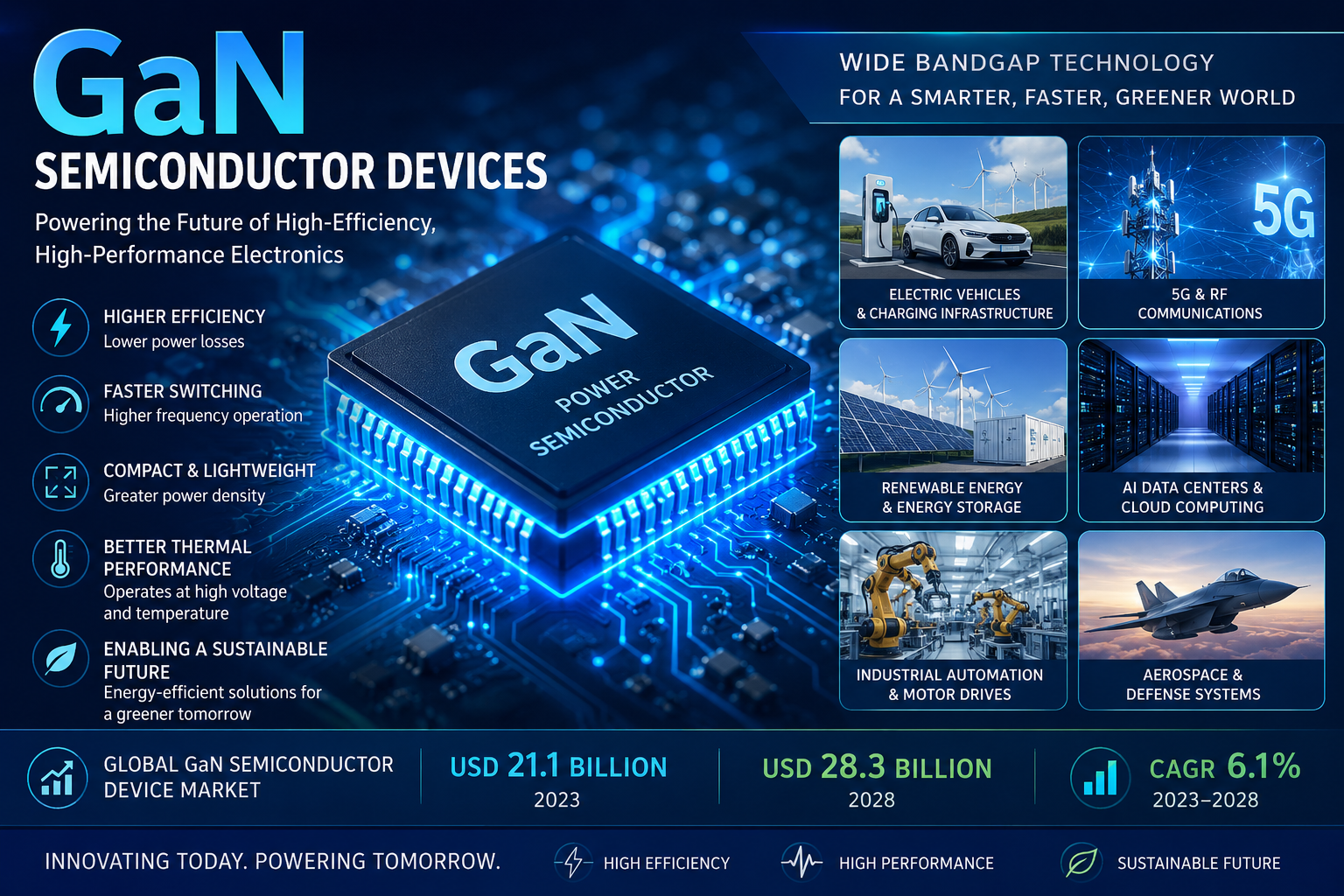
Gallium Nitride (GaN) semiconductor technology is transforming the power electronics industry by enabling faster switching speeds, higher power density, and improved energy efficiency compared to traditional silicon-based devices. As industries increasingly adopt electric vehicles (EVs), 5G infrastructure, renewable energy systems, AI-powered data centers, and industrial automation, the demand for high-performance semiconductor devices continues to grow. GaN technology enables compact system designs, lower power losses, and superior thermal performance, making it a critical enabler of next-generation electronic applications and sustainable digital infrastructure.
History of GaN Semiconductor Device Technology
GaN technology was initially developed for optoelectronic applications such as LEDs and laser diodes before expanding into high-power and high-frequency semiconductor devices. Continuous advancements in material science, wafer manufacturing, and device fabrication have enabled GaN transistors to achieve commercial adoption across telecommunications, aerospace, defense, automotive, and industrial power electronics. Today, ongoing innovations in wide-bandgap semiconductor technologies continue to improve performance, reduce manufacturing costs, and expand the range of commercial applications.
Benefits of GaN Semiconductor Device Technology
GaN semiconductor devices provide significant advantages over conventional silicon technologies by delivering greater efficiency, higher operating frequencies, and improved thermal management. Their ability to reduce energy losses while supporting compact and lightweight designs makes them an ideal choice for modern electronic systems across multiple industries.
Key Benefits Include:
- Higher energy efficiency with lower power losses.
- Faster switching speeds for improved system performance.
- Higher power density enabling compact electronic designs.
- Superior thermal performance with reduced cooling requirements.
- Longer operational life and improved system reliability.
- Supports high-frequency applications including RF and 5G communications.
- Enables fast-charging solutions for consumer electronics and electric vehicles.
- Contributes to sustainable and energy-efficient electronic systems.
Current Market Size and Growth Trends of the GaN Semiconductor Device Market
The GaN semiconductor device market is witnessing steady growth as industries continue investing in high-efficiency power electronics, next-generation communication infrastructure, renewable energy, and electric mobility. Increasing adoption of GaN devices across automotive, industrial automation, consumer electronics, aerospace, and telecommunications is driving market expansion, while continuous innovations in semiconductor manufacturing and packaging technologies are improving performance and commercial scalability.
According to MarketsandMarkets, the global GaN semiconductor device market is estimated to grow from USD 21.1 billion in 2023 to USD 28.3 billion by 2028, registering a CAGR of 6.1% during the forecast period.
Download PDF Brochure: https://www.marketsandmarkets.com/pdfdownloadNew.asp?id=698
Key Market Growth Drivers
- Rising adoption of electric vehicles (EVs) and advanced charging infrastructure.
- Expansion of 5G networks, RF communication systems, and satellite technologies.
- Increasing investments in renewable energy and smart grid infrastructure.
- Growing deployment of AI data centers and cloud computing facilities.
- Rising demand for fast-charging consumer electronics and compact power supplies.
- Continuous advancements in wide-bandgap semiconductor manufacturing.
- Increasing focus on energy efficiency and carbon emission reduction.
Key Drivers and Factors Influencing the Future of GaN Semiconductor Device Technology
The future of GaN semiconductor device technology is being driven by the growing need for energy-efficient, high-performance electronics across automotive, telecommunications, renewable energy, industrial automation, and data center applications. As organizations prioritize electrification, digital transformation, and sustainable power management, GaN devices are becoming a preferred alternative to conventional silicon semiconductors. Continuous improvements in manufacturing processes, packaging technologies, and device performance are further accelerating global adoption.
Key Growth Drivers
- Growing adoption of electric vehicles (EVs) and high-efficiency onboard power electronics.
- Rapid expansion of 5G infrastructure, RF communication systems, and satellite technologies.
- Increasing deployment of renewable energy systems, including solar inverters and energy storage solutions.
- Rising investments in AI data centers, cloud computing, and high-performance computing infrastructure.
- Government initiatives promoting energy-efficient electronics and carbon reduction.
- Continuous advancements in wide-bandgap semiconductor manufacturing and wafer technologies.
Emerging Trends in GaN Semiconductor Device Technology
GaN semiconductor technology continues to evolve as manufacturers focus on delivering smaller, faster, and more energy-efficient electronic solutions. Innovations in semiconductor fabrication, intelligent power management, and advanced packaging are expanding the range of commercial applications. At the same time, increasing integration with emerging technologies such as AI, edge computing, and electric mobility is creating new growth opportunities across multiple industries.
Key Emerging Trends
- Increasing adoption of GaN-on-Silicon technology for cost-effective manufacturing.
- Growing demand for GaN-based fast chargers for smartphones, laptops, and consumer electronics.
- Integration of GaN devices into AI servers, cloud infrastructure, and edge computing systems.
- Rising implementation of GaN power electronics in renewable energy and smart grid applications.
- Development of highly integrated GaN Power ICs for compact and efficient system design.
- Increasing use of GaN RF devices in 5G, defense, aerospace, and satellite communication systems.
Opportunities and Challenges in the GaN Semiconductor Device Market
The GaN semiconductor device market presents strong opportunities as industries continue investing in electrification, next-generation communications, and sustainable energy infrastructure. The technology's superior efficiency and compact design make it suitable for a wide range of high-growth applications. However, manufacturers must address production costs, supply chain complexities, and reliability requirements to accelerate widespread commercialization.
Key Opportunities
- Expanding electric vehicle and EV charging infrastructure.
- Increasing adoption across consumer electronics and fast-charging devices.
- Growing investments in renewable energy and energy storage systems.
- Rising demand from industrial automation, robotics, and smart manufacturing.
- Significant growth potential in aerospace, defense, and telecommunications.
Key Challenges
- Higher manufacturing costs compared to traditional silicon devices.
- Complex fabrication and packaging processes.
- Thermal management challenges in high-power applications.
- Supply chain dependence on advanced semiconductor manufacturing.
- Competition from other wide-bandgap semiconductor technologies such as Silicon Carbide (SiC).
Innovations and Advancements in GaN Semiconductor Device Technology
Continuous innovation is strengthening the commercial adoption of GaN semiconductor devices by improving performance, reliability, and manufacturing efficiency. Advances in semiconductor materials, packaging technologies, and intelligent power management are enabling manufacturers to develop highly efficient electronic systems for next-generation applications. These innovations are supporting the transition toward compact, sustainable, and high-performance power electronics across global industries.
Recent Innovations
- Development of normally-off (Enhancement Mode) GaN transistors for improved safety and simplified circuit design.
- Advanced chip-scale packaging and thermal management technologies.
- AI-assisted semiconductor design and manufacturing optimization.
- Integration of GaN Power ICs combining transistors, drivers, and protection circuits.
- Improved wafer manufacturing and epitaxial growth techniques.
- Enhanced device reliability for automotive, industrial, and aerospace applications.
Future Applications and Industries That Will Benefit from GaN Semiconductor Device Technology
GaN semiconductor device technology is expected to play a pivotal role in the future of power electronics as industries increasingly demand compact, energy-efficient, and high-performance solutions. Its superior electrical characteristics make it an ideal technology for applications requiring faster switching, higher power density, and lower energy losses. As electrification, digitalization, and sustainability initiatives continue worldwide, GaN devices will become a critical component across multiple high-growth industries.
Key Future Applications
- Electric Vehicles (EVs): Power onboard chargers, traction inverters, DC-DC converters, and ultra-fast charging infrastructure to improve vehicle efficiency and extend driving range.
- Renewable Energy: Enhance the efficiency of solar inverters, wind energy converters, battery energy storage systems (BESS), and smart grid infrastructure.
- 5G & Next-Generation Communications: Enable high-performance RF power amplifiers, base stations, satellite communication systems, and future 6G network infrastructure.
- AI Data Centers & Cloud Computing: Improve power conversion efficiency, reduce cooling requirements, and support high-density server architectures.
- Consumer Electronics: Power compact fast chargers, laptops, smartphones, gaming consoles, and wearable devices with higher efficiency and smaller form factors.
- Industrial Automation: Support robotics, motor drives, factory automation equipment, and intelligent manufacturing systems requiring reliable high-frequency power electronics.
- Aerospace & Defense: Deliver lightweight, high-reliability semiconductor solutions for radar systems, avionics, satellite payloads, and military communication equipment.
- Medical Devices: Improve the performance of imaging systems, diagnostic equipment, and precision medical electronics requiring compact and efficient power management.
As adoption continues to grow, GaN semiconductor devices will become a foundational technology supporting next-generation electronic systems across transportation, industrial automation, telecommunications, healthcare, and sustainable energy applications.
Conclusion: The Promising Future of GaN Semiconductor Device Technology
GaN semiconductor device technology is redefining the future of power electronics by delivering higher efficiency, superior switching performance, and greater power density than traditional silicon-based solutions. As industries accelerate investments in electric mobility, renewable energy, AI infrastructure, high-speed communications, and smart manufacturing, GaN devices are becoming increasingly important for building compact, reliable, and energy-efficient electronic systems.
Continuous advancements in semiconductor fabrication, wafer manufacturing, packaging technologies, and power integration are making GaN devices more commercially viable across a wide range of applications. Their ability to reduce power losses, improve thermal performance, and support high-frequency operation makes them a preferred technology for next-generation power conversion and RF communication systems.
Looking ahead, innovations in AI-assisted semiconductor design, advanced packaging, wide-bandgap materials, and intelligent power management will continue to expand the capabilities of GaN devices. Organizations adopting GaN technology will be better positioned to improve product performance, reduce energy consumption, and accelerate the transition toward smarter and more sustainable electronic systems.
Find More Information on GaN Semiconductor Device Technology Innovation @ https://www.marketsandmarkets.com/Market-Reports/gallium-nitride-gan-semiconductor-materials-devices-market-698.html
80% of the Forbes Global 2000 B2B companies rely on MarketsandMarkets to identify growth opportunities in emerging technologies and use cases that will have a positive revenue impact.
- Food Packaging Market Size Set for Strong Growth Through 2030 Amid Rising Demand for Convenience Foods
- Crop Protection Chemical Market Size, Share & Growth Forecast (2025–2030)
- Mulch Films Market: Driving Sustainable Agriculture Through Innovation
- Agricultural Adjuvants Market Analysis, Trends, and Growth Outlook (2026–2031)
- Japan Enterprise Asset Management Market Growth: AI and Smart Infrastructure Drive Demand

