

Humanoid Robotics: The Fastest-Growing Billion-Dollar Frontier in Industrial Tech
“Humanoid robots are no longer just a laboratory curiosity; they are becoming the next frontier of industrial automation in factories, warehouses, and healthcare settings.”
The convergence of AI breakthroughs, high-efficiency actuation, and energy-optimized power systems, coupled with the urgent need to offset labor shortages, has transformed humanoid robots from experimental prototypes into real workforce extensions. Humanoid robots are being designed to take over repetitive, physically demanding, or hazardous tasks so that people can focus on higher-value work such as decision-making, creativity, and supervision.
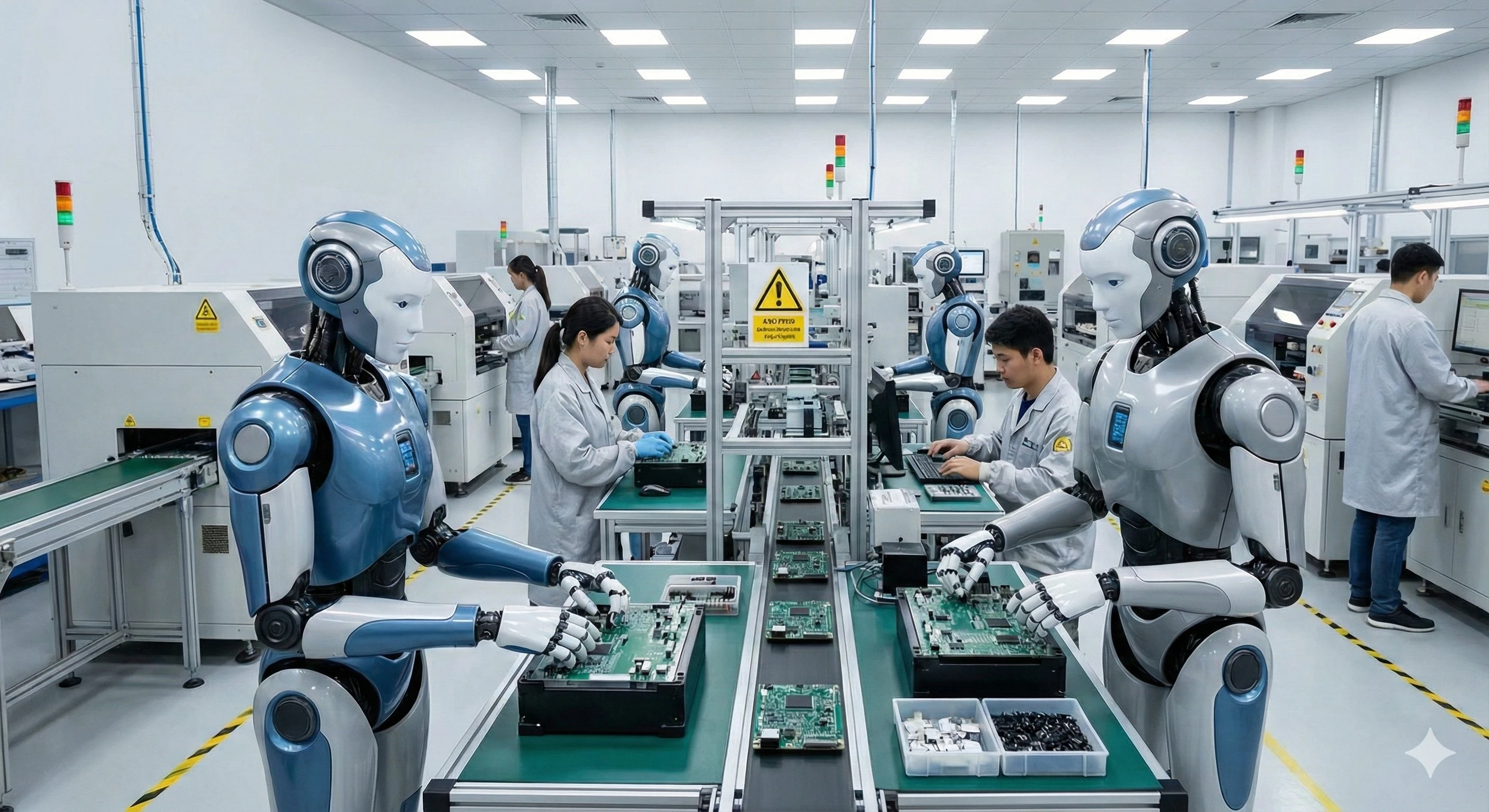
MarketsandMarkets’ latest analysis indicates that the global humanoid robot market is entering a phase of exponential expansion and is projected to reach USD 50.27 billion by 2035, expanding at a CAGR of 28.1% from 2026 to 2035. This momentum is fueled by rapid commercialization efforts and a surge of investor confidence signaling the humanoid sector’s shift from prototype to large-scale industrial deployment.
FROM DEMONSTRATION TO DEPLOYMENT: HUMANOIDS ENTER REAL INDUSTRIAL WORKFLOWS
The humanoid robotics sector is entering a decisive transition, where it is moving from demonstration and prototype testing to structured industrial deployment. The conversation has shifted from proving technical feasibility to validating measurable business outcomes.
Initial commercial pilots, such as Agility Robotics’ Digit robots being evaluated within Amazon’s logistics sites, represent the early stages of industrial integration. These pilots demonstrate how humanoids can seamlessly work alongside automated material-handling systems, performing repetitive pick-and-place tasks across predefined routes. Similarly, Apptronik’s Apollo is being tested by Mercedes-Benz in production environments to handle component delivery and assembly assistance. These pilots aim to quantify safety gains and throughput efficiency, laying the foundation for scaled adoption.
SHIFT FROM HARDWARE PERFORMANCE TO SOFTWARE INTELLIGENCE: THE NEW SOURCE OF VALUE
While hardware design continues to matter, long-term differentiation in humanoid robotics will come from the sophistication of software and AI learning systems. The future of humanoid competition will revolve around how seamlessly these integrate into enterprise automation ecosystems. Winning players will integrate robots seamlessly into data flows, ERP systems, and remote service models, enabling “humanoids-as-a-service” models that could drive recurring value. For instance,
- Figure AI is using advanced AI training models that allow robots to learn and adapt to new tasks with little or no reprogramming. Figure AI’s Figure robot, recently displayed in collaboration with BMW Manufacturing, uses a vision-language model that allows it to understand task instructions and object semantics.
- Tesla’s Optimus is being built on the company’s full-stack AI and manufacturing ecosystem, which shows how firms with cross-domain capabilities can compress cost curves and accelerate learning cycles.
- Boston Dynamics is advancing robotic mobility with the next-generation electric Atlas robot, designed for greater balance, agility, and durability in real-world industrial scenarios.
REGIONAL STRATEGIES AND BUSINESS MODELS: LOCALIZATION WILL DRIVE ADOPTION
Asia-Pacific is growing fast in humanoid manufacturing and adoption, due to abundant robotics expertise, aggressive national strategies, and cost advantages. For instance, the launch of South Korea’s K-Humanoid Alliance in 2025 underscores the nation’s commitment to building a comprehensive, locally integrated humanoid-robotics value chain by 2030. In China, companies like Fourier and Ubtech Robotics are expanding from rehabilitation and education robots to multi-purpose humanoids for logistics and smart manufacturing.
Meanwhile, North America and Europe are focusing on human-robot collaboration in regulated industries. Partnerships like Mercedes-Benz’s pilot with Apptronik in Germany and Hungary show how Western firms are integrating humanoids into structured assembly lines and quality inspection tasks. In Europe, startups such as PAL Robotics and Engineered Arts are focusing on collaborative service and interaction models suited for healthcare and customer service roles.
Ongoing innovation in business models is key to achieving sustainable growth in the humanoid robotics sector. Companies are now planning to use approaches like Robotics-as-a-Service (RaaS), leasing, or outcome-based contracts to help customers lower upfront costs, while ensuring vendors are rewarded for performance and system uptime.
SCALING FOR RELIABILITY AND COST: INDUSTRIAL SCALE WILL SHAPE FUTURE COMPETITIVE ADVANTAGE
Reliability and affordability are the two key barriers to mainstreaming humanoid robots. However, production philosophies from the electric vehicle sector are now reshaping robotics economics. For instance, Tesla and Figure AI are applying automotive-scale precision manufacturing by using shared component designs and integrated electronics to reduce the costs of humanoid robots.
Similarly, Boston Dynamics, with its newly unveiled all-electric Atlas robot, has demonstrated how design simplification can improve durability and reduce maintenance cycles. Initiatives like these will address the affordability and reliability issues that have long constrained humanoid adoption.
Top Key Takeaways
- The Humanoid Robot Market is projected to grow from USD 5.41 billion in 2026 to USD 50.27 billion by 2035, at a CAGR of 28.1%.
- AI, physical intelligence, and robot foundation models are improving perception, decision-making, and task execution.
- Manufacturing is expected to register the highest application growth, with a projected CAGR of approximately 27%–30%.
- Biped humanoid robots are expected to grow at approximately 28%–30%, supported by human-centric mobility requirements.
- Hardware components, including actuators, motors, sensors, and controllers, are essential to robot performance.
- Advanced vision systems and torque sensors are improving perception, motion feedback, and human-robot interaction.
- Warehousing and distribution centers offer opportunities for material handling, picking, and logistics automation.
- Asia Pacific is expected to account for more than 50% of the market throughout the forecast period.
- Robotics-as-a-Service models and simulation-based training are supporting commercialization and scalable deployment.
- High costs, battery limitations, safety, and system integration remain important challenges for market participants.
STRATEGIC MILESTONES THAT ARE DEFINING THE NEXT PHASE OF HUMANOID ROBOTICS
Recent developments from prominent humanoid robot makers mark the shift from concept to large-scale industrial deployment. These milestones have confirmed that the commercial era of humanoid robotics has truly begun.
- Tesla’s Optimus platform has highlighted advanced motion control and dexterity, including demonstrations of dynamic balance and coordinated grasping. Such advancements are signalling how humanoid locomotion and manipulation are evolving under AI-driven training systems.
- Apptronik recently secured USD 350 million in funding from companies like Google and Mercedes-Benz. This investment will accelerate the global rollout of its Apollo humanoid robots across organization and manufacturing applications.
- Agility Robotics’ RoboFab facility in Oregon marks one of the first large-scale production sites for humanoid robots, with a planned output of around 10,000 units annually. This is a major step toward true manufacturing industrialization of humanoids.
- Figure AI’s BotQ facility is expected to produce up to 12,000 humanoids per year, and this also marks the initiation of economies of scale in the humanoid industry.
- Fourier’s GRx Humanoid Robot Series is a purpose-built bipedal robotic lineup designed with an “AI-first” philosophy, modular hardware, and advanced motion control. With models such as the GR-1, GR-2, and GR-3, the series has use-cases from industrial automation (GR-1), advanced development platforms (GR-2), to human-centric service and companion roles (GR-3) .
WHAT THIS MEANS FOR BUSINESS LEADERS
Humanoid robots now stand at the intersection of AI, mechatronics, and human collaboration. As these robots become more capable, dependable, and affordable, they will redefine the boundaries between human labor and machine intelligence.
For CXOs and Strategy leaders, humanoid robots are no longer just a trend to watch, but instead a strategic capability that needs to be explored. Over the next decade, enterprises that proactively embed humanoid robots into their logistics, manufacturing, or service workflows will achieve levels of operational flexibility and resilience that conventional automation cannot match
Competitive Landscape and Industry Developments
The Humanoid Robot Market includes established robotics companies, AI developers, component manufacturers, and emerging technology startups.
Key companies identified by MarketsandMarkets include Unitree Robotics, AGIBOT Innovation, UBTECH Robotics, Leju Robotics, EngineAI, Fourier, Figure AI, Agility Robotics, Tesla, and Boston Dynamics.
Companies are investing in AI-based perception, motion control, actuation systems, simulation, and robotic manipulation to improve product capabilities.
The competitive landscape is also expanding beyond complete robot manufacturers. Suppliers of actuators, motors, sensors, reducers, encoders, batteries, and computing platforms are becoming important participants in the humanoid robotics ecosystem.
Robotics-as-a-Service (RaaS) models are creating additional opportunities by allowing businesses to access robotic capabilities through service-based arrangements rather than purchasing complete systems outright. These models may help reduce initial investment requirements and support adoption among companies exploring automation.
Partnerships between robotics developers, industrial manufacturers, software providers, and component suppliers are expected to remain important for commercializing humanoid robots and integrating them into existing workflows.
AI and Physical Intelligence Accelerate Humanoid Robotics
Artificial intelligence is one of the primary technologies transforming the Humanoid Robot Market. Modern humanoid robots integrate AI-based perception, machine learning, computer vision, and motion planning to interpret their surroundings and respond to changing environments.
Physical AI enables robots to connect digital intelligence with real-world actions. By processing visual, spatial, and sensor information, humanoid robots can identify objects, understand their positions, navigate workspaces, and execute physical tasks. These capabilities are particularly important in industrial environments where objects, workflows, and operating conditions may change.
Robot foundation models are also advancing the development of general-purpose humanoid systems. These models can help robots learn from demonstrations, simulations, and operational data, supporting the transfer of learned capabilities across different tasks.
Simulation-based training is becoming an important part of robot development. Virtual environments and digital twins allow developers to test movements, evaluate task performance, and train robotic systems before deploying them in physical facilities. This approach can reduce development time and support more scalable deployment.
The integration of AI with advanced sensors and robotic control platforms is expected to expand humanoid robot applications in manufacturing, material handling, inspection, and facility operations.
Future Humanoid Robot Market Outlook
Humanoid robotics is developing into an important segment of industrial technology, supported by advances in AI, physical intelligence, automation, and robotics components.
The projected growth of the Humanoid Robot Market from USD 5.41 billion in 2026 to USD 50.27 billion by 2035 highlights the expanding commercial interest in human-centric automation.
Manufacturing and warehousing are expected to remain important application areas, while healthcare, education, hospitality, and personal assistance provide additional opportunities.
Continued progress in actuators, motors, sensors, motion controllers, and AI-based perception will influence the pace of adoption. As manufacturers explore scalable deployment models and integrate humanoid robots into industrial workflows, the technology is positioned to play an increasingly important role in next-generation automation.
Frequently Asked Questions (FAQs)
1. What is the projected size of the Humanoid Robot Market?
The Humanoid Robot Market is estimated at USD 5.41 billion in 2026 and is projected to reach USD 50.27 billion by 2035, growing at a CAGR of 28.1% from 2026 to 2035.
2. What are the major growth drivers of the Humanoid Robot Market?
Major growth drivers include advancements in AI and physical AI, increasing industrial automation, labor shortages, demand for flexible robotics, and improvements in actuators, sensors, and robotic control systems.
3. Which type of humanoid robot is expected to grow fastest?
The biped segment is expected to register a CAGR of approximately 28%–30%, supported by demand for robots capable of operating in human-designed environments.
4. Which industries are adopting humanoid robots?
Key applications include manufacturing, warehousing and distribution, healthcare, education, hospitality and entertainment, and personal assistance and caregiving.
5. Who are the key players in the Humanoid Robot Market?
Major companies include Unitree Robotics, AGIBOT Innovation, UBTECH Robotics, Leju Robotics, EngineAI, Fourier, Figure AI, Agility Robotics, Tesla, and Boston Dynamics.
Author: Monika Nehra, Assistant Manager - Semiconductor and Electronics
LinkedIn ID: https://in.linkedin.com/in/monikanehra
Related Reports:
Artificial Intelligence (AI) Robots Market Size, Share & Trends
https://www.marketsandmarkets.com/Market-Reports/artificial-intelligence-robots-market-120550497.html
Embodied AI Market Size, Share & Trends
https://www.marketsandmarkets.com/Market-Reports/embodied-ai-market-83867232.html
Future of Robotics Market Size, Share & Trends, 2025 To 2030
https://www.marketsandmarkets.com/Market-Reports/future-robotics-56928872.html
Service Robotics Market Size, Share and Trends
https://www.marketsandmarkets.com/Market-Reports/service-robotics-market-681.html
80% of the Forbes Global 2000 B2B companies rely on MarketsandMarkets to identify growth opportunities in emerging technologies and use cases that will have a positive revenue impact.
- Food Packaging Market Size Set for Strong Growth Through 2030 Amid Rising Demand for Convenience Foods
- Crop Protection Chemical Market Size, Share & Growth Forecast (2025–2030)
- Mulch Films Market: Driving Sustainable Agriculture Through Innovation
- Agricultural Adjuvants Market Analysis, Trends, and Growth Outlook (2026–2031)
- Japan Enterprise Asset Management Market Growth: AI and Smart Infrastructure Drive Demand

