
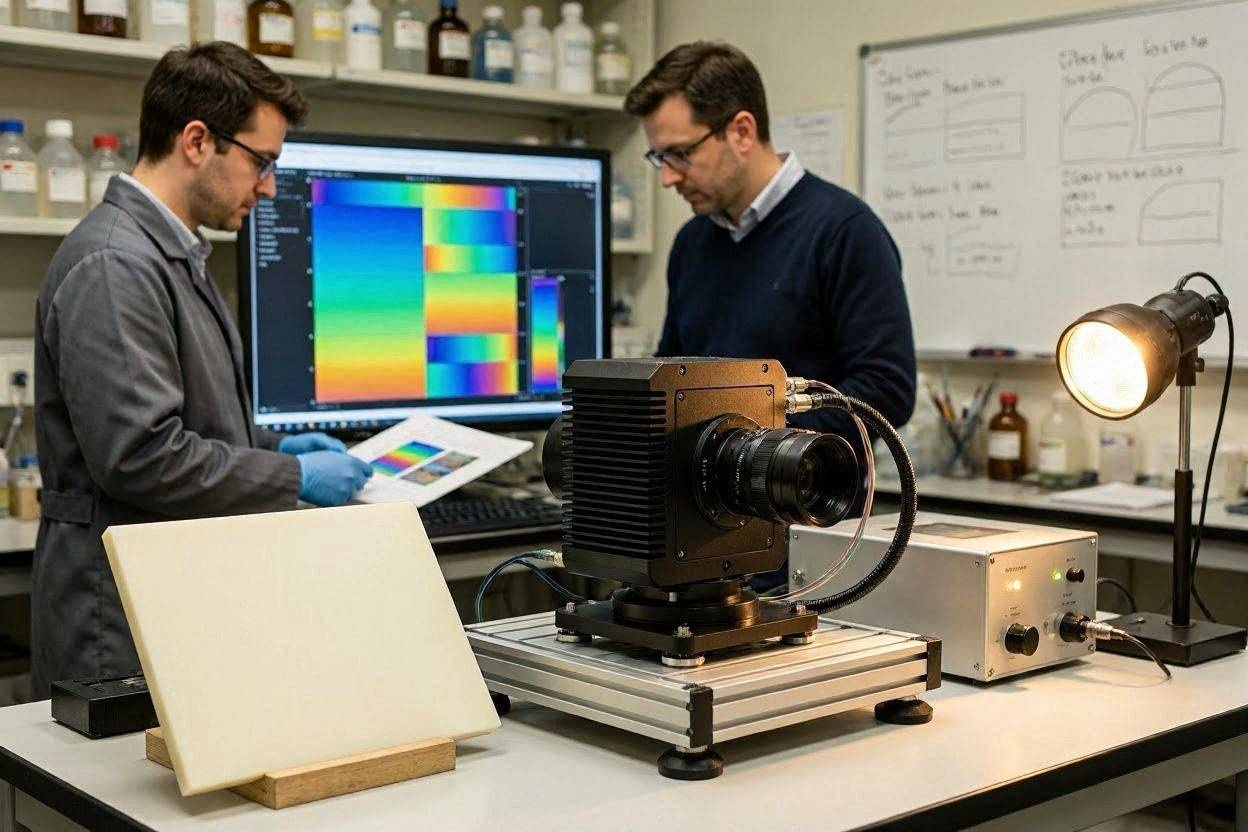
Hyperspectral Imaging Systems Innovation: Key Trends, Growth Drivers and Opportunities
Introduction to Hyperspectral Imaging Systems Innovation
Hyperspectral imaging systems innovation is revolutionizing how organizations capture, analyze, and act upon spectral information across defense, agriculture, environmental monitoring, and industrial inspection. Unlike conventional imaging systems that capture only three broad bands (RGB), hyperspectral cameras collect hundreds of narrow, contiguous spectral bands for each pixel, revealing chemical and material signatures invisible to traditional imaging . These intelligent systems combine advanced sensors, artificial intelligence, machine learning algorithms, and cloud platforms to enable precise material identification, quality assessment, and real-time decision-making. As governments and enterprises prioritize precision agriculture, environmental sustainability, and advanced surveillance capabilities, hyperspectral imaging has emerged as a critical technology for smart farming, infrastructure monitoring, and national security applications .
History of Hyperspectral Imaging Systems
The evolution of hyperspectral imaging began with multispectral sensors in remote sensing during the 1960s before accelerating with advances in sensor technology and computational methods. Early systems were large, expensive, and primarily used in aerospace and defense applications mounted on satellites and manned aircraft . The term "hyperspectral" was first defined in 1983 as involving over 100 spectral bands, enabling detailed material identification . Rapid advances in sensor miniaturization, complementary metal-oxide-semiconductor (CMOS) and charge-coupled device (CCD) technologies, and indium gallium arsenide (InGaAs) sensors transformed hyperspectral imaging from laboratory instruments into field-tolerant systems. Today, AI-powered analytics, drone-based platforms, CubeSat constellations, and handheld devices allow users to capture and process spectral data remotely while improving operational efficiency across agriculture, mining, healthcare, and environmental sectors .
Benefits of Hyperspectral Imaging Systems
Hyperspectral imaging delivers measurable value across multiple industries by improving accuracy, reducing operational costs, and enabling non-destructive analysis. Key benefits include:
- Precise material identification and chemical composition analysis through unique spectral signatures.
- Non-destructive testing and quality control in food, pharmaceutical, and manufacturing sectors.
- Early detection of crop diseases, nutrient deficiencies, and water stress in precision agriculture.
- Remote monitoring of environmental pollution, greenhouse gas emissions, and water quality.
- Enhanced surveillance, target detection, and reconnaissance capabilities for defense and security.
- Real-time data processing and actionable insights through AI and machine learning integration.
- Improved medical diagnostics, including non-invasive tissue analysis and early disease detection.
Current Market Size and Growth Trends
According to MarketsandMarkets, the global hyperspectral imaging systems market size was valued at USD 0.92 billion in 2025 and is projected to reach USD 1.83 billion by 2030, growing at a CAGR of 14.7% from 2025 to 2030. The cameras segment is expected to register the highest CAGR of approximately 10-12% during the forecast period, and the pushbroom/line scan technology is projected to dominate the market . The research and diagnostics application segment is projected to register the highest CAGR . Defense and aerospace agencies, agricultural enterprises, healthcare facilities, environmental monitoring organizations, and industrial inspection companies continue investing in intelligent hyperspectral solutions to optimize operations and improve sustainability.
Download PDF Brochure @ https://www.marketsandmarkets.com/pdfdownloadNew.asp?id=246979343
Key Drivers
Major growth drivers include increasing demand from diverse industries, development of affordable and portable systems, rising adoption in precision agriculture and environmental monitoring, integration of AI and machine learning for enhanced data analytics, and growing investment in space programs and defense surveillance . Organizations increasingly use connected hyperspectral platforms to gather detailed material composition data that improves quality control, resource management, and decision-making processes. Government funding for research institutions, modernization initiatives, and inter-company collaborations across North America, Europe, and Asia Pacific collectively strengthen robust market performance .
Emerging Trends
Human-centric lighting, Li-Fi communication, edge AI, wireless controls, digital twins, predictive maintenance, and cloud-based management are shaping the future of hyperspectral imaging. Advanced analytics enable real-time optimization while cybersecurity improvements strengthen connected spectral networks .
Key Technology Segments
By wavelength, the visible and near-infrared (VNIR) segment is expected to register the highest CAGR of approximately 9-13% during the forecast period, driven by the pressing need to identify material differentiation and biochemical properties with precision . The short-wave infrared (SWIR) segment is growing due to its ability to analyze chemical composition and molecular structure. The long-wave infrared (LWIR) segment is gaining traction with increasing deployment of LWIR hyperspectral sensors in UAVs and satellites . By technology, pushbroom/line scan systems dominate the market due to their efficiency in capturing continuous spectral data along a linear path, covering larger areas quickly while maintaining high resolution . The snapshot segment is expected to witness the highest CAGR, driven by remote sensing and real-time analytical capabilities . Snapshot systems are well-suited for real-time and high-throughput applications such as medical diagnostics, food inspection, and industrial quality control .
Key Application
Hyperspectral imaging systems are deployed across diverse applications. In monitoring and surveillance, they support border and perimeter surveillance, military and defense reconnaissance, critical infrastructure monitoring, maritime and coastal surveillance, disaster response and early warning systems, and urban and smart city surveillance . In remote sensing and mapping, applications include precision agriculture, mining and mineral exploration, environmental monitoring, and ecological assessment . In machine vision and optical sorting, hyperspectral imaging is used for industrial quality control, semiconductor inspection, food safety screening, and plastic recycling . In research and diagnostics, applications span medical diagnostics, pharmaceutical quality control, life sciences research, and tissue analysis .
Opportunities and Challenges
Smart lighting presents strong opportunities in commercial buildings, infrastructure modernization, industrial automation, and residential smart homes. Challenges include high initial investment, interoperability issues, cybersecurity risks, and integration with legacy infrastructure. Continued standardization and declining hardware costs are expected to improve adoption .
Innovations and Advancements
Manufacturers are introducing AI-powered spectral controllers, occupancy analytics, daylight harvesting, Bluetooth Mesh networking, and sensor-rich luminaires. These innovations improve energy efficiency while enabling predictive maintenance and data-driven facility management .
Future Outlook
Hyperspectral imaging will expand across smart cities, transportation hubs, hospitals, warehouses, retail stores, campuses, factories, airports, and residential communities. Integration with renewable energy, EV charging, and building automation systems will further enhance value .
Hyperspectral imaging systems innovation is redefining how organizations perceive and act on spectral information across scientific, industrial, and defense applications. Intelligent spectral solutions support sustainability, operational efficiency, and enhanced decision-making capabilities. With strong investment in digital infrastructure, space programs, and increasing demand for precision technologies, the industry is expected to maintain robust growth throughout the forecast period .
Learn more at https://www.marketsandmarkets.com/Market-Reports/hyperspectral-imaging-market-246979343.html
80% of the Forbes Global 2000 B2B companies rely on MarketsandMarkets to identify growth opportunities in emerging technologies and use cases that will have a positive revenue impact.
- Food Packaging Market Size Set for Strong Growth Through 2030 Amid Rising Demand for Convenience Foods
- Crop Protection Chemical Market Size, Share & Growth Forecast (2025–2030)
- Mulch Films Market: Driving Sustainable Agriculture Through Innovation
- Agricultural Adjuvants Market Analysis, Trends, and Growth Outlook (2026–2031)
- Japan Enterprise Asset Management Market Growth: AI and Smart Infrastructure Drive Demand


