
7500+ companies worldwide approach us every year for their revenue growth initiatives
2
80% of Fortune 2000 companies rely on our research to identify new revenue sources
3
Top 2000 strategists around the world rely on us for their growth roadmap/initiatives
Blue Agave Market by type (Blue Agave Syrup, Blue Agave Inulin, Blue Agave Powder and Others), Nature (Organic, Inorganic), Application, Distribution Channel, and Region - Global Forecast to 2030
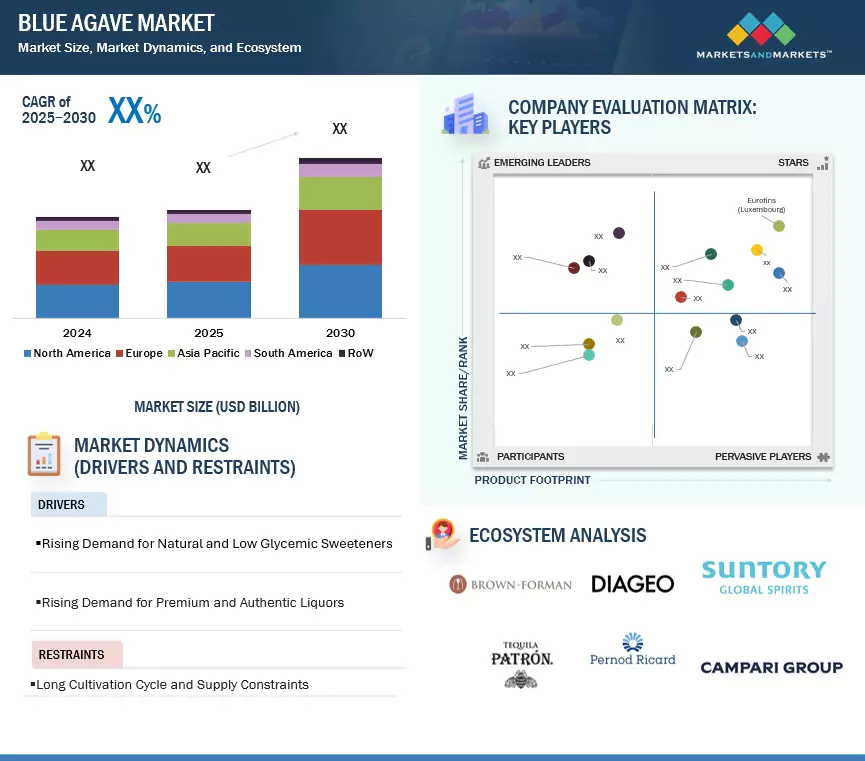
The blue agave market is projected to expand from USD XX million in 2025 to USD XX million by 2030, at a CAGR of XX% during the forecast period. Once limited largely to the spirits industry, Blue Agave has expanded into a wide range of applications, including natural sweeteners, dietary fibers, and specialty food ingredients. This diversification has created new opportunities for producers and suppliers, while also intensifying competition within the market. As concerns over refined sugars and artificial additives grow, Blue Agave syrup and inulin have gained strong momentum as preferred natural sweeteners and dietary fibers. However, the market is also facing structural challenges on the supply side. Factors such as fluctuating crop yields, long cultivation cycles, and environmental pressures are impacting production volumes and influencing price dynamics. In response, producers are increasingly adopting advanced agricultural practices, including precision farming and sustainable land management, to improve yields and stabilize supply.
Competition within the Blue Agave market is intensifying as more companies diversify their product portfolios and enter new segments. Traditional agave processors are expanding into health and wellness categories, while new entrants, including food-tech and specialty ingredient firms, are leveraging agave’s functional properties for innovative applications in snacks, beverages, and supplements. This shift is driving greater product differentiation and pushing companies to explore novel formulations and branding strategies.
Attractive Opportunities in the Blue Agave Market
ASIA PACIFIC
The blue agave market in APAC is witnessing growth driven by rapid shifts in consumer preferences and increasing demand for natural, plant-based ingredients. The growing middle-class population with higher disposable incomes is also fueling demand for premium and imported food and beverage products, including agave-based items.
The market's growth is fueled by evolving consumer preferences for high-quality spirits, health-conscious diets, and sustainable, organic products.
Collaborations and the introduction of new products are expected to present profitable prospects for industry participants in the coming five years.
The global popularity of tequila and mezcal, particularly in the premium and ultra-premium segments, is a primary growth driver. The rise of craft and artisanal spirits has further boosted demand for high-quality blue agave.
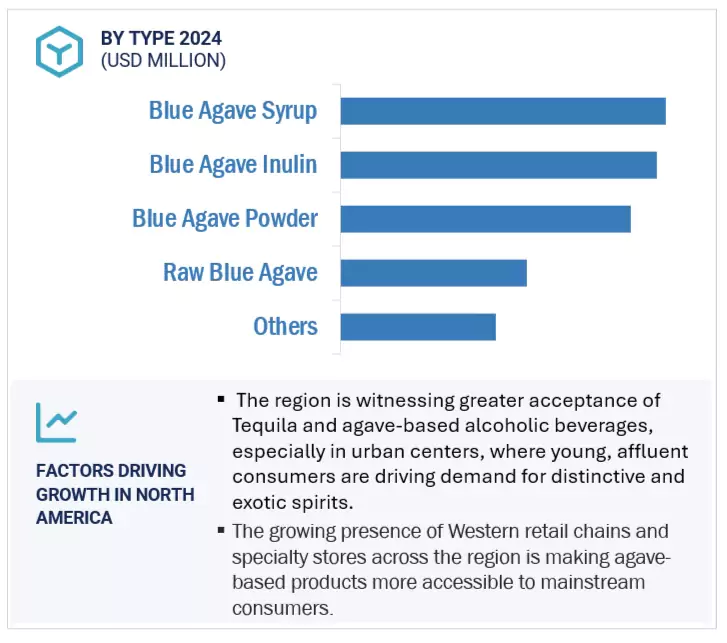
North America, particularly the United States and Mexico, leads global consumption of agave-based spirits such as Tequila and Mezcal. The U.S. is the largest export market for Tequila, driving significant demand for Blue Agave.
Global Blue Agave Market Dynamics
DRIVERS: Rising Demand for Natural and Low-Glycemic Sweeteners
One of the primary drivers accelerating growth in the Blue Agave market is the rising global demand for natural and low-glycemic sweeteners. With consumers becoming increasingly health-conscious, there is growing awareness about the negative health impacts of refined sugars and artificial sweeteners. Blue Agave syrup, known for its low glycemic index and natural origin, has emerged as a preferred alternative among health-focused consumers and food manufacturers alike. It is widely used in functional foods, beverages, organic snacks, and dietary supplements, particularly in markets such as North America and Europe where clean-label and plant-based trends are gaining traction. Additionally, regulatory moves in several countries to reduce sugar content in processed foods are further boosting the adoption of agave-based sweeteners, positioning Blue Agave as a key ingredient in the reformulation of food and beverage products.
RESTRAINTS: Long Cultivation Cycle and Supply Constraints
A major restraint facing the Blue Agave market is its long cultivation cycle and related supply limitations. Blue Agave typically requires six to eight years to reach full maturity before it can be harvested for commercial use, particularly for high-quality syrup, inulin, and spirits production. This extended growth period makes it difficult for producers to respond quickly to sudden demand spikes, leading to supply shortages and price volatility in the market. Additionally, over-reliance on a limited geographical region—primarily Mexico—exposes the market to risks such as adverse weather conditions, pests, and land-use competition. These supply-side challenges not only impact production costs but also create barriers for new entrants seeking to scale operations rapidly, potentially limiting the market’s ability to meet rising global demand consistently.
OPPORTUNITIES: Expansion into functional foods and nutraceuticals
Beyond its traditional applications in sweeteners and spirits, Blue Agave-derived ingredients such as inulin—a natural prebiotic fiber are gaining traction among health-conscious consumers and product formulators. Inulin supports digestive health, gut microbiome balance, and weight management, making it increasingly attractive for use in dietary supplements, wellness beverages, and high-fiber snacks. With rising global demand for gut health products and the growing popularity of plant-based functional ingredients, agave inulin offers manufacturers a versatile, clean-label solution. This creates new revenue streams for agave producers and opens up opportunities for market expansion beyond traditional categories like syrups and spirits, particularly in North America, Europe, and Asia-Pacific where functional foods are experiencing rapid growth.
CHALLENGES: Price Volatility and Supply Chain Disruptions
The long cultivation period of Blue Agave, coupled with factors such as climate fluctuations, pests, and land scarcity, often leads to supply-demand imbalances. In years of high demand and limited supply, prices for agave raw materials can surge sharply, putting pressure on manufacturers and end users, particularly in the beverage and sweetener industries. Additionally, since the majority of blue agave production is concentrated in Mexico, the market remains vulnerable to regional disruptions such as extreme weather events, trade policy changes, and transportation bottlenecks. These risks create uncertainty for businesses that rely on a steady, affordable supply of agave-based ingredients, limiting their ability to plan long-term and potentially slowing down product innovation and market expansion.
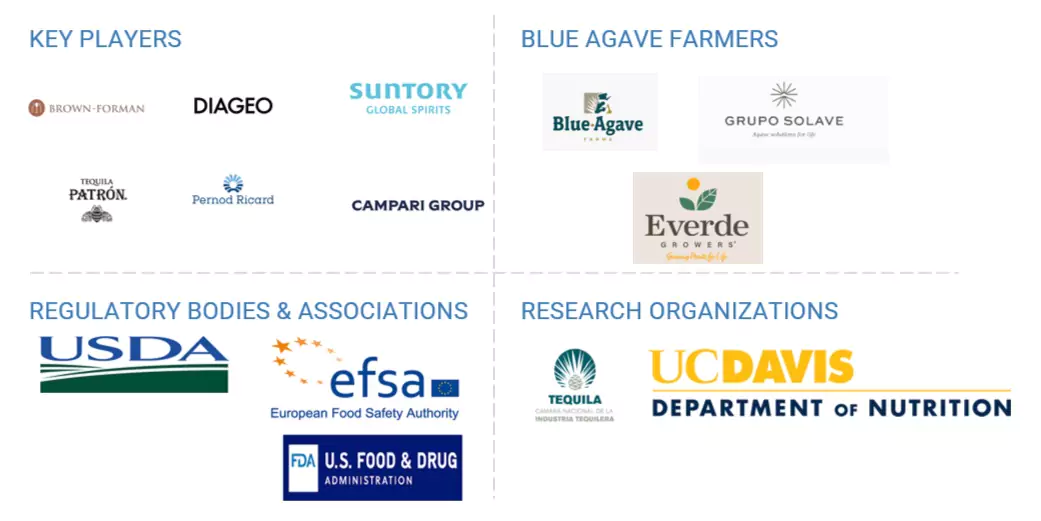
Global Blue Agave Market Ecosystem Analysis
Some of the prominent companies in this market include well-established and financially sound manufacturers of wine testing. These companies have been operational in the market for more than a decade and have diversified portfolios, the latest products, and excellent global sales and marketing networks. Some of the prominent companies in this market include Diageo (UK), Beam Suntory (US), Brown-Forman (US), Constellation Brands, Inc., (US), Pernod Ricard (France), The Campari Group (Italy), Patrón, (US), Proximo, (US), Whole Earth Brands, Inc., (US), Tres Agaves (US), Madhava (US), San Marcos Growers (US), Sazerac Co, Inc. (US), Global Goods Inc. . (US) and Whole Earth Sweetener Company LLC (US).
Note: The above diagram only shows the representation of the Blue Agave Market ecosystem; it is not limited to the companies represented above.
Source: Secondary Research and MarketsandMarkets Analysis
Based on type, the blue agave inulin segment is estimated to grow at a significant CAGR during the studied period.
Blue Agave Inulin (Fiber) is emerging as one of the fastest-growing segments. This growth is primarily driven by the rising global demand for functional food ingredients that support digestive health and overall wellness. Agave inulin, a natural prebiotic fiber, is gaining popularity among food and beverage manufacturers due to its ability to improve gut health, aid in weight management, and act as a clean-label ingredient in various formulations such as snacks, dairy alternatives, beverages, and dietary supplements. As consumer awareness around gut microbiome health increases—particularly in North America, Europe, and parts of Asia-Pacific—food producers are actively incorporating inulin to meet demand for high-fiber, plant-based solutions. Additionally, the versatile application of agave inulin in both mainstream and specialty products positions this segment for sustained, rapid growth within the broader Blue Agave market.
The food & beverages segment in the blue agave market is projected to have a significant share.
The Food & Beverage segment holds the largest share of the Blue Agave market among the listed applications. Within this segment, Blue Agave is widely used in various categories such as sweeteners, bakery & confectionery, dairy alternatives, and alcoholic beverages, most notably in Tequila and Mezcal production. Agave syrup and nectar are highly popular as natural sweeteners, driven by increasing consumer demand for low-glycemic, plant-based alternatives to refined sugars and artificial sweeteners. Additionally, the global appeal of agave-based spirits continues to grow, particularly in North America and Europe, further solidifying this segment’s dominant position.
Moreover, the versatility of Blue Agave in processed foods and beverages including its functional use in bakery products and dairy alternatives—has further expanded its market reach. With consumers increasingly favoring natural, organic, and clean-label products, the demand for Blue Agave within food and beverage formulations remains robust. This broad spectrum of applications, combined with high consumption volume and strong industry adoption, makes the Food & Beverage segment the clear leader in the Blue Agave market.
The Asia Pacific region is anticipated to experience rapid growth between 2025 and 2030.
The Asia-Pacific region is emerging as the fastest-growing market for Blue Agave products, driven by rapid shifts in consumer preferences and increasing demand for natural, plant-based ingredients. Countries such as China, Japan, Australia, and South Korea are witnessing rising awareness of health and wellness, leading to greater consumption of low-glycemic sweeteners like agave syrup and functional ingredients such as agave inulin. The growing middle-class population with higher disposable incomes is also fueling demand for premium and imported food and beverage products, including agave-based items. Additionally, the expanding popularity of Tequila and agave-based alcoholic beverages in urban areas, alongside a surge in functional foods and prebiotic supplements, is accelerating market growth in the region. As local production of Blue Agave remains limited, imports of agave-derived products continue to rise, supporting strong growth across both retail and foodservice channels. With these factors in play, Asia-Pacific is expected to maintain its position as the fastest-growing region in the Blue Agave market over the coming years.
FASTEST GROWING MARKET (2025-2030)
US: FASTEST GROWING MARKET IN THE REGION
Recent Developments of Blue Agave Market
In April 2025, Diageo, a global beverage alcohol leader, and Main Street Advisors have announced a joint venture focused on Cîroc Ultra-Premium Vodka and Lobos 1707 Tequila. This partnership leverages the strong market presence of both brands, with a focus on Lobos 1707’s unique agave spirits. Known for its craftsmanship, Lobos 1707 ages its agave-based Tequila in American oak barrels and finishes it in PX Sherry wine barrels, blending traditional techniques with modern innovation to tap into the growing premium agave market.
In April 2025, Pernod Ricard UK Altos is expanding its product lineup with the introduction of Altos Strawberry Margarita, its second ready-to-serve flavor. This new variant is made with Altos’ award-winning Plata Tequila, Triple Sec, agave syrup, and ripe strawberries, offering a refined blend of subtle strawberry sweetness and a smooth, well-balanced finish—positioning it as a premium, convenient agave-based cocktail option.
In February 2025, PATRÓN Tequila, the world’s leading super-premium tequila brand, has launched its “100% Additive-Free Tequila” campaign to highlight its commitment to purity and craftsmanship. Since 1989, PATRÓN has focused on producing high-quality tequila using only three natural ingredients—100% Weber Blue Agave, water, and yeast without any added sweeteners or additives, reinforcing its position in the premium agave market.
In May 2023, Campari Group has launched Mayenda Tequila Blanco, a new premium sipping tequila in the U.S. and Mexico, aimed at capturing deeper, authentic agave flavors. Positioned in the luxury segment, Mayenda emphasizes sustainability, with labels crafted from 100% reclaimed agave byproducts, highlighting both craftsmanship and environmental responsibility in its market appeal.
Key Market Players
List of Top Blue Agave Market Companies
The Blue Agave Market is dominated by a few major players that have a wide regional presence. The major players in the Blue Agave Market are
By Type, By Nature, By Application, By Distribution Channel and By Region
Regions covered
North America, Europe, Asia Pacific, South America, and Rest of the World (RoW)
Key Questions Addressed by the Report
What is the current size of the blue agave market?
The blue agave market is estimated to be USD XX million in 2025 and is projected to reach USD XX million by 2030, registering a CAGR of XX% during the forecast period.
Which are the key players in the market, and how intense is the competition?
Diageo (UK), Beam Suntory (US), Brown-Forman (US), Constellation Brands, Inc., (US), Pernod Ricard (France), The Campari Group (Italy), Patrón, (US), Proximo, (US), Whole Earth Brands, Inc., (US), Tres Agaves (US), Madhava (US), are some of the key market players.
Which region is projected to account for the largest share of the blue agave market?
North America holds the largest share of the Blue Agave market, driven by strong demand for agave-based spirits like Tequila, high consumption of agave sweeteners, and Mexico’s dominance in agave production. The region benefits from a mature supply chain, large-scale exports, and rising consumer preference for natural, plant-based ingredients, solidifying its market leadership.
What kind of information is provided in the company profiles section?
The company profiles provided deliver crucial details, including a thorough business summary that covers different segments, financial results, geographic presence, revenue distribution, and business revenue breakdown. They also offer insights into product lines, key achievements, and expert analyst opinions to better illustrate the company's potential.
What are the factors driving the blue agave market?
Rising demand for premium and authentic liquors, rising demand for natural and low glycemic sweeteners, and increasing research on end use applications among others.
Personalize This Research
Triangulate with your Own Data
Get Data as per your Format and Definition
Gain a Deeper Dive on a Specific Application, Geography, Customer or Competitor
Growth opportunities and latent adjacency in Blue Agave Market