Chinese Automakers Report

Report Code AT 9209
Published in Oct, 2024, By MarketsandMarkets™
Download PDF

Choose License Type

Buy Report Now Inquire Before Buying

Chinese Automakers Report Covers the Major Chinese Passenger Vehicle Manufacturers and Their Strategies on Electric Vehicles (EVs), Innovations in Battery Technology, Platforms, Powertrains, Connected Vehicles, Autonomous Technologies, Geographical Expansion, and Competitive Benchmarking of their Global Strategies and Plans to 2030

Overview

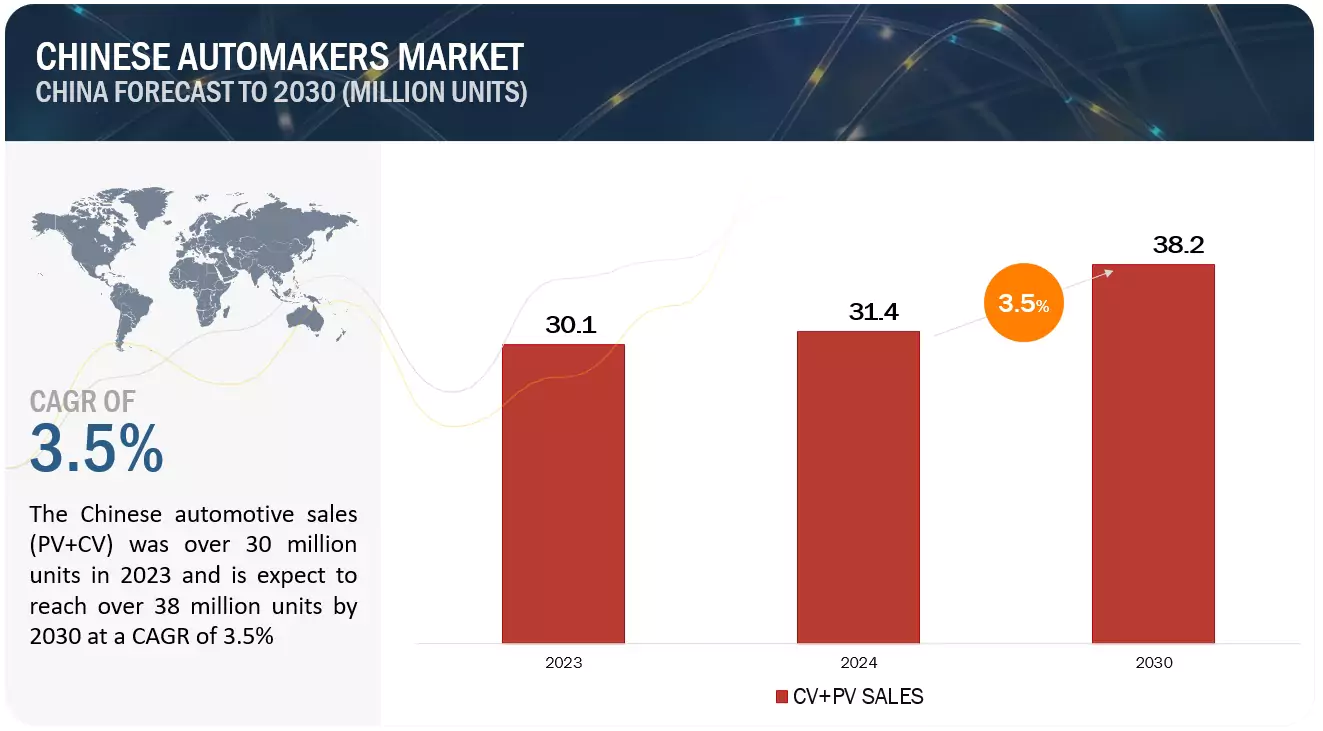
The Chinese automotive market (PV+CV) was 30.1 million units in 2023, estimated to reach 31.4 million units in 2024 and is expected to reach around 38.2 million units by 2030 at a CAGR of 3.5%. Factors such as the extended driving range of EVs and the increasing interest among consumers indicate EVs potential as an alternative for zero-emission mobility. Additionally, the rising involvement of investors, advancements in technology by automakers and governmental initiatives toward zero-emission transportation are expected to boost the market growth. This shift towards shared mobility and connected living is already experiencing global traction, notably in passenger vehicles, where autonomous driving is also progressively gaining favor.

The Chinese have been dominating the automotive sector for the last few years. This is owing to cheap labor, vast manufacturing and government policies, a high volume of exports, and the capability to develop technology. China saw significant vehicle sales growth in 2009-2010 after the Global Financial Crisis and again in 2016-2017 post the Great Fall, solidifying its manufacturing, automotive, and semiconductors leadership. In 2016, only three Chinese automakers were among China's top ten cars selling companies. In 2019, four automakers made it to the top ten of domestic sales, and in 2023, six Chinese automakers made it to the top ten list. Other major car companies in China were Volkswagen, Toyota, General Motors and Honda Motors. It is expected that in 2030, seven Chinese automakers will be top domestic vehicle sellers in China.

In addition, production in China is expected to reach 42.5 million units in 2030. This will help boost exports from China to over 9.0 million units in 2030. China is said to be exporting cars in all the major markets. The current scenario suggests that they will export around 6.0 million units in 2024 itself. The majority of the exports are EVs. The Chinese automakers are majorly focused on developing EV technologies; however, currently, ICE exports hold the majority of the exports to foreign markets.

Chinese OEMs Competitive Benchmarking

Attractive Opportunities in the Chinese automakers Competitive Benchmarking

CHINESE automakers

Growth of the Chinese automakers in the Asia Pacific market can be attributed to high vehicle production, higher vehicle sales and large consumer base

Electric and Hybrid cars would create opportunities for the global market during the forecast period.

Chinese automakers are collaborating with solution providers and manufacturers to provide long range batteries and fast charging technology to gain the market share

Growth of Chinese automakers can be attributed to increasing demand for electric vehicles (EVs) in the global market.

The market growth in Asia Pacific can also be attributed to higher vehicle production and increasing disposable income of the people in developing countries such as China and India.

China accounts for 60% of global EV sales, and BYD is the largest manufacturer of EVs in the world. The Chinese automakers and other companies have set up a robust ecosystem in China with the help of the Chinese government. The entire supply chain of EV manufacturing is integrated efficiently so that car manufacturing costs are low. This gives them an upper hand in the market to compete with foreign automakers. The cost of Chinese cars is less by 20-40% compared to its foreign competitors.

China currently dominates the mining and processing of EV battery raw materials. On average, 60% of the EV battery raw material is processed in China. Therefore, battery cell production is extremely low in China compared to other countries. Moreover, China has made heavy investments in African countries where raw materials for EV batteries are mined. This will also give an upper hand in battery manufacturing in the future. In addition, battery market leaders such as CATL, BYD, Gotion, CALB, and Sunwoda are based in China. These companies hold the largest share of EV battery manufacturing in the world.


The Chinese government firmly supports the adoption of EVs in the market and boosts the Chinese automakers with policies that will lead to their faster growth. China aims to achieve 50% electrification of cars by 2035 and to achieve this target; they may soon introduce CHINA 7 with strict regulation on CO2, NOx, and Particulate Matter emissions. This will further make it mandatory for others to adopt strict ZEV targets and develop an ecosystem around them. Since 2018, China has spent over $170 billion on the EV sector. This covered rebates, sales tax exemptions, infrastructure subsidies, R&D costs, and government procurements of material supporting the EV sector.

In addition to spending a large portion on the supply chain, the Chinese automakers are also focused on developing technologies that boost EV production and cut manufacturing costs. The Chinese automakers, through extensive R&D, have developed unique platforms that can manufacture cars from hatchbacks to SUVs on a single platform. These highly flexible platforms help cut production costs and bring uniformity in the process. Moreover, these advanced platforms have high battery capacity that will further help boost the cars' driving range. Further, the powertrains that are being developed are also focused on EVs, wherein the mature EV industry with its infrastructure, innovative strategies, JVs with foreign automakers, and patient protection laws will help the Chinese automakers to adopt the new e-powertrain into full-fledged production lines swiftly.

On the lines of autonomous and connected cars, Chinese automakers are aggressively innovating through new-age automakers such as NIO, Zeekr, Li Auto, Leapmotors, Xpeng, and others. L2+ and L3 testing permissions are already been given to several automakers in and around specific areas of certain states. The Chinese technology-developing automakers like Tencent, ecar, Neusoft, Baidu and Alibaba are advancing in this sectors by providing the Chinese automakers with connected and ADAS technologies.

Global Chinese automakers Competitive Benchmarking Ecosystem Analysis

These companies adopted new product launches, acquisitions, partnerships, collaborations, and other key strategies to gain traction in the automotive market.

Top Companies in Chinese OEMs Competitive Benchmarking

Key Market Players

List of Top Chinese automakers Competitive Benchmarking Companies

  • BYD Company Ltd,
  • Geely Group
  • Chery
  • Changan Automobile
  • SAIC Motor Corporation Limited
  • Great Wall Motor
  • Li Auto
  • Nio
  • Leapmotor
  • Xpeng
  • Xiaomi

Key Questions Addressed by the Report

What is the current size of the Chinese automotive industry?

The Chinese automotive sales (PV+CV) were over 30 million units in 2023 and are expected to reach around 38 million units by 2030 at a CAGR of 3.5%.

What are the driving factors impacting the growth of the Chinese automakers?

Increasing customer preference for electric vehicles, connectivity and autonomous features, low-cost manufacturing, integrated supply chain, development of advanced platforms and powertrains, and government support are the driving factors impacting the growth of Chinese automakers.

What are the new market trends impacting the growth of the Chinese automakers?

Long-range batteries, fast & ultra-fast charging, ADAS and LiDAR technologies, 5G connectivity, and autonomous vehicles are some of the major trends impacting this market.

What are the new market trends in the EV passenger vehicle market that are the focus of Chinese automakers?

Fast and ultra-fast charging, increasing battery pack capacity and ranges, and new chemistries are some of the key future technologies in the EV passenger vehicle segment that the Chinese automakers are focusing on.

Which major Chinese OEMs can have a global impact?

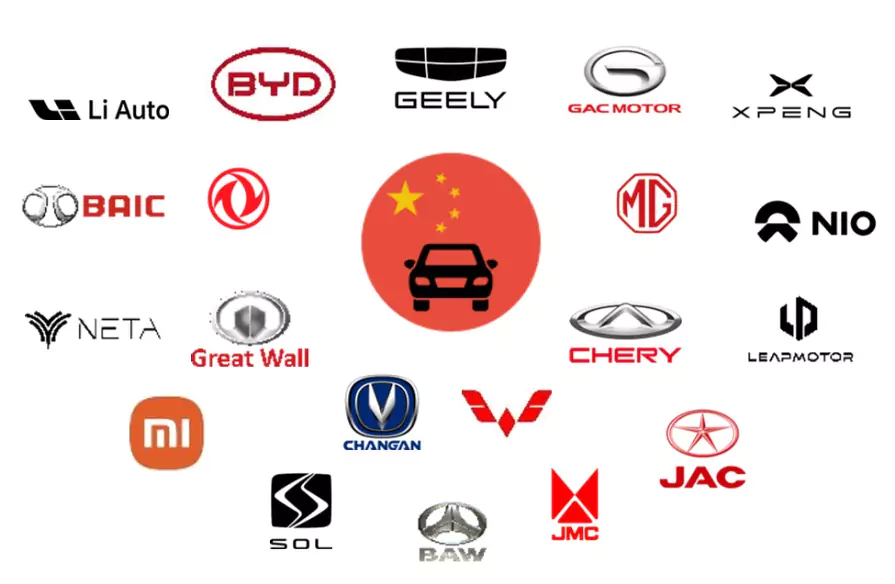
Chinese OEMs such as BYD, Geely, Chery, Changan, SAIC, and GWM are focused on high-volume sales. Nio, Xpeng, Li Auto, Leapmotors, and Xiaomi are some of the new-age Chinese automakers that are focused on connectivity and autonomous features of the vehicles.

Personalize This Research

  • Triangulate with your Own Data
  • Get Data as per your Format and Definition
  • Gain a Deeper Dive on a Specific Application, Geography, Customer or Competitor
  • Any level of Personalization
Request A Free Customisation

Let Us Help You

  • What are the Known and Unknown Adjacencies Impacting the Chinese Automakers R
  • What will your New Revenue Sources be?
  • Who will be your Top Customer; what will make them switch?
  • Defend your Market Share or Win Competitors
  • Get a Scorecard for Target Partners
Customized Workshop Request

Table of Contents

Exclusive indicates content/data unique to MarketsandMarkets and not available with any competitors.

TITLE
PAGE NO
EXECUTIVE SUMMARY
1
RESEARCH SCOPE, OBJECTIVES, AND METHODOLOGY
2
  • 2.1 STUDY OBJECTIVES & METHODOLOGY
  • 2.2 STUDY SCOPE
CHINESE AUTOMOTIVE MARKET ANALYSIS
3
  • 3.1 CHINA AUTOMOTIVE INDUSTRY SALES 2000 - 2030
  • 3.2 CHINA AUTOMOTIVE VOLUMES: PRODUCTION, SALES AND EXPORTS
  • 3.3 PASSENGER VEHICLES SALES VOLUMES: GLOBAL AND CHINA
  • 3.4 TOP 20 OEM GROUPS IN CHINA BASED ON DOMESTIC SALES VOLUMES: 2016, 2019 & 2023
  • 3.5 CHINA PASSENGER ELECTRIC VEHICLES VOLUMES: PRODUCTION, SALES AND EXPORTS
  • 3.6 BOM ANALYSIS OF CHINESE VS NON-CHINESE OEMS
CHINESE EV ECOSYSTEM
4
  • 4.1 GLOBAL & CHINA HISTORICAL EV BATTERY MARKET (GWH)
  • 4.2 CHINA’S SHARE OF BATTERY RAW MATERIAL
  • 4.3 CHINESE EV BATTERY COST BROKEN DOWN BY CHEMISTRY & EXPENSES
  • 4.4 CHINESE EV BATTERY OEMS SHARE AND CAPACITY
  • 4.5 MAJOR CHINESE BATTERY SUPPLIERS
GOVERNMENT SUPPORT FOR ELECTRIC VEHICLES
5
  • 5.1 GOVERNMENT REGULATIONS
  • 5.2 GOVERNMENT EXPENDITURE ON EV SECTOR
  • 5.3 GOVERNMENT INCENTIVES/SUBSIDIES SCENARIO
PROFILES OF KEY CHINESE OEMS
6
  • 6.1 BYD
  • 6.2 GEELY
  • 6.3 CHERY
  • 6.4 CHANGAN
  • 6.5 SAIC
  • 6.6 GREAT WALL MOTOR
  • 6.7 NEW AGE OEMS OVERVIEW
KEY STRATEGIES OF CHINESE OEMS
7
  • 7.1 PLATFORM STRATEGY OF KEY CHINESE OEMS
  • 7.2 CHINESE OEMS BATTERY STRATEGY
  • 7.3 CHINESE OEMS POWERTRAIN TECHNOLOGY
  • 7.4 CHINESE OEMS CONNECTIVITY & AUTONOMOUS DRIVING STRATEGY
  • 7.5 KEY CHINESE COMPONENT SUPPLIERS
  • 7.6 CASE STUDY
KEY FINDINGS
8
APPENDIX
9

The study involved analyzing the recent developments, trends and the performance of the automakers manufacturers with the projections and trends that will take place till 2030. The study is also based on an analysis of the major milestones achieved by these Chinese automakers in the automotive industry across vehicle connectivity, electrification, autonomous vehicles, geographical expansion, and other critical aspects likely to transform the automotive industry and increase its market share globally. Exhaustive secondary research was done to collect information on the market, the peer market, and the parent market. The next step was to validate these findings, assumptions, and sizing with the industry experts across value chains. The top-down and bottom-up approaches were employed to estimate the complete market size. After that, market breakdown and data triangulation processes were used to estimate the market size of segments and subsegments.

Secondary Research

The secondary sources referred for this research study include automotive automakers, Tier I/II companies, and publications from government sources, automotive associations & databases; [such as country-level automotive associations and organizations, International Energy Agency (IEA), Organization Internationale des Constructeurs d’Automobiles (OICA), European Automobile Manufacturers Association (ACEA), MarkLines, International Monetary Fund, Oxford Economics, and others]; corporate filings (annual reports, investor presentations, and financial statements); and trade, business, and automotive associations. Secondary data has been collected and analyzed to determine the overall sales volume.

Market Size Estimation

The bottom-up approach was used to estimate and validate the total automotive vehicle sales volume. This approach was also used to identify the sales of various subsegments in the Chinese and global markets. The research methodology used to estimate the market includes the following:

Chinese automakers Competitive Benchmarking : Top-Down and Bottom-Up Approach

Chinese automakers Competitive Benchmarking Top Down and Bottom Up Approach

Market Definition

Chinese automakers' competitive benchmarking report includes an analysis of Chinese automakers' performance and key developments in the automotive industry and insights on the most anticipated technological developments and growth across electric vehicles, connected cars and features, shared mobility, powertrains, platforms, and other major aspects of the automotive industry.

Stakeholders

  • Automobile Organizations/Associations
  • Automotive Component Manufacturers
  • Automotive Component Suppliers
  • Automotive automakers
  • Automotive System Manufacturers
  • Automotive Electronics Manufacturers
  • Country-specific Automotive Associations
  • China Association of Automobile Manufacturers (CAAM)
  • European Automobile Manufacturers Association (ACEA)
  • EV Manufacturers
  • EV Component Manufacturers
  • EV Charging Infrastructure Companies
  • Government & Research Organizations
  • Raw Material Suppliers for the Automotive Industry
  • Software Providers
  • Traders, Distributors, and Suppliers of Automotive Components

Report Objectives

  • To analyze the Chinese OEM's performance
  • To provide key developments achieved
  • To identify the trends that are likely to impact the market till 2030
  • To identify major growth segments and opportunities till 2030
  • To project China automotive vehicle sales till 2030
  • To track and analyze competitive developments such as deals (joint ventures, mergers & acquisitions, partnerships, collaborations), product developments, and other activities carried out by key Chinese automakers.

Previous Versions of this Report

"Our USP is "providing game-changing business opportunities reports with free customization" - so please feel free to provide us with your specific areas of interest / business challenges in much greater detail !!"

We appreciate your interest in this report. Once you fill out the form, you'll be immediately directed to an exclusive solution tailored to your needs. This high-value offering can help boost your revenue by 30% - a must-see opportunity for anyone looking to maximize growth.


By clicking the "Submit" button, you are agreeing to the Terms of Use and Privacy Policy.

Custom Market Research Services

We Will Customise The Research For You, In Case The Report Listed Above Does Not Meet With Your Requirements

Get 10% Free Customisation

Growth opportunities and latent adjacency in Chinese Automakers R

DMCA.com Protection Status