Future of Energy Management Services - Forecast to 2035
Energy management services are experiencing rapid growth in demand as utilities, fleet operators, and consumers increasingly focus on optimizing electricity use, integrating renewables, and improving charging efficiency. V2G/V2H technologies and battery energy storage systems (BESS) are playing a key role by enabling bidirectional energy flow, peak load management, backup power support, and real-time grid balancing across residential, commercial, and fleet applications. V2G-enabled vehicle sales are expected to grow from nearly 0.5 million units in 2025 to around 28.8 million units by 2035, transforming EVs into mobile energy storage assets. Governments, utilities, and automakers are increasingly investing in bidirectional charging infrastructure and smart energy platforms to support this transition.
The V2G/V2H and BESS market is witnessing a major shift from pilot projects toward commercial-scale deployment. What was once limited to niche energy applications is now evolving into a software-driven, grid-integrated ecosystem supported by AI-based energy management, smart chargers, and cloud-connected battery platforms. This transition is reshaping how utilities, OEMs, charging operators, and energy service providers create value through virtual power plants, demand response, and energy trading services.
One of the key trends is the growing role of EVs and stationary batteries in supporting grid stability and balancing renewable energy. As solar and wind penetration rise globally, energy storage systems and bidirectional EV charging are becoming critical for peak load management and backup power applications. For the aftermarket and energy ecosystem, this creates new opportunities in battery diagnostics, energy orchestration software, smart charging services, and battery lifecycle management solutions over the next decade.
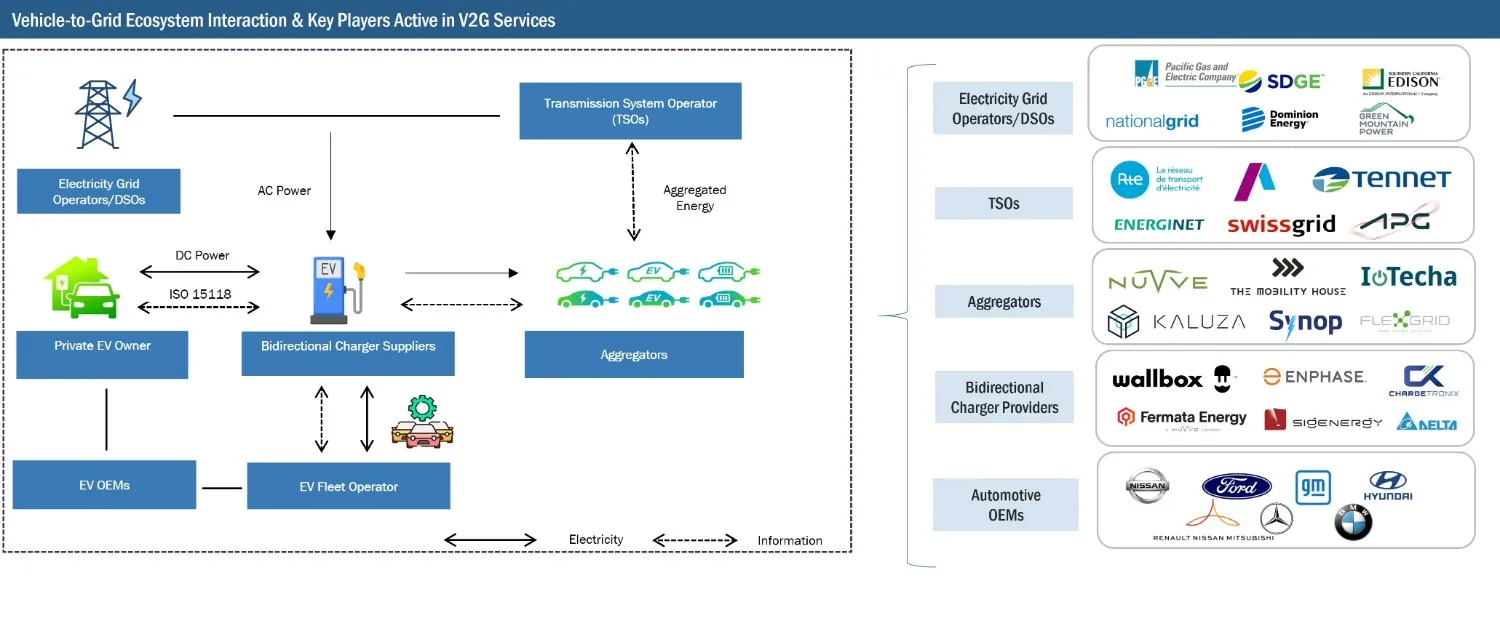
Bidirectional charging is emerging as one of the most important technologies in the V2G/V2H ecosystem. It allows EVs not only to consume electricity but also to send stored energy back to homes or the power grid during peak demand or outages. Advancements in smart chargers, battery management systems, and communication protocols are improving the commercial viability of V2G-enabled vehicles. As charger costs decline and OEM support increases, bidirectional charging is expected to become a mainstream feature across passenger and commercial EV platforms.
Smart grid and microgrid integration is becoming a critical trend for the future of V2G/V2H and BESS deployments. Utilities and energy operators are increasingly integrating EVs and stationary batteries into virtual power plants, renewable energy networks, and decentralized microgrids to improve grid stability and energy resilience. AI-driven energy management platforms, cloud-connected storage systems, and predictive load-balancing technologies are enabling real-time coordination among vehicles, buildings, and the electricity grid. This transition is accelerating the shift toward distributed and software-defined energy ecosystems globally.
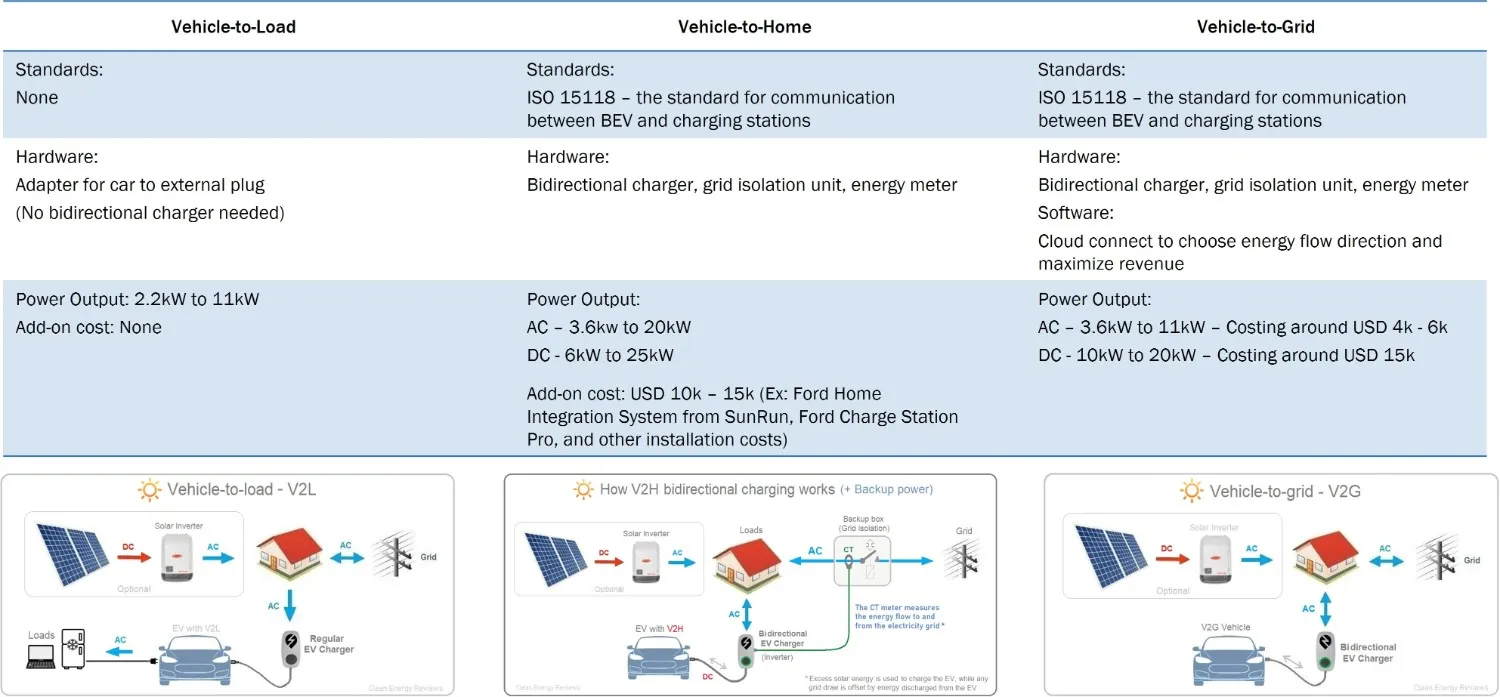
Standards, policies, and regulatory frameworks are emerging as the key enablers for large-scale V2G/V2H adoption across global markets. The US is advancing through FERC Order 2222, IEEE 1547, and utility interconnection standards that allow EVs to participate in distributed energy and grid-balancing programs. Europe is accelerating deployment through AFIR regulations and ISO 15118-20 standards for bidirectional charging interoperability, while China is rapidly expanding pilot projects and national V2G deployment targets. Japan continues to leverage its early CHAdeMO-based bidirectional charging ecosystem, whereas India is gradually building EV charging and smart-grid frameworks under national electrification and renewable energy programs. Across all regions, harmonized standards, grid codes, communication protocols, and supportive incentive policies will play a critical role in determining the pace of commercialization, interoperability, and investment in V2G/V2H and BESS infrastructure over the next decade.
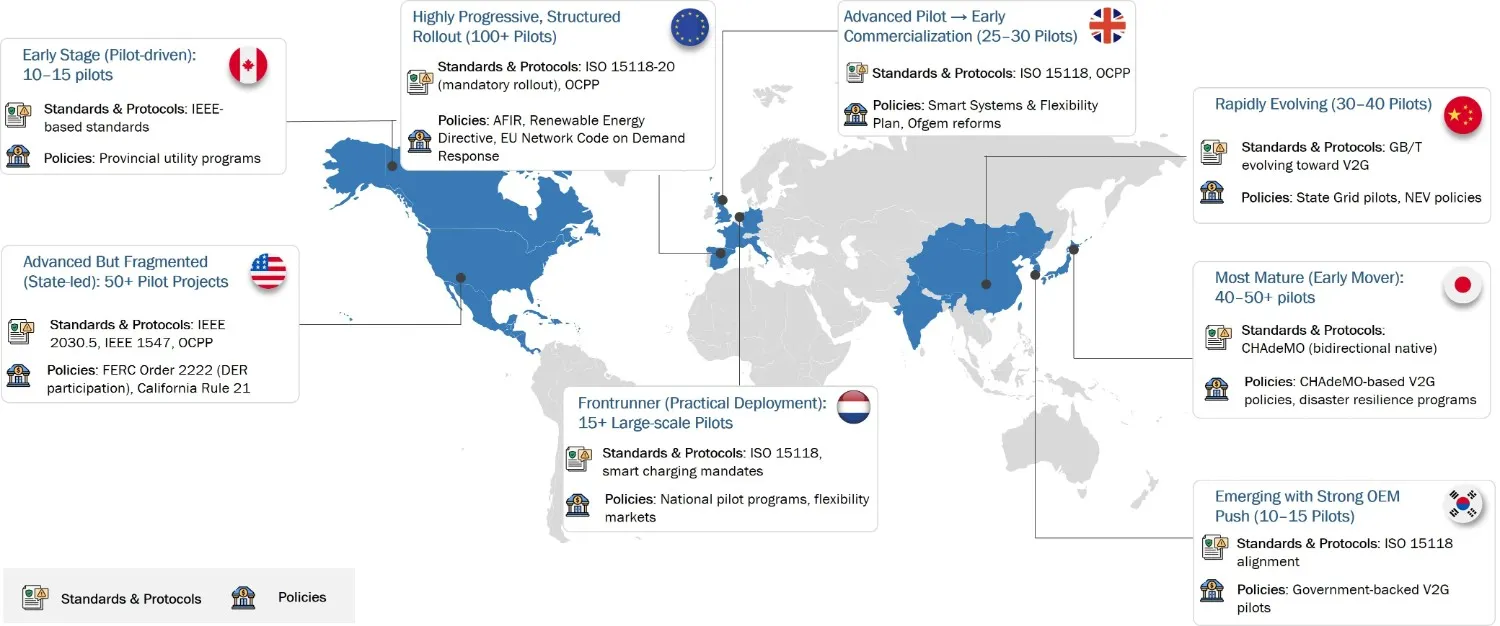
The rapid expansion of DC fast-charging infrastructure across the US, Europe, China, India, and other major EV markets is becoming one of the strongest growth drivers for the V2G/V2H and BESS ecosystem. Global public fast-charging capacity is expected to increase more than tenfold by 2030, supported by rising EV adoption, government incentives, and investments in ultra-fast charging corridors. China continues to lead charger deployment globally, while Europe and the US are aggressively expanding highway and urban charging networks to support passenger and commercial EV growth.
At the same time, depot charging infrastructure for electric trucks and buses is witnessing significant expansion, particularly across logistics hubs, fleet depots, transit stations, and industrial zones. Depot charging is expected to dominate the heavy-duty EV charging ecosystem through 2035, with private fleet charging hubs accounting for the majority of installed chargers globally. The growing deployment of high-power DC chargers, ranging from 150 kW to megawatt-level systems, is increasing electricity demand at fleet depots, creating a strong need for load balancing, energy optimization, and grid support solutions.
This rapid scale-up of fast charging and depot electrification is creating a major opportunity for BESS across both public and private charging infrastructure. As ultra-fast charging sites place heavy stress on local grids, charging operators are increasingly integrating stationary battery storage to manage peak demand, reduce grid upgrade costs, and improve charging reliability. BESS is also enabling renewable energy integration, backup power support, and energy arbitrage opportunities for fleet operators and utilities. Over the next decade, the convergence of DC fast charging, depot electrification, and smart energy storage is expected to become a foundational pillar of the global EV energy ecosystem.
Several business models are emerging rapidly within the V2G/V2H and BESS ecosystem as energy systems become more decentralized and software-driven. Energy arbitrage is one of the most prominent models, in which battery systems store electricity during low-price periods and discharge it during peak-pricing hours to maximize returns. BESS is also increasingly deployed alongside solar and wind projects to improve renewable energy utilization, stabilize intermittent generation, and provide backup power. In parallel, Battery-as-a-Service (BaaS) models are gaining traction by reducing upfront battery ownership costs for fleet operators and consumers through subscription-based energy solutions. Community microgrid BESS deployments are also expanding across residential, commercial, and industrial sectors to enhance energy resilience, support local renewable integration, and reduce grid dependency. Additionally, virtual power plants, demand response services, peak shaving, and fleet energy management are creating new revenue opportunities for utilities, charging operators, and energy aggregators globally.
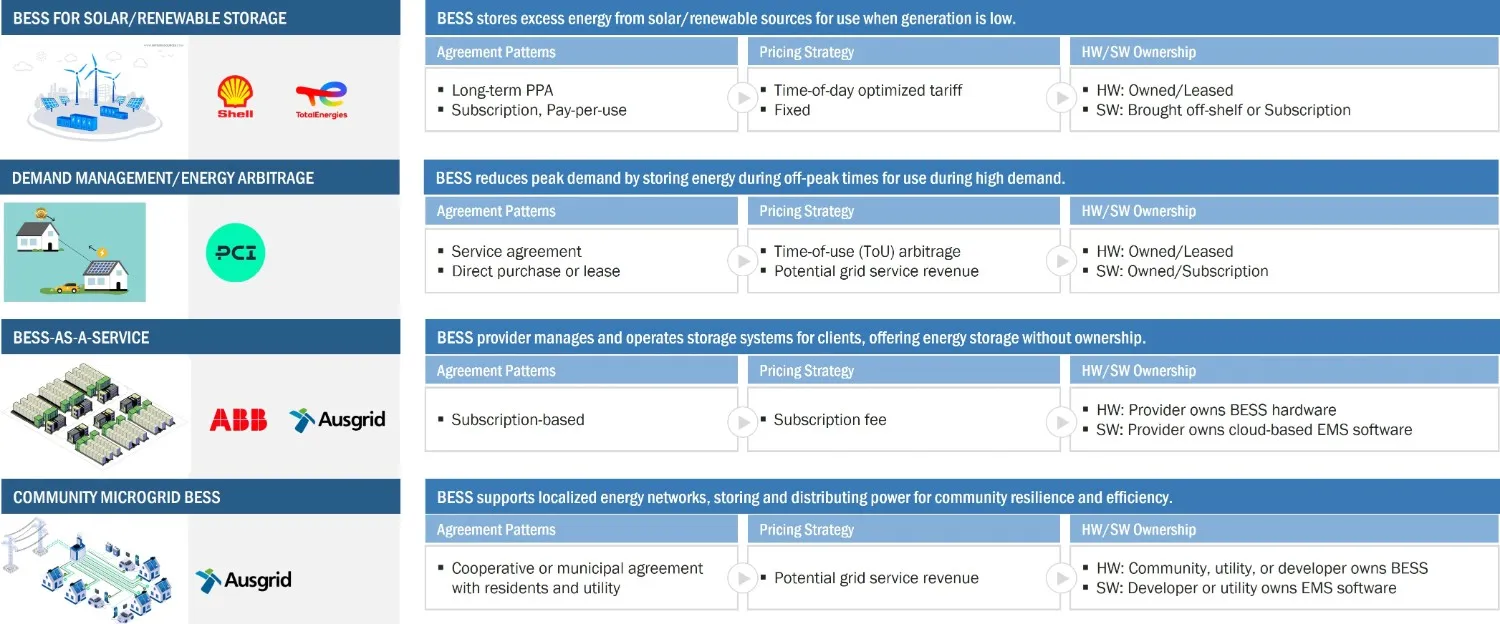
Energy management services are becoming a critical pillar of the V2G/V2H and BESS ecosystem, enabling real-time optimization of EV charging, battery storage, renewable energy utilization, and grid balancing. Utilities, fleet operators, OEMs, and energy aggregators are increasingly investing in AI-driven energy platforms, smart charging software, and virtual power plant solutions to improve energy efficiency and reduce peak load pressure. However, large-scale adoption continues to face several challenges. Supply chain disruptions in batteries, semiconductors, power electronics, and charging hardware are impacting deployment timelines and infrastructure costs.
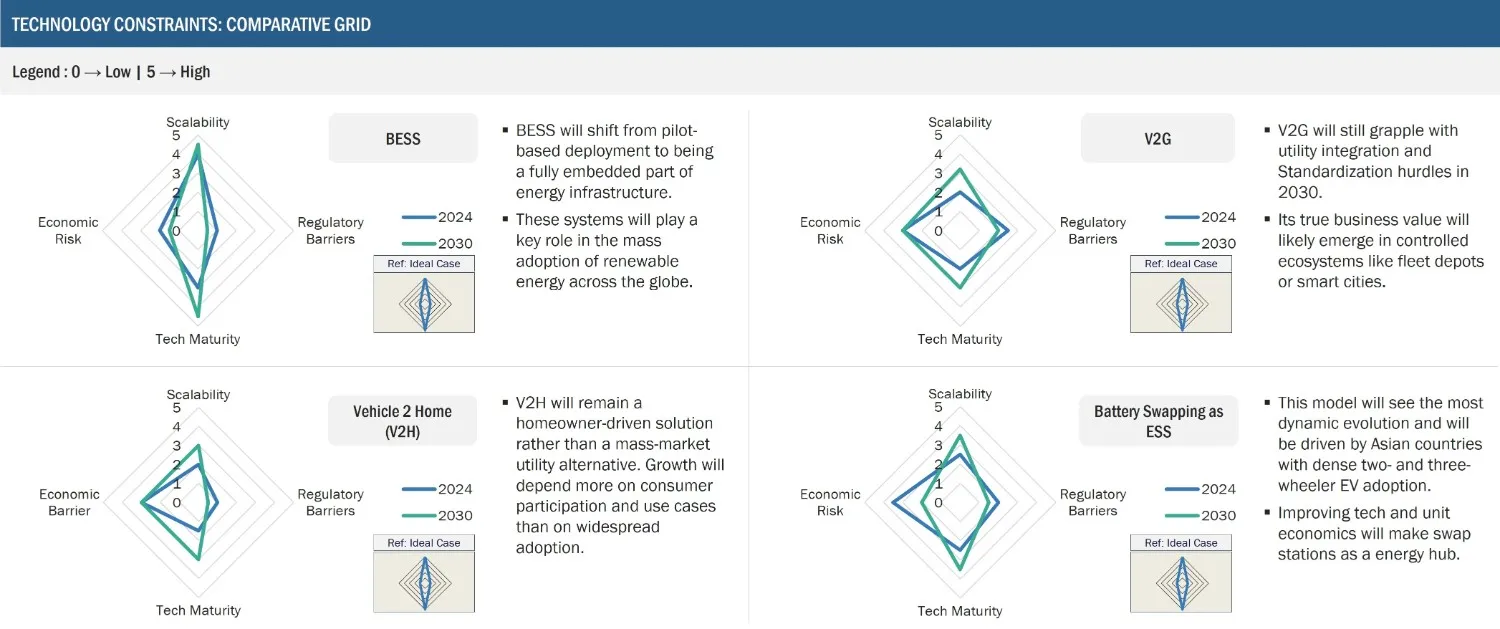
Energy security concerns and rising electricity demand are also pushing governments to accelerate grid modernization and investments in localized energy storage. At the same time, the lack of global standardization across charging protocols, communication interfaces, and interoperability frameworks remains a major barrier for seamless V2G integration. Existing power grids in many regions are not fully equipped to handle bidirectional energy flows and decentralized energy resources, creating a strong need for grid upgrades, smart substations, and digital energy management systems. Regulatory uncertainty, interconnection delays, cybersecurity risks, and evolving utility pricing models further complicate commercial adoption. Despite these challenges, the long-term outlook remains strong as governments and industry stakeholders continue to invest in resilient, software-defined, and distributed energy ecosystems globally.
Conclusion
V2G/V2H services and BESS are experiencing strong global demand as countries accelerate EV adoption, renewable energy integration, and smart-grid modernization. Regions such as the US, Europe, China, Japan, and India are increasingly investing in bidirectional charging and battery storage solutions to improve grid stability, manage peak electricity demand, and support the integration of solar and wind power. The growing deployment of DC fast chargers, fleet depot charging, and residential energy systems is further driving the need for distributed energy storage and intelligent energy management platforms. In addition, governments and utilities are promoting the adoption of V2G and BESS to strengthen energy security, reduce strain on grid infrastructure, and create flexible, decentralized energy ecosystems for the future.
Personalize This Research
- Triangulate with your Own Data
- Get Data as per your Format and Definition
- Gain a Deeper Dive on a Specific Application, Geography, Customer or Competitor
- Any level of Personalization
Request A Free Customisation
Let Us Help You
- What are the Known and Unknown Adjacencies Impacting the Energy Management Services Market
- What will your New Revenue Sources be?
- Who will be your Top Customer; what will make them switch?
- Defend your Market Share or Win Competitors
- Get a Scorecard for Target Partners
Customized Workshop Request













Growth opportunities and latent adjacency in Energy Management Services Market