The research study involved four major steps in estimating the size of the food lyophilization equipment market. Exhaustive secondary research was done to collect important information about the market and peer markets. The next step was to validate these findings and assumptions and size them with the help of primary research with industry experts across the value chain. The top-down and bottom-up approaches were used to estimate the market size. After this, the market breakdown and data triangulation approaches were adopted to estimate the market sizes of segments and subsegments.
Secondary Research
Various secondary sources were referred to in the secondary research process to identify and collect the information required for this study. These sources include annual reports, press releases, investor presentations of companies, white papers, and articles from recognized authors. Secondary research was performed to obtain key information about the market’s value chain, the pool of key market players, market segmentation according to industry trends, regional outlook, and developments from market and technology perspectives.
The global market size was estimated using the top-down and bottom-up approaches, along with several other dependent submarkets. The major players in the market were identified using extensive secondary research, and their presence in the market was determined using secondary and primary research. All the percentage splits and breakdowns were determined using secondary sources and verified through primary sources.
Primary Research
Extensive primary research was conducted after understanding the food lyophilization equipment market scenario through secondary research. Several primary interviews were conducted with key opinion leaders from demand- and supply-side vendors across four major regions: North America, Europe, Asia Pacific, and RoW. Approximately 25% of the primary interviews were conducted with demand-side vendors, while 75% were with supply-side vendors. The primary data collection relied on telephone interviews, accounting for 80% of the total interviews. The remaining data was gathered through the use of questionnaires and emails.
After successful interaction with industry experts, brief sessions were conducted with highly experienced independent consultants to reinforce our primary research findings. This, along with the in-house subject matter experts’ opinions, has led us to the findings as described in the report. The breakdown of primary respondents is as follows:
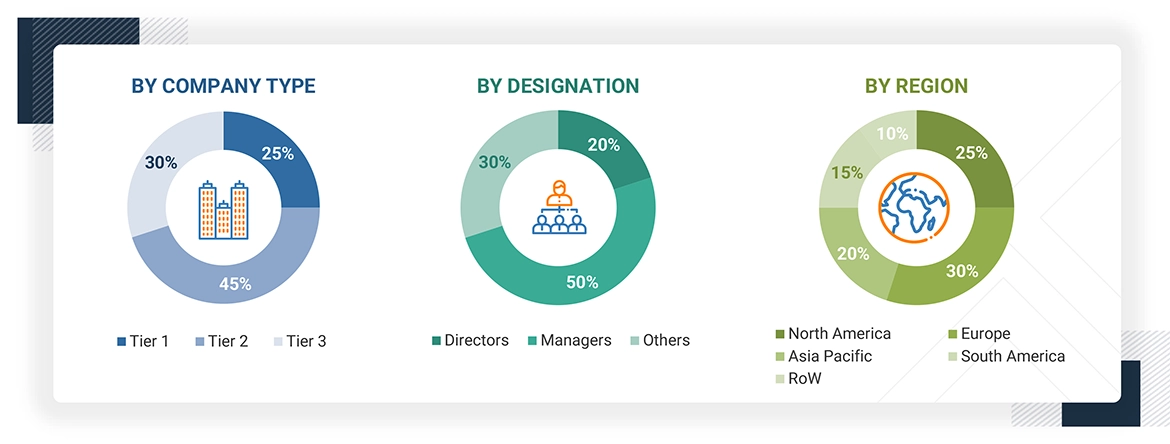
Note 1: Others include sales managers, marketing managers, and product managers.
Note 2: Tier 1 companies’ revenues are more than USD 10 billion; tier 2 companies’ revenues range between USD 1 and 10 billion; and tier 3 companies’ revenues range between USD 500 million and USD 1 billion.
Source: Industry Experts
To know about the assumptions considered for the study, download the pdf brochure
Market Size Estimation
In the complete market engineering process, top-down and bottom-up approaches and several data triangulation methods were used to estimate and forecast the market size for the overall market segments and subsegments listed in this report. Extensive qualitative and quantitative analyses were performed on the complete market engineering process to list the key information/insights throughout the report.
The key players in the food lyophilization equipment market were identified through secondary research, and their rankings in the respective regions were determined through primary and secondary research. This entire procedure involved the study of the annual and financial reports of top players and interviews with industry experts, such as chief executive officers, vice presidents, directors, and marketing executives, for quantitative and qualitative key insights. All percentage shares, splits, and breakdowns were determined using secondary sources and verified through primary sources. All parameters that affect the markets covered in this research study were accounted for, viewed in extensive detail, verified through primary research, and analyzed to obtain the final quantitative and qualitative data. This data was consolidated, supplemented with detailed inputs and analysis from MarketsandMarkets, and presented in this report.
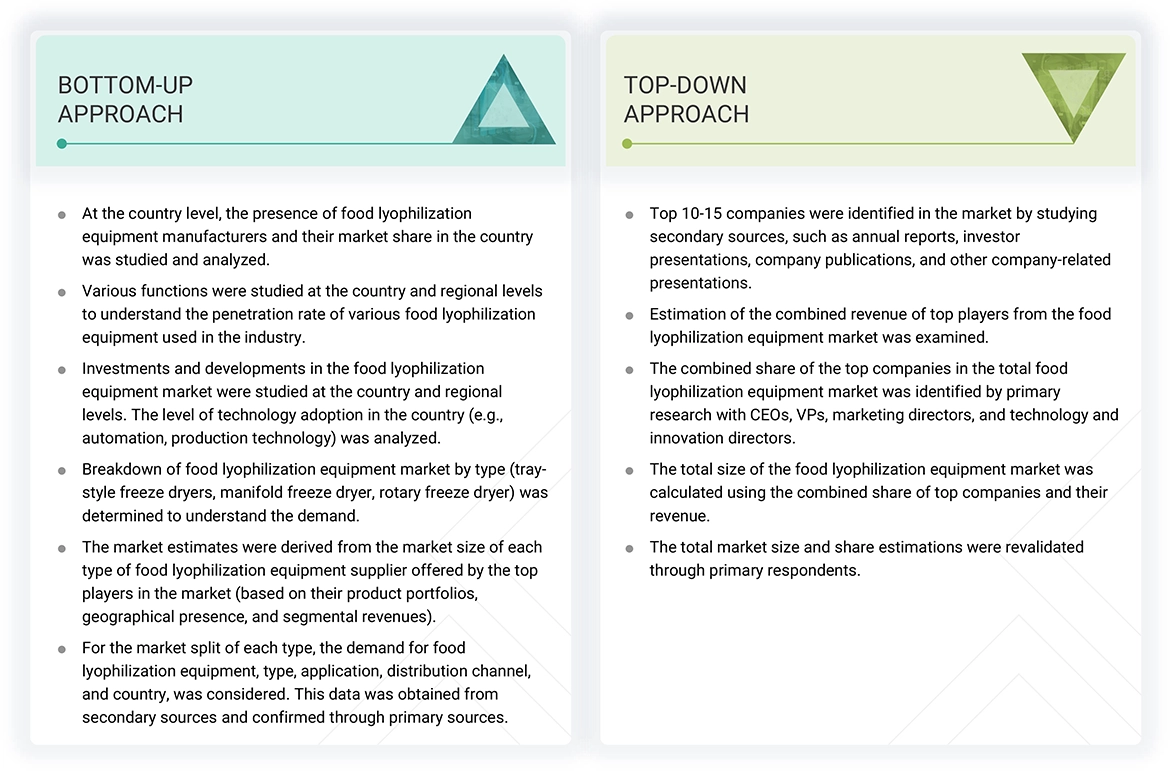
Market Size Estimation Methodology- Bottom-up approach
-
At the country level, the presence of food lyophilization equipment manufacturers and their market share were studied and analyzed.
-
Various functions were studied at the country & regional levels to understand the penetration rate of various food lyophilization equipment used for various functions in the industry.
-
Investments and developments in the food lyophilization equipment market were studied at the country & regional levels. The country’s technological adoption level (e.g., automation, production technology) was analyzed.
-
A breakdown of the food lyophilization equipment market by type (tray-style freeze dryers, manifold freeze dryers, and rotary freeze dryers, was determined to understand the demand.
-
The market estimates were derived through the market size of each type of food lyophilization equipment suppliers, offered by top players in the food lyophilization equipment market (based on their product portfolios, geographical presence, and segmental revenues).
-
For the market split of each type, the demand for food lyophilization equipment, type, application, distribution channel, and country was considered. This data was obtained from secondary sources and confirmed through primary inputs.
Market Size Estimation Methodology- Top-down approach
-
Leading companies and system integrators operating across various industries were tracked.
-
The size of the food lyophilization equipment market was derived through the data sanity method, analyzing revenues of more than 15 key providers through their annual reports and press releases, secondary databases, and summing them up to estimate the overall market size.
-
Multiple discussions were conducted with key opinion leaders to understand the demand for food lyophilization equipment manufacturers and analyze the breakup of the scope of work carried out by each major company.
-
Market trends were analyzed to obtain the CAGR of the food lyophilization equipment market by understanding the product penetration rate in each application and examining the demand and supply of food lyophilization equipment in different applications.
-
A percentage of the overall revenue, or in some cases, a portion of the segmental revenues from each company, was used to calculate their earnings from the sales of food lyophilization equipment. This percentage has been assigned to each company based on the composition of their product portfolios.
-
Estimates at every level were verified through discussions with key opinion leaders, including CXOs, directors, and operation managers, and with domain experts at MarketsandMarkets.
-
Various paid and unpaid information sources, such as annual reports, press releases, white papers, and databases, were studied.
Food Lyophilization Equipment Market : Top-Down and Bottom-Up Approach
Data Triangulation
After determining the overall size of the food lyophilization equipment market from the market size estimation processes explained above, the total market was split into several segments and subsegments. Where applicable, the market breakdown and data triangulation procedures were employed to complete the overall market engineering process and arrive at the exact statistics for all segments and subsegments. The data was triangulated by studying various factors and trends. Additionally, the market size was validated using top-down and bottom-up approaches.
Market Definition
Food lyophilization equipment, also known as freeze-drying equipment, is specialized machinery used to remove moisture from food products by freezing them and then reducing the surrounding pressure to allow the frozen water in the food to sublimate (transition directly from solid to vapor without passing through the liquid phase).
Stakeholders
-
Raw material suppliers
-
Regulatory bodies, which include the following:
-
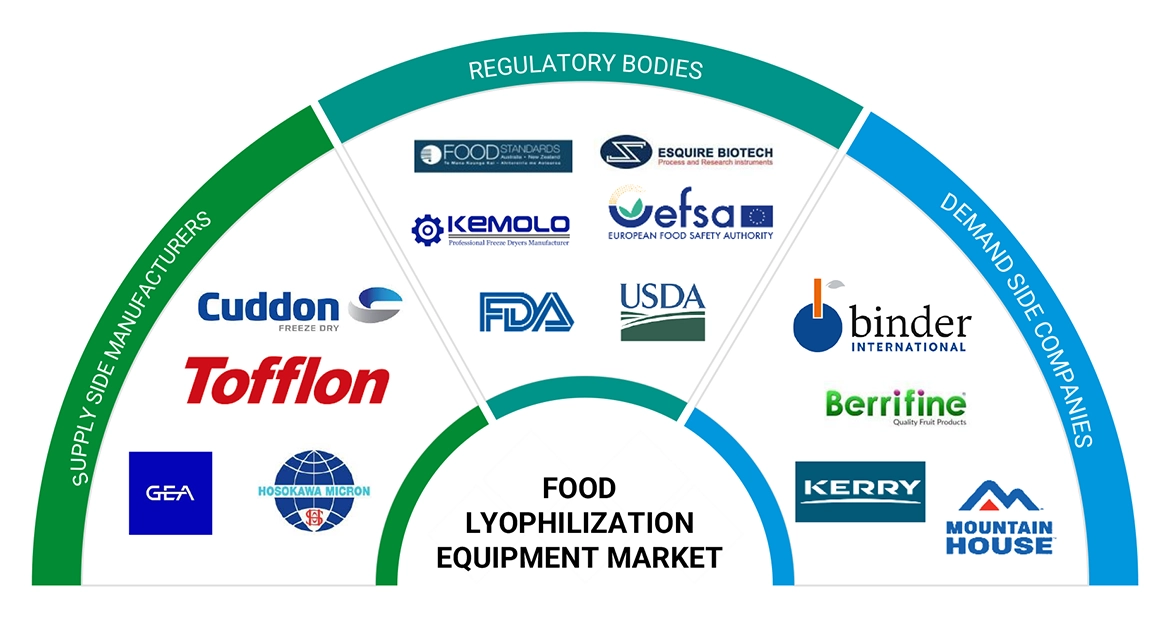
Food safety agencies such as the FDA, EFSA, USDA, and FSANZ
-
Government agencies and NGOs
-
Food safety agencies
-
End users, which include the following:
-
Food & beverage manufacturers/suppliers
-
Research centers, laboratories, and scientific institutes
-
Retailers
-
Commercial research & development (R&D) institutions and financial institutions
-
Importers and exporters of lyophilization equipment
-
Government and research organizations
-
Trade associations and industry bodies
Report Objectives
-
To define, describe, and segment the food lyophilization equipment market based on type, scale of operation, technology type, application, and region in terms of value and volume from 2025 to 2030
-
To identify the attractive opportunities in the market by determining the largest and fastest-growing segments across regions
-
To analyze demand-side factors based on the following:
-
Impact of macroeconomic and microeconomic factors on market growth
-
Shifts in demand patterns across subsegments and regions
-
To provide detailed information about the key factors influencing market growth (drivers, restraints, opportunities, and industry-specific challenges)
-
To analyze the micromarkets concerning individual growth trends, prospects, and their contribution to the total market
-
To assess the competitive developments, such as partnerships, mergers & acquisitions, product developments, and expansions & investments in the food lyophilization equipment market
Available Customizations
With the given market data, MarketsandMarkets offers customizations according to the specific requirements of companies. The following customization options are available for the report:
-
Detailed analysis and profiling of additional market players based on various blocks of the supply chain


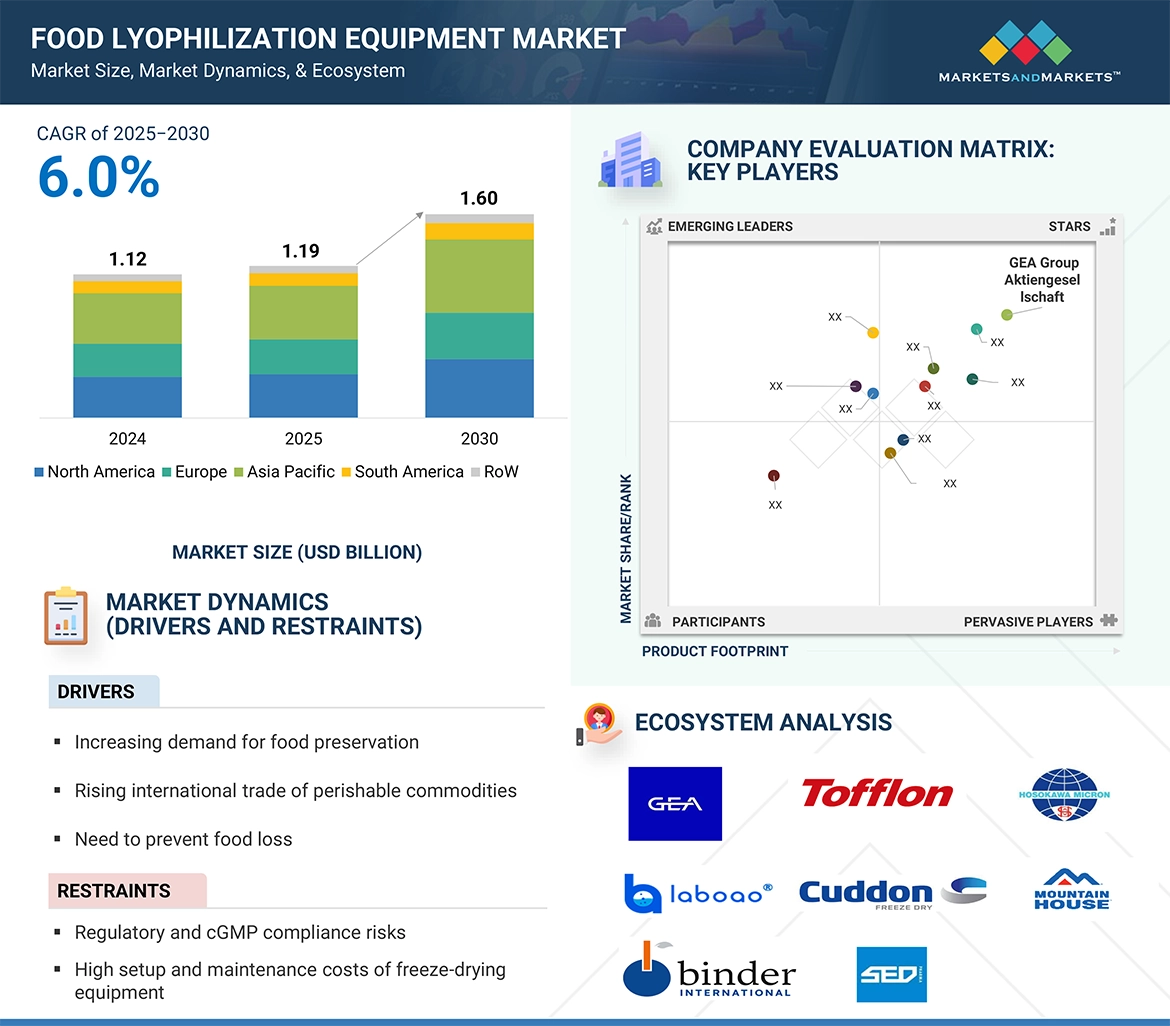


 HIGHEST CAGR MARKET IN 2025-2030
 INDIA FASTEST GROWING MARKET IN THE REGION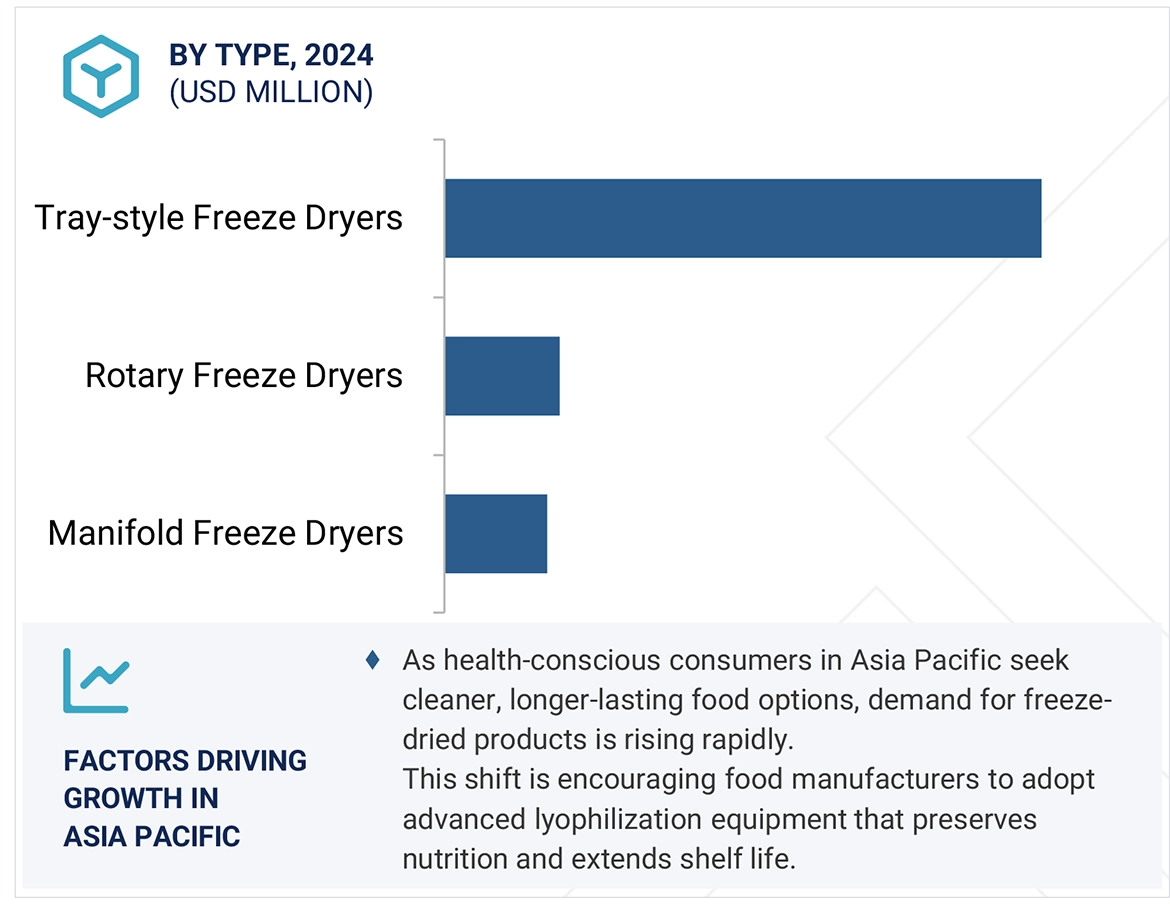










Growth opportunities and latent adjacency in Food Lyophilization Equipment Market