7500+ companies worldwide approach us every year for their revenue growth initiatives
2
80% of Fortune 2000 companies rely on our research to identify new revenue sources
3
Top 2000 strategists around the world rely on us for their growth roadmap/initiatives
Fragrance Intermediate Market Type (Aldehydes, Esters, Alcohols, Ketones, Essential Oil), Source (Synthetic Fragrance Intermediates, Natural Fragrance Intermediates), Applications (Cosmetics & Personal Care, Household Care, Pharmaceutical) and Region - Global Forecast to 2030
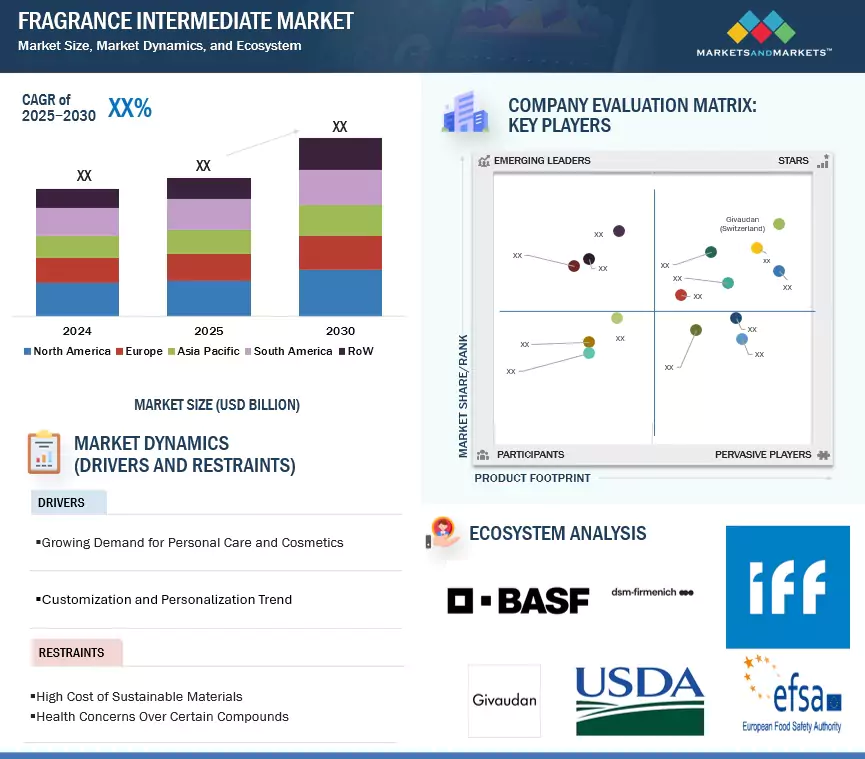
The fragrance intermediate market is projected to expand from USD XX billion in 2025 to USD XX billion by 2030, at a CAGR of XX% during the forecast period. Surging consumer interest in wellness, uniqueness, and eco-friendly products is propelling market expansion. Breakthroughs in fragrance intermediates such as bio-based aroma chemicals, biodegradable materials, and green synthesis processes are improving product safety, efficacy, and environmental acceptability. Increased use of AI-based fragrance formulation, real-time consumer feedback, and complex olfactory analysis is helping create customized, culture-specific fragrances. These technologies are reducing the development time, increase the product success rates, and enabling regulatory compliance. Natural and plant-based intermediates are gaining traction with increasing worries related to synthetic ingredients, particularly in the premium and clean-label segments. Strategic investment in R&D, regional creative centers, and sustainable production sites, especially in Asia Pacific, Latin America, and the Middle East, is additionally driving market growth globally.
Attractive Opportunities in the Fragrance Intermediate Market
North America
Consumer interest in personalized scent experiences boosts demand for specialty fragrance intermediates. Increasing awareness about clean-label and eco-friendly products drives the use of natural fragrance intermediates
The market for fragrance intermediate market is projected to record a CAGR of XX% during the study period, reaching USD XX billion by 2030.
Collaborations and new product launches are expected to present profitable prospects for industry participants in the next five years.
Innovations in fermentation-based aroma chemicals and synthetic processes enhance production efficiency and cost-effectiveness.
Major market players are investing and expanding in new markets.
Global Fragrance Intermediate Market Dynamics
DRIVERS: Growing Demand for Personal Care and Cosmetics
The fragrance intermediate market industry is significantly determined by the rise in demand for cosmetic and personal care products. Self-care, grooming, and overall wellness being consumed worldwide are factors propelling demand for innovative and high-quality fragrance ingredient cosmetics used in perfumery, skincare, haircare, and the rest of the personal care products. These meet the conditions for efficacy, as fragrance intermediates such as aroma chemicals, natural extracts, and essential oils can augment the sensory appeal of these products to consumers. Global shifts toward premium, sustainable, and clean-label cosmetics would thus result in increased usage of natural and bio-based fragrance intermediates. Besides, in agreement with this shift, companies are launching products that promise performance and identities of sustainability. For example, Insempra unveiled its bio-based Superior Phenyl Ethyl Alcohol (Superior PEA) for personal care in May 2025 with improved sustainability. Similarly, Givaudan launched Z-biome Fragrance Technologies in March 2024, offering microbiome-friendly solutions for skincare and cosmetics. All these innovations are supporting the growth of this market.
RESTRAINTS: Health Concerns Over Certain Compounds
Health implications associated with certain compounds acts as a restraint on the growth of the fragrance intermediate market. Most of these fragrance intermediates, especially the synthetic aroma chemicals, come under the regulatory eyes as well as the scrutiny of consumers. Most of these chemicals are potential sources of allergy, skin irritation, respiratory problems as well as some long-term health hazards. The more acute guidelines are specific to some ingredients suspected to be harmful such as phthalates and some musks or even known allergens under various bodies such as the European Chemicals Agency (ECHA) and the US Environmental Protection Agency (EPA). This ever-growing health awareness among the manufacturers and consumers has raised the concern of safety within fragrance formulations, thus further demanding ingredient transparency and disclosure. Therefore, more challenges face companies with reformulating products, conducting additional safety testing, and following up on changing regulations. And even negative publicity or product recalls from health concerns, a company could lose a good reputation, sales, and customers' trust. All these combinedly slow down-market growth, especially for synthetic intermediates, and increase investments made by companies to grow in the area of safer, sustainable options.
OPPORTUNITIES: Adoption of AI & Digital Scent Technologies
The use of AI and digital scent technologies presents a significant opportunity for the fragrance intermediate market by making faster, more precise, and highly customized product development. AI-driven fragrance formulation helps companies analyze wide range of consumer data, predict emerging scent preferences, and create targeted fragrance intermediates tailored to specific regions, demographics, or product categories. It will shorten development timelines and improve success rates by aligning products more closely with consumer expectations. A notable example is IFF's China Scent Exploration Program, launched in January 2025, which combines artificial intelligence with cultural insights to develop region-specific fragrances. By analyzing consumer behavior across different generations and cities, IFF uses AI to translate preferences into precise fragrance creation guidelines, reducing development costs and enhancing product acceptance. Additionally, IFF introduced its AI-powered ScentChat™ App in February 2025, which allows real-time consumer feedback during the fragrance creation process. These innovations show how AI is transforming fragrance formulation, making the market more dynamic and responsive. As demand for personalization and niche fragrances rises globally, AI and digital technologies will open new avenues for intermediate manufacturers to offer innovative, consumer-centric solutions.
CHALLENGES: Sourcing Sustainable Raw Materials at Scale
Among the several challenges, sourcing sustainable raw materials on a scale is a major difficulty for the fragrance intermediate market, especially as demand continues to grow for natural and eco-friendly consumer goods. Sourcing natural fragrance intermediates derived from plant or renewable sources becomes difficult at a larger scale without depleting resources. Many natural ingredients such as essential oils or botanical extracts are dependent on agricultural yields, weather conditions, and area biodiversity, rendering supply inconsistent and fragile against environmental disruption. While large-scale production of sustainable raw materials usually requires a huge initial investment in ethical sourcing, traceability systems, and partnerships with local growers, these components tend to drive up the price of raw materials. It can be difficult for firms to attain a fine balance between sustainability and profitability. The primary causes include raw material price fluctuations and supply chain disruptions. Furthermore, more stringent environmental regulations and certification requirements make sourcing practices more difficult. These have brought barriers for the manufacturers who want to meet a dual challenge of delivering demand in the market while keeping up to date with sustainable practices. With a lack of scalable and reliable sources of sustainable raw materials, fragrance intermediate producers are likely to face supply shortages and increased costs coupled with limited eco-friendly product lines.
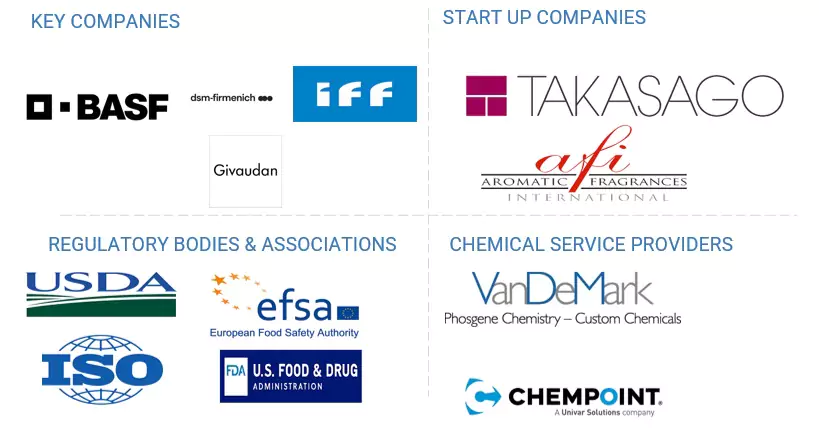
Global Fragrance Intermediate Market Ecosystem Analysis
Some of the prominent companies in this market include well-established and financially sound manufacturers of fragrance intermediate market. These companies have been operational in the market for more than a decade and have diversified portfolios, the latest technologies, and excellent global sales and marketing networks. Some of the prominent companies in this market include BASF SE (Germany), Givaudan (Switzerland), dsm-firmenich (Switzerland), Symrise AG (Germany), International Flavors & Fragrances Inc. (IFF) (US).
Note: The above diagram only shows the representation of the Fragrance Intermediate Market ecosystem; it is not limited to the companies represented above.
Source: Secondary Research and MarketsandMarkets Analysis
By source, the natural source is estimated to have a significant market share during the forecast period
As the ever-increasing global demand for clean label, eco-friendliness, and sustainability types of products in personal care, home care, and fine fragrances recognizes increasing consumer preferences, the natural-source segment holds a significant share within the fragrance intermediate market. Rising awareness towards health, wellness, and environmental impacts is gradually shifting market potential from synthetic chemical ingredients to plant-based and naturally derived product formulations by consumers. natural fragrance intermediates, such as essential oils, absolutes, and plant extracts, are certainly pleasant and prove immensely useful owing to their authenticity, biodegradable nature and complex aromatic profiles. For example, lavender oil, rose oil, and sandalwood oil are extensively used in fine fragrances and aromatherapy while citrus extracts and herb oils are used in home care and personal care. Some major companies have expanded their portfolios over the years for natural and organic products, contributed to by Givaudan's producing essential oils and botanicals obtained from extraction, dsm-firmenich is focusing on sustainably sourced natural ingredients. The transparency in evolving product quality and regulation is enhanced by technical advancement in extraction methodologies involving the use of CO2 extraction and green chemistry. As consumers demand more authenticity and wellness-based formulations, the natural-source segment will gain further growth.
By application, the cosmetics & personal care segment is expected to grow at the fastest CAGR during the forecast period.
The cosmetic and personal care application category is expected to grow at the fastest CAGR for the fragrance intermediates market during the projection period. This rise is comparatively pushed by the increased demand for high-quality fragrances and innovative formulations of personal care products for skin, hair, and cosmetics being bolstered by an increasing consumer focus on grooming, wellness, and self-care. Intermediates such as benzyl alcohol, aroma chemicals, essential oils, and specialty ingredients, greatly enhance product odor profile, sensory experience, and shelf-life. Noticing the increased demand, major players such as LANXESS and SEQENS have increased their portfolio of offerings in this regard. At the in-cosmetics Global event in March 2022, SEQENS launched three novel fragrance intermediates from its AdvensCare™ line, focusing on purity, flexibility, and sustainable manufacturing from Ecovadis Gold-certified locations. This development will trigger the growth of this segment in terms of application in cosmetics and personal care.
North America is estimated to lead the market during the forecast period.
The major portion of the North American fragrance intermediate market belongs to the USA on account of faster moving trends wherein global manufacturers are seen to build state-of-the-art production capacity, in addition to rising key markets such as cosmetics, personal care, and home care. Basically, developments by the major players such as LANXESS are doing much of the fixing with new installations, as illustrated by the announcement of the benzyl alcohol production site expansion at Kalama, Washington made on 25th May 2023. This facility optimally functions as a high-grade benzyl alcohol supply center, essential in the fragrance intermediate with a very widely used and common application in personal care products, cosmetics, and technical products. The factors bolstering the U.S. market consumers are the willingness to adopt new premium and eco-friendly fragrance ingredients along with the existence of well-established cosmetic and personal care brands. Further, companies such as Givaudan, IFF, and dsm-firmenich have a significant operational and customer base across the nation, adding to the requirements for such fragrance intermediates as supply sources. These factors, along with the leading technologies, strong manufacturing ecosystems, and high consumption of cosmetic and household products, contribute to making the U.S. the leading nation in the North American fragrance intermediates market.
HIGHEST CAGR MARKET IN 2030
US FASTEST GROWING MARKET IN THE REGION
Recent Developments of Fragrance Intermediate Market
In May 2025, LANXESS showcased a wide selection of very high-purity, nature-identical aroma chemicals from its extensive portfolio covering floral, spicy, woody, and earthy notes. It included a variety of grades of benzyl benzoate, including the sustainable UltraPure® grade, with more than 50 percent of the used raw materials being renewable. LANXESS also features sustainably produced benzyl alcohol it sources for fragrances and cosmetics. They provide effective, cleaner aroma chemicals to the cosmetics and perfumery industries.
In June 2024, IFF announced the launch of three new fragrances in Geneva. The company introduced a biodegradable fragrance molecule featuring solar white floral and fruity notes, designed to enhance the performance inside perfumes and personal care products. IFF's LMR Natural Oils introduced Gradefruit and Persian Lime Oils, built via cold-press technology and sourced from high-quality producers. These include IFF's dedication to quality and sustainability, innovation in fragrance.
Key Market Players
List of Top Fragrance Intermediate Market Companies
The Fragrance Intermediate Market is dominated by a few major players that have a wide regional presence. The major players in the Fragrance Intermediate Market are
North America, Europe, Asia Pacific, South America, and Rest of the World (RoW)
Key Questions Addressed by the Report
What is the current size of the Fragrance Intermediate Market?
The fragrance intermediate market is estimated to be USD XX billion in 2025 and is projected to reach USD XX billion by 2030, registering a CAGR of XX% during the forecast period.
Which are the key players in the market, and how intense is the competition?
Givaudan (Switzerland), BASF (Germany), dsm-firmenich (Switzerland) are some of the key market players.
The market for fragrance intermediate market is expanding rapidly, with more mergers, acquisitions, and product launches. Companies in this sector are also heavily investing.
Which region is projected to account for the largest share of the fragrance intermediate market?
The Fragrance Intermediate Market in North America is rising due to increasing demand for personal care, cosmetics, and home care products driven by consumers focus on wellness, hygiene, and premium lifestyle products. Additionally, advancements in high-purity ingredients like benzyl alcohol and sustainable aroma chemicals by regional manufacturers such as LANXESS are supporting market growth.
What kind of information is provided in the company profiles section?
The company profiles provided deliver crucial details, including a thorough business summary that covers different segments, financial results, geographic presence, revenue distribution, and business revenue breakdown. They also offer insights into product lines, key achievements, and expert analyst opinions to better illustrate the company's potential.
What are the factors driving the Fragrance Intermediate Market?
Growing consumer inclination toward organic personal care and home products creates opportunities for natural intermediates.
Personalize This Research
Triangulate with your Own Data
Get Data as per your Format and Definition
Gain a Deeper Dive on a Specific Application, Geography, Customer or Competitor
I highly appreciate the team's efficiency for a well conducted study that helped us clarify some blind spots in food and agricultural niche markets. Although compiling information for B2B markets is very difficult, the MnM team pulled out the task successfully. The quality of research, level of insights, and responsiveness of team were commendable.




 HIGHEST CAGR MARKET IN 2030
 US FASTEST GROWING MARKET IN THE REGION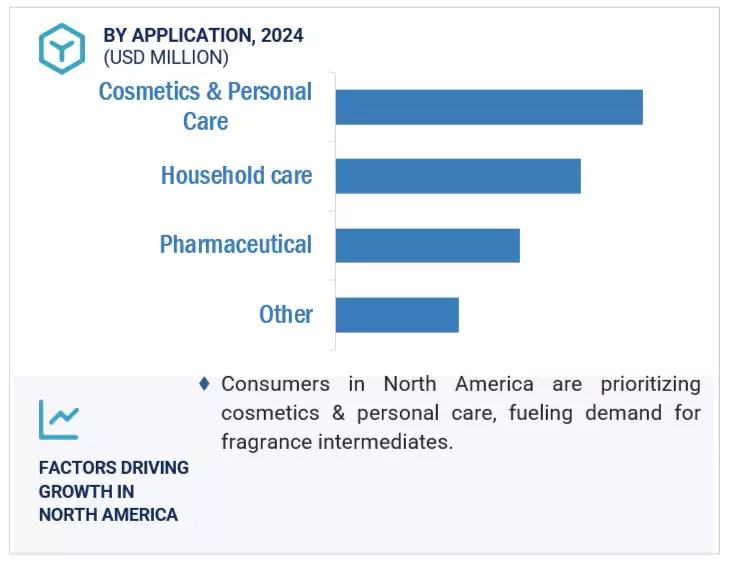










Growth opportunities and latent adjacency in Fragrance Intermediate Market