The Future of India study explores the country’s economic growth, urbanization, infrastructure, digital advancements, future industries, and societal shifts, highlighting its transformation into a global powerhouse.
India is projected to add USD 1 trillion to its economy every 18 months on average to become a USD 30 trillion economy by 2047.
India took 60 years for its GDP to reach the first trillion-dollar mark in 2007. In the next 7 years, the country reached USD 2 trillion from USD 1 trillion in 2014. Despite COVID-19, India reached the USD 3 trillion mark in 2021. The journey from USD 3 trillion to USD 4 trillion took just 4 years. At this pace, should the progression continue the way it is, India is poised to add a trillion dollars to its GDP every 1.5 years, and could likely become a USD 10 trillion economy by the end of 2032 and USD 30 trillion by 2047.
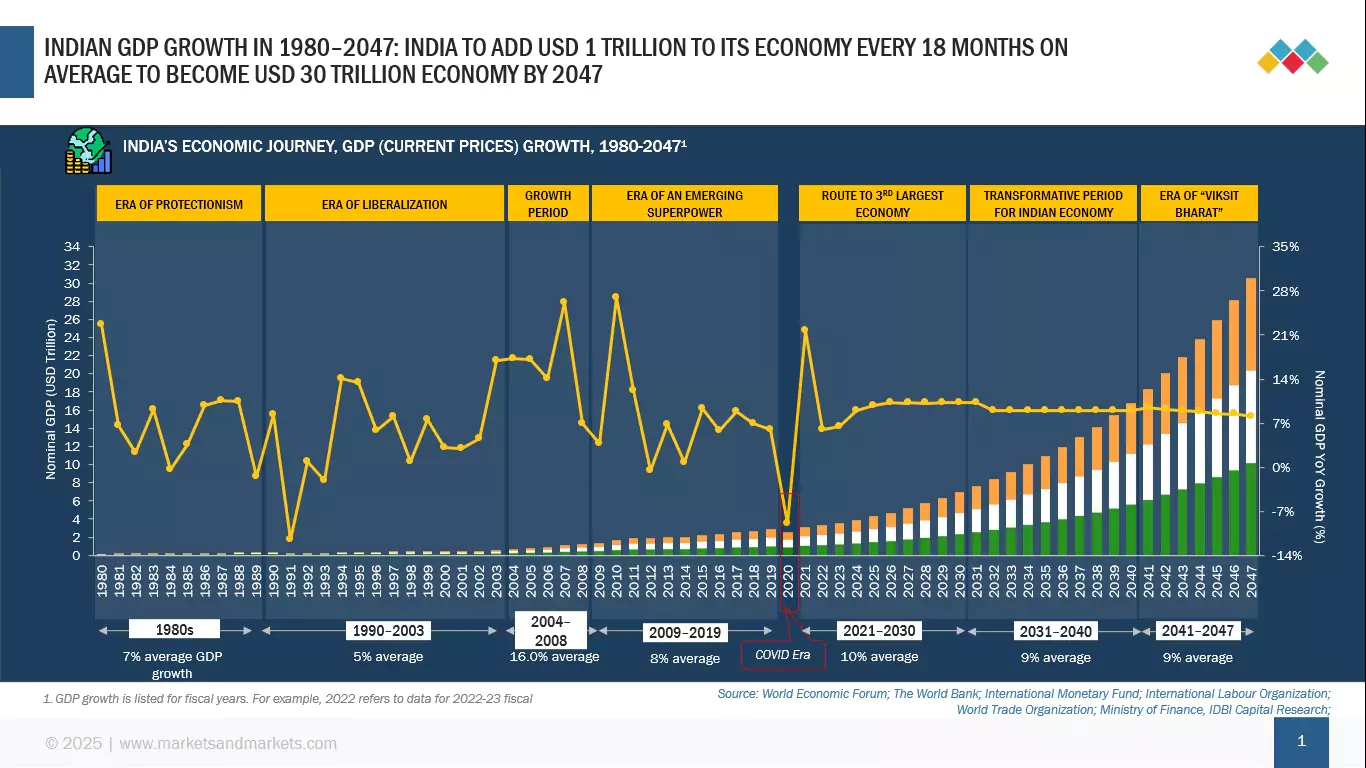
While the target is ambitious, strong macroeconomic fundamentals, demographic advantage, urbanization drive, expanding capital market, and a focus on structural reforms provide a credible foundation for this long-term growth trajectory.
India’s Robust Macroeconomic Indicators- While India’s current account balance and currency depreciation remain concerns, overall growth remains strong. The services and manufacturing sectors are likely to drive GDP expansion in the future.
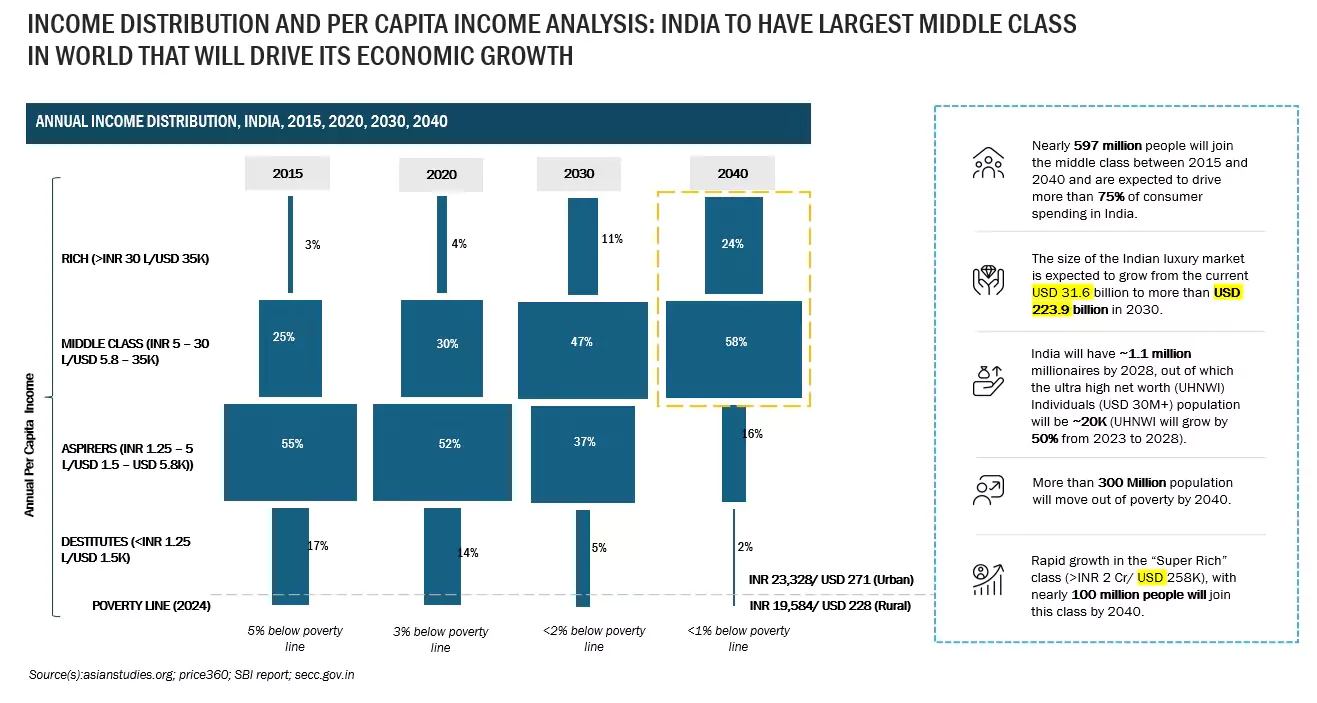
Rise of Indian Middle Class- India is projected to have the largest middle class globally, fueling economic expansion. Nearly 597 million people are likely to join the middle class between 2015 and 2040, driving 75%+ of consumer spending. This growth is also lifting millions out of poverty, with only 6% of households expected to be destitute by 2031, down from 15% currently.
Nearly 597 million people to join the middle class during 2015-2040 and to drive more than 75% of consumer spending in India
India’s Trillion-dollar States- Maharashtra, Gujarat, and Tamil Nadu are expected to achieve the USD 1 trillion GDP status by 2035, comparable to the GDP of countries like the UAE, Sweden, and Belgium, solidifying their role as key growth engines in India’s economic growth. These states’ rapid growth, urbanization, and focus on high-value industries make them the engines of India’s economic momentum.
Capital Market Expansion and Investment Potential- India’s capital markets are expanding rapidly, driven by domestic investment, policy support, and a growing retail base, offering significant investment potential and positioning the markets as a cornerstone of future economic growth. With only 6% of household assets in equity, India remains an attractive investment destination. The stock market is set to grow further, with demat account penetration increasing from 11% in 2022 to ~30% by 2035.
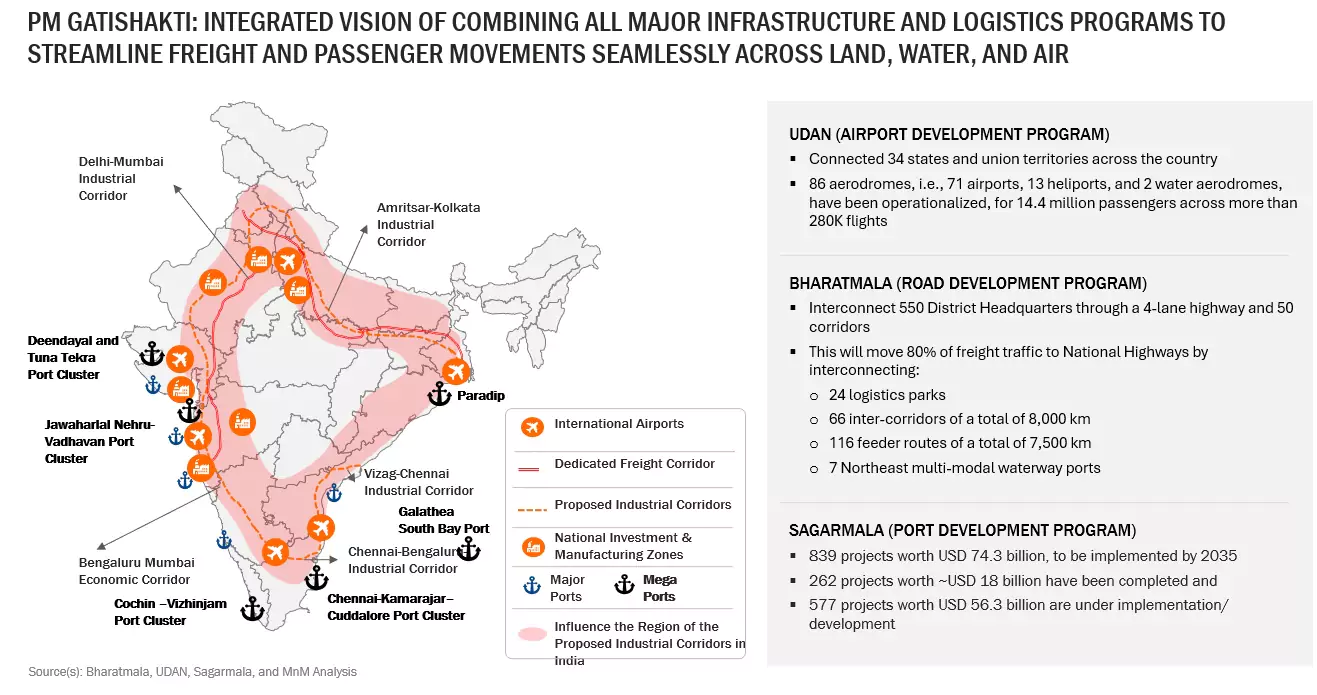
Infrastructure Development: It is expected to be a fundamental driver of India’s economic growth, acting as the backbone for industrialization, trade, and investment. India is projected to spend an average USD 290 billion per year on infrastructure by 2030. The PM Gati Shakti initiative is a cornerstone of India’s infrastructure-led economic growth strategy. By lowering logistics costs, improving connectivity, attracting investment, and fostering inclusive and sustainable development, the initiative is poised to drive India’s emergence as a global economic powerhouse.
As of 2024, over 208 major infrastructure projects worth more than $180 billion have been assessed under Gati Shakti principles, with 156 critical infrastructure gaps identified and addressed.
Manufacturing & Trade Diversification Strategies Boosting Indian Industries- India’s manufacturing sector is rapidly evolving into a global powerhouse, driven by a strategic mix of government reforms, investment incentives, and infrastructure upgrades. Make in India and Production-Linked Incentive (PLI) schemes have driven over USD 18.8 billion investments and USD 1.29 billion in incentive disbursements across 14 sectors. Indian Industries will play a significant role in driving robust economic growth through 2035 by significantly increasing their contribution to GDP, job creation, and global competitiveness.
MnM’s subject matter experts have taken a further deep dive into the future of high-growth sectors based on their future market size, growth rate, and top use cases. They have also assessed the impact of changing dynamics across their value chain and the ecosystem players. Examples include the future of semiconductor and electronics manufacturing services, the future of mobility, the future of healthcare, the future of space, the future of food and agriculture, and the future of energy, among others.
ATTRACTIVE OPPORTUNITIES IN INDUSTRIES IN FUTURE
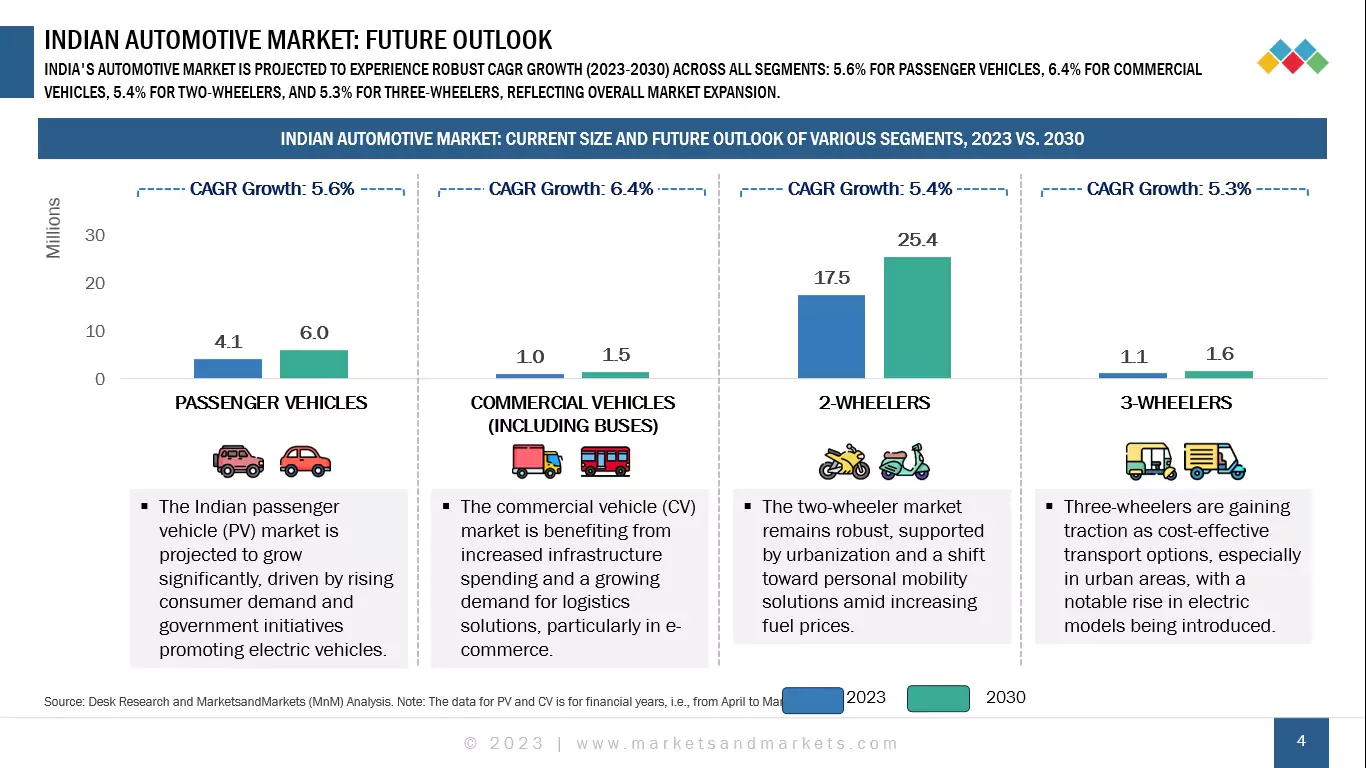
Future of Indian Automotive Industry- India, the ‘Chauffeur Capital’ of the world, is emerging as a ‘Future Automotive Hub’, with 3.3 million in added car capacity by 2030.
Future of Indian Chemical Industry- India ranks third in polymer consumption, fourth in agrochemical production, and second in dye manufacturing and exports.
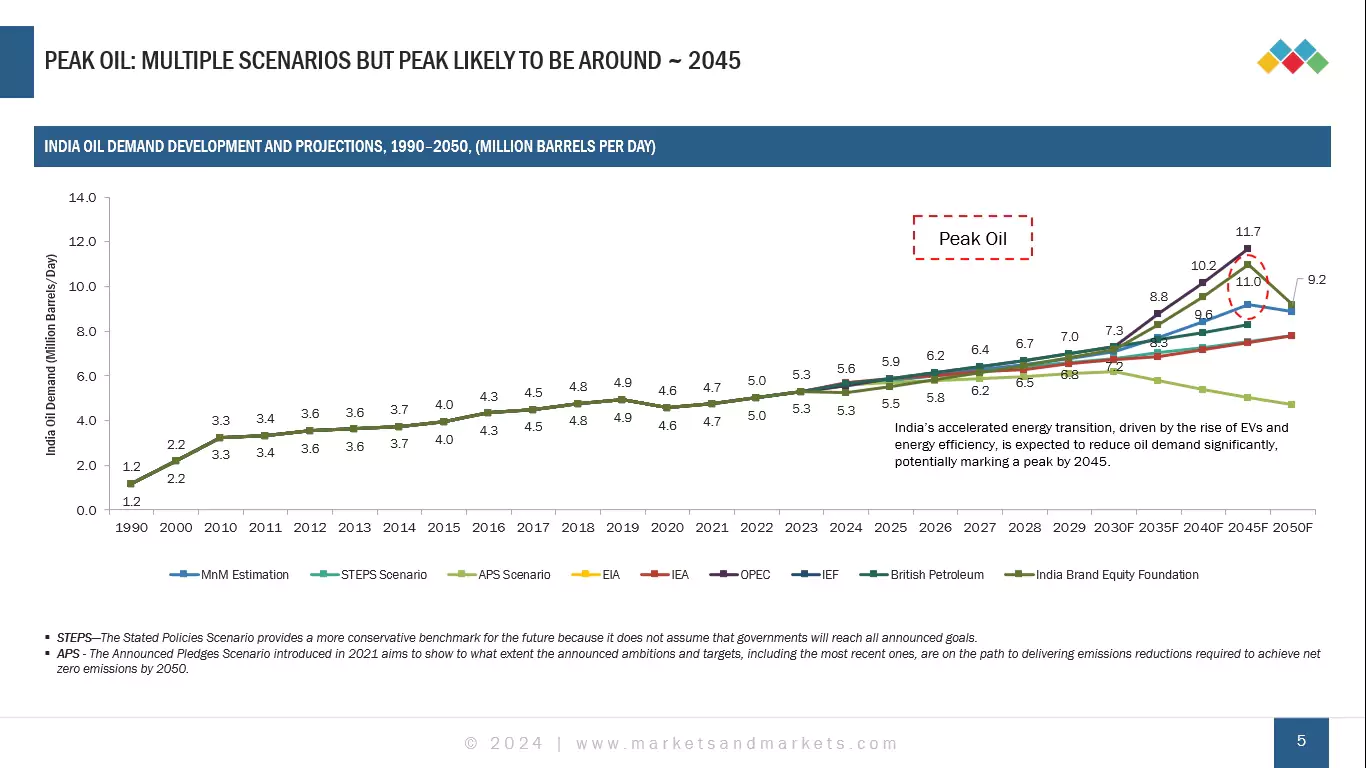
Future of India Oil & Gas Industry- India is projected to be the largest source of global oil demand growth by 2030, surpassing China and accounting for over a third of the world’s total increase in oil demand. India has positioned itself as the fourth-largest global refining hub in the world.
Future of Indian Space Industry- The industry aims to capture 8–10% of the global space market by 2030, up from just 2% in 2021, and targets a 15% share by 2047.
Future of Indian ICT Industry- India’s ICT industry is projected to grow at a CAGR of around 9% through 2030, with the digital economy expected to contribute nearly one-fifth of national income by 2030, outpacing both agriculture and manufacturing.
Future of Indian Semiconductors & Electronics Industries- India is a global leader in chip design, with roughly 20% of the world’s chip designers based in India.
Future of Indian Food & Beverages Industry- By 2030, India’s food & beverage industry is projected to be a trillion-dollar industry, marked by rapid growth, digital transformation, health-driven consumption, and a strong shift toward convenience and premium products.
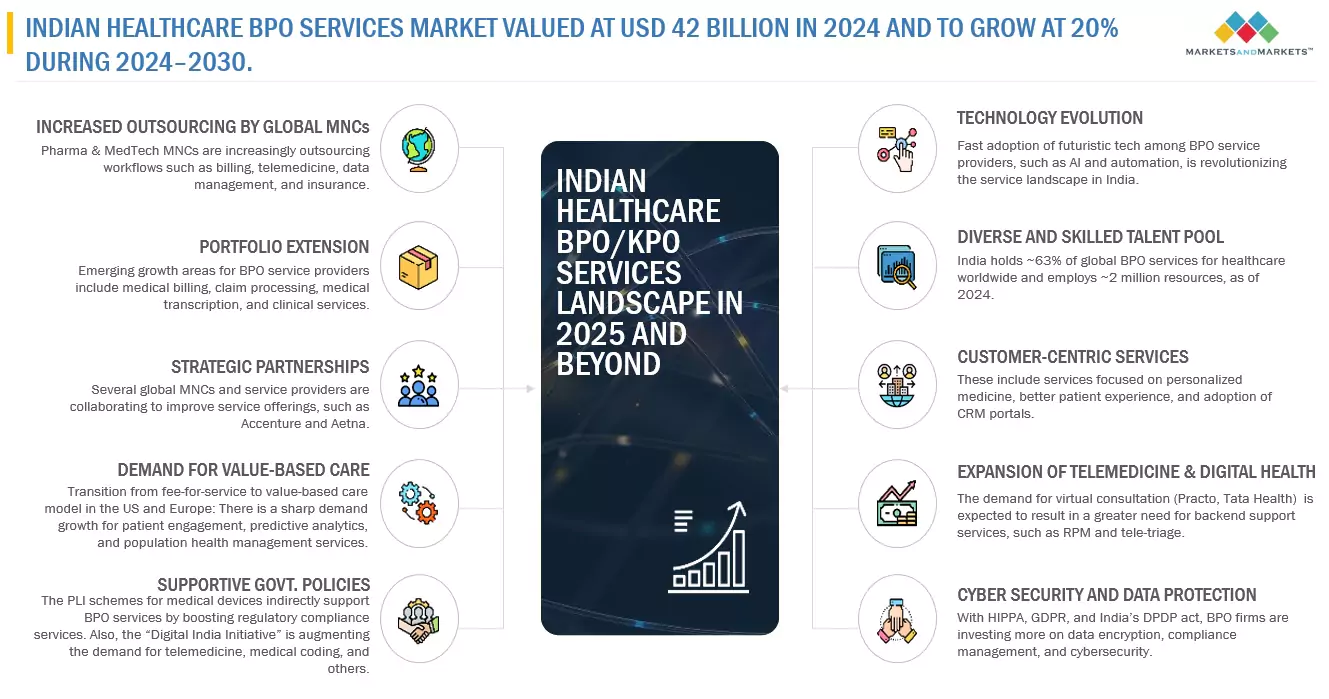
Future of Indian Healthcare Industry- India, the ‘Cancer & Diabetes Capital’ of the world, is set to be a USD 800 billion market by 2030, driven by Tier 2 and 3 cities.
The Future of India study explores the country’s economic growth, urbanization, infrastructure, digital advancements, future industries, and societal shifts, highlighting its transformation into a global powerhouse.











Growth opportunities and latent adjacency in Future of India - Fo