The Future of Quantum Computing study explores how quantum computing is evolving from a scientific breakthrough into a foundational technology platform that will redefine computing, artificial intelligence, cybersecurity, communications, scientific discovery, and industrial innovation through 2035.
The quantum computing segment is expected to dominate the quantum technology market, capturing approximately 80% of the total estimated value of USD 65.74 billion by 2035.
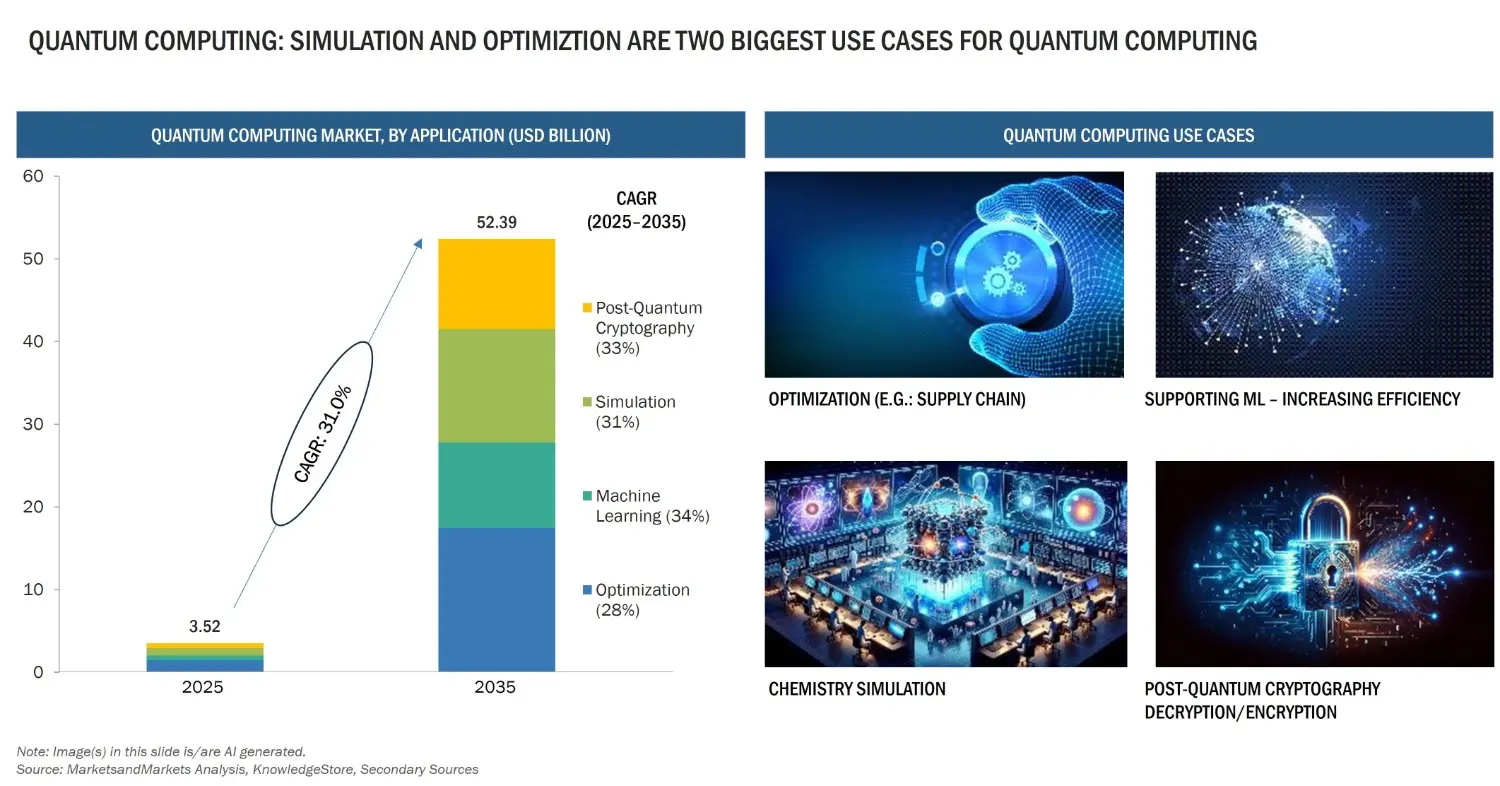
After years of extensive research, the quantum computing sector is now progressing toward commercialization. Over the next decade, we expect a critical transition from noisy intermediate-scale quantum (NISQ) systems to robust, fault-tolerant quantum computers designed for enterprise applications. These advanced systems will be capable of addressing complex computational problems that are currently beyond the reach of today's fastest supercomputers.
Quantum Computing Poised to Revolutionize Industrial Innovation
Optimization and simulation are emerging as the two largest commercial opportunities for quantum computing. Industries such as pharmaceuticals, chemicals, automotive, financial services, aerospace & defense, logistics, manufacturing, and energy are expected to leverage quantum technologies to accelerate product innovation, optimize operations, reduce operational costs, and solve previously intractable computational challenges.
AI Converging With Quantum Computing, Marking Significant Advancement in Computational Capabilities
The integration of quantum computing with artificial intelligence (AI) is poised to emerge as a pivotal technological trend over the next decade. Quantum-enhanced AI can potentially revolutionize the field by significantly accelerating machine learning (ML) processes, optimizing complex algorithms, reducing the computational overhead associated with training, and facilitating the development of intelligent systems that exceed the performance limitations of current GPU-based architectures.
Quantum Internet: Transforming Future of Digital Infrastructure
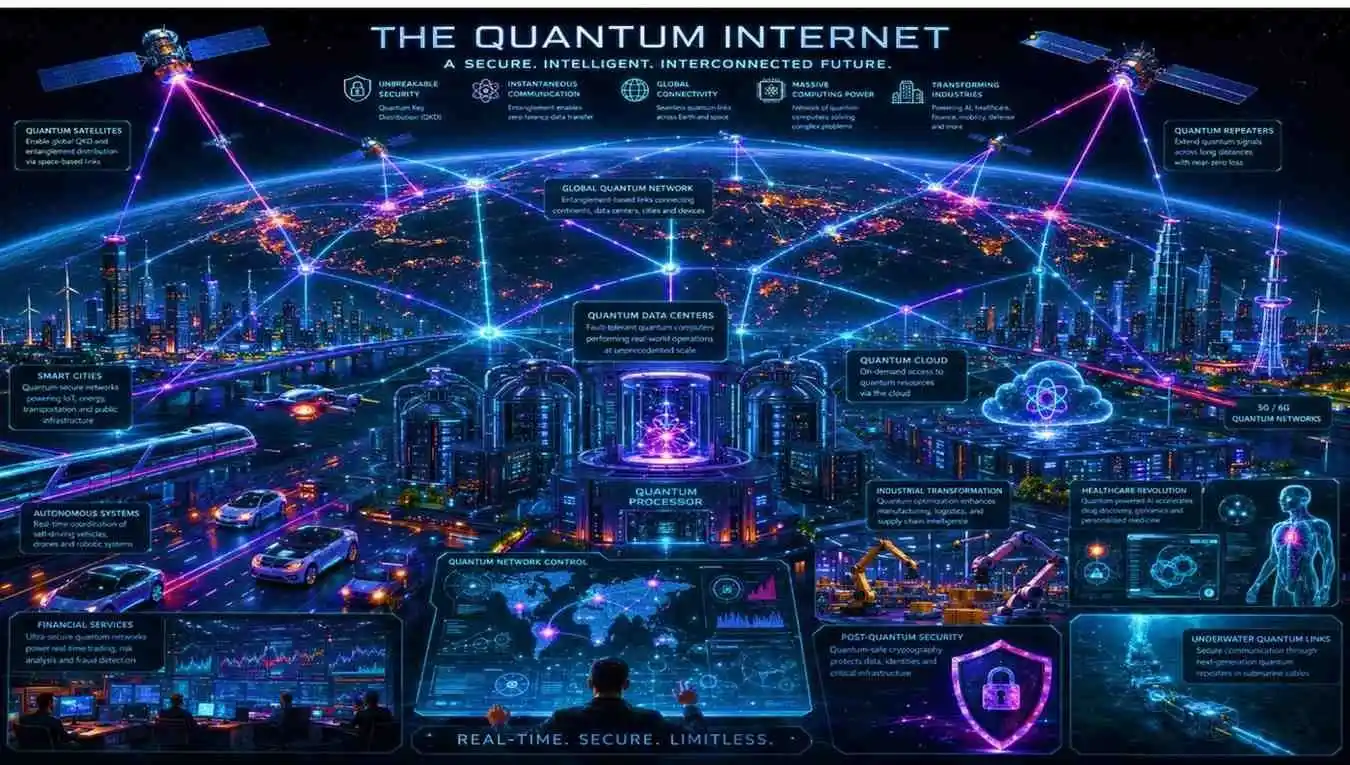
Quantum technologies are extending beyond computing into secure communications and networking. Quantum key distribution (QKD), quantum networking, and eventually, the quantum internet are expected to create ultra-secure digital infrastructure capable of protecting critical communications while enabling entirely new computing paradigms.
Quantum Race Is Evolving into Full-stack Competition
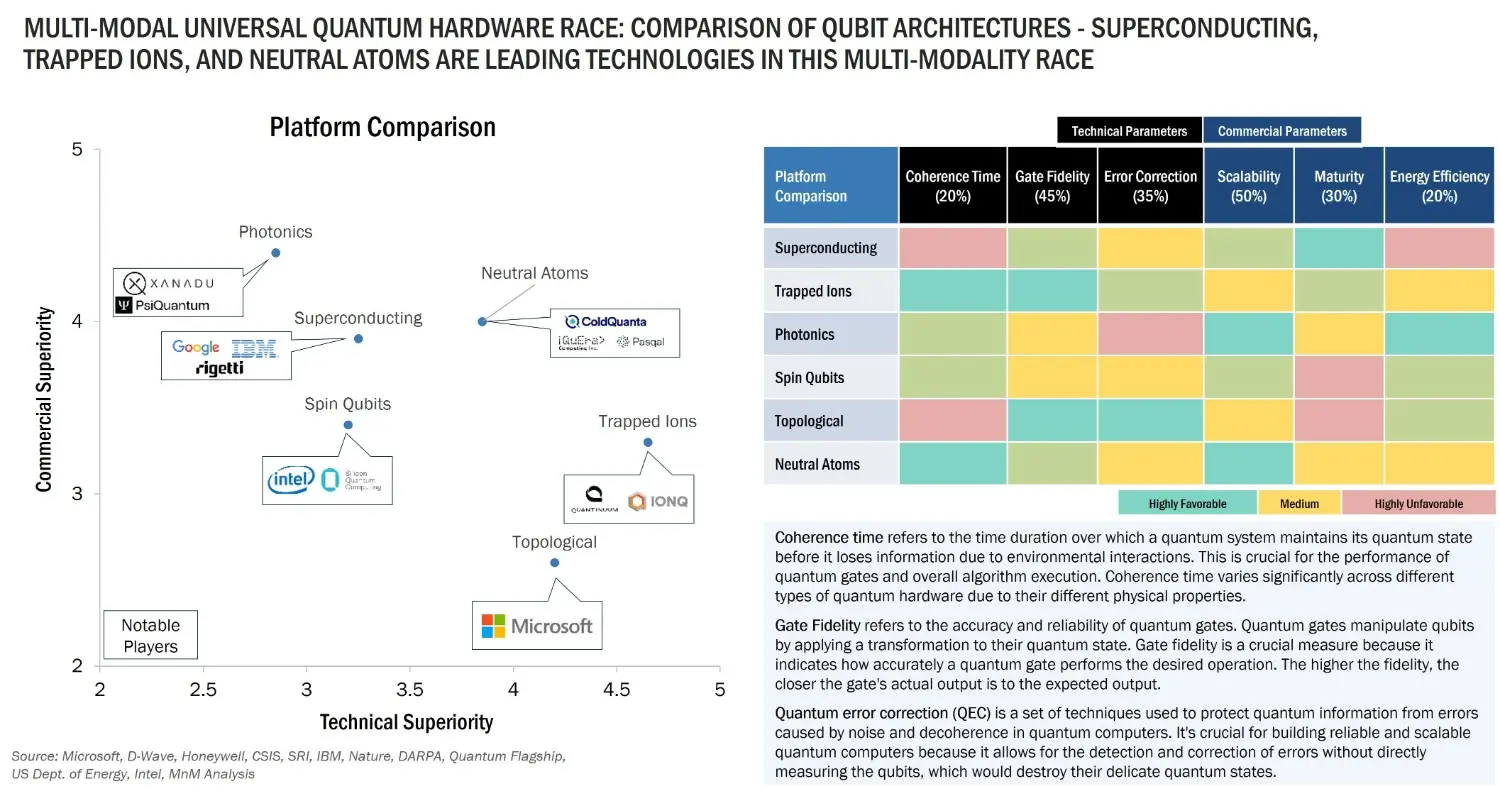
The industry is rapidly evolving from a hardware race into a full-stack ecosystem battle involving quantum processors, software platforms, cloud infrastructure, developer ecosystems, and vertical applications. As superconducting, trapped-ion, neutral atom, photonic, and silicon-based quantum technologies continue to advance, the quantum computing landscape is expected to evolve into a multi-modal ecosystem. Different quantum architectures will be optimized for specific commercial applications, capitalizing on their distinct strengths in performance, scalability, and operational efficiency
Strategic Government Investments Accelerate Global Quantum Technology Leadership
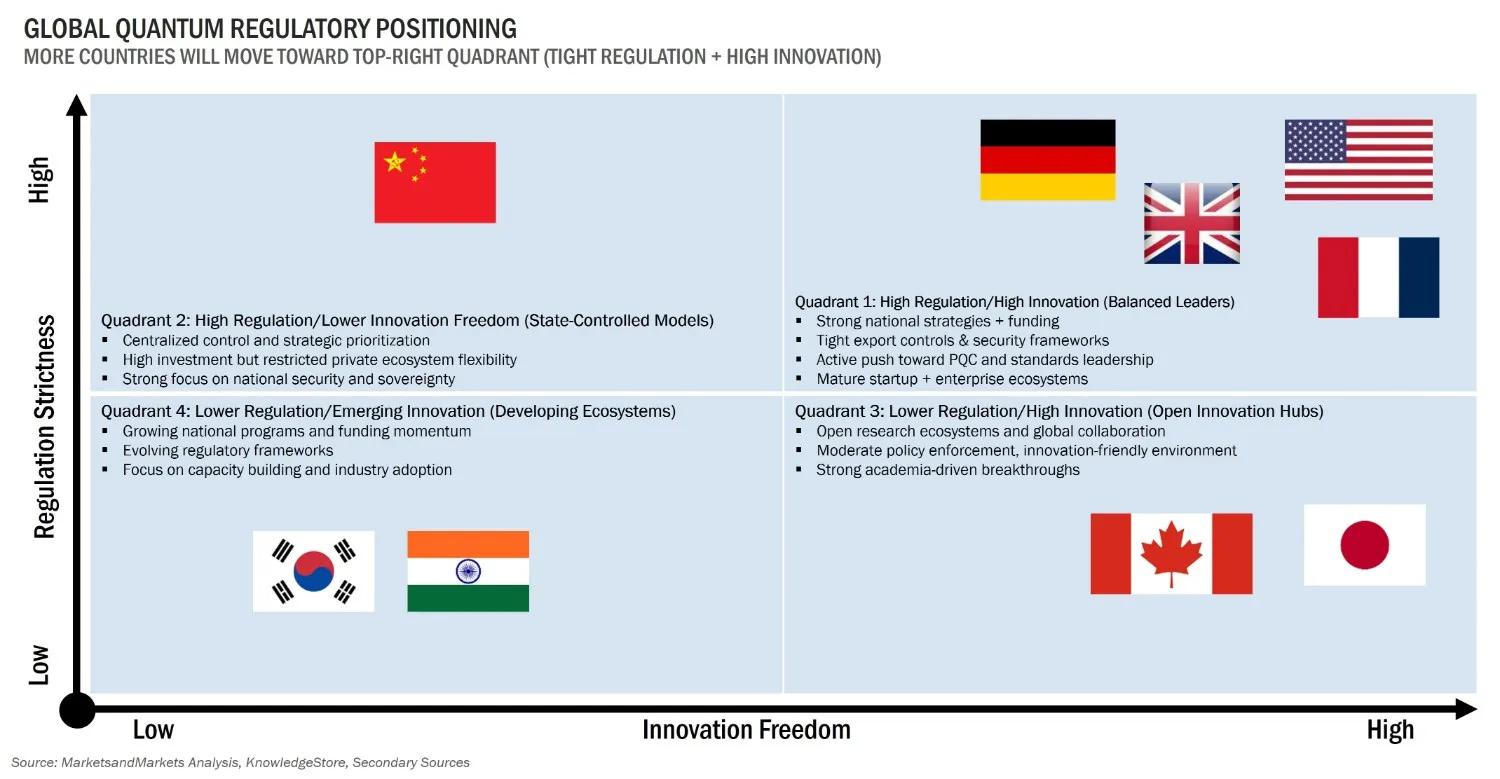
Governments worldwide are investing billions of dollars to establish leadership in quantum technologies through national missions, research funding, and industrial partnerships. The United States, China, the United Kingdom, Germany, France, Japan, Canada, Australia, and India are rapidly expanding investments to secure long-term technological leadership and strategic competitiveness. For example, the United States has committed more than USD 9.21 billion toward quantum information science through initiatives such as the National Quantum Initiative and funding from agencies including the Department of Energy, National Science Foundation, and DARPA. China has invested an estimated USD 17.10 billion in quantum research and infrastructure, including the National Laboratory for Quantum Information Sciences and large-scale quantum communication networks, making it one of the world's largest public investors in quantum technologies.
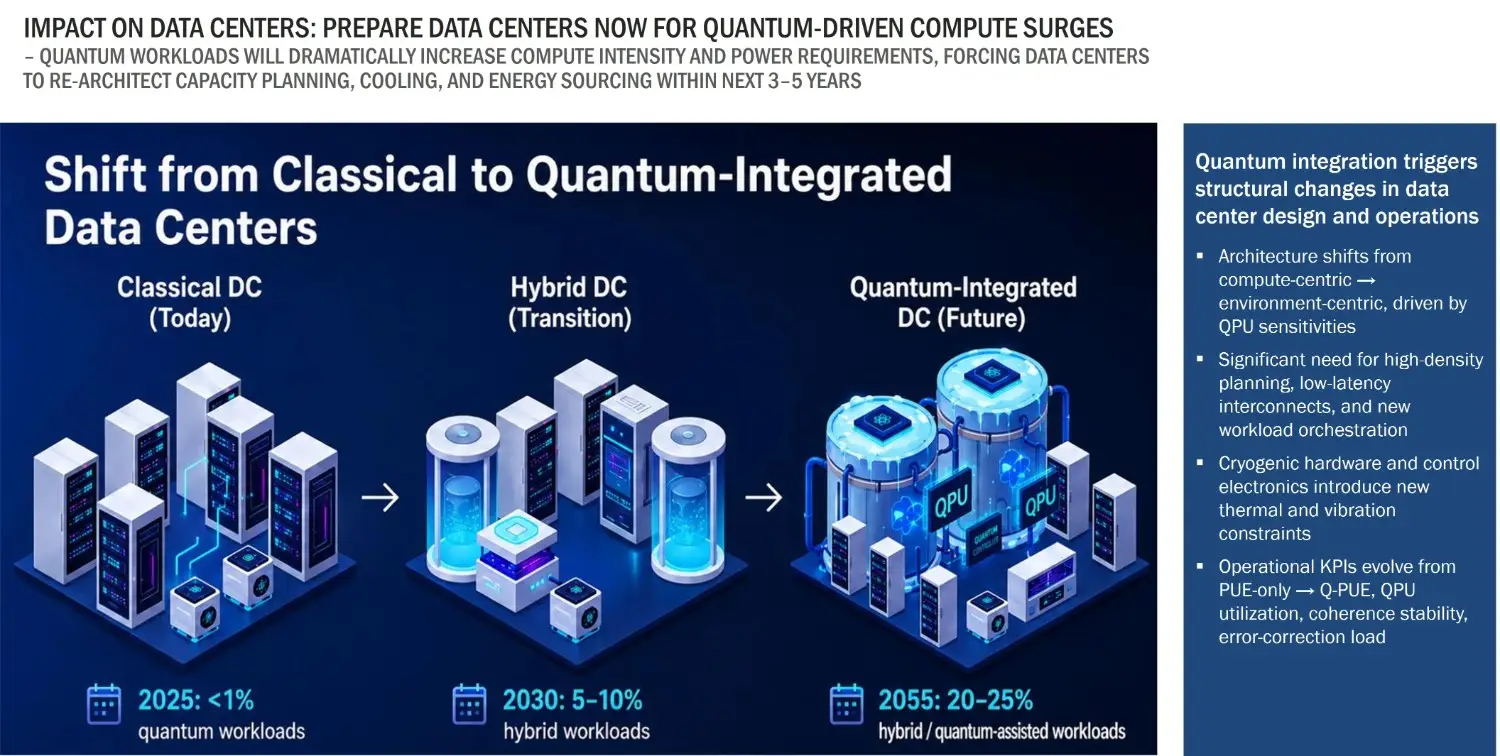
Data Centers Transitioning into Quantum Computing Era
Quantum computing is poised to revolutionize AI infrastructure and the architecture of future data centers. Quantum processors have the potential to deliver significant improvements in computational efficiency for specialized workloads. However, their widespread deployment will require substantial advances in enabling technologies, including cryogenic cooling systems, control electronics, photonic components, and hybrid quantum-classical computing architectures. Consequently, next-generation data centers are expected to integrate quantum processors alongside classical computing infrastructure, creating hybrid environments that combine the strengths of both paradigms to address increasingly complex computational challenges.
Enabling Technologies Will Emerge as Strategic Growth Markets
As quantum computing moves toward commercialization, demand for enabling technologies is expected to grow significantly. Key areas such as cryogenic cooling, photonics, quantum control electronics, advanced semiconductors, quantum networking, precision manufacturing, and specialized cloud infrastructure will play a vital role in supporting the deployment and scalability of quantum systems. As a result, leadership in these enabling technologies will become increasingly important for accelerating innovation and building a robust, globally competitive quantum ecosystem.
Next Five Years Will Shape Future Market Leadership
The period from 2025 to 2030 is expected to be a pivotal phase in the commercialization of quantum computing. Organizations that invest early in quantum readiness—including talent development, strategic ecosystem partnerships, cybersecurity modernization, hybrid computing infrastructure, and application development—will be better positioned to capitalize on emerging opportunities. As quantum technologies mature, these early investments are likely to create sustainable competitive advantages and help define the next generation of market leaders.
MnM's subject-matter experts provide a comprehensive assessment of the future quantum ecosystem by analyzing technology evolution, competing hardware platforms, commercialization strategies, startup activities, government investments, competitive dynamics, infrastructure implications, and adoption across major industries. The research also assesses the implications of quantum computing on various domains, including artificial intelligence, cybersecurity, cloud computing, energy systems, and digital infrastructure. It provides strategic recommendations tailored for stakeholders across the quantum value chain.
Frequently Asked Questions (FAQs)
What is the overall market opportunity highlighted in this study?
The study projects that quantum computing will emerge as the largest segment of the quantum technology market by 2035, reaching nearly USD 66 billion and accounting for approximately 80% of the overall market. Significant growth opportunities are expected in optimization, scientific simulation, AI acceleration, quantum cybersecurity, and high-performance scientific computing as organizations increasingly adopt quantum-enabled solutions.
What are the mega themes explored in this study?
The report explores the key trends shaping the future of quantum computing, including advances in quantum hardware architectures, the convergence of AI and quantum computing, quantum communications, the Quantum Internet, commercialization strategies, startup ecosystems, government investments, enabling technologies, energy and cooling requirements, quantum-enabled data centers, and the transformative impact of quantum technologies across industries.
What types of industries are covered in this study?
The study analyzes the adoption and impact of quantum computing across a wide range of industries, including pharmaceuticals and life sciences, chemicals, financial services, automotive, aerospace & defense, energy, manufacturing, retail and logistics, telecommunications, cybersecurity, and cloud computing. It also evaluates opportunities within enabling sectors such as semiconductors, photonics, cryogenics, quantum networking, and advanced data center infrastructure.
Who can benefit from this study, and how?
The report provides strategic insights for technology companies, hyperscalers, semiconductor manufacturers, enterprises, investors, governments, research organizations, startups, and infrastructure providers. It helps stakeholders assess market opportunities, benchmark technology and ecosystem leaders, prepare for the transition to quantum-era cybersecurity, identify investment priorities, and develop long-term strategies to compete in the evolving quantum economy.
Personalize This Research
- Triangulate with your Own Data
- Get Data as per your Format and Definition
- Gain a Deeper Dive on a Specific Application, Geography, Customer or Competitor
- Any level of Personalization
Request A Free Customisation
Let Us Help You
- What are the Known and Unknown Adjacencies Impacting the Future of Quantum Co
- What will your New Revenue Sources be?
- Who will be your Top Customer; what will make them switch?
- Defend your Market Share or Win Competitors
- Get a Scorecard for Target Partners
Customized Workshop Request
Quantum computing is transitioning from a scientific curiosity to one of the most strategically important technologies of the next decade. As advances in qubit architecture, error correction, quantum algorithms, and cloud accessibility continue to accelerate, quantum computing is poised to redefine how industries solve complex problems, secure digital infrastructure, discover new materials, develop medicines, optimize operations, and build the next generation of intelligent systems.
This study provides a comprehensive assessment of the global quantum computing landscape through 2035, examining the technology's evolution from experimental systems to fault-tolerant, enterprise-grade quantum computers capable of delivering transformational business value. The report analyzes the convergence of quantum computing with artificial intelligence, cybersecurity, cloud computing, advanced manufacturing, and digital infrastructure, while evaluating the strategic implications for governments, enterprises, investors, and technology providers.
Beyond technology, the study explores the global race for quantum leadership, highlighting investments, regulations, startup ecosystems, competitive positioning, and commercialization roadmaps that will determine the winners in the emerging quantum economy. It also assesses the impact of quantum computing on enabling industries such as semiconductors, photonics, cryogenics, control electronics, energy infrastructure, and next-generation data centers.
Methodology
The study has been divided into multiple strategic sections to provide a holistic assessment of the quantum computing ecosystem—from technology evolution and hardware platforms to commercialization, infrastructure, industry adoption, and future strategic implications.
Secondary Research
The study is primarily based on extensive secondary research conducted using a wide range of publicly available and proprietary information sources. Secondary sources include research publications from leading universities and national laboratories, quantum technology roadmaps, government policy documents, standards organizations, scientific journals, patent databases, company annual reports, investor presentations, technical white papers, conference proceedings, startup databases, and publications from recognized industry associations.
The research also incorporates information from government initiatives and national quantum programs across the United States, China, the European Union, the United Kingdom, Canada, Japan, Australia, India, and other leading innovation economies. Company disclosures, funding announcements, regulatory developments, and technology roadmaps from leading quantum hardware, software, cloud, semiconductor, and AI companies were analyzed to evaluate technology maturity, commercialization progress, and competitive positioning.
Secondary research was extensively used to assess the global quantum value chain, identify key technology providers and startups, benchmark competing hardware architectures, evaluate investment trends, analyze industry adoption, and estimate future growth opportunities.
Estimation and Forecasting Approach
Technology Evolution and Adoption Forecasting
The study employs a combination of technology maturity assessment, scenario-based forecasting, expert judgment, and trend extrapolation to estimate the evolution of quantum computing through 2035.
Forecasts incorporate multiple factors, including:
-
Hardware scalability and qubit roadmaps
-
Error correction milestones
-
Commercial adoption across industries
-
Government funding and policy initiatives
-
Venture capital and private investment activity
-
Enterprise adoption of Quantum-as-a-Service (QaaS)
-
Integration with AI, cloud computing, and cybersecurity ecosystems
Scenario analysis has been used to evaluate conservative, base-case, and accelerated commercialization pathways.
Market Opportunity Assessment
A bottom-up approach has been adopted to assess the market opportunity across various segments of the quantum ecosystem. Existing MarketsandMarkets research across AI, cloud computing, semiconductors, cybersecurity, photonics, data centers, advanced manufacturing, healthcare, automotive, energy, and other related markets has been leveraged to estimate future opportunities arising from quantum computing adoption.
List of Key Stakeholders
-
Technology Developers and Platform Providers
-
Quantum hardware developers
-
Quantum software and algorithm providers
-
Quantum cloud platform providers
-
Semiconductor and photonics companies
-
Cryogenic and control electronics suppliers
Report Objectives
The objective of this study is to provide strategic insights into how quantum computing will reshape industries, digital infrastructure, and global competitiveness through 2035.
Scope of the Report
|
Report Metric
|
Details
|
|
Market Size Available for Years
|
2025 and 2035 (somewhere extended to 2040)
|
|
Base Year Considered
|
2025
|
|
Forecast Year
|
2035 (somewhere extended to 2040)
|
|
Geographic Coverage
|
Global (with country-level analysis for major quantum economies)
|
|
Forecast Units
|
USD Billion, Number of Qubits, Technology Readiness Levels (TRL), Adoption Timelines, Investment Trends
|
|
Key Coverage
|
Technology evolution, hardware architectures, software ecosystem, AI convergence, commercialization, competitive landscape, government initiatives, startup ecosystem, investments, cybersecurity, energy & cooling, data centers, industry disruption, enabling technologies, stakeholder implications, and future outlook
|
-
Technology Companies and Enterprises
-
Hyperscale cloud providers
-
AI platform companies
-
Enterprise software vendors
-
OEMs and system integrators
-
Data center operators
-
Governments and Regulatory Bodies
-
National quantum mission agencies
-
Science and technology ministries
-
Defense and cybersecurity organizations
-
Standards development organizations
-
Investors and Financial Institutions
-
Venture capital firms
-
Private equity investors
-
Sovereign wealth funds
-
Institutional investors
-
Corporate venture arms
-
Research and Academic Institutions
-
Universities
-
National laboratories
-
Quantum research centers
-
Innovation hubs
-
Industry End Users
-
Pharmaceutical and biotechnology companies
-
Financial institutions
-
Automotive manufacturers
-
Aerospace and defense organizations
-
Energy and utilities companies
-
Logistics and manufacturing enterprises
-
Telecommunications companies
-
Industry Associations and Innovation Ecosystems
-
Quantum industry alliances
-
Standards organizations
-
Startup incubators and accelerators
-
Open-source quantum communities
-
The report aims to:
-
Assess the current maturity and future evolution of quantum computing technologies.
-
Compare competing quantum hardware architectures and commercialization pathways.
-
Identify high-impact applications across optimization, simulation, AI, cybersecurity, communications, and scientific computing.
-
Analyze the competitive landscape, investment trends, startup ecosystem, and government initiatives driving the global quantum race.
-
Evaluate the impact of quantum computing on enabling industries including semiconductors, photonics, cryogenics, energy systems, and data centers.
-
Assess industry adoption across healthcare, financial services, manufacturing, automotive, aerospace, defense, logistics, and energy.
-
Identify technology risks, commercialization barriers, cybersecurity implications, and talent requirements.
-
Provide strategic recommendations for enterprises, investors, governments, technology providers, and other stakeholders to accelerate quantum readiness.












Growth opportunities and latent adjacency in Future of Quantum Co