Industrial Process Heating Market Size, Share & Trends

Industrial Process Heating Market Size, Share & Trends by Gas Heating (Burners, Heat Exchangers, Air Heaters, BMS Controller, Sensors), Electric Heating (Electric Air Heaters, Immersion Heaters, Line Heaters, Solid-State Relay, SCR Power Controllers) - Global Forecast to 2032




INDUSTRIAL PROCESS HEATING MARKET OVERVIEW
According to Marketsandmarkets, the global industrial process heating market size is projected to reach USD 17.47 billion by 2032 from USD 13.36 billion in 2026, at a CAGR of 4.6% from 2026 to 2032. Demand for the global industrial process heating market is driven by the increasing adoption of energy-efficient heating technologies, such as heat pumps, electric heating systems, and waste heat recovery solutions, across industries. Rising focus on decarbonization, electrification of industrial processes, and stringent environmental regulations is further supporting market growth. Increased investments in advanced heating technologies and sustainable industrial infrastructure are accelerating adoption across key sectors such as chemicals, metals, food & beverages, and oil & gas.
REPORT SCOPE
| REPORT METRIC | DETAILS |
|---|---|
| Market Size in 2025 (Value) | USD 9.66 Billion |
| Market Size in 2026 (Value) | USD 10.06 Billion |
| Market Forecast in 2032 (Value) | USD 12.46 Billion |
| Growth Rate | CAGR of 4.6% from 2026–2032 |
| Years Considered | 2024–2032 |
| Base Year | 2025 |
| Forecast Period | 2026–2032 |
| Units Considered | Value (USD BN), Volume (KG) |
| Report Coverage | Revenue forecast, company ranking, competitive landscape, growth factors, and trends |
| Top Companies |
|
| Growth Drivers |
|
| Segments Covered |
|
| Regional Scope | North America, Europe, Asia Pacific, Latin America, Middle East & Africa |
KEY TAKEAWAYS
-
INDUSTRIAL PROCESS HEATING MARKET, BY REGIONBy Region, Asia Pacific is expected to dominate the market, gaining largest market share during the forecast period.
-
INDUSTRIAL PROCESS HEATING MARKET, BY HEATING TECHNOLOGIESBy heating technology, gas-powered heating systems dominate the market, while electric powered heating systems are gaining traction.
-
INDUSTRIAL PROCESS HEATING MARKET, BY INDUSTRYBy end user industry, Chemicals industry shows the largest increase between 2025 and 2032, strengthening its position as the lead
-
COMPETITIVE LANDSCAPE - KEY PLAYERSHoneywell International Inc. (US), Emerson (US), and Fives Group (France) were identified as leading players in the gas-powered process heating market, supported by their strong installed base, broad portfolios of gas-fired products, and extensive global presence across energy-intensive industries such as metals, chemicals, and refining. Similarly, in electric process heating, Watlow Electric Manufacturing Company (US), and Thermon Group Holdings (US), were among the top players
-
COMPETITIVE LANDSCAPE - STARTUPS/SMESNOXMAT GmbH (Germany), and Combustion Concept Pvt. Ltd. (India), among others, are established SMEs and specialized players in the industrial process heating market. These companies focus on niche, application-specific heating solutions, including advanced gas heating and electric heating technologies.
Industrial process heating systems are used to generate thermal energy for operations such as drying, melting, curing, heat treatment, and chemical processing. These systems include equipment such as burners, heat exchangers, air heaters, and electric heating systems, along with control and safety components. They are designed to deliver efficient and controlled heat across industrial applications, supporting productivity, safety, and process optimization across sectors such as chemicals, metals, food & beverages, and oil & gas.
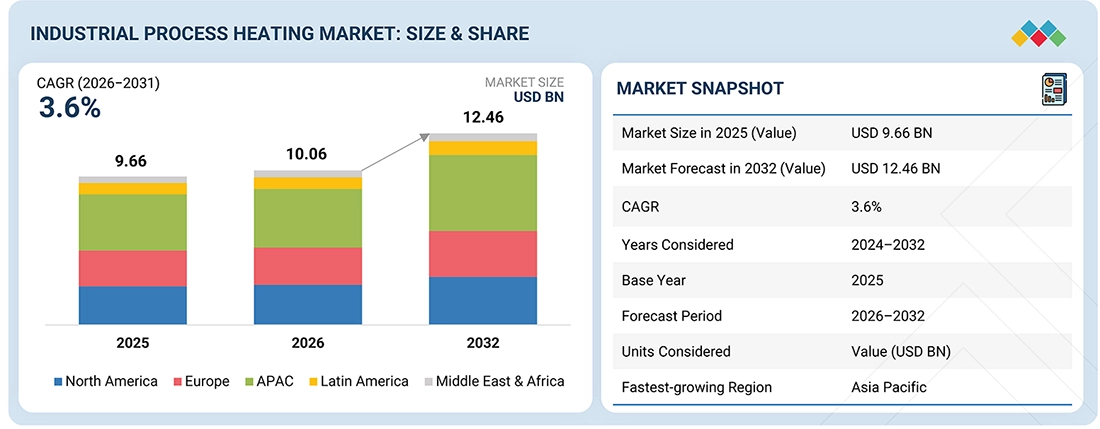
Source: Secondary Research, Interviews with Experts, MarketsandMarkets Analysis
TRENDS & DISRUPTIONS IMPACTING CUSTOMERS' CUSTOMERS
The industrial process heating market is being shaped by a transition from conventional fuel-based heating systems toward energy-efficient and electrified heating technologies. Increasing emphasis on decarbonization, emission reduction, and energy optimization is driving the adoption of electric heaters, advanced burners, and integrated control systems. Growing demand from industries such as chemicals, oil & gas, metals, and food processing is creating new opportunities for providers of heating equipment and automation solutions. These trends are further supported by end-user industries seeking improved process efficiency, operational safety, and precise temperature control, leading to the adoption of smart, digitally enabled heating systems.
Source: Secondary Research, Interviews with Experts, MarketsandMarkets Analysis
MARKET DYNAMICS

Level
-
Process Throughput and Temperature Uniformity Sustain Gas Heating Demand

-
Emissions and Safety Requirements Reinforce Adoption of Modern Gas Heating Systems


Level
-
Process-Specific Performance Requirements Limit Cross-Technology Substitution


Level
-
Major Industrial OEMs Are Actively Expanding Electric Process Heating Portfolios


Level
-
High Capital Intensity and Retrofit Complexity Limit Pace of Adoption

-
Energy Price Volatility Complicates Heating Technology Decisions

Source: Secondary Research, Interviews with Experts, MarketsandMarkets Analysis
Driver: Process Throughput and Temperature Uniformity Sustain Gas Heating Demand
High-temperature industrial processes require uniform heat distribution and controlled furnace dynamics to maintain product quality and line throughput. Gas-fired burners enable active heat transfer and internal circulation, which are critical in large furnaces with high thermal inertia. In sectors such as metals, glass, refining, petrochemicals, chemicals, cement, ceramics, food processing, and industrial manufacturing, process units are highly sensitive to temperature non-uniformity, directly impacting product quality, yield, and operating efficiency.
Restraint: Process-Specific Performance Requirements Limit Cross-Technology Substitution
Process heating applications depend on specific heat profiles lame geometry, radiant intensity, and heat flux that are difficult to replicate across technologies. Since production processes are calibrated to these conditions, switching technologies requires revalidation, increasing cost, time, and operational risk. This limits substitution and sustains parallel demand for multiple heating technologies.
Opportunity: Major Industrial OEMs Are Actively Expanding Electric Process Heating Portfolios
Industrial heating OEMs are expanding standardized electric heating systems to meet demand for precise, combustion-free applications. These integrated, higher-power solutions reduce customization, improve control, and lower system complexity. As portfolios scale in power and capability, electric heating is emerging as a viable alternative to gas, with declining adoption barriers driving broader industrial uptake.
Challenge: High Capital Intensity and Retrofit Complexity Limit Pace of Adoption
Process heating assets are engineered around specific furnace geometries, heat flux profiles, and combustion designs, making system replacement or conversion technically complex rather than modular.Retrofitting for compliance or electrification often triggers cascading upgrades across burners, ducting, refractory linings, controls, and safety systems, materially expanding project cost and scope.
INDUSTRIAL PROCESS HEATING MARKET: COMMERCIAL USE CASES ACROSS INDUSTRIES
| COMPANY | USE CASE DESCRIPTION | BENEFITS |
|---|---|---|
 |
Deployment of electric heating and thermal energy storage systems in steel manufacturing processes such as reheating and annealing. Electricity is stored as high-temperature heat and later supplied to furnaces, replacing fossil-fuel-based heating. | This approach significantly reduces reliance on fossil fuels in high temperature steelmaking processes while enabling the integration of renewable energy sources into operations. As a result, it supports faster decarbonization of one of the most energy-intensive industrial sectors and improves long-term sustainability |
 |
Development of an electrified steam cracking furnace using renewable electricity instead of fossil-fuel combustion. Integrated into BASF’s Ludwigshafen facility for producing base chemicals at ~850°C | The electrified steam cracking technology has the potential to reduce CO2 emissions by up to 90% compared to conventional furnaces. It also demonstrates the scalability of electrification in high-temperature chemical processes while enabling a transition toward low-carbon and more sustainable chemical production systems. |
Logos and trademarks shown above are the property of their respective owners. Their use here is for informational and illustrative purposes only.
MARKET ECOSYSTEM
The industrial process heating market ecosystem comprises equipment manufacturers, component suppliers, and system integrators, supported by engineering firms and technology providers that enhance system design, efficiency, and performance. Automation and control solution providers play a critical role in enabling precise temperature control, safety, and process optimization. Industry associations and regulatory bodies contribute to standardization, compliance, and energy efficiency guidelines, while end-user industries such as chemicals, oil & gas, metals, food & beverages, and pulp & paper drive demand and large-scale adoption of industrial process heating solutions.
MARKET SEGMENTS
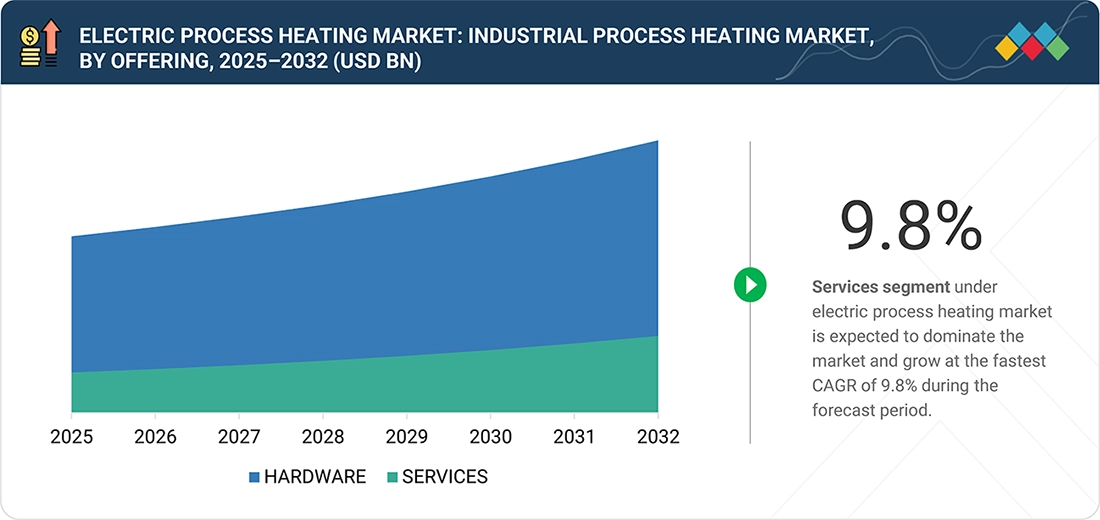
Source: Secondary Research, Interviews with Experts, MarketsandMarkets Analysis
Industrial Process Heating Market, By Gas Powered Heating
Gas-powered heating systems dominate the market due to their high heat output, cost-effectiveness, and widespread use across heavy industries. Technologies such as direct-fired burners, radiant tube burners, and furnaces are extensively used in applications requiring high-temperature operations. These systems are preferred in industries like oil & gas, chemicals, and metals where continuous and large-scale heating is essential.
Industrial Process Heating Market, By Electric Powered Heating
Electric powered heating is gaining traction due to its energy efficiency, precise temperature control, and lower emissions. Technologies such as electric heaters, induction heating, and infrared heating systems enable clean and controlled heating processes. These solutions are increasingly adopted in industries focusing on sustainability, operational safety, and advanced process automation.
Industrial Process Heating Market, By Industry
The industrial process heating market is driven by strong demand from industries such as chemicals, oil & gas, metals, food & beverages, and pulp & paper. The chemicals and oil & gas sectors dominate due to continuous heating requirements, while food & beverages and other industries are adopting advanced heating systems for improved efficiency, product quality, and regulatory compliance.
REGION
Asia Pacific is expected to be the largest region in the global Industrial Process Heating Market during the forecast period
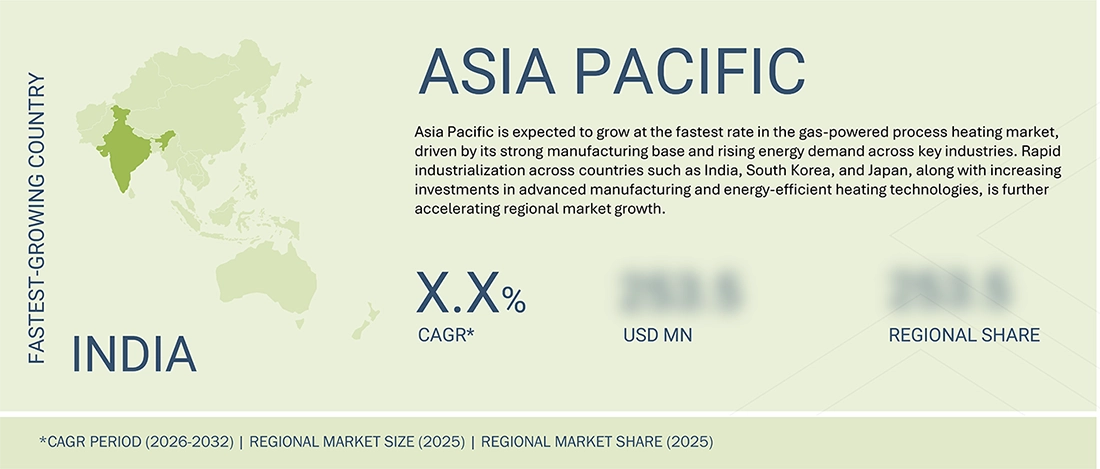
Asia Pacific is expected to gain the largest market share in the industrial process heating market due to strong demand from expanding manufacturing industries such as chemicals, metals, oil & gas, and food & beverages across China and India. The region benefits from increasing industrialization, infrastructure development, and rising investments in energy-efficient and electrified heating technologies, which are critical for modern industrial operations. In addition, the presence of major regional equipment manufacturers and industrial players such as IHI Corporation (Japan), Mitsubishi Heavy Industries, Ltd. (Japan), and other local heating solution providers is supporting faster deployment and wider adoption of advanced industrial process heating systems across the region.
KEY MARKET PLAYERS
WHAT IS IN IT FOR YOU: INDUSTRIAL PROCESS HEATING MARKET REPORT CONTENT GUIDE
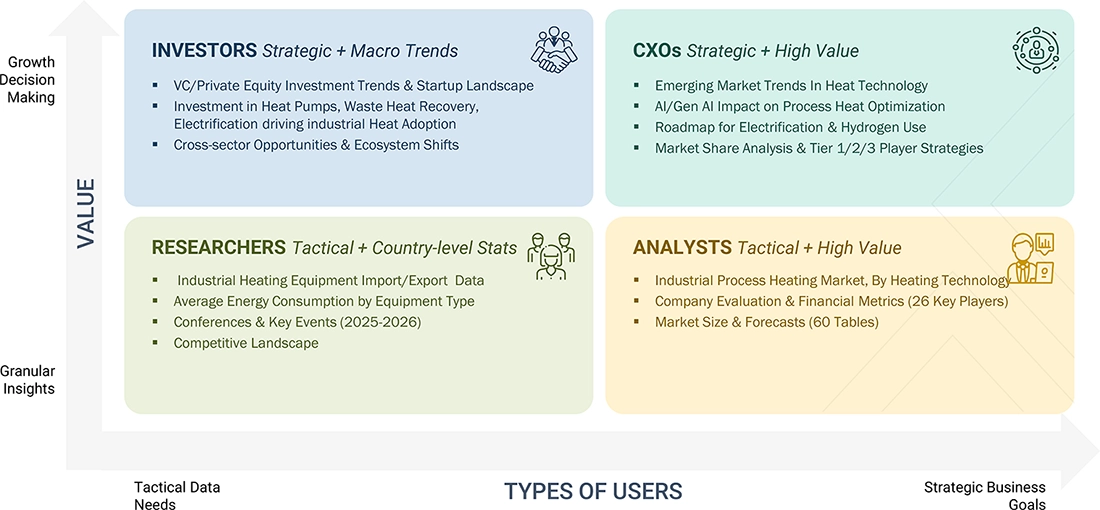
DELIVERED CUSTOMIZATIONS
We have successfully delivered the following deep-dive customizations:
| CLIENT REQUEST | CUSTOMIZATION DELIVERED | VALUE ADDS |
|---|---|---|
| Industrial burner & combustion system manufacturers |
|
|
| Flue gas treatment & emission control providers |
|
|
| Industrial end-users (oil & gas, metals, chemicals) |
|
|
RECENT DEVELOPMENTS
- August 2026 : Watlow Electric Manufacturing Company launched its PowerSafe Medium Voltage Integrated Heater and Control Platform, a medium-voltage electric heating system designed for large-scale industrial process heating and electrification applications. The platform integrates the heater and control system to support industrial heating at multi-megawatt scale, providing an alternative to combustion-based process heat. The development directly expands Watlow’s industrial process heating portfolio and addresses the electrification of high-demand thermal processes.
- July 2026 : ABB and Coolbrook advanced their partnership into the industrial delivery phase for RotoDynamic Heater technology at an Adani Cement facility. The electric heating technology is designed for high-temperature industrial process heating and can replace fossil-fuel combustion with electricity in processes requiring temperatures of up to 1,700°C. The development directly concerns industrial process heating and represents the progression of an electrified heating solution toward industrial-scale deployment.
- February 2026 : Honeywell International, Inc. introduced its Hybrid Heating Solution, which enables industrial manufacturers to combine natural gas and electric energy for industrial process heating. The automated system can dynamically switch between energy sources according to operating requirements, helping manufacturers optimize heating costs while reducing reliance on a single fuel source. The launch directly addresses industrial process heating by providing a hybrid approach for high-demand thermal processes and supporting the electrification of industrial heat.
- January 2026 : ANDRITZ received an order from a Chinese titanium-industry company for a precision 20-high reversing cold-rolling mill, as part of its equipment offering for metal-processing operations. However, although ANDRITZ also supplies industrial burners and heating systems for process heating, the January development itself concerns a rolling mill rather than industrial process heating. Therefore, I am not counting this as a qualifying match under the exact-keyword rule.
- November 2025 : Weishaupt Group expanded its regional presence by opening a new branch in Leipzig, Germany, strengthening sales, service, technical consulting, and training capabilities for burners and heating systems in eastern Germany. The new facility increases capacity for logistics, customer service, and specialist training, including practical burner training supported by test flame tube boilers, reinforcing customer support for industrial and commercial heating applications.
Table of Contents
 Exclusive indicates content/data unique to MarketsandMarkets and not available with any competitors.
Methodology
The research process for this study involved systematically gathering, recording, and analyzing data on customers and companies operating in the industrial process heating market. This process involved the extensive use of secondary sources, directories, and databases (Factiva and Oanda) to identify and collect valuable information for the comprehensive, technical, market-oriented, and commercial study of the industrial process heating market. In-depth interviews were conducted with primary respondents, including experts from core and related industries, as well as preferred manufacturers, to obtain and verify critical qualitative and quantitative information and assess growth prospects. Key players in the industrial process heating market were identified through secondary research, and their market rankings were determined through a combination of primary and secondary research. This research involved studying the annual reports of top players and conducting interviews with key industry experts, including CEOs, directors, and marketing executives.
Secondary Research
Various sources were utilized in the secondary research process to identify and collect information relevant to this study. These include company annual reports, press releases, investor presentations, white papers, technology journals, certified publications, articles by recognized authors, directories, and databases.
Secondary research was primarily used to gather key information on the industry’s value chain, the total pool of market players, market classification by industry trends at the most detailed level, regional markets, and key developments from both market- and technology-oriented perspectives.
Primary Research
Primary research was also conducted to identify segmentation types, key players, the competitive landscape, and key market dynamics, including drivers, restraints, opportunities, challenges, and industry trends, as well as the key strategies adopted by players in the industrial process heating market. Extensive qualitative and quantitative analyses were conducted across the complete market engineering process to compile key information and insights throughout the report.
Extensive primary research has been conducted following the acquisition of knowledge about the industrial process heating scenarios through secondary research. Several primary interviews were conducted with experts from the demand (industry and region) and supply sides (heating technology & their respective equipment) across five major geographic regions: North America, Europe, Asia Pacific, Latin America, the Middle East & Africa. Approximately 60% and 40% of the primary interviews were conducted with the supply and demand sides, respectively. This primary data has been collected through questionnaires, emails, and telephonic interviews.
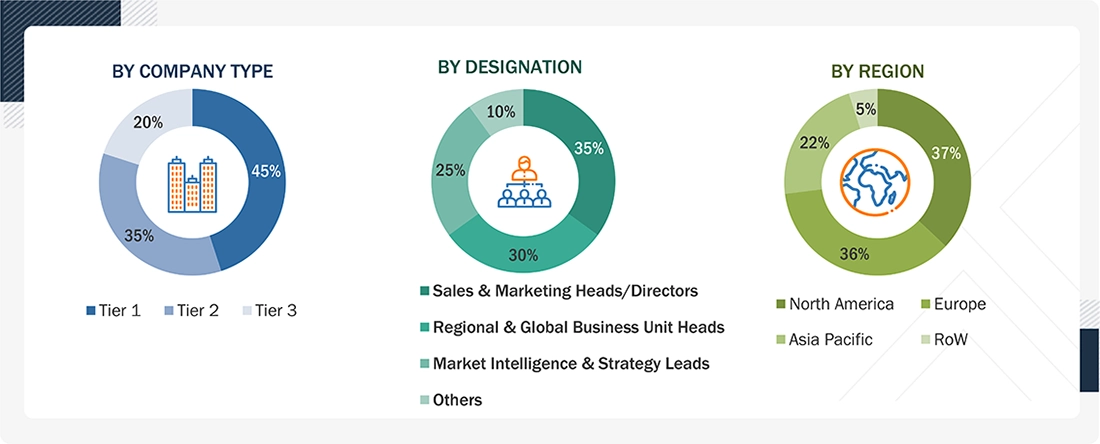
Note 1: The three tiers of companies have been defined based on their total/segmental revenue as of 2025: Tier 1 = > USD 1 billion, Tier 2 = USD 1 billion–USD 500 million, and Tier 3 = < USD 500 million.
Note 2: Other designations include sales, marketing, and product managers.
To know about the assumptions considered for the study, download the pdf brochure
Market Size Estimation
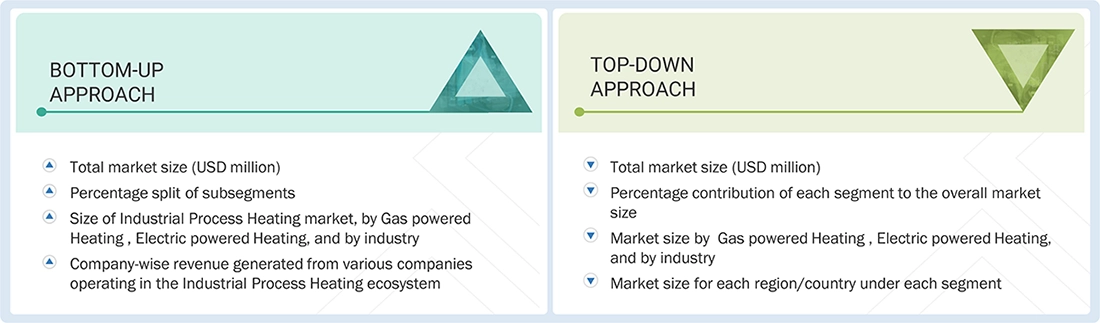
Throughout the complete market engineering process, top-down and bottom-up approaches, along with several data triangulation methods, were used to estimate and validate the size of the industrial process heating market and related dependent submarkets. Key players in the market were identified through secondary research, and their market shares in respective regions were determined through a combination of primary and secondary research. This research methodology involved studying the annual and financial reports of the top players and conducting interviews with experts (including CEOs, VPs, directors, and marketing executives) to gather key insights (both quantitative and qualitative).
All percentage shares, splits, and breakdowns were determined using secondary sources and verified through primary sources. All possible parameters affecting the markets covered in this research study were accounted for, reviewed in detail, verified through primary research, and analyzed to obtain the final quantitative and qualitative data. This data was consolidated and supplemented with detailed inputs and analysis from MarketsandMarkets and presented in this report.
Industrial Process Heating Market : Top-Down and Bottom-Up Approach
Data Triangulation
After determining the overall market size through the estimation process described above, the total market was divided into several segments and subsegments. To complete the overall market engineering process and obtain precise statistics for all segments and subsegments, market breakdown and data triangulation procedures were employed, as applicable. The data was triangulated by examining various factors and trends on both the demand and supply sides. Additionally, the market has been validated using both top-down and bottom-up approaches.
Market Definition
The industrial process heating covers the global ecosystem involved in the development, production, integration, and commercialization of heating systems used in industrial operations. Industrial process heating systems are designed to generate and control thermal energy for applications such as drying, melting, curing, heat treatment, and chemical processing, using gas-fired (e.g., natural gas, LPG) and electric heating technologies. These systems include components such as burners, electric heaters, heat exchangers, air heaters, combustion and power control systems, valves, and fuel or power delivery equipment.
The industrial process heating market is primarily segmented by heating technology into gas-powered heating and electric-powered heating. Gas-powered heating is further categorized into key subsegments, including burners, heat exchangers, air heaters, burner management systems, fuel and air delivery solutions, and services. Similarly, electric-powered heating is segmented into electric heating equipment, power and thermal control hardware, sensors and safety protection components, and services. Additionally, the market is segmented by end-use industries, including automotive, asphalt, agriculture, boilers, building materials, chemicals, ceramics, food and beverages, glass, metals, oil and gas, pulp and paper, and textiles. It also considers the adjacent data center cooling thermal infrastructure market, comprising hardware and services. Geographically, the market is categorized into North America, Europe, Asia Pacific, Latin America, and the Middle East & Africa.
Key Stakeholders
- Burner & combustion system providers
- Combustion control & automation suppliers
- Chemicals & petrochemicals producers
- Large industrial manufacturing facilities, and others
- Electric process heating manufacturers
- Equipment and processing technology providers
- End-user industries and OEMs
- Research institutions, academia, and innovation centers
Report Objectives
- To describe and forecast the size of the industrial process heating market, by heating technology and end-use industry, in terms of value
- To describe and forecast the market size for four major regions—North America, Europe, Asia Pacific, and RoW, in terms of value
- To provide a detailed overview of the industrial process heating technologies and throughputs
- To provide detailed information regarding major factors, such as drivers, restraints, opportunities, and challenges, influencing the market growth
- To provide case study analysis, value chain analysis, key conferences and events, pricing analysis, and regulations about the market under study
- To strategically analyze micromarkets concerning individual market trends, growth prospects, and contributions to the total market
- To strategically profile key players and comprehensively analyze their market position in terms of ranking and core competencies, along with a detailed competitive landscape for the market leaders
- To analyze major growth strategies, such as product launches, expansions, joint ventures, and acquisitions, adopted by key market players to enhance their market position
- To describe macroeconomic factors impacting market growth in each region
Customization Options
Based on the given market data, MarketsandMarkets offers customizations tailored to the company’s specific needs. The following customization options are available for the report:
Key Questions Addressed by the Report
What is the industrial process heating market size in 2026 and 2032?
According to MarketsandMarkets, the global industrial process heating market is projected to reach USD 17.47 billion by 2032 from USD 13.36 billion in 2026.
What is the CAGR of the industrial process heating market from 2026 to 2032?
The industrial process heating market is projected to grow at a CAGR of 4.6% from 2026 to 2032.
What are the key factors driving the growth of the industrial process heating market?
Growth is driven by increasing adoption of energy-efficient heating technologies, rising focus on decarbonization and electrification, stringent environmental regulations, and investments in advanced heating technologies and sustainable industrial infrastructure.
What are the major trends shaping the industrial process heating market?
Major trends include the transition from conventional fuel-based heating toward energy-efficient and electrified technologies, increasing adoption of electric heaters and advanced burners, integrated control systems, digital monitoring, smart heating solutions, and greater emphasis on emission reduction and energy optimization.
Which heating technology dominates the industrial process heating market?
Gas-powered heating systems dominate the industrial process heating market. They are widely used because of their high heat output, cost-effectiveness, and suitability for high-temperature and continuous operations across heavy industries.
Why is electric-powered heating gaining traction in the industrial process heating market?
Electric-powered heating is gaining traction because of its energy efficiency, precise temperature control, lower emissions, and suitability for industries focused on sustainability, operational safety, and advanced process automation.
Which industries are major end users of industrial process heating systems?
Major end-use industries include chemicals, oil & gas, metals, food & beverages, pulp & paper, automotive, asphalt, agriculture, boilers, building materials, ceramics, glass, and textiles.
Which region is expected to dominate the industrial process heating market during the forecast period?
Asia Pacific is expected to gain the largest market share during the forecast period, supported by expanding manufacturing industries, industrialization, infrastructure development, and investments in energy-efficient and electrified heating technologies.
What are the major challenges affecting the adoption of industrial process heating technologies?
Major challenges include high capital intensity and retrofit complexity, process-specific performance requirements that limit cross-technology substitution, and energy price volatility, which can complicate heating technology decisions.
Who are the key players in the industrial process heating market?
Key players include Honeywell International, Inc., Siemens, Emerson, Andritz, ABB, Fives, Bloom Engineering Company, Inc., Fireye, LLC., NOXMAT, and Watlow Electric Manufacturing Company.


Personalize This Research
- Triangulate with your Own Data
- Get Data as per your Format and Definition
- Gain a Deeper Dive on a Specific Application, Geography, Customer or Competitor
- Any level of Personalization
Let Us Help You
- What are the Known and Unknown Adjacencies Impacting the Industrial Process Heating Market
- What will your New Revenue Sources be?
- Who will be your Top Customer; what will make them switch?
- Defend your Market Share or Win Competitors
- Get a Scorecard for Target Partners

Custom Market Research Services
We Will Customise The Research For You, In Case The Report Listed Above Does Not Meet With Your Requirements
Get 10% Free CustomisationTESTIMONIALS

Tetsuya Ohhira
Business Development Manager-Technology Business
Nikon Corporation,
Leading Japanese MNC specializing in optics and imaging productswww.nikon.com
MarketsandMarkets™ response
is quick. Their attitude is flexible and positive. Analyst Insights are globally considered and
significant. Client Services quickly respond to our inquiry and demand. Their wide range of global
surveys help us make our strategic plan.
We hope Knowledge Store will be easier to search
for a report.
VP - Marketing & Business Development
Leading Provider of Process Control Solutions
We engaged with MarketsandMarkets on a study to perform an analysis and recommend a Go-To-Market strategy for metrology and process control in the semiconductor market. The study was tailored to our targets and needs with well-defined milestones. Our overall experience with the MarketsandMarkets team was very good throughout the project in all aspects including the analysis methodologies used, the quality and depth of primary and secondary data sets, the professionalism and flexibility of the team and the ability to meet the target schedule and milestones. We want to thank MarketsandMarkets team for a job well done.






Growth opportunities and latent adjacency in Industrial Process Heating Market