Medical Device Manufacturing Equipment (by Production) Market

Medical Device Manufacturing Equipment (by Production) Market by Type (Material Processing, Sterilization & Cleaning Equipment), Application (Consumables & Disposables), End User (OEMs, Contract Manufacturing Organizations) - Global Forecast to 2030




MEDICAL DEVICE MANUFACTURING EQUIPMENT MARKET SIZE, SHARE & GROWTH SNAPSHOT
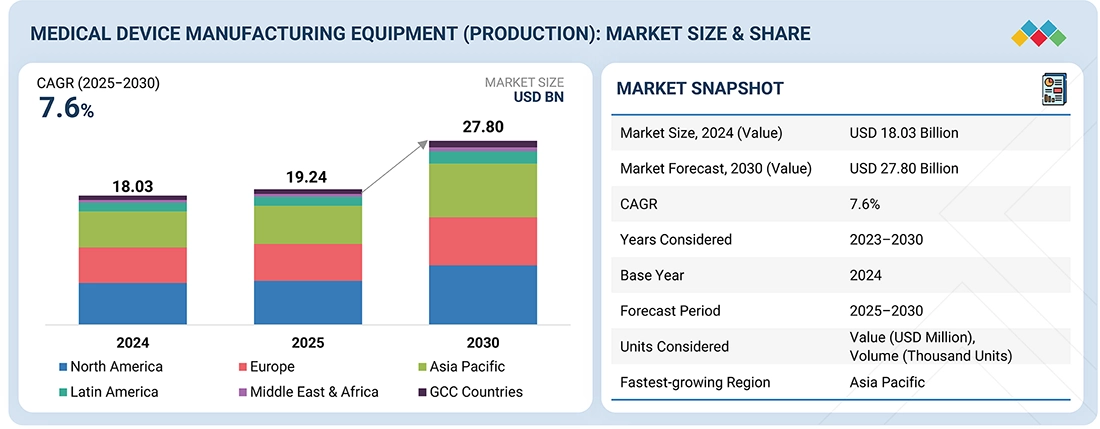
Source: Secondary Research, Interviews with Experts, MarketsandMarkets Analysis
The global medical device manufacturing equipment market is projected to grow from USD 19.24 billion in 2025 to USD 27.80 billion by 2030, at a CAGR of 7.6% during the forecast period. The market was valued at USD 18.03 billion in 2024. The medical device manufacturing equipment (by production) market is driven by rising demand for precision devices, increasing chronic diseases, and automation adoption for efficiency. Regulatory compliance and high equipment costs act as key restraints, limiting smaller manufacturers. However, opportunities lie in advanced technologies like AI, robotics, and additive manufacturing, enabling faster production, customization, and innovation in complex devices, ensuring long-term growth and competitiveness for equipment providers serving global medical device manufacturers.
KEY TAKEAWAYS
-
BY APPLICATIONBy application, drug delivery devices are expected to record a higher CAGR during forecast period.
-
BY END USERBy End user, contract manufacturing organizations are expected to record a higher CAGR during forecast period.
-
COMPETITIVE LANDSCAPE - KEY PLAYERSABB (Switzerland), Nikon Corporation (Japan), ZEISS Group (Germany), TRUMPF Group (Germany) and STERIS plc (Ireland) were identified as Star players in the medical device manufacturing equipment market, as they emphasis more on innovation and have broad industry coverage and strong operational and financial strength.
-
COMPETITIVE LANDSCAPE - STARTUPS/SMESClean Rooms International, Inc. (US), Atlas Environments, Ltd. (US), Clean Air Technology, Inc. (US) are among a few key startups and SMEs due to their strong product portfolio and business strategies.
TRENDS & DISRUPTIONS IMPACTING CUSTOMERS' CUSTOMERS
The medical device manufacturing equipment (by production) market is undergoing a major transformation, driven by disruptive technologies and evolving customer needs. While traditional revenue sources such as conventional material processing equipment, consumables, manual assembly systems, and sterilization equipment continue to play a role, the industry is rapidly shifting toward new, high-growth opportunities. Emerging technologies such as advanced automation and robotics, additive manufacturing (3D printing), digital and smart manufacturing (Industry 4.0), and laser & plasma processing systems are reshaping production processes by enhancing precision, efficiency, and scalability. Additionally, cleanroom and containment solutions are becoming critical as regulatory and quality standards tighten. This technological evolution is directly impacting end-users—including medical device OEMs, contract manufacturing organizations, and research & academic prototyping centers—who are increasingly adopting these innovations to remain competitive, reduce costs, and accelerate time-to-market in a dynamic healthcare landscape
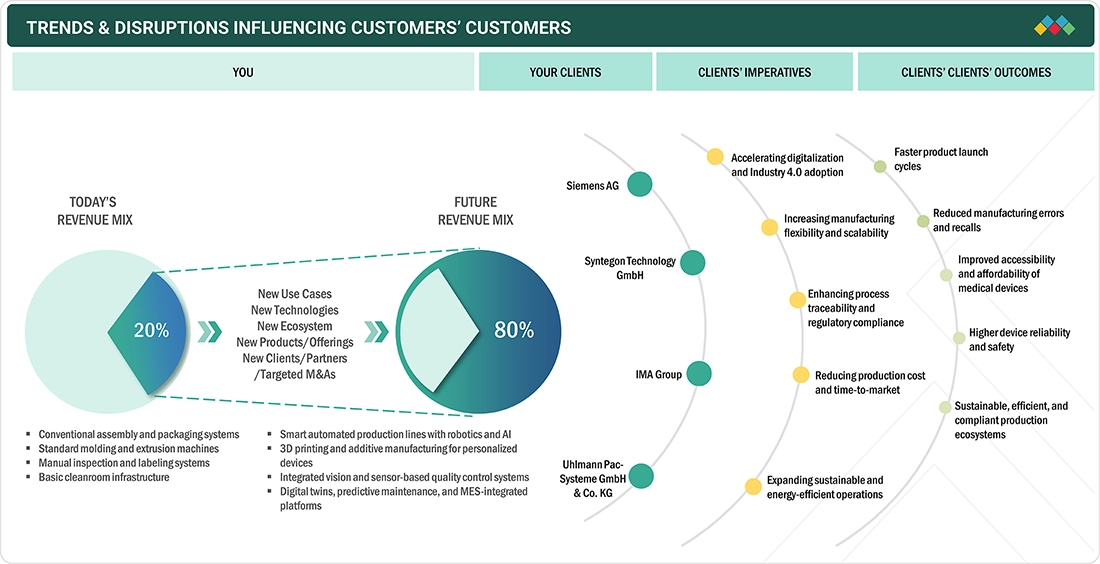
Source: Secondary Research, Interviews with Experts, MarketsandMarkets Analysis
MARKET DYNAMICS

Level
-
Technological Advancements in Manufacturing

-
Increased Healthcare Expenditure


Level
-
Supply Chain Vulnerabilities

-
Stringent Regulatory Requirements


Level
-
Customization and Personalization

-
Adoption of Digital Health Solutions


Level
-
Trade Tariffs and Import Restrictions

Source: Secondary Research, Interviews with Experts, MarketsandMarkets Analysis
Driver:Technological Advancements In Manufacturing
Technological advancements in manufacturing are a key driver of the medical device manufacturing equipment market, as innovations such as automation, robotics, precision CNC machining, and additive manufacturing (3D printing) enable faster, more accurate, and cost-efficient production. These technologies allow manufacturers to produce complex and customized devices with minimal errors, reduce material waste, and improve scalability. Additionally, integration of digital tools like IoT, AI, and real-time monitoring enhances quality control and compliance with stringent regulatory standards, driving market growth globally
Restraint: Supply Chain Vulnerabilities
Supply chain vulnerabilities act as a major restraint for the medical device manufacturing equipment market. Disruptions caused by geopolitical tensions, trade restrictions, or natural disasters can delay the availability of critical raw materials and components. Dependence on global suppliers for specialized machinery or high-precision parts increases production risks. Additionally, logistics challenges, fluctuating costs, and transportation delays can impact manufacturing timelines and profitability. These vulnerabilities hinder consistent production, increase operational costs, and limit the ability of manufacturers to meet growing global demand efficiently
Opportunity: Customization And Personalization
Customization and personalization present a significant opportunity in the medical device manufacturing equipment market. Advances in 3D printing, additive manufacturing, and precision machining allow manufacturers to produce patient-specific devices tailored to individual anatomical and clinical needs. This trend supports minimally invasive procedures, prosthetics, implants, and dental devices, enhancing treatment outcomes. Growing demand for personalized healthcare solutions encourages investment in flexible, adaptable production equipment, enabling companies to offer high-quality, customized devices at scale, strengthening competitiveness and market presence globally
Challenge: Trade Tariffs and Import Restrictions
Trade tariffs and import restrictions pose a significant challenge to the medical device manufacturing equipment market. Policies such as high import duties, export controls, or restrictive trade agreements can increase the cost of machinery, raw materials, and components, impacting overall production expenses. Manufacturers relying on global supply chains may face delays, reduced access to critical equipment, and limited flexibility in sourcing. These trade barriers affect competitiveness, profit margins, and the ability to scale production, especially for companies operating across multiple international markets
MEDICAL DEVICE MANUFACTURING EQUIPMENT (BY PRODUCTION) MARKET: COMMERCIAL USE CASES ACROSS INDUSTRIES
| COMPANY | USE CASE DESCRIPTION | BENEFITS |
|---|---|---|
 |
Provides laser cutting, welding, and marking systems for surgical instruments and implants, enabling high-precision manufacturing and compliance with UDI regulations. | Ensures accuracy, traceability, and durability of medical devices while reducing production errors and meeting global regulatory standards. |
 |
Offers additive manufacturing (3D printing) platforms for patient-specific implants, surgical guides, and anatomical models tailored for planning and device prototyping. | Accelerates product development, reduces material waste, and enables customization of implants and instruments for improved patient outcomes. |
 |
Supplies optical inspection and computed tomography (CT) systems for quality control of implants, instruments, and complex device assemblies. | Enhances defect detection, ensures compliance with ISO/FDA standards, and reduces recalls through precise imaging and dimensional accuracy. |
 |
Provides injection molding platforms for syringes, diagnostic consumables, and drug delivery devices with integrated process monitoring systems. | Enables high-volume, consistent production with reduced scrap rates, supporting cost-effective manufacturing for single-use medical devices. |
 |
Delivers advanced coating systems and materials for implants, surgical tools, and orthopedic devices, improving wear resistance and biocompatibility. | Extends device lifespan, enhances patient safety, and supports next-generation minimally invasive medical technologies. |
Logos and trademarks shown above are the property of their respective owners. Their use here is for informational and illustrative purposes only.
MARKET ECOSYSTEM
The ecosystem map of the overall medical device manufacturing equipment market comprises the key elements involved in enabling efficient, compliant, and scalable production of medical devices. It includes production equipment such as injection molding systems, robotics and automation platforms, laser processing systems, sterilization equipment, cleanroom systems, metrology and inspection systems, packaging equipment, and additive manufacturing solutions.Equipment manufacturers form the core of this ecosystem, developing technologies that support high-precision manufacturing, component assembly, surface treatment, testing, sterilization, and final packaging. Raw material suppliers and component providers support the ecosystem by supplying medical-grade polymers, metals, electronics, sensors, tooling components, molds, and consumables required for device production. Medical device OEMs and contract manufacturing organizations act as the primary customers, using these systems to manufacture products such as surgical instruments, diagnostic devices, drug delivery devices, implants, catheters, and disposable medical products.Regulatory bodies and certification agencies play a critical role by defining compliance requirements related to quality systems, process validation, sterilization assurance, traceability, and product safety. Technology partners, software providers, and automation integrators contribute to smart manufacturing through robotics, digital production control, machine vision, predictive maintenance, and data-driven quality monitoring. Distributors, service providers, and maintenance partners support equipment installation, validation, after-sales service, and regional market access. The end-user segment includes medical device OEMs, contract development and manufacturing organizations, and research or academic prototyping centers. These end users drive demand for equipment that can improve production efficiency, reduce manual errors, ensure repeatability, support regulatory compliance, and enable flexible manufacturing. Investors, government agencies, and industry associations act as ecosystem influencers by supporting manufacturing localization, innovation funding, automation adoption, and capacity expansion across global medical device production hubs.
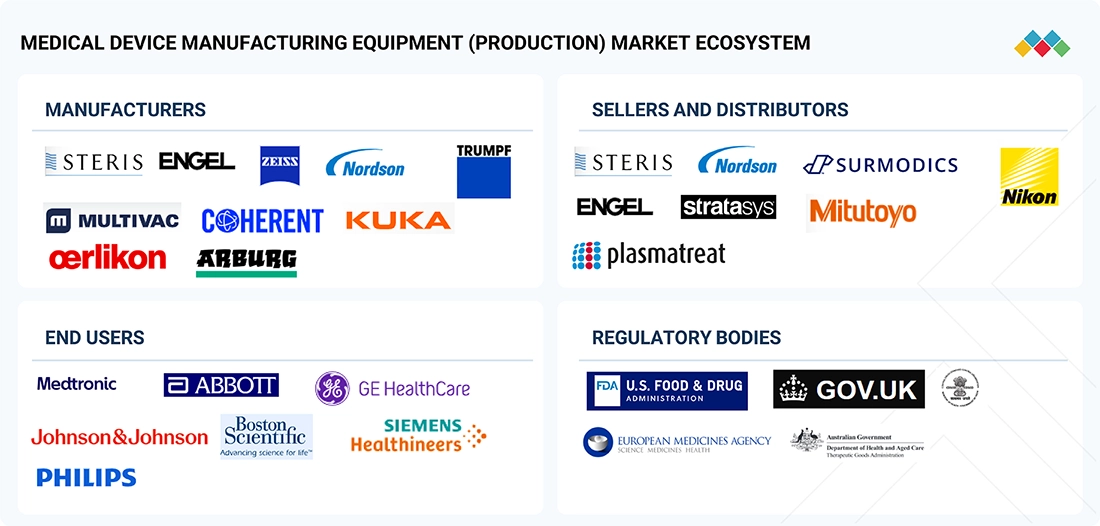
Logos and trademarks shown above are the property of their respective owners. Their use here is for informational and illustrative purposes only.
MARKET SEGMENTS
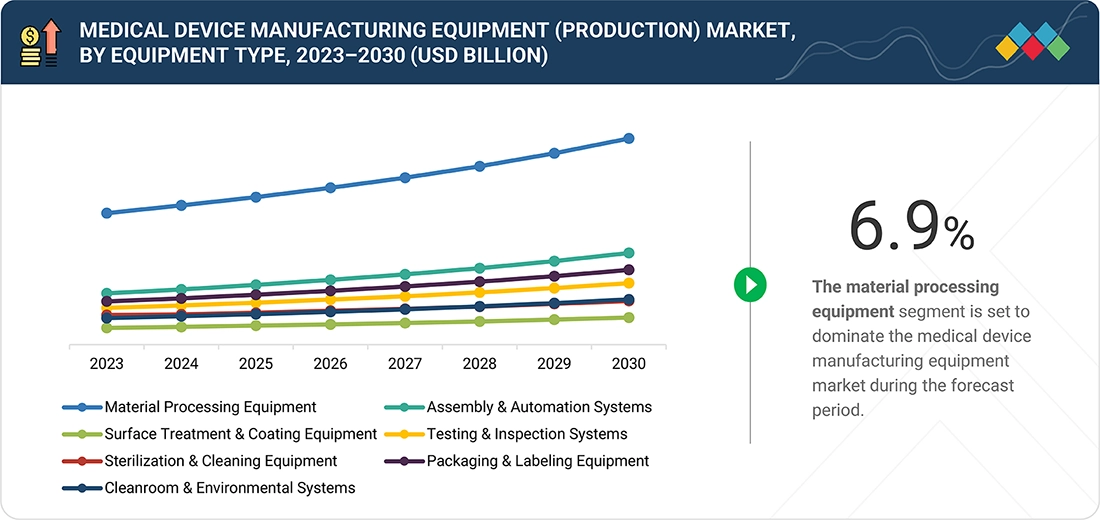
Source: Secondary Research, Interviews with Experts, MarketsandMarkets Analysis
Medical Device Manufacturing Equipment Market, By Equipment Type
Based on equipment type, in 2024, the Material processing equipment holds the largest market share in the medical device manufacturing equipment market because it is critical for shaping, cutting, welding, and assembling precise medical components. Advanced technologies like laser systems, ultrasonic welding, and injection molding ensure high accuracy, repeatability, and compliance with stringent industry standards. With rising demand for minimally invasive and complex devices, manufacturers increasingly rely on robust material processing solutions
Medical Device Manufacturing Equipment Market, By Application
Based on application, in 2024, Consumables & disposables hold the largest market share in the medical device manufacturing equipment market due to their recurring demand, cost-effectiveness, and essential role in every production cycle. Items like tubing, connectors, filters, and sterile packaging are indispensable for maintaining quality and regulatory compliance. Unlike capital equipment, these products require frequent replenishment, ensuring continuous revenue streams
Medical Device Manufacturing Equipment Market, By End User
Based on end user, in 2024, Medical device OEMs hold the largest market share in the medical device manufacturing equipment market as they directly drive demand for advanced production technologies to meet stringent quality, safety, and regulatory standards. OEMs continually invest in automation, precision engineering, and cleanroom technologies to enhance efficiency and scalability. Their large-scale manufacturing operations, global distribution networks, and constant innovation pipelines create consistent equipment demand
REGION
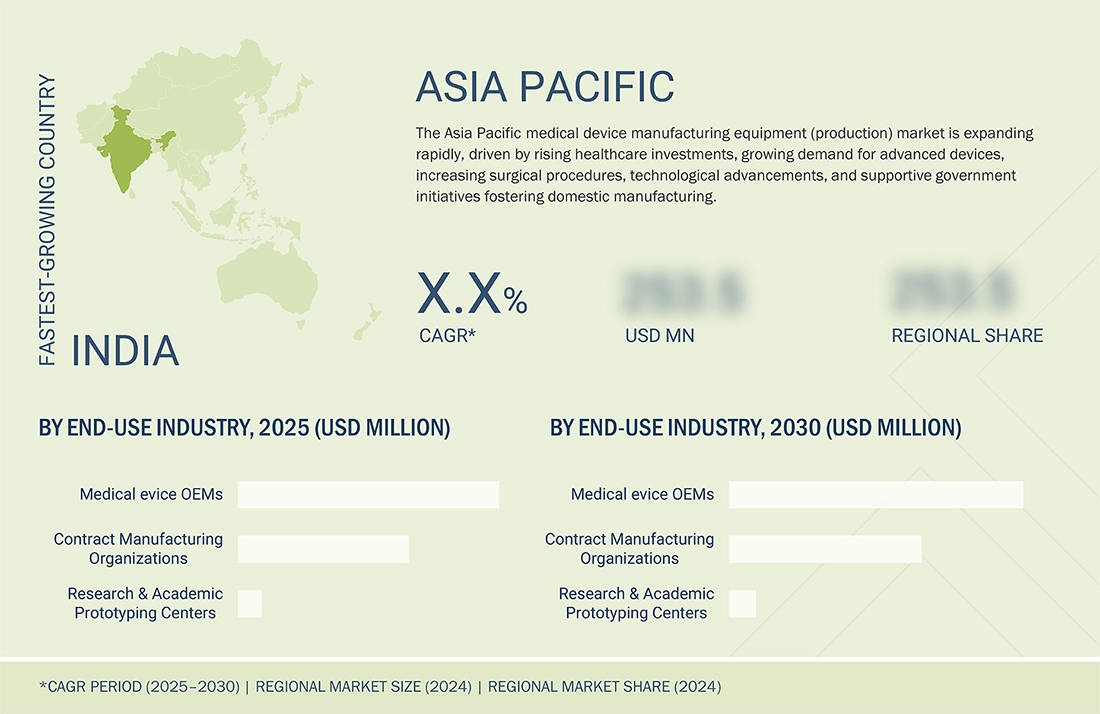
Asia Pacific to be fastest-growing region in global Medical Device Manufacturing Equipment market during forecast period
The APAC Medical Device Manufacturing Equipment (Production) market is expanding rapidly, driven by rising healthcare investments, growing demand for advanced devices, increasing surgical procedures, technological advancements, and supportive government initiatives fostering domestic manufacturing.
MEDICAL DEVICE MANUFACTURING EQUIPMENT (BY PRODUCTION) MARKET: COMPANY EVALUATION MATRIX
In the Medical Device Manufacturing Equipment market matrix, ABB. (Star) leads with a strong global presence and a comprehensive portfolio. Stratasys. (Emerging Leader) is gaining traction with innovative product offering, positioning itself for rapid growth. While ABB dominates with scale and established market leadership, Stratasys demonstrates strong potential to advance toward the leaders' quadrant.
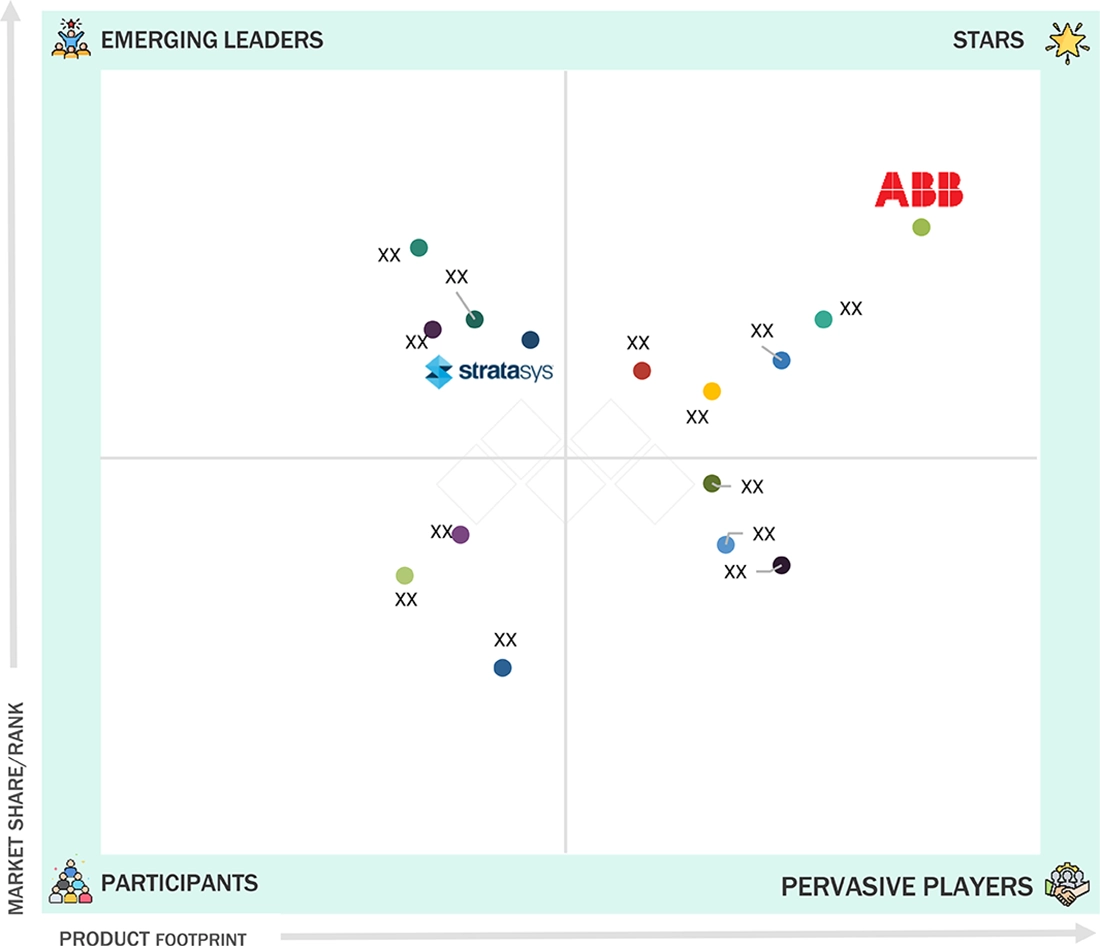
Source: Secondary Research, Interviews with Experts, MarketsandMarkets Analysis
KEY MARKET PLAYERS
- STERIS (US)
- Nordson Corporation (US)
- ENGEL (Austria)
- Zeiss Group (Germany)
- Multivac (Germany)
- Coherent Corp. (US)
- KUKA AG (Germany)
- ABB (Switzerland)
- TRUMPF (Germany)
- OC Oerlikon Management AG (Switzerland)
- Arburg (Germany)
- Stratasys Ltd (US)
- Plasmatreat (Germany)
- Nikon Corporation (Japan)
- Mitutoyo Corporation (Japan)
MARKET SCOPE
| REPORT METRIC | DETAILS |
|---|---|
| Market Size Value in 2025 | USD 19.24 Billion |
| Revenue Forecast in 2030 | USD 27.80 Billion |
| Growth Rate | CAGR of 7.6% from 2025-2030 |
| Actual data | 2023-2030 |
| Base year | 2024 |
| Forecast period | 2025-2030 |
| Units considered | Value (USD Million), Volume (Thousand Units) |
| Report Coverage | Revenue Forecast, Company Ranking, Competitive Landscape, Growth Factors, and Trends |
| Segments Covered |
|
| Regional Scope | North America, Europe, Asia Pacific, Latin America, the Middle East & Africa, and GCC Countries |
WHAT IS IN IT FOR YOU: MEDICAL DEVICE MANUFACTURING EQUIPMENT (BY PRODUCTION) MARKET REPORT CONTENT GUIDE
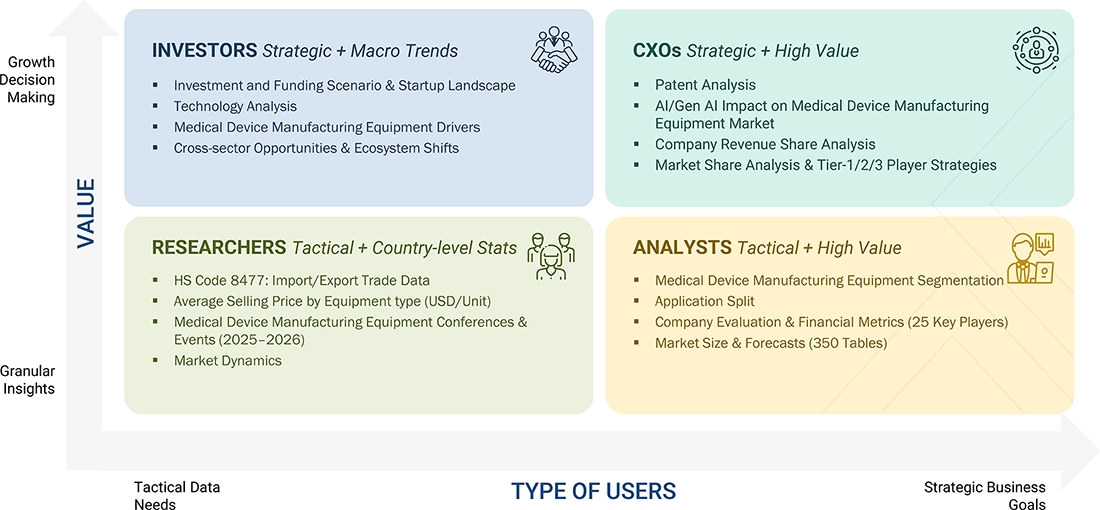
DELIVERED CUSTOMIZATIONS
We have successfully delivered the following deep-dive customizations:
| CLIENT REQUEST | CUSTOMIZATION DELIVERED | VALUE ADDS |
|---|---|---|
| Product Analysis | Comparison of core equipment categories: laser cutting & welding systems, additive manufacturing/3D printing, robotic assembly lines, pick & place robotics, dispensing & gluing systems, ultrasonic welding, coating systems, and optical inspection solutions. Analysis included ASP trends, technology adoption, and performance benchmarks. | Enables identification of high-growth technologies driving manufacturing automation; highlights cost-efficiency, precision, and compliance with ISO/FDA standards influencing capital equipment purchasing decisions. |
| Company Information | Key players covered: TRUMPF, Stratasys, Nikon, Husky Injection Molding Systems, ABB, Zeiss, ENGEL, Oerlikon, and others. Insights on partnerships, product pipelines, automation integration, and geographic presence. | Provides visibility into competitive positioning, innovation focus (e.g., Industry 4.0, IoT-enabled systems), and partnerships/M&A shaping the medtech manufacturing ecosystem. |
| Geographic Analysis | Detailed regional analysis on North America, Europe, Asia-Pacific (China, Japan, India), and Rest of World. Client-focused sub-analysis on APAC manufacturing hubs (China–low-cost manufacturing; Germany/Switzerland–precision engineering). | Supports demand mapping for localized production strategies, identification of emerging markets (e.g., ASEAN, India), and helps in planning facility expansions and supplier partnerships. |
RECENT DEVELOPMENTS
- March 2024 : STERIS launched Verafit sterilization bags/covers with a new viewing window to verify dryness post-sterilization, supporting EU GMP Annex 1. Constructed using low-particulate Purefit wrapping, these products help ensure compliance in sterile packaging
- January 2024 : TRUMPF’s short-pulse marking laser enables fine, “cold” UDI-compliant marking on surgical instruments without heat damage, improving traceability and product durability.
- December 2023 : ABB Robotics has partnered with XtalPi to build automated laboratories in China, using GoFa collaborative robots for sample-handling, testing, and quality-control. These labs speed up biopharma and material R&D via modular workstations, boosting experimentation throughput and integrating automation with lab-scale workflows.
- January 2023 : ZEISS is acquiring LENSO Sp. z o.o., a Polish 3D optical systems specialist, to expand Industrial Quality Solutions. The deal boosts ZEISS’s metrology reach and combines strengths for measurement solutions tailored to specific applications.
Table of Contents
 Exclusive indicates content/data unique to MarketsandMarkets and not available with any competitors.
Methodology
The study involved major activities in estimating the current market size for the medical device manufacturing equipment (by production) market. Exhaustive secondary research was done to collect information on the medical device manufacturing equipment (by production) market. The next step was to validate these findings, assumptions, and sizing with industry experts across the value chain using primary research. Different approaches, such as top-down and bottom-up, were employed to estimate the total market size. After that, the market breakup and data triangulation procedures were used to estimate the market size of the segments and subsegments of the medical device manufacturing equipment (by production) market.
Secondary Research
This research study involved the wide use of secondary sources, directories, databases such as Dun & Bradstreet, Bloomberg Businessweek, Factiva, whitepapers, and companies’ house documents. Secondary research was undertaken to identify and collect information for this extensive, technical, market-oriented, and commercial study of the medical device manufacturing equipment (by production) market. It was also used to obtain important information about the top players, market classification, and segmentation according to industry trends, to the bottom-most level, geographic markets, and key developments related to the market. A database of the key industry leaders was also prepared using secondary research.
Primary Research
In the primary research process, various supply- and demand-side sources were interviewed to obtain qualitative and quantitative information for this report. Primary sources from the supply side included industry experts such as CEOs, vice presidents, marketing and sales directors, technology & innovation directors, engineers, and related key executives from various companies and organizations operating in the medical device manufacturing equipment (by production) market. Primary sources from the demand side included pediatric hospitals, maternity & birthing centers, clinics, researchers, lab technicians, purchase managers, and stakeholders in corporate & government bodies.
Breakdown of Primary Interviews
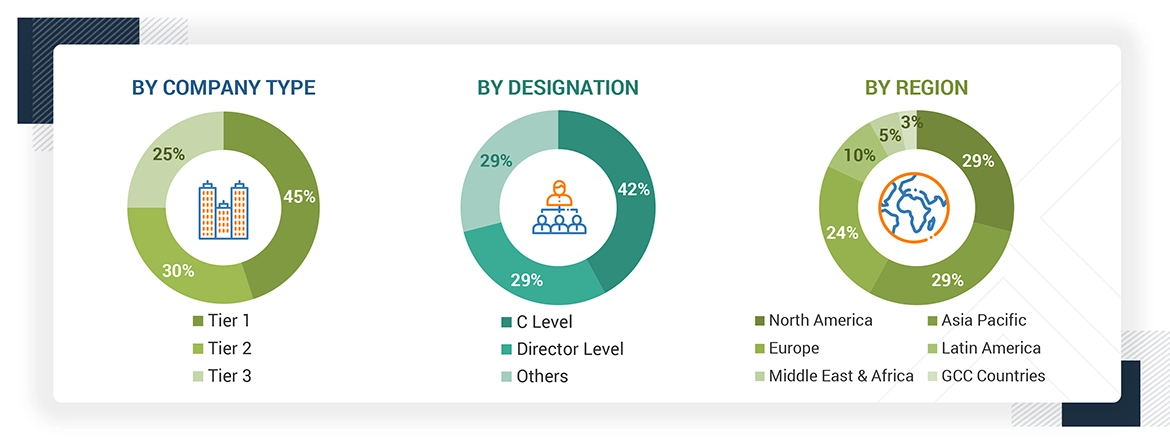
Note 1: C-level primaries include CEOs, COOs, and CTOs.
Note 2: Others include sales managers, marketing managers, and product managers.
Note 3: Companies are classified into tiers based on their total revenue. As of 2024: Tier 1 = More than USD 1 billion, Tier 2 = USD 500 million to USD 1 billion, Tier 3 = Less than USD 500 million
To know about the assumptions considered for the study, download the pdf brochure
Market Size Estimation
Both top-down and bottom-up approaches were used to estimate and validate the total size of the medical device manufacturing equipment (by production) market. These methods were also used extensively to estimate the size of various subsegments in the market. The research methodology used to estimate the market size includes the following:
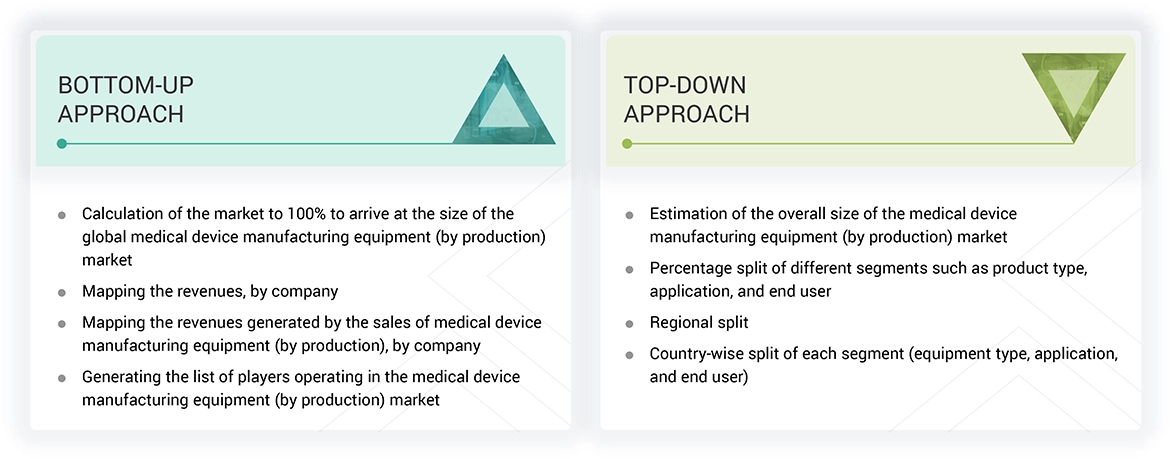
Data Triangulation
The entire market was split into three segments when the market size was determined. Data triangulation and market breakdown processes were used where necessary to complete the entire market engineering process and arrive at precise statistics for all segments.
Approach to derive the market size and estimate market growth.
Using secondary data from paid and unpaid sources, the market rankings for the major players were determined following a thorough analysis of their sales of medical device manufacturing equipment (by production). Due to data restrictions, the revenue share in certain cases was determined after a thorough analysis of the product portfolio of big corporations and their individual sales performance. This information was verified at each stage by in-depth interviews with professionals in the field.
Market Definition
Medical device manufacturing equipment (by production) refers to the specialized machinery, systems, and technologies used by medical device manufacturers to design, process, assemble, test, package, and sterilize medical devices. This includes equipment for material processing (cutting, welding, molding, coating, additive manufacturing), assembly & automation systems (robotics, inspection, testing), and cleanroom & packaging solutions (sterilization, sealing, environmental control).
Stakeholders
- Medical device manufacturing equipment and accessory manufacturers
- Medical device manufacturing equipment and accessory distributors
- Research & development (R&D) companies
- Medical device procurement agencies
- Government bodies/municipal corporations
- Business research and consulting service providers
- Venture capitalists
- US FDA
- European Union (EU)
Report Objectives
- To describe, analyze, and forecast the medical device manufacturing equipment (by production) market, by equipment type, application, end user, and region
- To describe and forecast the medical device manufacturing equipment (by production) market for key regions, namely, North America, Europe, the Asia Pacific, Latin America, the Middle East and Africa, and GCC Countries
- To provide detailed information regarding drivers, restraints, opportunities, and challenges influencing the growth of the medical device manufacturing equipment (by production) market
- To strategically analyze the ecosystem, regulations, patenting trend, value chain, Porter’s five forces, and prices pertaining to the market under study
- To strategically analyze micromarkets with respect to individual growth trends, prospects, and contributions to the overall market
- To analyze market opportunities for stakeholders and provide details of the competitive landscape for market players
- To profile key players and comprehensively analyze their market shares and core competencies in the medical device manufacturing equipment (by production) market
- To analyze competitive developments such as collaborations, acquisitions, product launches, expansions, and R&D activities in the medical device manufacturing equipment (by production) market


Personalize This Research
- Triangulate with your Own Data
- Get Data as per your Format and Definition
- Gain a Deeper Dive on a Specific Application, Geography, Customer or Competitor
- Any level of Personalization
Let Us Help You
- What are the Known and Unknown Adjacencies Impacting the Medical Device Manufacturing Equipment (by Production) Market
- What will your New Revenue Sources be?
- Who will be your Top Customer; what will make them switch?
- Defend your Market Share or Win Competitors
- Get a Scorecard for Target Partners

Custom Market Research Services
We Will Customise The Research For You, In Case The Report Listed Above Does Not Meet With Your Requirements
Get 10% Free CustomisationTESTIMONIALS

JAYANT RAJPUROHIT
Director of Market Insights, Data and Analytics
SFI Health,
Leading Pharmaceutical Companywww.sfihealth.com/

We at SFI Health approached MarketsandMarkets for an Opportunity Assessment on "Incidence and Prevalence of Focus Indications" as we wanted to know the most attractive HCPs like Physician, Functional MD, Naturopath and Pharmacist. The project was critical for us to ensure our focus on the right target which would enable sustainable growth and profitability for SFI Health. The business insights provided exceeded our expectations and we were extremely impressed. The team at MarketsandMarkets is highly professional and detail oriented and very well understood our business needs. MarketsandMarkets offers a unique combination of expertise and dedicated engagement model. We identified 2 new products to be launched in coming months, based on the research findings provided by MarketsandMarkets. We are happy with the services and would strongly recommend MarketsandMarkets to my peers in the industry.

BEATRIZ DE LA CALLE
Head of Commercial Analytics
Qualicaps,
Leading Pharmaceutical Companywww.qualicaps.com/

We partnered with MarketsandMarkets for an assessment study on hard empty capsules. The team was extremely professional in understanding our business requirements and we received timely responses to all our queries. The market intelligence and the recommendations has met our business requirements. We were extremely impressed to see the final study results; it really exceeded our expectations. The market intelligence offered by MarketsandMarkets, and clarity on next steps will help us achieve our business objective for the Year 2021. We are happy with the services and would strongly recommend MarketsandMarkets to my peers in the industry.

Bob Williams,
Senior Director Business Development & Innovation
Bracco Diagnostics Inc.,
Italian Multinational in life sciences sector and a World Leader in imaging diagnosticsimaging.bracco.com/us-en
We were pleased with targeted insights that MarketsandMarkets identified from a custom study on the 'Radiation Dose Management Solutions Market'. Your team identified and characterized the market participants as well as underlying trends accurately. This study was useful to Bracco in formulating business strategies for our dose monitoring product lines and we thank MarketsandMarkets for the job well done.
Cody Coonradt,
Market Development and Strategy Manager
3M Health Information Systems,
Leader in Health care Coding, Payment & Analytics Solutions.www.3m.com/3M/en_US/health-information-systems-us
The value for our organization comes from three things: depth of research, specificity of segments and being easy to work with. As important as the first two are, the third can't be underestimated. MarketsandMarkets, maybe more than any other research vendor, wants to know what is top of mind for our team and what big questions we are grappling to answer.
Their customer first approach and high value engagement model, have given us great analysis and excellent value for money
- Italy Medical Device Manufacturing Equipment (by Production) Market
- Spain Medical Device Manufacturing Equipment (by Production) Market
- Canada Medical Device Manufacturing Equipment (by Production) Market
- US Medical Device Manufacturing Equipment (by Production) Market
- China Medical Device Manufacturing Equipment (by Production) Market
- Japan Medical Device Manufacturing Equipment (by Production) Market
- India Medical Device Manufacturing Equipment (by Production) Market
- South Korea Medical Device Manufacturing Equipment (by Production) Market
- Australia Medical Device Manufacturing Equipment (by Production) Market
- Brazil Medical Device Manufacturing Equipment (by Production) Market
- Mexico Medical Device Manufacturing Equipment (by Production) Market
- GCC Countries Medical Device Manufacturing Equipment (by Production) Market
- Rest Of Europe Medical Device Manufacturing Equipment (by Production) Market
- Rest Of Asia Pacific Medical Device Manufacturing Equipment (by Production) Market
- Rest Of Latin America Medical Device Manufacturing Equipment (by Production) Market
- Germany Medical Device Manufacturing Equipment (by Production) Market
- France Medical Device Manufacturing Equipment (by Production) Market
- UK Medical Device Manufacturing Equipment (by Production) Market






Growth opportunities and latent adjacency in Medical Device Manufacturing Equipment (by Production) Market