7500+ companies worldwide approach us every year for their revenue growth initiatives
2
80% of Fortune 2000 companies rely on our research to identify new revenue sources
3
Top 2000 strategists around the world rely on us for their growth roadmap/initiatives
Non-Dairy Creamer Market by Product Type (Regular, Low-Fat, Sugar-Free), Source (Almond, Soy, Coconut, Oats), Form (Powder, Liquid), Flavor (Unflavored, Flavored), Nature, and Region - Global Forecast to 2030
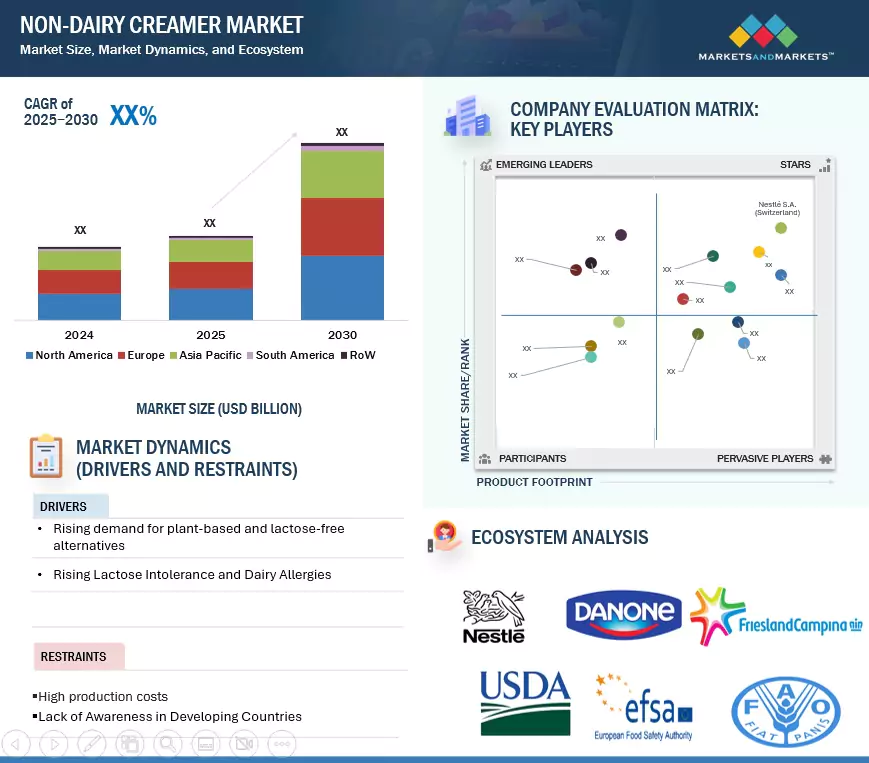
The non-dairy creamer market is projected to expand from USD xx billion in 2025 to USD xx billion by 2030, at a CAGR of xx% during the forecast period. Veganism and flexitarianism are gaining popularity around the world, and cases of lactose intolerance are reportedly on the rise; furthermore, health awareness and dietary preferences are triggering an increase in demand for plant-based and lactose-free products. These factors have contributed to the growth of the non-dairy creamer market. Improvements in taste, texture, and nutritional profile—which in turn has generated a greater appeal to their product—are propelled by the use of ingredients such as almond, oat, and coconut. Further, modern café culture and increasing consumption of coffee and tea on a global scale are boosting the growth of this market. Other major contributors driving up consumer penetration and brand visibility include strategic product launches, clean-label formulations, e-commerce, and retail availability.
Attractive Opportunities in the Non-Dairy Creamer Market
ASIA PACIFIC
The non-dairy creamer market in North America is driven by high lactose intolerance rates, growing consumer preference for plant-based diets, and strong demand from the thriving coffee culture. Widespread availability of innovative flavors and functional creamers (e.g., keto, MCT-based) also fuels market growth. Additionally, major retail and e-commerce channels enhance product accessibility.
The market for non-dairy creamer is projected to record a CAGR of xx% during the study period, reaching USD xx billion by 2030.
Collaborations and new product launches are expected to present profitable prospects for industry participants in the next five years.
Health and wellness trends, vegan and flexitarian movement, and influence of clean label preferences is driving the market.
Major market players are investing and introducing newer products.
Global Non-Dairy Creamer Market Dynamics
DRIVERS: Rising demand for plant-based and lactose free alternatives
One of the most significant factors driving the Non-Dairy Creamer Market is the increased demand for plant-based or lactose-free substitutes everywhere. Plant-based products are the preferred alternatives, mainly due to the perceived health benefits of plant-based diets and the ethical side of production and lesser environmental impact. The rampant awareness concerning lactose intolerance and milk allergies has also preferred a number of health-conscious individuals for non-dairy creamers. Further, as more persons adopt the veganism and flexitarian lifestyles, some of the popular creamy plant-based sources, such as almond, soy, oat, coconut, and more, are fast becoming the mainstays in everyday relatively coffee or tea drinkers' diets.
Food and beverage manufacturers are tapping on this development by producing a wide array of non-dairy creamers that promise improved taste, texture, and nutritional properties. The product appeal goes across a very wide consumer base, owing to natural sweeteners, clean-label ingredients, and fortified formulations. Growth in cafe culture and rising esteem in specialty coffee will also further augment demand for versatile barista-quality plant-based creamers. Furthermore, the retail and e-commerce expansion also create more opportunities for the mainstream consumer to access these goods. As the trends continue to evolve in the years to come, the non-dairy creamer gained by innovation, health trends, and changing consumption habits is expected to witness sustained growth.
RESTRAINTS: High production costs
High production costs continue to be a major constraint in the non-dairy creamer market, diminishing the scalability and price competitiveness of plant-based alternatives. Such specialized ingredients as almond, coconut, oat, and soy often command greater input costs over and above conventional dairy creamers. Further, these formulas incur extra expenses in production because of advanced processing technologies required to achieve acceptable taste, texture, and stability in non-dairy formulations. Collectively, these factors create an elevated retail price that is dissuading for price-sensitive consumers and is, therefore, slowly forging inroads in developing regions.
Though fluctuations in raw materials or crop yield affect the production cost of many non-dairy creamers, for those brands really interested about uniformity of flavor and shelf-life, stabilizers and emulsifiers, and fortification/etc., have to be accepted as additional costs. Thus, the balance between the price and quality of their products is a constant dilemma for these companies. This is becoming increasingly important as competition heats up and consumers demand products that are clean-label, and free from allergens and sustainable sources. Optimization of the supply chain, innovations in ingredients, and the achievement of economies of scale, will need to be addressed in order for long-term growth of the market and broader adoption of non-dairy products.
OPPORTUNITIES: Clean label and organic variants
The demand for clean label and organic non-dairy creamers is tremendously increasing as health-promoting consumers seek the truth and simplicity in their food. Consumers have increasingly been perusing ingredient labels in this regard and seeking out products without artificial flavoring and synthetic additives, hydrogenated oils, and preservatives. It is majorly due to increasing consciousness with respect to the possible health threats posed by artificial ingredients and the general tendency to consume natural foods.
Companies are reformulating the non-dairy creamer products of non-dairy creams using natural plant ingredients such as organic coconut milk, almond, oat, or soy; and are moving away from using artificial sweeteners, colors, and emulsifiers in their products. Organic certification guarantees value addition on the products and ensures compliance with strict environmental and health safety standards. This fits well in the demand for veganism, gluten-free, and allergen-friendly products, thus bringing reach to brands into an expansive consumer base. Thus, clean label organic offerings are simply not credible for consumers but also serve to premiumize the non-dairy creamers segment. Those brands that enable a good taste proposition in combination with label transparency could leverage a good market opportunity in North America and Europe, where the label-driven consumers determine the purchasing choices.
CHALLENGES: Allergen Concerns
In the non-dairy creamer market, allergen concerns present an enormous challenge because most of the implemented plant-based ingredients, including soy, almond, and coconut, are allergens. As the trend for plant-based ingredients rises, so does the scrutiny of allergen content from those suffering from food sensitivities or purchasing for household members with dietary restrictions. Soy, an early non-dairy ingredient, can invoke allergic reactions in children and adults. Tree nuts, such as almonds and coconuts, can trigger mild discomfort to severe anaphylaxis. Such considerations could limit the consumer market and increase risks for food service operators and retailers when it comes to properly label allergens and avoid cross-contamination.
In this regard, manufacturers have been looking into safer options for consumers sensitive to such allergens, such as oat, rice, or pea protein-based creamers, which are considered hypoallergenic alternatives. Nevertheless, these substitutes may not taste, texture, or otherwise nutritionally compare nut- or soy-based products and may indeed pose further formulation challenges. With more demand for clear labeling, allergen-free production environments, and inclusive product lines, the demand for allergen-friendly and inclusive food products is surging, thus positioning those brands that can develop safe, appetizing, and versatile non-dairy creamers closer to a much larger market share.
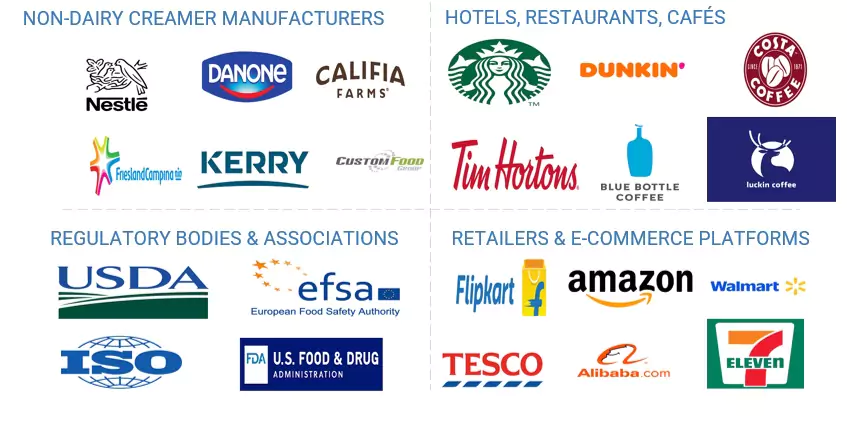
Global Non-Dairy Creamer Market Ecosystem Analysis
Some of the prominent companies in this market include well-established and financially sound manufacturers of non-dairy creamer. These companies have been operational in the market for more than a decade and have diversified portfolios, the latest technologies, and excellent global sales and marketing networks. Some of the prominent companies in this market include Nestlé S.A. (Switzerland), Danone S.A. (France), Kerry (Ireland), Califia Farms, LLC (US), and FrieslandCampina (Netherlands).
Note: The above diagram only shows the representation of the Non-Dairy Creamer Market ecosystem; it is not limited to the companies represented above.
Source: Secondary Research and MarketsandMarkets Analysis
Regular non-dairy creamer will likely lead the market during the forecast period
Regular non-dairy creamer is projected to lead the market in product type segment. This is the most palatable form to which customers can turn. Creaminess and richness are also preferred by consumers who want to experience the closest experience to that of dairy products in their coffee or tea. Most of these products take a more significant part of the market through retail stores and food service outlets. Low-fat and sugar-free varieties are gaining popularity due to trends in health and wellness; however, these products still tend to represent a niche area in comparison with regular creamer. There are many who feel that the low-fat and sugar-free options just do not deliver on taste or mouthfeel. Regular creamers are often cheaper and appeal to a wider base, especially in developing parts of the world where affordability and familiarity drive most purchases.
Regular manufacturers are continuing to innovate, using a blend of ingredients such as oats, almonds, and coconuts, while satisfying creaminess and shelf stability. For this reason, the regular type remains mainstream, ensuring its dominant share in the international non-dairy creamer market despite the rising interest in healthier alternatives.
Conventional non-dairy creamer segment will likely hold largest market share during the forecast period
Conventional non-dairy creamers is projected to dominate this market rather than organic varieties, as these will account for much larger volume and market shares. The reasons for that dominance are their wide availability; cheaper, hence affording accessibility for the majority of consumers. They conventionally serve both retail and food service channels and are provided in supermarkets, convenience stores, and online platforms. The long shelf life, consistent taste profile, and open acceptance of various beverages renders them the preferred type of daily consumption, particularly in emerging markets where price sensitivity is very high.
The raw materials for conventional creamers are from widely available plant-based materials, such as soybean, coconut, and palm kernel oil. Compared to organic creams, they tend to be cheaper and have lower processing costs at a usage scale. The mass production and distribution of ordinary creamers through retail chains, supermarkets, and foodservice outlets left them an attractive choice for consumers who sought both convenience and value in choosing their options. Their long shelf life coupled with the stability of formulation and the consistency of taste have been convincing reasons for greater penetration in the market.
Asia Pacific is estimated to record highest CAGR during the forecast period
The Asia Pacific region is expected to experience the fastest growth in the global non-dairy creamer market, mainly attributed to increasing health consciousness, growing lactose intolerance, and an interest in plant-based diets in key economies. Countries, such as China, India, Indonesia, and Thailand are seeing an increase in demand for all dairy alternatives driven by urbanization, changing diets, and the expansion of the middle class. Additionally, the expanding coffee and tea culture in the region, especially for younger consumers, is stimulating consumption of non-dairy creamers, particularly among urban consumers, who are involved in convenience and lifestyle purchasing habits.
The growth of the non-dairy creamer market is also driven by several factors, including a strong manufacturing base in the region, supportive government policies promoting plant-based food production, and enhancing investment from global and regional players. Local players are also innovating with different lint-free creamers, using soy, coconut, and oats that appeal to local flavor and price points. The increased sale of non-dairy creamers in supermarkets, conveniency stores, and the emergence of online availability has improved consumer access. Consumers with increased health understanding about lactose intolerance, and the importance of food diversity can provide great opportunities for growth for manufacturers wanting to implement more robust markets in emerging markets.
FASTEST GROWING MARKET IN 2030
CHINA: FASTEST-GROWING MARKET IN THE REGION
Recent Developments of Non-Dairy Creamer Market
December 2024, Coffee Mate launched its limited-edition “White Lotus”-inspired creamers, expanding its flavored product portfolio.
In January 2024, MPearlRock completed the acquisition of Nutpods, a leading brand in the better-for-you, non-dairy coffee creamer segment, strengthening its presence in the plant-based beverage market.
In January 2023, Violife launched a dairy-free sour cream alternative, expanding its plant-based offerings across 883 Walmart locations in the US.
In January 2023, Danone North America launched two new plant-based creamers under its alternative dairy brands, Silk and So Delicious, expanding its non-dairy product portfolio.
Key Market Players
List of Top Non-Dairy Creamer Market Companies
The Non-Dairy Creamer Market is dominated by a few major players that have a wide regional presence. The major players in the Non-Dairy Creamer Market are
What is the current size of the non-dairy creamer market?
The non-dairy creamer market is estimated to be USD xx billion in 2025 and is projected to reach USD xx billion by 2030, registering a CAGR of xx during the forecast period.
Which are the key players in the market, and how intense is the competition?
Nestlé S.A. (Switzerland), Danone (France), Kerry (Ireland), Califia Farms, LLC (US), and FrieslandCampina (Netherlands) are some of the key market players.
The market for non-dairy creamer is expanding rapidly, with more mergers, acquisitions, and product launches. Companies in this sector are also heavily investing in research and development.
Which region is projected to account for the largest share of the non-dairy creamer market?
North America holds the largest share in the non-dairy creamer market, driven by high consumer awareness, strong demand for plant-based products, and a well-established coffee culture. The region benefits from a wide availability of non-dairy creamer options across retail and foodservice channels, along with continuous product innovation in terms of flavor, texture, and nutritional enhancements. Rising lactose intolerance, vegan lifestyles, and clean-label preferences further support the region’s market dominance.
What kind of information is provided in the company profiles section?
The company profiles deliver crucial details, including a thorough business summary that covers different segments, financial results, geographic presence, revenue distribution, and business revenue breakdown. They also offer insights into product lines, key achievements, and expert analyst opinions to better illustrate the company's potential.
What are the factors driving the non-dairy creamer market?
The home non-dairy creamer market is driven by rising consumer demand for plant-based and lactose-free alternatives, growing health awareness, and the increasing prevalence of vegan and flexitarian diets. The expanding café culture, especially in urban areas, and the popularity of coffee and tea beverages further support market growth.
Personalize This Research
Triangulate with your Own Data
Get Data as per your Format and Definition
Gain a Deeper Dive on a Specific Application, Geography, Customer or Competitor
I highly appreciate the team's efficiency for a well conducted study that helped us clarify some blind spots in food and agricultural niche markets. Although compiling information for B2B markets is very difficult, the MnM team pulled out the task successfully. The quality of research, level of insights, and responsiveness of team were commendable.




 FASTEST GROWING MARKET IN 2030
 CHINA: FASTEST-GROWING MARKET IN THE REGION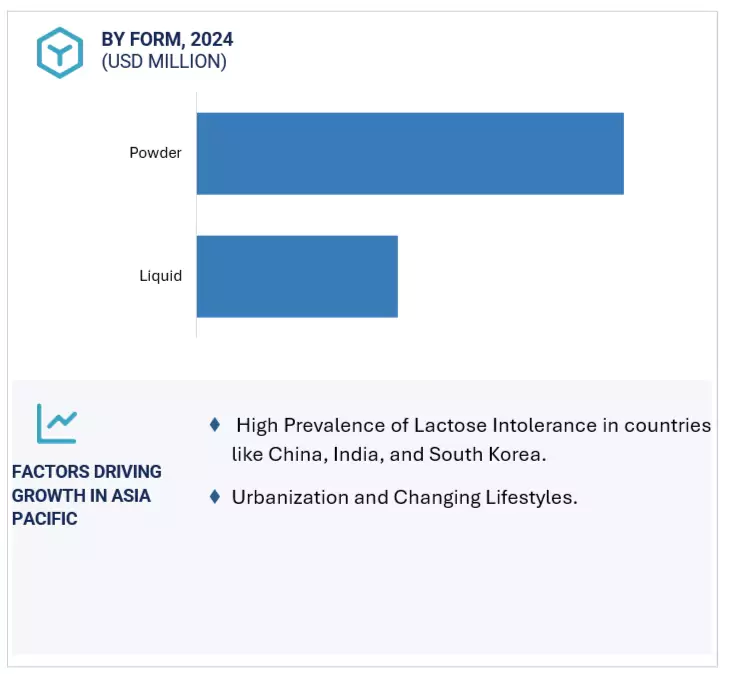










Growth opportunities and latent adjacency in Non-Dairy Creamer Market