

Future of Crystal Oscillators: Advancing Precision in a Connected World
The future of crystal oscillators is set to play a pivotal role in shaping the next generation of electronic devices, communications, and connected systems. As the world embraces ultra-fast 5G networks, Internet of Things (IoT) ecosystems, and autonomous technologies, the demand for highly stable and precise timing components like crystal oscillators has never been greater. Understanding the trajectory and innovations in this field is crucial for industries reliant on accurate frequency control.
Why the crystal oscillators market is growing?
• Rising Consumer Electronics Demand
Smartphones, wearables, and laptops all rely on crystal oscillators for precise timing and performance.
• 5G and Telecom Expansion
Next-gen networks need ultra-stable oscillators for high-speed, low-latency communication.
• Automotive & EV Growth
Modern vehicles, especially EVs and ADAS-equipped models, require reliable oscillators for control and safety systems.
• Boom in IoT Devices
Smart homes, industrial IoT, and edge computing rely on compact, low-power oscillators for synchronization.
• Healthcare Tech Adoption
Medical devices like wearables and remote monitors use crystal oscillators for accurate diagnostics and real-time tracking.
• Industrial Automation
Oscillators enable precision in robotics, sensors, and machine communication across smart factories.
• Tech Advancements
Innovations in TCXO, VCXO, and OCXO are making oscillators more compact, stable, and power-efficient.
Crystal oscillators serve as the heartbeat of electronic systems, providing a stable and consistent frequency reference essential for timing, synchronization, and signal processing. Whether in smartphones, satellite communications, medical devices, or industrial automation, crystal oscillators ensure the seamless operation of countless applications. The future of crystal oscillators lies in their ability to meet increasingly stringent requirements for precision, size, and power consumption.
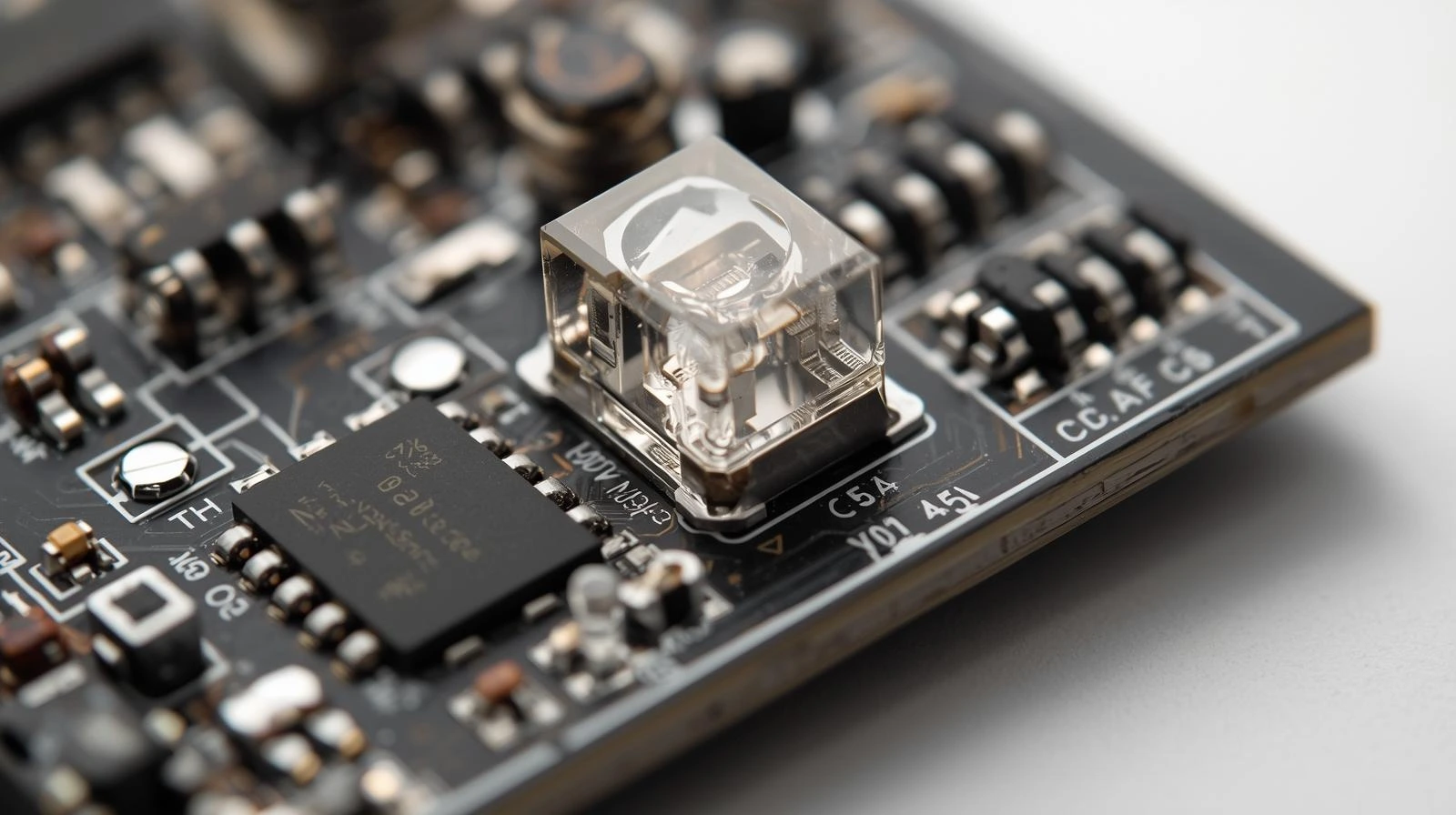
Driving Forces Behind the Future of Crystal Oscillators
Several technological and market trends are propelling the advancement of crystal oscillator technology. The rollout of 5G demands oscillators with ultra-low phase noise and exceptional frequency stability to support high-speed data transmission. Simultaneously, IoT devices require compact, energy-efficient oscillators to function reliably in constrained environments.
Furthermore, emerging fields like autonomous vehicles, aerospace, and quantum computing push the boundaries of oscillator performance. The future of crystal oscillators will be marked by innovations that address these diverse needs, balancing miniaturization with enhanced accuracy.
Innovations Shaping the Future of Crystal Oscillators
Advances in materials science, manufacturing techniques, and design architectures are driving the evolution of crystal oscillators. The integration of microelectromechanical systems (MEMS) with traditional crystal technology is one such breakthrough, offering greater resilience to vibration and temperature variations.
Moreover, new oscillator designs are incorporating temperature compensation and adaptive tuning capabilities, ensuring stable frequency output across a wide range of operating conditions. These innovations directly impact the future of crystal oscillators by expanding their application scope and reliability.
Challenges and Opportunities Ahead
Despite the promising outlook, the future of crystal oscillators faces challenges, including the pressure to reduce size and power consumption while maintaining or improving performance. Competition from alternative timing technologies, such as MEMS-only oscillators and atomic clocks, also drives the industry toward continuous innovation.
However, these challenges present opportunities for companies investing in research and development to capture emerging markets. The convergence of precision, reliability, and efficiency in crystal oscillators will unlock new possibilities in connected devices and smart systems.
Asia-Pacific Leads Crystal Oscillators Market Growth
The Asia-Pacific region is projected to dominate the global crystal oscillators market, driven by its robust electronics manufacturing ecosystem and rapidly expanding consumer base. Countries like China, Japan, South Korea, and Taiwan are home to some of the world’s largest semiconductor and electronics companies, which are major consumers of crystal oscillators in products ranging from smartphones and laptops to industrial equipment and automotive electronics.
In addition to being a manufacturing hub, the region is also experiencing strong demand growth from sectors like automotive (especially EVs and ADAS), 5G telecom infrastructure, and IoT deployments. Governments in countries like India and China are investing heavily in digital infrastructure, smart cities, and industrial automation — all of which require high-precision timing components like crystal oscillators. The rise in local demand is further supported by increased urbanization, a growing middle class, and higher spending on consumer technology.
Furthermore, the availability of low-cost labor, government incentives, and proximity to raw material suppliers make Asia-Pacific an attractive region for oscillator production. This has led global players to either set up manufacturing facilities or partner with local companies in the region. With a strong supply chain and escalating demand across multiple sectors, Asia-Pacific is well-positioned to remain the largest and fastest-growing market for crystal oscillators in the coming years.
The future of crystal oscillators is bright, fueled by the growing need for precise timing in an increasingly connected world. As industries evolve and demand higher performance from their components, crystal oscillators will continue to advance, enabling innovations across telecommunications, healthcare, automotive, and beyond.
Staying informed about these developments is essential for engineers, manufacturers, and investors aiming to leverage the full potential of this critical technology in the years to come.
FAQ :
Q1: Why is the future of crystal oscillators important for investors?
The crystal oscillator market is critical for the backbone of modern electronics, enabling precise timing across telecommunications, automotive, IoT, healthcare, and industrial sectors. Its growth is driven by rising demand for connectivity and automation, presenting strong investment opportunities.
Q2: What industries are driving demand for advanced crystal oscillators?
Key industries include 5G telecom networks, electric and autonomous vehicles, consumer electronics, IoT devices, healthcare monitoring systems, and industrial automation — all requiring high-precision, low-power, and miniaturized oscillators.
Q3: What technological trends should investors watch?
Innovations like temperature-compensated (TCXO), oven-controlled (OCXO), and microelectromechanical systems (MEMS) integrated oscillators are pushing performance boundaries. These advancements enhance oscillator stability, reduce size, and improve energy efficiency.
Q4: How does the rise of 5G impact the crystal oscillator market?
5G requires ultra-low phase noise and stable frequency references to ensure high-speed, reliable connectivity. This significantly increases demand for advanced oscillators in network infrastructure and devices, driving market growth.
Q5: Which geographic markets offer the best growth potential?
Asia-Pacific is the largest and fastest-growing market due to its robust electronics manufacturing, expanding telecom infrastructure, and growing automotive and IoT sectors. North America and Europe also present opportunities driven by aerospace, defense, and healthcare technologies.
80% of the Forbes Global 2000 B2B companies rely on MarketsandMarkets to identify growth opportunities in emerging technologies and use cases that will have a positive revenue impact.
- Food Packaging Market Size Set for Strong Growth Through 2030 Amid Rising Demand for Convenience Foods
- Mulch Films Market: Driving Sustainable Agriculture Through Innovation
- Agricultural Adjuvants Market Analysis, Trends, and Growth Outlook (2026–2031)
- Crop Protection Chemical Market Size, Share & Growth Forecast (2025–2030)
- Japan Enterprise Asset Management Market Growth: AI and Smart Infrastructure Drive Demand


