

USA Wireless Audio Devices Market Size, Share, Trends & Industry Report
The USA wireless audio devices market is evolving as consumers increasingly prefer convenient, high-quality audio experiences across smartphones, laptops, televisions, gaming consoles, and smart home devices. Wireless headphones, truly wireless stereo (TWS) earbuds, Bluetooth speakers, and smart audio systems have become important products for entertainment, communication, fitness, remote work, and everyday listening. Improvements in Bluetooth connectivity, battery performance, active noise cancellation (ANC), and artificial intelligence (AI) are also changing how consumers interact with audio technology.
Demand is supported by the popularity of music and video streaming, podcasts, online meetings, mobile gaming, and connected devices. Consumers are looking for products that combine clear sound, comfortable designs, long battery life, reliable connectivity, and intuitive controls. As a result, manufacturers are competing through product innovation, premium features, ecosystem integration, and differentiated listening experiences.
Download PDF Brochure :
https://www.marketsandmarkets.com/pdfdownloadNew.asp?id=1275
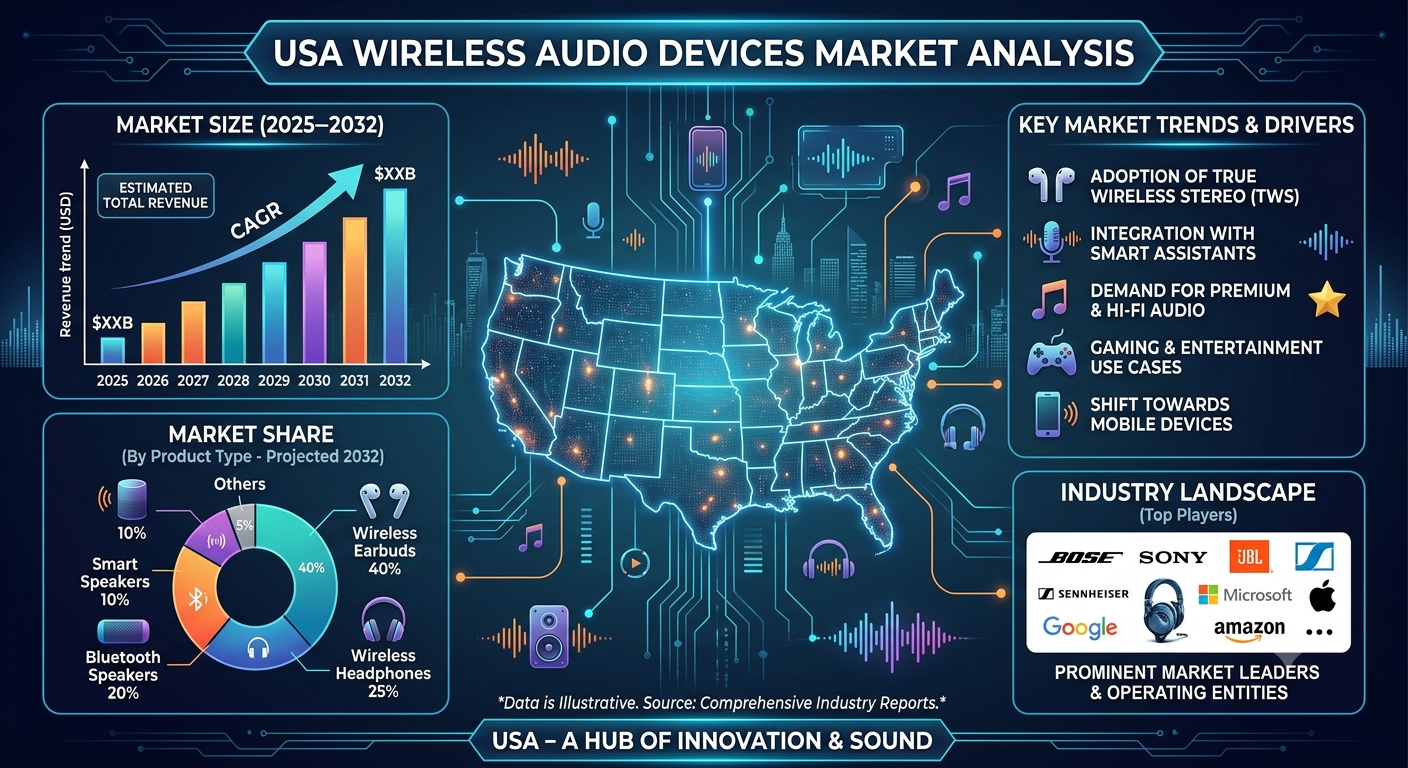
USA Wireless Audio Devices Market Size and Industry Overview
The USA wireless audio devices market includes a broad range of products designed to transmit audio without a traditional wired connection. Key categories include wireless headphones, TWS earbuds, Bluetooth speakers, wireless gaming headsets, and smart speakers with audio streaming capabilities. These products serve individual consumers, businesses, educational institutions, fitness users, and entertainment applications.
Market size and revenue performance depend on factors such as unit sales, average selling prices, replacement cycles, premium product adoption, and demand across different device categories. Wireless earbuds and headphones benefit from everyday portability, while Bluetooth speakers are popular for home entertainment, outdoor activities, and social gatherings. Premium headphones attract consumers who prioritize immersive sound, noise cancellation, and comfort during long listening sessions.
The market also benefits from the widespread adoption of smartphones and other connected devices. As manufacturers reduce or eliminate traditional headphone ports on many devices, wireless audio products have become an important accessory category. At the same time, consumers are increasingly purchasing audio products that integrate seamlessly with their existing smartphones, tablets, computers, smart televisions, and voice assistants.
Note: A precise USA-only market valuation, market share breakdown, or forecast CAGR should be added only after confirming the figures from a consistent market research source. Market estimates can vary depending on whether the study includes headphones and earbuds alone or also covers speakers and other wireless audio equipment.
USA Wireless Audio Devices Market Share by Product Type
Product segmentation is an important factor in understanding the competitive landscape of the USA wireless audio devices market. Wireless headphones, TWS earbuds, Bluetooth speakers, and other connected audio products address different consumer needs and price points.
True wireless stereo (TWS) earbuds are an important product category because of their compact form factor, portability, and compatibility with smartphones. Consumers use them for music streaming, video calls, fitness activities, commuting, and gaming. Features such as touch controls, multipoint connectivity, voice assistant support, and active noise cancellation are helping manufacturers differentiate their offerings.
Wireless headphones remain attractive to consumers who prioritize immersive sound, extended listening comfort, and noise reduction. Over-ear headphones are particularly relevant for travel, office work, gaming, and home entertainment. Premium models increasingly incorporate adaptive noise cancellation, spatial audio, and personalized sound settings.
Bluetooth speakers serve residential, outdoor, and social entertainment applications. Portable designs, water resistance, improved battery life, and stereo pairing are key purchase considerations. Meanwhile, wireless soundbars and smart speakers support home entertainment, connected living spaces, and voice-controlled audio experiences.
Product market shares vary by research methodology, geographic coverage, and revenue definition. For example, some studies focus on personal audio devices, while others include speakers, soundbars, and additional wireless audio equipment.
Artificial Intelligence and Smart Audio Technology
Artificial intelligence is becoming an important differentiator in wireless audio products. AI-enabled systems can help reduce background noise, improve voice clarity, adjust sound profiles, and enhance speech recognition. These capabilities are valuable for users who frequently participate in online meetings, make calls in noisy environments, or listen to audio while travelling.
Adaptive audio technologies can also modify listening settings according to surrounding noise levels and user preferences. As processing capabilities improve, manufacturers have opportunities to introduce more personalized listening experiences without requiring users to make frequent manual adjustments.
Active Noise Cancellation and Spatial Audio
Active noise cancellation is a major feature in premium wireless headphones and earbuds. The technology uses microphones and signal processing to reduce unwanted ambient sound, making it useful in offices, public transport, aircraft cabins, and busy environments.
Spatial audio is another important trend, particularly in entertainment, gaming, and video streaming. By creating a more immersive listening experience, spatial audio can help manufacturers distinguish premium products from entry-level alternatives. The combination of noise cancellation, high-quality microphones, and advanced sound processing is strengthening competition in the higher-value segment.
Battery Life and Wireless Connectivity
Battery performance remains a significant consideration for consumers. Users increasingly expect wireless headphones and earbuds to support extended listening sessions, quick charging, and convenient charging cases. Manufacturers are also working to balance battery capacity with compact product designs.
Bluetooth continues to be a core connectivity technology for personal audio products, while Wi-Fi supports selected smart speakers and home audio systems. Improved connectivity, multipoint pairing, and lower-latency performance can improve usability across smartphones, computers, televisions, and gaming devices.
Open-Ear Audio and Lifestyle Integration
Open-ear headphones and earbuds are attracting attention from consumers who want to listen to audio while remaining more aware of their surroundings. These products can appeal to runners, cyclists, fitness enthusiasts, and people who use audio devices throughout the day.
Lifestyle-focused designs are also influencing product development. Manufacturers are differentiating products through comfort, lightweight construction, durability, appearance, and integration with health and fitness routines. Recent product coverage highlights both advanced wireless earbuds and the emergence of open-ear designs, illustrating the variety of consumer preferences in the category.
Several factors are influencing demand for wireless audio devices across the United States.
First, the continued use of digital entertainment platforms supports demand for headphones, earbuds, speakers, and home audio products. Consumers use wireless devices for music, podcasts, films, gaming, and online content.
Second, hybrid work and digital communication create demand for devices with reliable microphones, comfortable designs, and effective background-noise reduction. Wireless headsets and earbuds are useful for remote meetings, business calls, and professional collaboration.
Third, product innovation encourages consumers to replace older devices with models offering better connectivity, longer battery life, and more advanced audio features. Premium products can also increase market revenue even when unit sales grow more slowly.
Finally, e-commerce and omnichannel retail make wireless audio devices accessible across different price ranges. Online product comparisons, customer reviews, promotional campaigns, and direct-to-consumer sales give buyers more ways to evaluate competing brands. However, market conditions can vary by category: Euromonitor's 2025 US wireless-headphones analysis reported a slowdown in volume sales that year, while identifying premium wireless headbands as a relatively stronger performer in value growth.
The USA wireless audio devices market features established consumer electronics brands and specialist audio manufacturers. Competition involves sound quality, design, product reliability, software features, pricing, and compatibility with connected-device ecosystems.
Key companies active in the broader wireless audio category include:
-
Apple: AirPods products, device integration, and spatial audio features.
-
Bose: Noise-cancelling headphones and premium audio products.
-
Sony: Wireless headphones, earbuds, and audio-processing technologies.
-
Samsung: Galaxy Buds and connected-device integration.
-
JBL: Wireless earbuds, headphones, and portable Bluetooth speakers.
These companies pursue different positioning strategies, ranging from premium audio performance and ecosystem integration to portable designs and broader price accessibility. Actual market shares should be established using a defined reporting period and comparable company-level sales data rather than inferred from brand visibility.
Challenges and Market Opportunities
Despite favorable technology trends, the market faces challenges. Strong competition can put pressure on product prices and profit margins, especially in entry-level earbuds and speakers. Consumers may also delay purchases when existing devices continue to meet their needs. Battery degradation, device compatibility, connectivity issues, and concerns about data privacy can affect satisfaction and brand loyalty.
Manufacturers have opportunities to address these challenges through improved product durability, repairability, battery efficiency, and software support. AI-powered audio processing, specialized gaming headsets, premium noise cancellation, and open-ear designs may create additional differentiation. Businesses can also explore opportunities in professional communication, education, fitness, hospitality, and smart-home applications.
USA Wireless Audio Devices Market Outlook
The outlook for the USA wireless audio devices market will depend on consumer spending, product replacement cycles, premium-device adoption, and advances in wireless and audio-processing technologies. AI-based sound optimization, spatial audio, better microphone performance, and energy-efficient connectivity are likely to remain important areas of product development.
Market participants will need to balance innovation with affordability, usability, privacy, and battery performance. Companies that respond effectively to different consumer needs—from affordable everyday earbuds to premium headphones and connected home audio systems—can strengthen their competitive position.
For businesses and investors, a detailed industry report should assess market size, forecast growth, product segmentation, connectivity technologies, distribution channels, competitive positioning, and emerging opportunities. These factors provide a more complete view of the USA wireless audio devices market and its potential development through the forecast period.
Research note: Market size and growth figures differ substantially across published reports because of differences in product coverage and research methodology. Before publishing a specific US market valuation, share percentage, or CAGR, verify that the selected source measures the same market definition and forecast period throughout.
80% of the Forbes Global 2000 B2B companies rely on MarketsandMarkets to identify growth opportunities in emerging technologies and use cases that will have a positive revenue impact.
- Food Packaging Market Size Set for Strong Growth Through 2030 Amid Rising Demand for Convenience Foods
- Crop Protection Chemical Market Size, Share & Growth Forecast (2025–2030)
- Mulch Films Market: Driving Sustainable Agriculture Through Innovation
- Agricultural Adjuvants Market Analysis, Trends, and Growth Outlook (2026–2031)
- Japan Enterprise Asset Management Market Growth: AI and Smart Infrastructure Drive Demand

