Asia Pacific Nuclear Medicine Market Size, Growth, Share & Trends Analysis

Asia Pacific Nuclear Medicine Market by Type (SPECT [Tc99m, I-123, Ga-67], PET [F-18, Rb-82], Alpha Emitters, Beta Emitters [Y-90], Brachytherapy), Application (Onco, Thyroid, Cardio), Procedure, End User (Imaging Center, Hospital) - Forecast to 2030




OVERVIEW
Source: Secondary Research, Interviews with Experts, MarketsandMarkets Analysis
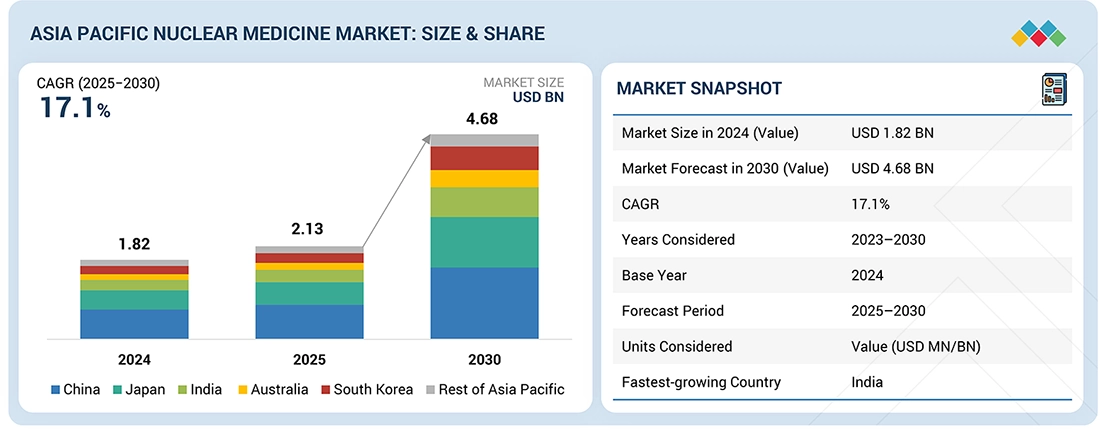
The Asia Pacific nuclear medicine market, valued at USD 1.82 billion in 2024, stood at USS 2.13 billion in 2025 and is projected to advance at a resilient CAGR of 17.1% from 2025 to 2030, culminating in a forecasted valuation of USD 4.68 billion by the end of the period. This is due to the increased demand for radiopharmaceuticals and radioisotopes. This is associated with an increasing cancer burden, increased use of PET and SPECT imaging, and the growing use of targeted radioligand therapies. Large markets, such as China, India, Japan, South Korea and Australia, are growing nuclear medicine infrastructure, cyclotron capacity and local production of radiopharmaceuticals and the favorable government programs and increased clinical awareness are further fueling market growth.
KEY TAKEAWAYS
-
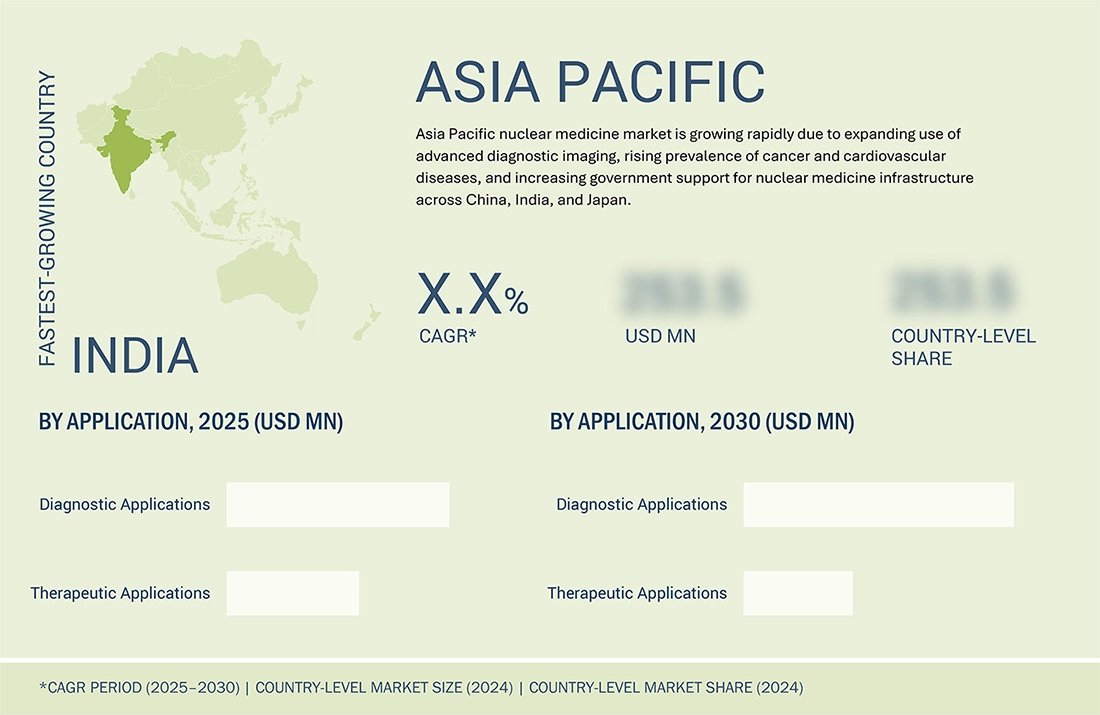
BY COUNTRYBy country, India is expected to register the highest CAGR of 19.0% from 2025 to 2030.
-
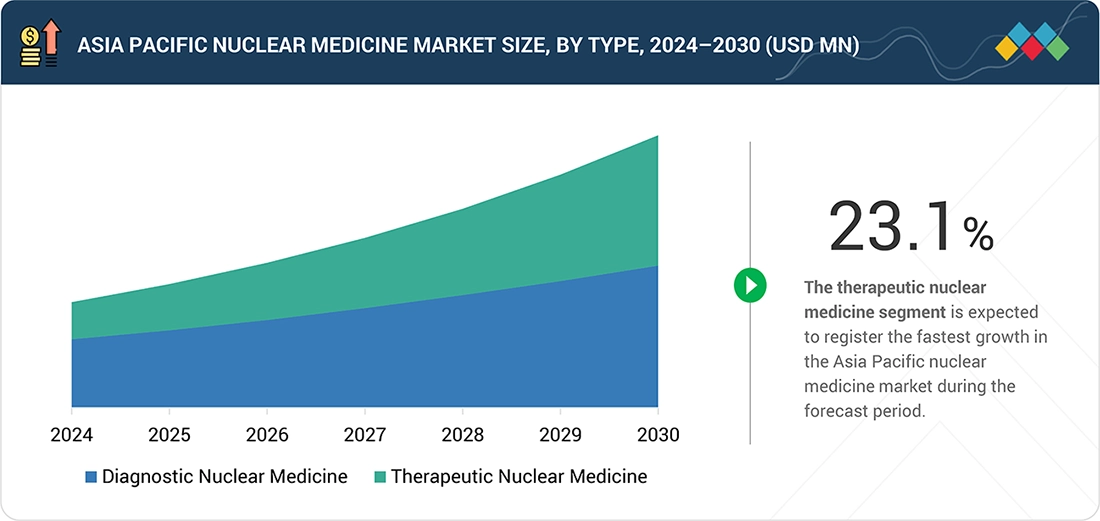
BY TYPEBy type, the therapeutic nuclear medicine segment is expected to register the highest CAGR of 23.1% during the forecast period.
-
BY APPLICATIONBy application, the diagnostic applications segment accounted for the largest share of 65.0% in 2024
-
BY VOLUME ASSESSMENTBy volume assessment, the diagnostic procedures segment is expected to dominate the market between 2025 and 2030.
-
BY END USERBy end user, the hospitals segment accounted for the largest share in 2024.
-
COMPETITIVE LANDSCAPEGE HealthCare, Cardinal Health, and Sun Pharmaceutical Industries, Inc. are key leaders in the Asia Pacific nuclear medicine market, recognized for their extensive product portfolios, robust data integration capabilities, and strong presence across healthcare ecosystems.
Asia Pacific nuclear medicine market is rising due to the rise in investments in PET/CT and SPECT/CT facility and the increase in radiopharmaceuticals and radioisotopes for the treatment of cancer. Significant markets, such as China, India, Japan, South Korea and Australia, are increasing cyclotron capacity and local production of radiopharmaceuticals to enhance the availability of isotopes. The intensifying use of oncology-targeted radioisotopes, the rising level of interest in theranostics and the enhanced cooperation between radiopharmaceutical companies and hospital systems are also encouraging the expansion of the market in the region.
TRENDS & DISRUPTIONS IMPACTING CUSTOMERS' CUSTOMERS
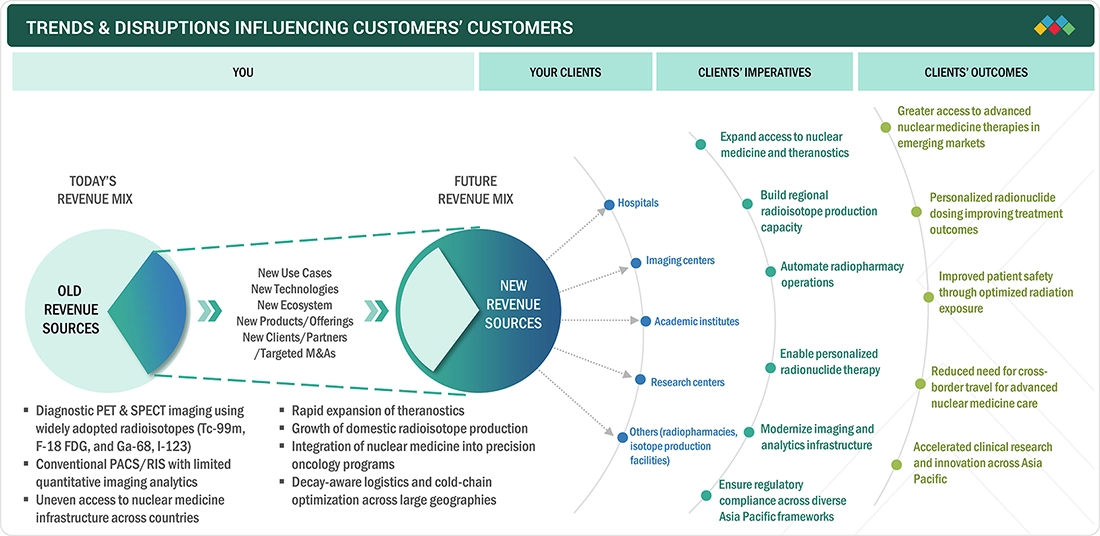
Trends in the Asia Pacific nuclear medicine market are driven by the rise in radiopharmaceutical and radioisotopes applications and the efforts to address the shortage of supply and the insufficient variability of infrastructure. A significant disruption is the adoption of local radioisotope manufacture and more extensive cyclotron networks in China, India, Japan, South Korea and Australia so as to counteract the threat of short half-life isotopes supply. The increasing use of theranostics and radioligand therapy and the more extensive use of automated radiopharmacy systems are transforming clinical practice. This also adds to the trends toward the cost-effective and outcome-focused purchase of nuclear medicine systems.
Source: Secondary Research, Interviews with Experts, MarketsandMarkets Analysis
MARKET DYNAMICS

Level
-
Rapid expansion of healthcare infrastructure in emerging economies

-
Growing government support for nuclear medicine programs


Level
-
Limited access to radioisotopes and nuclear pharmacy infrastructure

-
Uneven reimbursement coverage


Level
-
Localization of radioisotope manufacturing

-
Rising clinical adoption of theranostics


Level
-
Shortage of skilled nuclear medicine professionals

-
Regulatory variability across countries

Source: Secondary Research, Interviews with Experts, MarketsandMarkets Analysis
Driver: Rapid expansion of healthcare infrastructure in emerging economies
The Asia Pacific nuclear medicine market is largely fueled by the growth of healthcare infrastructure in emerging economies, which has been a significant market for radiopharmaceuticals and radioisotopes. China and other countries, including India, are building new hospitals, cancer centers, and diagnostic venues and assist in the broader usage of PET and SPECT imaging. Such growth is contributing to the growing number of nuclear medicine departments, cyclotrons, and radiopharmacies. These are also enhancing access to high-quality diagnostics and necessitating continued demand of nuclear medicine solutions throughout the region.
Restraint: Limited access to radioisotopes and nuclear pharmacy infrastructure
The constraint to the development of the Asia Pacific nuclear medicine market is limited access to radioisotopes and nuclear pharmacy facilities. Radioisotopes imported to Asia Pacific countries are of great use. Therefore, there is exposure to the supply disruptions, high logistics, and difficulties related to short half-life radiopharmaceuticals. In the emerging markets, cyclotrons, licensed nuclear pharmacies, and trained radiopharmacists are limited. This limits the availability of diagnostic and therapeutic isotopes consistently, except in large cities. These infrastructure gaps affect the volume of procedures, impede the adoption of advanced nuclear medicine procedures, and retards the growth of the market even as clinical demand keeps increasing in Asia Pacific.
Opportunity: Localization of radioisotope manufacturing
The manufacturing of radioisotopes locally is a significant opportunity to Asia Pacific nuclear medicine market as it is the direct solution to the problems of supply shortages and reliance on imports. The emerging trends in spending in the domestic cyclotron facilities and radiopharmaceutical production capacities in China, India, Japan, and Australia as a measure of reliability in accessing short half-life radioisotopes. This shift simplifies the logistics, increases cost-effectiveness, and supply security, which allows greater implementation of PET, SPECT, and theranostic procedures. Regional alliances, technology transfer and capacity building, positioning Asia Pacific as a more self-reliant and scalable nuclear medicine market.
Challenge: Shortage of skilled nuclear medicine professionals
A major threat to the Asia Pacific nuclear medicine market is the shortage of qualified nuclear medicine practitioners since growth in the application of radiopharmaceuticals and radioisotopes is increasing faster than the number of workers. The presence of only a few trained nuclear medicine physicians, radiopharmacists and technologists, particularly in developing economies, limits the effective functioning of nuclear medicine facilities and the uptake of other advanced applications, including theranostics, limiting market development.
ASIA PACIFIC NUCLEAR MEDICINE MARKET: COMMERCIAL USE CASES ACROSS INDUSTRIES
| COMPANY | USE CASE DESCRIPTION | BENEFITS |
|---|---|---|
 |
Supply of PET and SPECT radiopharmaceuticals for oncology, cardiology, and neurology imaging across Asia Pacific | Expanded access to advanced nuclear imaging | Reliable isotope supply | Improved diagnostic accuracy |
 |
Distribution support and nuclear pharmacy expertise for radiopharmaceutical handling and delivery in select Asia Pacific healthcare systems | Improved logistics efficiency | Timely radiotracer availability | Consistent imaging operations |
 |
Production and regional distribution of diagnostic and therapeutic radiopharmaceuticals, including PET and SPECT radioisotopes, across Asia Pacific | Stable isotope availability | Improved imaging quality | Broader adoption of nuclear medicine procedures |
 |
Radioisotope-based diagnostic and therapeutic solutions for oncology applications across Asia Pacific healthcare markets | Targeted cancer treatment | Improved patient outcomes | Growing access to advanced nuclear therapies |
 |
Supply of diagnostic radiopharmaceuticals and PET imaging agents for cardiac and oncologic imaging in the Asia Pacific region | Faster and more accurate disease detection | Improved clinical decision-making | Support for expanding nuclear medicine infrastructure |
Logos and trademarks shown above are the property of their respective owners. Their use here is for informational and illustrative purposes only.
MARKET ECOSYSTEM
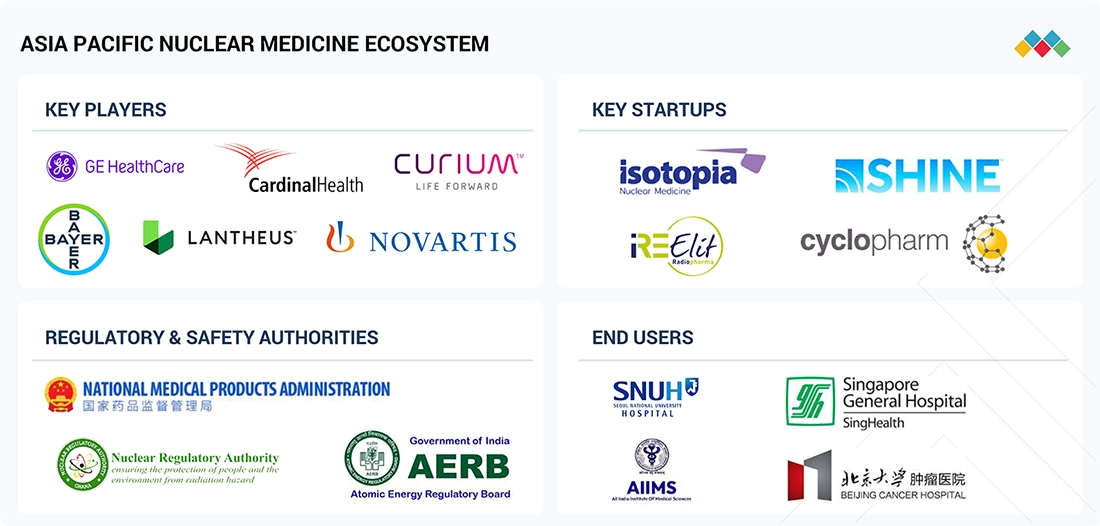
The Asia Pacific nuclear medicine ecosystem consists of radiopharmaceutical companies, institutions of the public sector, and radiopharmacies based in hospitals that serve the production and clinical use of radioisotopes. Imaging technologies, radiopharmaceutical supply, and localized manufacturing make contributions through players such as GE HealthCare, Curium, and Sun Pharmaceutical Industries, Inc. Increasing the interaction between suppliers of nuclear medicine, between healthcare professionals and research centers is bolstering regional supply chains and catalyzing the adoption of nuclear medicine in the region.
Logos and trademarks shown above are the property of their respective owners. Their use here is for informational and illustrative purposes only.
MARKET SEGMENTS
Source: Secondary Research, Interviews with Experts, MarketsandMarkets Analysis
Asia Pacific Nuclear Medicine Market, By Type
Based on type, the Asia Pacific nuclear medicine market is segmented into diagnostic nuclear medicine and therapeutic nuclear medicine, with the diagnostic segment accounting for the largest share. The wide application of radiopharmaceuticals as diagnostic tools in the early detection of diseases in the fields of oncology, cardiology, and neurology causes this growth. The success of diagnostic segment within the Asia Pacific nuclear medicine market is reinforced by the increasing adoption of PET and SPECT imaging in various hospitals and diagnostic centers in China, India, Japan and South Korea as well as the growing healthcare infrastructure and increasing awareness of early diagnosis.
Asia Pacific Nuclear Medicine Market, By Application
Based on application, the diagnostic segment holds a significant share in the Asia Pacific nuclear medicine market due to the increasing application of nuclear imaging in diagnosis and monitoring of cancer, cardiovascular, and neurological disorders. Diagnostic radiopharmaceuticals are demanded with the growing presence of PET and SPECT imaging in hospitals and other diagnostic centers, especially in developing economies, such as China, India and Japan. Moreover, the increasing awareness of the importance of early diagnosis, the growth in the availability of healthcare, and the low cost of diagnostic nuclear medicine as opposed to invasive procedures are also driving this segment in Asia Pacific.
Asia Pacific Nuclear Medicine Market, By Volume Assessment
Based on volume assessment, the diagnostic procedures segment contributed significantly to the Asia Pacific nuclear medicine market. This is due to the rate of diagnostic nuclear medicine procedures being executed among the hospitals and imaging centers in the area is high. The extensive application of PET and SPECT scan during cancer screening, staging of the disease and monitoring of therapy, especially in the most populated countries, such as China and India, promotes significantly higher volumes of procedures than the therapeutic use. Additionally, the procedure time is even shorter, the clinical indication is even wider, and the numbers of non-invasive diagnostic imaging referred to increase, which all demonstrates the predominance of the diagnostic procedures in the Asia Pacific nuclear medicine market.
Asia Pacific Nuclear Medicine Market, By End User
By end user, the Asia Pacific nuclear medicine market is segmented into hospitals, imaging centers, academic & research centers, and other end users, with the hospital segment holding a significant share. The nuclear medicine infrastructure has been concentrated in hospitals, comprising of PET and SPECT, radiopharmacies and integrated oncology services. Asian Pacific hospitals undertake a great number of tests and treatment procedures. It is facilitated by improved access to radiopharmaceuticals and specialized personnel. Moreover, the growth of tertiary and specialized hospitals in China, India, and Japan, among other countries, is also strengthening the leading portion of the hospital segment in the market of nuclear medicine in the region.
REGION
India to be fastest-growing region in Asia Pacific nuclear medicine market during forecast period
India is expected to register the fastest-growing country in the Asia Pacific nuclear medicine market during the forecast period. This is due to the fast development of healthcare facilities, the incidence of cancer, and the use of nuclear medicine tests and treatment. The market is expanding at a healthy rate in India due to increasing investments in PET and SPECT imaging systems, developing domestic production of radiopharmaceuticals and favorable government initiatives.
ASIA PACIFIC NUCLEAR MEDICINE MARKET: COMPANY EVALUATION MATRIX
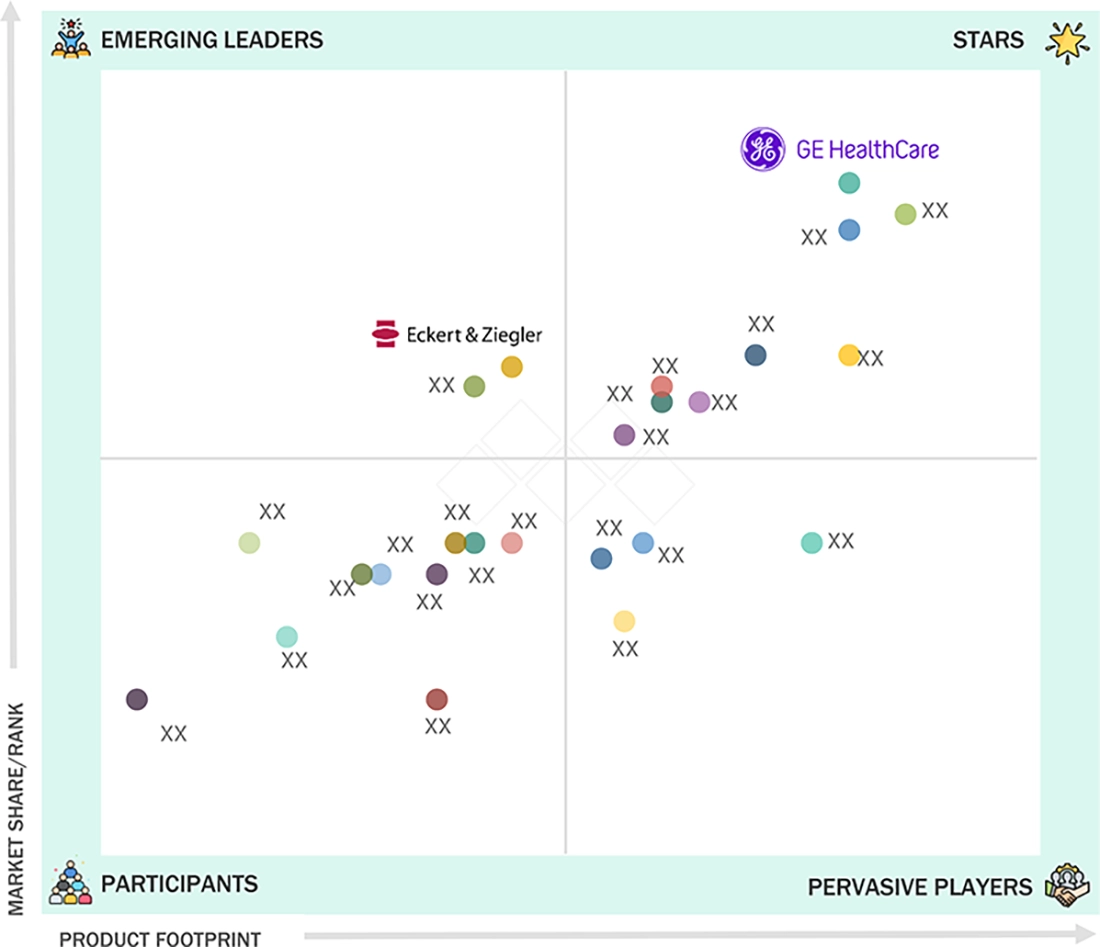
GE HealthCare plays a major role in the Asia Pacific nuclear medicine market due to its healthy PET and SPECT imaging range and collaborations with local hospitals in the area. Additionally, regional firms, including Sun Pharmaceutical Industries, Inc., are also rising by increasing manufacturing of local radiopharmaceutical and radioisotopes to satisfy growing diagnostic and therapeutic demand which makes Asian Pacific a booming nuclear medicine market. Eckert & Ziegler is emerging as a promising player in the region by leveraging its strengths in radioisotope production and radiopharmaceutical development to address the rising demand for nuclear medicine procedures across Asia Pacific.
Source: Secondary Research, Interviews with Experts, MarketsandMarkets Analysis
KEY MARKET PLAYERS
- GE HealthCare (US)
- Cardinal Health (US)
- Curium (France)
- Bayer AG (Germany)
- Lantheus Holdings, Inc. (US)
- Novartis AG (Switzerland)
- Jubilant Pharmova Limited (India)
- Bracco Imaging S.P.A (Italy)
- Pharmalogic Holdings Corp. (US)
- Sun Pharmaceutical Industries, Inc. (India)
- Nordion Inc. (Canada)
- Siemens Healthineers AG (Germany)
- NorthStar Medical Radiosiotopes, LLC (US)
- Eckert & Ziegler (Germany)
- Isotope JSC (Russia)
- Global Medical Solutions (US)
- Telix Pharmaceuticals Limited (Australia)
- PDRadiopharma Inc. (Japan)
- ITM Isotope Technologies Munich SE (Germany)
- BWX Technologies Inc. (US)
- SHINE Technologies, LLC (US)
- Isotopia (Israel)
- China Isotope & Radiation Corporation (China)
- IRE Elit (Turkey)
- Cyclopharm (Australia)
MARKET SCOPE
| REPORT METRIC | DETAILS |
|---|---|
| Market Size in 2024 (Value) | USD 1.82 Billion |
| Market Forecast in 2030 (Value) | USD 4.68 Billion |
| Growth Rate | CAGR of 17.1% from 2025-2030 |
| Years Considered | 2023-2030 |
| Base Year | 2024 |
| Forecast Period | 2025-2030 |
| Units Considered | Value (USD Million/Billion) |
| Report Coverage | Revenue forecast, company ranking, competitive landscape, growth factors, and trends |
| Segments Covered |
|
| Countries Covered | China, Japan, India, Australia, South Korea, and Rest of Asia Pacific |
| Parent & Related Segment Reports |
Nuclear Medicine Market US Nuclear Medicine Market Europe Nuclear Medicine Market |
WHAT IS IN IT FOR YOU: ASIA PACIFIC NUCLEAR MEDICINE MARKET REPORT CONTENT GUIDE
DELIVERED CUSTOMIZATIONS
We have successfully delivered the following deep-dive customizations:
| CLIENT REQUEST | CUSTOMIZATION DELIVERED | VALUE ADDS |
|---|---|---|
| Competitive Landscape Mapping | Lists of leading players in the Asia Pacific and world nuclear medicine (e.g., GE HealthCare, Siemens Healthineers, Toshiba Canon Medical, Curium, China Isotope and Radiation Corp.) in the fields of radiopharmaceuticals, PET / SPECT systems and radiopharmacy services. | Facilitates competitive benchmarking, brings out the differentiation among tracers, imaging platforms, and local production capabilities. |
| Market Entry & Growth Strategy | An analysis of the demand in China, Japan, India, South Korea, and Australia based on the level of demand indicated by the country, the maturity of the healthcare infrastructure, and the amount of investment the government and the private sector have invested in nuclear medicine. | Eliminates entry risk, facilitates prioritization in high-growth countries and applications, and planning a scalable regional expansion. |
| Regulatory & Operational Risk Analysis | Audit of regional and country regulation systems (NMPA, PMDA, CDSCO, ARPANSA), radiation safety standards, and limitations on the import and export of isotopes. | Improves regulatory preparedness, compliance/supply-chain risk mitigation, and confidence in market-entry. |
| Technology Adoption Trends | Novel information on using new PET tracers, theranostics, PET/ CT growth, cyclotrons, and automation in radiopharmacies. | Informs portfolio and investment strategy, makes it competitive, and contributes to the targeted technology deployment across the region. |
RECENT DEVELOPMENTS
- April 2025 : Telix Pharmaceuticals partnered with Cardinal Health to assist in the commercial distribution of its gallium- 68 PSMA-PET imaging agent Gozellix in the US. This facilitated its widespread availability on the market after the agency granted approval.
- January 2025 : Telix Pharmaceuticals and Curium Pharma signed an agreement for Scintimun (99mTc- besilesomab) is a diagnostic radiopharmaceutical used to image infections. The arrangement assigns the international marketing and distribution rights to Curium and makes Curium a contract manufacturer of the product.
- January 2025 : Eckert & Ziegler signed a licensing agreement with Qi Kang medical, a joint venture between Eckert and Ziegler and DC Pharma pertaining to the cyclotron technology to generate actinium-225 on a GMP grade.
Table of Contents
 Exclusive indicates content/data unique to MarketsandMarkets and not available with any competitors.
Methodology
The study involved four major activities in estimating the current size for the Asia Pacific Nuclear Medicine Market. Exhaustive secondary research was done to collect information on the market and its different subsegments. The next step was to validate these findings, assumptions, and sizing with industry experts across the value chain through primary research. Both top-down and bottom-up approaches were employed to estimate the complete market size. After that, market breakdown and data triangulation were used to estimate the market size of segments and subsegments.
Secondary Research
In the secondary research process, various secondary sources such as D&B Hoovers, Bloomberg Business, and Factiva have been referred to, to identify and collect information for the market study. These secondary sources included annual reports, press releases & investor presentations of companies, white papers, certified publications, articles by recognized authors, gold standard & silver standard websites, regulatory bodies, and databases.
Primary Research
The Asia Pacific Nuclear Medicine Market comprises several stakeholders, such as preferred suppliers and distributors, healthcare institutions (hospitals, medical schools, group practices, individual surgeons, and governing bodies), medical device vendors/service providers, research institutes, and research and consulting firms. Various primary sources from both the supply and demand sides of the market were interviewed to obtain qualitative and quantitative information. Mentioned below is the breakdown of primary respondents:
To know about the assumptions considered for the study, download the pdf brochure
Market Size Estimation
Both top-down and bottom-up approaches were used to estimate and validate the total size of the Asia Pacific Nuclear Medicine Market. These methods were also used extensively to estimate the size of various subsegments in the market. The research methodology used to estimate the market size includes the following:
- The key players in the industry and markets have been identified through extensive secondary research
- The industry’s supply chain and market size, in terms of value, have been determined through primary and secondary research processes
- All percentage shares, splits, and breakdowns have been determined using secondary sources and verified through primary sources
Data Triangulation
After arriving at the overall Asia Pacific Nuclear Medicine Market size—using the market size estimation processes as explained above—the market was split into several segments and subsegments. To complete the overall market engineering process and to arrive at the exact statistics of each market segment and subsegment, the data triangulation and market breakdown procedures were employed, wherever applicable. The data was triangulated by studying various factors and trends from both the demand and supply sides in the nuclear medicine industry
Report Objectives
- To define, describe, and forecast the Asia Pacific Nuclear Medicine Market on the basis of type, application, procedural volume, and country
- To provide detailed information regarding the major factors influencing the growth of the Asia Pacific Nuclear Medicine market (such as drivers, restraints, and opportunities)
- To analyze the micromarkets with respect to individual growth trends, prospects, and contributions to the overall Asia Pacific Nuclear Medicine market
- To analyze the opportunities for stakeholders and provide details of the competitive landscape for market leaders in the Asia Pacific Nuclear Medicine market
- To forecast the size of the market segments with respect to Asia Pacific Nuclear Medicine market
- To strategically analyze the market structure and profile key players and their core competencies in the Asia Pacific Nuclear Medicine market
- To track and analyze competitive developments such as product launches, expansions, acquisitions, partnerships, and collaborations in Asia Pacific Nuclear Medicine market
Available Customizations
With the given market data, MarketsandMarkets offers customizations as per the company’s specific needs. The following customization options are available for the Asia Pacific Nuclear Medicine Market report:
Product Analysis
- Product matrix, which gives a detailed comparison of the software portfolios of the top five companies
Company Information
- Detailed analysis and profiling of additional market players (up to 5)


Personalize This Research
- Triangulate with your Own Data
- Get Data as per your Format and Definition
- Gain a Deeper Dive on a Specific Application, Geography, Customer or Competitor
- Any level of Personalization
Let Us Help You
- What are the Known and Unknown Adjacencies Impacting the Asia Pacific Nuclear Medicine Market
- What will your New Revenue Sources be?
- Who will be your Top Customer; what will make them switch?
- Defend your Market Share or Win Competitors
- Get a Scorecard for Target Partners

Custom Market Research Services
We Will Customise The Research For You, In Case The Report Listed Above Does Not Meet With Your Requirements
Get 10% Free CustomisationTESTIMONIALS

JAYANT RAJPUROHIT
Director of Market Insights, Data and Analytics
SFI Health,
Leading Pharmaceutical Companywww.sfihealth.com/

We at SFI Health approached MarketsandMarkets for an Opportunity Assessment on "Incidence and Prevalence of Focus Indications" as we wanted to know the most attractive HCPs like Physician, Functional MD, Naturopath and Pharmacist. The project was critical for us to ensure our focus on the right target which would enable sustainable growth and profitability for SFI Health. The business insights provided exceeded our expectations and we were extremely impressed. The team at MarketsandMarkets is highly professional and detail oriented and very well understood our business needs. MarketsandMarkets offers a unique combination of expertise and dedicated engagement model. We identified 2 new products to be launched in coming months, based on the research findings provided by MarketsandMarkets. We are happy with the services and would strongly recommend MarketsandMarkets to my peers in the industry.

BEATRIZ DE LA CALLE
Head of Commercial Analytics
Qualicaps,
Leading Pharmaceutical Companywww.qualicaps.com/

We partnered with MarketsandMarkets for an assessment study on hard empty capsules. The team was extremely professional in understanding our business requirements and we received timely responses to all our queries. The market intelligence and the recommendations has met our business requirements. We were extremely impressed to see the final study results; it really exceeded our expectations. The market intelligence offered by MarketsandMarkets, and clarity on next steps will help us achieve our business objective for the Year 2021. We are happy with the services and would strongly recommend MarketsandMarkets to my peers in the industry.

Bob Williams,
Senior Director Business Development & Innovation
Bracco Diagnostics Inc.,
Italian Multinational in life sciences sector and a World Leader in imaging diagnosticsimaging.bracco.com/us-en
We were pleased with targeted insights that MarketsandMarkets identified from a custom study on the 'Radiation Dose Management Solutions Market'. Your team identified and characterized the market participants as well as underlying trends accurately. This study was useful to Bracco in formulating business strategies for our dose monitoring product lines and we thank MarketsandMarkets for the job well done.
Cody Coonradt,
Market Development and Strategy Manager
3M Health Information Systems,
Leader in Health care Coding, Payment & Analytics Solutions.www.3m.com/3M/en_US/health-information-systems-us
The value for our organization comes from three things: depth of research, specificity of segments and being easy to work with. As important as the first two are, the third can't be underestimated. MarketsandMarkets, maybe more than any other research vendor, wants to know what is top of mind for our team and what big questions we are grappling to answer.
Their customer first approach and high value engagement model, have given us great analysis and excellent value for money






Growth opportunities and latent adjacency in Asia Pacific Nuclear Medicine Market