Body Composition Analyzers Market

Body Composition Analyzers Market by Product (Bioimpedance Analyzer, DEXA Scan, Skinfold Caliper, Air Displacement Plethysmography, Hydrostatic Weighing), Usage (Professional, Consumer), Modality (Portable, Stationary), End User - Global Forecast to 2031



BODY COMPOSITION ANALYZERS MARKET SIZE, SHARE & GROWTH SNAPSHOT
Source: Secondary Research, Interviews with Experts, MarketsandMarkets Analysis
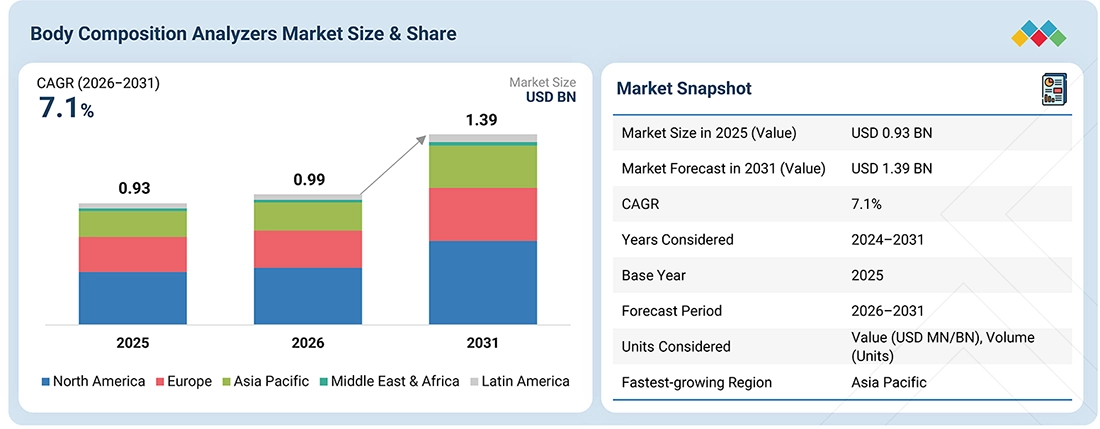
The global body composition analyzers market is projected to grow from USD 0.99 billion in 2026 to USD 1.39 billion by 2031, at a CAGR of 7.1% during the forecast period. The market was valued at USD 0.93 billion in 2025. Factors such as increasing prevalence of obesity, increased awareness regarding preventive health care, and increasing demand from fitness and wellness centers are contributing to the market growth. Increasing use of these devices for assessing nutritional status and managing chronic ailments such as diabetes and heart disease in hospitals and clinics is contributing further to this trend. Improvements in BIA and DEXA technology, as well as the launch of cost-effective portable devices, also drive this market.
KEY TAKEAWAYS
-
MARKET SNAPSHOT:
Base Year Market Size (2025): USD 0.93 Billion
Current Market Size (2026): USD 0.99 Billion
Forecast Market Size (2031): USD 1.39 Billion
CAGR (2026–2031): 7.1% -
SEGMENT LEADERSHIP:
Regional Leader: Asia Pacific is anticipated to record the highest CAGR between 2026 and 2031.
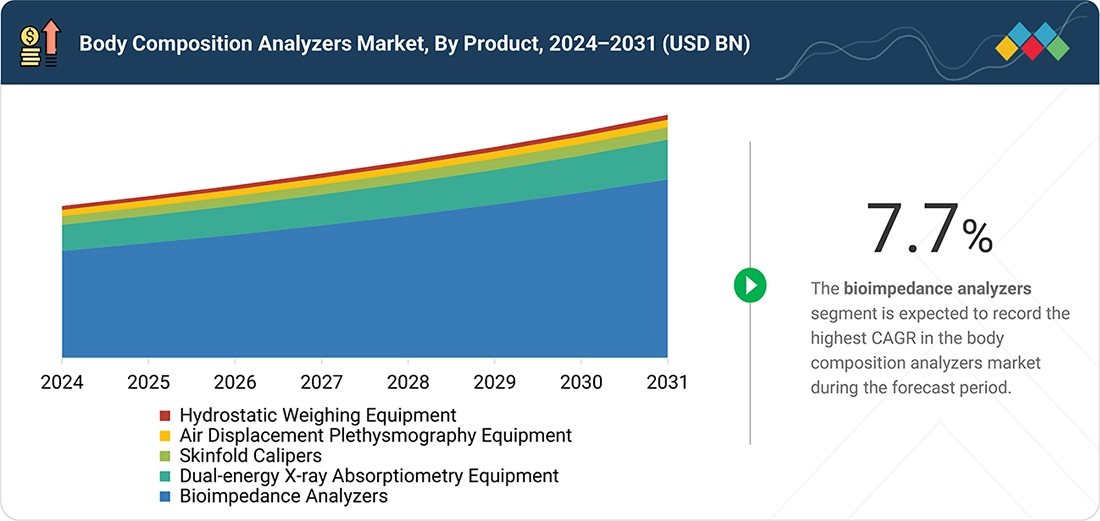
Product Leader: Bioimpedance analyzers segment accounted for a 71.0% share of the body composition analyzers market in 2025.
Modality Leader: Portable segment is expected to register the highest CAGR of 8.2% during the forecast period.
Usage Type Leader: Consumer-grade segment is projected to witness the highest CAGR of 9.7% from 2026 to 2031.
Application Leader: Segmental body measurement accounted for a 57.7% share of the body composition analyzers market in 2025.
End User Leader: Home users segment is projected to witness the highest CAGR of 8.6% during the forecast period. -
MARKET OUTLOOK & COMPETITIVE LANDSCAPE:
Major players include GE HealthCare (US), OMRON Corporation (Japan), Hologic, Inc. (US), InBody Co., Ltd. (South Korea), and Tanita Corporation (Japan). These companies offer a diverse portfolio of body composition assessment technologies and compete through product innovation, advanced measurement capabilities, broad geographic presence, and applications across hospitals, clinics, fitness and wellness centers, research institutions, and home settings.
Maltron International Ltd. (UK), Akern S.r.l. (Italy), and BioTekna (Italy), among others, have distinguished themselves among startups and SMEs by securing strong footholds in specialized niche areas, underscoring their potential as emerging market leaders.
With the increasing prevalence of obesity, increased interest in preventive healthcare, and the growing desire for precise and non-invasive approaches to determine fat, muscle, and water content levels, the body composition analyzers market is progressing steadily. New collaborations and developments such as partnerships between fitness tech firms and healthcare providers, investments in artificial intelligence, and innovation of portable and wearable body composition devices are changing the market landscape.
TRENDS & DISRUPTIONS IMPACTING CUSTOMERS' CUSTOMERS
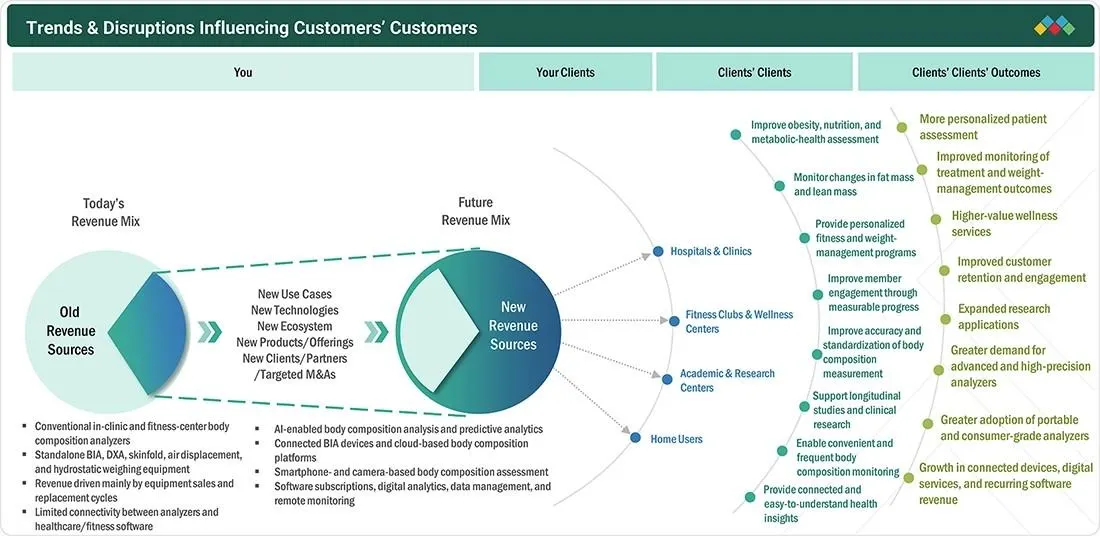
The body composition analyzers market is changing from conventional equipment and switching to connected data-driven models with the help of advancements in AI-enabled analysis, cloud-based BIA technologies, and subscription-based software solutions. This shift is taking place due to new demands of end users, with hospitals demanding better treatment monitoring, fitness clubs providing more efficient member engagement and outcomes measurement, research institutions looking for standardized and repeatable data, and home consumers wanting convenient health measurement. These factors contributed to more personalized body composition measurement processes and the accelerating usage of portable, connected, and digitally integrated body composition analyzers in the healthcare, fitness, research, and consumer fields.
Source: Secondary Research, Interviews with Experts, MarketsandMarkets Analysis
MARKET DYNAMICS

Level
-
Rising prevalence of obesity and focus on body fat and muscle mass assessment

-
Growing adoption of body composition analysis in weight management and preventive healthcare


Level
-
Limited reimbursement for routine body composition assessment

-
High sensitivity of bioimpedance measurements to hydration status and measurement conditions


Level
-
Increasing establishment of fitness, wellness, and sports performance centers

-
Mounting demand for connected and data-driven monitoring


Level
-
Lack of standardization across BIA devices, algorithms, and measurement protocols

-
Competition from established clinical imaging technologies

Source: Secondary Research, Interviews with Experts, MarketsandMarkets Analysis
Driver: Rising prevalence of obesity and focus on body fat and muscle mass assessment
The growing prevalence of obesity and the subsequent rise in metabolic disorders are augmenting the demand for body composition analyzers. Body composition devices provide detailed insights, helping to diagnose and manage conditions such as diabetes and cardiovascular diseases. As health consciousness increases, more individuals and healthcare providers are turning to body composition analysis for effective health management. This trend is expected to significantly boost the body composition analyzers market growth.
Restraint: Limited reimbursement for routine body composition assessment
The limited possibility of reimbursement for tests of body composition is a limitation for the body composition analyzers market since many insurers do not usually make reimbursements for body composition tests when they are used for general health purposes. Also, the limited possibility of coverage and reimbursement leads to increased costs for patients and decreased interest of physicians in introducing body composition analysis into medical practice. This uncertainty in reimbursement may result in limited widespread use of high-cost professional equipment and low frequency of tests for body composition in health organizations.
Opportunity: Increasing establishment of fitness, wellness, and sports performance centers
The rising number of fitness clubs and wellness centers is creating significant growth opportunities for the body composition analyzers market. These centers are increasingly adopting advanced body composition analysis tools to offer personalized fitness and nutrition plans, which enhance their service offerings. With more people joining fitness and wellness programs, the demand for precise body composition measurement continues to rise, driving the market.
Challenge: Competition from established clinical imaging technologies
The presence of established methods of clinical imaging, especially CT and MRI, could limit the growth of the body composition analyzers market. While CT and MRI are already established in clinical practice and can provide highly detailed assessment of body composition, such as visceral and subcutaneous fat, muscle distribution, and tissue features, while simultaneously allowing the diagnosis of various diseases.
BODY COMPOSITION ANALYZERS MARKET: COMMERCIAL USE CASES ACROSS INDUSTRIES
| COMPANY | USE CASE DESCRIPTION | BENEFITS |
|---|---|---|
 |
Manufactures Lunar iDXA, a DXA instrument with dual energy, which is often used in hospitals and research contexts to provide bone density, fat, and lean mass data; the machine produces an examination of both lean and fat masses and the total body fat percentage for body composition studies as well as understanding risk of metabolic diseases | High-quality imaging and high patient weight capacity | Enables comprehensive skeletal health and body composition assessment | Detailed body composition analysis | Measures fat mass, lean mass, and body fat percentage | Metabolic health assessment | Supports evaluation of body composition-related health risks |
 |
Produces health monitoring devices available for home use and for consumer use; offers products including HBF-514C and BCM-500 blood composition monitoring devices; the OMRON BCM-500, which provides information about six body metrics and can store the results for four profiles, is one of its devices | Convenient home-based monitoring | Enables regular body composition tracking outside clinical settings | Multi-parameter assessment | Provides multiple body composition metrics in a single measurement | Multi-user data tracking | Supports individual monitoring and comparison of results over time |
 |
Provides the Horizon DXA System, a dual-energy X-ray absorptiometry technology used in healthcare, clinics, and sports performance for simultaneous, accurate bone density and body composition measurements | Full-body sensing | Provides more comprehensive measurements than foot-to-foot devices | Simultaneous bone & body composition assessment | Measures bone density alongside fat and lean mass | Research-based methodology | Supports repeatable and reliable results | Automated calibration & standardization | Ensures consistent measurements across large patient populations |
 |
Produces BIA-based professional devices, including the InBody 270 and InBody 970, among others, used in hospitals, clinics, and exercise centers for segmental body composition measurement; the DSM-MFBIA technology independently measures electrodes in the body's organs and limbs, therefore delivering high precision and not depending on estimation, based on gender, age, or body shape | Direct segmental measurement | Provides detailed analysis of individual body segments | Multi-frequency analysis | Enables comprehensive assessment of body composition and body water | Reduced reliance on predictive equations | Supports individualized measurements without dependence on age, gender, or body shape |
 |
Manufactures multi-frequency segment analyzers, including the MC-780U Plus, that are used for in-depth body composition analysis by medical providers and fitness specialists; the device collects 31 measurements in 20 seconds, including segmental levels of fat and muscle mass, basal metabolic rate, and visceral fat | Rapid comprehensive assessment | Delivers multiple body composition measurements in a short testing time | Detailed segmental analysis | Provides separate fat and muscle mass measurements for different body regions | Actionable health & fitness insights | Supports personalized assessment and program planning |
Logos and trademarks shown above are the property of their respective owners. Their use here is for informational and illustrative purposes only.
MARKET ECOSYSTEM
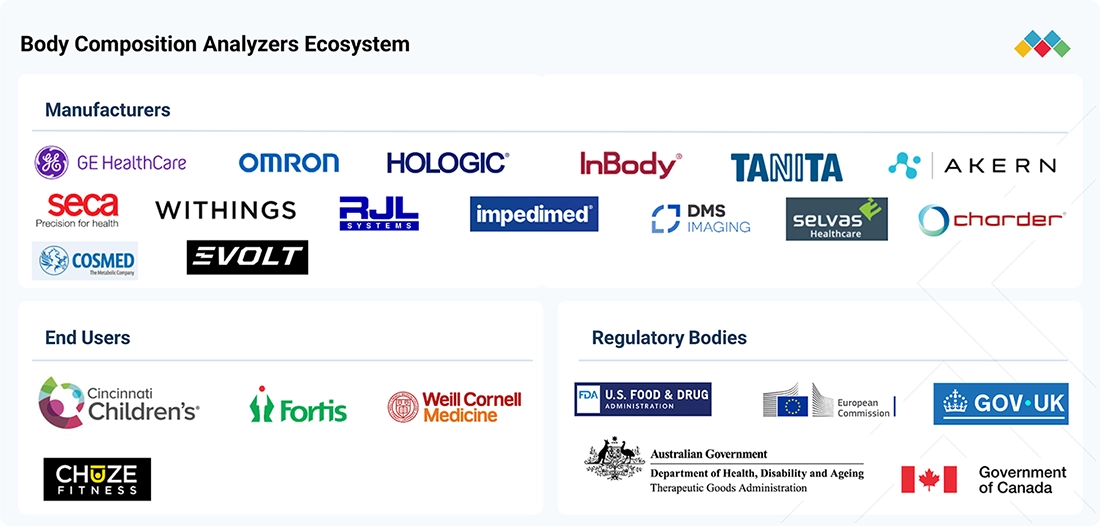
The body composition analyzers market operates within a complex interconnected ecosystem, which includes product innovation, regulatory oversight, manufacturing, distribution, and end-user adoption across multiple care settings. At the core of the ecosystem are manufacturers, including GE Healthcare (US), Omron Corporation (Japan), InBody Co., Ltd. (South Korea), Tanita Corporation (Japan), and Hologic, Inc. (US). They are supported by academic institutes, clinical research bodies, and technology partners. Surrounding this network are regulatory agencies such as the Food and Drug Administration (FDA), European Medicines Agency (EMA), and national health authorities that enforce strict compliance with device safety, sterility, performance standards, and post-market surveillance. Downstream, the ecosystem culminates with diverse end users, including fitness clubs & wellness centers, hospitals & clinics, academic research organizations, and home users whose clinical needs, workflow requirements, and safety priorities directly shape product selection, adoption rates, and long-term technology evolution within the market.
Logos and trademarks shown above are the property of their respective owners. Their use here is for informational and illustrative purposes only.
MARKET SEGMENTS
Source: Secondary Research, Interviews with Experts, MarketsandMarkets Analysis
Body Composition Analyzers Market, By Product
The body composition analyzers market is categorized into bioimpedance analyzers, dual-energy x-ray absorptiometry equipment, skinfold calipers, air displacement plethysmography equipment, and hydrostatic weighing equipment, based on the product. In 2025, the bioimpedance analyzers segment emerged as the leading sector in the body composition analyzers market. The large share of this segment can be attributed mainly to the use of bioimpedance analyzers in clinical settings for monitoring hydration, body composition, and diagnosing conditions such as lymphedema.
Body Composition Analyzers Market, By End User
Categorized by its various end users, the body composition analyzers market includes hospitals & clinics, fitness clubs & wellness centers, academic & research centers, and home users. As of 2025, the largest portion of the market was dominated by the fitness clubs & wellness centers segment. This dominance is largely attributed to rising consumer interest in health and fitness encouraging fitness clubs and wellness centers to invest in body composition analyzers.
REGION
Asia Pacific to be fastest-growing region in global body composition analyzers market during forecast period
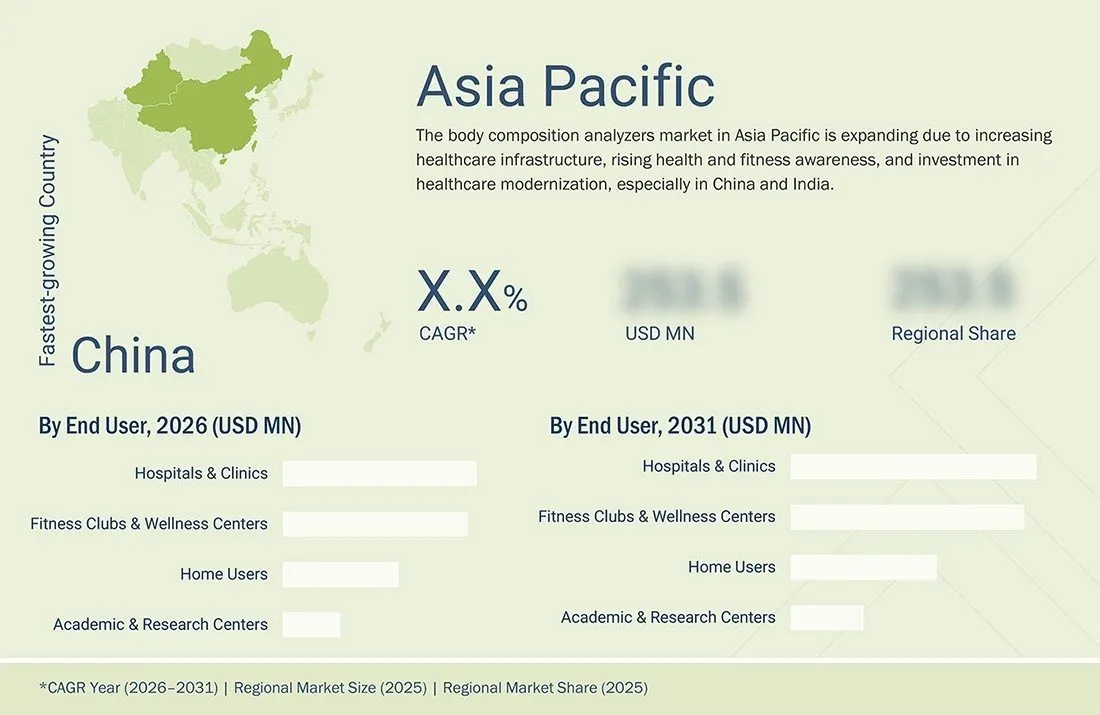
The Asia Pacific body composition analyzers market is expanding due to the increasing healthcare infrastructure, rising health and fitness awareness, and investment in healthcare modernization in developing countries such as China and India. Growth is further supported by increasing disposable income, growing penetration of smart and connected health devices, and rising demand for weight management, sports performance monitoring, and clinical nutrition assessment. Additionally, the large population base, expanding middle-class population, increasing penetration of e-commerce, growing awareness of muscle health and body composition beyond BMI, and rising availability of affordable consumer-grade and locally manufactured devices are further contributing to market growth.
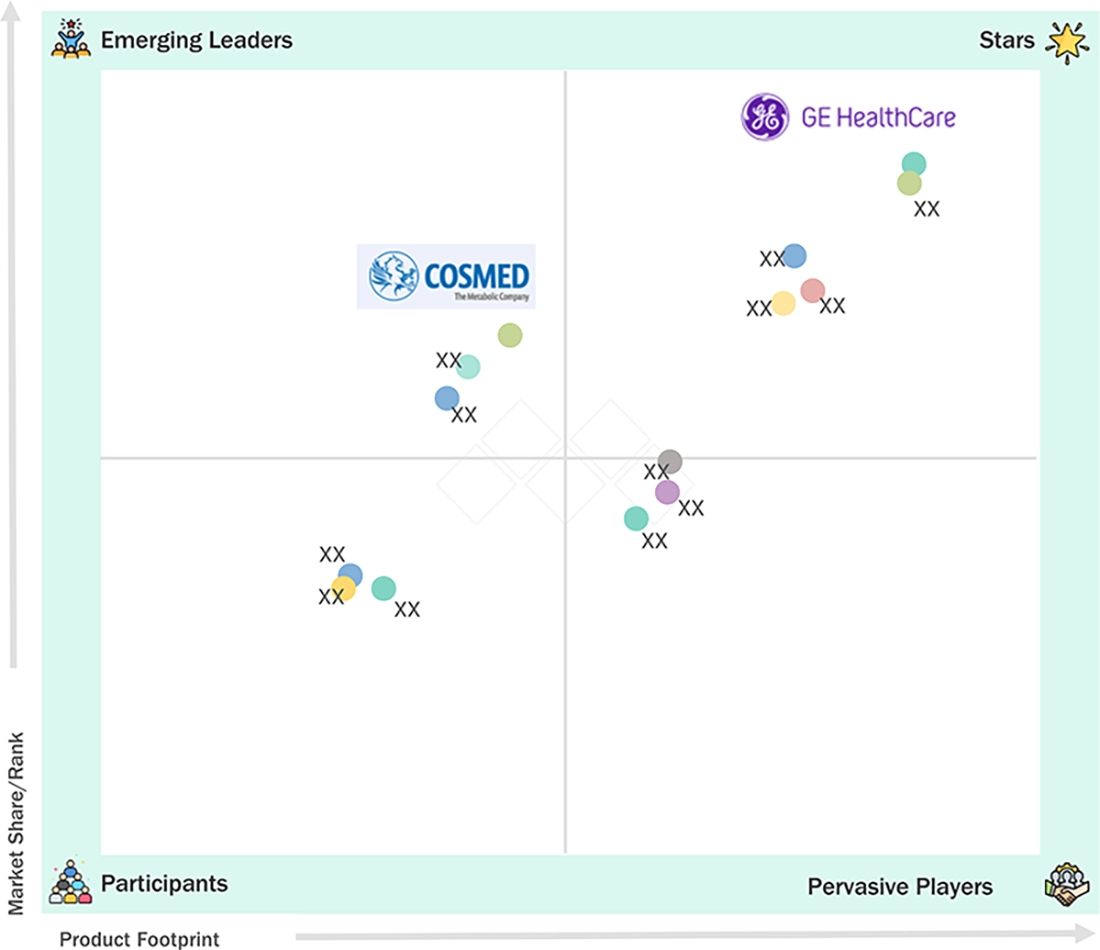
BODY COMPOSITION ANALYZERS MARKET: COMPANY EVALUATION MATRIX
In the body composition analyzers market matrix, GE Healthcare (Star) leads with a strong market share and product footprint, driven by its advanced equipment and technologies. Cosmed srl (Emerging Leader) is gaining visibility with its specialized body composition analyzer solutions, strengthening its position through innovation and niche clinical applications.
Source: Secondary Research, Interviews with Experts, MarketsandMarkets Analysis
KEY MARKET PLAYERS
- GE HealthCare (US)
- OMRON Corporation (Japan)
- Hologic, Inc. (US)
- InBody Co., Ltd. (South Korea)
- Tanita Corporation (Japan)
- seca (Germany)
- Withings (France)
- SELVAS Healthcare, Inc. (South Korea)
- COSMED srl (Italy)
- RJL Systems (US)
MARKET SCOPE
| REPORT METRIC | DETAILS |
|---|---|
| Market Size in 2025 (Value) | USD 0.93 Billion |
| Market Forecast in 2026 (Value) | USD 0.99 Billion |
| Market Forecast in 2031 (Value) | USD 1.39 Billion |
| Growth Rate | CAGR of 7.1% from 2026-2031 |
| Years Considered | 2024-2031 |
| Base Year | 2025 |
| Forecast Period | 2026-2031 |
| Units Considered | Value (USD Million/Billion), Volume (Units) |
| Report Coverage | Revenue forecast, company ranking, competitive landscape, growth factors, and trends |
| Segments Covered |
|
| Regions Covered | North America, Asia Pacific, Europe, Latin America, and the Middle East & Africa |
WHAT IS IN IT FOR YOU: BODY COMPOSITION ANALYZERS MARKET REPORT CONTENT GUIDE
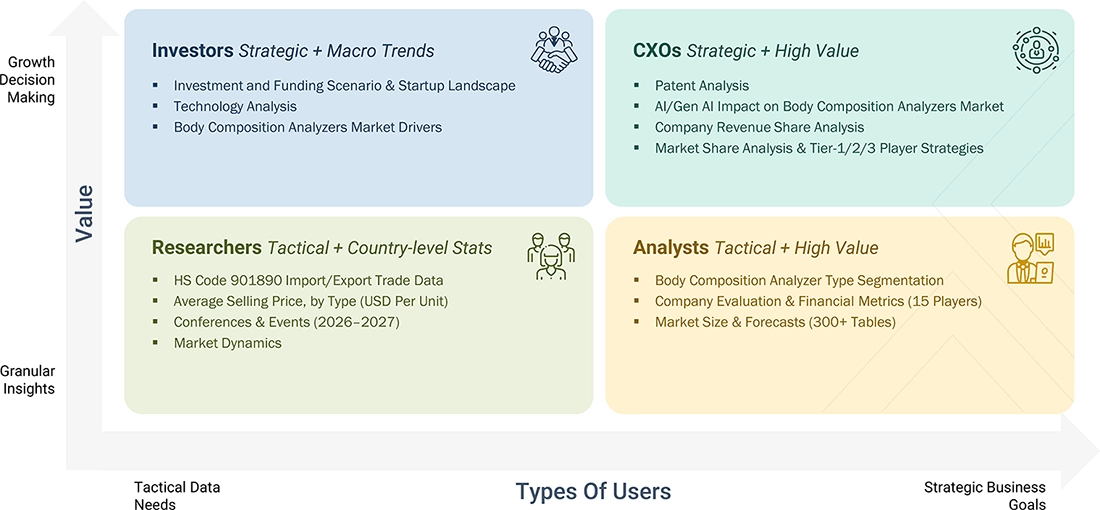
DELIVERED CUSTOMIZATIONS
We have successfully delivered the following deep-dive customizations:
| CLIENT REQUEST | CUSTOMIZATION DELIVERED | VALUE ADDS |
|---|---|---|
| Product Analysis | In-depth assessment of body composition analyzers by product (Bioimpedance Analyzers (Multi-frequency Bioimpedance Analyzers, Single-frequency Bioimpedance Analyzers, Dual-frequency Bioimpedance Analyzers), Dual-energy X-ray Absorptiometry Equipment, Skinfold Calipers, Air Displacement Plethysmography Equipment, and Hydrostatic Weighing Equipment), by modality (Portable Body Composition Analyzers, and Stationary/Benchtop Body Composition Analyzers), by usage type (Professional-Grade Body Composition Analyzers, and Consumer-Grade Body Composition Analyzers), by application (Segmental Body Measurement, and Whole-body Measurement), by distribution channel (e-commerce, and Offline/Retail Stores), by end users (Hospitals & Clinics, Fitness Clubs and Wellness Centers, Academic & Research Centers, and Home Users), along with evaluation of automation capabilities, patient convenience, and procedure efficiency. |
|
| Company Information | Comprehensive profiles of leading global players such as GE HealthCare, OMRON Corporation, Hologic, Inc., InBody Co., Ltd., Tanita Corporation, and other Partners. |
|
| Geographic Analysis | Region- and country-level demand mapping across North America, Europe, Asia-Pacific, Latin America, and Middle East & Africa; evaluation of regulatory frameworks, biologics adoption, pricing dynamics, and healthcare infrastructure. |
|
RECENT DEVELOPMENTS
- July 2026 : GE HealthCare and Catholic Health entered a 10-year strategic Care Alliance valued at approximately USD 500 million. The agreement covers more than 1,300 pieces of technology across Catholic Health's hospitals and ambulatory sites, together with equipment, services, digital solutions, cloud solutions, and AI-enabled technologies.
- July 2026 : OMRON joined Noetra to develop a Japan-originated AI foundation model, aiming to advance AI technology and applications.
- July 2025 : DMS Group signed a strategic agreement with Innolux covering a potential investment by Innolux in DMS Group. The partnership is intended to strengthen DMS's position in medical imaging and combine DMS's medical-imaging expertise with Innolux's capabilities in display and X-ray detector technologies. The agreement provides for an initial investment and potential additional investment subject to conditions.
Table of Contents
 Exclusive indicates content/data unique to MarketsandMarkets and not available with any competitors.
Methodology
This study involved the extensive use of both primary and secondary sources. The research process involved the study of various factors affecting the industry to identify segmentation types, industry trends, key players, competitive landscape, key market dynamics, and key player strategies.
Secondary Research
The secondary research process involves the widespread use of secondary sources, directories, databases (Bloomberg Businessweek, Factiva, and D&B Hoovers), white papers, annual reports, company house documents, investor presentations, and SEC filings of companies. Secondary research was used to identify and collect information useful for the extensive, technical, market-oriented, and commercial study of the body composition analyzers market. It was also used to obtain important information about the key players and market classification & segmentation according to industry trends, to the bottom-most level, and key developments related to market and technology perspectives. A database of the key industry leaders was also prepared using secondary research.
Primary Research
In the primary research process, various sources from the supply and demand sides were interviewed to obtain qualitative and quantitative information for this report. The primary sources from the supply side include industry experts such as CEOs, vice presidents, marketing and sales directors, technology & innovation directors, and related key executives from various key companies and organizations in the body composition analyzers market. The primary sources from the demand side include medical OEMs, medical device ISOs, and service providers, among others. Primary research was conducted to validate the market segmentation, identify key players in the market, and gather insights into key industry trends & key market dynamics.
Breakdown of Primary Interviews
A breakdown of the primary respondents for the body composition analyzers market (supply side) is provided below:
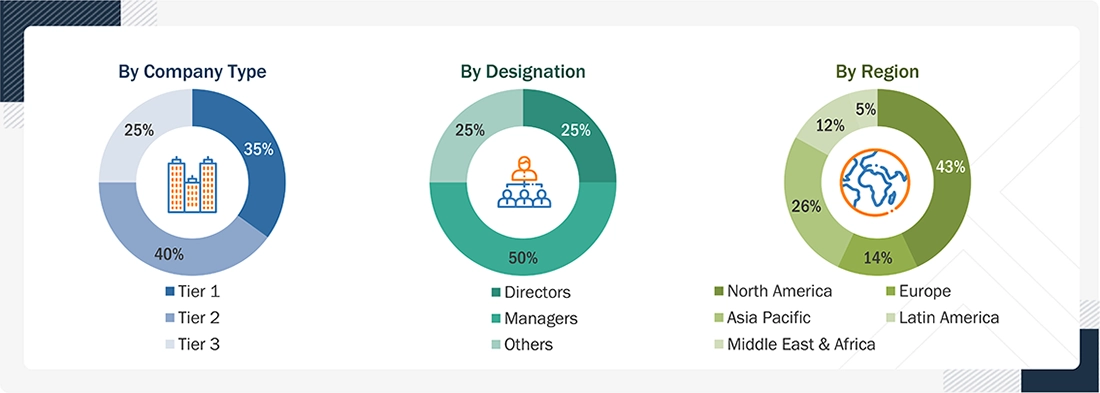
Note: Others include sales, marketing, and product managers.
Companies are classified into tiers based on their total revenue.
As of 2025, Tier 1 = >USD 2 billion, Tier 2 = USD 50 million to USD 2 billion, and Tier 3 = <USD 50 million.
To know about the assumptions considered for the study, download the pdf brochure
Market Size Estimation
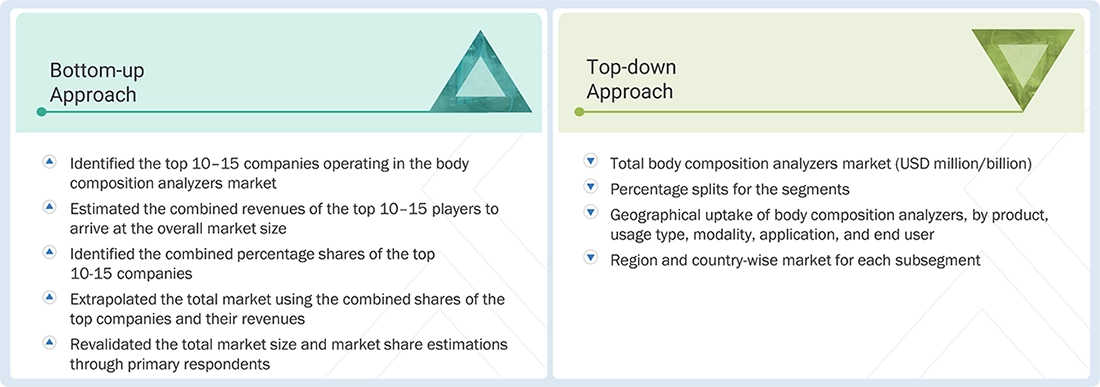
In this report, the global body composition analyzers market size was arrived at by using the revenue share analysis of leading players. For this purpose, key players were identified, and their revenues from the body composition analyzer business were determined through various insights gathered during the primary and secondary research phases. Secondary research included the study of the annual and financial reports of the top market players. In contrast, primary research included extensive interviews with key opinion leaders, such as CEOs, directors, and key marketing executives.
To calculate the global market value, segmental revenues were calculated based on the revenue mapping of major solution/service providers. This process involves the following steps:
- Generating a list of major global players operating in the body composition analyzers market
- Mapping annual revenues generated by major global players from the body composition analyzers segment (or nearest reported business unit/service category)
- Revenue mapping of key players to cover a major share of the global market as of 2025
- Extrapolating the global value of the market
Top-Down and Bottom-Up Approach
Data Triangulation
After arriving at the overall market size from the market size estimation process explained above, the global body composition analyzers market was split into segments and subsegments. Data triangulation and market breakdown procedures were employed to complete the overall market engineering process and arrive at the exact statistics for all segments and subsegments. The data was triangulated by studying various factors and trends from the demand and supply sides. Additionally, the market was validated using both top-down and bottom-up approaches.
Market Definition
Body composition analyzers consist of devices and systems that quantitatively measure a person’s body composition, which includes different parameters such as body fat mass, percentage of body fat, body muscle mass, lean mass, total body water amount, bone mass, and visceral fat. To estimate or assess body composition, analyzers employ various technologies such as bioelectrical impedance analysis (BIA), dual-energy X-ray absorptiometry (DEXA/DXA), skinfold measurement, air displacement plethysmography, and hydrostatic weighing.
Key Stakeholders
- Body composition analyzer manufacturing companies
- Original equipment manufacturing companies
- Body composition analyzer Suppliers and distributors
- Healthcare service providers
- Health insurance payers
- Government bodies/municipal corporations
- Regulatory bodies
- Medical research institutes
- Business research and consulting service providers
- Venture capitalists
- Market research and consulting firms
Report Objectives
- To describe and forecast the global body composition analyzers market, by product, usage type, modality, application, end user, and region, in terms of value
- To forecast the global body composition analyzers market, by product, in terms of volume
- To forecast the size of the market segments concerning five main regions, namely North America, Europe, Asia Pacific, Latin America, and the Middle East & Africa, in terms of value
-
To provide detailed information regarding the major factors influencing the market growth
(such as drivers, restraints, opportunities, and challenges) along with the current trends - To strategically analyze micromarkets concerning individual growth trends, prospects, and contributions to the overall market
- To analyze the opportunities in the global market for stakeholders and provide details of the competitive landscape for market leaders
- To profile the key players and analyze their market shares and core competencies
- To track and analyze competitive developments, such as product launches, partnerships, agreements, collaborations, expansions, strategic alliances, and acquisitions, in the global market
- To benchmark players within the market using the proprietary “Company Evaluation Matrix” framework, which analyzes market players on various parameters within the broad categories of business and product excellence strategy
Available customizations:
With the given market data, MarketsandMarkets offers customizations as per the company’s specific needs. The following customization options are available for the present global body composition analyzers market report:
Product Analysis
- Product matrix, which gives a detailed comparison of the product portfolios of the top twelve companies
Company Information
- Detailed analysis and profiling of additional market players (up to 10)
Geographic Analysis
- Further breakdown of the Rest of Europe’s body composition analyzers market into Russia, Finland, Switzerland, Turkey, the Czech Republic, the Netherlands, Norway, Poland, Portugal, Romania, Estonia, Austria, Belgium
- Further breakdown of the Rest of Asia Pacific’s body composition analyzers market into Taiwan, New Zealand, and Sri Lanka
- Further breakdown of the Rest of Latin America’s body composition analyzers market into Uruguay, Costa Rica, Bolivia, Venezuela, and Paraguay


Personalize This Research
- Triangulate with your Own Data
- Get Data as per your Format and Definition
- Gain a Deeper Dive on a Specific Application, Geography, Customer or Competitor
- Any level of Personalization
Let Us Help You
- What are the Known and Unknown Adjacencies Impacting the Body Composition Analyzers Market
- What will your New Revenue Sources be?
- Who will be your Top Customer; what will make them switch?
- Defend your Market Share or Win Competitors
- Get a Scorecard for Target Partners

Custom Market Research Services
We Will Customise The Research For You, In Case The Report Listed Above Does Not Meet With Your Requirements
Get 10% Free CustomisationTESTIMONIALS

JAYANT RAJPUROHIT
Director of Market Insights, Data and Analytics
SFI Health,
Leading Pharmaceutical Companywww.sfihealth.com/

We at SFI Health approached MarketsandMarkets for an Opportunity Assessment on "Incidence and Prevalence of Focus Indications" as we wanted to know the most attractive HCPs like Physician, Functional MD, Naturopath and Pharmacist. The project was critical for us to ensure our focus on the right target which would enable sustainable growth and profitability for SFI Health. The business insights provided exceeded our expectations and we were extremely impressed. The team at MarketsandMarkets is highly professional and detail oriented and very well understood our business needs. MarketsandMarkets offers a unique combination of expertise and dedicated engagement model. We identified 2 new products to be launched in coming months, based on the research findings provided by MarketsandMarkets. We are happy with the services and would strongly recommend MarketsandMarkets to my peers in the industry.

BEATRIZ DE LA CALLE
Head of Commercial Analytics
Qualicaps,
Leading Pharmaceutical Companywww.qualicaps.com/

We partnered with MarketsandMarkets for an assessment study on hard empty capsules. The team was extremely professional in understanding our business requirements and we received timely responses to all our queries. The market intelligence and the recommendations has met our business requirements. We were extremely impressed to see the final study results; it really exceeded our expectations. The market intelligence offered by MarketsandMarkets, and clarity on next steps will help us achieve our business objective for the Year 2021. We are happy with the services and would strongly recommend MarketsandMarkets to my peers in the industry.

Bob Williams,
Senior Director Business Development & Innovation
Bracco Diagnostics Inc.,
Italian Multinational in life sciences sector and a World Leader in imaging diagnosticsimaging.bracco.com/us-en
We were pleased with targeted insights that MarketsandMarkets identified from a custom study on the 'Radiation Dose Management Solutions Market'. Your team identified and characterized the market participants as well as underlying trends accurately. This study was useful to Bracco in formulating business strategies for our dose monitoring product lines and we thank MarketsandMarkets for the job well done.
Cody Coonradt,
Market Development and Strategy Manager
3M Health Information Systems,
Leader in Health care Coding, Payment & Analytics Solutions.www.3m.com/3M/en_US/health-information-systems-us
The value for our organization comes from three things: depth of research, specificity of segments and being easy to work with. As important as the first two are, the third can't be underestimated. MarketsandMarkets, maybe more than any other research vendor, wants to know what is top of mind for our team and what big questions we are grappling to answer.
Their customer first approach and high value engagement model, have given us great analysis and excellent value for money
- Rest Of Europe Body Composition Analyzers Market
- Rest Of Asia Pacific Body Composition Analyzers Market
- Rest Of Latin America Body Composition Analyzers Market
- Ksa Body Composition Analyzers Market
- Other GCC Countries Body Composition Analyzers Market
- UAE Body Composition Analyzers Market
- US Body Composition Analyzers Market
- Canada Body Composition Analyzers Market
- Germany Body Composition Analyzers Market
- France Body Composition Analyzers Market
- UK Body Composition Analyzers Market
- Italy Body Composition Analyzers Market
- Spain Body Composition Analyzers Market
- China Body Composition Analyzers Market
- Japan Body Composition Analyzers Market
- India Body Composition Analyzers Market
- Brazil Body Composition Analyzers Market
- Mexico Body Composition Analyzers Market






Growth opportunities and latent adjacency in Body Composition Analyzers Market