Industrial Vehicles Market

Industrial Vehicles Market By Vehicle Type (Forklift, Aisle Truck, Tow Tractor, Container Handler), Propulsion (ICE, Battery-operated, Gas-powered), Application, Tonnage capacity, Level of Autonomy, Motor Type, and Region - Global Forecast to 2035



OVERVIEW
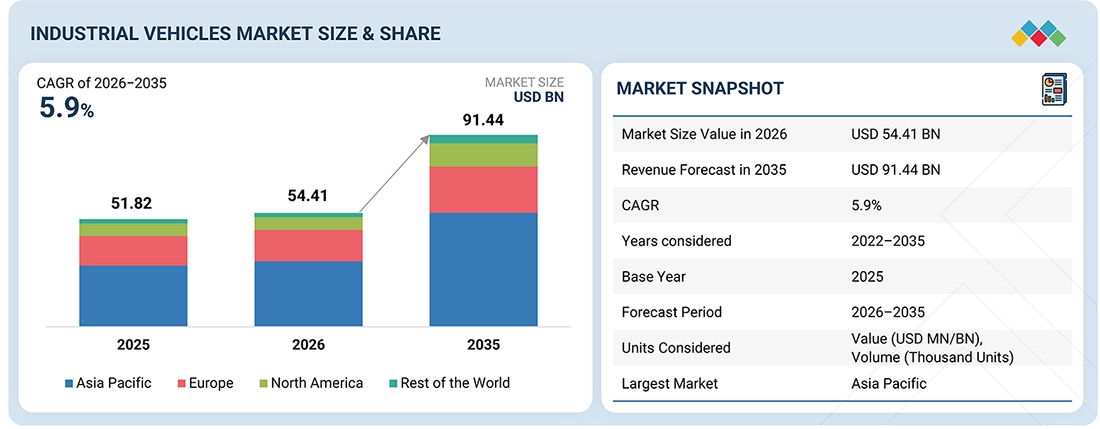
Source: Secondary Research, Interviews with Experts, MarketsandMarkets Analysis
The global industrial vehicles market size is projected to grow from USD 54.41 billion in 2026 to USD 91.44 billion by 2035, at a CAGR of 5.9%. The rapid growth of the e-commerce industry is driving substantial expansion in the global industrial vehicles market, prompting the need for effective material handling solutions. With the continued rise of online retail, there is a growing need for warehouses and distribution centers equipped with industrial vehicles, such as forklifts and automated guided vehicles (AGVs), to optimize operations. Moreover, heightened attention to workplace safety standards is driving the adoption of automated industrial vehicles to reduce accidents and boost productivity. Industrial vehicles such as forklifts, aisle trucks, tow tractors, and container handlers are evolving into software-defined, connected platforms rather than standalone equipment. Integration with Autonomous Mobile Robots (AMRs) and AGVs is enabling synchronized warehouse automation, real-time fleet monitoring, and OTA-based performance upgrades. Telematics-driven predictive maintenance and Vehicle-as-a-Service (VaaS) models are reducing the total cost of ownership while improving operational efficiency. This shift is accelerating the adoption of sensor-based, autonomous machinery across logistics and warehouse operations
Key Industrial Vehicles Market Trends and Insights
- Industrial Vehicles Market Growth: Growth is driven by increasing warehouse automation, expanding e-commerce and logistics operations, rising industrialization, and growing demand for efficient material handling equipment.
-
Technology Impact: Advanced telematics, IoT-enabled fleet management, autonomous navigation systems, and predictive maintenance solutions are improving productivity, safety, and operational efficiency.
- Growing Trends: The Industrial Vehicles market is witnessing increased adoption of electric industrial vehicles, lithium-ion battery technologies, autonomous forklifts, smart warehouse solutions, and connected fleet management platforms.
- Growth Opportunities: Opportunities are driven by the expansion of manufacturing facilities, growth in logistics infrastructure, rising investments in warehouse automation, and increasing demand for sustainable industrial mobility solutions.
KEY TAKEAWAYS
-
MARKET SNAPSHOT:
Current Market Size (2026): USD 54.41 Billion
Projected Market Size (2035): USD 91.44 Billion
CAGR (2026–2035): 5.9% -
SEGMENT LEADERSHIP:
-
BY VEHICLE TYPE & CAPACITYAisle trucks are expected to grow at a significant rate. Aisle trucks with tonnage capacity between 1 and 2 dominate the market.
-
BY PROPULSIONBattery-powered industrial vehicles are projected to have the largest share, especially in Europe and the Asia Pacific. Aisle trucks dominate the battery-powered propulsion segment.
-
BY APPLICATIONThe manufacturing application segment holds the largest market share for industrial vehicles and is projected to grow at a CAGR of 4.4%.
-
AERIAL WORK PLATFORM, BY TYPEBoom lifts hold the largest market share.
-
MARKET OUTLOOK & COMPETITIVE LANDSCAPE:
-
BY REGIONAsia Pacific is dominating the aisle trucks, forklifts, and container handling segment due to higher demand for these vehicles in manufacturing, warehouses, and e-commerce industries. China is expected to be the largest market for industrial vehicles in terms of value and volume in the Asia Pacific region during the forecast period. Major players from Asia Pacific, such as Toyota Industries Corporation, Mitsubishi Logisnext Co., Ltd., and Hangcha Group Co., Ltd, are offering industrial vehicles with large-capacity batteries, and these companies are focusing on new product launches and expansion of existing factories.
-
COMPETITIVE LANDSCAPE: KEY PLAYERSThe key players in the industrial vehicles market are Toyota Industries Corporation (Japan), Kion Group AG (Germany), Mitsubishi Logisnext Co., Ltd. (Japan), Jungheinrich AG (Germany), and Crown Equipment Corporation (US). These major companies are focusing on key strategies such as global networking, mergers and acquisitions, partnerships, and technological advancement to maintain their position in the global industrial vehicles market.
With global supply chains expanding and manufacturing and logistics networks becoming increasingly complex, the need for efficient and dependable industrial transportation solutions is rising. Industrial vehicles play a vital role in minimizing manual effort, enhancing workplace safety, and boosting overall productivity in material handling operations. Additionally, technological advancements, including electrification and automation, are further transforming industrial vehicle design and functionality, resulting in supporting the steady growth in the global industrial vehicles market.
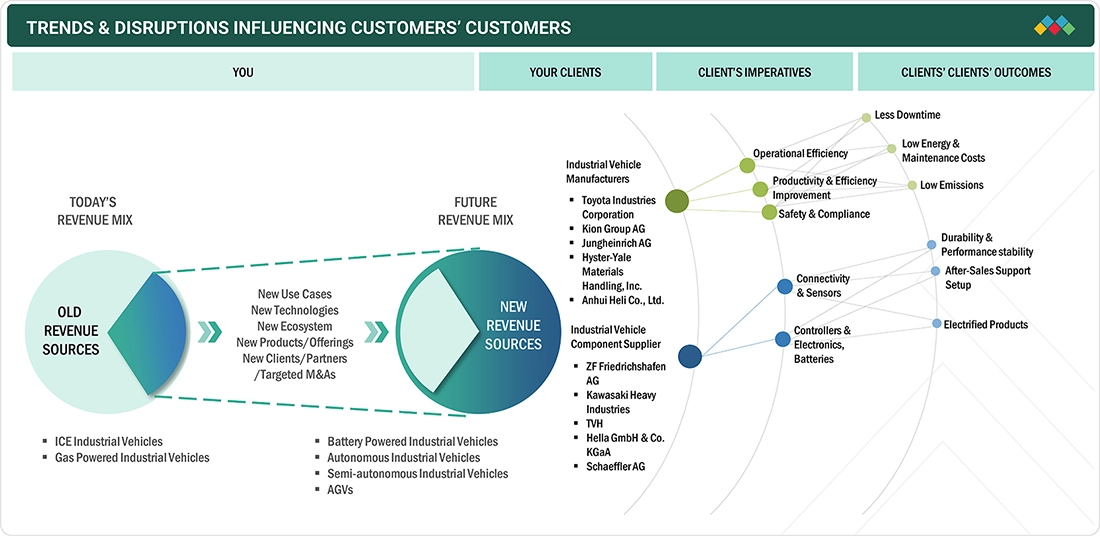
TRENDS & DISRUPTIONS IMPACTING CUSTOMERS' CUSTOMERS
The industrial vehicles market is evolving rapidly, shaped by technological innovation, shifting consumer preferences, and regulatory support. The growing need for advanced technology integration, such as automation and electrification, to reduce carbon emissions, is anticipated to propel the industrial vehicles market forward. The increasing popularity of e-commerce and the warehouse sector is expected to further drive the growth of the industrial vehicles market.
Source: Secondary Research, Interviews with Experts, MarketsandMarkets Analysis
MARKET DYNAMICS

Level
-
Impact of warehouse automation and high-density storage models

-
Electrification & indoor emission compliance


Level
-
High capex & total cost of ownership (TCO) sensitivity

-
Infrastructure and facility constraints


Level
-
Energy as-a-service & battery ecosystem integration

-
Fleet digitalization & productivity as-a-service


Level
-
Technology transition risk (ICE→ electric & digital platforms)

-
Margin compression from commonization & rental shifts

Source: Secondary Research, Interviews with Experts, MarketsandMarkets Analysis
Driver: Impact of warehouse automation and high-density storage models
The rapid expansion of e-commerce and omni-channel distribution is driving the shift toward high-density warehouse models such as Jungheinrich ETVQ / ETVC series, Linde V/VT series turret trucks, and Toyota VNA turret range. These models are characterized by narrow aisle (VNA) layouts and high-bay racking structures, which typically range from 12 to 18 meters. The fulfillment centers are increasingly deploying reach trucks, turret trucks, and articulated forklifts capable of operating efficiently in confined aisle widths, maximizing cubic utilization and reducing real estate costs per pallet position. Large-scale operators such as Amazon continue to optimize fulfillment center designs around vertical storage density and faster SKU rotation, while third-party logistics providers, including GXO Logistics, are integrating advanced racking configurations with high-throughput material handling fleets to support multi-client operations across North America and Europe in 2025–2026. These structural shifts are directly influencing procurement trends toward specialized warehouse trucks engineered for higher lift heights, tighter turning radii, and enhanced operator-assist systems.
Restraint: High capex & total cost of ownership (TCO) sensitivity
Rising Li-ion battery adoption in Class I and Class V forklifts is increasing upfront acquisition costs compared to lead-acid and ICE models, especially with added 360° safety systems, telematics, and semi-automation packages. OEMs like Hyster-Yale Materials Handling and Jungheinrich AG are expanding factory-integrated Li-ion solutions, yet cost premiums and ROI uncertainty remain barriers for small and mid-sized 3PLs. Warehouses operating 15–40 truck fleets are cautious due to electrical infrastructure upgrades, battery replacement costs, and unclear resale values of electric trucks. This uncertainty is slowing fleet replacement cycles and increasing demand for refurbished equipment. As a result, rental and leasing models are gaining traction, with players like United Rentals reporting steady growth in electric forklift rentals. Overall, operators prefer flexible financing and phased electrification over large upfront fleet transitions.
Opportunity: Energy as-a-service & battery ecosystem integration
Energy-as-a-Service (EaaS) is emerging as a key enabler of fleet electrification in industrial vehicles by removing heavy upfront investments in batteries, chargers, and grid upgrades. Instead of asset ownership, operators subscribe to bundled solutions covering lithium-ion batteries, charging infrastructure, energy management software, and maintenance. OEMs such as Toyota Material Handling, KION Group (including Linde Material Handling), and Jungheinrich AG are expanding integrated battery ecosystems to support large electric fleets. Companies like Konecranes and Kalmar are deploying electrified port equipment with smart charging and energy management solutions. Meanwhile, BYD Company is strengthening its integrated battery-electric forklift offerings for high-utilization warehouses. By combining on-site storage, renewable integration, and centralized monitoring, EaaS models reduce downtime, optimize charging during idle periods, and accelerate zero-emission adoption across warehouses and terminals.
Challenge: Technology transition risk (ICE→ electric & digital platforms)
The transition from ICE to electric and digitally enabled industrial vehicles brings significant operational and financial risks for fleet operators. Large-scale electrification requires substantial investments in charging infrastructure, grid upgrades, battery management, and workforce retraining, costs that are often underestimated during fleet conversions. While OEMs such as Toyota Material Handling, Hyster-Yale Materials Handling, and KION Group are expanding electric portfolios, many users still rely on mixed ICE-electric fleets due to range and duty-cycle limitations. In heavy-duty environments like ports and steel plants, diesel equipment continues to offer flexibility for continuous high-power operations. Moreover, integration with WMS, ERP, telematics, and automation platforms increases cybersecurity and interoperability risks. As a result, companies, including Jungheinrich AG, Kalmar, and Konecranes, are supporting phased adoption strategies, with pilots and diesel backup fleets to mitigate transition risk.
INDUSTRIAL VEHICLES MARKET: COMMERCIAL USE CASES ACROSS INDUSTRIES
| COMPANY | USE CASE DESCRIPTION | BENEFITS |
|---|---|---|
 |
The company supplied the compact and highly maneuverable EDiA electric counterbalance trucks as the solution. The compact trucks are designed to be used in various environments and are equipped with many safety features to protect pedestrians. | On-site safety was significantly enhanced without compromising productivity. Moreover, the near misses or accidents that involved pedestrians were reduced significantly, and damage to the building and infrastructure was also reduced. |
 |
L’Oréal, with the help of Dematic (Germany), installed 14 autonomous forklifts with a capacity of 1 ton and a lift height of 2.4 meters with pallet detection capacity. The system optimizes storage as well as retrieval, which takes up the most effort. Autonomous forklifts have reduced the need for labor and improved the material handling processes by reducing damage. | The changes brought by automation enhanced both productivity and processing throughput. For instance, the quality of internal transport operations of liquid goods was improved by a reduction in the number of spills. The number of workers related to intralogistics on-site was reduced by 90%. Additionally, the threat of temperature change caused by manual ICE forklifts, which used to affect the quality of products, was eliminated. |
 |
To increase the overall efficiency and cost-effectiveness of the warehouse, the company invested in an automatic narrow-aisle warehouse. Coko-Werk GmbH & Co. KG invested in three automated ETXa high-rack stackers by Jungheinrich AG. | With the incorporation of the ETXa high-rack stackers (which are designed for an optimal lift height of 10 meters), the overall efficiency and supply capability of warehouse processes have increased. |
Logos and trademarks shown above are the property of their respective owners. Their use here is for informational and illustrative purposes only.
MARKET ECOSYSTEM
The ecosystem analysis highlights various industrial vehicle market players, primarily represented by raw material suppliers, component manufacturers, industrial vehicle manufacturers, and end users.
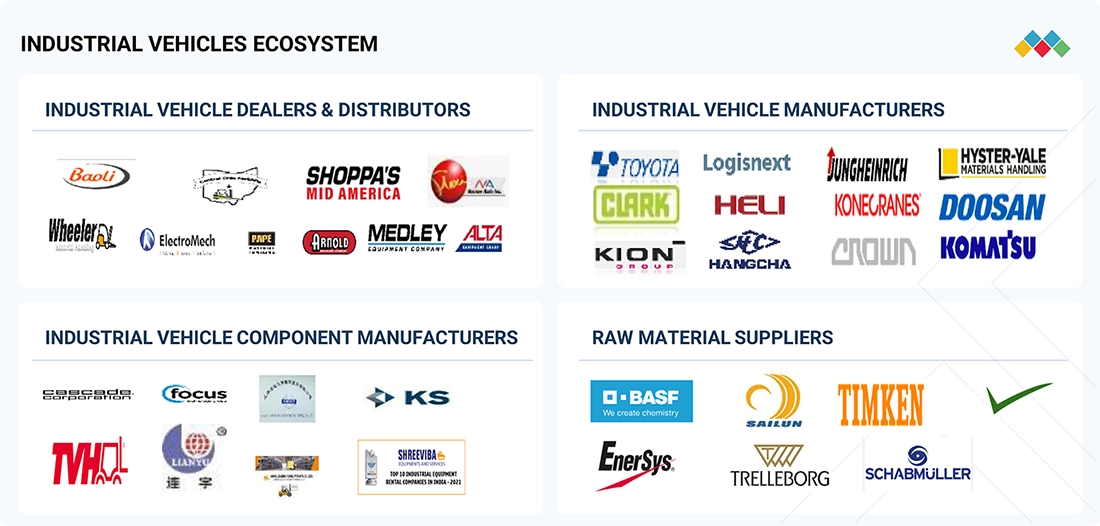
Logos and trademarks shown above are the property of their respective owners. Their use here is for informational and illustrative purposes only.
MARKET SEGMENTS
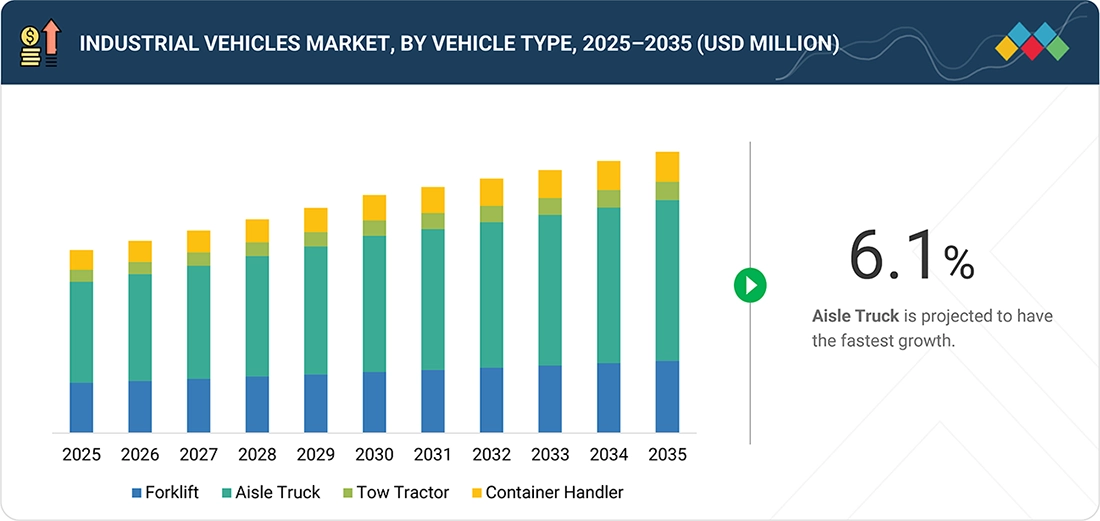
Source: Secondary Research, Interviews with Experts, MarketsandMarkets Analysis
Industrial Vehicle Market, By Vehicle Type & Capacity
Aisle truck dominates the global industrial vehicle market. Aisle trucks are witnessing substantial demand attributed to their reliable operation, cost-effectiveness, and efficiency. The surge in demand for battery-powered aisle trucks, driven by rapid industrialization in Europe and North America, is expected to propel the overall industrial vehicles market in these regions. Often constrained by limited space, warehouses adopt narrow-aisle configurations to optimize inventory capacity and spatial utilization. Within Aisle trucks, 1-2 tonnage aisle trucks hold the largest share owing to increasing applications in the warehousing and logistics segment.
Industrial Vehicle Market, By Propulsion
Battery-powered industrial vehicles hold the largest market share in the global industrial vehicle market. The aisle trucks sold in the market are all battery-operated due to the limited capacity required for these vehicles. Class 1-3 forklifts are all electric powered forklifts which are mainly designed for indoor material handling in warehouses, and facilities. Aisle trucks are all battery powered and they have higher adoption in industries like food & beverages, healthcare and pharmaceuticals. Further, electrification in container handlers and tow tractors is accelerating due to stricter emission norms at ports, logistics hubs, and airports, where diesel restrictions and decarbonization targets are tightening. The demand for lithium-ion container handlers and tow tractors is higher in China and Europe. Thus, with growing shift towards electrified industrial vehicles due to CO2 emission concerns and development of electric industrial vehicles with ability to handling high tonnage capacity, the growth for battery-powered industrial vehicles are expected to grow.
Industrial Vehicle Market, By Application
Industrial vehicles in the warehousing application are expected to register the fastest CAGR during the forecast period. Key material handling equipment in warehouses includes forklifts and aisle trucks. The demand for industrial vehicles has been on the rise, driven by their numerous advantages, including enhanced efficiency, high accuracy, and reduced resource wastage. Notably, industrial vehicles such as forklifts, tow tractors, automated guided vehicles (AGVs,) autonomous mobile robots (AMR, and aisle trucks play essential roles in various material-handling tasks in warehouses, including loading and unloading products, pallet movement, and overall goods transportation. These vehicles facilitate swift, safe product movement in confined warehouse spaces, helping reduce manual material-handling-related injuries.
Aerial Work Platform Market, By Type
Boom lifts hold the largest market in the global aerial work platform market during the forecast period. The boom lifts segment is driven by growing construction demand across geographies, coupled with various mega construction projects, particularly in the Asia Pacific. Governments in Asia-Pacific countries are focusing on infrastructure development and investing in mega construction projects..
REGION
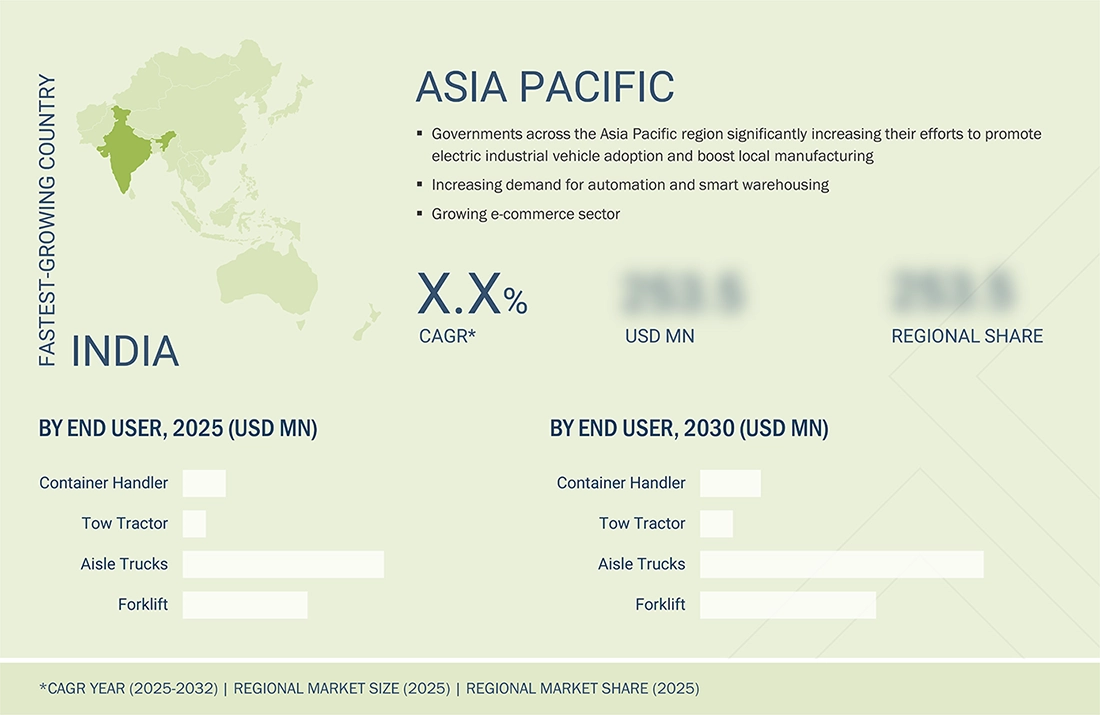
The Asia Pacific is expected to be the largest region in the global industrial vehicle market during the forecast period.
Asia Pacific is estimated to be the largest industrial vehicles market by 2030. The industrial vehicles market is expanding rapidly across the Asia Pacific, with individual countries such as China, Japan, India, South Korea, and the rest of the Asia Pacific countries playing a vital role. The region is a leading producer of industrial vehicles and is home to some of the world's fastest-developing economies, such as China and India. This has fueled a steady rise in industrial vehicle production volumes, with OEMs meeting domestic and international demand. Major manufacturers are expanding their regional presence to capitalize on the country's rapid growth in the material handling equipment market. China is poised to lead the industrial vehicles market in the Asia Pacific, followed by Japan, driven by factors such as high labor costs, the imperative to enhance production efficiency, and government incentives for industrial infrastructure development. Moreover, population growth, rising GDP, and increasing per capita income are fostering additional opportunities for industrial vehicles across the Asia Pacific. Major industrial vehicle manufacturers, such as Toyota Industries Corporation (Japan), Mitsubishi Logisnext Co., Ltd. (Japan), Anhui Heli Co., Ltd. (China), and others, are increasing their presence in the region to meet growing demand. For instance, Cargotec Corporation (Finland) announced in December 2023 that its Kalmar brand is set to start producing electric reach stackers and an essential forklift truck range at the company's Shanghai Plant in China. Thus, the region’s strategic initiatives to enhance industrial efficiency, coupled with substantial investments from major manufacturers, are expected to boost the demand in the Asia Pacific.
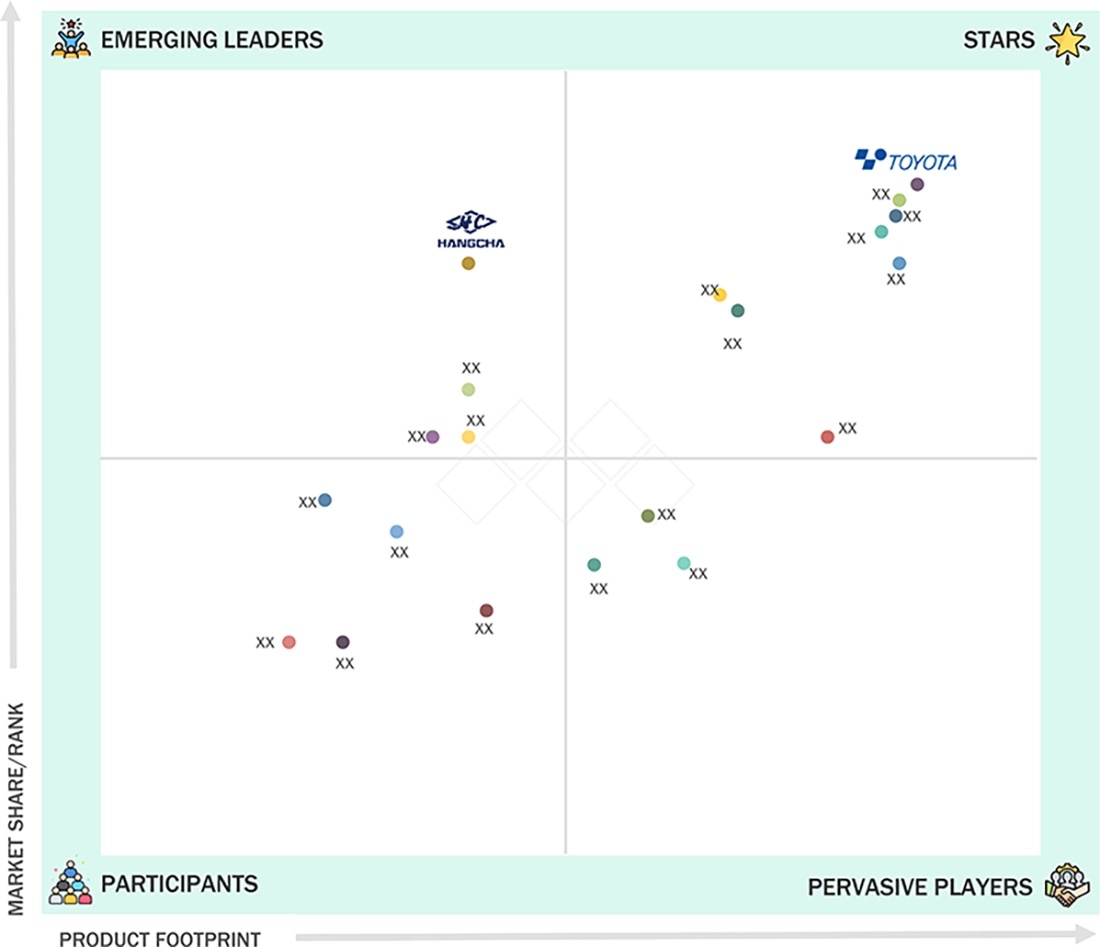
INDUSTRIAL VEHICLES MARKET: COMPANY EVALUATION MATRIX
Microquadrant provides information on major players that offer industrial vehicle manufacturers and outlines the findings and analysis of how well each vendor performs within the predefined criteria. The company evaluation matrix for the industrial vehicles market positions players based on market share/rank and product footprint. Companies in the Stars quadrant, such as Toyota Industries Corporation, lead the industrial vehicles market with a strong market presence and a wide product portfolio.
Source: Secondary Research, Interviews with Experts, MarketsandMarkets Analysis
KEY MARKET PLAYERS
MARKET SCOPE
| REPORT METRIC | DETAILS |
|---|---|
| Market Size Value in 2026 | USD 54.41 BN |
| Revenue Forecast in 2035 | USD 91.44 BN |
| Growth Rate | 5.9% |
| Actual Data | 2022 – 2035 |
| Base Year | 2025 |
| Forecast Period | 2035 |
| Units Considered | Value (USD Million/Billion), Volume (Thousand Units) |
| Report Coverage | Revenue forecast, Regional Market Shares, Competitive Landscape, Driving factors, Trends & Disruption, OEM Analysis, Bill of Materials, Total Cost of Ownership, OEM Analysis, and Others |
| Segments Covered | • By Vehicle Type & Capacity (Forklift, Aisle Truck, Tow Tractor, and Container Handler), Forklifts by Tonnage Capacity (<5 tons, 5-10 tons, 11-36 tons, and >36 tons), Tow Tractors by Tonnage Capacity (<1 tons, 1-2 tons, and >2 tons), Tow Tractors by Tonnage Capacity (<5 tons, 5-10 tons, 11-30 tons, and >30 tons), and Container Handlers by Tonnage Capacity (<30 tons, 30-40 tons, and >40 tons), • By Propulsion (ICE, Battery-operated, and Gas-powered) • By Application (Manufacturing, Warehousing, Freight & Logistics, and Others) • By Motor Type (Traction Motors, Hydraulic Motors, and Power Steering Motors) • By Level of Autonomy (Semi-autonomous and Autonomous) • Aerial Work Platform By Type (Boom Lifts and Scissor Lifts) |
| Regional Scope | Asia Pacific, Europe, North America, and Rest of the World |
WHAT IS IN IT FOR YOU: INDUSTRIAL VEHICLES MARKET REPORT CONTENT GUIDE
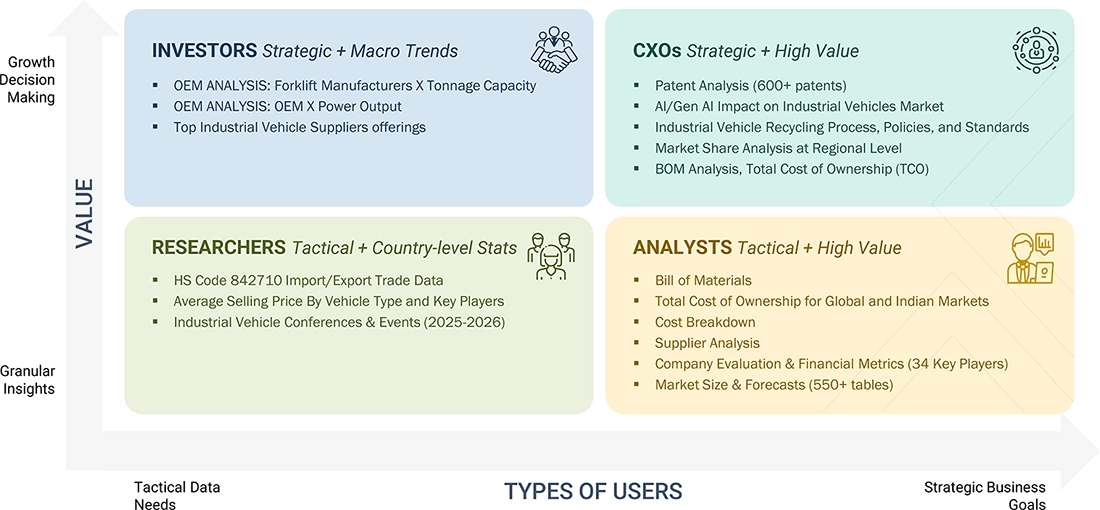
DELIVERED CUSTOMIZATIONS
We have successfully delivered the following deep-dive customizations:
| CLIENT REQUEST | CUSTOMIZATION DELIVERED | VALUE ADDS |
|---|---|---|
| Industrial Vehicle Market by Motor Type | Industrial vehicle sales and forecast to 2035 at the regional level by motor type (hydraulic motors, traction motors, and steering motors) | • Identifies the fastest-growing motor types within the industrial vehicles across different regions • Helps the client to decide which motor type categories to focus on based on region-specific demand |
RECENT DEVELOPMENTS
- August 2025 : Toyota Industries Corporation released new 5/35 series lithium-ion batteries for forklifts, offering improved charge times, thermal management, and broad voltage support (24–48V) to boost productivity and reduce operating costs.
- May 2025 : Jungheinrich AG has formed a partnership with EP Equipment to co-develop the Mid-Tech “AntOn by Jungheinrich” lineup and enhance the global product portfolio.
- January 2025 : Toyota Material Handling expanded its forklift lineup with Integrated Mid & Large Electric Pneumatic Forklifts and a refreshed Core Electric Forklift series, focusing on operational efficiency and environmental sustainability.
- March 2024 : EP Equipment (China) announced that Boendgen Baustoffe (Germany) purchased the EFL electric forklift series to upgrade its fleet.
- March 2024 : Mitsubishi Logisnext Americas launched Logisnext Financial Services in partnership with DLL, adding financing and leasing solutions for customers purchasing equipment like (forklifts, AGVs, automation tech) across North America.
Table of Contents
 Exclusive indicates content/data unique to MarketsandMarkets and not available with any competitors.
Methodology
The market size assessment was conducted through a structured multi-stage research approach. Extensive secondary research was used to compile data on the industrial vehicles market, adjacent markets, competitive landscape, and product mapping from company reports, industry publications, and recent developments. These findings and assumptions were then validated through primary interviews with industry participants across the value chain, including manufacturers, distributors, and end users. Both bottom-up and top-down estimation approaches were applied to derive the overall market size. Finally, market segmentation, cross-verification, and data triangulation methods were used to calculate the size of individual segments and subsegments, ensuring consistency, reliability, and alignment with current market dynamics.
Secondary Research
The secondary research phase utilized a broad set of reliable and authoritative sources to develop a comprehensive understanding of the industrial vehicles market. These sources included company annual reports, investor presentations, press releases, industry whitepapers, recognized publications, commercial databases, and documents issued by industry associations and government agencies. The analysis of these materials enabled the identification of the industry value chain, key market participants, market segmentation based on prevailing industry trends, regional market dynamics, and recent technological and business developments. The insights derived from this phase served as a foundational basis for the overall market assessment.
Primary Research
Extensive primary research was undertaken following a comprehensive assessment of the industrial vehicles market through secondary analysis. Multiple in-depth interviews were conducted with industry experts representing both demand-side industrial vehicle end users and supply-side original equipment manufacturers across key regions, including North America, Europe, and the Asia Pacific. Approximately 17% of the interviews were conducted with demand-side stakeholders, while 83% interviews were conducted with supply-side stakeholders.
Primary insights were gathered through structured questionnaires, email interactions, and telephonic discussions. To ensure a well-rounded perspective, respondents from diverse organizational functions, including sales, operations, and marketing, were involved in the discussion.
In addition, discussions were held with highly experienced independent consultants to validate and strengthen the primary findings. These inputs, together with the perspectives of in-house subject matter experts, formed the basis for the conclusions and insights presented in the subsequent sections of this report.
BREAKDOWN OF PRIMARY INTERVIEW PARTICIPANTS
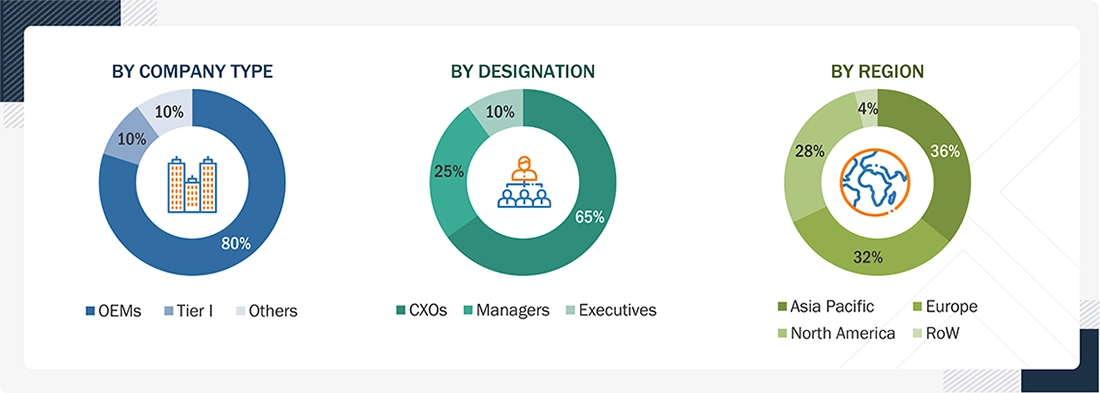
Note: The company's tiers are based on the value chain of the industrial vehicles market; companies' revenues have not been considered. Tier 1 suppliers supply components to OEMs.
To know about the assumptions considered for the study, download the pdf brochure
Market Size Estimation
A detailed market estimation approach was followed to estimate and validate the value of the industrial vehicles market. Key players in the industrial vehicles market were identified through secondary research, and their global market shares were determined through primary and secondary research. The research methodology included the study of the annual and quarterly financial reports & regulatory filings of major market players, as well as interviews with industry experts for detailed market insights. All major penetration rates, percentage shares, splits, and breakdowns for the industrial vehicles market were determined using secondary sources, model mapping, and verified through primary sources. All key macro indicators affecting the revenue growth of the market segments and subsegments were accounted for, viewed in extensive detail, verified through primary research, and analyzed to get the validated and verified quantitative & qualitative data. The gathered market data was consolidated and added with detailed inputs, analyzed, and presented in this report.
Data Triangulation
All percentage shares, splits, and breakdowns were determined using secondary sources and verified by primary sources. All parameters that affect the markets covered in this research study were accounted for, viewed in extensive detail, and analyzed to obtain the final quantitative and qualitative data. This data was consolidated and enhanced with detailed inputs and analysis from MarketsandMarkets and presented in the report. The following figure is an illustrative representation of the overall market size estimation process employed for this study.
Market Definition
- Industrial vehicles: The industrial vehicles market encompasses the production, distribution, and utilization of specialized vehicles tailored for material handling, transportation, and logistical operations within industrial environments like warehouses, manufacturing facilities, distribution centers, and ports. These vehicles, including forklifts, aisle trucks, tow tractors, and container handlers, are crucial for optimizing operational productivity, safety, and efficiency. Key stakeholders involved in this market include industrial vehicle manufacturers, component manufacturers, industrial vehicle rental/leasing companies, and end users.
Key Stakeholders
- Associations, forums, and alliances related to industrial vehicles
- Raw material suppliers
- Industrial vehicle distributors and dealers
- Manufacturers of industrial vehicles
- Manufacturers of industrial vehicle components
- Autonomous vehicle solution providers
- Technology vendors
- Industrial vehicle rental/leasing companies
- Material handling associations
- Standards organizations and regulatory authorities related to the material handling industry
Report Objectives
- To segment and forecast the size of the global industrial vehicles market, by value & volume, based on vehicle type & capacity (forklifts (<5ton, 5-10 ton, 11-36 ton, >36 ton), aisle trucks (<1ton, 1-2 ton, >2 ton), tow tractors (<5ton, 5-10 ton, 11-30 ton, >30 ton), container handlers (<30 ton, 30-40 ton, >40 ton), automated guided vehicles, and personnel carriers)
- To segment and forecast the size of the global industrial vehicles market, by value & volume, based on drive type (internal combustion engine industrial vehicles, battery-operated industrial vehicles, and gas-powered industrial vehicles)
- To segment and forecast the size of the global industrial vehicles market, by value & volume, based on application (manufacturing (chemical, food & beverages, mining, automotive, metals & heavy machinery, and others), warehousing, freight & logistics, and others)
- To segment and forecast the size of the global industrial vehicles market by value, based on level of autonomy (non/semi-autonomous and autonomous)
- To segment and forecast the size of the global industrial vehicles market by value, based on motor type and power output (traction motors (<4.9 KW and >5 KW) and power source (AC and DC), hydraulic motors (<4.9 KW and >5 KW and power source (AC and DC)), and power steering motors (<4.9 KW and >5 KW) and power source (AC and DC))
- To segment and forecast the size of the global aerial work platforms market, by value & volume, based on type (scissor lifts (scissor lifts by drive type), boom lifts (articulating AWP, telescopic AWP), and boom lifts by drive type)
- To segment and forecast the size of the industrial vehicles market, by value & volume, based on region (Asia Pacific, Europe, North America, and Rest of the World)
Available customizations:
With the given market data, MarketsandMarkets offers customizations per the company's specific needs.
- By capacity at the regional level for each vehicle type
- By drive type at the regional level for each vehicle type
- By application at the global level for each vehicle type
- Company information
- Profiling of additional market players (up to five)
Key Questions Addressed by the Report
What is the current market size of the Industrial Vehicles Market, and how is it expected to grow?
The Industrial Vehicles Market is projected to grow from USD 54.41 billion in 2026 to USD 91.44 billion by 2035, at a CAGR of 5.9% during the forecast period.
What are the key factors driving the growth of the Industrial Vehicles Market?
The market is driven by rapid warehouse automation, expanding e-commerce and logistics operations, increasing industrialization, and growing demand for efficient material handling equipment.
Which region is expected to dominate the Industrial Vehicles Market during the forecast period?
Asia Pacific is expected to dominate the Industrial Vehicles Market due to strong manufacturing activity, expanding warehouse infrastructure, and increasing adoption of battery-powered industrial vehicles.
What are the latest trends shaping the Industrial Vehicles Market?
Key trends include the adoption of electric industrial vehicles, autonomous forklifts, IoT-enabled fleet management, predictive maintenance, and software-defined industrial vehicles.
Who are the leading companies in the Industrial Vehicles Market, and what strategies are they adopting?
Leading companies are focusing on electrification, autonomous technologies, product innovation, strategic partnerships, and expanding their smart material handling solutions to strengthen their market position.


Personalize This Research
- Triangulate with your Own Data
- Get Data as per your Format and Definition
- Gain a Deeper Dive on a Specific Application, Geography, Customer or Competitor
- Any level of Personalization
Let Us Help You
- What are the Known and Unknown Adjacencies Impacting the Industrial Vehicles Market
- What will your New Revenue Sources be?
- Who will be your Top Customer; what will make them switch?
- Defend your Market Share or Win Competitors
- Get a Scorecard for Target Partners

Custom Market Research Services
We Will Customise The Research For You, In Case The Report Listed Above Does Not Meet With Your Requirements
Get 10% Free CustomisationTESTIMONIALS

JIM NAAS
PRODUCT DIRECTOR, WEASLER
Weasler Engineering, a CentroMotion organization
Global Provider of Industrial Actuation & Control Solutionswww.weasler.com
Our organization was interested in learning more about the attractiveness of a particular market space. We contacted MarketsandMarkets to help us based on previous positive experiences we had with them. The results did not disappoint! We discussed our objectives with them, and the team at MarketsandMarkets developed and executed a proposal that met our needs precisely. We were very impressed by their level of expertise, the quality of the analysis and their insightful recommendations. We would not hesitate in working with them again in the future.

Matt Kardel,
Vice President
Aptiv,
A global technology company that develops safer, greener and more connected solutions.www.aptiv.com
We contracted with
MarketsandMarkets to evaluate the value chain and potential go-to-market partners related to our
interest in the Fleet Management space. The team successfully completed the work on time and at the
pricing agreed. MarketsandMarkets listened and understood our objectives and collaborated well with
us to help us get the visibility we needed to make an investment.
We have subsequently used
MarketsandMarkets again related to Smart Cities to good results.
- China Industrial Vehicles Market
- India Industrial Vehicles Market
- Japan Industrial Vehicles Market
- South Korea Industrial Vehicles Market
- Germany Industrial Vehicles Market
- UK Industrial Vehicles Market
- France Industrial Vehicles Market
- Italy Industrial Vehicles Market
- Spain Industrial Vehicles Market
- US Industrial Vehicles Market
- Canada Industrial Vehicles Market
- Mexico Industrial Vehicles Market
- Brazil Industrial Vehicles Market
- South Africa Industrial Vehicles Market
- Rest Of Europe Industrial Vehicles Market
- Rest Of Asia Pacific Industrial Vehicles Market
Growth opportunities and latent adjacency in Industrial Vehicles Market






Roma
Jun, 2022
Which geography is expected to grow at the highest rate among others in the global Industrial Vehicles Market from 2022 to 2030?.