The study involved four major activities in estimating the market size for phosphoric acid. Exhaustive secondary research was conducted to gather information on the market, including peer and parent markets. The next step was to validate these findings, assumptions, and sizing with industry experts across the value chain through primary research. Both top-down and bottom-up approaches were used to estimate the total market size. Subsequently, market breakdown and data triangulation methods were applied to determine the sizes of segments and subsegments.
Secondary Research
Secondary sources used in this study included annual reports, press releases, and investor presentations of companies; white papers; certified publications; articles from recognized authors; and gold standard & silver standard websites such as Factiva, ICIS, and Bloomberg. The findings of this study were verified through primary research by conducting extensive interviews with key officials such as CEOs, VPs, directors, and other executives.
Primary Research
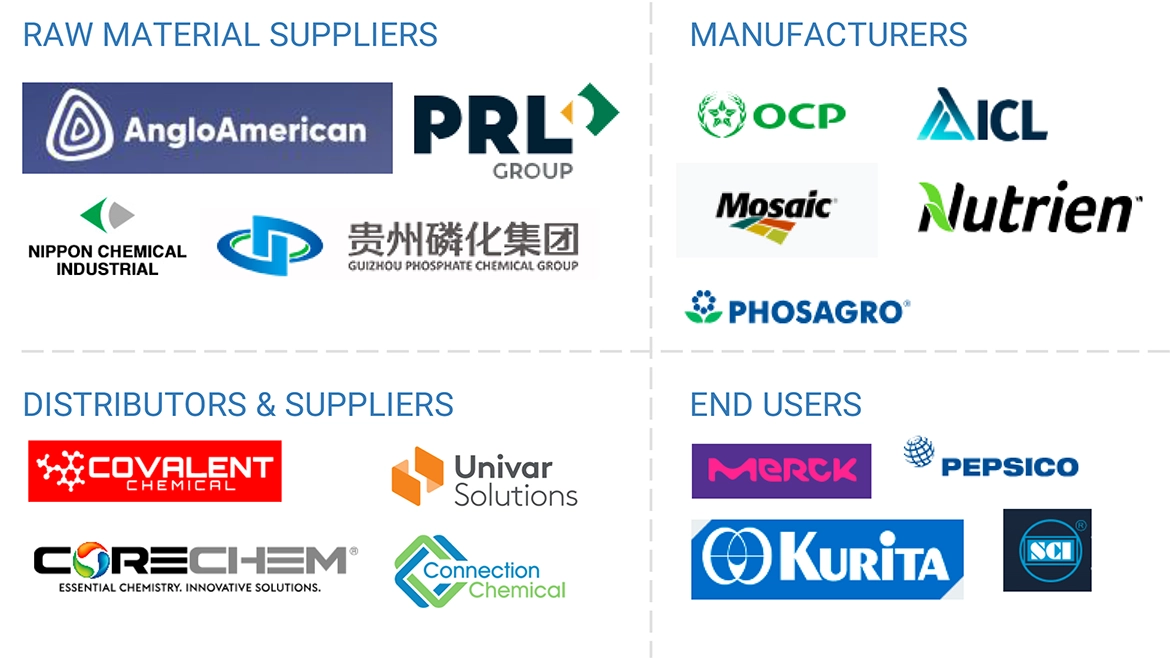
The phosphoric acid market comprises several stakeholders, such as raw material suppliers, end-product manufacturers, and regulatory organizations in the supply chain. The demand side of this market is characterized by key opinion leaders in various applications for the phosphoric acid market. The supply side is characterized by advancements in technology and diverse application industries. Various primary sources from both the supply and demand sides of the market were interviewed to obtain qualitative and quantitative information.
The breakdown of profiles of the primary interviewees is illustrated in the figure below:
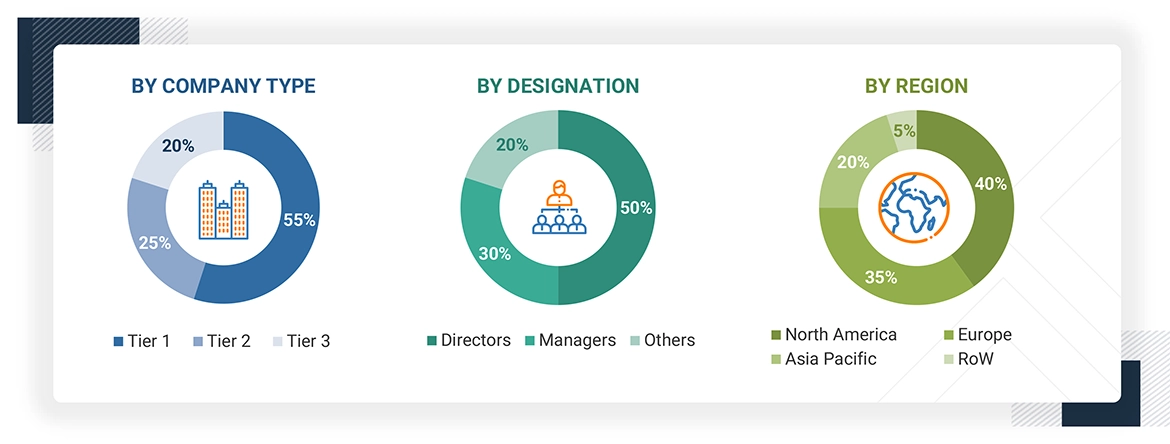
Note: Tier 1, Tier 2, and Tier 3 companies are classified based on their market revenue in 2023/2024, available in the public domain, product portfolios, and geographical presence.
Other designations include consultants and sales, marketing, and procurement managers.
To know about the assumptions considered for the study, download the pdf brochure
|
COMPANY NAME |
DESIGNATION |
|
OCP Group |
Senior Manager |
|
The Mosaic Company |
Innovation Manager |
|
PJSC PhosAgro |
Vice-President |
|
ICL Group Ltd. |
Production Supervisor |
|
Nutrien Ltd. |
Sales Manager |
Market Size Estimation
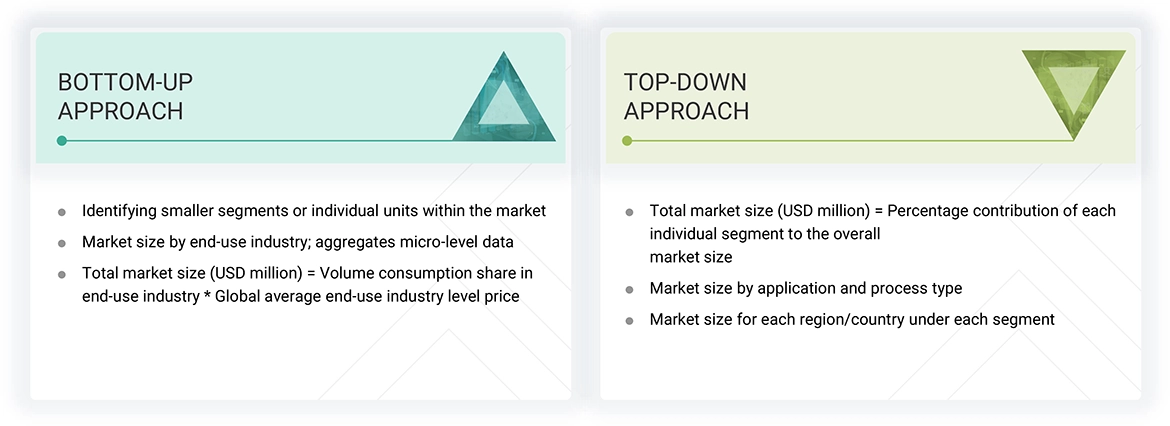
Both top-down and bottom-up approaches were used to estimate and validate the total size of the phosphoric acid market. These methods were also used extensively to estimate the size of various subsegments in the market. The research methodology used to estimate the market size includes the following:
-
The key players in the industry have been identified through extensive secondary research.
-
The supply chain of the industry has been determined through primary and secondary research.
-
All percentage shares, splits, and breakdowns have been determined using secondary sources and verified through primary sources.
-
All possible parameters that affect the markets covered in this research study have been accounted for, viewed in extensive detail, verified through primary research, and analyzed to obtain the final quantitative and qualitative data.
Data Triangulation
After arriving at the overall market size—using the market size estimation processes as explained above—the market was split into several segments and subsegments. To complete the overall market engineering process and arrive at the exact statistics of each market segment and subsegment, data triangulation, and market breakdown procedures were employed, wherever applicable. The data was triangulated by studying various factors and trends from both the demand and supply sides in the phosphoric acid industry.
Market Definition
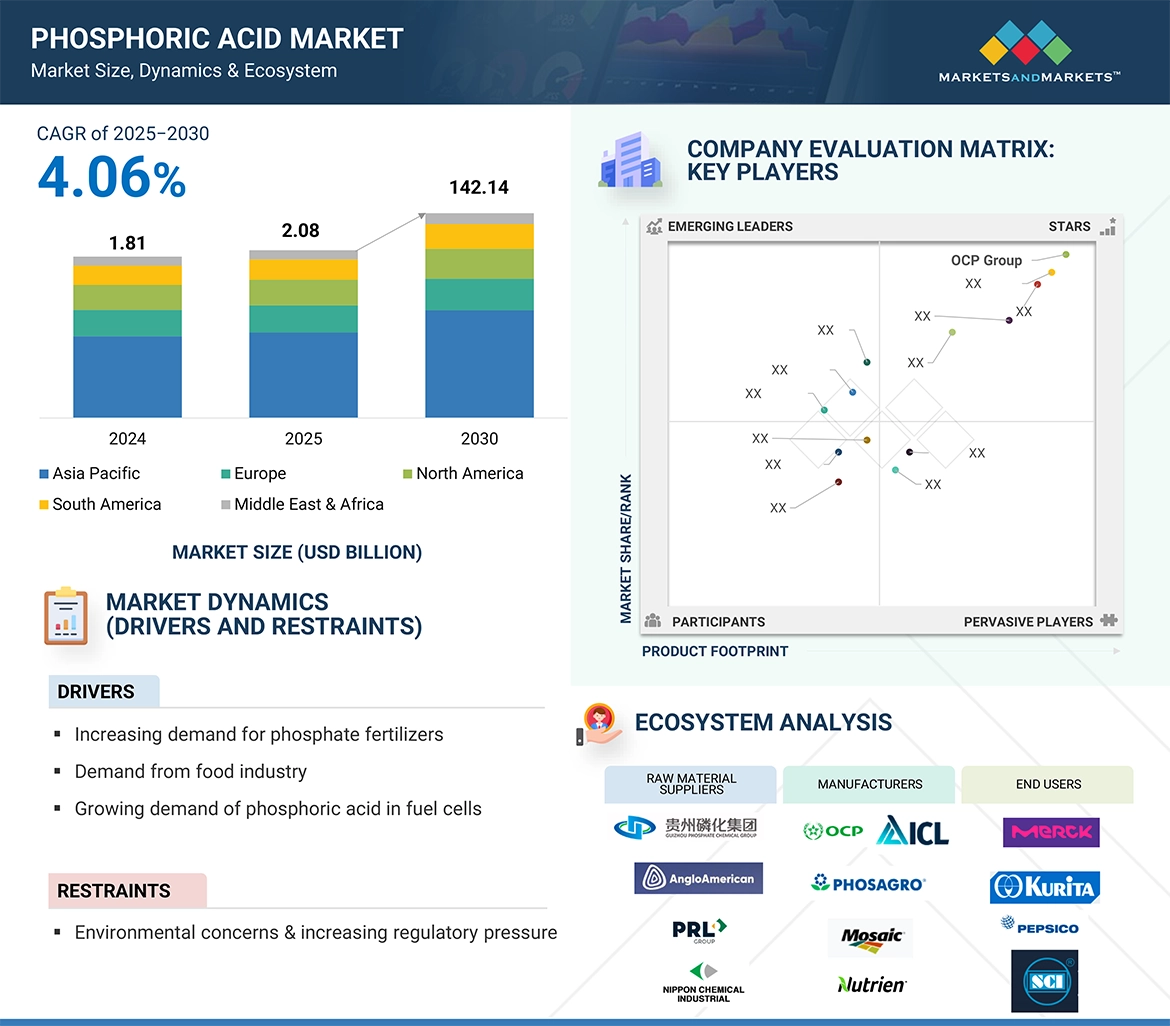
According to the Phosphoric Acid and Phosphates Association, "Phosphates are inorganic compounds that exist in various food products and are manufactured synthetically from phosphoric acid.” Phosphoric acid is an inorganic type of acid that is derived from one or more inorganic compounds. The key raw materials for phosphoric acid production are rock phosphate, sulfuric acid, and elemental phosphorus. Phosphoric acid is manufactured from two major processes, the wet process and the thermal process. The wet process is the most commonly used for phosphoric acid production. The thermal process is used to produce high-purity phosphoric acid.
Stakeholders
-
Phosphoric acid manufacturers
-
Phosphoric acid distributors
-
Raw material suppliers
-
Government and research organizations
-
Investment banks and private equity firms
Report Objectives
-
To define, describe, and forecast the phosphoric acid market in terms of value and volume
-
To provide detailed information regarding significant drivers, opportunities, restraints, and challenges, influencing market growth
-
To estimate and forecast the market size by process type, application, and region
-
To forecast the size of the market with respect to five main regions (along with key countries of each region): Asia Pacific, North America, Europe, the Middle East & Africa, and South America
-
To strategically analyze micromarkets with respect to individual growth trends, prospects, and their contribution to the overall market
-
To analyze opportunities in the market for stakeholders and provide a competitive landscape of the market leaders
-
To analyze competitive developments, such as product launches, acquisitions, partnerships, and expansions
-
To strategically profile the key players and comprehensively analyze their core competencies




 HIGHEST CAGR MARKET IN 2025–2030
 INDONESIA FASTEST-GROWING MARKET IN THE REGION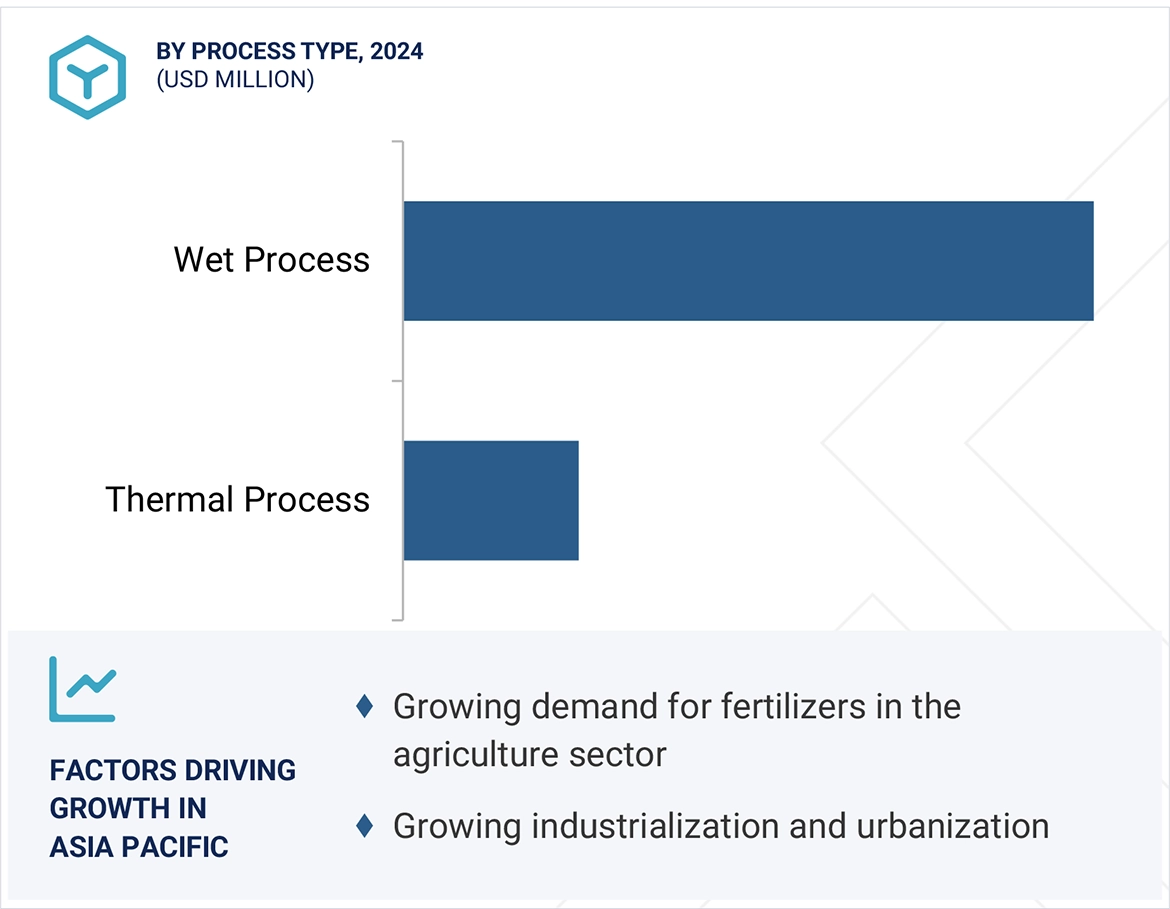









Growth opportunities and latent adjacency in Phosphoric Acid Market