The research methodology used to analyze the global Ultrasound AI is comprehensively outlined on the website. It clearly explains the structure, processes, and practices for collecting and analyzing field data, ensuring accuracy and reliability. This level of transparency enables stakeholders to effectively evaluate the credibility of the findings, conclusions, and recommendations presented in the report, supporting well-informed decision-making.
Secondary Research
For this secondary research, we relied on diverse sources such as D&B Hoovers, Bloomberg Businessweek, Factiva, white papers, annual reports, company filings, investor presentations, and SEC filings. This in-depth approach allowed us to build a robust database of key players in the industry. The database features essential insights on established companies, detailed multi-level market segmentation, trends within each segment, notable mergers and acquisitions, and the impact of advanced technological innovations shaping the Ultrasound AI market.
Primary Research
The primary research involved qualitative and quantitative techniques and was conducted in depth with participants from both the supply and demand sides through interviews.
On the supply side, interviews were held with high-level executives, including CEOs, vice presidents, marketing directors, sales directors, regional sales managers, and directors of technology and innovation, from leading companies and organizations that produce and deliver therapy products.
On the demand side, professionals interviewed included clinicians, procurement managers, purchasing managers, department heads, and subject-matter experts from hospitals, surgical centers, diagnostic centers, maternity centers, ambulatory centers, research institutions, and academia, as well as other end users.
Overall, this research provided valuable insights into market segmentation, key players, trends, dynamics, and growth drivers in the market.
A breakdown of the primary respondents is provided below:
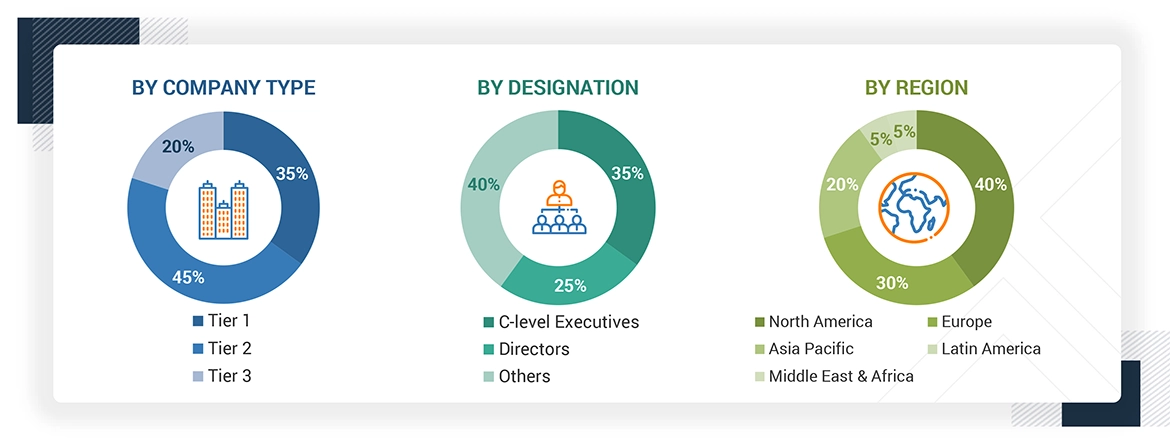
Note 1: Others include sales managers, marketing managers, business development managers, product managers, distributors, and suppliers.
Note 2: Companies are classified into tiers based on their total revenue. As of 2024 Tier 1 = >USD 1 billion, Tier 2 = < USD 500 million, and Tier 3 = < USD 100 million.
To know about the assumptions considered for the study, download the pdf brochure
Market Size Estimation
The report offers an in-depth analysis of the Ultrasound AI market, identifying key players through primary and secondary research. Secondary research drew on annual and financial reports from major market companies, while primary research included detailed interviews with key opinion leaders such as CEOs, directors, and senior marketing executives.
A segment-based methodology was applied to estimate the global market value, using revenue data from leading solution and supplier providers. This involved:
-
Identifying major participants in the global Ultrasound AI market.
-
Reviewing their reported annual revenues, whether directly related to ultrasound or reflecting broader business units and product lines.
The data was then projected to arrive at the overall value for the Ultrasound AI market.
Data Triangulation
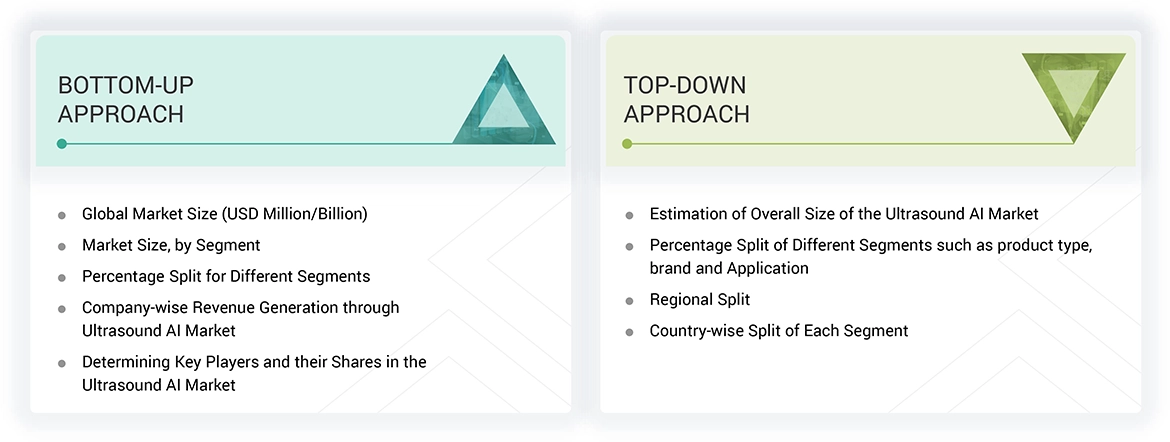
The research approach divided the global Ultrasound AI market into different participant groups and categories. Data triangulation and segmentation methods were applied to ensure the accuracy of information across all market segments. Multiple analyses were carried out to assess the market's demand and supply aspects. The study delivered a thorough understanding of the Ultrasound AI market by combining top-down and bottom-up approaches.
Market Definition
The AI in ultrasound market refers to the segment of the medical imaging industry that integrates artificial intelligence technologies—such as machine learning, deep learning, and computer vision—into ultrasound systems to enhance image acquisition, interpretation, and diagnostic accuracy. These AI-powered solutions enable automated measurements, anomaly detection, workflow optimization, and real-time decision support, reducing operator dependency and improving efficiency. The market encompasses a range of applications, including diagnostic imaging, monitoring, and interventional procedures, across various medical fields such as cardiology, obstetrics and gynecology, radiology, and oncology, with adoption in hospitals, diagnostic centers, and point-of-care settings worldwide.
Stakeholders
-
Healthcare institutions (hospitals & diagnostic centers)
-
Research institutions
-
Clinical research organizations
-
Academic medical centers & universities
-
Reference laboratories
-
Accountable care organizations (ACOs)
-
Research & consulting firms
-
Contract research organizations (CROs) and contract manufacturing organizations (CMOs)
-
Academic medical centers & universities
-
Market research & consulting firms
-
Group purchasing organizations (GPOs)
-
Medical research laboratories
-
Academic medical centers & universities
Report Objectives
-
To define, describe, and forecast the Ultrasound AI market based on product type, brand, application, end user, and region
-
To provide detailed information regarding the major factors influencing the market growth (drivers, restraints, opportunities, and challenges), along with the current trends
-
To strategically analyze micromarkets1 with respect to their individual growth trends, prospects, and contributions to the total market
-
To analyze opportunities in the market for stakeholders and provide details of the competitive landscape for market leaders
-
To forecast the revenue of the market segments for five regions: North America (US and Canada), Europe (Germany, France, UK, Italy, Spain, and Rest of Europe), the Asia Pacific (China, Japan, India, South Korea, Australia, and Rest of Asia Pacific), Latin America (Brazil, Mexico, and Rest of Latin America), and the Middle East & Africa
-
To profile the key players and comprehensively analyze their market shares and core competencies
-
To track and analyze competitive developments in the Ultrasound AI market, such as acquisitions, product launches, expansions, agreements, joint ventures, alliances, and collaborations


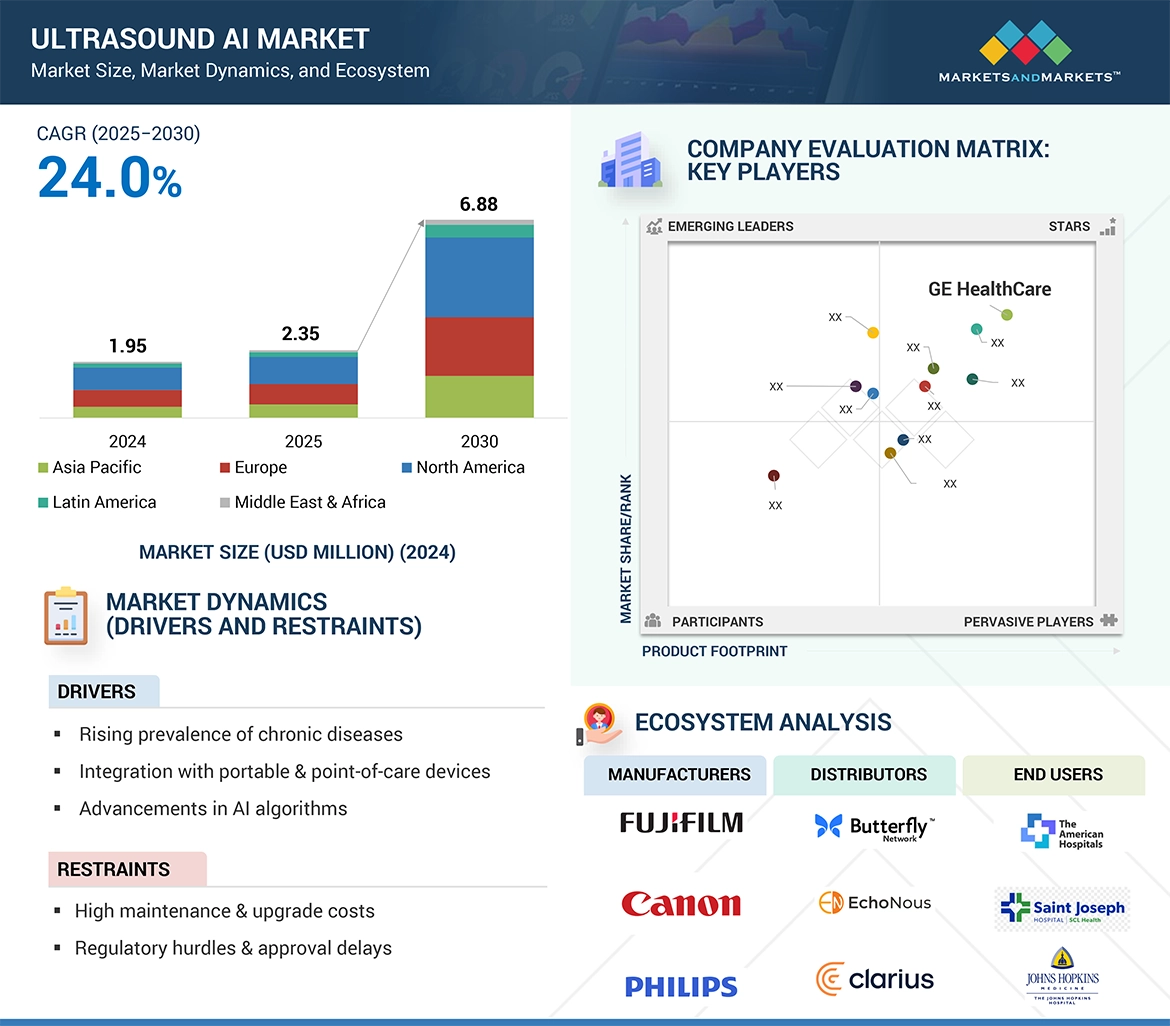


 HIGHEST CAGR MARKET IN 2025–2030
 JAPAN: FASTEST-GROWING MARKET IN THE REGION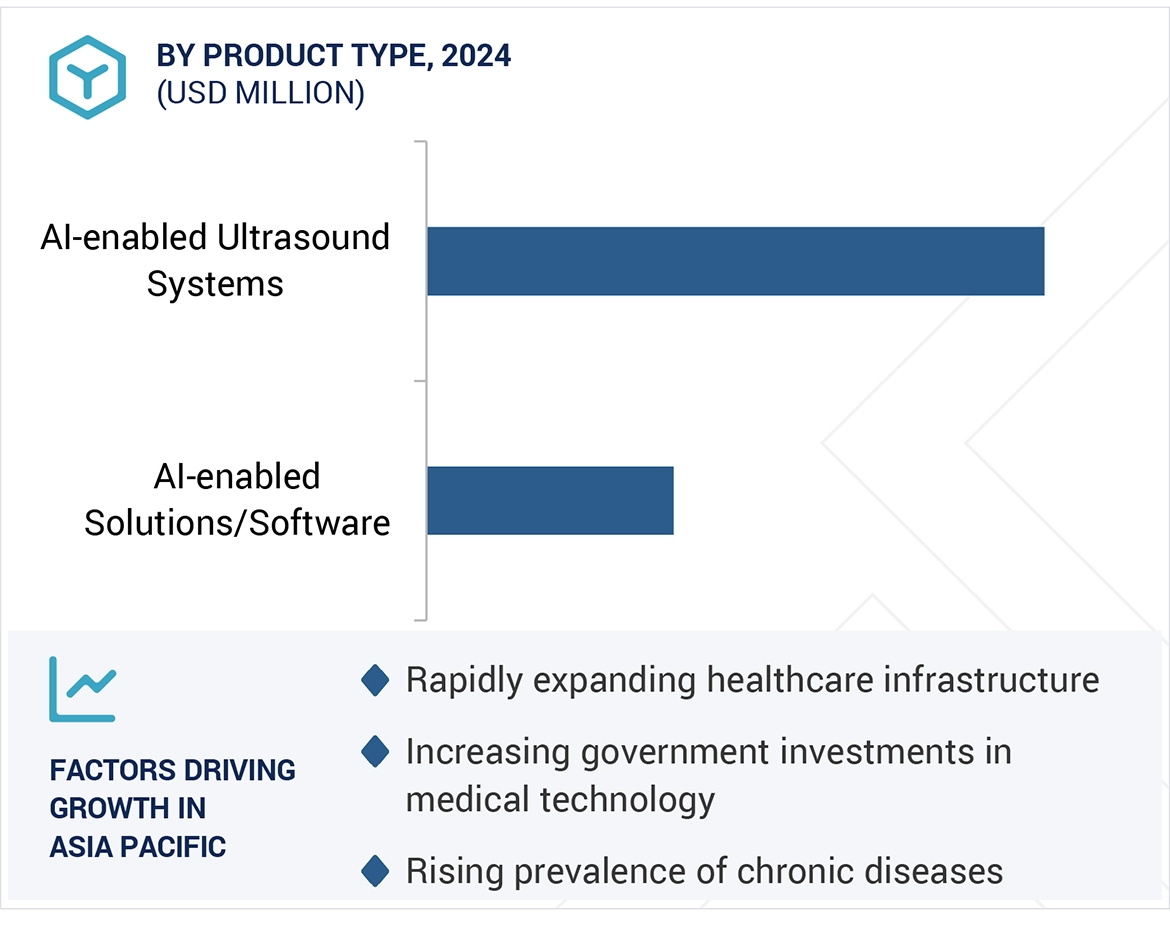














Growth opportunities and latent adjacency in Ultrasound AI Market