

Avionics Market Research Insights 2030: How Honeywell, RTX, Thales, Garmin, and L3Harris Are Steering the Future of Intelligent Aviation Systems
The aviation industry is undergoing one of the most transformative decades in its history — a shift toward digitalization, automation, and sustainability. At the heart of this transformation lies the Avionics Market, the technological nervous system of modern aircraft. According to the latest research, the global avionics market is projected to grow from USD 56.22 billion in 2025 to USD 82.33 billion by 2030, registering a CAGR of 7.9%.
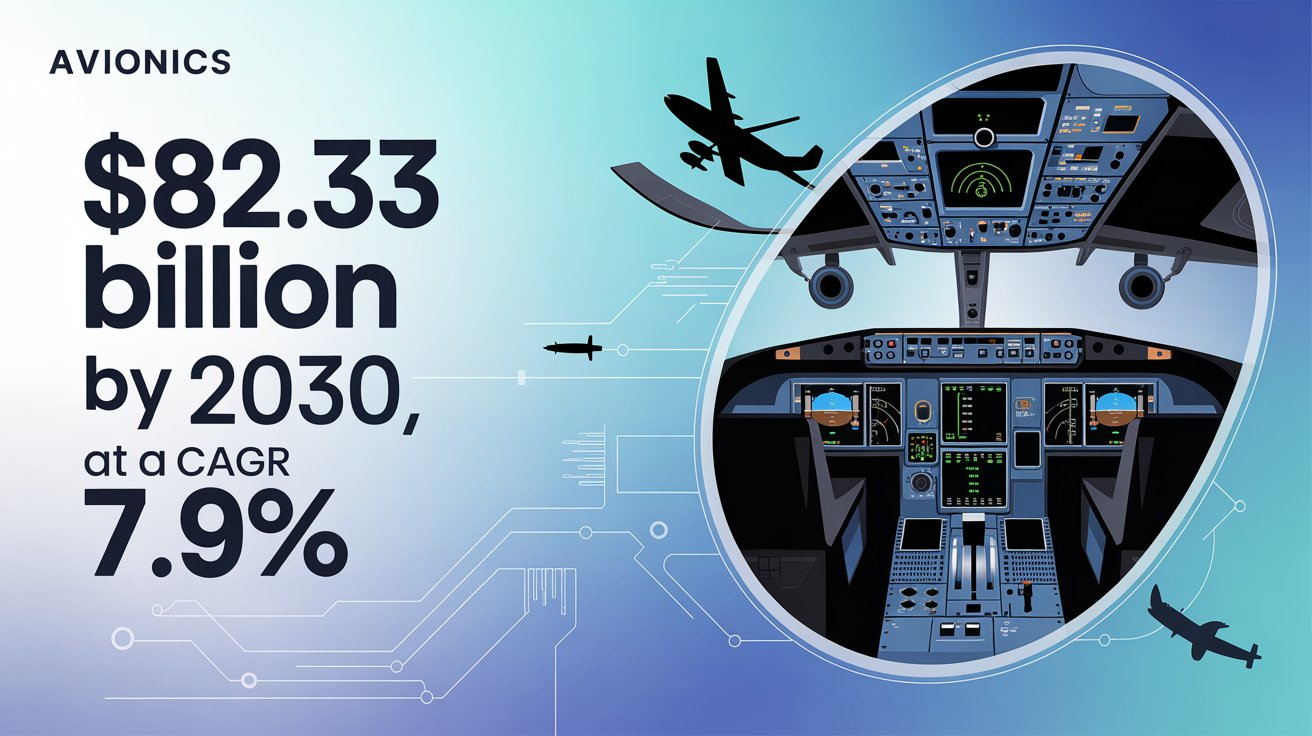
As the aerospace ecosystem evolves to support smarter, connected, and autonomous operations, avionics manufacturers are racing to develop advanced systems that enhance flight efficiency, safety, and situational awareness. Leading avionics industry players such as Honeywell International Inc. (US), RTX (Raytheon Technologies, US), Thales Group (France), Garmin Ltd (US), and L3Harris Technologies Inc. (US) are playing a pivotal role in shaping this transformation through innovation, integration, and intelligent design.
Download Report Sample @ https://www.marketsandmarkets.com/requestsampleNew.asp?id=138098845
Understanding the Role of Avionics in Modern Aviation
Avionics — or aviation electronics — refers to the suite of electronic systems responsible for communication, navigation, monitoring, and control of aircraft. From flight management to power distribution and data processing, avionics ensures that every operation onboard an aircraft is safe, efficient, and coordinated.
In today’s digital aviation environment, the evolution of avionics is being driven by three key factors:
- The growing adoption of connected and autonomous flight systems
- The rising need for fuel efficiency and sustainability
- The demand for real-time data integration and AI-driven decision-making
As air traffic continues to grow globally and fleet modernization accelerates, avionics technology is rapidly transitioning from analog to intelligent digital platforms capable of adaptive communication and predictive control.
Key Market Segments and Functional Insights
The avionics market is structured around several system categories, each critical to flight operations and mission performance.
1. Flight Management Systems (FMS)
The FMS serves as the command center for modern aircraft. It integrates inputs from navigation, sensors, and performance databases to calculate optimal flight paths. AI-enabled FMS solutions developed by Honeywell and Collins Aerospace (RTX) are helping pilots reduce workload, enhance efficiency, and support eco-friendly flight planning.
2. Navigation & Surveillance Systems
Accurate navigation is vital for flight safety. Systems such as Automatic Dependent Surveillance–Broadcast (ADS-B) and Global Navigation Satellite Systems (GNSS) are transforming how aircraft navigate airspace. The industry’s shift toward Performance-Based Navigation (PBN) and NextGen air traffic systems has increased avionics upgrades across fleets, especially in North America.
3. Communication Systems
Modern aircraft rely on advanced communication technologies like SATCOM, VHF Data Link (VDL), and HF systems to maintain seamless contact between pilots, air traffic controllers, and ground operations. Companies such as L3Harris and Thales are leading innovations in secure and high-bandwidth aviation communication networks, supporting connected aircraft ecosystems.
4. Power & Data Management Systems
With increasing electrification in aviation, efficient energy management has become crucial. Safran SA (France) and Curtiss-Wright Corporation (US) are pioneering integrated power and data management solutions that improve reliability, reduce energy losses, and optimize aircraft system performance — aligning with the “More Electric Aircraft (MEA)” movement.
5. Mission and Payload Management Systems
This segment caters primarily to defense, surveillance, and special mission aircraft. Advanced mission management systems integrate real-time imaging, radar, and sensor data for operations like reconnaissance, search and rescue, and border patrol. Players such as Elbit Systems (Israel) and BAE Systems (UK) are leading in mission avionics for next-generation defense aircraft.

Major Market Trends Influencing Growth
The avionics industry is not static — it’s evolving at an accelerated pace due to technological convergence and shifting market priorities. Here are the most significant trends shaping its future:
1. The Rise of Connected and Autonomous Aircraft
The aviation sector is advancing toward autonomy. Avionics systems are enabling semi-autonomous flight control, real-time environmental perception, and data-driven predictive navigation. Companies like Garmin are integrating AI-assisted autopilot capabilities even in smaller aircraft segments.
2. Growing Emphasis on Sustainability
Avionics contributes directly to sustainable aviation goals. Intelligent systems help optimize routes, monitor engine performance, and reduce carbon emissions. The integration of AI for fuel optimization is becoming a key differentiator for commercial airlines seeking net-zero emission operations.
3. Increased Demand for Retrofit and Modernization
Aging aircraft fleets, especially in North America and Europe, are undergoing avionics modernization to comply with safety mandates such as ADS-B Out and satellite-based navigation. This retrofit trend is creating long-term revenue opportunities for OEMs and maintenance service providers alike.
4. Integration of Open Architecture and Modular Systems
Avionics manufacturers are shifting toward open systems architecture (OSA) to enable interoperability and scalability. This approach allows operators to integrate new functionalities without replacing entire systems, significantly reducing lifecycle costs.
5. Advancements in Artificial Intelligence and Data Analytics
AI-driven avionics systems enhance predictive maintenance and system reliability. For instance, Honeywell’s Anthem Flight Deck uses cloud-based data analytics to provide pilots with real-time insights, improving operational decision-making and safety.
Regional Insights: North America Leads, Asia-Pacific Emerges
North America
North America remains the largest market for avionics, thanks to its strong aerospace infrastructure, regulatory initiatives, and technological innovation. The FAA’s NextGen air traffic modernization program has compelled airlines to upgrade cockpit systems and surveillance capabilities.
The presence of leading players such as Honeywell, RTX (Collins Aerospace), Garmin, and L3Harris gives the region a competitive edge. The US defense sector’s investments in special mission and unmanned aircraft systems (UAS) are further propelling avionics demand.
Europe
Europe’s avionics growth is supported by the SESAR (Single European Sky ATM Research) initiative, which promotes advanced air traffic control and interoperable avionics systems. Thales Group and BAE Systems are spearheading regional innovation with emphasis on digital flight decks and secure communication solutions.
Asia-Pacific
The Asia-Pacific region is expected to witness the fastest growth rate over the forecast period. Nations like China, India, Japan, and South Korea are expanding commercial and defense aviation capabilities. Increasing demand for new aircraft and indigenous avionics production is fueling partnerships between local manufacturers and global OEMs.
Competitive Landscape: Key Players and Their Strategic Focus
The avionics market features a competitive ecosystem led by a combination of global aerospace giants and specialized system providers. The key players include:
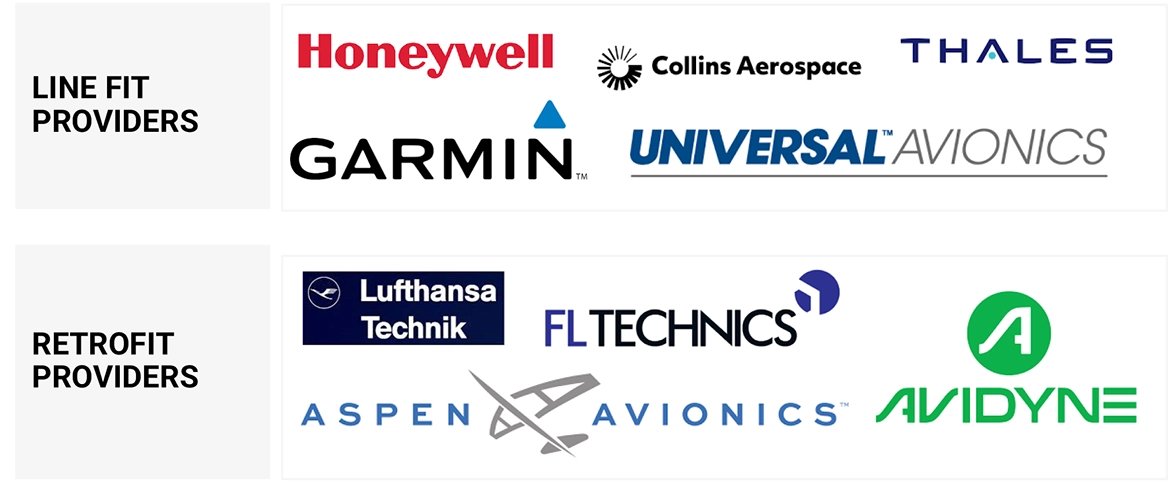
- Honeywell International Inc. (US) – A leader in integrated flight decks and digital cockpit systems, Honeywell’s Anthem Flight Deck represents a new generation of connected, AI-enabled avionics architecture.
- RTX (Raytheon Technologies, US) – Through its subsidiary Collins Aerospace, RTX provides modular avionics, mission computers, and open-system architectures designed for both civil and defense applications.
- Thales Group (France) – Thales focuses on digital flight avionics, synthetic vision, and cybersecurity for aviation systems, playing a key role in European air traffic modernization.
- Garmin Ltd (US) – Garmin dominates the general and business aviation segment, offering advanced integrated flight displays, autopilot systems, and navigation solutions.
- L3Harris Technologies Inc. (US) – Specializing in defense avionics and secure communication, L3Harris supports real-time data processing and mission-critical electronic warfare systems.
- BAE Systems (UK) – Renowned for its defense avionics expertise, BAE delivers mission systems and pilot interface technologies for next-generation combat aircraft.
- Safran SA (France) – A major player in power and data management, Safran supports sustainable aviation initiatives through efficient electrical distribution systems.
- Elbit Systems Ltd (Israel) – Focuses on mission avionics, helmet-mounted displays, and advanced defense cockpit technologies.
- Curtiss-Wright Corporation (US) – Specializes in ruggedized avionics computing and integrated flight control electronics.
These companies are strategically investing in AI integration, cybersecurity, cloud-based analytics, and open architecture platforms to enhance performance and reduce aircraft lifecycle costs.
Future Outlook: Avionics as the Core of Smart Aviation
The next decade will redefine how avionics systems interact, communicate, and make autonomous decisions. The fusion of AI, cloud computing, and real-time analytics will transform avionics from reactive control systems into intelligent, adaptive networks capable of self-diagnosis and optimization.
Moreover, the rise of Urban Air Mobility (UAM) and electric vertical takeoff and landing (eVTOL) aircraft will open new frontiers for compact, lightweight, and highly automated avionics systems. These emerging markets will push avionics OEMs to innovate with miniaturization, AI-driven autonomy, and sustainability at the forefront.
By 2030, avionics will be more than a flight system — it will be the digital brain of every aircraft, driving decision-making, safety assurance, and operational efficiency across global skies.
A Decade of Intelligent Aviation Leadership
The Avionics Market stands at the intersection of technology and aviation’s future. As aircraft become smarter, greener, and more autonomous, avionics systems will continue to evolve into intelligent digital ecosystems.
Industry leaders like Honeywell, RTX, Thales, Garmin, and L3Harris are not just supplying components — they are shaping the architecture of next-generation aviation. Their investments in open architectures, AI-driven platforms, and sustainable energy systems are defining the future of flight operations across commercial, defense, and urban air mobility segments.
For investors, suppliers, and aviation professionals, the avionics market presents immense growth opportunities in the decade ahead. The synergy between digital intelligence, automation, and sustainability will ensure that avionics remains the cornerstone of aviation’s technological evolution.
80% of the Forbes Global 2000 B2B companies rely on MarketsandMarkets to identify growth opportunities in emerging technologies and use cases that will have a positive revenue impact.
- Food Packaging Market Size Set for Strong Growth Through 2030 Amid Rising Demand for Convenience Foods
- Crop Protection Chemical Market Size, Share & Growth Forecast (2025–2030)
- Mulch Films Market: Driving Sustainable Agriculture Through Innovation
- Agricultural Adjuvants Market Analysis, Trends, and Growth Outlook (2026–2031)
- Japan Enterprise Asset Management Market Growth: AI and Smart Infrastructure Drive Demand

