AI Avatar Market

AI Avatar Market by Platform (Digital Human, 3D & Metaverse Avatars, Stylized Avatars), Type (Interactive Avatars, Noninteractive Avatars), Application (Virtual Assistant, Characters, Influencer, Companion, Podcaster & VTuber) - Global Forecast to 2032




OVERVIEW
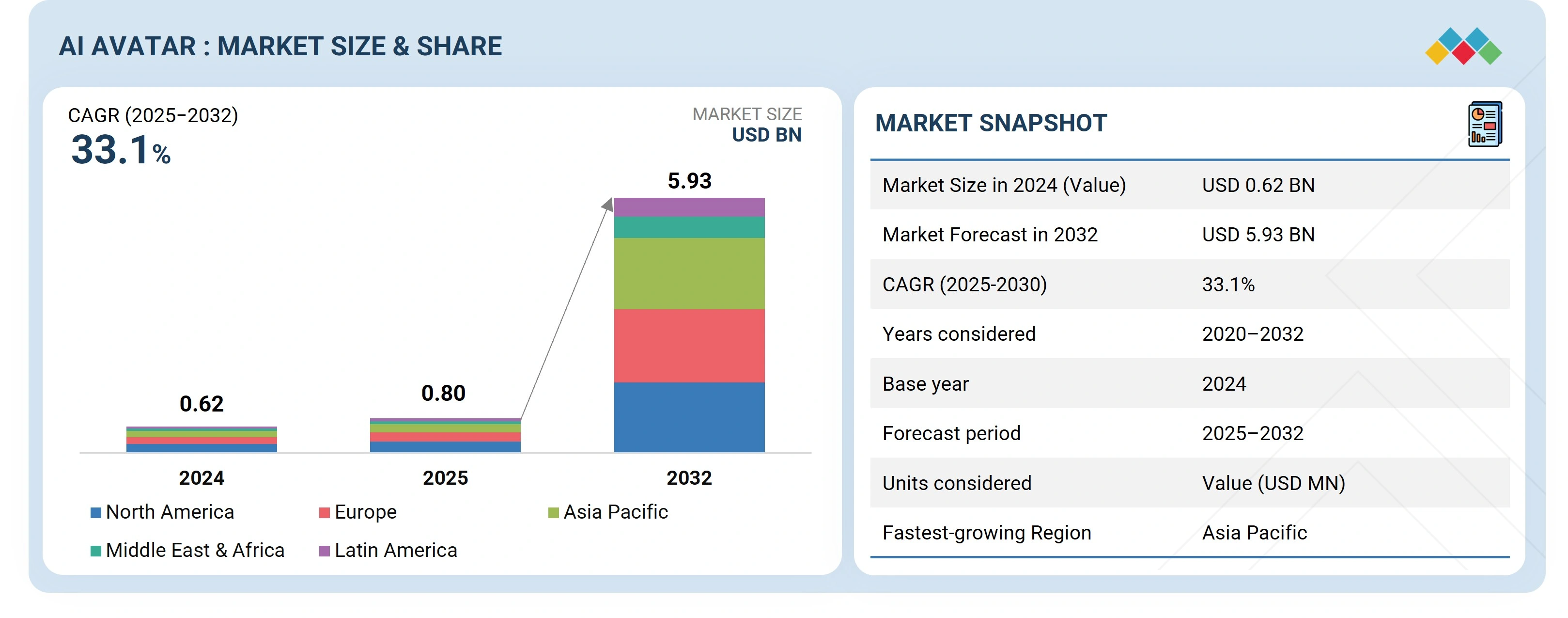
Source: Secondary Research, Interviews with Experts, MarketsandMarkets Analysis
The AI Avatar market is undergoing exponential growth, projected to expand from USD 0.80 billion in 2025 to USD 5.93 billion by 2032, registering a CAGR of 33.1%. This surge is driven by rapid advancements in natural language processing (NLP), computer vision, and generative AI, which are transforming how digital personas interact across industries. Trends in growth indicate increasing demand for education, entertainment, customer service, and healthcare, where personalized, scalable interactions are essential. The application and platform segments drive this growth, providing adaptable deployment for providers and engaging user experiences. Companies use AI avatars for training, advertising, and customer service, whereas smaller firms employ them for budget-friendly content generation. AI avatars can reduce production expenses by more than 80%, as demonstrated by Whole Life Pet, which saved USD 2,900 for each video. As reported by TravelPerk, 95% of participants rely on AI avatars during virtual meetings, and 34% of executives can rely on them for decision-making.
Market Size and Forecast:
- Market Size Value in 2024: USD 0.66 billion
- Market Size Value in 2025: USD 0.80 billion
- Revenue Forecast in 2032: USD 5.93 billion
- Growth Rate: CAGR of 33.1% from 2025 to 2032
- Data available from 2020 to 2032
- Base year: 2024
- Forecast period: 2025-2032
- Fastest Growing Region: Asia Pacific
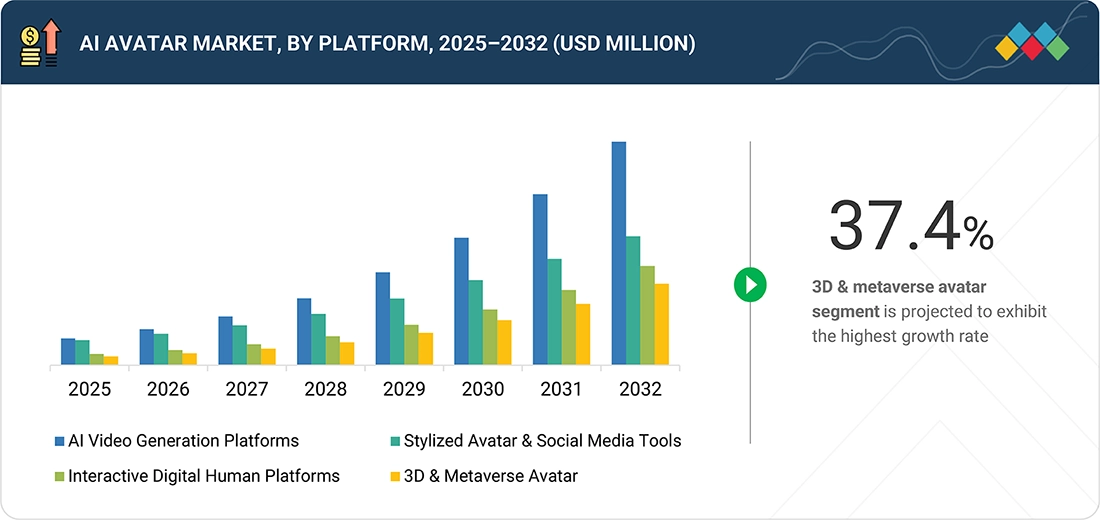
- 3D & metaverse avatar segment is projected to exhibit the highest growth rate at a CAGR of 37.4% from 2025 to 2030.
Key Market Trends and Insights
- Growth Driver: Generative AI and multimodal AI accelerate AI avatar market adoption across industries.
-
Growth Drivers: Rising demand for virtual assistants and digital humans fuels AI avatar market growth.
- Opportunities: Expanding metaverse, education, healthcare, and marketing create AI avatar opportunities.
- AI Impact: AI enables lifelike avatars with NLP, computer vision, and real-time personalized interactions.
KEY TAKEAWAYS
- North America dominates the AI Avatar market by 32.7% market share in 2025.
- By platform, 3D & Metaverse Avatar segment is expected to be the fastest growing segment, with CAGR of 37.4%, during the forecast period.
- By degree of customization, the preset avatars segment dominates the market, with market share of 39.5% in 2025.
- By type, the interactive avatars segment is expected to grow the fastest, during the forecast period.
- By application, the virtual agents & assistants segment is projected to dominate the market.
- By end user, the education enterprise segment is expected to be the fastest growing segment, during the forecast period.
- Synthesia, HeyGen and D-ID are identified as some of the star players in the AI Avatar market, given their strong market share and product footprint.
- Akool, Runway and UneeQ Digital Humans, among others, have distinguished themselves among startups and SMEs by securing strong footholds in specialized niche areas, underscoring their potential as emerging leaders.
The AI avatar market is rapidly expanding as enterprises and consumers increasingly adopt virtual humans for communication, marketing, customer engagement, and entertainment. Driven by advances in generative AI, deep learning, and natural language processing, AI avatars are transforming digital interactions across industries. Businesses are leveraging hyper-realistic avatars for virtual influencers, brand storytelling, e-learning, and metaverse experiences. The growing integration of AI avatars in gaming, virtual meetings, and customer service enhances personalization and emotional connection. Rising demand for immersive, cost-effective, and scalable digital experiences continues to propel market innovation and global adoption.
TRENDS & DISRUPTIONS IMPACTING CUSTOMERS' CUSTOMERS
The AI avatar market is rapidly evolving, driven by advances in generative AI, facial animation, and natural language processing. Vendors traditionally offered platform subscriptions and licensing, but rising demand for hyper-realistic, interactive avatars is reshaping business models. Companies now prioritize AI-driven virtual influencers, metaverse integration, and immersive digital engagement for marketing, entertainment, and e-learning. Real-time emotion rendering, conversational AI avatars, and customizable virtual humans enable personalized, scalable experiences. Generative AI streamlines avatar creation, while AI-powered engagement analytics optimize user interactions, positioning vendors as strategic partners delivering measurable value beyond technology in customer experience and digital content ecosystems.
alt='AI Avatar Market Disruptions' title='AI Avatar Market Trends/Disruptions'>Source: Secondary Research, Interviews with Experts, MarketsandMarkets Analysis
MARKET DYNAMICS

Level
-
Growing Demand for Hyper-Personalized Digital Interactions

-
Expansion of Metaverse


Level
-
Trust & Uncanny Valley Effect


Level
-
AI Avatars integration with VR & AR

-
Rise of Emotional AI Companions


Level
-
Scalability & Performance Bottlenecks

Source: Secondary Research, Interviews with Experts, MarketsandMarkets Analysis
Driver: Growing Demand for Hyper-Personalized Digital Interactions
The market is fueled by increasing demand for emotionally responsive, context-aware, and customizable virtual experiences across sectors like customer service, e-commerce, education, healthcare, and entertainment. AI avatars powered by natural language processing, computer vision, and machine learning simulate lifelike conversations, adapt in real time, and enhance engagement. Businesses deploy avatars as digital shopping assistants, e-learning tutors, and immersive storytellers, especially in remote and hybrid environments.
Restraint: Trust and Uncanny Valley Effect
Adoption is hindered by user discomfort, privacy concerns, and the uncanny valley effect, where avatars appear almost lifelike but evoke unease. Risks include deepfakes, identity theft, and unauthorized data use, especially in sensitive sectors like healthcare, education, and customer service. Overcoming this requires ethical design, security protocols, and transparency in avatar behavior and data handling.
Opportunity: Rise of Emotional AI Companions
The rise of emotionally intelligent AI avatars presents a major opportunity in mental health, employee wellness, and therapeutic applications. These avatars use sentiment analysis, affective computing, and natural language understanding to interpret emotions and deliver personalized support. Integration with wearables, VR platforms, and immersive environments expands use cases in healthcare, HR, and consumer wellness.
Challenge: Scalability & Performance Bottlenecks
Delivering real-time, lifelike avatars at scale requires high computational power, advanced deep learning models, and robust infrastructure. Performance issues—such as latency and degraded responsiveness, limiting adoption in gaming, virtual events, and large-scale customer support. Solutions include model optimization, distributed computing, 5G integration, and cloud-edge orchestration to ensure seamless avatar performance.
AI Avatar Market: COMMERCIAL USE CASES ACROSS INDUSTRIES
| COMPANY | USE CASE DESCRIPTION | BENEFITS |
|---|---|---|
 |
Gameloft used D-ID Studio to create engaging, character-driven video ads by animating static game characters for user acquisition campaigns. | The production costs and time has been reduced and eliminated the need for voice actors, and improved marketing efficiency, resulting in stronger user engagement and faster campaign delivery. |
 |
STUDIO 47 adopted HeyGen’s AI avatars to automate news content creation, optimizing production workflows and improving efficiency across multiple digital distribution platforms. | Boosted content production speed by 80%, enabled localization for wider reach, reduced newsroom workload, and allowed journalists to focus on high-value investigative reporting. |
 |
Titan Training Solutions leveraged Speechify Studio’s text-to-speech tools to produce clear, consistent, and customizable voice-overs for e-learning and promotional materials. | Enhanced learner comprehension and retention, accelerated audio production, reduced costs, and improved training and marketing content quality through consistent, high-clarity voice output. |
 |
Hero MotoCorp implemented DaveAI’s virtual avatar “Zeni” to guide employees through new digital tools and product features via immersive, interactive experiences. | Accelerated technology adoption, improved employee engagement and understanding, enhanced productivity, and positioned the company as a leader in AI-driven digital transformation and workforce enablement. |
Logos and trademarks shown above are the property of their respective owners. Their use here is for informational and illustrative purposes only.
MARKET ECOSYSTEM
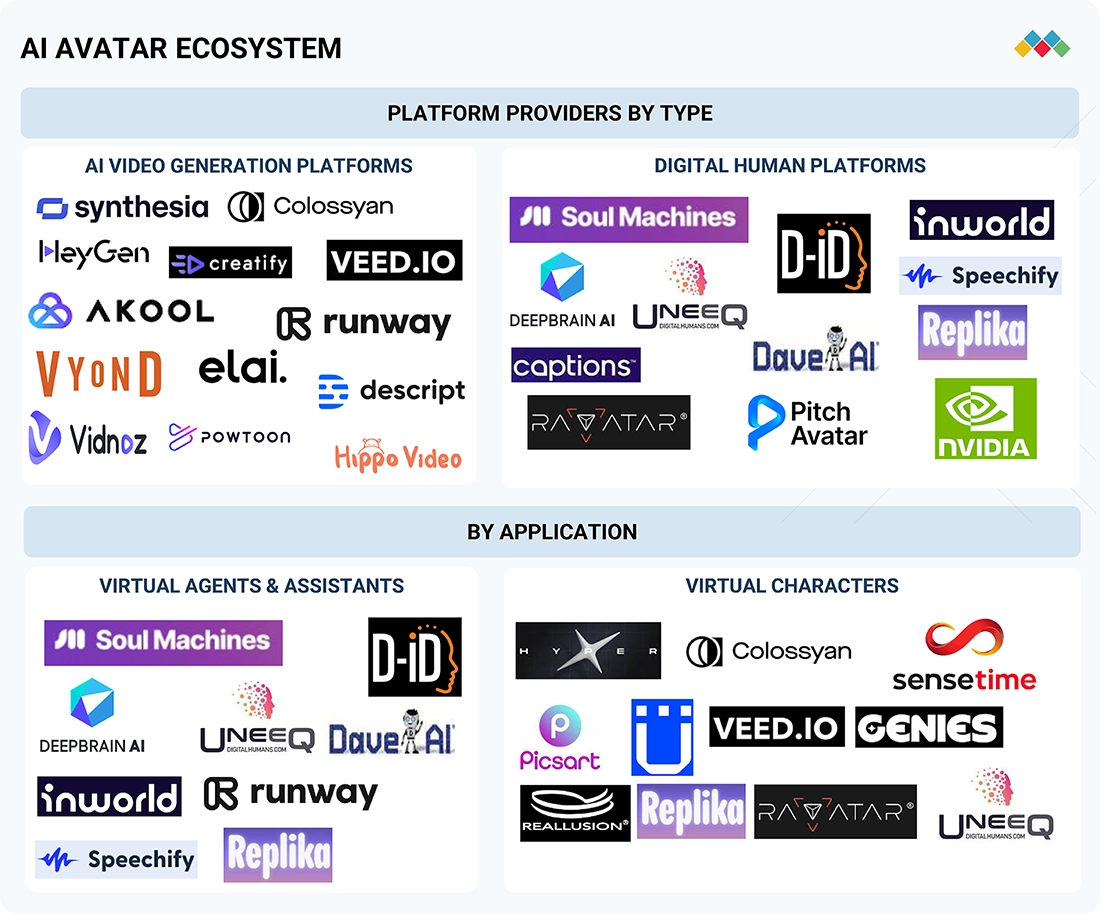
The AI avatar market ecosystem comprises a diverse range of stakeholders. The ecosystem includes platform and application types. Platform types are split into AI video generation platforms, digital human platforms, stylized avatars and social media tools, and 3D metaverse avatars. Application types are bifurcated into virtual agents and assistants, characters, influencers, and companions. These entities collaborate to develop, deliver, and use AI solutions, driving innovation and growth in the AI avatar industry.
Logos and trademarks shown above are the property of their respective owners. Their use here is for informational and illustrative purposes only.
MARKET SEGMENTS
Source: Secondary Research, Interviews with Experts, MarketsandMarkets Analysis
AI Avatar Market, By Platform
The 3D and metaverse avatar segment is projected to witness the fastest growth, driven by rising adoption of immersive technologies and virtual world integration. Enterprises and consumers are engaging in metaverse-based social, commercial, and entertainment experiences using lifelike avatars that simulate realistic body motion, facial expressions, and spatial interactions. Businesses are leveraging 3D avatars for branding, collaboration, and interactive marketing, transforming digital engagement across virtual showrooms, digital workplaces, and metaverse platforms.
AI Avatar Market, By type
Interactive avatars are experiencing the fastest growth due to demand for real-time, human-like engagement in digital communication. Powered by conversational AI, emotional intelligence, and response modeling, these avatars deliver empathetic, personalized experiences across customer service, gaming, and marketing. Enterprises are deploying interactive avatars as AI presenters, digital assistants, and virtual influencers, enhancing authenticity and emotional resonance in digital interactions.
AI Avatar Market, By Application
The virtual companion segment is growing rapidly as users seek emotionally supportive, context-aware digital experiences. These avatars serve as mental health assistants, lifestyle coaches, and empathetic conversational partners, enabled by affective computing, sentiment analysis, and natural language understanding. Adoption is rising among individuals and healthcare providers focused on digital well-being, loneliness reduction, and self-care. Integration into mobile apps, VR environments, and wearables enhances accessibility and impact.
AI Avatar Market, By End User
The education sector is one of the fastest-growing end-user segments, with institutions adopting AI-powered digital tutors and virtual instructors to improve learning outcomes. These avatars offer interactive, multilingual, and adaptive instruction, supporting virtual classrooms, immersive simulations, and remote learning. AI avatars are revolutionizing pedagogy by enabling inclusive, emotionally intelligent, and scalable educational experiences, bridging accessibility gaps and enhancing engagement.
REGION
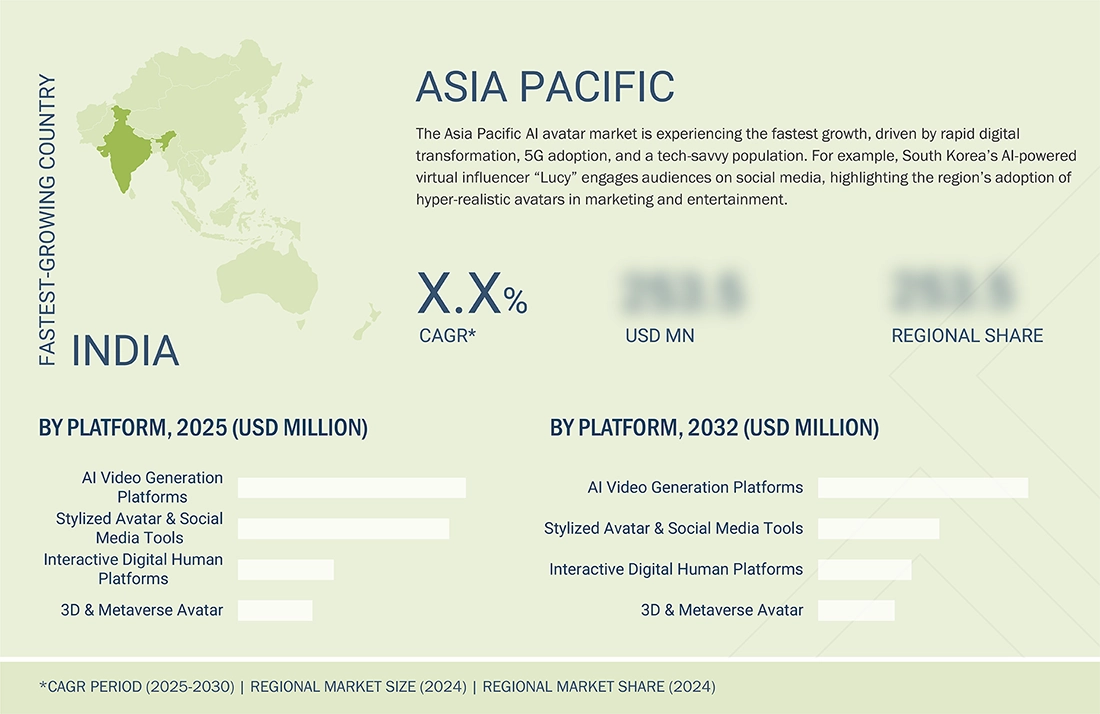
Asia Pacific to be the fastest-growing region in the AI Avatar market during the forecast period
The Asia Pacific AI avatar market is experiencing the fastest growth, driven by rapid adoption of 5G, immersive technologies, and AI-driven virtual experiences. Countries like China and South Korea lead the surge, with AI-powered virtual influencers, interactive gaming avatars, and metaverse-based entertainment gaining traction. Japan is expanding the use of AI avatars in education and healthcare for personalized learning and digital wellness applications. Rising investments in generative AI, hyper-realistic digital humans, and synthetic media platforms fuel regional innovation. The tech-savvy population, strong gaming culture, and government-backed AI initiatives further accelerate demand for scalable, interactive, and emotionally responsive AI avatars.
AI Avatar Market: COMPANY EVALUATION MATRIX
In the AI Avatar market matrix, NVIDIA (Star) leads with a strong presence and a comprehensive suite of AI-driven avatar solutions, enabling large-scale adoption in 3D avatar generation, interactive virtual assistants, motion capture animation, and metaverse experiences. Leveraging GPU-accelerated AI frameworks and the Omniverse Avatar platform, NVIDIA drives enterprise deployment across gaming, entertainment, and virtual collaboration. NVIDIA (Emerging Leader) gains traction with real-time avatar rendering, adaptive behavior modeling, and personalized virtual companions, demonstrating strong growth potential while steadily advancing toward broader market dominance in the AI avatar ecosystem.
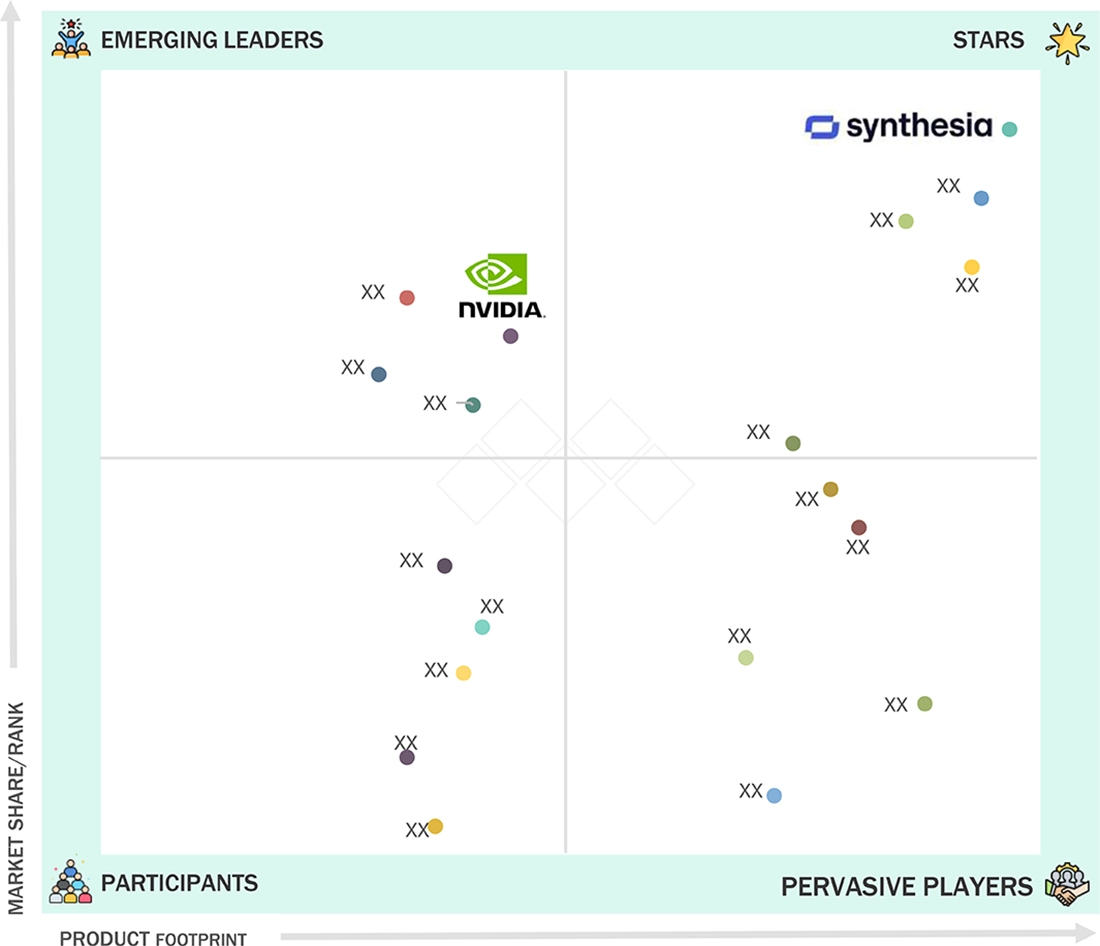
Source: Secondary Research, Interviews with Experts, MarketsandMarkets Analysis
KEY MARKET PLAYERS
MARKET SCOPE
| REPORT METRIC | DETAILS |
|---|---|
| Market Size in 2024 (Value) | USD 0.62 Billion |
| Market Forecast in 2032 | USD 5.93 Billion |
| Growth Rate | CAGR of 33.1% during 2025-2032 |
| Years Considered | 2020-2032 |
| Base Year | 2024 |
| Forecast Period | 2025-2032 |
| Units Considered | Value (USD Billion) |
| Report Coverage | Revenue forecast, company ranking, competitive landscape, growth factors, and trends |
| Segments Covered |
|
| Regions Covered | North America, Asia Pacific, Europe, the Middle East & Africa, and Latin America |
DELIVERED CUSTOMIZATIONS
We have successfully delivered the following deep-dive customizations:
| CLIENT REQUEST | CUSTOMIZATION DELIVERED | VALUE ADDS |
|---|---|---|
| Leading Solution Provider (US) | Delivered competitive profiling of additional vendors, brand comparative analysis, and a drill-down of country-level segmentation across key markets. | Enabled competitive positioning insights, product differentiation clarity, and multi-country market intelligence, supporting go-to-market strategy refinement and stakeholder alignment. |
| Leading Solution Provider (Europe) | Provided competitive profiling, brand benchmarking, and segmentation analysis across additional geographies. | Delivered in-depth market insights, comparative brand positioning, and segment-level intelligence, empowering strategic decision-making and regional growth planning. |
RECENT DEVELOPMENTS
- April 2025 : Synthesia partnered with Shutterstock to enhance its AI research capabilities by using Shutterstock’s extensive content library. This collaboration aims to improve the pre-training process of Synthesia’s EXPRESS-2 model, which powers a new generation of AI avatars.
- April 2025 : HeyGen and HubSpot expanded their partnership to streamline personalized video campaigns within HubSpot workflows. This integration enables marketers and sales teams to automatically generate AI-driven videos using contact data, eliminating the need for filming or editing.
- March 2025 : Microsoft partnered with D-ID to integrate agentic AI avatars into Microsoft Teams and other Microsoft software. This will enhance enterprise communication with visually engaging, lifelike digital agents. These avatars add a natural, human-like interface to AI agents, improving customer interactions and personalization.
- December 2024 : AKOOL and LiveX AI partnered to transform customer engagement by combining LiveX AI’s advanced multimodal conversational AI agents with AKOOL’s dynamic avatar technology. Their joint solution delivers real-time, human-like virtual agents that see, hear, and respond empathetically, offering accurate problem-solving and tailored support.
- August 2024 : Veritone signed a three-year strategic collaboration agreement with Amazon Web Services (AWS) to accelerate enterprise and generative AI innovation across media, entertainment, sports, talent acquisition, and public sectors. This partnership aims to help organizations overcome challenges in adopting AI and cloud technologies by offering scalable, cloud-native solutions.
Table of Contents
 Exclusive indicates content/data unique to MarketsandMarkets and not available with any competitors.
Methodology
This research study on the AI avatar market used extensive secondary sources, including directories, the IEEE, and paid databases such as the International Journal of Innovation and Technology Management. Primary sources were mainly industry experts from the core and related industries, preferred AI avatar providers, third-party service providers, consulting service providers, end users, and other commercial enterprises. In-depth interviews with primary respondents, including key industry participants and subject matter experts, were conducted to obtain and verify critical qualitative and quantitative information and assess the market’s prospects.
Secondary Research
In the secondary research process, various sources were referred to identify and collect information for this study. Secondary sources included annual reports, press releases, and investor presentations of companies; white papers, journals, and certified publications; and articles from recognized authors, directories, and databases. The data was also collected from other secondary sources, such as journals, government websites, blogs, and vendors’ websites. Additionally, the AI avatar spending of various countries was extracted from the respective sources.
Primary Research
In the primary research process, various sources from the supply and demand sides were interviewed to obtain qualitative and quantitative information on the market. The primary sources from the supply side included various industry experts, such as Chief Experience Officers (CXOs), Vice Presidents (VPs), and directors specializing in business development, marketing, and AI avatar providers. It also included key executives from AI avatar solution vendors, system integrators (SIs), professional service providers, industry associations, and other key opinion leaders.
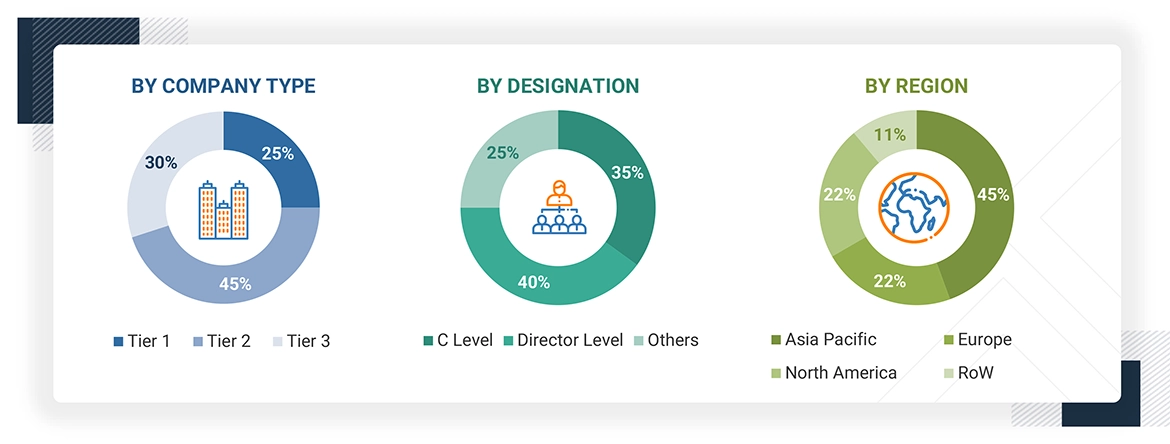
Note 1: Others include sales managers, marketing managers, and product managers.
Note 2: Tier 1 companies’ revenues are more than USD 10 billion; tier 2 companies’ revenues range between USD 1 and 10 billion; and tier 3 companies’ revenues range between USD 500 million and USD 1 billion.
Source: Industry Experts
To know about the assumptions considered for the study, download the pdf brochure
Market Size Estimation
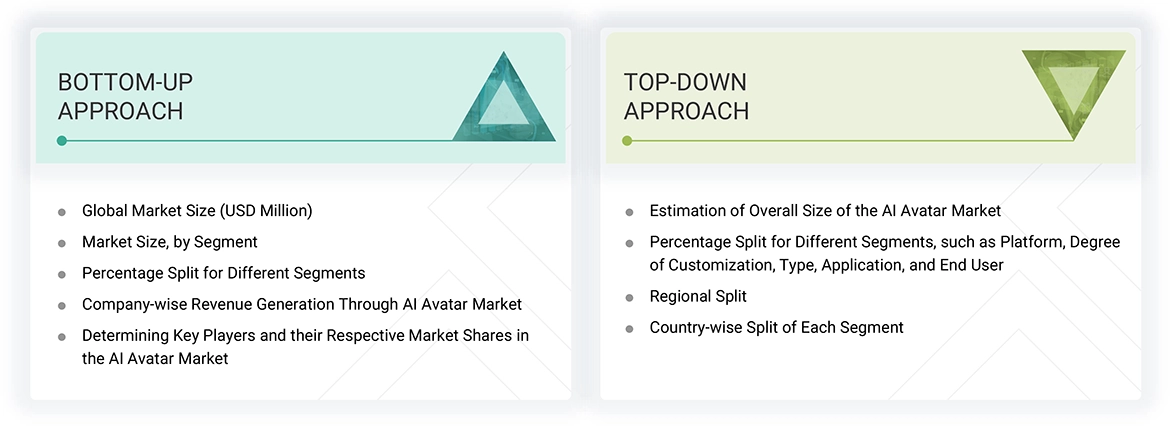
Multiple approaches were adopted to estimate and forecast the AI avatar market. The first approach involved estimating the market size by companies’ revenue generated through the sale of AI avatar products.
Market Size Estimation Methodology: Top-down Approach
In the top-down approach, an exhaustive list of all the vendors offering products in the AI avatar market was prepared. The revenue contribution of the market vendors was estimated through annual reports, press releases, funding, investor presentations, paid databases, and primary interviews. Each vendor’s offerings were evaluated based on platform, degree of customization, type, application, end user, and region. The markets were triangulated through primary and secondary research. The primary procedure included extensive interviews for key insights from industry leaders, such as CIOs, CEOs, VPs, directors, and marketing executives. The market figures were further cross-verified with the existing repository from MarketsandMarkets for validation.
Market Size Estimation Methodology: Bottom-up Approach
In a bottom-up approach, the adoption rate of AI avatar products across sectors in key countries was identified, emphasizing the regions that contribute most to the market share. For cross-validation, the adoption of AI avatar products among enterprises and various use cases based on their respective regions was identified. Weightage was assigned to these use cases in different regions for market size calculation.
Based on the market numbers, the regional split was determined by primary and secondary sources. The procedure included an analysis of the AI avatar market’s regional penetration. Based on secondary research, the regional spending on Information and Communications Technology (ICT), socio-economic analysis of each country, strategic vendor analysis of major AI avatar providers, and organic and inorganic business development activities of regional and global players were estimated.
AI Avatar Market : Top-Down and Bottom-Up Approach
Data Triangulation
After determining the overall market size using the market size estimation processes explained above, the market was split into several segments and subsegments. Data triangulation and market breakup procedures were employed, wherever applicable, to complete the overall market engineering process and determine the exact statistics of each market segment and subsegment. The overall market size was then used in the top-down procedure to estimate the size of other individual markets via percentage splits of the market segmentation.
Market Definition
An AI avatar is a computer-generated digital human that emulates real-life human expressions, movements, and speech patterns to facilitate realistic virtual interactions. These avatars use advanced artificial intelligence technologies, including machine learning, computer vision, and natural language processing, to replicate human behaviors such as facial expressions, gestures, and speech.
Stakeholders
- AI avatar software providers
- Business analysts
- Cloud service providers
- Consulting service providers
- Enterprise end users
- Distributors and value-added resellers (VARs)
- Government agencies
- Independent software vendors (ISV)
- Managed service providers
- Market research and consulting firms
- Support & maintenance service providers
- System integrators (SIs)/migration service providers
- Technology providers
- Training data providers
- Content creators & designers
- Privacy & security providers
- Platform providers
Report Objectives
- To define, describe, and forecast the AI avatar market by platform, degree of customization, type, application, and end user
- To provide detailed information related to major factors (drivers, restraints, opportunities, and industry-specific challenges) influencing market growth
- To analyze the micro markets with respect to individual growth trends, prospects, and their contribution to the total market
- To analyze the opportunities in the market for stakeholders by identifying the high-growth segments of the market
- To assess market opportunities and provide details of the competitive landscape for stakeholders and market leaders
- To forecast the market size of segments for the five main regions: North America, Europe, Asia Pacific, the Middle East & Africa, and Latin America
- To profile the key players and comprehensively analyze their market ranking and core competencies
- To analyze competitive developments, such as partnerships, product launches, and mergers and acquisitions, in the AI avatar market
Available Customizations
With the given market data, MarketsandMarkets offers customizations based on the company’s specific needs. The following customization options are available for the report:
Product Analysis
- The product matrix provides a detailed comparison of the product portfolio of each company.
Geographic Analysis as per Feasibility
- Further breakup of the North American AI avatar market
- Further breakup of the European market
- Further breakup of the Asia Pacific market
- Further breakup of the Middle East & Africa market
- Further breakup of the Latin American AI avatar market
Company Information
- Detailed analysis and profiling of additional market players (up to five)
Key Questions Addressed by the Report
What are AI avatars, and how is the market expected to grow in the coming years?
AI avatars are digital representations of humans powered by artificial intelligence, capable of mimicking human appearance, behavior, and communication. The AI avatar market is expected to grow at a CAGR of 33.1% from 2025 to 2032, driven by the rising demand for personalized digital experiences, advancements in natural language processing (NLP) and computer vision, and the adoption of virtual influencers.
What are the key applications of AI avatars across industries?
AI avatars have diverse applications across industries, including entertainment (realistic NPCs in games), customer service (virtual assistants), education (virtual tutors), healthcare (digital companions), marketing (virtual influencers), and enterprise collaboration (digital hosts).
What are the major factors driving the growth of the AI avatar market?
Key drivers include advancements in AI technology, growing demand for digital interactions, personalization needs, cost-efficiency through automation, and the rise of virtual influencers as a marketing tool.
What are the key challenges faced by companies in the AI avatar market?
Companies face ethical and privacy concerns, high development costs, bias in AI models, regulatory compliance, and user acceptance of digital avatars.
Who are the key vendors in the AI avatar market?
Some major players in the AI avatar market include Synthesia (UK), HeyGen (US), D-ID (Israel), Akool (US), Veritone (US), NVIDIA (US), AWS (US), Meta (US), Vyond (US), Soul Machines (US), Microsoft (US), Google (US), Adobe (US), Perfect Corp (Taiwan), SenseTime (Hong Kong), Speechify (US), VEED.io (UK), Colossyan (US), Unith (Netherlands), Captions (US), DeepBrain AI (US), Uneeq (US), and DaveAI (India). The market is competitive with key players ranging from specialized AI avatar companies to technology giants. They differentiate through technology expertise, customization options, industry focus, partnership networks, and ethical AI practices.


Personalize This Research
- Triangulate with your Own Data
- Get Data as per your Format and Definition
- Gain a Deeper Dive on a Specific Application, Geography, Customer or Competitor
- Any level of Personalization
Let Us Help You
- What are the Known and Unknown Adjacencies Impacting the AI Avatar Market
- What will your New Revenue Sources be?
- Who will be your Top Customer; what will make them switch?
- Defend your Market Share or Win Competitors
- Get a Scorecard for Target Partners

Custom Market Research Services
We Will Customise The Research For You, In Case The Report Listed Above Does Not Meet With Your Requirements
Get 10% Free CustomisationTESTIMONIALS
- Mexico AI Avatar Market
- Argentina AI Avatar Market
- Rest Of Europe AI Avatar Market
- Rest Of Asia Pacific AI Avatar Market
- Canada AI Avatar Market
- US AI Avatar Market
- UK AI Avatar Market
- Germany AI Avatar Market
- France AI Avatar Market
- Italy AI Avatar Market
- Spain AI Avatar Market
- China AI Avatar Market
- Japan AI Avatar Market
- India AI Avatar Market
- South Korea AI Avatar Market
- Singapore AI Avatar Market
- Saudi Arabia AI Avatar Market
- UAE AI Avatar Market
- Qatar AI Avatar Market
- South Africa AI Avatar Market
- Brazil AI Avatar Market






Growth opportunities and latent adjacency in AI Avatar Market