All-terrain Vehicle Market Size & Share

All-terrain Vehicle Market by Type (Sports, Utility), Engine Capacity (<400, 400-800, >800 cc), Application (Sports, Entertainment, Agriculture, Military), Drive & Fuel Type, Number of Wheel, Battery & Seating Capacity, & Region- Global Forecast to 2035



OVERVIEW
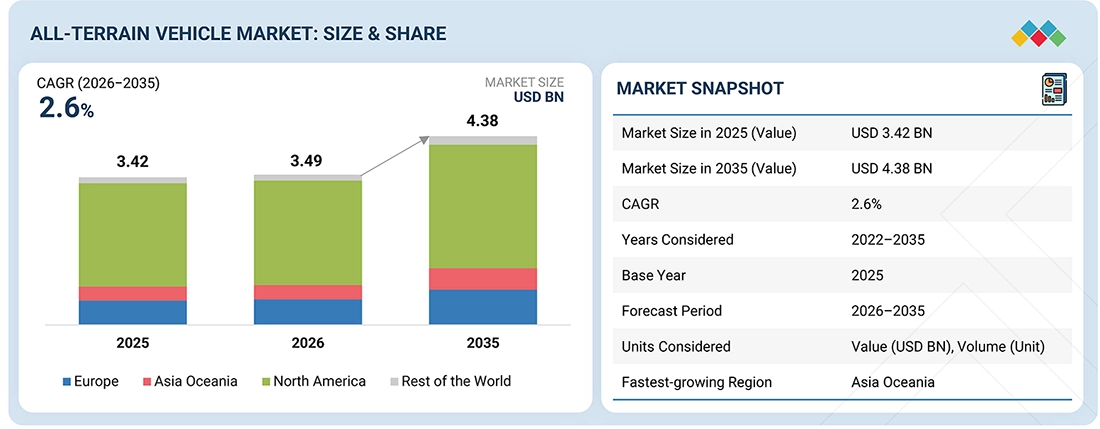
Source: Secondary Research, Interviews with Experts, MarketsandMarkets Analysis
The all-terrain vehicle market is projected to grow from USD 3.49 billion in 2026 to USD 4.38 billion by 2035, at a CAGR of 2.6%. The growing interest in adventure, off-roading, and recreational activities is driving demand for all-terrain vehicles. ATVs are also used in non-recreational applications, such as agriculture & farming operations, forestry & land management, and emergency & rescue services. The popularity of motorsports and other adventure activities has also contributed to the growth of ATV sales, particularly in regions such as North America and Europe. North America continues to lead due to its large, established consumer base, extensive off-road and trail infrastructure, and strong culture of outdoor recreational riding. Asia Oceania is likely to be the fastest-growing region because rising incomes and the expanding use of ATVs for agriculture, construction, and utility tasks are driving adoption beyond recreation.
Key All-terrain Vehicle Market Trends and Insights
- All-terrain Vehicle Market Growth: Growth is driven by increasing recreational off-road activities, expanding utility applications in agriculture and forestry, and rising demand for adventure tourism vehicles.
-
Technology Impact: Advanced suspension systems, electric powertrains, connected vehicle technologies, GPS navigation, and enhanced safety features are improving ATV performance and user experience.
- Growing Trends: The All-terrain Vehicle Market is witnessing increased adoption of electric ATVs, smart connectivity features, high-performance utility ATVs, advanced terrain management systems, and lightweight vehicle designs.
- Growth Opportunities: Opportunities are driven by growing outdoor recreation participation, expansion of agricultural mechanization, increasing military and defense applications, and advancements in sustainable off-road mobility solutions.
KEY TAKEAWAYS
-
MARKET SNAPSHOT:
Market Size (2025): USD 3.42 Billion
Current Market Size (2026): USD 3.49 Billion
Projected Market Size (2035): USD 4.38 Billion
CAGR (2026–2035): 2.6% -
SEGMENT LEADERSHIP:
-
By TypeBy type, the utility vehicles segment is expected to dominate the market, accounting for 63% of the market share in 2026.
-
By Engine CapacityBy engine capacity, ATVs with 400-800 cc are expected to dominate the market, with a share of more than 60% in 2026.
-
By Electric ATV Battery CapacityBy Electric ATV Battery Capacity, the >10 kWh segment is projected to register the fastest CAGR of 5.1% during the forecast period.
-
By RegionAsia Oceania is estimated to register the fastest growth in all-terrain vehicle market, at a CAGR of 4.6% during the forecast period.
-
Competitive Landscape - Key PlayersPolaris Inc. (US), BRP (Canada), Kawasaki Heavy Industries, Ltd. (Japan), CFMOTO (China), and Yamaha Motor Co., Ltd. (Japan) are focusing on upgrading ATVs with improved suspension systems, electronic power steering, and better traction control to enhance off-road handling and rider comfort.
-
MARKET OUTLOOK & COMPETITIVE LANDSCAPE:
-
Competitive Landscape - Startups/SMEsSegway Technology Co., Ltd. (US), Massimo Motor Sports, LLC (US), Argo (Canada), DRR USA (US) among others, have distinguished themselves among startups and SMEs by securing strong footholds in specialized niche areas, underscoring their potential as emerging market leaders.
The all-terrain vehicle (ATV) market is expected to grow as ATVs are being widely used across utility applications such as agriculture, land management, forestry, and remote terrain mobility. As these vehicles prove useful for work-related tasks in rough terrain, demand is becoming less dependent on recreational sales alone.
TRENDS & DISRUPTIONS IMPACTING CUSTOMERS' CUSTOMERS
In the past, revenue in the all-terrain vehicle market was largely driven by gasoline-powered models used for recreation and basic utility work such as farming, hunting, and trail riding. Manufacturers mainly focus on improving engine performance, durability, and off-road capability. With the emergence of new technologies, the market is gradually shifting toward electric and hybrid ATVs, connected vehicle features, and advanced suspension and powertrain systems. These developments are expanding the role of ATVs beyond traditional recreation into applications such as land management, agricultural monitoring, and fleet-based outdoor operations, which is expected to influence the market's future revenue mix.
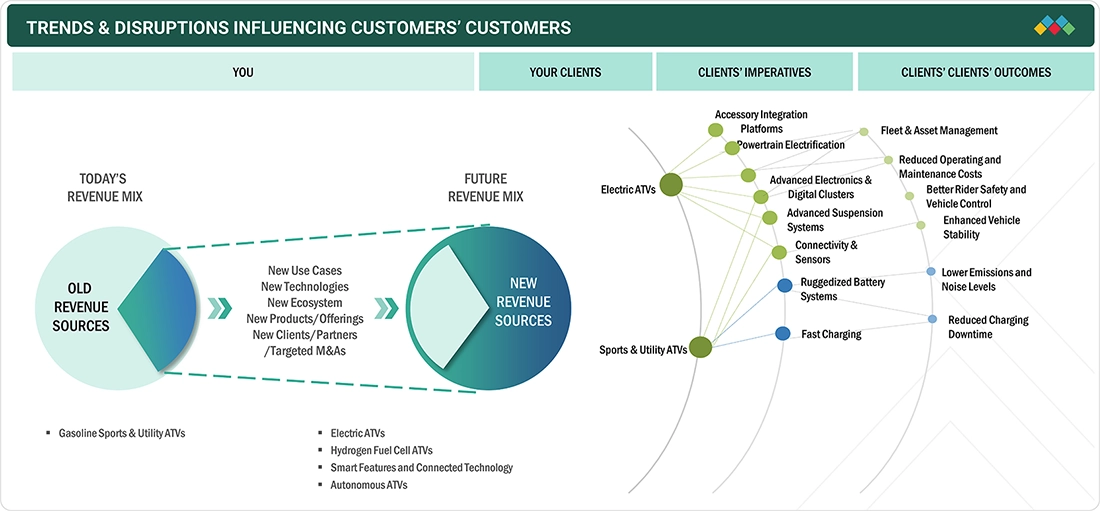
Source: Secondary Research, Interviews with Experts, MarketsandMarkets Analysis
MARKET DYNAMICS

Level
-
Increasing off-road recreational activities

-
Rising purchasing power & spending capacity


Level
-
High accident rates

-
Restriction on ATV use in wildlife zones


Level
-
Integration of advanced technologies

-
Growing penetartion of electric ATVs


Level
-
High cost of ATVs

-
Trade barriers between different countries

Source: Secondary Research, Interviews with Experts, MarketsandMarkets Analysis
Driver: Increasing off-road recreational activities
ATV championships featuring off-road ATVs in challenging conditions are being organized by national sports authorities in various countries. The US hosts multiple racing events each year, where participants compete for titles and prizes. The World Off-Road Championship Series (WORCS) is one of the most significant racing events organized in the country. It comprises nine events in total spread across five different states. The event is held across a wide range of terrains in various states, attracting over 50,000 spectators. The Auto Cycle Union (ACU) organized the 2026 ACU British Quad Cross Championship in the United Kingdom. It features multiple competitive rounds across established motocross circuits and attracts ATV riders across the country. These off-road recreational activities increase demand for personal and rental ATVs, thereby supporting the growth of the all-terrain vehicle market.
Restraint: High accident rates
Driving safety is the prime concern for buyers and OEMs of ATVs. Regulatory authorities worldwide are aiming to improve driving safety. Drivers must keep an eye on the speed, navigation, and other data related to an ATV. Any distraction or operator error may lead to major mishaps. The most common of these mishaps is caused when the ATV flips or rolls over. When this happens, the ATV driver and passenger can get ousted from the vehicle or even pinned down by it. In general, single-seater ATVs are not designed to carry passengers in the back, but there is a common misconception about this. Doing so can put both passengers and the vehicle operator at high risk of an accident.
Opportunity: Integration of advanced technologies
One of the most important features needed for a rider to navigate difficult terrain trails successfully is a GPS. OEMs are now launching products with integrated GPS capabilities via a touchscreen, allowing riders to monitor their location. Models also feature vehicle interconnectivity, allowing a group of riders to track one another for safety. Honda recently partnered with Google to bring Android Auto to its automotive segment. This, if implemented in ATVs, can provide riders with more functionality accessible via their smartphones. Also, Polaris launched the RZR Pro R Ultra Edition in January 2026, featuring factory-integrated electronically controlled hydraulic locking sway bar links. It also comes with the DYNAMIX DVS Suspension System, offering a level of adaptability and control.
Challenge: High cost of ATVs
Deploying a full-fledged ATV with all necessary features requires significant investment in components such as the four-wheel-drive system, power steering, electronic fuel injection, and four-wheel independent suspension. ATV operation is subject to many regulations regarding licensing and training in countries such as the US, Canada, and Australia to prevent accidents and related fatalities. In addition, obtaining the required licenses and training certifications to operate these vehicles is complex and time-consuming, and it adds to the cost of ATVs. Inexperienced customers may need to complete training before operating ATVs, which can also increase operational costs.
ALL-TERRAIN VEHICLE MARKET SIZE & SHARE: COMMERCIAL USE CASES ACROSS INDUSTRIES
| COMPANY | USE CASE DESCRIPTION | BENEFITS |
|---|---|---|
 |
Integrates Ride Command 7-inch display, GPS navigation, group ride tracking, upgraded suspension calibration, and improved LED lighting systems | Improved trail awareness and route planning | Upgraded suspension and lighting enhanced ride stability, visibility, and rider safety during off-road travel |
 |
Rotax engine tuning, Tri Mode Dynamic Power Steering, and enhanced suspension architecture. | Better vehicle control | Reduced rider fatigue | Improved stability across rough terrain |
 |
Integrates ultramatic automatic transmission with engine braking system and electronic power steering technology | Improved traction control and downhill stability | Reduced rider effort during long off-road operations |
 |
Electronic fuel injection systems, selectable drive modes, and upgraded independent suspension systems in newer models sold globally | Improved throttle response and fuel efficiency | Enhanced adaptability to different terrains due to adjustable drive modes and suspension features |
Logos and trademarks shown above are the property of their respective owners. Their use here is for informational and illustrative purposes only.
MARKET ECOSYSTEM
The ecosystem analysis highlights various players in the all-terrain vehicle market, including government & regulatory authorities, raw material/component suppliers, repair & other service providers, ATV manufacturers/OEMs, and dealers & distributors. The leading players in the all-terrain vehicle market are Polaris Inc.; BRP Inc.; Yamaha Motor Co., Ltd.; Kawasaki Heavy Industries, Ltd.; and CFMOTO, among others.
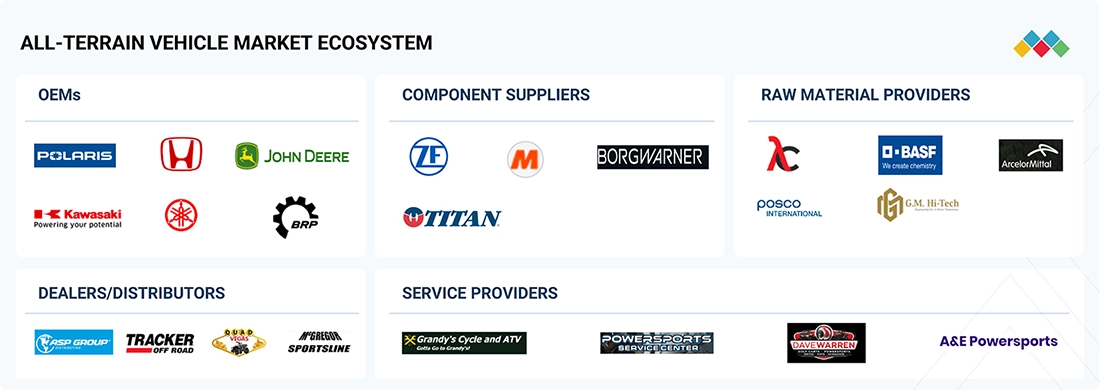
Logos and trademarks shown above are the property of their respective owners. Their use here is for informational and illustrative purposes only.
MARKET SEGMENTS
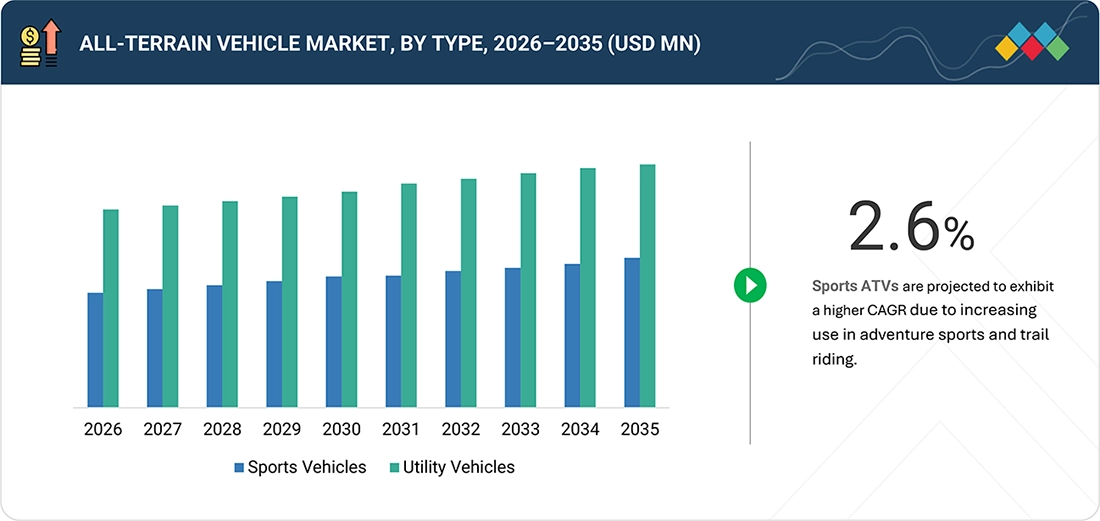
Source: Secondary Research, Interviews with Experts, MarketsandMarkets Analysis
All-terrain Vehicle Market, by Drive Type
AWD ATVs are gaining traction because they continuously distribute torque to all wheels, improving stability, traction, and rider control compared to traditional selectable 2WD or part-time 4WD systems, especially on mixed terrains such as sand, mud, and rocky trails. This drivetrain reduces wheel slip and allows smoother handling at higher trail speeds, attracting recreational riders and professional users who operate in variable terrains. Manufacturers are introducing advanced traction systems to support this shift. For example, BRP Inc. integrates its Visco Lok QE automatic all-wheel traction system into the Can-Am Outlander ATV lineup, which automatically transfers power to the front wheels when slip is detected, improving grip without rider intervention. Similarly, Polaris Inc. continues expanding its electronic traction management technologies across its Polaris Sportsman models, enabling smoother engagement of all-wheel traction for better control and safety in demanding off-road conditions.
Electric All-terrain Vehicle Market, by Battery Capacity
Demand for elecric ATVs with >10 kWh battery capacity is growing because larger batteries provide longer riding range and higher sustained power output, which are necessary for demanding off-road use such as trail riding, towing, and utility operations. Smaller battery systems often limit operating time and power delivery, which restricts their use to light-duty applications. Manufacturers are, therefore, introducing higher capacity battery platforms to improve the practicality of electric ATVs. For instance, Polaris Inc. developed its electric off-road platform with high-capacity lithium-ion battery systems used in the Polaris Ranger XP Kinetic, enabling stronger torque and longer operating range than lower-capacity electric vehicles. Similarly, companies such as Volcon Inc. introduced electric off-road vehicles, such as the Volcon Stag, equipped with high-capacity battery packs designed to support extended off-road performance and utility tasks.
All-Terrain Vehicle Market, by Number of Wheel
Four-wheel ATVs dominate the market because their design provides a strong balance of stability, maneuverability, and cost, making them suitable for both recreational riding and utility tasks such as farming, trail maintenance, and forestry work. Compared to larger multi-axle ATVs, four-wheel models are lighter, easier to handle on narrow trails, and widely supported by established product platforms. Manufacturers, therefore, focus most of their ATV portfolios on this configuration. For example, Polaris Inc. continues expanding its four-wheel ATV lineup with models such as the Polaris Sportsman 570 and Polaris Scrambler XP 1000 S, designed for trail and sport use, while Yamaha Motor Co., Ltd. offers four-wheel utility ATVs, such as the Yamaha Grizzly 700, which combine traction capability with maneuverability.
All-terrain Vehicle Market, by Seating Capacity
One-seater ATVs dominate the market because most off-road activities, such as trail riding, racing, hunting patrol, and farm inspection, require a compact vehicle designed for one rider, which improves maneuverability and control on narrow or uneven terrain. These vehicles are also lighter and typically cost less than multi-passenger configurations, making them the preferred choice for recreational riders and individual land users. Manufacturers, therefore, concentrate most of their ATV platforms on single-rider models. For example, Yamaha Motor Co., Ltd. offers single-rider utility ATVs such as the Yamaha Kodiak 700, designed for farm and trail tasks. At the same time, Polaris Inc. continues producing one-seater sports models, namely the Polaris Scrambler XP 1000 S, built for high-performance trail riding.
Side-by-Side Market, by Number of Wheel
Four wheels dominates because this configuration offers the most efficient balance between vehicle size, load capacity, and maneuverability, which is important for navigating trails, farms, forests, and job sites where larger multi-axle vehicles may struggle. It also allows manufacturers to keep vehicle weight and drivetrain complexity lower, thereby improving reliability and reducing operating costs for users. As a result, most new side-by-side platforms continue to follow the four-wheel layout. For example, Polaris Inc. offers four-wheel side-by-side models, such as the Polaris RANGER 1000, designed for work and trail use, while Yamaha Motor Co., Ltd. produces the four-wheel Yamaha Wolverine RMAX 1000, built for recreational and utility applications, reinforcing the dominance of the four-wheel configuration in this segment.
REGION
Asia Oceania to be fastest-growing region in global all-terrain vehicle market during forecast period.
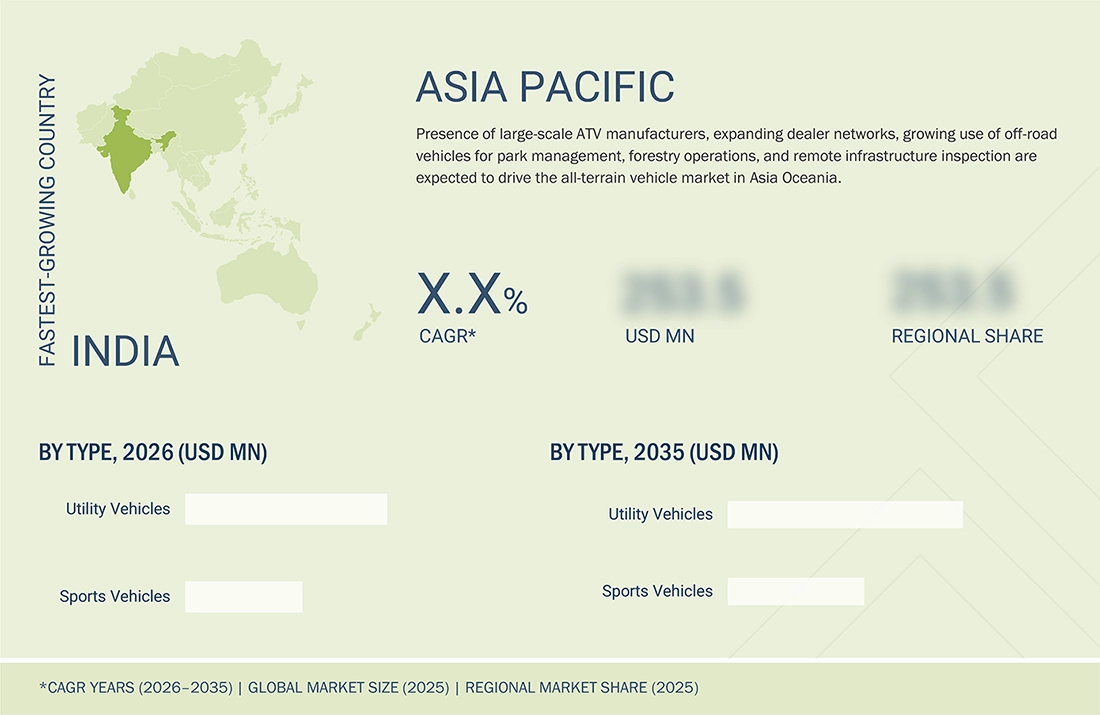
Asia Oceania is expected to be the fastest-growing market for all-terrain vehicle market, driven by expanding off-road tourism, increased farm mechanization, and wider use of ATVs for land management and rural mobility. Countries such as China and Australia lead regional demand, where ATVs are widely used on large farms, cattle stations, and outdoor recreation areas. In Australia, ATV use remains common across livestock farms and national parks for terrain access. Markets such as Japan, India, and New Zealand are emerging as adoption grows in tourism operations, forestry work, and adventure sports facilities. Major manufacturers are expanding their product lines and distribution in the region to capture this demand. For example, Yamaha Motor Co., Ltd. supplies utility ATVs such as the Yamaha Kodiak 700 and Yamaha Grizzly 700 across Australia and New Zealand for farm and trail use. Polaris Inc. sells models such as the Polaris Sportsman 570 through expanding dealer networks in Australia and parts of Asia for recreational and property management use. At the same time, CFMOTO continues to strengthen its regional presence in China through the CFORCE ATV series, distributed across Asia Pacific markets.
ALL-TERRAIN VEHICLE MARKET SIZE & SHARE: COMPANY EVALUATION MATRIX
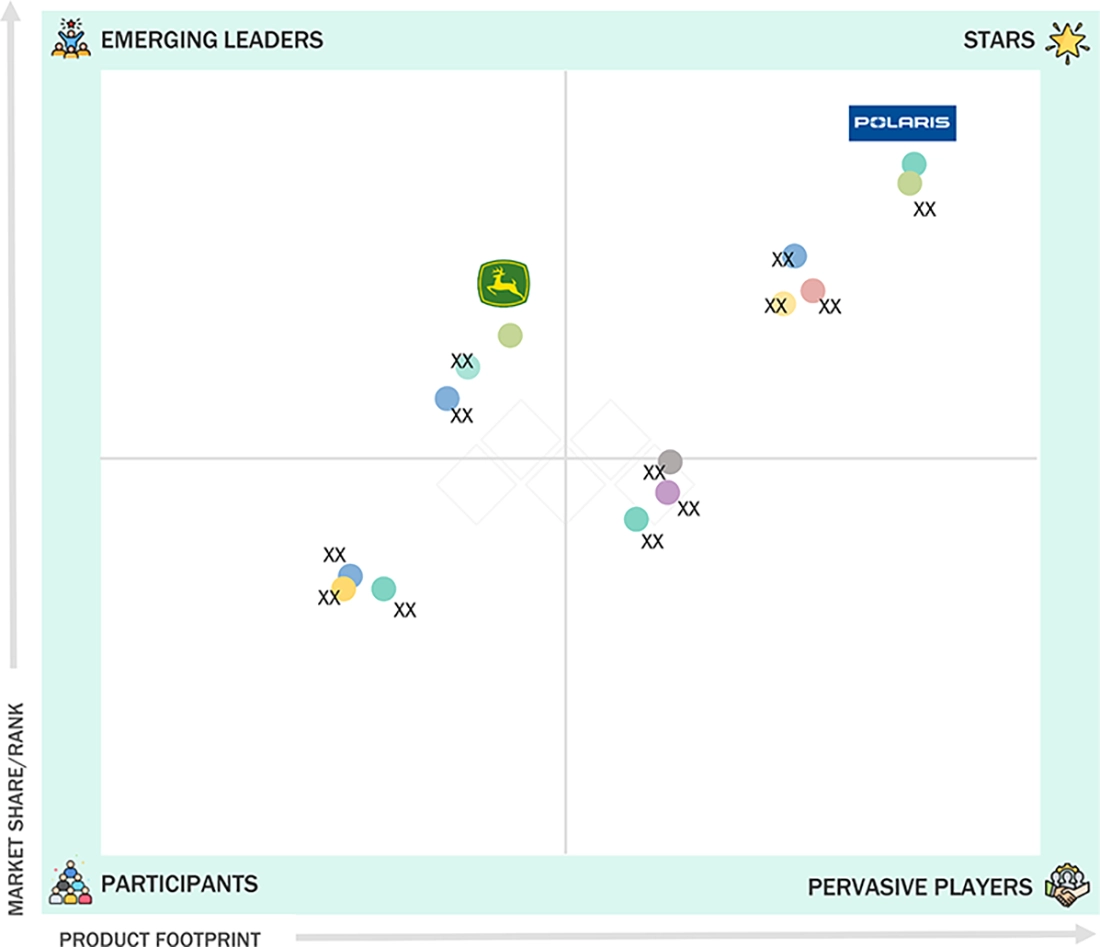
In the all-terrain vehicle market evaluation matrix, Polaris (Star) leads with a strong global portfolio, a large dealer network, and continuous product launches focused specifically on off-road vehicles. Deere & Company (Emerging Leader) is rapidly scaling by expanding its vehicle lineup, integrating stronger engines, improved cargo capacity, and precision agriculture connectivity features.
Source: Secondary Research, Interviews with Experts, MarketsandMarkets Analysis
KEY MARKET PLAYERS
- Polaris Inc. (US)
- Kawasaki Heavy Industries Ltd. (Japan)
- BRP (Canada)
- Honda Motor Co., Ltd. (Japan)
- CFMOTO (China)
- Suzuki Motor Corporation (Japan)
- Deere and Company (US)
- Yamaha Motor Co., Ltd. (Japan)
MARKET SCOPE
| REPORT METRIC | DETAILS |
|---|---|
| Market Size in 2025 (Value) | 3.42 BN |
| Market Size in 2035 (Value) | 4.38 BN |
| Growth Rate | CAGR of 2.6% from 2026 to 2035 |
| Actual Data | 2022-2035 |
| Base Year | 2025 |
| Forecast Period | 2026-2035 |
| Units Considered | Value (USD Million), Volume (Unit) |
| Report Coverage | Revenue forecast, company ranking, competitive landscape, growth factors, and trends |
| Segments Covered |
|
| Regional Scope | Asia Oceania, Europe, North America, Rest of the World |
WHAT IS IN IT FOR YOU: ALL-TERRAIN VEHICLE MARKET SIZE & SHARE REPORT CONTENT GUIDE
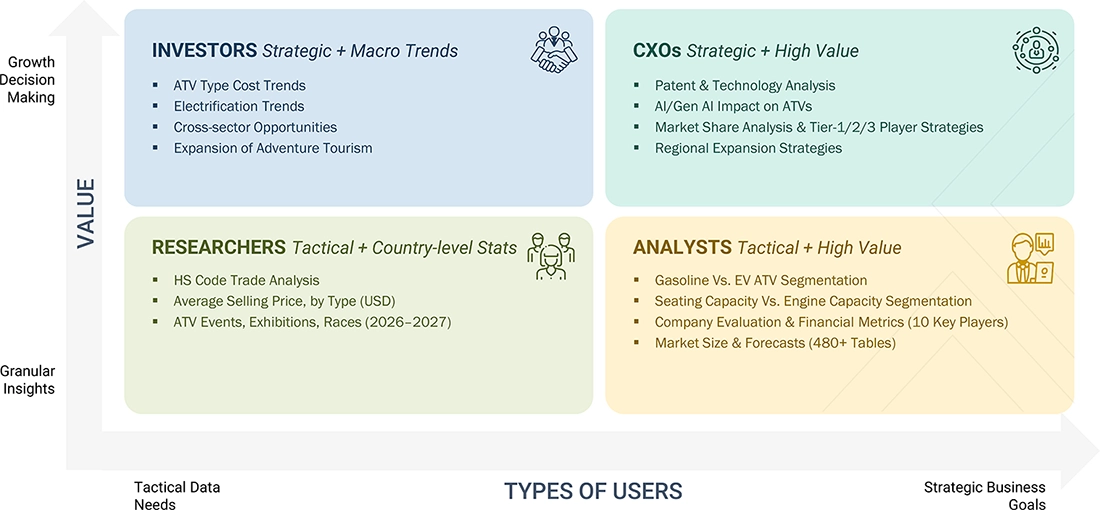
DELIVERED CUSTOMIZATIONS
We have successfully delivered the following deep-dive customizations:
| CLIENT REQUEST | CUSTOMIZATION DELIVERED | VALUE ADDS |
|---|---|---|
| OEMs and fleet buyers want to understand demand differences across key side-by-side vehicle applications. | Segmentation analysis of side-by-side vehicle demand by application type, including sport recreation models, tourism and rental entertainment vehicles, farm and land management utility vehicles, and specialized defense mobility platforms used for patrol or logistics in rough terrain. | Identification of high-growth application pockets, such as agriculture for farm transport and equipment towing, tourism resorts using recreational vehicles for guided trail activities, and defense forces adopting compact off-road mobility platforms for rapid-response operations. |
| Manufacturers and distributors are evaluating fuel-type preferences across regions as buyers choose between gasoline, diesel, and electric side-by-side vehicles based on performance, operating costs, and regulatory requirements. | Comparative assessment of fuel type adoption, mapping gasoline vehicles for high-performance recreation use, diesel vehicles for heavy-duty farm and utility operations, and electric side-by-side vehicles for low-noise environments such as resorts, campuses, and controlled industrial areas. | Clear insight into how the operating environment drives fuel choice: gasoline models dominating sport recreation parks in North America, diesel vehicles used on large farms for towing and hauling tasks, and electric models gaining interest in tourism resorts where quiet operation and low maintenance are valued. |
| Companies entering the electric off-road segment want clarity on battery-chemistry selection and its impact on cost, durability, and vehicle range for electric side-by-side vehicles. | Evaluation of electric vehicle configurations using Li NMC and LFP battery chemistries, comparing energy density, thermal stability, charging behavior, and suitability for rough terrain vehicle duty cycles such as farm transport or recreational trail riding. | Strategic guidance on battery selection based on use case, for example, Li NMC used in performance-oriented electric side-by-side vehicles that require higher energy density and longer range. In contrast, LFP batteries are preferred for utility fleets where safety, longer cycle life, and lower battery cost are important. |
RECENT DEVELOPMENTS
- December 2025 : Suzuki Motor Corporation launched the KingQuad 750, which comes with a 722 cc fuel-injected single-cylinder engine, QuadMatic automatic transmission, selectable 2WD and 4WD with differential lock, and independent suspension. The company also launched the KingQuad 400, which comes with a 376 cc fuel-injected engine, automatic CVT-type transmission, and selectable drive system, offering dependable performance and ease of operation.
- November 2025 : Honda announced a USD 9.658-million investment to modernize its North Carolina Manufacturing (NCM) plant, enabling associates at the facility to build critical all-terrain vehicle (ATV) parts in-house, including rear fenders, front fenders, side covers, ATV toolbox covers, and smaller items used in assembly for ATVs.
- November 2025 : CFMOTO presented CFORCE C4, CFORCE C5 TOURING, and CFORCE C6 PRO TOURING and represented the evolution from concept to production. They feature an all-new design language that blends bold, modern edges and forms with practicality and efficiency.
- October 2025 : Polaris Inc. introduces RZR XP S Sport, designed for riders who crave wide-open terrain capability at a competitive price point. The model features a 72-inch stance and 25 inches of usable suspension travel. The RZR XP S is engineered to take on the toughest trails with three drive modes, including Standard, Sports, and Rock, adapting throttle response specifically to the terrain for the right balance of performance and comfort.
- October 2025 : Can-Am announced an expanded partnership with MeatEater. It will join the Official MeatEater Partnership Program as MeatEater’s exclusive powersports partner. As part of this partnership, Can-Am products will be featured in MeatEater content across all media, and the company will supply Steven Rinella and the MeatEater talent Crew with all-terrain vehicles (ATVs) and side-by-side vehicles (SSVs), specifically equipped for their outdoor pursuits.
Table of Contents
 Exclusive indicates content/data unique to MarketsandMarkets and not available with any competitors.
Methodology
The research study extensively uses secondary sources, such as company annual reports/presentations, industry association publications, industry magazine articles, directories, World Economic Outlook, technical handbooks, technical articles, and databases, to identify and collect information on the all-terrain vehicle market. In-depth interviews have been conducted with various primary respondents, including key industry participants, subject-matter experts (SMEs), C-level executives of key market players (ATV manufacturers, system and component suppliers), and industry consultants, among others, to obtain and verify critical qualitative and quantitative information and assess market prospects.
Secondary Research
The all-terrain vehicle market is directly dependent on vehicle production. ATV sales/registration volume has been derived through secondary sources such as automotive sector organizations; corporate filings (such as annual reports, investor presentations, and financial statements); and trade, paid repository, and automotive associations such as Motorcycle Industry Council, Abraciclo, Federal Chamber of Automotive Industries, Brazilian Ministry of Transport, Canadian Off-Highway Vehicle Distributors Council, and China All-Terrain Vehicle Alliance.
Historical sales/registration data have been collected and analyzed, and industry trends have been considered to arrive at the forecast, which has been further validated through primary research.
Primary Research
In the primary research process, various primary sources from both the supply and demand sides have been interviewed to obtain qualitative and quantitative information on the market. The primary sources on the supply side include industry experts, such as CXOs, vice presidents, and directors from business development, marketing, and product development/innovation teams, as well as related executives from various companies. Various system integrators, industry associations, independent consultants/industry veterans, and key opinion leaders have also been interviewed.
Primary interviews have been conducted to gather insights such as ATV sales/registrations forecast, all-terrain vehicle market forecast, future technology trends, and upcoming technologies in the ATV industry. Data triangulation of all these points has been carried out using the information gathered from secondary research and model mapping. Stakeholders from the demand and supply sides have been interviewed to understand their views on the aforementioned points.
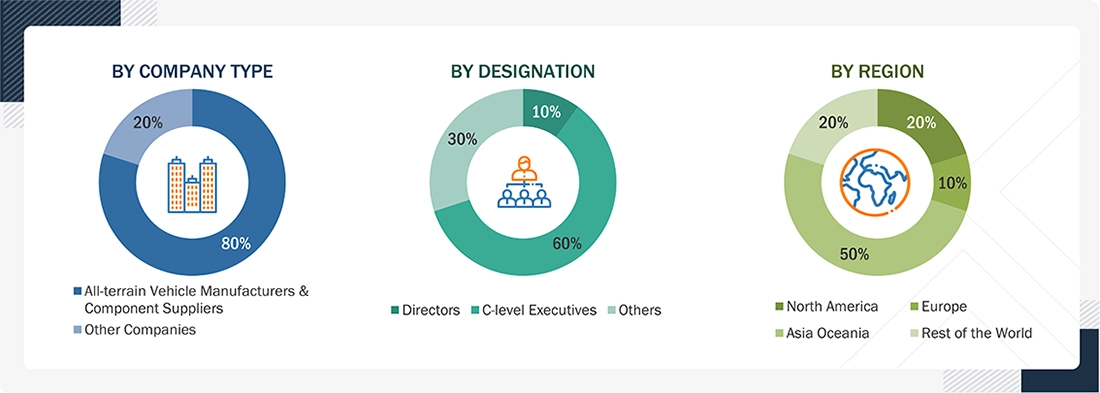
Primary interviews have been conducted with market experts from both the demand (ATV manufacturers) and supply (component suppliers) sides across four major regions: North America, Europe, Asia Oceania, and Rest of the World. Approximately 80% of the primary interviews have been conducted with OEMs, and 20% with others. Primary data has been collected through questionnaires, emails, and telephonic interviews. In the canvassing of primaries, various departments within organizations, such as sales and operations, have been covered to provide a holistic viewpoint in the report.
After interacting with industry experts, brief sessions have been conducted with highly experienced independent consultants to reinforce the findings from primary interviews. This, along with the opinions of in-house subject-matter experts, led to the findings described in the remainder of this report.
Note: Other designations include product design engineers, system architects, technical leads/architects, etc.
To know about the assumptions considered for the study, download the pdf brochure
Market Size Estimation
A detailed market estimation approach has been followed to estimate and validate the size of the all-terrain vehicle market and other dependent submarkets, as mentioned below.
- Key players in the all-terrain vehicle market have been identified through secondary research, and their global market share has been determined through primary and secondary research.
- The research methodology includes a study of annual and quarterly financial reports and regulatory filings of major market players (public), as well as interviews with industry experts for detailed market insights.
- All regional-level penetration rates, splits, and breakdowns for the all-terrain vehicle market have been determined using secondary sources and verified through primary sources.
- All key macro indicators affecting the revenue growth of market segments and subsegments have been accounted for, reviewed in detail, verified through primary research, and analyzed to obtain validated, verified quantitative and qualitative data.
- The gathered market data has been consolidated, enhanced with detailed inputs, analyzed, and presented in this report.
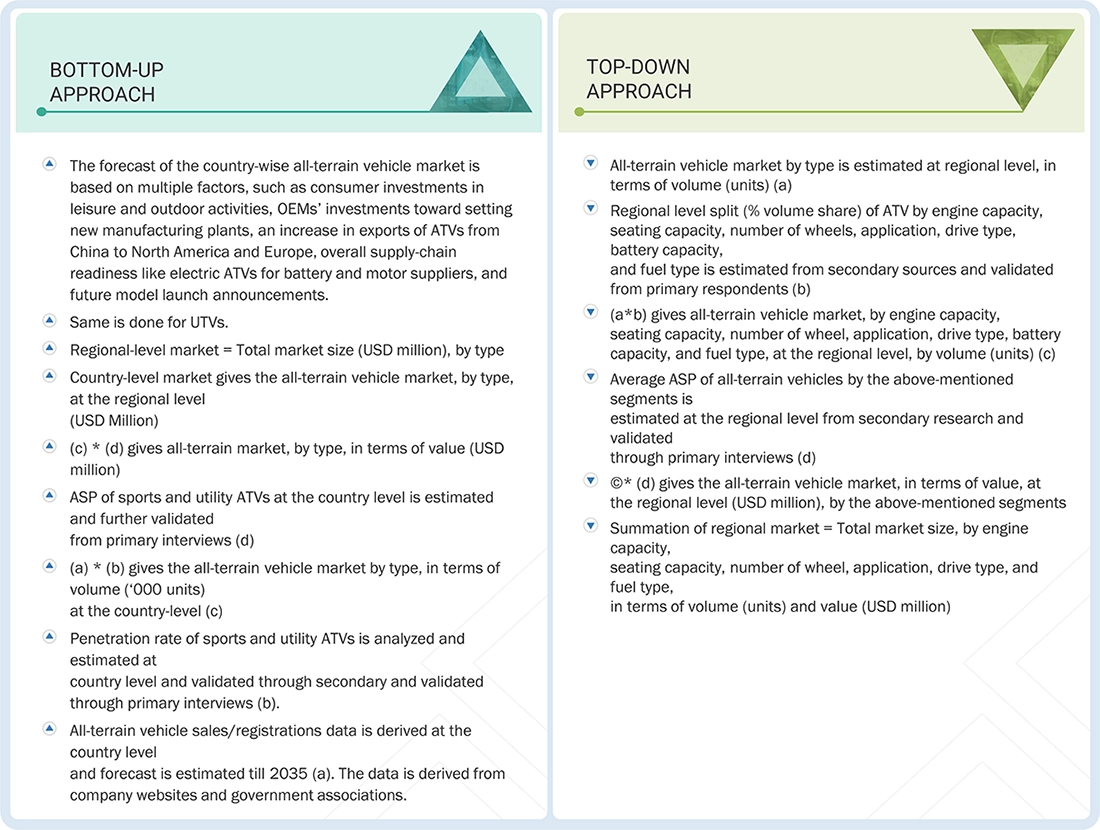
Bottom-up approach: all-terrain vehicle market, by type and top-down approach: all-terrain vehicle market, by engine capacity
Data Triangulation
All percentage shares, splits, and breakdowns have been determined using secondary sources and verified by primary sources. All parameters reported to affect the markets covered in this research study have been accounted for, examined in detail, and analyzed to obtain the final quantitative and qualitative data. This data has been consolidated, enhanced with detailed inputs and analysis from MarketsandMarkets, and presented in the report. The following figure illustrates the overall process for estimating the market size used in this study.
Market Definition
According to Polaris Inc., an all-terrain vehicle (ATV) is a four-wheel off-road vehicle with straddle/motorcycle-style seating and handlebar steering. While two-person models exist, a typical ATV accommodates a single rider. Also known as quads or four-wheelers, ATVs are generally smaller than UTVs, more physically intensive to operate, and easier to transport long distances, as they can fit in the beds of most full-size pickups and many standard utility trailers.
A side-by-side (SxS), also called a utility vehicle (UTV), usually boasts four to six wheels and bench or bucket seating with seatbelts for up to six passengers. The UTV driver operates the machine with a steering wheel and foot pedals. The UTV cab is shielded by a roll bar or cage, with options to add front and rear windshields or a completely enclosed cab for further protection. UTVs make a middle ground between dirt bikes and four-wheelers on one side of the off-roading spectrum and full-size off-road vehicles on the other.
Key Stakeholders
- ATV and Side-by-Side (SxS) Vehicle Manufacturers (OEMs)
- Component Suppliers to ATVs and SxS Vehicle Manufacturers
- Raw Material Suppliers for ATVs (Suppliers for OEMs)
- Traders, Distributors, and Suppliers of ATVs and SxS Vehicles
- Automotive Industry Associations, Government Authorities, and Research Organizations
- Country/Regional-level All-terrain Vehicle Associations
- Organized and Unorganized ATV Suppliers
Report Objectives
- To define, describe, and forecast the all-terrain vehicle (ATV) market in terms of value (USD million) and volume (units) based on the following segments:
- Drive type (2WD, 4WD, and AWD)
- Fuel type (gasoline and electric)
- Application (sports, agriculture, entertainment, military & defense, and other applications)
- Engine capacity (<400 cc, 400–800 cc, and > 800 cc)
- Seating capacity (one-seater and two-seater and above)
- Type (utility vehicles and sports vehicles)
- Number of wheels (four wheels and more than four wheels)
- Side-by-side vehicle market, by number of wheels (four wheels and more than four wheels)
- Electric all-terrain vehicle market by battery capacity (<10 kWh and >10 kWh)
- To segment the market and forecast its size by volume and value based on region (Asia Oceania, Europe, North America, and Rest of the World)
- To identify and analyze key drivers, restraints, opportunities, and challenges influencing market growth
- To analyze the competitive landscape for market leaders by providing details on MQ1 for ATVs manufacturers, MQ2 for side-by-side vehicle providers, and MQ3 for startup and SME companies.
- To study the supply chain analysis, ecosystem analysis, trade analysis, case studies, pricing analysis, key conferences and events, patent analysis, trends and disruptions impacting customer business, technology trends, total cost of ownership, impact of AI/gen AI on the all-terrain vehicle market, investment scenario, and regulatory landscape with respect to the market.
- To analyze the key players offering ATVs with respect to OEM analysis for electric all-terrain vehicles and side-by-side vehicles (battery capacity vs. vehicle range), gasoline all-terrain vehicles (horsepower vs. engine capacity), and gasoline side-by-side vehicles (horsepower vs. engine capacity).
- To strategically profile key manufacturers of ATVs, side-by-side vehicles, and startups and SMEs in the industry, and comprehensively analyze their market shares
- To analyze competitive developments such as product launches/developments, deals (acquisitions, partnerships, and collaborations), and other developments carried out by key industry participants
- To analyze the company evaluation matrix to identify and showcase opportunities for stakeholders and the competitive landscape for global and regional market players
Available customizations:
1.1 SIDE-BY-SIDE VEHICLE MARKET, BY APPLICATION
1.1.1 SPORTS
1.1.2 ENTERTAINMENT
1.1.3 AGRICULTURE
1.1.4 MILITARY & DEFENCE
1.2 side-by-side vehicle market, by fuel type
1.2.1 gasoline
1.2.2 Electric
1.3 Side-by-Side vehicle market, by battery chemistry
1.3.1. Li-NMC
1.4 Detailed analysis and profiling of additional market players (UP TO 3)
-
- Other APPLICATIONS
- LFP
Key Questions Addressed by the Report
What is the current market size of the All-Terrain Vehicle Market, and how is it expected to grow?
The All-Terrain Vehicle Market is projected to grow from USD 3.49 billion in 2026 to USD 4.38 billion by 2035, at a CAGR of 2.6% during the forecast period.
What are the key factors driving the growth of the All-Terrain Vehicle Market?
The market is driven by increasing demand for ATVs in agriculture, forestry, land management, emergency services, and outdoor recreational activities, along with the growing adoption of electric ATV models.
Which region is expected to witness the fastest growth in the All-Terrain Vehicle Market during the forecast period?
Asia Oceania is expected to witness the fastest growth due to rising incomes, expanding agricultural applications, and increasing use of ATVs in construction and utility operations.
What are the latest trends shaping the All-Terrain Vehicle Market?
Key trends include the development of electric ATVs, advanced suspension systems, electronic power steering, improved traction control, and increasing adoption of utility-focused ATV models.
Who are the leading companies in the All-Terrain Vehicle Market, and what strategies are they adopting?
Leading companies are focusing on product innovation, expanding electric ATV portfolios, enhancing off-road performance, and strengthening their market presence through strategic partnerships and new product launches.


Personalize This Research
- Triangulate with your Own Data
- Get Data as per your Format and Definition
- Gain a Deeper Dive on a Specific Application, Geography, Customer or Competitor
- Any level of Personalization
Let Us Help You
- What are the Known and Unknown Adjacencies Impacting the All-terrain Vehicle Market
- What will your New Revenue Sources be?
- Who will be your Top Customer; what will make them switch?
- Defend your Market Share or Win Competitors
- Get a Scorecard for Target Partners

Custom Market Research Services
We Will Customise The Research For You, In Case The Report Listed Above Does Not Meet With Your Requirements
Get 10% Free CustomisationTESTIMONIALS

JIM NAAS
PRODUCT DIRECTOR, WEASLER
Weasler Engineering, a CentroMotion organization
Global Provider of Industrial Actuation & Control Solutionswww.weasler.com
Our organization was interested in learning more about the attractiveness of a particular market space. We contacted MarketsandMarkets to help us based on previous positive experiences we had with them. The results did not disappoint! We discussed our objectives with them, and the team at MarketsandMarkets developed and executed a proposal that met our needs precisely. We were very impressed by their level of expertise, the quality of the analysis and their insightful recommendations. We would not hesitate in working with them again in the future.

Matt Kardel,
Vice President
Aptiv,
A global technology company that develops safer, greener and more connected solutions.www.aptiv.com
We contracted with
MarketsandMarkets to evaluate the value chain and potential go-to-market partners related to our
interest in the Fleet Management space. The team successfully completed the work on time and at the
pricing agreed. MarketsandMarkets listened and understood our objectives and collaborated well with
us to help us get the visibility we needed to make an investment.
We have subsequently used
MarketsandMarkets again related to Smart Cities to good results.
- China All-terrain Vehicle Market
- Australia All-terrain Vehicle Market
- New Zealand All-terrain Vehicle Market
- Japan All-terrain Vehicle Market
- India All-terrain Vehicle Market
- Germany All-terrain Vehicle Market
- France All-terrain Vehicle Market
- Russia All-terrain Vehicle Market
- UK All-terrain Vehicle Market
- Spain All-terrain Vehicle Market
- Sweden All-terrain Vehicle Market
- Canada All-terrain Vehicle Market
- Mexico All-terrain Vehicle Market
- Brazil All-terrain Vehicle Market
- UAE All-terrain Vehicle Market
- South Africa All-terrain Vehicle Market
- Saudi Arabia All-terrain Vehicle Market
- US All-terrain Vehicle Market
Growth opportunities and latent adjacency in All-terrain Vehicle Market




amit
May, 2020
Interested in All-terrain vehicle to understand the electrification trend in ATV and by when it will have a considerable impact on conventional fuel engines .
amit
May, 2020
If I purchase a single license, can I print the material or copy the graph to a ppt file? And, can I share the pdf file to my colleagues? If not, is it OK to share a ppt file to quote your report?.