Amine-Based Epoxy Hardeners Market

Amine-Based Epoxy Hardeners Market by Raw Material (MXDA, 1,3-BAC, IPDA, DETA), By Application (Protective Coatings, Adhesives & Sealants, Composites), By End-Use Industry (Building & Construction, Automotive & Transportation, Aerospace & Defense), and Region - Global Forecast to 2031


OVERVIEW

Source: Secondary Research, Interviews with Experts, MarketsandMarkets Analysis
The amine-based epoxy hardener market size is projected to grow from USD 4.45 billion in 2026 to USD 5.90 billion by 2031, registering a CAGR of 5.8% during the forecast period. The market of amine-based epoxy hardener is estimated to show stable growth during the forecast period, owing to rising demand for high-performance, tough, and chemically resistant epoxy systems. The amine-based epoxy hardeners such as aliphatic amines, cycloaliphatic amines, aromatic amines, polyamides, polyamidoamines, and polyetheramines are commonly used due to their good curing properties, excellent adhesion, mechanical strength, and chemical & corrosion resistance. Rising investment in the sectors of building & construction, automotive & transportation, industrial maintenance and infrastructure are estimated to fuel the demand for epoxy-based protective coatings, adhesives and sealants, composites, and encapsulation. In addition, rising demand for corrosion resistant coatings, lightweight composites, high-performance bonding products, and tough floorings is expected to propel the market growth. Technological developments in low-VOC, waterborne and modified amine curing agents and rising focus on sustainability and product performance are expected to generate growth opportunities for the amine-based epoxy hardener market.
KEY TAKEAWAYS
-
By RegionAsia Pacific dominated the amine-based epoxy hardner market, with a share of 45%, in terms of value, in 2025.
-
By Raw MaterialThe IPDA dominate the market with a share of 14%, in terms of value, in 2025.
-
By ApplicationBased on application, the composites is projected to register the highest CAGR of 7.2% in the amine based epoxy hardners market during the forecast period.
-
By End-Use IndustryBased on end-use industry, the energy is projected to register the highest CAGR of 7.5% in the amine based epoxy hardners market during the forecast period.
-
COMPETITIVE LANDSCAPE- KEY PLAYERSCompanies such as Mitsubishi Gas Chemical Company, Inc, Evonik, BASF SE were identified as some of the star players in the amine-based epoxy hardner market , given their strong market share and product footprint
-
COMPETITIVE LANDSCAPE- STARTUPSCardolite Corporation, Atul Ltd and Royce Global among others, have distinguished themselves among startups and SMEs by securing strong footholds in specialized niche areas, underscoring their potential as emerging market leaders.
There are several factors driving the steady growth of the amine-based epoxy hardener market. One of the primary factors is the increasing demand for durable, high-performance epoxy systems that offer excellent adhesion, mechanical strength, chemical resistance, and corrosion protection across various end-use industries. Other key growth drivers include rising investments in building and construction, infrastructure development, automotive and transportation, and industrial manufacturing, where amine-based epoxy hardeners are widely used in protective coatings, adhesives and sealants, composites, and encapsulation applications. The growing need for corrosion-resistant coatings for industrial equipment, pipelines, marine structures, and concrete surfaces has further supported market demand. In addition, the increasing use of lightweight composite materials in automotive, aerospace, and wind energy applications has created opportunities for advanced epoxy curing agents. Developments in modified amines, cycloaliphatic amines, polyamides, polyamidoamines, and polyetheramines, along with growing demand for low-VOC and waterborne formulations, are also contributing to the adoption of amine-based epoxy hardeners across diverse industrial applications.
TRENDS & DISRUPTIONS IMPACTING CUSTOMERS' CUSTOMERS
In response to the rising demands for high-performance, durable, and sustainable materials, there are some technological trends that have been influencing the development of amine-based epoxy hardeners. The rise in the demand for corrosion protection, adhesives, and flooring systems that can withstand the harsh environmental conditions has been increasing the usage of amine-based epoxy hardeners in the fields of buildings and construction, transportation, marine, and industries. There has been an increase in the developments of modified aliphatic amines, cycloaliphatic amines, polyamides, polyamidoamines, and polyetheramines which is making the performance of curing, resistance to chemicals, flexibility, and adhesion of the epoxy hardener more efficient at different conditions. Moreover, with the rise in the use of light-weight composite materials in the field of automotive, aerospace, and wind power industry, there are emerging opportunities for advanced epoxy curing agents. Furthermore, the rising focus on low-VOC products and improved safety in workplace has been encouraging manufacturers to develop such epoxy hardeners.

Source: Secondary Research, Interviews with Experts, MarketsandMarkets Analysis
MARKET DYNAMICS

Level
-
Expansion of wind energy and composites

-
Growth in protective coatings, construction and infrastructure


Level
-
Raw material price volatility

-
Health, safety and regulatory pressure


Level
-
Bio-based and sustainable amine hardeners

-
Electronics, electric vehicles and Asia Pacific industrialisation


Level
-
Balancing performance trade-offs in application

-
Competition from alternative chemistries and end-of-life concerns

Source: Secondary Research, Interviews with Experts, MarketsandMarkets Analysis
Driver: Expansion of wind energy and composites
Demand drivers for amine hardeners are dominated by wind energy applications and the broader composites market. Blades are constantly becoming larger and depend on epoxy resins that cure using cycloaliphatic amines and polyetheramines. Those materials offer low viscosity, controllable exotherm, good fatigue performance and good adhesion to glass and carbon fibres. With the expansion of the renewable fleet worldwide to meet climate objectives, each next generation of blades uses more resin and hardener, thus increasing consumption. Outside wind, the composites market is rapidly expanding into aerospace, automotive lightweight applications, sporting goods and pressure vessels where amine curing agents give the required mechanical properties, thermal stability and strength. Auctions of offshore wind sites, government support programs, and the growing number of repowering activities in Europe, China, India, and the United States all serve as catalysts to this trend. Since amine hardeners are flexible enough to be used in slow, medium and fast infusion processes, their formulation matches large-scale production well, which gives them an edge over other hardeners.
Restraint: Raw material price volatility
The prices of amine hardeners are based on petrochemical feedstocks like ethylene, ammonia, propylene oxide, ethylene diamine, and other intermediaries. They change in line with crude oil, natural gas, and regional supply-demand dynamics. Price fluctuations in energy, unexpected shutdowns at plants, logistical problems, or export/import constraints could cause rapid rise in costs, which manufacturers are not able to recover from their clients. Epoxy hardener manufacturers usually sell in competitive and contractual markets within the coatings, adhesives, and composite applications, where buyers do not like price increases. It negatively affects financial planning and agreement making processes. Small-sized producers are highly vulnerable to price fluctuations due to lack of diversification and backward integration capabilities. Moreover, price volatility makes some end-users reluctant to work with epoxy systems for price-sensitive applications, which leads to substitution. Concentration of certain intermediate production in limited regions also carries supply chain risks as evidenced by recent global disruption. As a response to the problem, companies enter into long-term sourcing agreements, produce regionally, build inventories, which increases expenses. The situation will stay unchanged until supply of feedstocks is diversified or alternative bio-based sources are developed.
Opportunity: Bio-based and sustainable amine hardeners
Sustainability has become a significant growth opportunity for those that can provide either renewable or reduced impact hardeners. Renewable hardener alternatives like cardanol-based phenalkamines, plant oil and sugar-based amines, and semi-bio derived polyamides have become more appealing to customers of coatings, composites and adhesives. More brand owners, wind turbine manufacturers and construction companies are setting themselves goals in carbon reduction and usage of recycled and renewable materials, thus driving demand for products with credible lifecycle data and certifications. Biogenic phenalkamines are currently delivering great results in terms of cold and wet surface curing and thus are commercially viable rather than just environmentally friendly option. The emergence of new opportunities for development of reprocessable and recyclable epoxy resin systems, such as amine cured systems aimed for chemical recycling of polymers, could solve the issue of end-of-life management for composites. Manufacturers that manage to ensure feedstock supply and production of sustainable products at scale will be able to charge premium prices and establish long-term partnerships with their customers. Government funds for green chemistry and increasingly strict environmental requirements also make the transition easier.
Challenge: Balancing performance trade-offs in application
It is challenging for formulators to reconcile cure rate, pot life, physical properties, and applicability in amine-cured resin systems. Quick ambient cure tends to reduce pot life, whereas systems with slow cure rate and long pot life tend to affect efficiency. Amines can react with water and carbon dioxide under low temperatures and high humidity and result in amine blush, tackiness of the surface and poor intercoat adhesion. Although aromatic amines have good chemical and thermal resistance, they are yellowing, need to be heated, whereas aliphatic and cycloaliphatic amines are cured quickly at room temperature but are brittle or expensive. The requirement of obtaining low viscosity for infusion without any volatile solvent but having high glass transition temperature and toughness is difficult technologically. The field conditions are wide ranging from offshore environment which is cold to tropical environment which is very hot and sometimes applicator may not follow the optimal way for mixing and curing of resins, resulting in failure of the application and warranty claim. Thus satisfying all requirements demands extensive formulation knowledge and technical service, increasing development cost.
AMINE-BASED EPOXY HARDENERS MARKET: COMMERCIAL USE CASES ACROSS INDUSTRIES
| COMPANY | USE CASE DESCRIPTION | BENEFITS |
|---|---|---|
 |
Supplies MXDA and modified MXDA-based epoxy curing agents, including Gaskamine 240 and Gaskamine 328, for protective and anticorrosive coatings used on pipelines, bridges, marine structures, tanks, and industrial floors. Its amine technologies also support fiber-reinforced composites and wind turbine blade repair. Source · Gaskamine 240 | Supports low-temperature curing, strong adhesion, and improved water, chemical, and corrosion resistance in infrastructure, marine, and industrial coating applications. |
 |
Supplies amine-based epoxy curing agents under the Ancamine and Ancamide product families for protective and industrial coatings, tank linings, concrete flooring, crack injection, adhesives, sealants, and composite manufacturing. Source · Ancamine 2422 | Enables formulators to develop epoxy systems with high chemical resistance, reliable adhesion, curing flexibility, and durable protection for concrete and metal substrates. |
 |
Supplies Baxxodur amine-based epoxy curing agents, including polyetheramines, aliphatic amines, and cycloaliphatic amines. Applications include industrial and construction flooring, protective coatings, and other epoxy thermoset formulations. Source | Supports control over curing behavior and final material properties. Baxxodur® EC 151, developed with Sika, targets durable flooring coatings with improved flow, low-temperature curing, and reduced VOC emissions. Source |
 |
A directly attributable use case for Nouryon's own amine-based epoxy hardener portfolio could not be verified from the available sources. Its inclusion as a manufacturer of amine-based epoxy hardeners should therefore be confirmed against current product documentation before assigning specific applications. | Avoids attributing another company's curing-agent products or application claims to Nouryon. Confirm the relevant product name and chemistry before associating the company with protective coatings, adhesives, composites, or encapsulation. |
 |
Supplies ARADUR amine-based curing agents for corrosion-resistant coatings, tank linings, pipe coatings, industrial flooring, epoxy mortars, adhesives, sealants, and composite applications. For example, ARADUR 37-3 is designed for waterborne epoxy anticorrosive coatings, while ARADUR 847 is used in chemical-resistant flooring and tank-lining formulations. Source · ARADUR 847 | Supports durable coating and flooring systems with chemical and water resistance, corrosion protection, adhesion, and application-specific curing performance. |
Logos and trademarks shown above are the property of their respective owners. Their use here is for informational and illustrative purposes only.
MARKET ECOSYSTEM
The amine-based epoxy hardener market operates in a complex value chain involving raw material/feedstock suppliers, amine intermediate manufacturers, epoxy hardener manufacturers, chemical distributors, epoxy resin formulation companies, coatings and adhesives manufacturers, composite manufacturers, system integrators, contractors, and OEMs for end-use applications in industries like building & construction, automotive & transportation, aerospace, marine, wind energy, electrical & electronics, and industrial manufacturing. Some of the primary raw materials employed in the market include meta-xylenediamine (MXDA), 1,3-bis(aminomethyl)cyclohexane (1,3-BAC), isophorone diamine (IPDA), diethylenetriamine (DETA), triethylenetetramine (TETA), tetraethylenepentamine (TEPA), polyetheramines, polyamides, and polyamidoamines. These raw materials are used to manufacture amine-based epoxy curing agents like aliphatic amines, cycloaliphatic amines, modified amines, polyamides, polyamidoamines, and specialty curing agents. Some of the common applications include protective coatings, adhesives & sealants, composites, encapsulation, industrial flooring, corrosion protection, and infrastructure repair. Some of the value-added services offered in the market include formulation development, technical support, application testing, optimization of curing process, compatibility studies, on-site application assistance, quality assurance, and customization of products for specific performance needs.

Logos and trademarks shown above are the property of their respective owners. Their use here is for informational and illustrative purposes only.
MARKET SEGMENTS

Source: Secondary Research, Interviews with Experts, MarketsandMarkets Analysis
Amine-Based Epoxy Hardener Market, by Raw Material
The global market for epoxy hardener based on amine can be segmented into diethylenetriamine (DETA), triethylenetetramine (TETA), tetraethylenepentamine (TEPA), isophorone diamine (IPDA), 1,3-bis(aminomethyl)cyclohexane (1,3-BAC), meta-xylenediamine (MXDA), polyetheramines, polyamidoamines, 4,4′-diaminodiphenyl sulfone (DDS), diethyltoluenediamine (DETDA), and other raw materials. Out of these, it is estimated that IPDA will dominate the market due to the fact that it provides a favorable combination of mechanical properties, chemical resistance, weathering properties, and curing properties in epoxy. This is widely used in high-performance coatings, industrial flooring, adhesives, and composites because it offers durability and resistance to chemical attack and weathering. Moreover, the cycloaliphatic nature of this product helps in formulating epoxy with color and weathering resistance. This makes IPDA an important raw material for applications which require durable performance. In addition to this, increasing demand for corrosion resistant protective coatings in infrastructure, industry, and transportation applications, as well as high-performance epoxy in construction and advanced composites, is likely to drive the demand for epoxy hardeners based on IPDA.
Amine-Based Epoxy Hardeners Market, by Application
The market for epoxy hardeners based on amines can be segmented into applications such as protective coatings, adhesives & sealants, composites, encapsulation, and other applications; among these, the protective coatings are expected to occupy the largest market share. The reason behind the dominance of protective coatings can be attributed to the usage of amine-based epoxy hardeners that enable good adhesion, corrosion resistance, mechanical strength, and chemical resistance. Such hardeners find extensive use in industrial coatings, marine coatings, pipeline protection, storage tanks, concrete floors, and infrastructure coating applications. Due to their ability to offer durable coatings that resist water, chemicals, abrasion, and harsh operating conditions, such hardeners find use in protecting metallic and concrete surfaces in diverse industries. Further, investments in building & construction, industrial infrastructure, transportation, and energy infrastructure are expected to drive demand for protective coating solutions using amine-based epoxy hardeners.
Amine-Based Epoxy Hardeners Market, by End-use Industry
By end-use industry, the amine-based epoxy hardener market is segmented into building & construction, automotive & transportation, aerospace & defense, industrial manufacturing, electrical & electronics, energy, and other end use industries, wherein building & construction is expected to have the largest market share among all. The largest market share held by this segment is due to the widespread usage of amine based epoxy hardeners in protective coatings, industrial flooring, concrete repair, structural adhesives, sealants, and infrastructure maintenance. The properties like adhesion, chemical resistance, mechanical strength and durability of epoxy formulation provided by these hardeners make them an ideal choice for the building and construction purposes. In addition, the usage of amine based epoxy hardeners for protecting concrete and steel constructions from moisture, abrasion, corrosion and chemical effects makes them useful for bridges, tunnels, parking lots, warehouses and other infrastructures. Moreover, the rising investment in the urban development and infrastructure renovation projects is further driving the demand for such materials.
REGION
Asia Pacific to be fastest-growing region in amine-based epoxy hardners market during forecast period
Asia Pacific is to be the fastest-growing region in the market for amine-based epoxy hardener. This is due to fast industrialization, urbanization, development of infrastructure, and manufacture activities taking place in China, India, Japan, and Southeast Asia. Investments in construction of residential buildings and commercial constructions, transportation infrastructure, manufacturing facilities, and renewable energy projects will drive the use of protective coatings, adhesives and sealants, and composites based on epoxy. The strength of automotive and electronic manufacturing in the region will aid the adoption of high performance epoxy systems for bonding, electrical insulation, and encapsulation applications. In addition, the presence of chemical manufacturers and developed supply chain for amine intermediates and epoxy resins will improve production and availability of products. The need for corrosion resistant coatings, tough floorings, and robust bonding solutions as a result of growing industrialization and modernization of infrastructure will contribute to market growth. Moreover, investments in wind energy, electric vehicles, and advanced manufacturing as well as increased demand for low VOC and waterborne formulations will provide growth opportunities for amine-based epoxy hardener manufacturers in Asia Pacific.

AMINE-BASED EPOXY HARDENERS MARKET: COMPANY EVALUATION MATRIX
Mitsubishi Gas Chemical Company, Inc., which is one of the prominent players in the amine-based epoxy hardener value chain, benefits from having great expertise in specialty amine chemistry, manufacturing capabilities, and meta-xylylenediamine (MXDA) and MXDA-based epoxy hardeners. The properties that are exhibited by these products include adhesion, chemical resistance, and durability, and the potential applications of such products include protective coatings and anticorrosive coatings. Moreover, the company’s expertise in chemical manufacturing and international operations are factors that give it great potential in serving customers in various industries and construction-related industries. In addition, the company’s investment in the production of specialty amines and development of curing solutions gives it great potential in the value chain. On the other hand, Nouryon can be referred to as an emerging player due to the presence of expertise in specialty chemicals, application development, and industrial customers. International operations and technical support of the company give it great potential to participate in the amine-based epoxy hardener value chain. Finally, the expansion of the Mumbai Innovation Center and office in November 2024 will make customer engagement and technical cooperation in India and Asia Pacific regions more successful.

Source: Secondary Research, Interviews with Experts, MarketsandMarkets Analysis
KEY MARKET PLAYERS
- 1. Mitsubishi Gas Chemical Company, Inc (Japan)
- 2. Evonik (Germany)
- 3. Itochu Chemical Frontier Corporation (Japan)
- 4. BASF SE (Germany)
- 5. Nouryon (Netherlands)
- 6. Huntsman Corporation (US)
- 7. Dow (US)
- 8. Tosoh Corporation (Japan)
- 9. Aditya Birla Chemicals (India)
- 10. Westlake Corporation (US)
MARKET SCOPE
| REPORT METRIC | DETAILS |
|---|---|
| Market Size in 2025 (Value) | USD 4.25 Billion |
| Market Forecast in 2026 (Value) | USD 4.45 Billion |
| Market Forecast in 2031 (value) | USD 5.90 Billion |
| Growth Rate | CAGR of 5.8% from 2026–2031 |
| Years Considered | 2022–2031 |
| Base Year | 2025 |
| Forecast Period | 2026–2031 |
| Units Considered | Value (USD Billion), Volume (Kiloton) |
| Report Coverage | Revenue Forecast, Company Ranking, Competitive Landscape, Growth Factors, and Trends |
| Segments Covered |
|
| Regions Covered | North America, Asia Pacific, Europe, South America, Middle East & Africa |
WHAT IS IN IT FOR YOU: AMINE-BASED EPOXY HARDENERS MARKET REPORT CONTENT GUIDE

DELIVERED CUSTOMIZATIONS
We have successfully delivered the following deep-dive customizations:
| CLIENT REQUEST | CUSTOMIZATION DELIVERED | VALUE ADDS |
|---|---|---|
| Demand for country-specific market insights | Provided an in-depth analysis of amine-based epoxy hardener demand, growth drivers, industry trends, and market opportunities across key countries in North America, Europe, Asia Pacific, Latin America, and the Middle East & Africa. | Helps clients identify high-growth regional markets, understand country-level demand patterns, evaluate investment opportunities, and develop market-entry and expansion strategies. |
| Request for competitor benchmarking | Delivered comprehensive benchmarking of key amine-based epoxy hardener manufacturers, covering product portfolios, raw material expertise, manufacturing capabilities, geographic presence, strategic developments, capacity expansions, acquisitions, and product launches. | Enables competitive positioning, identification of portfolio gaps, assessment of competitors' strengths, and development of differentiated business and product strategies. |
| Application- and end-use industry-specific insights | Provided detailed analysis of amine-based epoxy hardener demand across protective coatings, adhesives & sealants, composites, encapsulation, and other applications, with a focus on building & construction, automotive & transportation, aerospace & defense, industrial manufacturing, electrical & electronics, and energy. | Supports product portfolio optimization, identifies high-potential applications and end-use industries, and helps companies align product development with evolving customer requirements. |
| Raw material and product-type analysis | Evaluated market trends and demand across DETA, TETA, TEPA, IPDA, 1,3-BAC, MXDA, polyetheramines, polyamidoamines, DDS, DETDA, and other raw materials, considering their properties, curing performance, and suitability for different epoxy applications. | Supports raw material selection, formulation development, product differentiation, and identification of opportunities in specialized, high-performance epoxy curing agents. |
| Market sizing, forecasting, and segmentation | Developed market size estimates and forecasts using a structured assessment of historical trends, demand across applications and end-use industries, regional consumption, supplier revenues, pricing, and primary research inputs. | Helps clients evaluate market potential, estimate future demand, prioritize investment areas, and support strategic planning and revenue growth decisions. |
| Technology, performance, and sustainability assessment | Assessed developments in modified amines, cycloaliphatic amines, polyamides, polyamidoamines, and other curing agents, including advances in curing performance, chemical resistance, low-VOC formulations, and waterborne epoxy systems. | Supports innovation planning, identification of emerging product opportunities, evaluation of performance requirements, and development of more sustainable epoxy formulations. |
RECENT DEVELOPMENTS
- April 2026 : Evonik introduced Ancamine 2873, an ultra-low-emission epoxy curing agent designed for protective and marine coatings, particularly for cold-weather applications. It enables fast curing and reliable film formation at temperatures as low as 5°C while supporting high-solids formulations with reduced VOC emissions
- May 2025 : Huntsman announced plans to expand its Performance Products manufacturing site in Texas. This project will increase capacity for key intermediates and specialty chemicals produced by the business, including amines and related chemistries commonly used in epoxy resin curing agents and amine-based hardener systems.
- March 2025 : BASF and Sika jointly developed a new amine building block for epoxy resins. Commercialized under the Baxxodur EC 151 brand, it targets flooring applications and supports low-VOC formulations, curing at temperatures as low as 5–10°C, improved flow and surface quality, and reduced curing time. BASF developed and scaled the manufacturing process to production scale, while Sika developed the application in Sikafloor coatings.
- November 2024 : Evonik inaugurated its expanded specialty amine production facility in Nanjing, China, on April 21, 2026, following a double-digit-million-euro investment. The expansion strengthens its capacity to manufacture advanced reactive amines for polyurethane and epoxy applications, including epoxy curing agents used in protective coatings and adhesives.
- September 2024 : Univar announced an expanded agreement with BASF to distribute its full Baxxodur line of amine-based curing agents in the US and Canada. The arrangement broadened access to epoxy and polyurea curing and accelerating agents for customers in construction, electronics and other industrial applications
Table of Contents
 Exclusive indicates content/data unique to MarketsandMarkets and not available with any competitors.
Methodology
The study involves two major activities in estimating the current market size for the amine-based epoxy hardeners market. Exhaustive secondary research was done to collect information on the market, peer market, and parent market. The next step was to validate these findings, assumptions, and sizing with industry experts across the value chain through primary research. Both top-down and bottom-up approaches were employed to estimate the complete market size. After that, market breakdown and data triangulation were used to estimate the market size of segments and subsegments.
Secondary Research
Secondary sources referred to for this research study include financial statements of companies offering amine-based epoxy hardeners and information from various trade, business, and professional associations. Secondary research has been used to obtain critical information about the industry’s value chain, the total pool of key players, market classification, and segmentation according to industry trends to the bottom-most level and regional markets. The secondary data was collected and analyzed to arrive at the overall size of the amine-based epoxy hardeners market, which was validated by primary respondents.
Primary Research
Extensive primary research was conducted after obtaining information regarding the amine-based epoxy hardeners market scenario through secondary research. Several primary interviews were conducted with market experts from both the demand and supply sides across major countries of North America, Europe, Asia Pacific, Middle East & Africa, and South America. Primary data was collected through questionnaires, emails, and telephonic interviews. The primary sources from the supply side included various industry experts, such as chief executive officers (CXOs), vice presidents (VPs), directors from business development, marketing, product development/innovation teams, and related key executives from amine-based epoxy hardeners industry vendors; material providers; distributors; and key opinion leaders. Primary interviews were conducted to gather insights into market statistics, revenue from products and services, market breakdowns, market size estimates, market forecasting, and data triangulation. Primary research also helped in understanding the various trends related to raw materials, applications, end-use industries, and regions. Stakeholders from the demand side, such as CIOs, CTOs, CSOs, and installation teams of the customer/end users who are seeking amine-based epoxy hardeners, were interviewed to understand the buyer’s perspective on the suppliers, products, and their current usage of amine-based epoxy hardeners and future outlook of their business, which will affect the overall market.
Following is the breakdown of primary respondents:

To know about the assumptions considered for the study, download the pdf brochure
Market Size Estimation
The research methodology used to estimate the size of the amine-based epoxy hardeners market includes the following details. The market sizing was undertaken from the demand side. The market was upsized based on the demand for amine-based epoxy hardeners in different end-use industries at a regional level. Such procurements provide information on the demand aspects of the amine-based epoxy hardeners industry for each end-use industry. For each end-use, all possible segments of the amine-based epoxy hardeners market were integrated and mapped.

Data Triangulation
After arriving at the overall size from the market size estimation process explained above, the total market was split into several segments and subsegments. The data triangulation and market breakdown procedures explained below were implemented, wherever applicable, to complete the overall market engineering process and arrive at the exact statistics for various market segments and subsegments. The data were triangulated by studying various factors and trends from the demand and supply sides. Along with this, the market size was validated using both the top-down and bottom-up approaches.
Market Definition
Epoxy hardeners based on amine systems are chemicals that react with the epoxy resins to create a highly durable, rigid, crosslinked, thermosetting polymer network having high mechanical strength, good adhesion, good chemical resistance, and durability. These hardeners have functional amine groups that help in reacting with the epoxide groups of epoxy resins so that a rigid three-dimensional polymer network is created. Based on their structure and composition, they are classified as aliphatic amines, cycloaliphatic amines, aromatic amines, polyetheramines, polyamides, polyamidoamines, and modified amines. The raw materials commonly used to prepare these hardeners are DETA, TETA, TEPA, IPDA, 1,3-BAC, MXDA, etc. These hardeners find many applications, including protective coatings, adhesives and sealants, composites, encapsulants, industrial flooring, and infrastructure repair. Their performance depends upon their chemical composition, curing temperature, reactivity, and formulation. These hardeners are essential for the preparation of durable materials used in building and construction, automotive and transportation, aerospace, electrical and electronics, industrial manufacturing, and renewable energy applications.
Key Stakeholders
- Amine-based Epoxy Hardener Manufacturers
- Amine-based Epoxy Hardener Distributors and Suppliers
- End-use Industries
- Universities, Governments, and Research Organizations
- Associations and Industrial Bodies
- R&D Institutes
- Environmental Support Agencies
- Investment Banks and Private Equity Firms
- Research and Consulting Firms
Report Objectives
- To define, describe, and forecast the amine-based epoxy hardeners market size in terms of volume and value
- To provide detailed information regarding the key factors, such as drivers, restraints, opportunities, and challenges influencing market growth
- To analyze and forecast the market by raw material, application, end-use industry, and region
- To forecast the market size concerning five main regions (along with country-level data), namely, North America, Europe, Asia Pacific, Middle East & Africa, and South America, and analyze the significant region-specific trends
- To strategically analyze micromarkets with respect to individual growth trends, prospects, and contributions of the submarkets to the overall market
- To analyze the market opportunities and the competitive landscape for stakeholders and market leaders
- To assess recent market developments and competitive strategies, such as agreements, contracts, acquisitions, partnerships & collaboration, and product developments/product launches, to draw the competitive landscape
- To strategically profile the key market players and comprehensively analyze their core competencies
Customization Options
MarketsandMarkets offers the following customizations for this market report:
- Additional country-level analysis of the amine-based epoxy hardeners market
Product Analysis
- Product matrix, which provides a detailed comparison of the product portfolio of each company’s market


Personalize This Research
- Triangulate with your Own Data
- Get Data as per your Format and Definition
- Gain a Deeper Dive on a Specific Application, Geography, Customer or Competitor
- Any level of Personalization
Let Us Help You
- What are the Known and Unknown Adjacencies Impacting the Amine-Based Epoxy Hardeners Market
- What will your New Revenue Sources be?
- Who will be your Top Customer; what will make them switch?
- Defend your Market Share or Win Competitors
- Get a Scorecard for Target Partners

Custom Market Research Services
We Will Customise The Research For You, In Case The Report Listed Above Does Not Meet With Your Requirements
Get 10% Free CustomisationTESTIMONIALS
We at Nissan Chemicals Corporation have been clients of MarketsandMarkets for more than a year now. We recently consulted MarketsandMarkets for a study, the team at MarketsandMarkets was extremely professional and organized. The business insights were very detailed and aligned well with our expectations that really helped us formulate the Business Plans and device new strategies for development themes. MarketsandMarkets offers a unique combination of expertise and dedicated engagement model. Their research findings have helped us in designing our Pricing Strategy which will make it easier for us to predict the future sales and profits for the next ten years. We look forward to working with MarketsandMarkets in the future.
VP of Strategy & New Business Development
Leading Specialty Chemical Company
The MarketsandMarkets Engagement Model, composed of both the Knowledge Store and advisory custom research, has greatly helped us in understanding our markets and making strategic decisions. The Knowledge Store is a fast way to allow everyone in our organization to understand more about most any market they are interested in. The ability to then get custom research done and get answers to specific strategic questions and market insight has been spectacular. The Markets and Markets team feel more like colleagues than vendors and their services have helped us change our culture where statements of things like growth opportunities and competitive position are always backed by industry research.

Rich Gibson,
Director, Corporate Strategy
Milliken & Company,
Leading Industrial Manufacturer of specialty chemical, floor covering, performance and protective textile materials, and healthcaremilliken.com
MarketsandMarkets is a trusted resource that helps us to better understand markets that are near-adjacencies-whether its technology, value chain or geography. Their Knowledge Store platform provides a dashboard of markets and their characteristics which is easy to use and saves us time.
Adam Shaw,
Market Development and Strategy Manager
AdvanSix Inc. USA,
An American Leader in Chemicalswww.advansix.com
The Knowledge Store from MarketsandMarkets is a valuable tool which has helped my team acquire greater insight in to the end markets that our business serves. This has enabled us to help our company build stronger strategies throughout our planning process.
TOSHIO KINOSHITA
Senior Chif Consultion Research & Consulting Division
Mitsubishi Chemical Research Corporation,
Leading Manufacturer of Chemical Productswww.mitsubishichem-res.co.jp/en/

We recently engaged with MarketsandMarkets for a study, the team not only clearly understood our business objectives but was also extremely professional in the way they handled the entire project. The study was efficiently conducted in a phase-wise manner, and the engagement model furnished us with high-quality business insights that far exceeded our expectations at each phase. We were especially happy that MarketsandMarkets could provide us with both, an English as well as a Japanese version of the study. A special thanks to the Analyst Team and Client Services Team, whose fluency in Japanese enhanced our comfort level, as we could converse with them in our preferred language.
Independent entrepreneurs
Arrow Precision
We approached MarketsandMarkets for study on Proppants Market, and their work exceeded our expectations. The study conducted was comprehensive and enabled us to view the market through the various dimensions. In addition, the team was extraordinarily responsive throughout the process and resolved our queries on time. I strongly recommend MarketsandMarkets and will certainly consider them for additional market assessments we will need in the future.
Global engineering company, Japan
Deputy Manager,
Strategic Planning OfficeThe high-quality insights shared by the MarketsandMarkets team helped us understand the pharmaceutical plant designers in a specific geography. It also captured the risks that we may likely face in communicating with our potential partners. The study would enable us identify partners, which would impact our future growth.



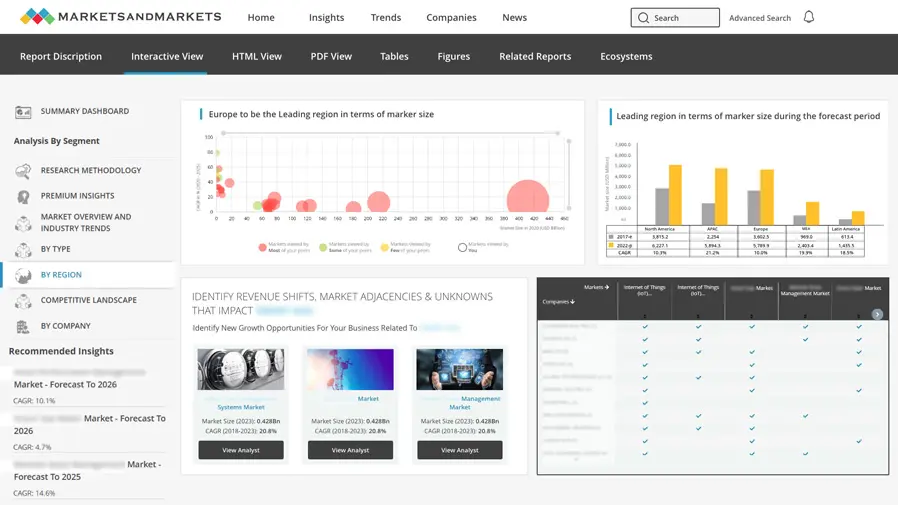
Growth opportunities and latent adjacency in Amine-Based Epoxy Hardeners Market