Asia Pacific Advanced Ceramics Market

Asia Pacific Advanced Ceramics Market by Material (Alumina, Zirconia, Titanate), Application (Monolithic Ceramics, Ceramic Matrix Composites), End-use Industry (Electrical & Electronics, Transportation, Medical, Chemical) - Forecast to 2030




OVERVIEW
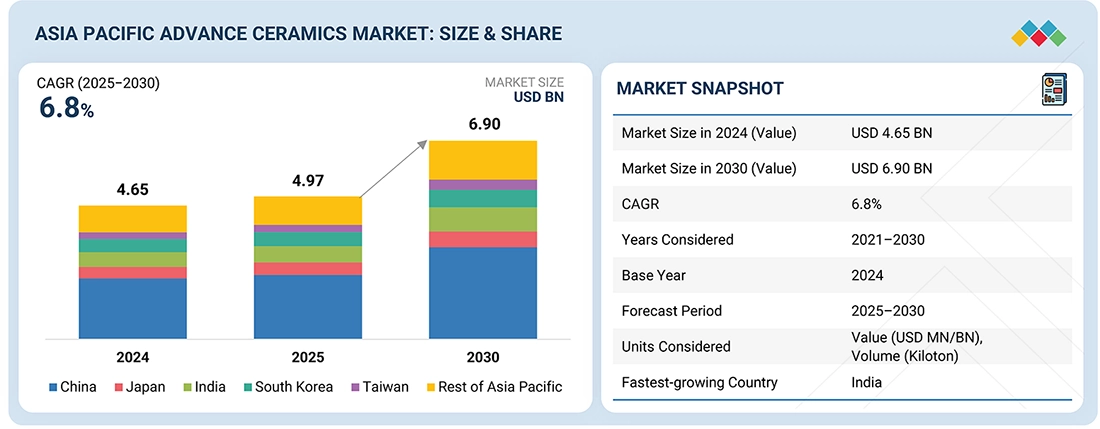
Source: Secondary Research, Interviews with Experts, MarketsandMarkets Analysis
The advanced ceramics market in Asia Pacific is the largest and the most rapidly growing one throughout the world, and the main reasons for this are fast industrialization, and the participation of the countries like China, Japan, South Korea, Taiwan, and India through the setting up of high-tech industries. The market has been using different types of advanced ceramics like alumina, zirconia, silicon nitride, silicon carbide, and aluminum nitride that are known for their superior mechanical strength, thermal stability, wear resistance, and electrical insulation. The electrical and electronics sector is the leading demander of such materials, as it is heavily supported by activities such as large-scale semiconductor fabrication, consumer electronics production, and power electronics manufacturing. The demand is further boosted by the growth of electric vehicles, renewable energy systems, and 5G infrastructure, especially because of the thermal management and insulation applications. The automotive sector is also among the major contributors, and advanced ceramics are being used in the production of sensors, power modules, braking systems, and engine components, among others. The healthcare industry is, on the whole, witnessing the gradually increasing demand for bioceramics in orthopedic and dental implants, which is the main factor behind the growth of the market. On the other hand, there are also some negative factors like high production costs, energy-intensive processing, stringent quality requirements, and raw material price volatility that the industry needs to face. However, overall, the market for advanced ceramics in the Asia Pacific region will continue to grow supported by technological developments, supply chain integration, and the rising demand for reliable materials.
KEY TAKEAWAYS
-
BY COUNTRYIndia accounted for the fastest growing country of the Asia Pacific advanced ceramics market with a CAGR of 8.5% during the forecast period.
-
BY MATERIALBy material, alumina is expected to register the highest CAGR during the forecast period.
-
BY APPLICATIONBy application, ceramic coatings segment is estimated to be the fastest growing during the forecast period.
-
BY END-USE INDUSTRYBy end-usse industry, medical segment is expected to be the fastest growing during the forecast period.
-
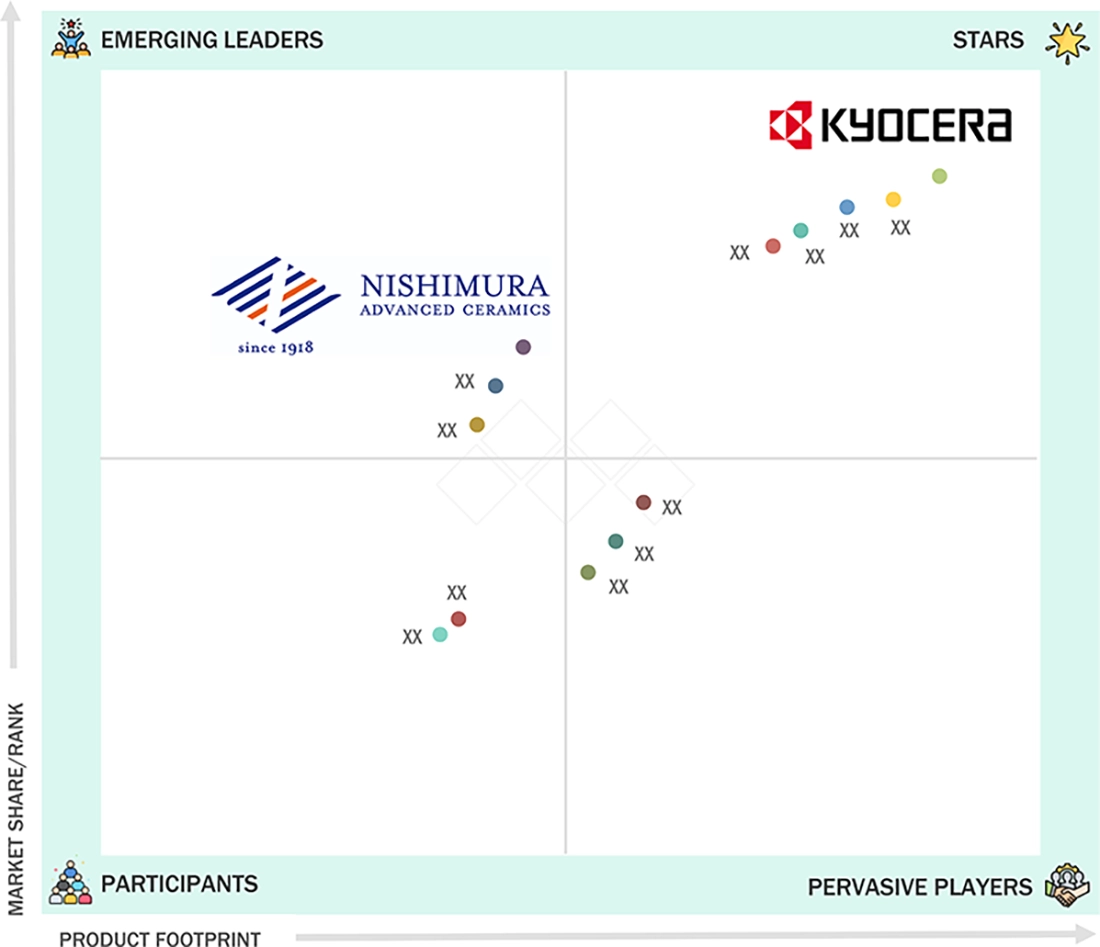
COMPETITIVE LANDSCAPE- KEY PLAYERSKYOCERA Corporation,NGK Insulators Ltd., and AGC Inc. were identified as some star players in the Asia Pacific advanced ceramics market, given their strong market share and product footprint
-
COMPETITIVE LANDSCAPE- STARTUPSNishimura Advanced Ceramics Co., Ltd., Fujimi Incorporated and TOKUYAMA CORPORATION among others have distinguished themselves among startups and SMEs by securing strong footholds in specialized niche areas, underscoring their potential as responsive companies
The Asia Pacific market for advanced ceramics has become the largest and most rapidly developing market in the world. This is primarily due to the strong manufacturing capabilities in China, Japan, South Korea, Taiwan, and India. The market is mainly composed of sectors that use these materials, such as electrical and electronics, particularly semiconductors, consumer electronics, and power devices, which are of high demand. Among various advanced ceramics, alumina, zirconia, silicon nitride, and silicon carbide are the most popular ones because of their superior thermal stability, electrical insulation and mechanical strength. The electric vehicle, renewable energy and 5G infrastructure industries are contributing to the increase in demand even more. Government backing for high-tech manufacturing and the proliferation of regional R&D capabilities are forces that propel the market ahead, although the latter faces obstacles like high production costs and energy-intensive processing.
TRENDS & DISRUPTIONS IMPACTING CUSTOMERS' CUSTOMERS
The market for advanced ceramics in the Asia-Pacific region is currently experiencing several major trends. One of the most notable is the growing use of ceramics in the semiconductor industry, electric vehicles, and renewable energy systems. The demand for ceramics in these applications is driven by their excellent thermal stability and electrical insulation properties. The trend towards the miniaturization of electronic components, along with the increasing need for high-performance substrates, is the main driver of innovation in ceramic materials such as alumina and aluminum nitride. Besides, additive manufacturing and advanced sintering technologies are making it easier for designers to make changes to their products and are also speeding up production times. However, the market is simultaneously facing disruptions from unpredictable raw material prices, high energy costs, and supply chain adjustments, especially in the manufacturing sector, which heavily relies on China. In addition, stricter environmental regulations and rapid technological advances favoring the use of alternative materials have posed challenges for regional ceramic manufacturers.
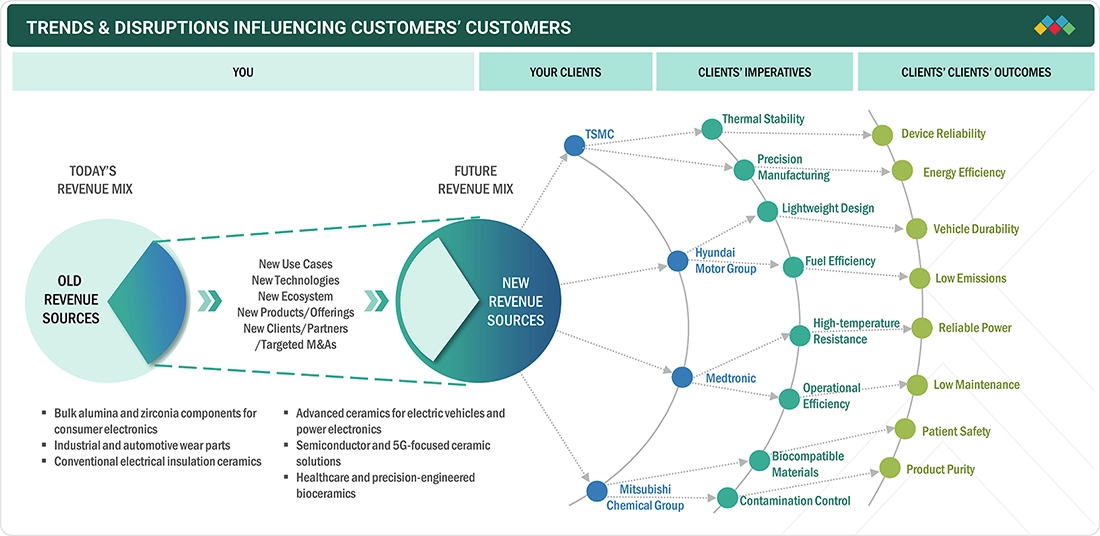
Source: Secondary Research, Interviews with Experts, MarketsandMarkets Analysis
MARKET DYNAMICS

Level
-
Rapid expansion of electronics, semiconductor manufacturing, EV production, and large-scale industrialization in China, Japan, South Korea, and India


Level
-
High production costs, energy-intensive manufacturing processes, and dependence on advanced processing technologies limit adoption, especially in cost-sensitive emerging Asia Pacific economies


Level
-
Growing investments in renewable energy, 5G infrastructure, medical devices, and government-led manufacturing initiatives (such as “Made in China 2025” and “Make in India”)


Level
-
Ensuring consistent quality, securing high-purity raw materials, and managing complex supply chains across diverse Asia Pacific countries

Source: Secondary Research, Interviews with Experts, MarketsandMarkets Analysis
DRIVER – Rapid expansion of electronics, semiconductor manufacturing, EV production, and large-scale industrialization in China, Japan, South Korea, and India
The advanced ceramics market in the Asia Pacific region is driven by a fast-growing electronics industry, semiconductor manufacturing, electric vehicle production, and large-scale industrialization in countries such as China, Japan, South Korea, Taiwan, and India. These sectors require materials that can withstand extreme heat, high voltages, and both mechanical and corrosive pressures; thus, advanced ceramics have become a necessity. The region’s strength in consumer electronics, chipmaking, power electronics, and automotive parts ensures a continuous demand for alumina, zirconia, silicon nitride, and silicon carbide ceramics. In a similar way, government assistance to local factories, increased infrastructure funding, and relentless R&D breakthroughs are factors that not only stimulate adoption but also empower advanced ceramics to become the primary materials in the Asia-Pacific high-growth industrial ecosystem.
RESTRAINT – High production costs, energy-intensive manufacturing processes, and dependence on advanced processing technologies limit adoption, especially in cost-sensitive emerging Asia Pacific economies
The Asia Pacific advanced ceramics market has strong demand but is still constrained by high production costs and energy-intensive manufacturing processes, such as sintering and hot pressing, which are major contributors to production costs. These processes require very precise control, modern equipment, and highly skilled workers, which ultimately increase both capital and operating expenditures. In developing economies in the Asia Pacific region, user cost sensitivity can limit the use of advanced ceramics compared to conventional materials. Small manufacturers are also limited by their reliance on advanced processing technologies and imported high-end equipment. In addition, energy prices that fluctuate and costs associated with environmental compliance are adding financial pressure, which results in a slowdown of the capacity expansion as well as limiting the penetration of the products into the price-competitive applications throughout the region.
OPPORTUNITY – Growing investments in renewable energy, 5G infrastructure, medical devices, and government-led manufacturing initiatives (such as “Made in China 2025” and “Make in India”
The use of advanced ceramics for thermal management, insulation, and durability is becoming increasingly common in prefabricated components, solar systems, power electronics, and wind turbines. Government-led initiatives, such as “Made in China 2025,” “Make in India,” and semiconductor self-sufficiency programs, are having a positive impact on local manufacturing and are encouraging material innovations. Additionally, the demand for bioceramics in implants is rapidly increasing, which is one of the drivers of the expansion of healthcare facilities. Thus, these factors together will create long-term opportunities for capacity expansion, localization, and technology upgrades.
CHALLENGE – Ensuring consistent quality, securing high-purity raw materials, and managing complex supply chains across diverse Asia Pacific countries
The advanced ceramics market in the Asia Pacific region faces several major challenges, primarily in quality control, the supply of high-purity raw materials, and the handling of complex, global supply chains. Advanced ceramics undergo strict quality control, especially in electronics and medical applications, making process control very important. The performance and yields can be severely affected by raw material purity and logistics disruptions. Regulatory standards, environmental norms, and skill gaps vary from one Asia-Pacific country to another, and manufacturers must adapt to them. Global companies and low-cost regional producers provide intense competition, making it even harder to maintain margins; hence, operational efficiency and technology-based differentiation become the main factors of competitiveness in the long run.
ASIA PACIFIC ADVANCED CERAMICS MARKET: COMMERCIAL USE CASES ACROSS INDUSTRIES
| COMPANY | USE CASE DESCRIPTION | BENEFITS |
|---|---|---|
 |
Development and large-scale manufacturing of advanced ceramic substrates, electronic components, cutting tools, and thermal management solutions for semiconductors, consumer electronics, EV power modules, and telecommunications across Asia Pacific | Improved heat dissipation | High electrical insulation | Enhanced durability | Increased device reliability | Improved performance of high-density electronic and power systems |
 |
Production of advanced ceramic insulators, substrates, and functional ceramics for power transmission, industrial equipment, automotive electronics, and renewable energy systems in the Asia Pacific markets | Superior electrical insulation | High thermal stability | Extended service life | Reduced power losses | Improved reliability of energy and industrial infrastructure |
 |
Integration of advanced ceramic materials into MLCCs, sensors, RF components, and electronic modules for smartphones, EVs, IoT devices, and industrial automation across Asia Pacific | Miniaturization of electronic components | Higher signal stability | Improved energy efficiency | Reduced electromagnetic interference | Enhanced performance of compact electronics |
 |
Manufacturing of technical ceramics for semiconductor fabrication equipment, industrial machinery, chemical processing, and medical devices across China, Japan, South Korea, and Southeast Asia | Extended component lifespan | Superior wear and chemical resistance | Reduced downtime | Improved process reliability | Lower total cost of ownership for industrial users |
Logos and trademarks shown above are the property of their respective owners. Their use here is for informational and illustrative purposes only.
MARKET ECOSYSTEM
The ecosystem of the advanced ceramics market in the Asia Pacific consists of raw material suppliers, manufacturers of ceramic components, distributors, and end-use industries, which are quite varied. Raw materials like alumina, zirconia, and silicon carbide are sourced from China, Australia, and Japan, which supports the low cost of producing these materials. Advanced ceramic component manufacturers are mainly located in Japan, China, South Korea, Taiwan, and India, where they process, shape, and sinter the materials. Distributors and system integrators provide regional supply and product customization. The major end-use industries are electrical and electronics, semiconductors, automotive and electric vehicles, industrial machinery, energy, and healthcare. The ecosystem's efficiency and competitiveness across Asia Pacific are greatly contributed to by strong vertical integration, localized supply chains, and government-backed manufacturing initiatives.
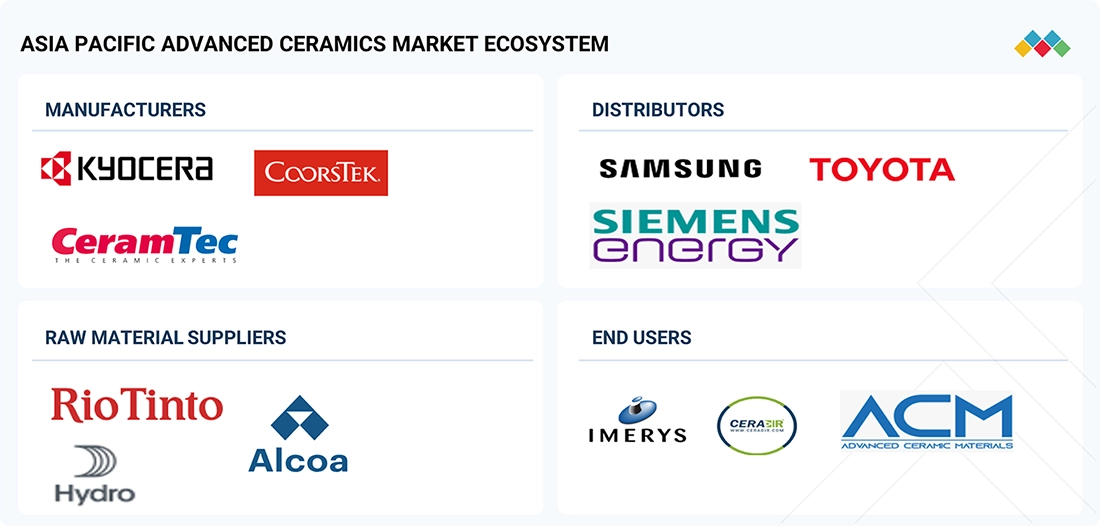
Logos and trademarks shown above are the property of their respective owners. Their use here is for informational and illustrative purposes only.
MARKET SEGMENTS
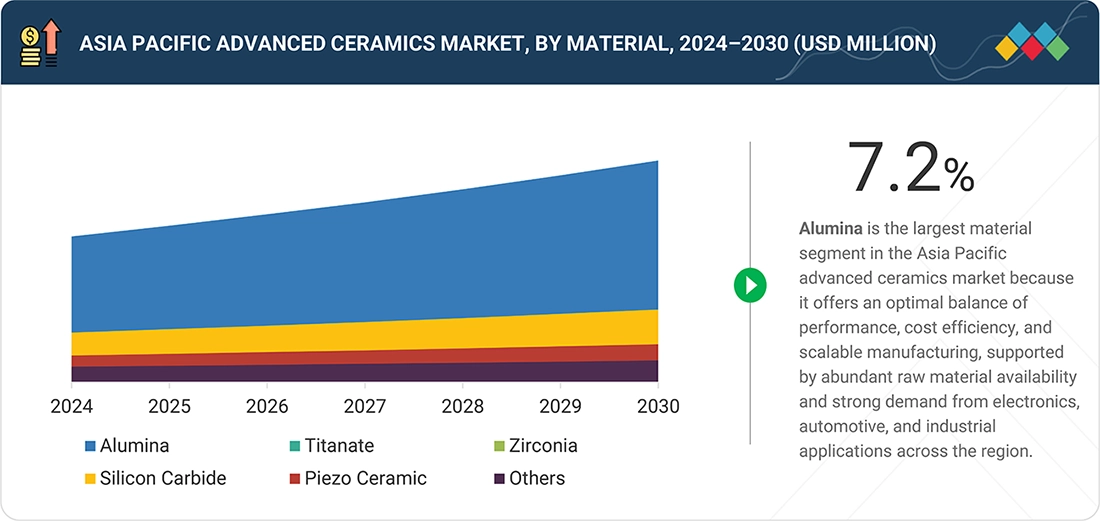
Source: Secondary Research, Interviews with Experts, MarketsandMarkets Analysis
Asia Pacific Advanced Ceramics Market, by Material
Alumina has been and remains the key material group with the largest share of Asia Pacific's advanced ceramics market, mainly because it offers the right blend of performance, availability, and cost-effectiveness, which is characteristic of the region's high-volume manufacturing environment. It finds application in electronics, automobiles, industrial machinery, and even medical applications due to its exceptional properties, such as electrical insulation, thermal stability, resistance to wear, and chemical resistance. The region is particularly blessed with alumina in its raw state, sourced mainly from China and Australia, and with advanced processing techniques that enable large-scale production with consistent quality. Non-oxide ceramics are far behind in terms of cost and ease of manufacture, which is one reason alumina is widely used in various industries in the area.
Asia Pacific Advanced Ceramics Market, by Application
Monolithic ceramics are leading the application segment for the Asia Pacific advanced ceramics market, as they are already widely used in the manufacturing of mass-produced components for electronics, automotive, and industrial machinery. These ceramics exhibit high mechanical strength, thermal stability, wear resistance, and electrical insulation in a single homogeneous structure. The strong Asia Pacific manufacturing base is a major factor in the choice of production scales, which can be achieved using well-established processes such as pressing and sintering. Besides, monolithic ceramics are more economical than composite ceramics, making them suitable for markets with low price elasticity that still meet performance requirements; thus, their widespread use in regional industries is justified.
Asia Pacific Advanced Ceramics Market, by End-use Industry
The electrical and electronics sector accounts for the largest end-use industry of advanced ceramics in the Asia Pacific region, as the region is the electronics and semiconductor manufacturing hub globally. The mentioned countries are China, Japan, South Korea, Taiwan, and India; they are the major manufacturers of semiconductors, consumer electronics, and power devices, which are the sectors that rely most on advanced ceramic substrates, insulators, and thermal management components. Advanced ceramics grant excellent dielectric strength, thermal conductivity, and high-temperature stability, which are the necessary attributes for miniaturized and highpower electronic systems. Therefore, the quick growth of electrification of vehicles, 5G deployment, and data centers has been feeding the demand in this end-use sector.
REGION
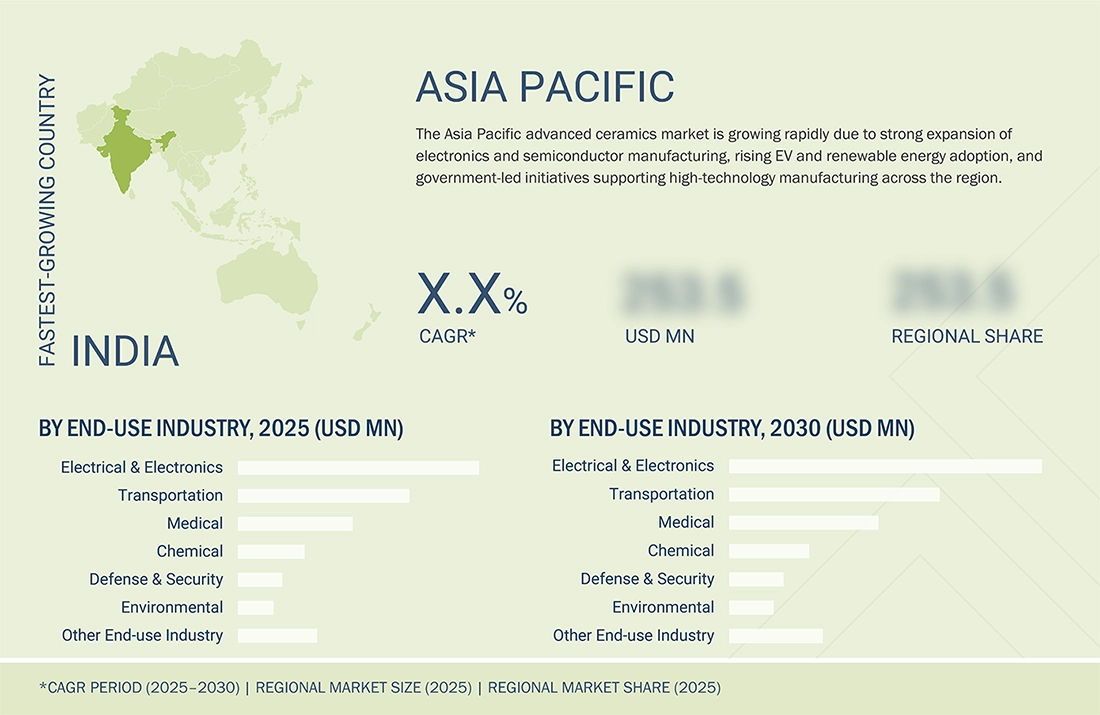
India is projected to be the fastest-growing country in the Asia Pacific advanced ceramics market during the forecast period.
The growth of the Asia Pacific advanced ceramics market is led by India, which is the fastest-growing country in this regard, driven by rapid growth in the electronics manufacturing, electric vehicle, and renewable energy sectors, as well as in healthcare infrastructure. Among the government initiatives contributing to the birth of a new era in India’s advanced materials and electronic components production are the Make in India, Production-Linked Incentive (PLI) schemes, and semiconductor fabrication programs. The rising investments in power electronics for electric vehicles, industrial automation, and military applications are driving demand for high-quality ceramics such as alumina and zirconia. Also, the production of medical devices and hospital and clinic conveniences will, directly or indirectly, lead to more bioceramics being used. India, with its low manufacturing costs, a large skilled workforce, and increasing R&D activity, is more than ever positioned as a high-growth market in the Asia Pacific region.
ASIA PACIFIC ADVANCED CERAMICS MARKET: COMPANY EVALUATION MATRIX
KYOCERA Corporation (Star) is a top player in the advanced ceramics market in Asia Pacific, as its extensive range of high-performance ceramic materials and continuous innovations in the electronic, automotive, aerospace, and industrial applications have made it a favorite. Nishimura Advanced Ceramics Co., Ltd. is an emerging leader for the Asia Pacific advanced ceramics market due to its growing product portfolio and geographical presence across the Asia Pacific and other regions.
Source: Secondary Research, Interviews with Experts, MarketsandMarkets Analysis
KEY MARKET PLAYERS
- KYOCERA Corporation (Japan)
- CeramTec GmbH (Germany)
- CoorsTek Inc. (US)
- Morgan Advanced Materials (UK)
- 3M (US)
- MARUWA Co., Ltd. (Japan)
- NGK INSULATORS, LTD.(Japan)
- Saint-Gobain Performance Ceramics & Refractories (France)
- Paul Rauschert GmbH & Co. KG. (Germany)
- AGC Inc. (Japan)
MARKET SCOPE
| REPORT METRIC | DETAILS |
|---|---|
| Market Size in 2024 (Value) | USD 4.65 Billion |
| Market Size in 2030 (Value) | USD 6.90 Billion |
| Growth Rate | CAGR of 6.8% from 2025 to 2030 |
| Years Considered | 2021–2030 |
| Base Year | 2024 |
| Forecast Period | 2025–2030 |
| Units Considered | Value (USD Million/Billion), Volume (Kiloton) |
| Report Coverage | Revenue Forecast, Company Ranking, Competitive Landscape, Growth Factors, and Trends |
| Segments Covered |
|
| Countries Covered | China, Japan, India, South Korea, Taiwan, Rest of Asia Pacific |
WHAT IS IN IT FOR YOU: ASIA PACIFIC ADVANCED CERAMICS MARKET REPORT CONTENT GUIDE
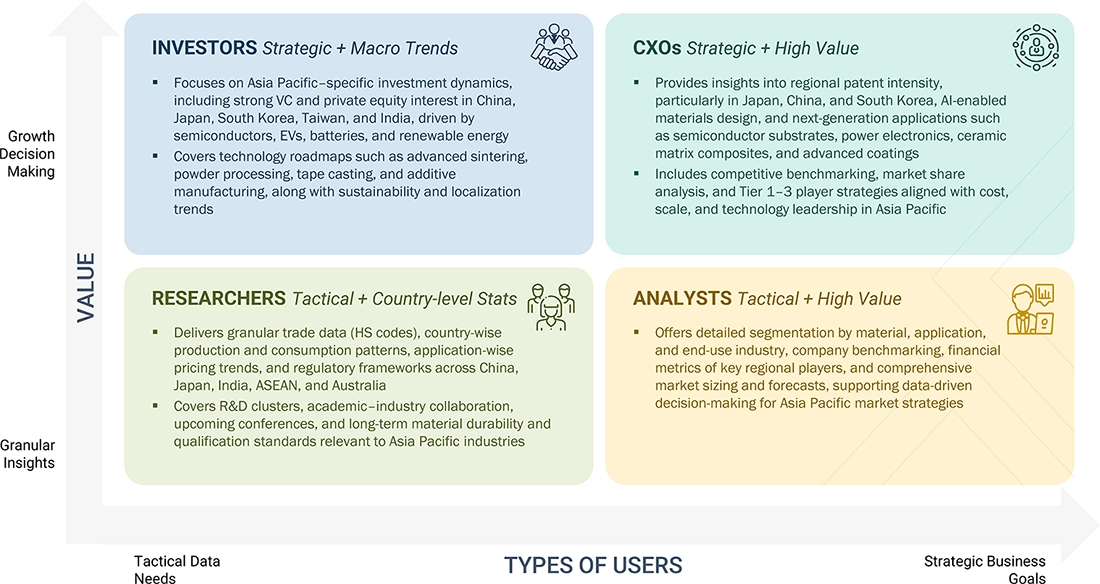
DELIVERED CUSTOMIZATIONS
We have successfully delivered the following deep-dive customizations:
| CLIENT REQUEST | CUSTOMIZATION DELIVERED | VALUE ADDS |
|---|---|---|
| Country-level Breakdown | Provides detailed country-specific insights for major Asia Pacific markets, including China, Japan, South Korea, India, Taiwan, and Southeast Asia, covering demand distribution across electronics, semiconductors, automotive, EVs, medical devices, energy, and industrial manufacturing. Covers installed manufacturing capacities, local supply chain depth, availability of alumina, zirconia, silicon carbide, and silicon nitride, import–export flows, OEM presence, domestic fabrication strengths, and government policies such as Made in China 2025, PLI (India), and semiconductor self-reliance programs |
|
| Application-specific Deep Dive | Offers segmentation of monolithic ceramics, ceramic coatings, ceramic matrix composites (CMCs), and functional ceramics across key applications, including electronic substrates, semiconductor equipment, power electronics, EV components, sensors, fuel cells, medical implants, industrial machinery, and renewable energy systems. Includes performance benchmarking, process compatibility, thermal/mechanical property analysis, and real-world adoption trends across Asia Pacific manufacturing ecosystems |
|
| Material-based Customization | Comparative assessment of alumina, zirconia, silicon carbide, silicon nitride, aluminum nitride, and bioceramics across performance metrics, cost structures, processing technologies, scalability, and end-use suitability in Asia Pacific. Includes analysis of material substitution trends, local raw material availability, processing maturity, and lifecycle performance under APAC operating conditions |
|
| End-use Industry Customization | Breakdown of consumption patterns across electrical & electronics, semiconductors, automotive & EVs, energy, medical devices, industrial equipment, and aerospace & defense, with Asia Pacific-specific demand drivers, investment trends, technology adoption, and procurement behavior. Includes mapping of key end-use clusters, local OEM ecosystems, and regional standards and certification requirements |
|
RECENT DEVELOPMENTS
- June 2024 : KYOCERA Corporation opened a new production facility at the Minami Isahaya Industrial Park in Isahaya City, Nagasaki Prefecture. The company opened this factory to produce fine ceramic components for semiconductor-related applications and packages. This helped the company to strengthen its manufacturing capacity to meet the rising market demand for its products.
- May 2024 : Morgan Advanced Materials and Penn State University have signed a five-year Memorandum of Understanding (MOU) to drive research and development in silicon carbide (SiC) crystal growth in the semiconductor industry. This collaboration is part of a multimillion-dollar initiative that highlights both organizations' commitment to advancing innovation in semiconductor materials.
- April 2024 : KYOCERA Corporation merged its Shiga Yohkaichi Plant and Shiga Gamo Plant to form the newly named "Shiga Higashiomi Plant" in order to improve operational efficiency. The plant produces fine ceramic components, semiconductor components, electronic components, industrial tools, and medical products.
- May 2022 : CeramTec GmbH developed a new product called AIN HP. It is a high-performance substrate made of aluminum nitride. The newly launched AIN HP substrate offers 40% more flexural strength than the previous generation of AIN substrates.
Table of Contents
 Exclusive indicates content/data unique to MarketsandMarkets and not available with any competitors.
Methodology
The study involved four major activities for estimating the current size of the Asia Pacific Advanced Ceramics market. Exhaustive secondary research was conducted to collect information on the market, the peer product market, and the parent product group market. The next step was to validate these findings, assumptions, and sizes with the industry experts across the value chain of advanced ceramics through primary research. Both the top-down and bottom-up approaches were employed to estimate the overall size of the Asia Pacific Advanced Ceramics Market. After that, market breakdown and data triangulation procedures were used to determine the size of different segments and sub-segments of the market.
Secondary Research
In the secondary research process, various secondary sources such as Hoovers, Factiva, Bloomberg BusinessWeek, and Dun & Bradstreet were referred, to identify and collect information for this study on the Asia Pacific Advanced Ceramics Market. These secondary sources included annual reports, press releases & investor presentations of companies; white papers; certified publications; articles by recognized authors; regulatory bodies, trade directories, and databases.
Primary Research
The Asia Pacific Advanced Ceramics Market comprises several stakeholders in the supply chain, which include raw material suppliers, distributors, end-product manufacturers, buyers, and regulatory organizations. Various primary sources from the supply and demand sides of the markets have been interviewed to obtain qualitative and quantitative information. The primary participants from the demand side include key opinion leaders, executives, vice presidents, and CEOs of companies in the Asia Pacific Advanced Ceramics Market. Primary sources from the supply side include associations and institutions involved in the Asia Pacific Advanced Ceramics Market, key opinion leaders, and processing players.
Market Size Estimation
The bottom-up and top-down approaches have been used to estimate the Asia Pacific Advanced Ceramics Market by material, application, end-use industry, and region. The research methodology used to calculate the market size includes the following steps:
- The key players in the industry and markets were identified through extensive secondary research.
- In terms of value, the industry’s supply chain and market size were determined through primary and secondary research processes.
- All percentage shares, splits, and breakdowns were determined using secondary sources and verified through primary sources.
- All possible parameters that affect the markets covered in this research study were accounted for, viewed in extensive detail, verified through primary research, and analyzed to obtain the final quantitative and qualitative data.
- The research included studying reports, reviews, and newsletters of top market players and extensive interviews with leaders such as directors and marketing executives to obtain opinions.
Data Triangulation
After arriving at the overall size of the Asia Pacific Advanced Ceramics Market from the estimation process explained above, the total market was split into several segments and sub-segments. The data triangulation and market breakdown procedures were employed, wherever applicable, to complete the overall market engineering process and arrive at the exact statistics for all segments and subsegments. The data was triangulated by studying various factors and trends from both the demand and supply sides. Along with this, the market size was validated using both the top-down and bottom-up approaches.
Market Definition
Advanced ceramics are a group of engineered ceramic materials with high strength, thermal resistance, electrical conductivity, and chemical stability. They are generally manufactured using advanced processing methods and are intended for high-performance applications in the aerospace, automotive, electronics, healthcare, and defense industries. Advanced ceramics comprise alumina, zirconia, and silicon carbide, which are applied in electronic substrates, medical equipment, cutting tools, and armor systems. The Advanced Ceramics Market is fueled by continuous technological improvements, miniaturization needs, and the demand for high-performance, long-life materials in hostile environments.
Stakeholders
- Advanced Ceramics Manufacturers
- Raw Material Suppliers
- Regulatory Bodies and Government Agencies
- Distributors and Suppliers
- End-Use Industries
- Associations and Industrial Bodies
- Market Research and Consulting Firms
Report Objectives
- To define, describe, and forecast the size of the Asia Pacific Advanced Ceramics Market in terms of value and volume.
- To provide detailed information regarding the key factors influencing the growth of the Asia Pacific Advanced Ceramics market (drivers, restraints, opportunities, and challenges).
- To forecast the Asia Pacific Advanced Ceramics market size based on material, application, end-use industry, and region.
- To strategically analyze micro markets with respect to individual growth trends, prospects, and contributions to the total Asia Pacific Advanced Ceramics market.
- To analyze the opportunities in the Asia Pacific Advanced Ceramics market for stakeholders and provide details of the competitive landscape for the market leaders.
- To strategically profile leading players and comprehensively analyze their key developments such as new product launches, expansions, and deals in the Asia Pacific Advanced Ceramics Market.
- To strategically profile key players and comprehensively analyze their market shares and core competencies in the Asia Pacific Advanced Ceramics market
- To study the impact of AI/Gen AI on the Asia Pacific Advanced Ceramics market under study, along with the macroeconomic outlook.


Personalize This Research
- Triangulate with your Own Data
- Get Data as per your Format and Definition
- Gain a Deeper Dive on a Specific Application, Geography, Customer or Competitor
- Any level of Personalization
Let Us Help You
- What are the Known and Unknown Adjacencies Impacting the Asia Pacific Advanced Ceramics Market
- What will your New Revenue Sources be?
- Who will be your Top Customer; what will make them switch?
- Defend your Market Share or Win Competitors
- Get a Scorecard for Target Partners

Custom Market Research Services
We Will Customise The Research For You, In Case The Report Listed Above Does Not Meet With Your Requirements
Get 10% Free CustomisationTESTIMONIALS
We at Nissan Chemicals Corporation have been clients of MarketsandMarkets for more than a year now. We recently consulted MarketsandMarkets for a study, the team at MarketsandMarkets was extremely professional and organized. The business insights were very detailed and aligned well with our expectations that really helped us formulate the Business Plans and device new strategies for development themes. MarketsandMarkets offers a unique combination of expertise and dedicated engagement model. Their research findings have helped us in designing our Pricing Strategy which will make it easier for us to predict the future sales and profits for the next ten years. We look forward to working with MarketsandMarkets in the future.
VP of Strategy & New Business Development
Leading Specialty Chemical Company
The MarketsandMarkets Engagement Model, composed of both the Knowledge Store and advisory custom research, has greatly helped us in understanding our markets and making strategic decisions. The Knowledge Store is a fast way to allow everyone in our organization to understand more about most any market they are interested in. The ability to then get custom research done and get answers to specific strategic questions and market insight has been spectacular. The Markets and Markets team feel more like colleagues than vendors and their services have helped us change our culture where statements of things like growth opportunities and competitive position are always backed by industry research.

Rich Gibson,
Director, Corporate Strategy
Milliken & Company,
Leading Industrial Manufacturer of specialty chemical, floor covering, performance and protective textile materials, and healthcaremilliken.com
MarketsandMarkets is a trusted resource that helps us to better understand markets that are near-adjacencies-whether its technology, value chain or geography. Their Knowledge Store platform provides a dashboard of markets and their characteristics which is easy to use and saves us time.
Adam Shaw,
Market Development and Strategy Manager
AdvanSix Inc. USA,
An American Leader in Chemicalswww.advansix.com
The Knowledge Store from MarketsandMarkets is a valuable tool which has helped my team acquire greater insight in to the end markets that our business serves. This has enabled us to help our company build stronger strategies throughout our planning process.
TOSHIO KINOSHITA
Senior Chif Consultion Research & Consulting Division
Mitsubishi Chemical Research Corporation,
Leading Manufacturer of Chemical Productswww.mitsubishichem-res.co.jp/en/

We recently engaged with MarketsandMarkets for a study, the team not only clearly understood our business objectives but was also extremely professional in the way they handled the entire project. The study was efficiently conducted in a phase-wise manner, and the engagement model furnished us with high-quality business insights that far exceeded our expectations at each phase. We were especially happy that MarketsandMarkets could provide us with both, an English as well as a Japanese version of the study. A special thanks to the Analyst Team and Client Services Team, whose fluency in Japanese enhanced our comfort level, as we could converse with them in our preferred language.
Independent entrepreneurs
Arrow Precision
We approached MarketsandMarkets for study on Proppants Market, and their work exceeded our expectations. The study conducted was comprehensive and enabled us to view the market through the various dimensions. In addition, the team was extraordinarily responsive throughout the process and resolved our queries on time. I strongly recommend MarketsandMarkets and will certainly consider them for additional market assessments we will need in the future.
Global engineering company, Japan
Deputy Manager,
Strategic Planning OfficeThe high-quality insights shared by the MarketsandMarkets team helped us understand the pharmaceutical plant designers in a specific geography. It also captured the risks that we may likely face in communicating with our potential partners. The study would enable us identify partners, which would impact our future growth.






Growth opportunities and latent adjacency in Asia Pacific Advanced Ceramics Market