Asia Pacific Chromatography Resins Market

Asia Pacific Chromatography Resins Market by Technique (Ion Exchange (Cation, Anion), Affinity, Hydrophobic Interaction, Mixed Mode), Application (Pharmaceutical & Biotechnology), Type (Natural, Synthetic, Inorganic Media), and Country - Forecast to 2030




OVERVIEW
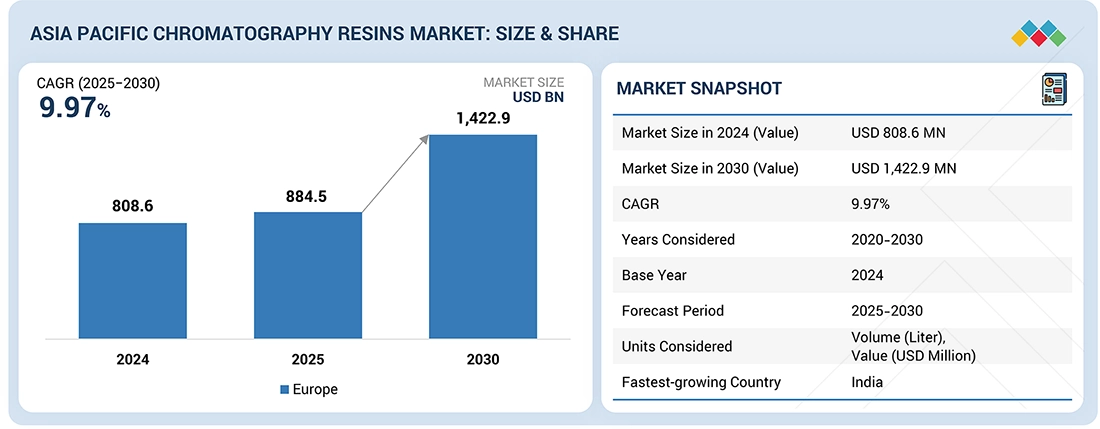
Source: Secondary Research, Interviews with Experts, MarketsandMarkets Analysis
The Asia Pacific chromatography resins market is projected to reach USD 1,422.9 million by 2030, up from USD 884.5 million in 2025, at a CAGR of 9.97% from 2025 to 2030. Chromatography resins are matrices of natural and synthetic polymers (dextran, cellulose, and agarose) or inorganic materials (silica and polyacrylamide). These matrices separate or purify complex mixtures through a set of techniques. The Asia Pacific chromatography resins market is growing rapidly due to increasing biopharmaceutical production, rising demand for high-purity biomolecule separation, technological advancements in resin performance, expanding applications in food, diagnostics, and environmental analysis, and a growing focus on sustainable purification processes.
KEY TAKEAWAYS
-
BY TECHNIQUEAmong chromatography techniques, affinity chromatography is projected to be the second-fastest-growing technique by value, with a CAGR of 10.17% during the forecast period between 2025 and 2030.
-
BY APPLICATIONThe pharmaceutical & biotechnology application is projected to be the fastest-growing application, with a CAGR of 10.10% in value, during the forecast period between 2025 and 2030
-
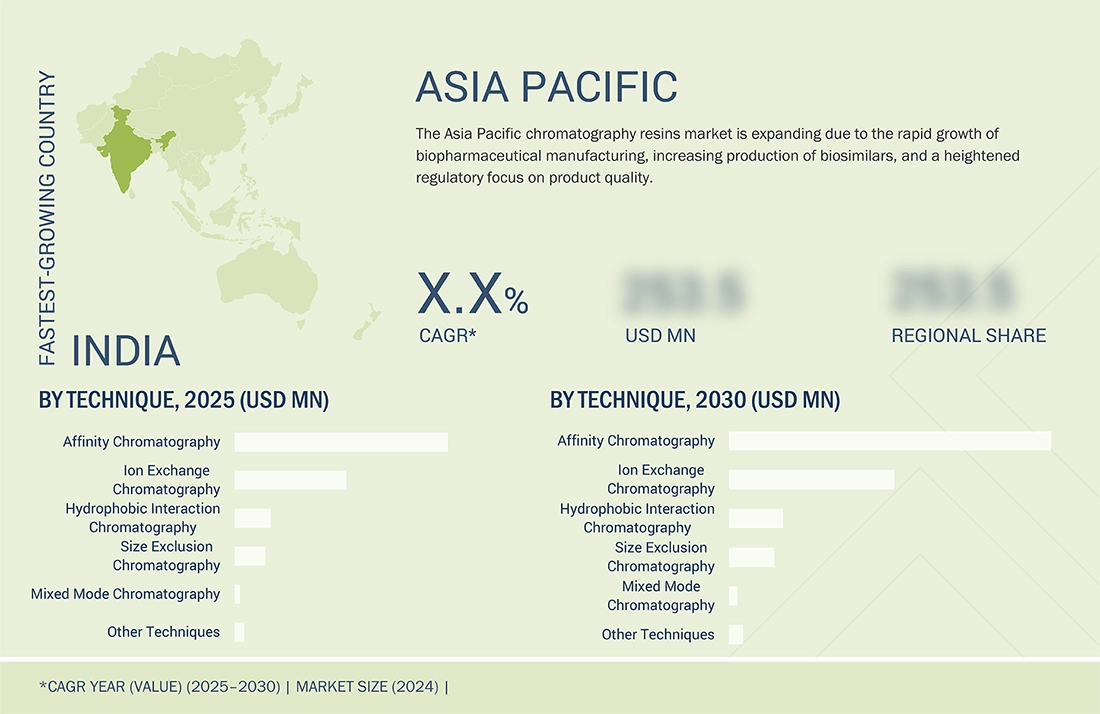
BY COUNTRYIn 2025, Japan dominated the Asia Pacific region's chromatography resins market, accounting for a share of 34.4% by value.
-
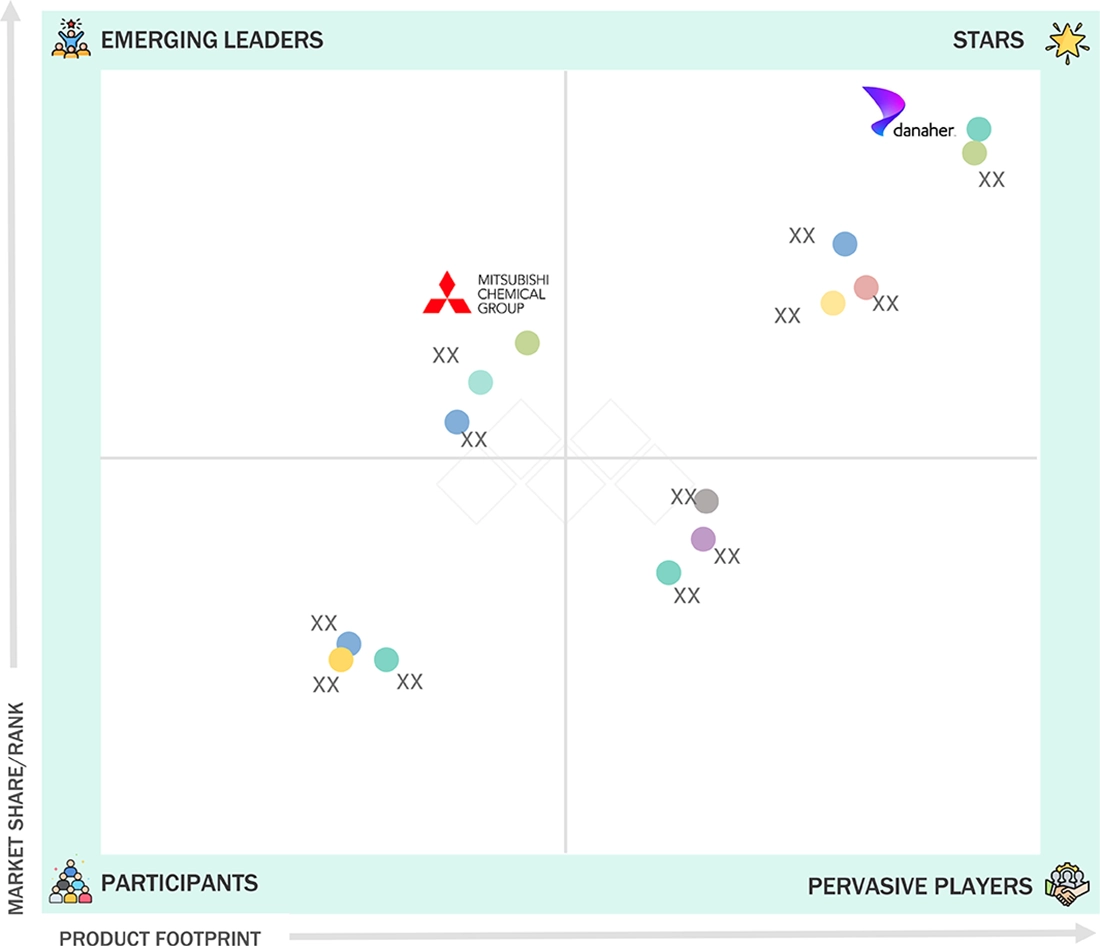
COMPETITIVE LANDSCAPE - KEY PLAYERSDanaher Corporation (Singapore) and Tosoh Corporation (Japan) are identified as key players in the Asia Pacific chromatography resin market. These companies have a strong market presence and extensive product portfolios.
-
COMPETITIVE LANDSCAPE - STARTUPSMitsubishi Chemical Group Corporation, among other emerging players, has carved out a solid position within specialized niche segments, highlighting its potential to evolve into future market leaders.
The Asia Pacific chromatography resins market is growing due to the rising demand for pure biomolecules across pharmaceuticals and biotechnology, food and beverage, and water and environmental analysis. Moreover, the expanding production of products such as monoclonal antibodies, vaccines, recombinant proteins, and biosimilars is boosting the need for purification methods. Techniques such as ion exchange, affinity, and mixed-mode are enhancing selectivity, stability, and overall performance, enabling the effective separation of complex compounds. In addition, stricter regulations on product safety and quality, a growing focus on sustainability, and demand for eco-friendly and recyclable resins are driving innovation and market growth in the Asia-Pacific region, making the market highly attractive.
TRENDS & DISRUPTIONS IMPACTING CUSTOMERS' CUSTOMERS
Clients’ shifting priorities across pharmaceutical, biotechnology, food & beverage, and environmental analysis are transforming market demands in the Asia Pacific region, with a growing focus on efficiency, sustainability, and regulatory compliance driving the adoption of advanced chromatography resins. These evolving needs are reshaping business strategies and will significantly impact the future revenue mix, emphasizing innovative solutions, diversified applications, and expansion into emerging countries.
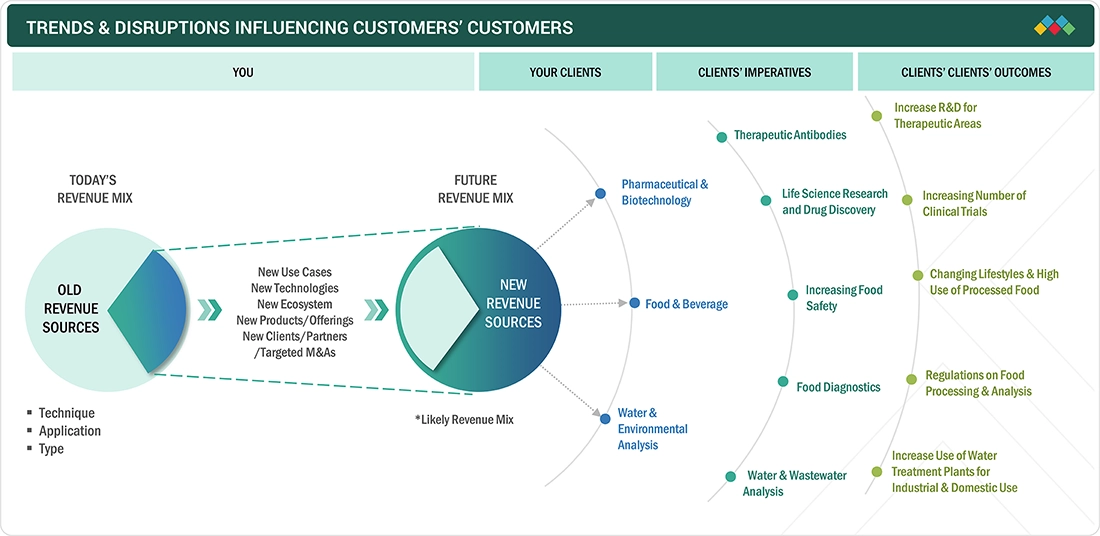
Source: Secondary Research, Interviews with Experts, MarketsandMarkets Analysis
MARKET DYNAMICS

Level
-
Expansion of biopharmaceutical manufacturing

-
Growing adoption of advanced analytical and purification technologies


Level
-
High cost of advanced chromatography resins

-
Technical complexity and operational challenge


Level
-
Growth of CDMOs and biosimilar production

-
Increasing focus on localized biomanufacturing


Level
-
Regulatory diversity across region

-
Dependence on imports for high-end resins

Source: Secondary Research, Interviews with Experts, MarketsandMarkets Analysis
Driver: Expansion of biopharmaceutical manufacturing
One of the major drivers shaping the chromatography resins market is the rapid growth of biopharmaceutical production across the Asia Pacific region. China, India, Japan, and South Korea are the most significant players in investment in biologics, biosimilars, vaccines, and advanced therapies, which will help develop domestic healthcare and sustain exports. Since purification is one of the most important processes in the production of biologics, the increase in commercial manufacturing has directly led to a rise in demand for robust chromatography resins that guarantee product purity.
Restraint: High cost of advanced chromatography resins
The primary restraint in the Asia Pacific market, especially for small and mid-sized manufacturers, remains the high price of advanced chromatography resins. Biologics purification premium resins require a substantial upfront investment and ongoing replacement costs that can easily exceed production budgets in markets where price sensitivity is a major concern. As a result, manufacturers often delay upgrades, extend recycling cycles, or opt for cheaper alternatives, thereby slowing the adoption of high-capacity and specialized resins amid rising quality demands.
Opportunity: Growth of CDMOs and biosimilar production
The rapid expansion of contract development and manufacturing organizations (CDMOs) and biosimilar manufacturing activities in the Asia Pacific region has significantly expanded the chromatography resins market. As global pharmaceutical companies outsource development and production to the region, CDMOs are seeking purification solutions that are flexible, scalable, and validated. The growing number of biosimilar approvals and the establishment of large-scale manufacturing programs are driving demand for robust, reusable chromatography resins, creating opportunities for suppliers to provide tailored solutions and engage in long-term partnerships.
Challenge: Regulatory diversity across region
Regulatory diversity in the Asia Pacific region is a major challenge for chromatography resin suppliers and users. On the one hand, regulatory oversight is increasing, while on the other hand, countries such as China, India, Japan, and Australia have different approval processes and validation requirements. Navigating these complex rules makes compliance, documentation, and time-to-market for new products more difficult, thereby increasing costs. These regulatory differences could delay the adoption of modern resins and complicate global suppliers' regional expansion strategies.
ASIA PACIFIC CHROMATOGRAPHY RESINS MARKET: COMMERCIAL USE CASES ACROSS INDUSTRIES
| COMPANY | USE CASE DESCRIPTION | BENEFITS |
|---|---|---|
 |
Purification of monoclonal antibodies and recombinant proteins in drug manufacturing | High purity and consistency | Critical for therapeutic protein production | Ensures regulatory compliance |
 |
Purification and separation of sweeteners and flavor compounds | Improves product consistency | Ensures safety and quality | Supports efficient processing |
 |
Chromatography resins for heavy metal removal and water purification | Efficient contaminant removal | Scalable process | Improves water quality for industrial use |
Logos and trademarks shown above are the property of their respective owners. Their use here is for informational and illustrative purposes only.
MARKET ECOSYSTEM
The chromatography resins market ecosystem in the Asia Pacific region consists of a network of stakeholders connected to one another, including raw material suppliers, manufacturers, distributors, and end users of the products. Raw material suppliers deliver the essential materials required for resin production, enabling manufacturers to create chromatography resins using specialized techniques. Distributors and suppliers build the bridge between manufacturing companies and end consumers, helping make supply and distribution processes more efficient and thereby increasing operational efficiency and profitability.
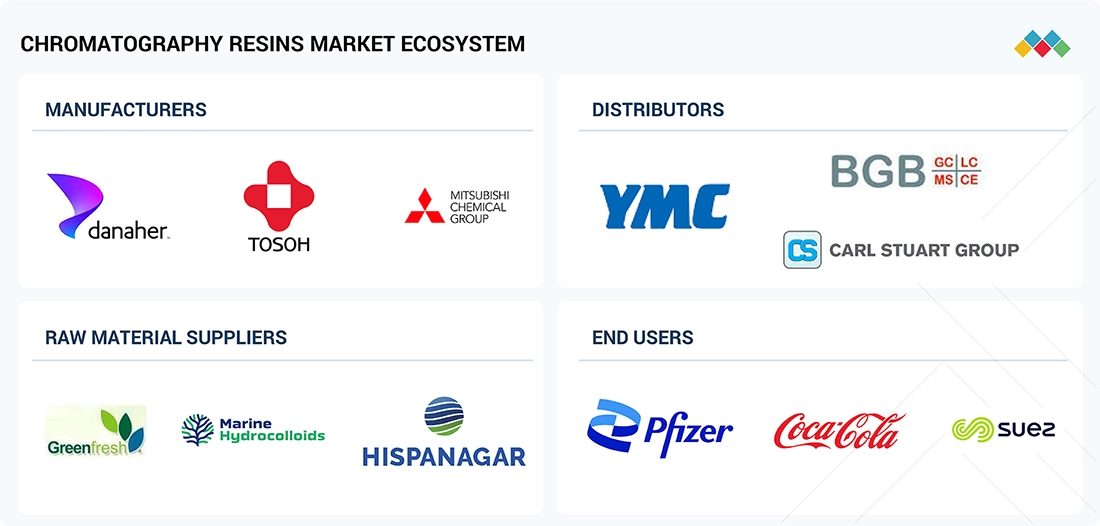
Logos and trademarks shown above are the property of their respective owners. Their use here is for informational and illustrative purposes only.
MARKET SEGMENTS
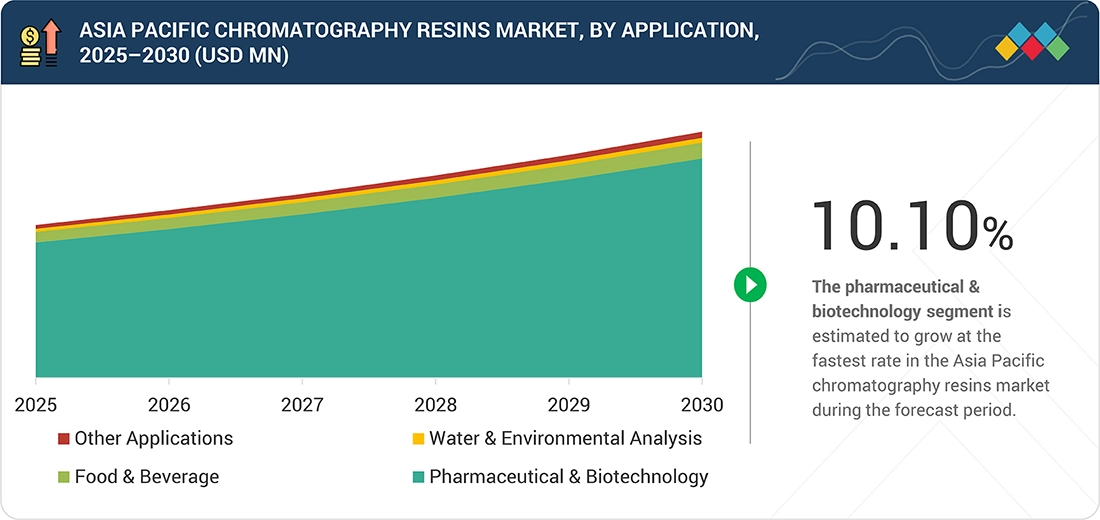
Source: Secondary Research, Interviews with Experts, MarketsandMarkets Analysis
Asia Pacific Chromatography Resin Market, By Technique
In the Asia Pacific chromatography resins market by technique, ion exchange chromatography accounted for the second-largest share due to its widespread use in biomolecule purification, especially in the pharmaceutical and biotechnology sectors. This method is essential for separating charged species, including proteins, peptides, and nucleic acids, based on their ionic properties. Ion exchange chromatography resins offer high capacity, strong selectivity, and high reproducibility, making them a necessity for large-scale production of biopharmaceuticals. The market for this technique is also supported by the growing need for high-purity biologics and vaccines, along with regulations, which in turn is driving market growth.
Asia Pacific Chromatography Resin Market, By Application
The food & beverage application is the second-largest share holder in the Asia Pacific chromatography resins market by application. The main factors are increasing concerns over food safety, quality assurance, and regulatory compliance. Rapid urbanization, together with higher disposable incomes and new consumption patterns, has led to greater demand for processed and packaged foods, which in turn has required more thorough testing to ensure no contaminants, additives, or residues are present. Chromatography resins are also heavily involved in the detection of pesticides, mycotoxins, allergens, and adulterants, as well as in the purification of sweeteners, flavors, and nutraceuticals. The growing demand for compliance and the setting up of stricter regulations regarding food safety in the major economies act as a continuous driver of resin demand in this application sector.
REGION
Japan accounted for largest share in Asia Pacific chromatography resins market in 2024
Japan is expected to dominate the Asia-Pacific chromatography resins market by value in 2024, accounting for 34.4% of the regional market share, primarily due to its fully developed and technologically advanced pharmaceutical and biotechnology sectors. Japan has a high concentration of biopharmaceutical and specialty drugmakers that rely on purification technologies, driving higher resin consumption and higher realized value. Additionally, the country’s commitment to the high-quality standards set by the PMDA, state-of-the-art analytical capabilities, and rapid adoption of new chromatography technologies have helped maintain demand for premium resins in both R&D and commercial production over the years.
ASIA PACIFIC CHROMATOGRAPHY RESINS MARKET: COMPANY EVALUATION MATRIX
In the Asia Pacific chromatography resins market, Danaher Corporation (Star) leads with a strong market presence and a wide product portfolio, driving large-scale adoption across the industry. Mitsubishi Chemical Group (Emerging Leader) is gaining notable momentum in the Asia Pacific chromatography resins market through the introduction of innovative solutions. These enhancements are positioning the company as a key player in the industry.
Source: Secondary Research, Interviews with Experts, MarketsandMarkets Analysis
KEY MARKET PLAYERS
- Danaher Corporation
- Tosoh Corporation
- Mitsubishi Chemical Group
- Bio-Rad Laboratories Inc.
- Thermo Fisher Scientific Inc.
- Purolite
- Avantor, Inc.
- Repligen Corporation
MARKET SCOPE
| REPORT METRIC | DETAILS |
|---|---|
| Market Size Value in 2024 | USD 808.6 MN |
| Revenue Forecast in 2030 | USD 1,422.9 MN |
| Growth Rate | CAGR of 9.97% from 2025-2030 |
| Actual Data | 2020−2030 |
| Base Year | 2024 |
| Forecast Period | 2025−2030 |
| Units Considered | Value (USD Million), Volume (Liter) |
| Report Coverage | Revenue forecast, company ranking, competitive landscape, growth factors, and trends |
| Segments Covered |
|
| Regional Scope | Asia Pacific |
WHAT IS IN IT FOR YOU: ASIA PACIFIC CHROMATOGRAPHY RESINS MARKET REPORT CONTENT GUIDE
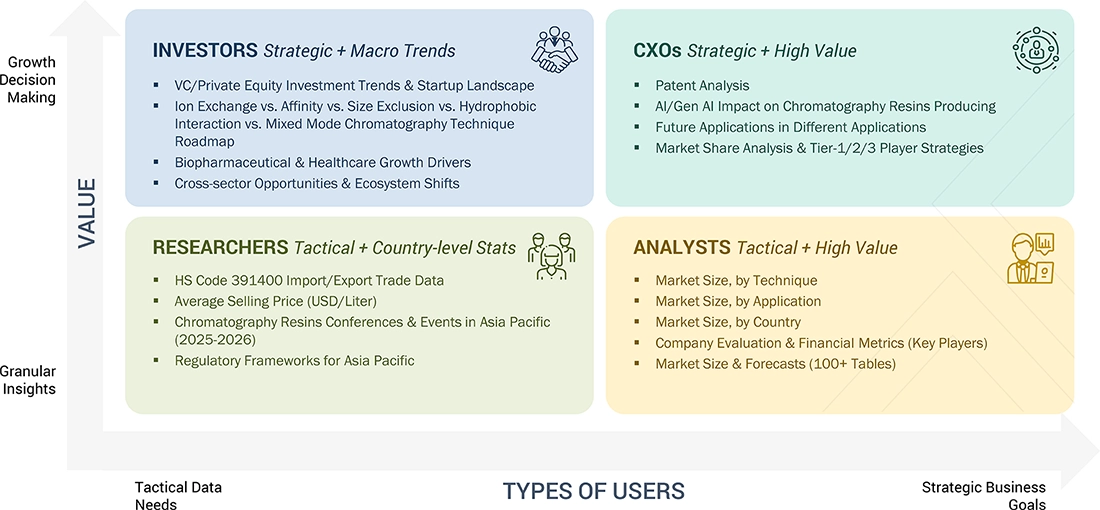
DELIVERED CUSTOMIZATIONS
We have successfully delivered the following deep-dive customizations:
| CLIENT REQUEST | CUSTOMIZATION DELIVERED | VALUE ADDS |
|---|---|---|
| Japan-based Chromatography Resins Manufacturer |
|
|
| China-based Chromatography Resins Manufacturer |
|
|
RECENT DEVELOPMENTS
- August 2022 : Danaher Corporation launched Capto Core 700 resin, a resin for viral vector purification that offers high capacity and selectivity for the production of gene therapies and vaccines.
- September 2021 : Tosoh Corporation launched a new cation exchange resin designed for high-resolution separation of proteins and other biomolecules, supporting advanced bioprocessing workflows.
- March 2021 : Danaher Corporation acquired Precision NanoSystems, a Canadian company specializing in nanomedicine and genetic medicine delivery technologies. The acquisition expanded Danaher’s capabilities in cell and gene therapy solutions, particularly in chromatography resins and nanoparticle delivery systems.
Table of Contents
 Exclusive indicates content/data unique to MarketsandMarkets and not available with any competitors.
Methodology
The study involved four major activities in estimating the market size for the Asia Pacific chromatography resin market. Exhaustive secondary research was done to collect information on the market, the peer market, and the parent market. The next step was to validate these findings, assumptions, and sizing with industry experts across the value chain through primary research. Both top-down and bottom-up approaches were employed to estimate the complete market size. After that, the market breakdown and data triangulation procedures were used to estimate the market size of the segments and subsegments.
Secondary Research
Secondary sources used in this study included annual reports, press releases, and investor presentations of companies; white papers; certified publications; articles from recognized authors; and gold standard & silver standard websites such as Factiva, ICIS, Bloomberg, and others. The findings of this study were verified through primary research by conducting extensive interviews with key officials such as CEOs, VPs, directors, and other executives. The breakdown of profiles of the primary interviewees is illustrated in the figure below:
Primary Research
The Asia Pacific chromatography resin market comprises several stakeholders, such as raw material suppliers, end-product manufacturers, and regulatory organizations in the supply chain. The demand side of this market is characterized by key opinion leaders in various applications for the Asia Pacific chromatography resin market. The supply side is characterized by advancements in technology and diverse application industries. Various primary sources from both the supply and demand sides of the market were interviewed to obtain qualitative and quantitative information.
Market Size Estimation
Both top-down and bottom-up approaches were used to estimate and validate the total size of the Asia Pacific chromatography resin market. These methods were also used extensively to estimate the size of various subsegments in the market. The research methodology used to estimate the market size includes the following:
- The key players in the industry have been identified through extensive secondary research.
- The supply chain of the industry has been determined through primary and secondary research.
- All percentage shares, splits, and breakdowns have been determined using secondary sources and verified through primary sources.
- All possible parameters that affect the markets covered in this research study have been accounted for, viewed in extensive detail, verified through primary research, and analyzed to obtain the final quantitative and qualitative data.
Data Triangulation
After arriving at the overall market size—using the market size estimation processes as explained above—the market was split into several segments and subsegments. To complete the overall market engineering process and arrive at the exact statistics of each market segment and subsegment, data triangulation, and market breakdown procedures were employed, wherever applicable. The data was triangulated by studying various factors and trends from both the demand and supply sides in the Asia Pacific chromatography resin industry.
Market Definition
Chromatography resins are insoluble matrix materials used in chromatography procedures to resolve, purify, or characterize complex mixtures of biological or chemical compounds. Different types of these resins have stationary phases designed to be natural polymers (agarose or cellulose), synthetic polymers, and inorganic media. They interact with target molecules, and this allows their accurate separation and purification by mechanisms that include ion exchange, affinity, hydrophobic interaction, size exclusion, and others. Chromatography resins find extensive use in industries like pharmaceutical industries, biotechnology industries, food & beverage manufacturing industries, environmental testing, and research laboratories. They are of paramount importance in single small-scale manufacturing of biopharmaceutical products, including monoclonal antibodies, vaccines, and recombinant proteins. The chromatography resin market includes areas of production and development of these resins as well as their distribution, which have been motivated by the modernization in the bioseparation technologies, regulatory requirements, and the growing investment in the life sciences and analytical testing.
Stakeholders
- Chromatography Resin Manufacturers
- Chromatography Resin Distributors
- Raw Material Suppliers
- Service Providers
- Packaging Companies
- Government and Research Organizations
Report Objectives
- To define, describe, segment, and forecast the Asia Pacific chromatography resin market by product type, method, application, end user, and region
- To provide detailed information about the major factors (such as drivers, restraints, opportunities, and challenges) influencing the market growth
- To strategically analyze micromarkets with respect to individual growth trends, prospects, and contributions to the overall market
- To analyze market opportunities for stakeholders and provide details of the competitive landscape for key players
- To profile the key players in the Asia Pacific chromatography resin market and comprehensively analyze their core competencies and market shares
- To track and analyze competitive developments, such as product launches, acquisitions, expansions, collaborations, agreements, and partnerships of the leading players in the Asia Pacific chromatography resin market
- To benchmark players within the Asia Pacific chromatography resin market using the ‘Company Evaluation Quadrant’ framework, which analyzes market players based on various parameters, including product portfolio, geographic reach, and market share/rank


Personalize This Research
- Triangulate with your Own Data
- Get Data as per your Format and Definition
- Gain a Deeper Dive on a Specific Application, Geography, Customer or Competitor
- Any level of Personalization
Let Us Help You
- What are the Known and Unknown Adjacencies Impacting the Asia Pacific Chromatography Resins Market
- What will your New Revenue Sources be?
- Who will be your Top Customer; what will make them switch?
- Defend your Market Share or Win Competitors
- Get a Scorecard for Target Partners

Custom Market Research Services
We Will Customise The Research For You, In Case The Report Listed Above Does Not Meet With Your Requirements
Get 10% Free CustomisationTESTIMONIALS
We at Nissan Chemicals Corporation have been clients of MarketsandMarkets for more than a year now. We recently consulted MarketsandMarkets for a study, the team at MarketsandMarkets was extremely professional and organized. The business insights were very detailed and aligned well with our expectations that really helped us formulate the Business Plans and device new strategies for development themes. MarketsandMarkets offers a unique combination of expertise and dedicated engagement model. Their research findings have helped us in designing our Pricing Strategy which will make it easier for us to predict the future sales and profits for the next ten years. We look forward to working with MarketsandMarkets in the future.
VP of Strategy & New Business Development
Leading Specialty Chemical Company
The MarketsandMarkets Engagement Model, composed of both the Knowledge Store and advisory custom research, has greatly helped us in understanding our markets and making strategic decisions. The Knowledge Store is a fast way to allow everyone in our organization to understand more about most any market they are interested in. The ability to then get custom research done and get answers to specific strategic questions and market insight has been spectacular. The Markets and Markets team feel more like colleagues than vendors and their services have helped us change our culture where statements of things like growth opportunities and competitive position are always backed by industry research.

Rich Gibson,
Director, Corporate Strategy
Milliken & Company,
Leading Industrial Manufacturer of specialty chemical, floor covering, performance and protective textile materials, and healthcaremilliken.com
MarketsandMarkets is a trusted resource that helps us to better understand markets that are near-adjacencies-whether its technology, value chain or geography. Their Knowledge Store platform provides a dashboard of markets and their characteristics which is easy to use and saves us time.
Adam Shaw,
Market Development and Strategy Manager
AdvanSix Inc. USA,
An American Leader in Chemicalswww.advansix.com
The Knowledge Store from MarketsandMarkets is a valuable tool which has helped my team acquire greater insight in to the end markets that our business serves. This has enabled us to help our company build stronger strategies throughout our planning process.
TOSHIO KINOSHITA
Senior Chif Consultion Research & Consulting Division
Mitsubishi Chemical Research Corporation,
Leading Manufacturer of Chemical Productswww.mitsubishichem-res.co.jp/en/

We recently engaged with MarketsandMarkets for a study, the team not only clearly understood our business objectives but was also extremely professional in the way they handled the entire project. The study was efficiently conducted in a phase-wise manner, and the engagement model furnished us with high-quality business insights that far exceeded our expectations at each phase. We were especially happy that MarketsandMarkets could provide us with both, an English as well as a Japanese version of the study. A special thanks to the Analyst Team and Client Services Team, whose fluency in Japanese enhanced our comfort level, as we could converse with them in our preferred language.
Independent entrepreneurs
Arrow Precision
We approached MarketsandMarkets for study on Proppants Market, and their work exceeded our expectations. The study conducted was comprehensive and enabled us to view the market through the various dimensions. In addition, the team was extraordinarily responsive throughout the process and resolved our queries on time. I strongly recommend MarketsandMarkets and will certainly consider them for additional market assessments we will need in the future.
Global engineering company, Japan
Deputy Manager,
Strategic Planning OfficeThe high-quality insights shared by the MarketsandMarkets team helped us understand the pharmaceutical plant designers in a specific geography. It also captured the risks that we may likely face in communicating with our potential partners. The study would enable us identify partners, which would impact our future growth.






Growth opportunities and latent adjacency in Asia Pacific Chromatography Resins Market