Asia Pacific Core Material Market

Asia Pacific Core Material Market by Type (Foam, Balsa, and Honeycomb), End-Use Industry (Wind Energy, Marine, Aerospace & Defense, Automotive & Transportation, Construction & Industrial), and Country - Forecast To 2030




OVERVIEW
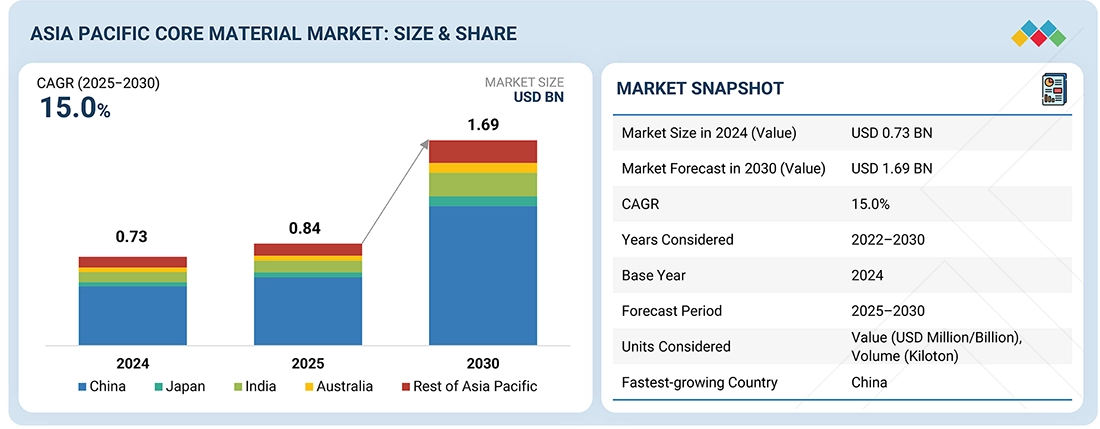
Source: Secondary Research, Interviews with Experts, MarketsandMarkets Analysis
The Asia Pacific core material market is projected to grow from USD 0.84 billion in 2025 to USD 1.69 billion by 2030, at a CAGR of 15.0%. The major reason for the Asia Pacific core materials market growth is expanding wind energy generation, which is followed by the growing industrial and infrastructure developments. China, India, Japan, and South Korea are expanding their respective production volumes for wind turbine components, which include requiring large, light, and strong wind turbine blades made from PET core materials, PVC core materials, and foam core materials. The rising demand within the automotive, transport, and construction industries drives demand for light core materials.
KEY TAKEAWAYS
-
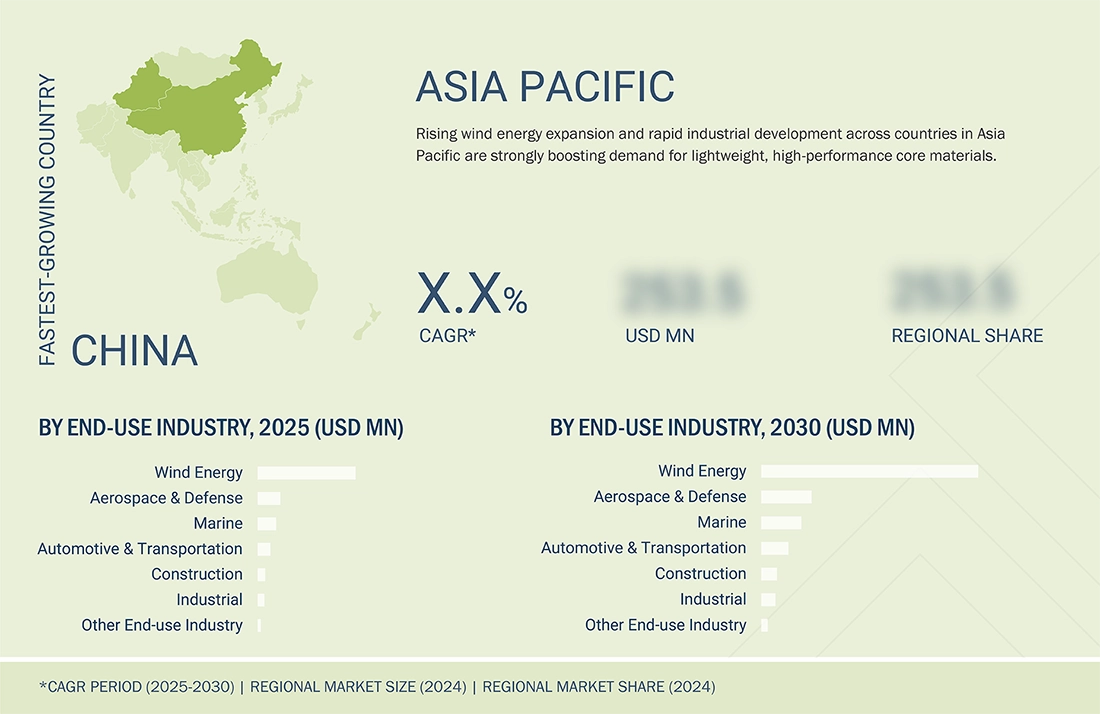
By CountryChina is projected to register the highest CAGR of 15.4% during the forecast period.
-
By TypeBy type, the foam type is projected to register the highest CAGR of 15.5% during forecast period.
-
By End-use IndustryBy end-use industry, the wind energy segment is estimated to dominate the market with a market share of 57.7% in 2025.
-
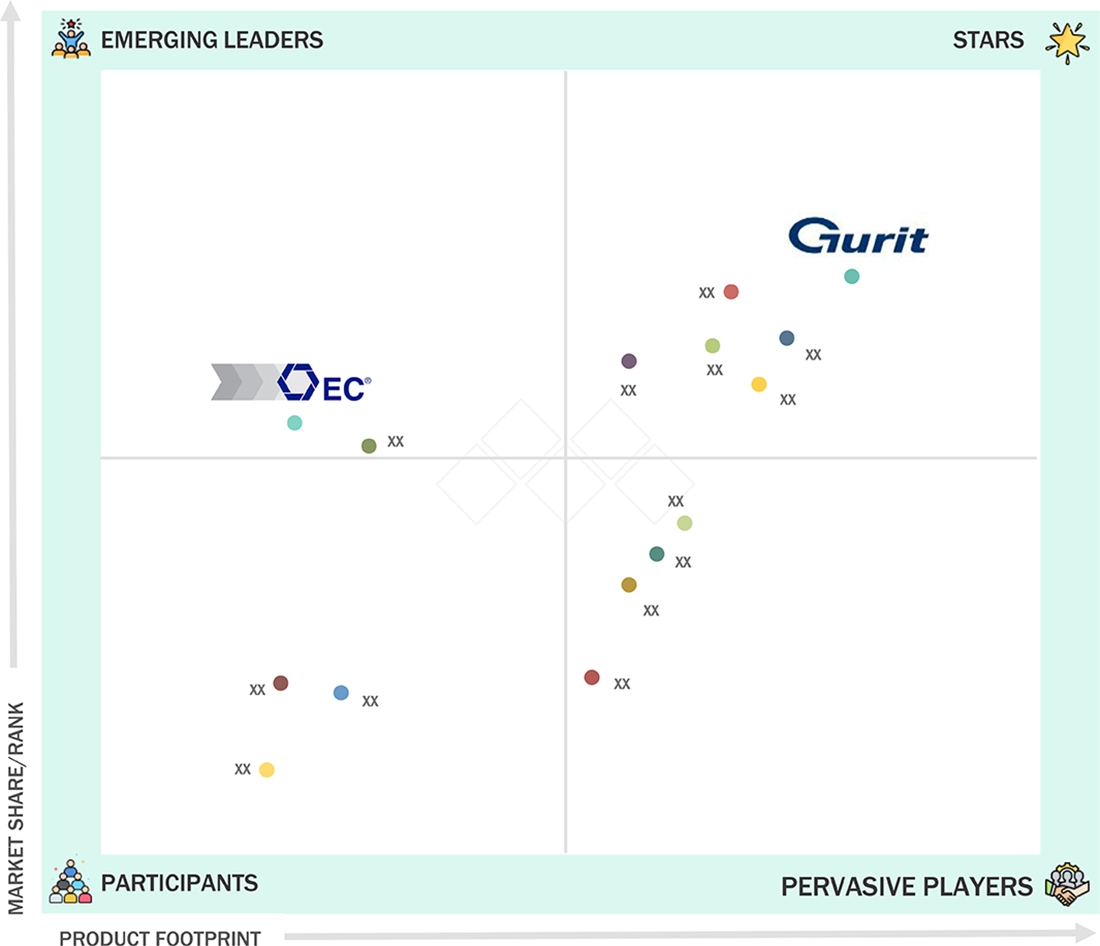
Competitive Landscape - Key PlayersGurit Holding AG, Changzhou Tiansheng New Materials Co. Ltd., Toray Industries, Inc., and Showa Aircraft Industry Co., Ltd, were identified as some of the star players in the Asia Pacific core materials market, given their strong market share and product footprint.
-
Competitive Landscape - Startups/SMEsNanoFract and steptics, among others, have distinguished themselves among startups and SMEs by securing strong footholds in specialized niche areas, underscoring their potential as emerging market leaders.
The rapid urbanization and massive infrastructure projects in Asia Pacific are contributing to the demand for core materials. To reduce weight, improve toughness, and increase energy efficiency, construction panels, modular buildings, transportation structures, and industrial equipment are progressively using PET, PVC, PE, EVA, and balsa cores. The countries of China, India, Japan, and the Southeast Asian region are investing heavily into office spaces, metro rail systems, and factory constructions. This altogether leads to a high demand for lightweight, high-performance core materials. Thus, the continuous infrastructural growth is the main factor that boosts the core materials market in the region.
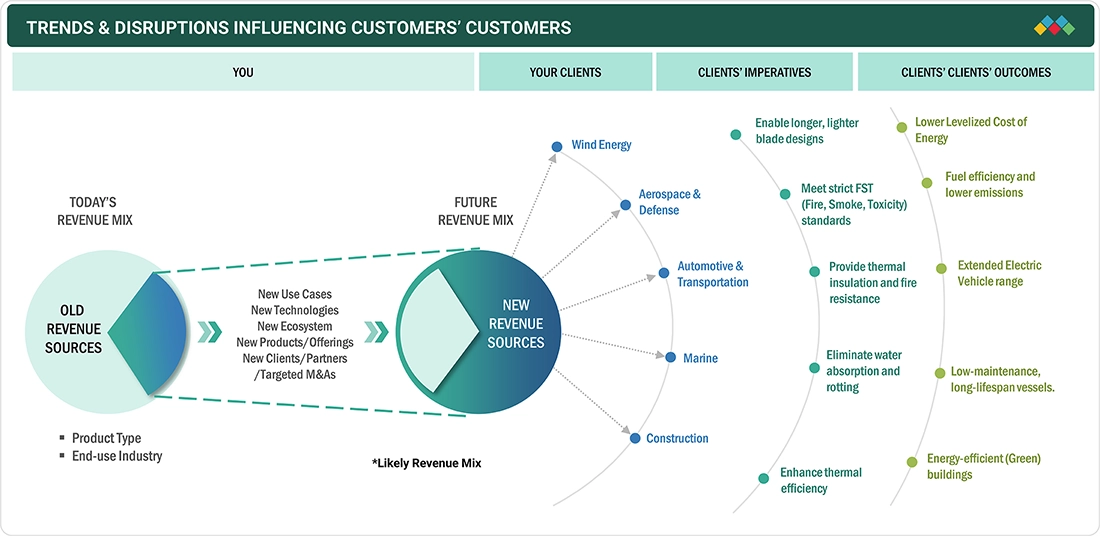
TRENDS & DISRUPTIONS IMPACTING CUSTOMERS' CUSTOMERS
Growth in the lightweight and high-stiffness core industries associated with wind energy, aerospace, and transportation is influencing the shape of the core materials market throughout Asia Pacific. This rapid growth is being created by the rapid expansion of large infrastructure projects and manufacturing in both China and India. Other factors impacting the growth of this sector include an increase in the use of high density, recyclable polyethylene terephthalate (PET) foam products as core materials; advancements being made with respect to making honeycomb cores from recycled materials; building new factories locally throughout the region to help reduce reliance on imported core materials; and the development of cost-effective, environmentally friendly products that help to change both supply chain and competitive dynamics in APAC.
Source: Secondary Research, Interviews with Experts, MarketsandMarkets Analysis
MARKET DYNAMICS

Level
-
Rapid growth of wind energy sector

-
Rapid industrial and infrastructure development


Level
-
High raw material costs and price volatility

-
Difficulty in recycling core materials


Level
-
Growth in electric vehicles and lightweight transportation

-
Technological advancements in core material manufacturing


Level
-
Limited local production and quality standardization

-
Environmental and regulatory pressures

Source: Secondary Research, Interviews with Experts, MarketsandMarkets Analysis
Driver: Rapid growth of wind energy sector
Core materials are in great demand because of the expanding Asian Pacific wind energy industry. Turbine manufacturers have rapidly started to make use of PET, PVC, and other foam cores for long, light, and durable blades. Large-scale installations are seen in countries like China and India. China installed almost 80?GW of new capacity in 2024, thus driving the demand for structural cores. Materials with a high degree of stiffness, fatigue resistance, and thermal stability will be required in both offshore and onshore projects for wind energy generation, hence forming an integral part of the improvement of the efficiency and service life of turbines. Government incentives, renewable energy targets, and large-scale manufacturing clusters further accelerate the adoption of core materials within the region.
Restraint: High raw material costs and price volatility
One of the key restraints to the growth of the core material market in the Asia Pacific region is the increasing cost and volatility of raw materials used in PET, PVC, PE, EVA, and balsa wood. As petroleum prices fluctuate, and in some countries where there is import dependence that leads to disrupted supply chains, the production cost of foam and honeycomb cores rises. This may inhibit adoption for some applications by cost-sensitive manufacturers, especially in the automotive, construction, and marine sectors. Despite strong demand, therefore, growth might be slowed. As performance needs must be balanced with economy in such cases, large-scale deployment of advanced core materials will remain constrained across the region.
Opportunity: Growth in electric vehicles and lightweight transportation
The development of electric vehicles, high-speed rail, and modern transportation systems has been so rapid that it has already opened huge prospects for core materials in the Asia Pacific. One of the key factors in the trend of using more and more PET, PVC, PE, and EVA foam cores in battery, body panel, and structural parts is that they lighten the whole vehicle, which results in improved energy consumption and safety. Countries like China, India, Japan, and South Korea, which have already invested significantly in EV production and green transport infrastructure, are the major players in this development as they are the biggest consumers of light and strong core materials. Thus, this path leads to enhanced production capacity, faster development of new materials, and acquisition of larger portions of the growing regional market by the manufacturers.
Challenge: Limited local production and quality standardization
The imbalance in developing domestic production and the lack of uniform quality standards across geographical boundaries pose some serious challenges to the core material market in the Asia Pacific region. While countries such as China and Japan boast adequate manufacturing capabilities, many emerging markets rely either on imports or on small-scale local producers, and this leads to differences in material performance, longer delivery times, and higher costs. This could reduce confidence in the adoption of these core materials into more fundamental applications like wind turbine blades, aerospace structures, and transportation components, where reliability and specific material specifications are prominent. Strengthening local production, development of standardized quality criteria, and adherence to international norms will, therefore, be inherently useful for the sustainable development of the regional core material market.
ASIA PACIFIC CORE MATERIAL MARKET: COMMERCIAL USE CASES ACROSS INDUSTRIES
| COMPANY | USE CASE DESCRIPTION | BENEFITS |
|---|---|---|
 |
Applies high-density PET and balsa cores in large blade shells and shear webs for offshore turbines | Superior mechanical stability, longer operational lifespan, improved manufacturing efficiency, and lower cost of energy |
 |
Uses PET and PVC foam cores in onshore and offshore wind turbine blades | Lightweight, high stiffness, fatigue resistance, improves turbine efficiency |
 |
Uses balsa and foam cores in aerospace and turbine blade components | High strength-to-weight ratio, excellent fatigue resistance, thermal stability |
Logos and trademarks shown above are the property of their respective owners. Their use here is for informational and illustrative purposes only.
MARKET ECOSYSTEM
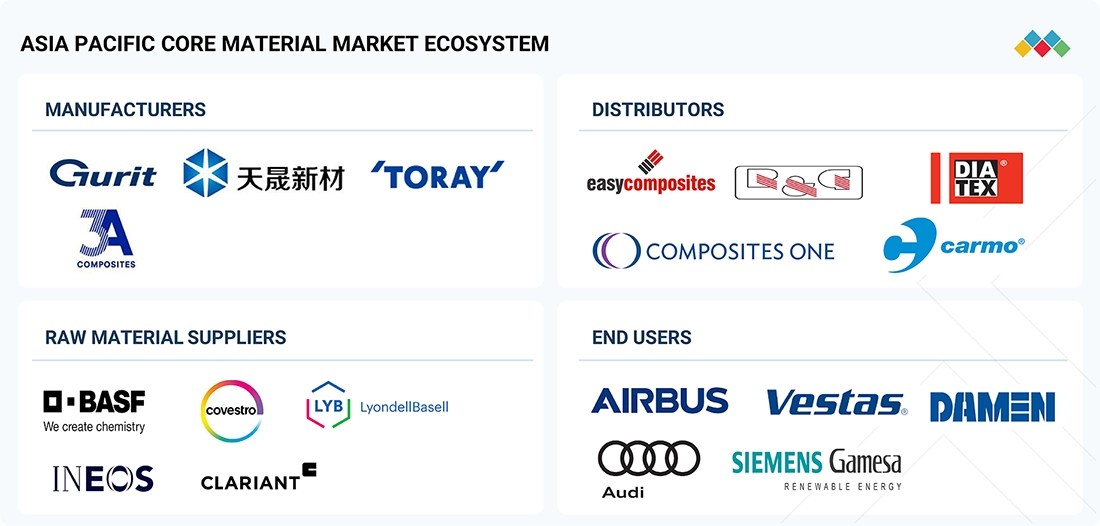
The core materials market in Asia Pacific is supported by an integrated value chain that links raw materials suppliers, foam and honeycomb producers, and composite producers with end-use industries like wind energy, shipping, autos, aerospace, and construction. China, Japan, South Korea, and India offer high-volume production capabilities, R&D, and testing infrastructure, and industrial estates and export-processing facilities support local and international demand. Government support for alternative energy, infrastructure projects, and high-tech production, as well as collaborative efforts with OEMs, encourages new product developments and customization. An efficient value chain with fast product development and cost benefits, and assured supply chain dynamics have promoted sales of PET core materials, PVC core materials, PE core materials, EVA core materials, and Balsa core materials.
Logos and trademarks shown above are the property of their respective owners. Their use here is for informational and illustrative purposes only.
MARKET SEGMENTS
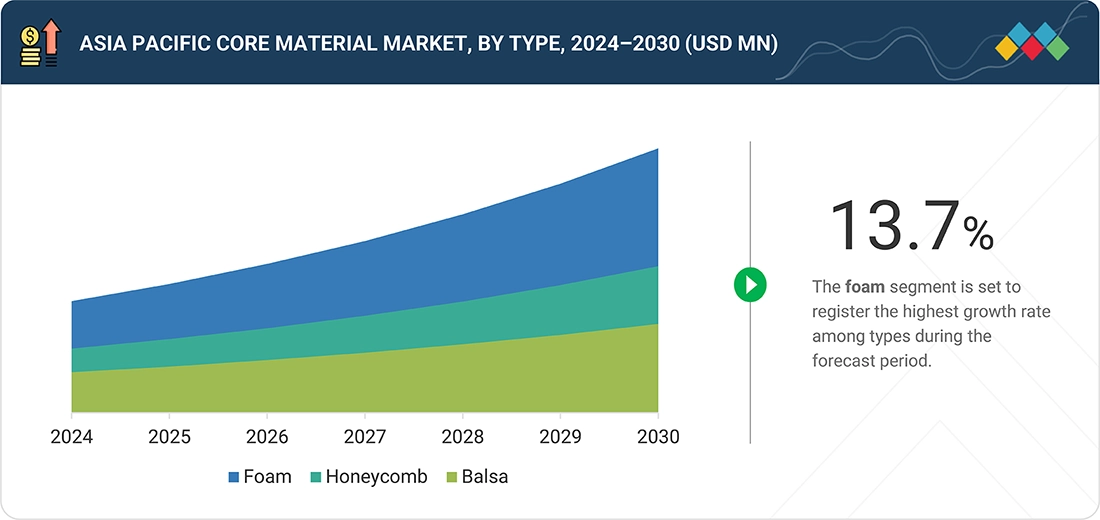
Source: Secondary Research, Interviews with Experts, MarketsandMarkets Analysis
Asia Pacific Core Materials Market, by Type
Foams account for a prominent share in the Asia Pacific core materials market due to their light weight, relatively high strength, and easy processing. Durable and recyclable properties make PET and PVC foams the leading segments. Ease of processing and usage make PE and EVA foams more desirable for sporting goods, packaging, and internal uses. The rapid growth of wind energy generation in China and India, rising EVs, metro rail projects, and shipbuilding projects substantiates market share growth for foam. The cost benefits and applicability will position foam as the biggest and fastest-growing market share holder in the Asia Pacific core materials market.
Asia Pacific Core Materials Market, by End-use Industry
The wind energy sector is the leading segment fueling the Asia Pacific core materials market, as the region represents a large share of total global wind energy capacity and new entrants. In 2024, Asia Pacific introduced almost 80 GW of new capacity, and China alone introduced about 79.8 GW, indicating a massive scale of onshore and offshore turbine installations. Long, lightweight cores made from PET, PVC, and various foams with excellent properties are required for wind turbine blade designs; these provide strength and better performance, thus generating consistent market demand for core materials. The massive scale of new turbine installations, advancements in offshore projects with increasingly challenging designs demanding superior blade performance, and government promotions for clean energy sources accelerate market adoption. These factors cumulatively and consistently make the wind energy sector the leading market for core materials within Asia Pacific.
REGION
China to be fastest-growing country in Asia Pacific core materials market during forecast period
China is projected to be the fastest-growing market for core materials as it supports the world’s biggest wind turbine manufacturing hub; this demands a huge number of PET and PVC foam cores with the capabilities of making large and high-performance blades. The growing offshore wind farms also accelerate growth due to the need for heavy-duty and fatigue-resistant core materials. It also enjoys an extremely integrated local value chain with regard to PE, EVA, PET, balsa, and structural foams, meaning large-scale production capabilities at relatively low costs. The fast EVs, high-speed rails, boat fabrication, and construction drive demands for lighter core structures. China’s government-supported industrial policies optimize China as the fastest-growing market within the Asia-Pacific region.
ASIA PACIFIC CORE MATERIAL MARKET: COMPANY EVALUATION MATRIX
Gurit emerges as a star player in the Asia Pacific core materials market, backed by its strong market presence, broad product offering, and deep integration in key sectors such as wind energy, marine, and aerospace. In contrast, Euro Composites stands out as an emerging leader, gaining rapid traction through its specialized expertise in high-quality honeycomb core materials and its growing ability to deliver customized, precision-engineered solutions. Together, these companies illustrate the market’s balance between established industry leaders and fast-advancing innovators.
Source: Secondary Research, Interviews with Experts, MarketsandMarkets Analysis
KEY MARKET PLAYERS
- Gurit Holding AG (Switzerland)
- Diab Group (Sweden)
- 3A Composites Core Materials (Switzerland)
- Armacell Core Materials (Luxembourg)
- Evonik Industries AG (Germany)
- Changzhou Tiansheng New Materials Co. Ltd. (China)
- Toray Industries, Inc (Japan)
- Showa Aircraft Industry Co., Ltd (Japan)
- Tccore Applied Honeycomb Technology Co., Ltd. (China)
- Dongying Horizon Composite Co., Ltd. (China)
- Zhejiang Youwei New Materials Co., Ltd. (China)
- Nagoya Core Co., Ltd. (Japan)
MARKET SCOPE
| REPORT METRIC | DETAILS |
|---|---|
| Market Size, 2024 (Value) | USD 0.73 Billion |
| Market Forecast, 2030 (Value) | USD 1.69 Billion |
| Growth Rate | CAGR of 15% from 2025 to 2030 |
| Years Considered | 2022–2030 |
| Base Year | 2024 |
| Forecast Period | 2025–2030 |
| Units Considered | Value (USD Million/Billion), Volume (Kiloton) |
| Report Coverage | Revenue forecast, company ranking, competitive landscape, growth factors, and trends |
| Segments Covered |
|
| Countries Covered | China, India, Japan, Australia, Rest of Asia Pacific |
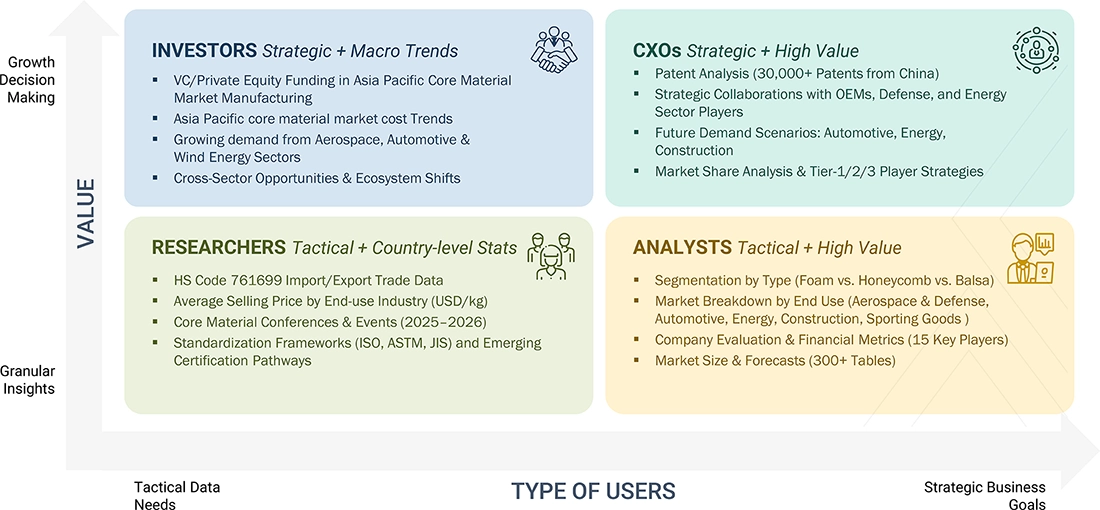
WHAT IS IN IT FOR YOU: ASIA PACIFIC CORE MATERIAL MARKET REPORT CONTENT GUIDE
DELIVERED CUSTOMIZATIONS
We have successfully delivered the following deep-dive customizations:
| CLIENT REQUEST | CUSTOMIZATION DELIVERED | VALUE ADDS |
|---|---|---|
| Asia Pacific Core Material Manufacturer |
|
|
| Raw Material Manufacturer |
|
|
| End User |
|
|
RECENT DEVELOPMENTS
- January 2024 : Gurit launched two different products. One is Gurit Kerdyn FR+, a PET recycled structural foam with Class C – EN13501 test and certification. It has good compressive strength and stiffness. The other one is Balsaflex Lite, a next-generation balsa and PET core material with a novel coating system that reduces resin uptake during infusion processes.
- October 2023 : Gurit announced major long-term supply contracts with two leading OEMs, expected to generate substantial net sales over the contract periods.
- May 2022 : 3A Composites Core Materials acquired SOLVAY’s TegraCore PPSU resin-based foam, which became part of the portfolio under AIREX TegraCore. Both companies agreed to continue their collaboration to further develop AIREX TegraCore.
Table of Contents
 Exclusive indicates content/data unique to MarketsandMarkets and not available with any competitors.
Methodology
The study involved two major activities in estimating the current size of the Asia Pacific Core Material Market. Exhaustive secondary research was performed to collect information on the market, the peer market, and the parent market. The next step was to validate these findings, assumptions, and sizing with industry experts across the value chain through primary research. Both top-down and bottom-up approaches were employed to estimate the total market size. After that, market breakdown and data triangulation procedures were used to determine the extent of market segments and sub-segments.
Secondary Research
Secondary sources referred to for this research study include financial statements of companies offering core materials and information from various trade, business, and professional associations. Secondary research has been used to obtain critical information about the industry’s value chain, the total pool of key players, market classification, and segmentation according to industry trends to the bottom-most level and regional markets. The secondary data was collected and analyzed to arrive at the overall size of the core material market, which was validated by primary respondents.
Primary Research
Extensive primary research was conducted after obtaining information regarding the core material market scenario through secondary research. Primary data was collected through questionnaires, emails, and telephonic interviews. The primary sources from the supply side included various industry experts, such as Chief X Officers (CXOs), Vice Presidents (VPs), Directors from business development, marketing, product development/innovation teams, and related key executives from core material industry vendors; system integrators; component providers; distributors; and key opinion leaders. Primary interviews were conducted to gather insights such as market statistics, data on revenue collected from the products and services, market breakdowns, market size estimations, market forecasting, and data triangulation. Primary research also helped in understanding the various trends related to technology, application, vertical, and region. Stakeholders from the demand side, such as CIOs, CTOs, CSOs, and installation teams of the customer/end users who are using the core materials, were interviewed to understand the buyer’s perspective on the suppliers, products, component providers, and their current usage of core materials and future outlook of their business which will affect the overall market.
Market Size Estimation
The research methodology used to estimate the size of the core material market includes the following details. The market sizing of the market was undertaken from the demand side. The market was upsized based on procurements and modernizations of core materials in different applications at a regional level. Such procurements provide information on the demand aspects of the core materials industry for each application. For each application, all possible segments of the core material market were integrated and mapped.
Data Triangulation
After arriving at the overall Asia Pacific Core Material Market size, using the market size estimation processes explained above, the market was split into several segments and sub-segments. In order to complete the whole market engineering process and arrive at the exact statistics of each market segment and sub-segment, the data triangulation and market breakdown procedures were employed, wherever applicable. The data was triangulated by studying various factors and trends from both the demand and supply sides, mainly from the wind energy, aerospace & defense, marine, automotive & transportation, and other end-use industries.
Market Definition
The term "core materials" describes a wide variety of materials that are used as essential parts of composite structures in a variety of sectors. These substances function as the inner or central core of sandwich composite structures, offering crucial characteristics including insulation, rigidity, and strength while keeping a thin profile. Core materials, which are commonly classified into categories like foam, balsa wood, and honeycomb structures, are widely used in a variety of industries, including construction, wind energy, aerospace, marine, automotive, and industrial manufacturing. The market for core materials is always changing due to advances in materials science and the increased emphasis on lightweight and sustainable solutions. This is because a variety of end-use sectors are seeing a growing need for high-performance and affordable alternatives.
Key Stakeholders
- Core materials manufacturers and distributors
- Key application segments for composites
- Research and consulting firms
- R&D institutions
- Associations and government institutions
- Environmental support agencies
Report Objectives
- To analyze and forecast the size of the Asia Pacific Core Material Market, in terms of value and volume
- To provide detailed information about the key factors (drivers, restraints, opportunities, and challenges) influencing the growth of the market
- To analyze and forecast the market based on type and end-use industry
- To strategically analyze the micro markets concerning individual growth trends, prospects, and their contribution to the overall market
- To analyze the opportunities in the market for stakeholders and provide a competitive landscape for market leaders
- To strategically profile the key players and comprehensively analyze their market shares and core competencies
Available Customizations
With the given market data, MarketsandMarkets offers customizations according to the specific needs of the companies with the given market data.
The following customization options are available for the report:
Product Analysis
- Product matrix, which gives a detailed comparison of the product portfolio of each company
Regional Analysis
- Further breakdown of Rest of APAC Asia Pacific Core Material Market
- Further breakdown of Rest of Europe Asia Pacific Core Material Market
- Further breakdown of Rest of world Asia Pacific Core Material Market
Company Information
- Detailed analysis and profiling of additional market players (up to 10)


Personalize This Research
- Triangulate with your Own Data
- Get Data as per your Format and Definition
- Gain a Deeper Dive on a Specific Application, Geography, Customer or Competitor
- Any level of Personalization
Let Us Help You
- What are the Known and Unknown Adjacencies Impacting the Asia Pacific Core Material Market
- What will your New Revenue Sources be?
- Who will be your Top Customer; what will make them switch?
- Defend your Market Share or Win Competitors
- Get a Scorecard for Target Partners

Custom Market Research Services
We Will Customise The Research For You, In Case The Report Listed Above Does Not Meet With Your Requirements
Get 10% Free CustomisationTESTIMONIALS

We at Nissan Chemicals Corporation have been clients of MarketsandMarkets for more than a year now. We recently consulted MarketsandMarkets for a study, the team at MarketsandMarkets was extremely professional and organized. The business insights were very detailed and aligned well with our expectations that really helped us formulate the Business Plans and device new strategies for development themes. MarketsandMarkets offers a unique combination of expertise and dedicated engagement model. Their research findings have helped us in designing our Pricing Strategy which will make it easier for us to predict the future sales and profits for the next ten years. We look forward to working with MarketsandMarkets in the future.
VP of Strategy & New Business Development
Leading Specialty Chemical Company
The MarketsandMarkets Engagement Model, composed of both the Knowledge Store and advisory custom research, has greatly helped us in understanding our markets and making strategic decisions. The Knowledge Store is a fast way to allow everyone in our organization to understand more about most any market they are interested in. The ability to then get custom research done and get answers to specific strategic questions and market insight has been spectacular. The Markets and Markets team feel more like colleagues than vendors and their services have helped us change our culture where statements of things like growth opportunities and competitive position are always backed by industry research.

Rich Gibson,
Director, Corporate Strategy
Milliken & Company,
Leading Industrial Manufacturer of specialty chemical, floor covering, performance and protective textile materials, and healthcaremilliken.com
MarketsandMarkets is a trusted resource that helps us to better understand markets that are near-adjacencies-whether its technology, value chain or geography. Their Knowledge Store platform provides a dashboard of markets and their characteristics which is easy to use and saves us time.
Adam Shaw,
Market Development and Strategy Manager
AdvanSix Inc. USA,
An American Leader in Chemicalswww.advansix.com
The Knowledge Store from MarketsandMarkets is a valuable tool which has helped my team acquire greater insight in to the end markets that our business serves. This has enabled us to help our company build stronger strategies throughout our planning process.
TOSHIO KINOSHITA
Senior Chif Consultion Research & Consulting Division
Mitsubishi Chemical Research Corporation,
Leading Manufacturer of Chemical Productswww.mitsubishichem-res.co.jp/en/

We recently engaged with MarketsandMarkets for a study, the team not only clearly understood our business objectives but was also extremely professional in the way they handled the entire project. The study was efficiently conducted in a phase-wise manner, and the engagement model furnished us with high-quality business insights that far exceeded our expectations at each phase. We were especially happy that MarketsandMarkets could provide us with both, an English as well as a Japanese version of the study. A special thanks to the Analyst Team and Client Services Team, whose fluency in Japanese enhanced our comfort level, as we could converse with them in our preferred language.
Independent entrepreneurs
Arrow Precision
We approached MarketsandMarkets for study on Proppants Market, and their work exceeded our expectations. The study conducted was comprehensive and enabled us to view the market through the various dimensions. In addition, the team was extraordinarily responsive throughout the process and resolved our queries on time. I strongly recommend MarketsandMarkets and will certainly consider them for additional market assessments we will need in the future.
Global engineering company, Japan
Deputy Manager,
Strategic Planning OfficeThe high-quality insights shared by the MarketsandMarkets team helped us understand the pharmaceutical plant designers in a specific geography. It also captured the risks that we may likely face in communicating with our potential partners. The study would enable us identify partners, which would impact our future growth.






Growth opportunities and latent adjacency in Asia Pacific Core Material Market