Asia Pacific DRaaS Market

Asia Pacific DRaaS Market By Service Type (Backup & Restore, Real-Time Replication, Data Protection, Professional Services), Deployment Mode (Public Cloud, Private Cloud), Organization Size, Vertical, and Region - Forecast to 2032




OVERVIEW
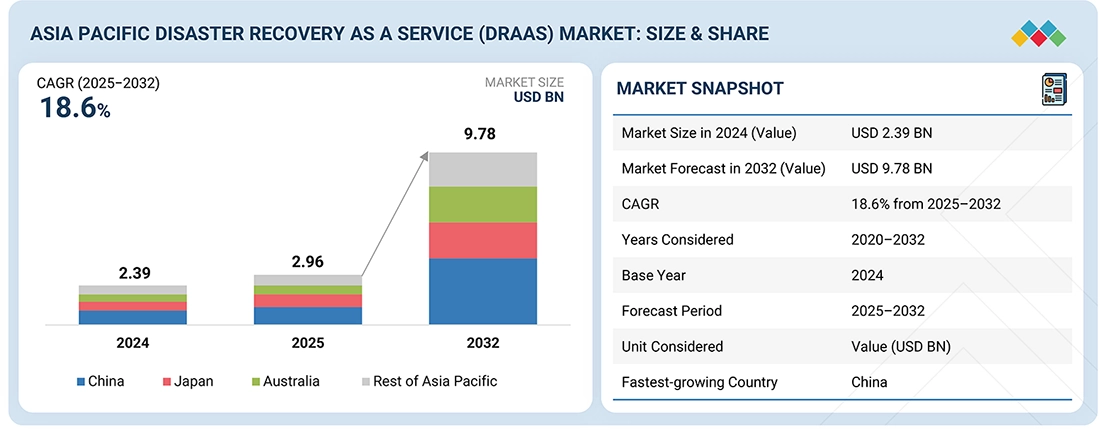
Source: Secondary Research, Interviews with Experts, MarketsandMarkets Analysis
The Asia Pacific Disaster Recovery as a Service (DRaaS) market is projected to grow from USD 2.96 billion in 2025 to USD 9.78 billion by 2032 at a CAGR of 18.6%. This growth is largely driven by the increasing number of ransomware incidents, which are prompting businesses to prioritize quicker recovery and stronger operational resilience strategies. Additionally, rising regulatory compliance requirements are pushing organizations in the financial services, healthcare, and government sectors to adopt validated disaster recovery and data protection solutions. Furthermore, the growing adoption of cloud technology is adding complexity to infrastructure, which is further intensifying the demand for managed recovery, orchestration, testing, and continuity assurance services among enterprises.
KEY TAKEAWAYS
-
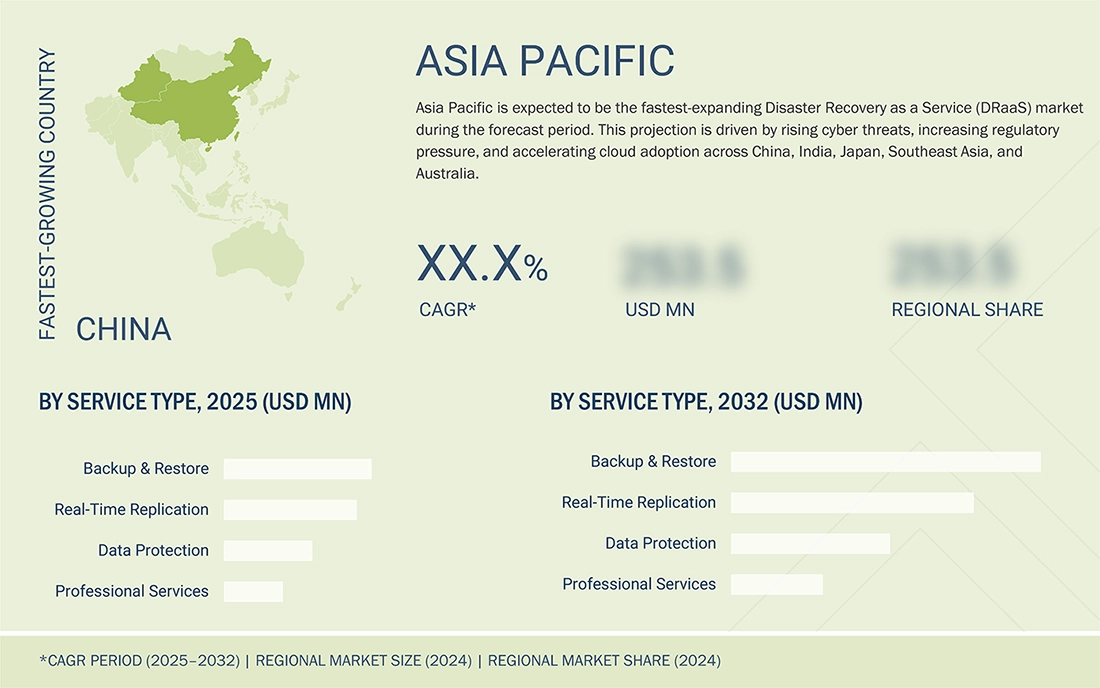
By CountryBy country, China is expected to be the fastest-growing market during the forecast period. It is projected to grow at a CAGR of 20.4% during the forecast period.
-
By Service TypeBy service type, the backup & restore segment is projected to grow at the highest CAGR (20.3%) in the Asia Pacific Disaster Recovery as a Service (DRaaS) market during the forecast period.
-
By Deployment ModeBy deployment mode, the private cloud segment is projected to grow at a higher CAGR (22.0%) than the public cloud segment in the Asia Pacific Disaster as a Service (DRaaS) market during the forecast period.
-
By Organization SizeBy organization size, the SMEs segment is expected to grow at a higher CAGR than the large enterprises segment during the forecast period.
-
By VerticalBy vertical, the retail & consumer goods segment is expected to be the fastest-growing segment during the forecast period.
-
Competitive Landscape – Key PlayersIBM, Microsoft, and AWS lead the Asia Pacific Disaster Recovery as a Service (DRaaS) market through global infrastructure scale recovery automation depth and enterprise trust.
-
Competitive Landscape – Startups/SMEsDXC Technology and NTT Data are gaining traction by offering agile deployment, rapid onboarding, and cost-efficient managed recovery service models.
The Asia Pacific Disaster Recovery as a Service (DRaaS) market is being reshaped by enterprise cloud migration programs. Enterprises adopt managed recovery services to reduce downtime exposure, improve regulatory readiness, and protect revenue continuity regionally. Providers respond with automated testing, orchestration, cyber recovery assurance, and scalable multicloud resilience platforms regionally. These factors are driving the growth of the market.
TRENDS & DISRUPTIONS IMPACTING CUSTOMERS' CUSTOMERS
The Asia Pacific Disaster Recovery as a Service (DRaaS) market is undergoing significant changes due to the rapid migration to cloud services in regulated and data-intensive industries. This transition is important because distributed workloads increase the risk of outages and complicate recovery efforts in hybrid and multicloud environments. In response, enterprises are prioritizing managed recovery services that standardize testing, governance, and cyber recovery assurance. Additionally, service providers are investing in automation, orchestration, and multicloud platforms to tackle the complexities of regional scale, regulatory diversity, and the growing expectations for resilience.
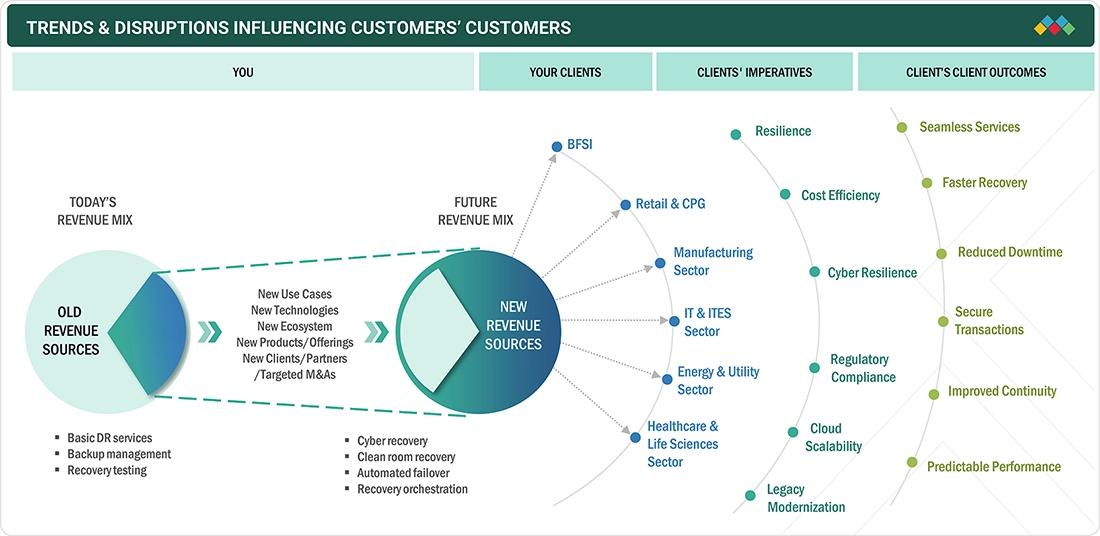
Source: Secondary Research, Interviews with Experts, MarketsandMarkets Analysis
MARKET DYNAMICS

Level
-
Rising enterprise focus on minimizing downtime and ensuring business continuity

-
Growing regional emphasis on cybersecurity and critical data protection investments


Level
-
Enterprise concerns over operational dependency on external DRaaS providers

-
Persistent enterprise hesitation to migrate recovery workloads to cloud platforms


Level
-
Increasing regulatory pressure driving demand for managed recovery and audit readiness

-
Expanding adoption of AI driven recovery orchestration and automated resilience testing


Level
-
Complexity involved in securing and governing recovery environments across multiple clouds and jurisdictions

-
Performance and bandwidth limitations affecting large-scale replication and recovery across distributed regions

Source: Secondary Research, Interviews with Experts, MarketsandMarkets Analysis
Driver: Rising enterprise focus on minimizing downtime and ensuring business continuity
The increasing reliance on digital services across the Asia Pacific region is leading to a significant financial impact from outages in banking, commerce, healthcare, and public services. As a result, business leaders are prioritizing recovery readiness, recognizing that downtime can directly affect revenue, regulatory compliance, and customer trust. This focus is driving the adoption of automated failover testing, recovery orchestration, and predefined recovery objectives in critical application environments.
Restraint: Enterprise concerns over operational dependency on external DRaaS providers
Relying on third-party recovery providers raises concerns about accountability, transparency, and the potential loss of direct control over recovery processes. Risk and compliance teams need verified testing results, enforced service levels, and clearly defined escalation ownership before they can approve any external recovery models. These requirements can slow down the adoption of such models and tend to favor providers that offer customer-controlled governance and auditable recovery operations.
Opportunity: Increasing regulatory pressure driving demand for managed recovery and audit readiness
Regulatory oversight in the financial, healthcare, and government sectors is leading to heightened expectations for documented recovery validation and audit traceability. Organizations are looking for managed recovery solutions that continuously test controls and produce recovery evidence suitable for regulators. This demand creates growth opportunities for providers that can integrate compliance reporting, data retention, governance, and automated validation within their recovery platforms.
Challenge: Complexity involved in securing and governing recovery environments across multiple clouds and jurisdictions
The adoption of multi-cloud strategies across the Asia Pacific region has led to fragmented security policies, inconsistent recovery tools, and varying compliance requirements. Cross-border data residency regulations and differences in infrastructure maturity further complicate the implementation of standardized recovery processes. This complexity raises delivery costs and makes it difficult for providers to offer consistent recovery assurance at scale.
ASIA PACIFIC DRAAS MARKET: COMMERCIAL USE CASES ACROSS INDUSTRIES
| COMPANY | USE CASE DESCRIPTION | BENEFITS |
|---|---|---|
 |
Infrascale: A cooperative effort to establish integrated disaster recovery and backup solutions for small- to medium-sized enterprise (SME) customers throughout the United Kingdom | Recovery Time Performance (RTP) efficiencies achieved through centralized recovery management and increased RTPs | Partner organizations enhanced individual and collective process support for commercial environments, reducing complexity for managed service teams | Improved Recovery Readiness (IRR) through quicker failover times | Increased confidence across all customer Service Level Agreements (SLAs) |
 |
Partnered with TierPoint to create a new hybrid cloud and Disaster Recovery as a Service (DRaaS) infrastructure to modernize operations | Enabled scalable, rapid growth (via backups) with improved application performance | Guaranteed recovery for critical healthcare and banking transaction systems through reliable and consistent uptime | Guaranteed uptime and enhanced business continuity | On-demand, scalable solutions supporting company growth | Improved application reliability and performance |
 |
Implemented iland Secure Cloud DRaaS powered by Veeam, replacing the legacy data center supporting secure data | Enabled simplified disaster recovery operations and reduced infrastructure burden | Improved operational recovery while maintaining compliance with state and federal regulations for insurers and partner services | Continuous data availability and significantly increased uptime | Improved overall control, flexibility, and predictability | Enhanced compliance management and simplified disaster recovery management |
Logos and trademarks shown above are the property of their respective owners. Their use here is for informational and illustrative purposes only.
MARKET ECOSYSTEM
The Asia Pacific Disaster Recovery as a Service (DRaaS) market ecosystem includes public/private cloud vendors such as AWS, IBM, and Microsoft, along with data movers and DRaaS providers that enable hybrid and multicloud recovery architectures, secure replication, orchestration, automated testing, and governance to ensure operational continuity across distributed enterprise environments.
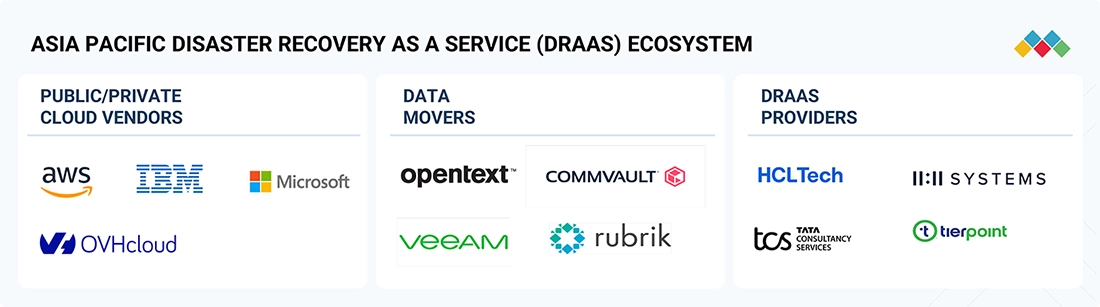
Logos and trademarks shown above are the property of their respective owners. Their use here is for informational and illustrative purposes only.
MARKET SEGMENTS
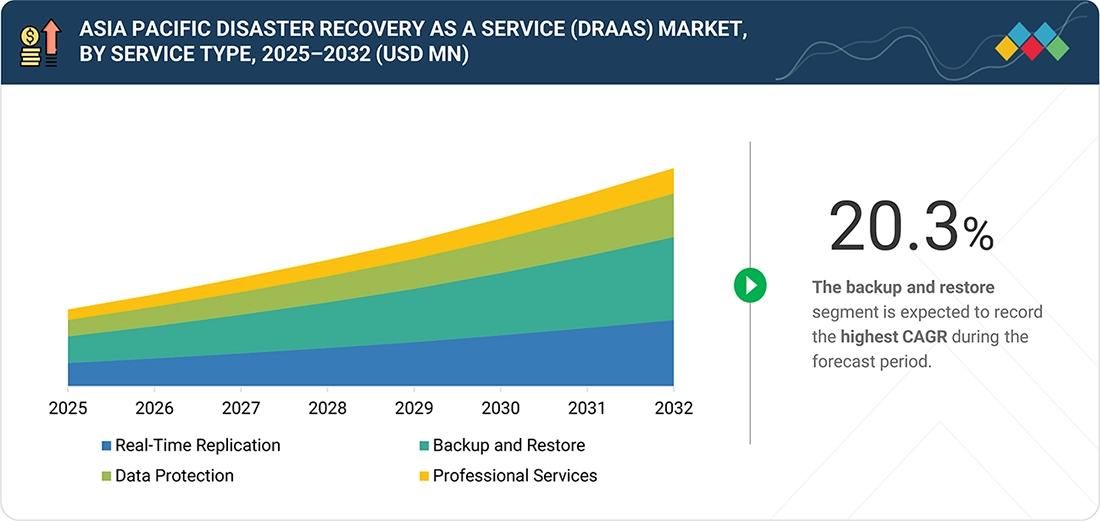
Source: Secondary Research, Interviews with Experts, MarketsandMarkets Analysis
By Service Type
The backup & restore segment dominates demand as organizations prioritize assured data protection and rapid recovery from cyber incidents and operational failures. The adoption of backup & restore services is concentrated around solutions that reduce data loss exposure and consistently meet aggressive recovery objectives across business-critical digital systems.
By Deployment Type
Public cloud is the most widely used deployment type in Asia Pacific as enterprises seek scalable recovery infrastructure without investing in secondary physical data centers. Cloud-based DRaaS supports faster provisioning, lower upfront costs, and flexible capacity aligned with changing recovery requirements.
By Organization Size
Due to the complexity of application landscapes and a greater degree of operational and regulatory risk, a majority of DRaaS (Data Recovery as a Service) adoption is taking place in large enterprises in Asia Pacific. These enterprises require a structured approach to test and manage recovery orchestration to ensure their ability to produce uninterrupted revenue and adhere to regulatory requirements.
By Vertical
BFSI is the largest vertical adopting DRaaS in the Asia Pacific, as financial institutions manage high transaction volumes and strict uptime requirements. Regulatory expectations and cybersecurity risks drive continuous investment in resilient recovery frameworks and recovery assurance capabilities.
REGION
China to be the fastest-growing country in the Asia Pacific DRaaS market during the forecast period
The Asia Pacific Disaster Recovery as a Service (DRaaS) market is expected to see China record the highest growth during the forecast period. This growth is expected to be driven by large-scale cloud migration programs and rising exposure to cyber incidents across digital enterprises. Enterprises in the country increasingly invest in cloud-based recovery services to strengthen operational resilience and regulatory readiness.
ASIA PACIFIC DRAAS MARKET: COMPANY EVALUATION MATRIX
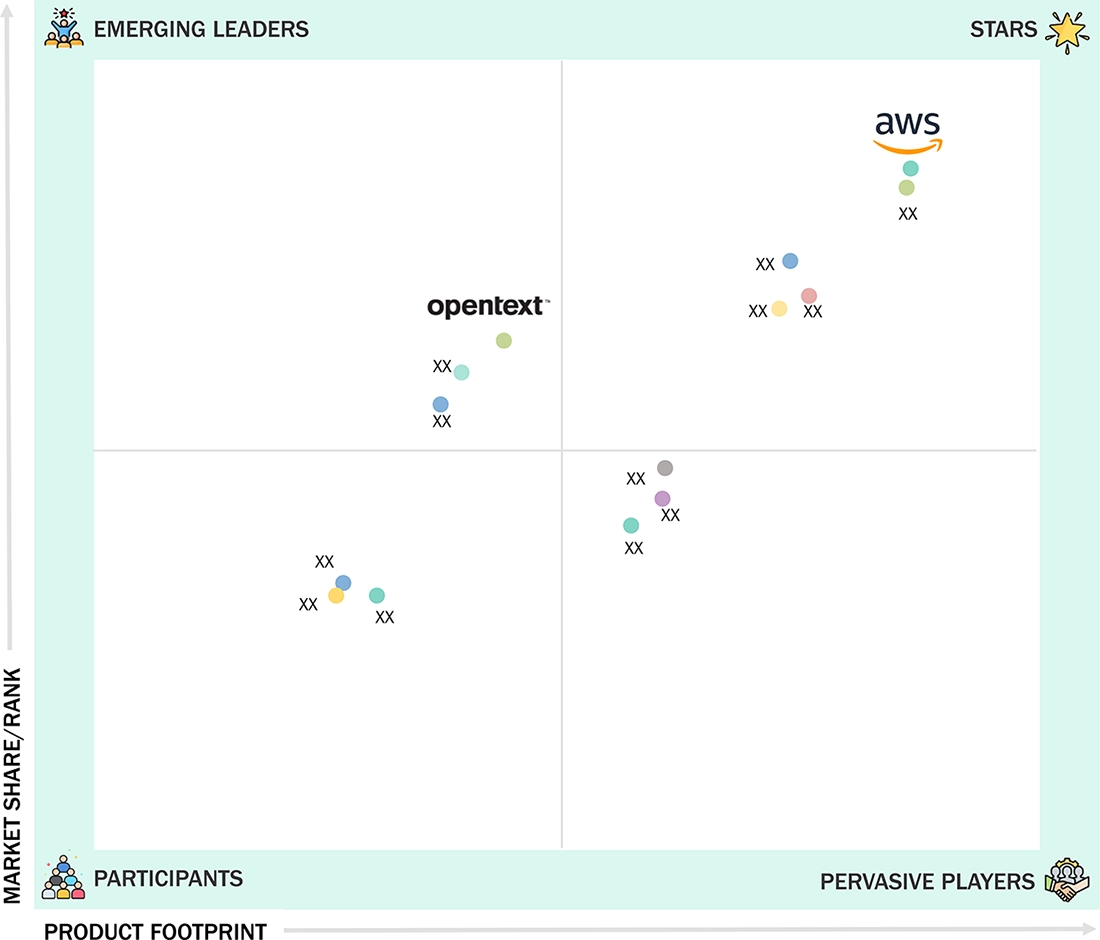
The company evaluation matrix places AWS in the 'Stars' quadrant because of its strong market presence and mature service portfolio. On the other hand, Opentext appears in the 'Emerging Leaders' quadrant as its capabilities and service reach continue to expand. Other vendors are categorized as 'Participants' or 'Pervasive Players,' reflecting differences in scale, innovation readiness, and outsourcing depth.
Source: Secondary Research, Interviews with Experts, MarketsandMarkets Analysis
KEY MARKET PLAYERS
- IBM (US)
- Microsoft (US)
- Cisco (US)
- Google (US)
- DXC Technology (US)
- Tata Consultancy Services (India)
- HCL Technologies (India)
- Wipro (India)
- Fujitsu (Japan)
- NTT Data (Japan)
- MetTel (US)
- 11:11 Systems (US)
- Infrascale (US)
- InterVision Systems (US)
- Flexential (US)
MARKET SCOPE
| REPORT METRIC | DETAILS |
|---|---|
| Market Size in 2024 (Value) | USD 2.39 Billion |
| Market Forecast in 2032 (Value) | USD 9.78 Billion |
| Growth Rate | CAGR of 18.6% from 2025–2032 |
| Years Considered | 2020–2032 |
| Base Year | 2024 |
| Forecast Period | 2025–2032 |
| Units Considered | Value (USD Billion) |
| Report Coverage | Revenue forecast, company ranking, competitive landscape, vendor positioning, segment-wise analysis, regional trends, technological developments, key commercial use cases, and growth factors |
| Segments Covered |
|
| Country Covered | China, Japan, Australia, Rest of Asia Pacific |
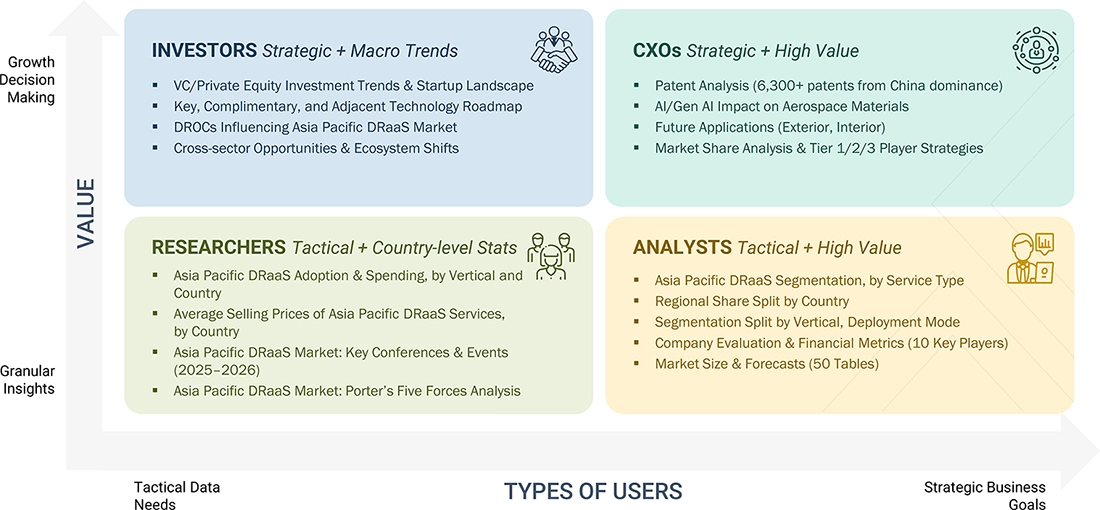
WHAT IS IN IT FOR YOU: ASIA PACIFIC DRAAS MARKET REPORT CONTENT GUIDE
DELIVERED CUSTOMIZATIONS
We have successfully delivered the following deep-dive customizations:
| CLIENT REQUEST | CUSTOMIZATION DELIVERED | VALUE ADDS |
|---|---|---|
| Global Enterprises in Asia Pacific (BFSI, Healthcare, Manufacturing) |
|
Support cost efficient provider selection across Asia Pacific |
| Telecom Operators in Asia Pacific (Network Resilience and 5G Infrastructure) |
|
Enable risk informed 5G resilience investments |
| Cloud and Data Center Providers in Asia Pacific (Hybrid and Multicloud Recovery) |
|
Identify high growth recovery segments |
RECENT DEVELOPMENTS
- December 2025 : HPE and Chunghwa Telecom created an International Disaster Recovery Centre in Taiwan to strengthen the Cyber Resilience of Enterprises Across Asia Pacific. This will enable enterprises in highly regulated and data intensive industries to achieve a Recovery Time Objective of Minutes and will facilitate cross border disaster recovery.
- June 2025 : Harbor Solutions announced the creation of a joint venture with Rubrik to allow Harbor Solutions to enter into the DRaaS market across Asia Pacific, beginning in Australia & New Zealand. The partnership was the result of increased enterprise demand for validated cyber recovery and operational resilience services, combined with the increasing regulatory pressure within the marketplace.
- June 2025 : Cohesity and 11:11 Systems launched a cloud-based Clean Room Recovery service to strengthen cyber resilience and ransomware recovery capabilities for global enterprises. The service is expected to reduce recovery complexity and accelerate incident response for organizations lacking dedicated air-gapped recovery infrastructure.
- April 2025 : Elastio partnered with JetSweep in the DRaaS Market to add Ransomware Protection & Recovery Assurance within Managed Disaster Recovery environments. By doing so, the two companies anticipate that their relationship will foster greater trust in Backup Integrity and reduce operational risk when a Customer experiences cyber recovery and rapid failover events.
Table of Contents
 Exclusive indicates content/data unique to MarketsandMarkets and not available with any competitors.
Methodology
This research study involved extensive secondary sources, directories, and paid databases to identify and collect information useful for this technical, market-oriented, and commercial study of the Asia Pacific DRaaS market. In-depth interviews were conducted with various primary respondents, including key industry participants, subject matter experts, C-level executives of key market players, and industry consultants, to obtain and verify critical qualitative and quantitative information and assess the market prospects. The following figure highlights the market research methodology in developing this report on the Asia Pacific DRaaS market.
Secondary Research
The market size of companies offering Asia Pacific DRaaS was based on the secondary data available through paid and unpaid sources and by analyzing the product portfolios of major companies in the ecosystem and rating the companies based on their product capabilities and business strategies. In the secondary research process, various sources were referred to for identifying and collecting information for the study. The secondary sources included annual reports, press releases, investor presentations of companies, product data sheets, white papers, journals, certified publications, articles from recognized authors, government websites, directories, and databases.
Secondary research was mainly used to obtain key information about the industry’s supply chain, the total pool of key players, market classification and segmentation according to industry trends to the bottom-most level, regional markets, and key developments from both market- and technology-oriented perspectives, all of which were further validated by primary sources.
Primary Research
In the primary research process, various primary sources from both the supply and demand sides were interviewed to obtain qualitative and quantitative information on the market. The primary sources from the supply side included various industry experts, including Chief Experience Officers (CXOs); Vice Presidents (VPs); directors from business development, marketing, and product development/innovation teams; and related key executives from Asia Pacific DRaaS vendors, industry associations, independent consultants, and key opinion leaders.
Primary interviews were conducted to gather insights, such as market statistics, the latest trends disrupting the market, new use cases implemented, data on revenue collected from products and services, market breakups, market size estimations, market forecasts, and data triangulation. Primary research also helped in understanding various trends related to technology, service type, deployment, and region. Stakeholders from the demand side, such as Chief Information Officers (CIOs), Chief Technology Officers (CTOs), Chief Security Officers (CSOs), the installation teams of governments/end users using Asia Pacific DRaaS, and digital initiatives project teams, were interviewed to understand the buyer’s perspective on suppliers, products, service providers, and their current use of solutions, which would affect the overall Asia Pacific DRaaS market.
Market Size Estimation
Both top-down and bottom-up approaches were used to estimate and forecast the Asia Pacific DRaaS market and other dependent submarkets. The bottom-up procedure was deployed to arrive at the overall market size using the revenues and offerings of the key companies in the market. With data triangulation methods and validation through primary interviews, this study determined and confirmed the exact value of the overall parent market size. The overall market size was then used in the top-down procedure to estimate the size of other individual markets via percentage splits of the market segments.
Top Down and Bottom Up Approach of the Asia Pacific DRaaS market.
The top-down and bottom-up approaches were used to estimate and validate the size of the Asia Pacific DRaaS market and various other dependent subsegments. The research methodology used to estimate the market size included the following:
Key players in the market were identified through secondary research, and their revenue contributions in respective countries were determined through primary and secondary research.
This entire procedure included the study of the annual and financial reports of top market players and extensive interviews for key insights from industry leaders, such as Chief Executive Officers (CEOs), VPs, directors, and marketing executives.
All percentage splits and breakups were determined using secondary sources and verified through primary sources.
Data Triangulation
After arriving at the overall market size, the market was split into several segments and subsegments—using the market size estimation processes as explained above. Where applicable, data triangulation and market breakdown procedures were employed to complete the overall market engineering process and determine each market segment's and subsegment's exact statistics. The data was triangulated by studying various factors and trends from government agencies’ demand and supply sides.
Market Definition
Asia Pacific DRaaS refers to a cloud model that enables replicating enterprise data and applications on a third-party virtual or cloud environment to ensure business continuity during artificial or natural disasters. It is mainly facilitated by System Integrators (SIs) and Managed Service Providers (MSPs). Asia Pacific DRaaS is based on three crucial aspects: disaster planning/management, business continuity, and backup.
Key Stakeholders
- Cloud service providers (CSPs)
- Colocation providers
- Technology service providers
- Data center managed service providers
- Government organizations
- Networking companies
- Consultants/consultancies/advisory firms
- Support and maintenance service providers
- Telecom service providers
- Information Technology (IT) infrastructure providers
- System Integrators (SIs)
- Regional associations
- Independent software vendors
- Value-added resellers and distributors
Report Objectives
- To describe and forecast the global Disaster Recovery as a Service (Asia Pacific DRaaS) market based on service types, deployment modes, organization size, verticals, and regions
- To forecast the market size of the five major regional segments: North America, Europe, Asia Pacific (APAC), Middle East & Africa (MEA), and Latin America
- To strategically analyze the market subsegments with respect to individual growth trends, prospects, and contributions to the total market
- To provide detailed information related to the major factors influencing the growth of the market (drivers, restraints, opportunities, and challenges)
- To strategically analyze macro and micro markets with respect to growth trends, prospects, and their contributions to the overall market
- To analyze industry trends, patents & innovations, and pricing data related to the Asia Pacific DRaaS market
- To analyze the impact of recession impact on service types, deployment modes, organization size, verticals, and regions across the globe
- To analyze the opportunities in the market for stakeholders and provide details of the competitive landscape for major players
- To profile key players in the market and comprehensively analyze their market share/ranking and core competencies
- To track and analyze competitive developments, such as mergers and acquisitions, new product developments, and partnerships and collaborations in the market
Available Customizations
With the given market data, MarketsandMarkets offers customizations per the company’s specific needs. The following customization options are available for the report:
Product Analysis
- The product matrix provides a detailed comparison of the product portfolio of each company.
Geographic Analysis
- Further breakup of the Asia Pacific DRaaS market
Company Information
- Detailed analysis and profiling of five additional market players
Key Questions Addressed by the Report
What is the current size of the Asia Pacific Disaster Recovery as a Service (DRaaS) market?
The Asia Pacific Disaster Recovery as a Service (DRaaS) market is estimated at USD 2.96 billion in 2025 and is projected to reach USD 9.78 billion by 2032, growing at a CAGR of 18.6% during the forecast period.
What factors are driving the growth of the Asia Pacific DRaaS market?
The market is expanding due to increasing ransomware attacks, rising adoption of hybrid and multi-cloud environments, stricter data protection regulations, growing demand for business continuity, and rapid digital transformation across industries. Countries such as India, Japan, and Australia are also strengthening cyber resilience and disaster recovery requirements.
Which industries are expected to adopt DRaaS solutions the most in Asia Pacific?
Key adopters include BFSI, government, healthcare, IT & ITeS, manufacturing, and telecommunications. These industries rely on DRaaS to minimize downtime, protect mission-critical applications, meet compliance requirements, and ensure uninterrupted business operations.
Which deployment model is expected to dominate the Asia Pacific DRaaS market?
The public cloud deployment model is expected to hold the largest market share during the forecast period due to its scalability, lower infrastructure costs, simplified disaster recovery management, and faster deployment capabilities.
Who are the leading players in the Asia Pacific Disaster Recovery as a Service (DRaaS) market?
Major companies operating in the Asia Pacific DRaaS market include IBM, Microsoft, Cisco, Google, DXC Technology, Tata Consultancy Services (TCS), HCL Technologies, Wipro, Fujitsu, NTT Data, MetTel, 11:11 Systems, Infrascale, InterVision Systems, and Flexential. These vendors provide cloud-based backup, replication, failover, and disaster recovery solutions tailored for enterprise workloads.
Why is Asia Pacific expected to be the fastest-growing regional market for DRaaS?
Asia Pacific is witnessing rapid growth due to accelerating cloud adoption, increasing investments in digital infrastructure, expanding regulatory requirements for cyber resilience, and rising demand for secure disaster recovery solutions among enterprises modernizing their IT environments.


Personalize This Research
- Triangulate with your Own Data
- Get Data as per your Format and Definition
- Gain a Deeper Dive on a Specific Application, Geography, Customer or Competitor
- Any level of Personalization
Let Us Help You
- What are the Known and Unknown Adjacencies Impacting the Asia Pacific DRaaS Market
- What will your New Revenue Sources be?
- Who will be your Top Customer; what will make them switch?
- Defend your Market Share or Win Competitors
- Get a Scorecard for Target Partners

Custom Market Research Services
We Will Customise The Research For You, In Case The Report Listed Above Does Not Meet With Your Requirements
Get 10% Free CustomisationTESTIMONIALS






Growth opportunities and latent adjacency in Asia Pacific DRaaS Market