Asia Pacific Portable Generator Market

Asia Pacific Portable Generator Market by Application (Emergency, Prime/Continuous), Fuel (Gasoline, Diesel, Natural Gas, Others), Power Rating (Below 5 kW, 5-10 kW, 10-20 kW), Product Type, End User - Forecast to 2030




OVERVIEW
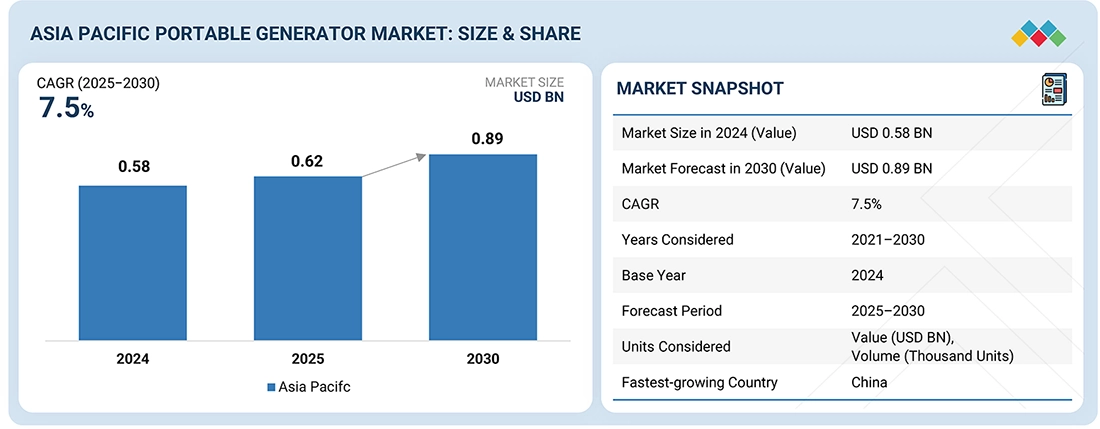
Source: Secondary Research, Interviews with Experts, MarketsandMarkets Analysis
The Asia Pacific portable generator market is projected to grow at a CAGR of 7.5% during the forecast period, increasing from USD 0.62 billion in 2025 to USD 0.89 billion by 2030. This growth is driven by rising demand for reliable backup and temporary power solutions across residential, commercial, and industrial sectors, particularly in regions with unstable grid infrastructure. Rapid urbanization, expanding construction activities, and increasing infrastructure development across countries such as China, India, and other Asia Pacific countries are further supporting market expansion. In addition, the growing incidence of extreme weather events and power disruptions is reinforcing the need for dependable portable power solutions. Advancements in generator technology, including improved fuel efficiency, longer runtime, and enhanced portability, are also contributing to increased adoption across diverse applications in the region.
KEY TAKEAWAYS
-
By CountryBy country, China is expected to have the fastest growth rate of 6.8% during the forecast period.
-
By ApplicationBy application, the emergency segment is expected to be dominant, with a market share of 74.8% in 2026.
-
By FuelBy fuel, the gasoline segment is expected to register the highest CAGR of 6.5% from 2025 to 2030.
-
By Power RatingBy power rating, the 5-10 kW segment is expected to have the highest growth rate during the period from 2025 to 2030
-
By Product TypeBy product type, the conventional generator segment is projected to register the largest market share from 2025 to 2030.
-
By END USERBy end user, the residential segment is projected to account for the largest market share during the forecast period.
-
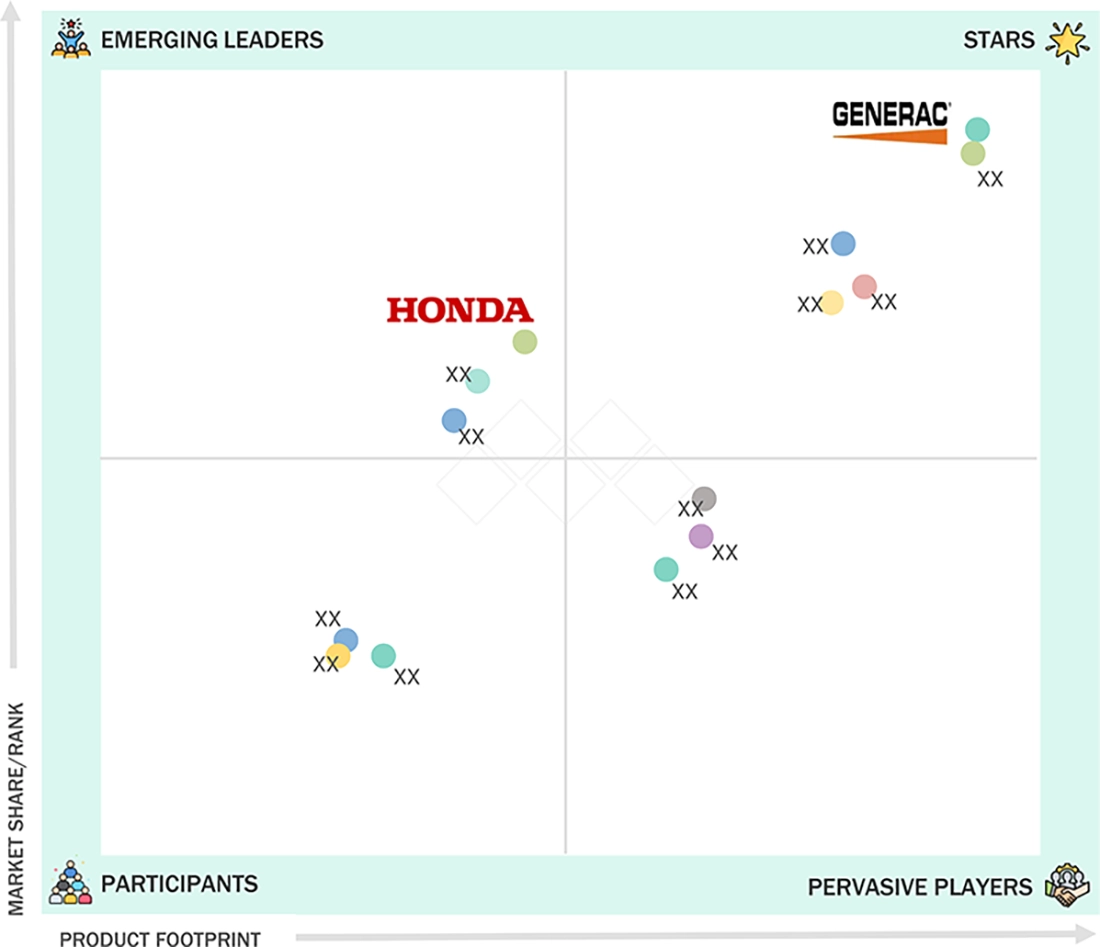
COMPETITIVE LANDSCAPE - KEY PLAYERSCompanies such as Caterpillar, Cummins Inc., Honda, Kirloskar, and Generac were identified as some of the star players in the Asia Pacific portable generator market.
-
COMPETITIVE LANDSCAPE - STARTUPSCompanies such as Okaya Power Group and Skoon Energy were identified as some of the key startups in the Asia Pacific portable generator market.
The Asia Pacific portable generator market is experiencing steady growth, driven by the increasing frequency of power outages caused by grid instability, extreme weather events, and rising electricity demand across developing and emerging economies. Aging and overburdened power infrastructure in certain regions, along with rapid urbanization, is further strengthening the need for reliable backup power solutions across residential and commercial sectors. In addition, expanding construction activities, infrastructure development, and growth in telecom and small business operations are supporting market demand. Technological advancements, such as inverter generators, fuel-efficient systems, and dual-fuel capabilities, are also contributing to sustained market growth across the region.
TRENDS & DISRUPTIONS IMPACTING CUSTOMERS' CUSTOMERS
The Asia Pacific portable generator market is undergoing a gradual transformation driven by technological advancements, evolving consumer preferences, and increasing emphasis on fuel efficiency and emissions reduction. A key trend in the region is the growing shift toward cleaner and more flexible technologies, including dual-fuel generators and gas-based systems, supported by tightening environmental regulations in countries such as China, Japan, and South Korea. Additionally, inverter-based and low-noise generators are gaining traction, particularly in urban and residential applications, due to rising demand for compact, efficient, and user-friendly backup power solutions. The increasing adoption of hybrid systems and the integration of smart features, such as remote monitoring and load management, are further shaping the market landscape across the region.
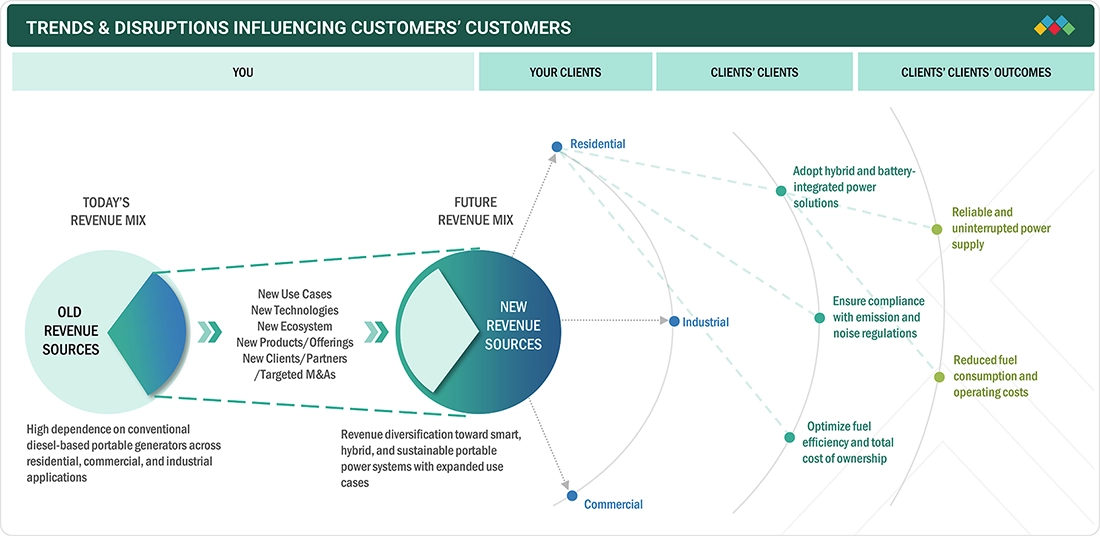
Source: Secondary Research, Interviews with Experts, MarketsandMarkets Analysis
MARKET DYNAMICS

Level
-
Rising instances of power outages

-
Growing construction activities


Level
-
Stringent government regulations pertaining to emissions from generators

-
Features of portable generators suited to less power applications


Level
-
Technological advancements such as dual-fuel and inverter portable generators

-
Increase in power demand owing to growing urbanization


Level
-
Increasing adoption of renewable energy technologies and energy storage solutions

Source: Secondary Research, Interviews with Experts, MarketsandMarkets Analysis
Driver: Rising instances of power outages
Electricity transmission and distribution infrastructure forms the backbone of power systems across the Asia Pacific region; however, in several developing economies, these networks are either aging or not adequately upgraded to handle increasing electricity demand. This often leads to grid instability, transmission losses, and frequent power outages, particularly in rapidly urbanizing countries such as India, Indonesia, and the Philippines. Even in more developed markets, rising load demand and integration of renewable energy sources are adding pressure on existing grid systems.
Restraint: Stringent government regulations pertaining to emissions from generators
Portable generators are widely used across residential, commercial, and industrial applications in the Asia Pacific region. However, their operation, particularly diesel-based units, results in emissions of nitrogen oxides, carbon monoxide, and particulate matter, contributing to environmental pollution. In response, several countries in the region, including China, Japan, South Korea, and Australia, have implemented increasingly stringent emission norms and environmental standards to control pollution from small engine equipment and generator sets. Regulatory authorities are focusing on reducing emissions through tighter fuel standards, noise regulations, and restrictions on the use of conventional diesel-powered generators in urban areas. For instance, stricter enforcement of emission norms in countries such as China and Japan, along with growing policy support for cleaner energy alternatives, is encouraging a shift toward low-emission and fuel-efficient technologies.
Opportunity: Technological advancements such as dual-fuel and inverter portable generators
Technological advancements are creating significant growth opportunities in the Asia Pacific portable generator market, particularly through the adoption of hybrid, dual-fuel, and inverter-based systems. Hybrid generators, which combine internal combustion engines with battery storage, are gaining traction across residential, commercial, and construction applications as they optimize performance by using battery power at low loads and engine support during peak demand, resulting in lower fuel consumption, reduced noise, and improved efficiency. Inverter generators are also becoming increasingly popular in urban and residential settings due to their compact design, fuel efficiency, and stable power output for sensitive electronics. These technological developments, along with the integration of advanced control systems, are expected to enhance reliability and drive the adoption of next-generation portable generators across the Asia Pacific region.
Challenge: Increasing adoption of renewable energy technologies and energy storage solutions
In the Asia Pacific region, the energy storage market has been expanding rapidly, driven by growing emphasis on reducing greenhouse gas emissions, achieving energy security, and meeting ambitious renewable energy targets set by countries such as China, Japan, South Korea, and Australia. Declining costs of solar panels and battery storage systems have made these technologies increasingly accessible, encouraging residential and commercial users to adopt alternative power solutions. Consumers are increasingly investing in rooftop solar and battery storage to reduce dependence on grid power and manage electricity costs. As a result, the reliance on fuel-based backup solutions such as portable generators is gradually being challenged, particularly in residential applications. This shift toward cleaner and more sustainable energy solutions is expected to limit the growth potential of conventional portable generators in the Asia Pacific market.
ASIA PACIFIC PORTABLE GENERATOR MARKET: COMMERCIAL USE CASES ACROSS INDUSTRIES
| COMPANY | USE CASE DESCRIPTION | BENEFITS |
|---|---|---|
 |
Honda portable generators are widely used across residential and small commercial segments in countries such as India, Japan, and Southeast Asia for backup power during outages, outdoor activities, and small business operations. They are also popular in retail shops, events, and telecom tower support. | Reliable and fuel-efficient performance, low noise levels, easy portability, and suitability for sensitive electronic equipment |
 |
Yamaha generators are extensively deployed in commercial applications such as construction sites, outdoor events, and emergency backup in urban areas across Southeast Asia and Australia. They are also used in hospitality and small enterprises requiring stable power. | High power stability, compact design, inverter technology advantages, and quiet operation suitable for urban environments |
 |
Kirloskar portable generators are used across construction, small industries, and commercial establishments in India and neighboring regions, especially in areas with unreliable grid infrastructure. They support continuous and backup power needs in semi-urban and rural locations. | Robust design, fuel efficiency, strong service network, and suitability for rugged operating conditions |
Logos and trademarks shown above are the property of their respective owners. Their use here is for informational and illustrative purposes only.
MARKET ECOSYSTEM
The market ecosystem includes several key players: raw material suppliers, manufacturers, distributors, end users, regulatory bodies, and standards organizations. The main end users in this market are those who interact across the value chain, such as raw material suppliers, power electronics and semiconductor manufacturers, generator producers, system integrators, distributors, installers, end users, regulatory bodies, and standards organizations. While this list is not exhaustive, it highlights the primary participants involved in the market.

Logos and trademarks shown above are the property of their respective owners. Their use here is for informational and illustrative purposes only.
MARKET SEGMENTS
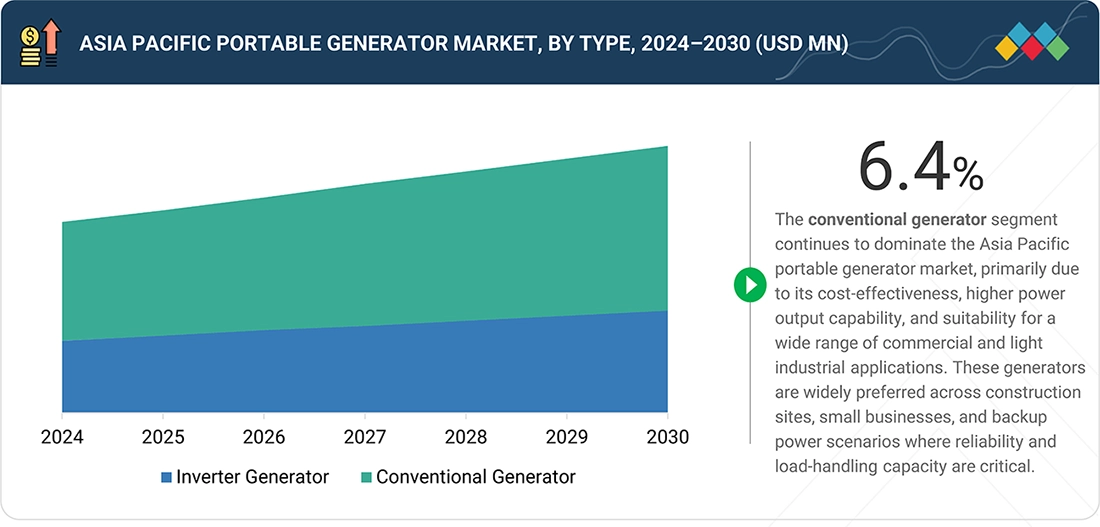
Source: Secondary Research, Interviews with Experts, MarketsandMarkets Analysis
Asia Pacific Portable Generator Market, by Power Rating
5–10 kW portable generators are used to power household appliances, primarily for residential use and camping. The increase in camping activities that require backup portable generators is driving demand in this segment.
Asia Pacific Portable Generator Market, by Fuel
The Asia Pacific portable generator market is segmented by fuel type into gasoline, diesel, natural gas, and others. Portable generators powered by natural gas are gaining traction across the region due to their operational convenience, lower emissions, and comparatively quieter performance. Natural gas is increasingly viewed as a cleaner alternative to conventional fuels, supported by expanding gas infrastructure in countries such as China, Japan, South Korea, and Australia. Additionally, the ability to store fuel efficiently and ensure a consistent supply makes natural gas-based generators suitable for prolonged use during power outages.
Asia Pacific Portable Generator Market, by Application
By application, the Asia Pacific portable generator market is segmented into prime or continuous and emergency use. The emergency segment accounts for the largest share, driven by the rising need for backup power during grid outages across residential, commercial, and light industrial applications. Portable generators are widely used to ensure power continuity during unexpected disruptions, particularly in regions with unreliable or underdeveloped grid infrastructure. Additionally, the increasing frequency of power outages, rapid urbanization, and growing dependence on electricity for critical operations are supporting the growth of the emergency segment across the Asia Pacific region.
Asia Pacific Portable Generator Market, by Product Type
By product type, the Asia Pacific portable generator market is segmented into conventional and inverter generators. Conventional generators hold a significant share due to their affordability, higher power output, and widespread use across residential, commercial, and light industrial applications. These generators are preferred for heavy-duty operations and emergency backup during power outages, particularly in regions experiencing grid instability and extreme weather conditions. Their simple design, ease of maintenance, and ability to support larger loads make them suitable for construction sites and industrial use. Despite the increasing adoption of inverter generators, conventional generators continue to witness strong demand across the region due to their cost-effectiveness and operational reliability.
Asia Pacific Portable Generator Market, by End User
By end user, the Asia Pacific portable generator market is segmented into residential, commercial, and industrial sectors. The residential segment holds a major share, driven by the increasing frequency of power outages and rising awareness regarding backup power solutions across developing and emerging economies. Portable generators are widely used in households to ensure uninterrupted power supply for essential appliances such as lighting, refrigerators, and communication devices during grid failures. Additionally, the growing use of portable generators for outdoor activities such as camping and small-scale events is supporting market growth. The availability of compact, user-friendly, and affordable models is further encouraging higher adoption among residential users across the Asia Pacific region.
REGION
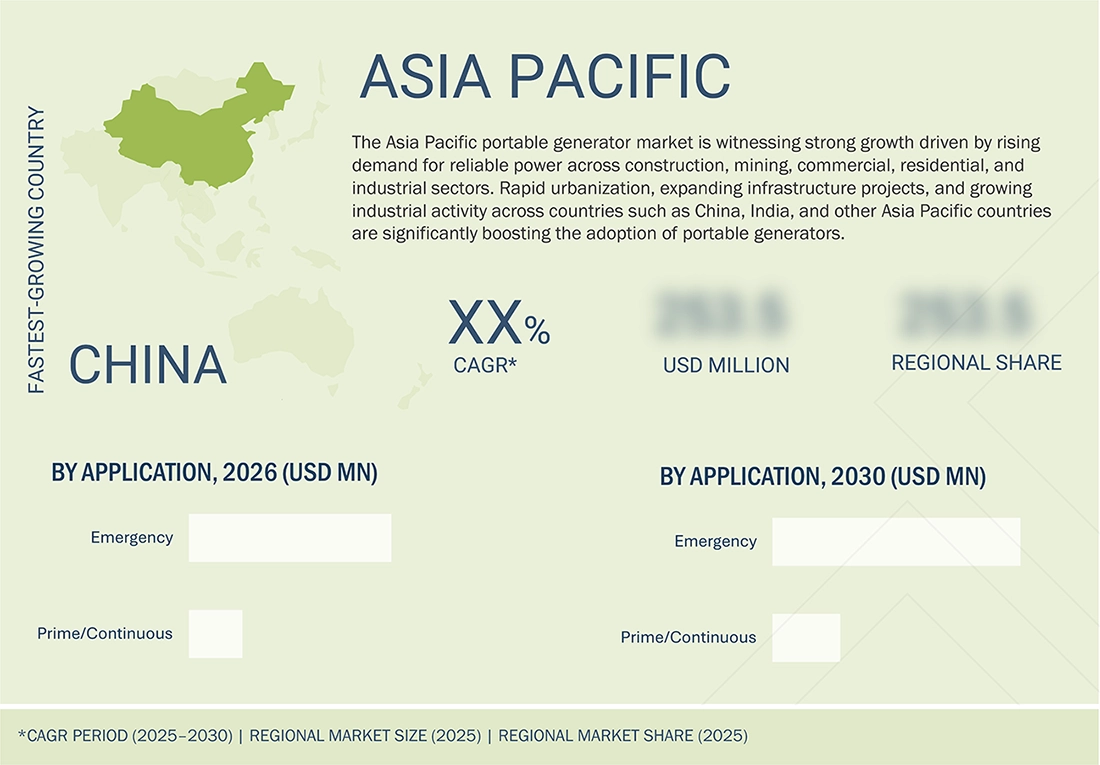
China to be largest country in Asia Pacific portable generator market during forecast period
China is expected to be the largest country in the Asia Pacific portable generator market, driven by its strong industrial base, extensive infrastructure development, and rising demand for reliable backup power solutions. Rapid urbanization and ongoing investments in construction, manufacturing, and infrastructure projects are significantly increasing electricity consumption across the country. A considerable portion of industrial and construction activities takes place in remote or grid-constrained areas, which drives the demand for portable generators.
ASIA PACIFIC PORTABLE GENERATOR MARKET: COMPANY EVALUATION MATRIX
Generac Power Systems is recognized as a key player in the Asia Pacific portable generator market, supported by its strong product portfolio and expanding presence across selected markets in the region. The company’s wide range of portable and backup power solutions enables it to cater to diverse residential, commercial, and light industrial applications. Honda is also a prominent player in the Asia Pacific market, known for its reliable, fuel-efficient, and cost-effective portable generators. Its strong brand reputation, extensive distribution network, and focus on innovation and sustainability contribute to its widespread adoption across multiple end-user segments in the region.
Source: Secondary Research, Interviews with Experts, MarketsandMarkets Analysis
KEY MARKET PLAYERS
- Generac (US)
- Cummins (US)
- Briggs and Stratton (US)
- Caterpillar Inc. (US)
- Honeywell International Inc. (US)
- Siemens (Germany)
- Yamaha Motor Co., Ltd. (Japan)
- Kubota Corporation (Japan)
- Kohler (US)
- Champion Power Equipment (US)
- Wen portable generators (US)
- Kirloskar Oil Engines Ltd. (India)
- Honda (Japan)
MARKET SCOPE
| REPORT METRIC | DETAILS |
|---|---|
| Market Size in 2024 (Value) | USD 0.58 BN |
| Market Forecast in 2030 (Value) | USD 0.89 BN |
| Growth Rate | 7.5% |
| Years Considered | 2021–2030 |
| Base Year | 2024 |
| Forecast Period | 2025–2030 |
| Units Considered | Value (USD BN), Volume (Thousand Unit) |
| Report Coverage | Revenue Forecast, Company Ranking, Competitive Landscape, Growth Factors, and Trends |
| Segments Covered |
|
| Regions Covered | Asia Pacific |
WHAT IS IN IT FOR YOU: ASIA PACIFIC PORTABLE GENERATOR MARKET REPORT CONTENT GUIDE
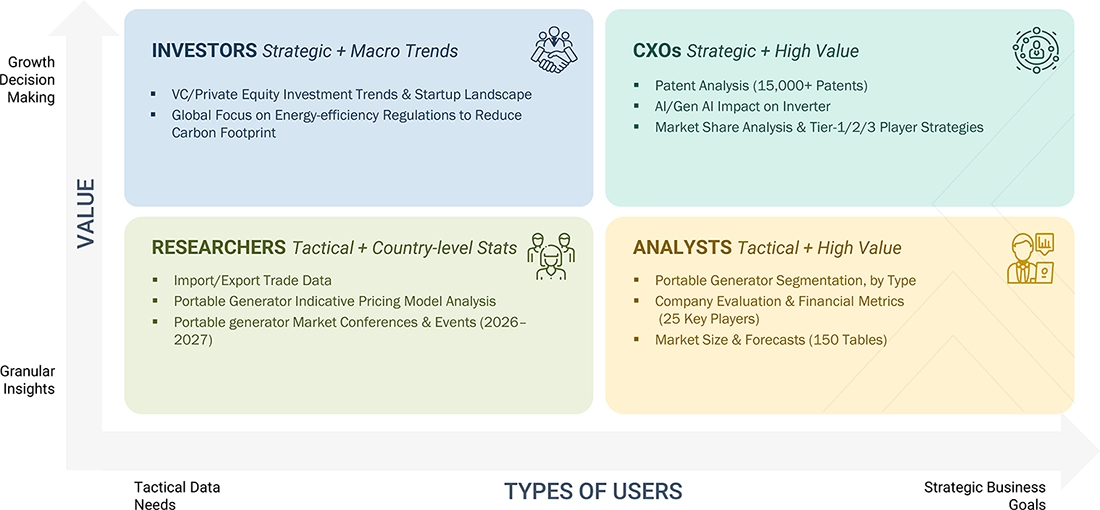
DELIVERED CUSTOMIZATIONS
We have successfully delivered the following deep-dive customizations:
| CLIENT REQUEST | CUSTOMIZATION DELIVERED | VALUE ADDS |
|---|---|---|
| Client requirement for Asia Pacific region-specific report | Market sizing for Asia Pacific countries | Country-wise market attractiveness analysis, investment and generator expansion insights, competitive landscape overview, and application scope of portable generators in high-growth economies |
RECENT DEVELOPMENTS
- July 2025 : Honda Motor Co., Ltd. upgraded its portable generator lineup with an enhanced CO-MINDER safety system, featuring improved sensor sensitivity and automatic shutdown at around 600 PPM carbon monoxide levels to comply with updated ANSI/PGMA G300-2023 standards.
- December 2025 : Cummins India unveiled its next-generation CPCB IV+ compliant 82.5 kVA genset at EXCON 2025, designed for infrastructure, construction, and mining applications. The system offers improved fuel efficiency, lower emissions, compact design, and enhanced performance, aligning with stricter environmental regulations and evolving industrial requirements.
- August 2024 : Yamaha Motor Co., Ltd. and Denyo Co., Ltd. continued advancing fuel-efficient and low-emission portable generator technologies, focusing on inverter-based systems, noise reduction, and improved operational efficiency to meet tightening environmental regulations and evolving customer requirements across Asia Pacific.
Table of Contents
 Exclusive indicates content/data unique to MarketsandMarkets and not available with any competitors.
Methodology
The study involved major activities in estimating the current size of the Asia pacific portable generator market. Exhaustive secondary research was done to collect information on the peer and parent markets. The next step was to validate these findings, assumptions, and sizing with industry experts across the value chain through primary research. Both top-down and bottom-up approaches were employed to estimate the complete market size. Thereafter, market breakdown and data triangulation were used to estimate the market size of the segments and subsegments.
Secondary Research
This research study on the Asia pacific portable generator market involved the use of extensive secondary sources, directories, and databases, such as Hoovers, Bloomberg, Businessweek, Factiva, International Energy Agency, and BP Statistical Review of World Energy, to identify and collect information useful for a technical, market-oriented, and commercial study of the global portable generators market. The other secondary sources included annual reports, press releases, and investor presentations of companies, white papers, certified publications, articles by recognized authors, manufacturer associations, trade directories, and databases.
Primary Research
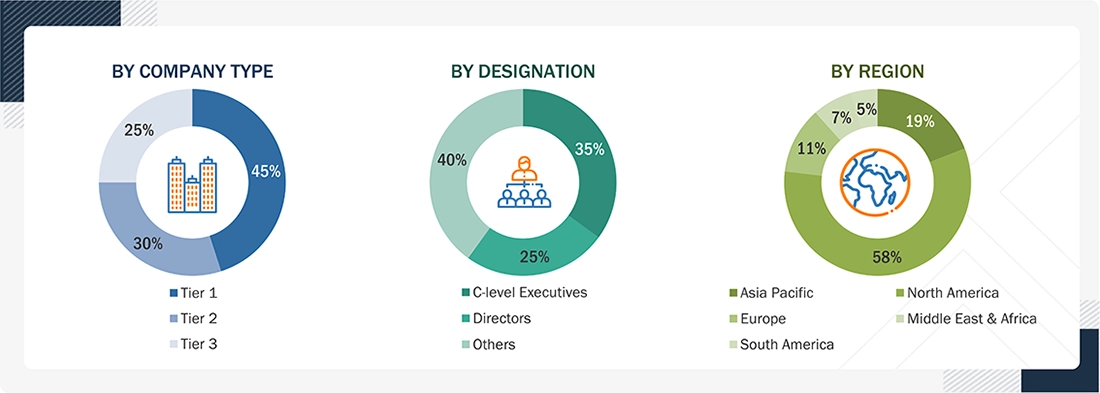
The Asia Pacific portable generators market comprises several stakeholders such as portable generators manufacturers, manufacturers of components of portable generators infrastructure, technology providers, and technology support providers in the supply chain. The demand side of this market is characterized by the rising demand for portable generators in the nations to reduce the non-revenue water losses. The supply side is characterized by rising demand for contracts from the residential users, commercial users and mergers and acquisitions among big players. Various primary sources from both the supply and demand sides of the market were interviewed to obtain qualitative and quantitative information. Following is the breakdown of primary respondents:
To know about the assumptions considered for the study, download the pdf brochure
Market Size Estimation
Both top-down and bottom-up approaches were used to estimate and validate the total size of the Asia Pacific portable generators market. These methods were also used extensively to estimate the size of various subsegments in the market. The research methodology used to estimate the market size includes the following:
- The key players in the industry and market have been identified through extensive secondary research, and their market share in the respective regions have been determined through both primary and secondary research.
- The industry’s value chain and market size, in terms of value, have been determined through primary and secondary research processes.
- All percentage shares, splits, and breakdowns have been determined using secondary sources and verified through primary sources.
Data Triangulation
After arriving at the overall market size from the estimation process explained above, the total market has been split into several segments and subsegments. To complete the overall market engineering process and arrive at the exact statistics for all the segments and subsegments, the data triangulation and market breakdown processes have been employed, wherever applicable. The data has been triangulated by studying various factors and trends from both the demand- and supply sides. Along with this, the market has been validated using both the top-down and bottom-up approaches.
Objectives of the Study
- To define, describe, segment, and forecast the Asia Pacific Portable Generators market size, by product type, fuel, power rating, end user, and application
- To provide detailed information on the major drivers, restraints, opportunities, and industry-specific challenges influencing the growth of the portable generators market
- To strategically analyze the portable generators market with respect to individual growth trends, prospects, and contributions of each segment to the market
- To analyze market opportunities for stakeholders and provide a detailed competitive landscape for market leaders
- To forecast the revenue of the market segments with respect to five main regions (along with countries), namely, North America, Europe, Asia Pacific, South America, and the Middle East & Africa
- To strategically profile key players and comprehensively analyze their market ranking and core competencies
- To track and analyze competitive developments such as new product developments, contracts & agreements, investments & expansions, and mergers & acquisitions in the portable generators market
Available Customizations:
With the given market data, MarketsandMarkets offers customizations as per the client’s specific needs. The following customization options are available for this report:
Geographic Analysis
- Further breakdown of region or country-specific analysis
Company Information
- Detailed analyses and profiling of additional market players (up to 5)


Personalize This Research
- Triangulate with your Own Data
- Get Data as per your Format and Definition
- Gain a Deeper Dive on a Specific Application, Geography, Customer or Competitor
- Any level of Personalization
Let Us Help You
- What are the Known and Unknown Adjacencies Impacting the Asia Pacific Portable Generator Market
- What will your New Revenue Sources be?
- Who will be your Top Customer; what will make them switch?
- Defend your Market Share or Win Competitors
- Get a Scorecard for Target Partners

Custom Market Research Services
We Will Customise The Research For You, In Case The Report Listed Above Does Not Meet With Your Requirements
Get 10% Free CustomisationTESTIMONIALS

Kimberly Murphy
GLOBAL MARKETING DIRECTOR
Bently Nevada,
Leading Condition Monitoring & Asset Protectionwww.bakerhughesds.com/bently-nevada

MarketsandMarkets™ showed consistent rigor for success and relentlessly worked with Bently Nevada stakeholders to positively impact go-to-market strategy. Their proactiveness and flexibility has been instrumental in achieving the objectives to grow our sales pipeline in key industrial markets.

DARRICK HUEBER
Business Development Leader
Nexus Controls LLC,
Leading Manufacturer of Automation System & Electrical Panelswww.bakerhughesds.com/nexus-controls

We partnered with MarketsandMarkets to expand our business further by tapping into new industrial segments. It was critical for us to gather crucial business insights about specific markets to achieve this goal. MarketsandMarkets engagement model and client services helped us provide those insights, it was really impressive and valuable for my business. The team was extremely flexible and helpful.

Mike Schoff
Global Industrial Commercial Strategy Leader
Nexus Controls LLC
Leading Manufacturer of Automation System & Electrical Panelswww.bakerhughesds.com/nexus-controls
We consulted MarketsandMarkets for potential Partner Identification. Overall, it was a good experience. The insights provided through interviews conducted by the team helped us put together the questionnaire required for discussion with the selected partners. Their ability to provide insights through interviews with customers in a timely manner was quite impressive.






Growth opportunities and latent adjacency in Asia Pacific Portable Generator Market