Asia Pacific Refrigerants Market

Asia Pacific Refrigerants Market by Type (HFC, HFO, Isobutane, Propane, Ammonia, Carbon Dioxide, Others) & Application (Refrigeration System, Chillers, Air Conditioning Systems, and MAC) - Forecast to 2030




OVERVIEW
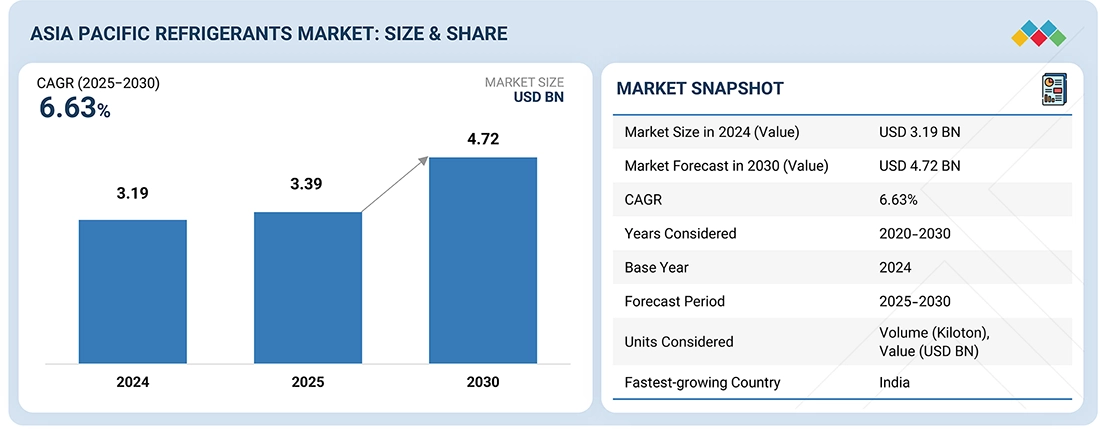
Source: Secondary Research, Interviews with Experts, MarketsandMarkets Analysis
The Asia Pacific refrigerants market is experiencing rapid growth driven by factors such as increasing urbanization, extensive infrastructure development, and the widespread adoption of air conditioning systems for both residential and commercial use. The primary drivers of demand are China, India, Japan, and Southeast Asia, where higher temperatures, expanded cold chain networks, and increased retail activity in food and pharmaceutical logistics are driving greater consumption of refrigerants. The region is gradually shifting away from conventional hydrofluorocarbons (HFCs) like R-410A and R-32, moving toward low global warming potential (GWP) alternatives such as hydrofluoroolefins (HFOs), hydrocarbons (R-290 and R-600a), ammonia, and carbon dioxide. This transition is supported by the commitments made under the Kigali Amendment and the individual phase-down schedules of various countries. Additionally, the robust manufacturing sector in the Asia Pacific, particularly in HVAC equipment, consumer appliances, and industrial refrigeration, creates a consistent in-house demand for refrigerant charging, servicing, and retrofitting.
KEY TAKEAWAYS
-
BY TYPEThe HFO segment is projected to be the fastest-growing refrigerant type, with a CAGR of 16.70% in terms of value between 2025 and 2030.
-
BY APPLICATIONThe air conditioning systems segment is projected to register the highest CAGR of 6.81%, in terms of value, during the forecast period.
-
BY COUNTRYChina dominated the Asia Pacific refrigerants market in 2024, accounting for a market share of 52.0% in terms of value.
-
COMPETITIVE LANDSCAPE - KEY PLAYERSDongyue Group Limited, Daikin, Honeywell International Inc., The Chemours Company, and Arkema are identified as key players in the Asia Pacific refrigerants market. These companies have a strong market presence and extensive product portfolios.
-
COMPETITIVE LANDSCAPE - STARTUPSAGC Inc., Quimobasicos, S.A. de C.V., and A-Gas International Limited, among other emerging players, have established solid positions in specialized niche segments, highlighting their potential to become future market leaders in the Asia Pacific refrigerants market.
The Asia Pacific refrigerants market is progressing quickly as countries invest heavily in climate-friendly cooling solutions to support dense urban populations and expanding commercial infrastructure. China, Japan, and South Korea are some of the prominent HVAC equipment manufacturing centers where continuous production is creating a stable demand for refrigerants that comply with updated efficiency standards and region, specific safety requirements. Meanwhile, Southeast Asian countries have been switching their cooling systems to handle rising ambient temperatures, thus increasing the usage of refrigerants capable of operating efficiently in hot climatic conditions.
TRENDS & DISRUPTIONS IMPACTING CUSTOMERS' CUSTOMERS
Consumer and business demand shaping the Asia Pacific refrigerants market is primarily driven by massive growth in cooling requirements across the residential, commercial, and industrial sectors. Rapid urbanization, increasing temperatures, and the construction of malls, office complexes, and high-density housing are driving the region toward more efficient refrigerant options. Industries such as electronics manufacturing, large-scale food processing, pharmaceutical storage, and retail cold chains are rapidly growing and are major consumers of advanced refrigerants, as they require strict temperature control and continuous operations.
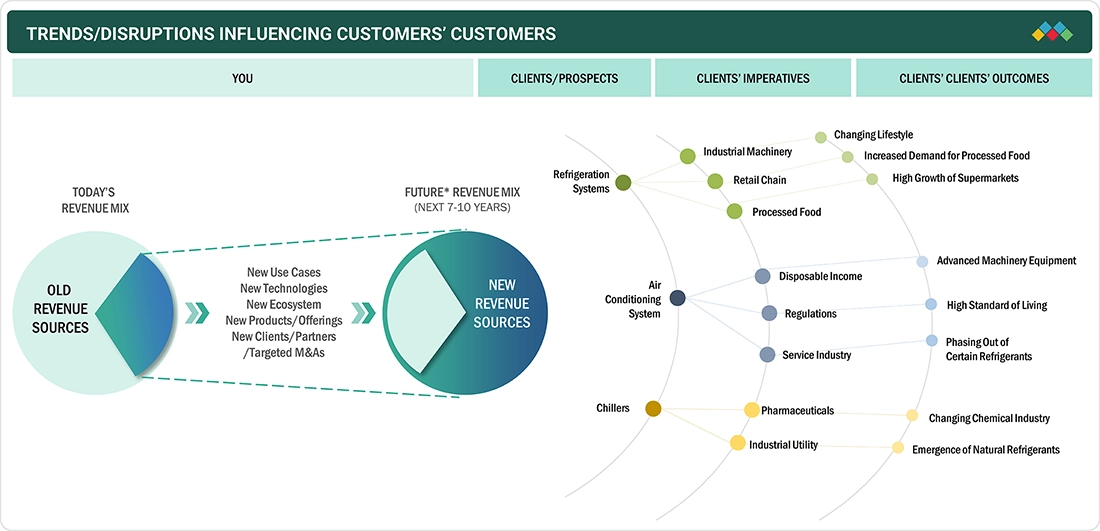
Source: Secondary Research, Interviews with Experts, MarketsandMarkets Analysis
MARKET DYNAMICS

Level
-
Rapid urbanization and massive expansion of residential & commercial cooling demand

-
Strong manufacturing base and rising adoption of energy-efficient cooling technologies


Level
-
Fragmented regulatory structures across countries creating compliance uncertainty

-
Limited technical readiness for safe handling of flammable next-generation refrigerants


Level
-
Accelerated shift toward natural refrigerants in retail, cold storage, and food processing

-
Booming heat-pump installations supported by government incentives in China, Japan, and South Korea


Level
-
Balancing affordability with need to upgrade to low-GWP systems

-
Addressing skill gaps in installation, maintenance, and safe refrigerant management

Source: Secondary Research, Interviews with Experts, MarketsandMarkets Analysis
Driver: Rapid urbanization and large-scale development of residential and commercial cooling demand
Asia Pacific, especially India, Southeast Asia, and China's Tier 2 and 3 cities, is witnessing a massive rise in cooling demand due to population growth, urbanization, and income growth. Such an upsurge is leading to the extensive use of room air conditioners, commercial AC systems, and industrial refrigeration units in places like malls, data centers, factories, and hospitals. The combination of hotter climatic conditions, greater electrification, and lifestyle shifts is pushing HVAC penetration rates to new highs. As a result, refrigerant consumption is growing rapidly, supported by the installation of new cooling equipment and recurring demand for servicing, charging, and maintenance.
Restraint: Fragmented regulatory structures across countries creating compliance uncertainty
In contrast to Europe or North America, the Asia Pacific region lacks a single refrigerant policy framework, leading to the development of national regulations and different phase-out schedules for high-GWP refrigerants. Some countries, for example, Japan and Australia, have set very high standards for flammable refrigerants and established strict transition pathways, while the rest still depend on HFC imports. This regulatory divergence therefore poses a challenge for OEMs and distributors, who must separately rework product designs, refrigerant choices, and compliance documentation for each market. The disagreement ultimately slows down the adoption of advanced refrigerants across the region.
Opportunity: Accelerated shift toward natural refrigerants in retail, cold storage, and food processing
The Asia Pacific region's cold chain industry is quickly becoming more sophisticated, due to e-commerce growth, pharmaceutical logistics, and food export demands. This has led to significant use and a shift toward carbon dioxide, ammonia, and hydrocarbon refrigerants. Supermarket chains in Japan, South Korea, China, and Australia are implementing natural refrigerant-based refrigeration systems to reduce their emissions and increase their overall efficiency. Governments are facilitating the transition to green tech through subsidies, pilot programs, and mandates to reduce carbon emissions. Because of that, natural refrigerants are becoming a crucial sector for growth, with great potential for both new installations and upgrading existing systems.
Challenge: Balancing affordability with need to upgrade to low-GWP systems
Balancing affordability with the need to upgrade to low-GWP systems is one of the major challenges the Asia Pacific region faces. The challenge is particularly significant in India, Indonesia, and Vietnam, where markets are highly cost-sensitive. It is true that green refrigerants can save money in the long run; however, the initial costs of redesigning the equipment, installing safety systems, and training technicians can be quite burdensome for end users and small businesses. In fact, many firms are at a loss as to how to make both ends meet, i.e., keeping their homes or offices affordable while at the same time complying with regulatory requirements and sticking to their long-term environmental commitments. Moreover, the problem is compounded by a shortage of skilled workers trained in the safe handling of mildly flammable or high-pressure refrigerants, which may delay the transition to new technologies even further.
ASIA PACIFIC REFRIGERANTS MARKET: COMMERCIAL USE CASES ACROSS INDUSTRIES
| COMPANY | USE CASE DESCRIPTION | BENEFITS |
|---|---|---|
 |
Deployment of R-32-based room air conditioners, VRV systems, and packaged units across Japan, India, and Southeast Asia | Inverter-enabled, low GWP cooling technologies featured expansion and adaptation for tropical climates | Resulted in lower energy consumption in regions with high temperatures, decreased GWP footprint, increased cooling efficiency, and affordability for mass-market consumers |
 |
Integration of next-generation refrigerants such as R-290 in residential ACs and heat pumps | Development of compact, charge-optimized designs for emerging markets | Lower refrigerant volume requirements, enhanced compliance with evolving safety norms, and cost-effective system operation for large-scale deployments |
 |
Expansion of CO2 (R-744) refrigeration units for supermarkets, convenience stores, and food logistics | Development of transcritical systems suitable for high-ambient tropical regions | Major emission cuts, a steady operation under different ambient conditions, and an improved sustainability of the food retail chains were the benefits derived from the project |
Logos and trademarks shown above are the property of their respective owners. Their use here is for informational and illustrative purposes only.
MARKET ECOSYSTEM
The Asia Pacific refrigerants market ecosystem is supported by a wide range of regional chemical producers, rapidly expanding HVAC-R system manufacturers, cold-chain infrastructure developers, service contractors, and government agencies that are encouraging energy-efficient cooling. Several countries in the region are implementing their refrigerant strategies through national energy policies and green building codes. OEMs and component manufacturers at the local level collaborate with distributors and service providers to increase the availability of A2L refrigerants, natural refrigerants such as ammonia and carbon dioxide, and tailor-made HFC blends for use in high ambient conditions. The ongoing large-scale development of food processing clusters, pharmaceutical logistics, electronics manufacturing, and urban commercial complexes is fueling the demand for high-quality cooling solutions at a reasonable price and reliably. By channeling more funds into smart infrastructure, heat pump penetration, and advanced cold storage, the Asia Pacific market is a high-growth, innovation-driven ecosystem focused on scalability, energy efficiency, and environmental compatibility across industrial, commercial, and residential applications, thereby ensuring a competitive edge globally.
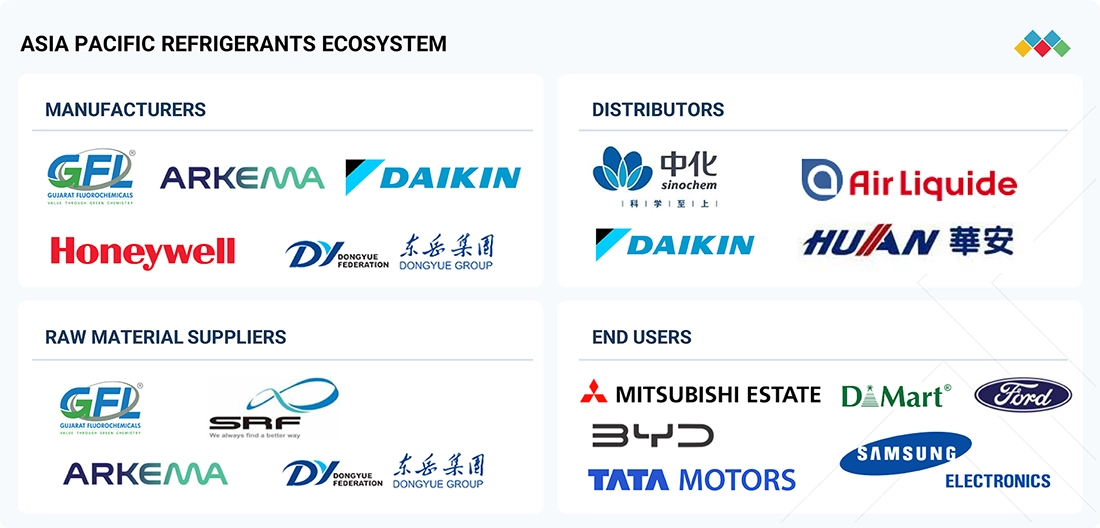
Logos and trademarks shown above are the property of their respective owners. Their use here is for informational and illustrative purposes only.
MARKET SEGMENTS
Asia Pacific Refrigerants Market, by Type
HFO is forecasted to be the fastest-growing refrigerant segment in the Asia Pacific region, aided by strong adoption in China, the largest market, and increasing regulatory pressure to move away from high-GWP HFCs. The rise in demand for residential and commercial cooling, coupled with the large-scale production of air conditioners and heat pumps, is hastening the transition to advanced, low-GWP refrigerants. Although HFCs are still widely used in many developing Southeast Asian markets due to legacy equipment and cost advantages, they are gradually losing ground as local producers increase their HFO production capacity. As nations make stronger commitments to the Kigali Amendment, the trend toward using HFO-based blends and other eco-friendly options is likely to grow across the region.
Asia Pacific Refrigerants Market, by Application
Mobile air conditioning (MAC) ranked as the second-fastest-growing application in the Asia Pacific refrigerants market due to a combination of factors, including vehicle production hitting new highs, higher passenger car ownership rates in China and India, and the rapid transition to energy-efficient refrigerants such as HFO 1234yf. Development in the automotive industry, the growth of EV production, and stricter emission standards are once more affecting the choice of refrigerants in the MAC segment. Although commercial and residential HVAC systems still account for the largest share of users, the momentum of the regional automotive market ensures that demand for compliant, high-performance MAC refrigerants is growing rapidly.
REGION
China accounted for largest share of Asia Pacific refrigerants market in 2024
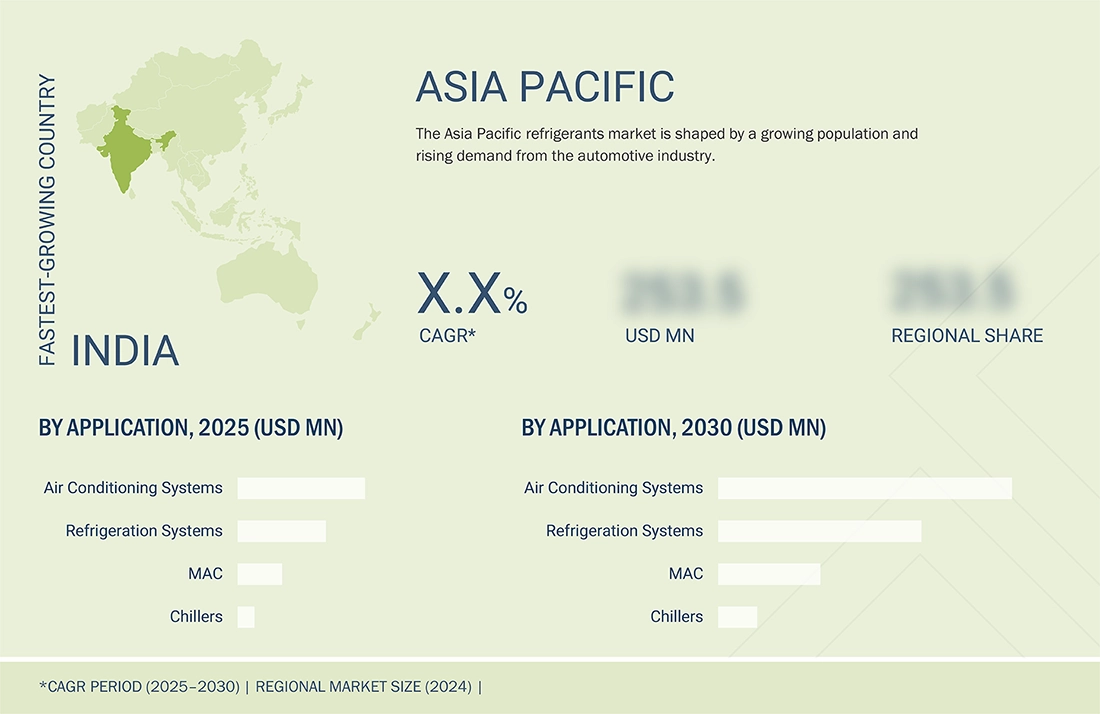
China accounted for the largest share of the Asia Pacific refrigerants market, in terms of value, in 2024. This is largely due to its massive HVAC manufacturing base, robust automotive production, and the fast development of cold chain and industrial cooling infrastructure. The country's rapid transition to low-GWP refrigerants, driven nationally by climate targets and locally by increasing HFO production capacity, firmly establishes its leadership in both consumption and supply at the regional level. Japan and South Korea are the next in line with well-established markets that emphasize high-efficiency, low-emission refrigerant technologies, especially for heat pumps and automotive AC systems. India is also experiencing rapid demand growth, driven by expanding residential cooling needs, higher disposable incomes, and the wider adoption of compliant refrigerants in commercial HVAC. Southeast Asian nations such as Thailand, Indonesia, and Vietnam continue to rely more on HFC-based systems but are gradually moving toward blended and next-generation alternatives as equipment modernization and regulatory alignment accelerate across the region.
ASIA PACIFIC REFRIGERANTS MARKET: COMPANY EVALUATION MATRIX
Honeywell International Inc. (Star) is the market leader in the Asia Pacific refrigerants market. This is mainly because of its strong range of advanced HFO and low-GWP refrigerants, good working relations with regional HVAC and refrigeration OEMs, and its capacity to support large-scale changes toward A2L and energy-efficient systems in China, Japan, South Korea, and Southeast Asia. Its technological innovation and readiness for regulatory implementation make it a go-to supplier for high-performance commercial and residential cooling applications. Dongyue Group (Emerging Leader) is getting increasingly recognized due to its growing production capacity, its pricing being very competitive, and the rise in domestic manufacturers in China, the region's largest market, adopting its HFC and new-generation HFO products. The company's growing export footprint and clean fluorochemical projects are transforming it into a fast-rising competitor that is steadily moving closer to the leaders' quadrant as Asia Pacific accelerates the switch to low-GWP refrigerants.
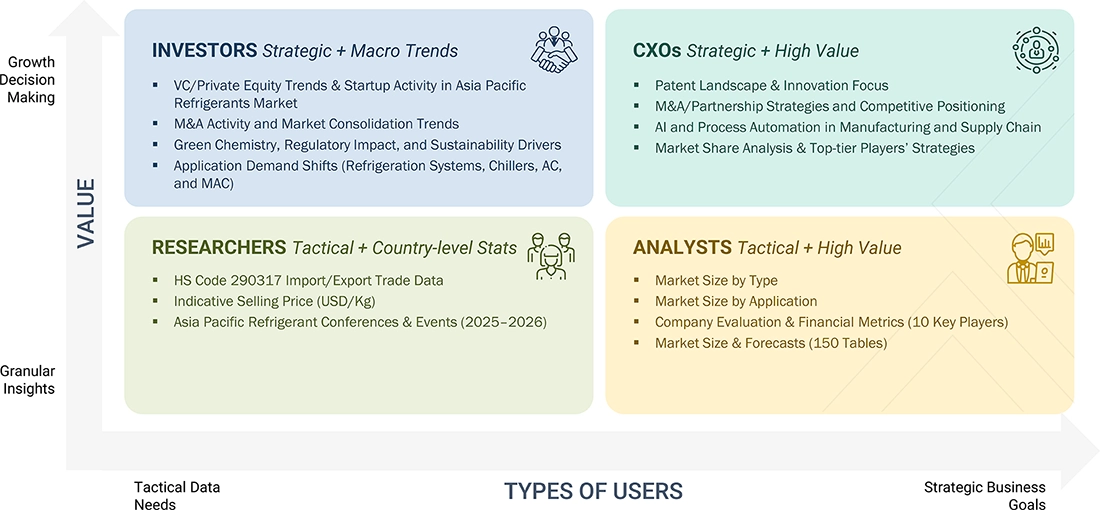
Source: Secondary Research, Interviews with Experts, MarketsandMarkets Analysis
KEY MARKET PLAYERS
- Honeywell International Inc. (US)
- Arkema (France)
- Dongyue Group Limited (China)
- The Chemours Company (US)
- Linde plc (Ireland)
- Daikin Industries Ltd. (Japan)
- Sinochem Hong Kong (Group) Company Limited (Hong Kong)
- Orbia Advance Corporation, S.A.B. de C.V. (Mexico)
- AGC Inc. (Japan)
- A-Gas International Limited (UK)
MARKET SCOPE
| REPORT METRIC | DETAILS |
|---|---|
| Market Size in 2024 (Value) | USD 3.19 Billion |
| Market Forecast in 2030 (Value) | USD 4.72 Billion |
| Growth Rate | CAGR of 6.63% from 2025 to 2030 |
| Years Considered | 2020–2030 |
| Base Year | 2024 |
| Forecast Period | 2025–2030 |
| Units Considered | Volume (Kiloton), Value (USD Billion) |
| Report Coverage | Revenue Forecast, Company Ranking, Competitive Landscape, Growth Factors, and Trends |
| Segments Covered |
|
| Regional Scope | Asia Pacific |
WHAT IS IN IT FOR YOU: ASIA PACIFIC REFRIGERANTS MARKET REPORT CONTENT GUIDE
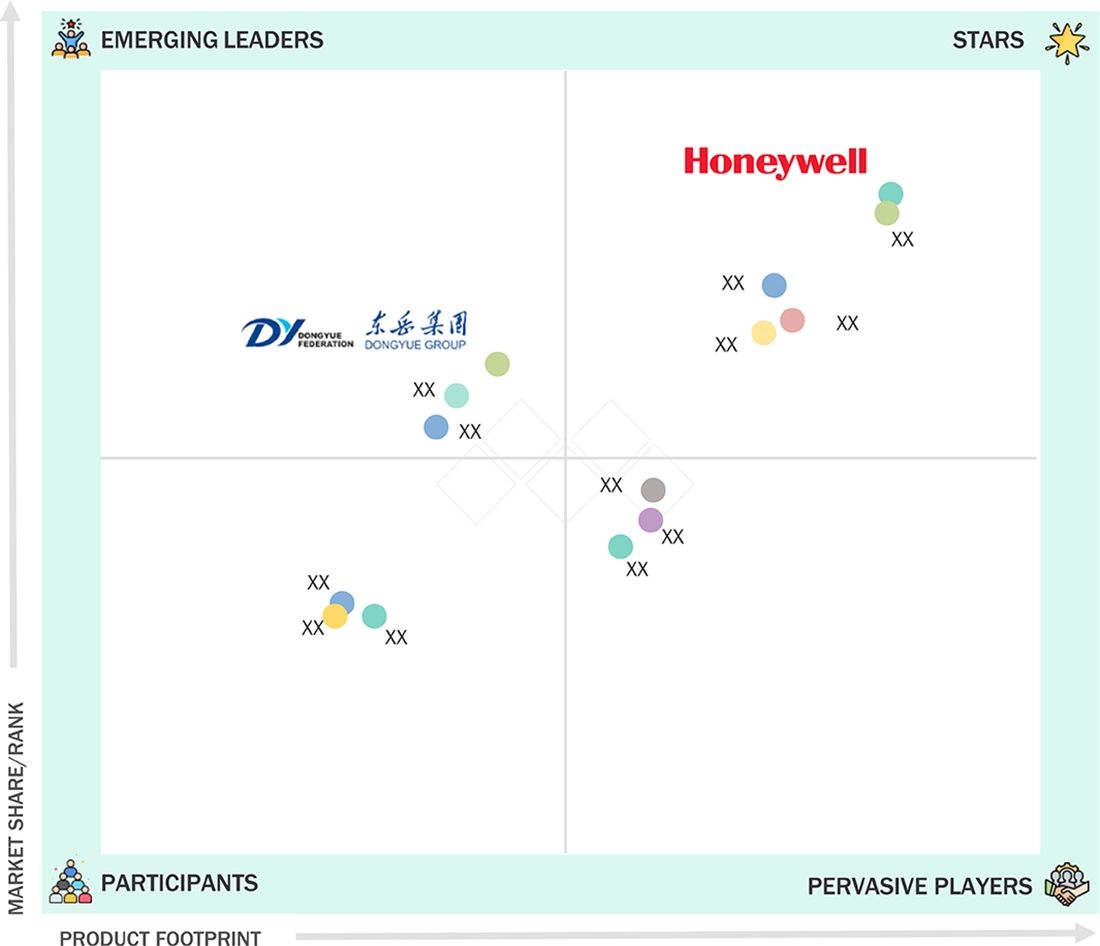
DELIVERED CUSTOMIZATIONS
We have successfully delivered the following deep-dive customizations:
| CLIENT REQUEST | CUSTOMIZATION DELIVERED | VALUE ADDS |
|---|---|---|
| Refrigerant Replacement Opportunity Modeling |
|
Identifies short-term and long-term revenue opportunities for OEMs, chemical suppliers, and service companies |
| Price Tracking & Cost Structure Benchmarking |
|
Helps producers and distributors optimize pricing strategy and negotiate with suppliers |
RECENT DEVELOPMENTS
- September 2024 : Daikin Industries Ltd. has announced plans to expand its operations in India to meet growing demand. The company intends to build a new plant near its existing facility in southern India. Daikin aims to double its sales in India by 2025 and increase production for global exports by 2026, further strengthening its presence in the region.
- June 2020 : Daikin and WASSHA Inc. established a new company, Baridi Inc., to start an air conditioner subscription business through which customers can use air conditioners whenever they want by paying a usage fee through a smartphone on either a daily, weekly, or monthly basis. This was done to commercialize the general use of air conditioners among the East African middle-income group who previously could not afford air conditioners.
- July 2020 : Linde plc set up a new air separation unit (ASU) and the first of three nitrogen generators as part of a 15-year contract to supply ultra-high purity industrial gases to a major electronics customer in Taiwan.
- May 2019 : Daikin announced that a resolution was passed to establish a new subsidiary in China for the manufacture and sales of fluorochemical products in the semiconductor and battery materials market.
Table of Contents
 Exclusive indicates content/data unique to MarketsandMarkets and not available with any competitors.
Methodology
The study involved four major activities in estimating the market size for Asia Pacific refrigerants market. Exhaustive secondary research was done to collect information on the market, the peer market, and the parent market. The next step was to validate these findings, assumptions, and sizing with industry experts across the value chain through primary research. Both top-down and bottom-up approaches were employed to estimate the complete market size. Post that, the market breakdown and data triangulation procedures were used to estimate the market size of the segments and subsegments.
Secondary Research
Secondary sources used in this study included annual reports, press releases, and investor presentations of companies; white papers; certified publications; articles from recognized authors; and gold standard & silver standard websites such as Factiva, ICIS, Bloomberg, and others. The findings of this study were verified through primary research by conducting extensive interviews with key officials such as CEOs, VPs, directors, and other executives. The breakdown of profiles of the primary interviewees is illustrated in the figure below:
Primary Research
The Asia Pacific Refrigerants Market comprises several stakeholders, such as raw material suppliers, end-product manufacturers, and regulatory organizations in the supply chain. The demand side of this market is characterized by the automotive, medical, construction and others. The supply side is characterized by advancements in technology and diverse application industries. Various primary sources from both the supply and demand sides of the market were interviewed to obtain qualitative and quantitative informations.
To know about the assumptions considered for the study, download the pdf brochure
| COMPANY NAME | DESIGNATION | |
|---|---|---|
| Honeywell International Inc. | Director of Marketing | |
| The Chemours Company | Manager- Sales & Marketing | |
| The Linde Group | Sales Manager | |
| Arkema | Production Manager | |
Market Size Estimation
Both top-down and bottom-up approaches were used to estimate and validate the total size of the Asia Pacific Refrigerants Market . These methods were also used extensively to estimate the size of various subsegments in the market. The research methodology used to estimate the market size includes the following:
- The key players in the industry have been identified through extensive secondary research.
- The supply chain of the industry has been determined through primary and secondary research.
- All percentage shares, splits, and breakdowns have been determined using secondary sources and verified through primary sources.
- All possible parameters that affect the markets covered in this research study have been accounted for, viewed in extensive detail, verified through primary research, and analyzed to obtain the final quantitative and qualitative data.
Data Triangulation
After arriving at the overall market size—using the market size estimation processes as explained above—the market was split into several segments and subsegments. To complete the overall market engineering process and arrive at the exact statistics of each market segment and subsegment, the data triangulation, and market breakdown procedures were employed, wherever applicable. The data was triangulated by studying various factors and trends from both the demand and supply sides in the Asia Pacific refrigerants industry.
Market Definition
According to the International Institute of Refrigeration, refrigerants are cooling mediums that absorb heat at low temperatures and pressure and release heat at high temperatures and pressure. Fluorocarbons are the most widely used refrigerants in equipment, such as refrigerators and air conditioners. However, due to their high ozone depleting potential (ODP) and global warming potential (GWP), they are being replaced by greener refrigerants such as propane, isobutane, ammonia, and carbon dioxide, among others, such as water and propene.
Stakeholders
- Refrigerants Manufacturers
- Refrigerants Traders, Distributors, and Suppliers
- End-use Market Participants of Different Segments of Refrigerants
- Government and Research Organizations
- Associations and Industrial Bodies
- Research and Consulting Firms
- R&D Institutions
- Environment Support Agencies
- Investment Banks and Private Equity Firms
Report Objectives
- To define, describe, and forecast the Asia Pacific Refrigerants refrigerants market in terms of value and volume
- To provide detailed information regarding the drivers, opportunities, restraints, and challenges influencing market growth in the Asia Pacific Refrigerants refrigerants market
- To estimate and forecast the market size by type, application, and country in the Asia Pacific Refrigerants refrigerants market
- To strategically analyze micromarkets with respect to their growth trends, prospects, and contribution to the overall Asia Pacific Refrigerants refrigerants market
- To analyze opportunities in the market for stakeholders and provide a competitive landscape for market leaders in the Asia Pacific Refrigerants refrigerants market
- To analyze competitive developments, such as deals and expansions, in the Asia Pacific Refrigerants refrigerants market
- To analyze the impact of the recession on the Asia Pacific Refrigerants refrigerants market
- To strategically profile key players and comprehensively analyze their growth strategies in the Asia Pacific Refrigerants refrigerants market


Personalize This Research
- Triangulate with your Own Data
- Get Data as per your Format and Definition
- Gain a Deeper Dive on a Specific Application, Geography, Customer or Competitor
- Any level of Personalization
Let Us Help You
- What are the Known and Unknown Adjacencies Impacting the Asia Pacific Refrigerants Market
- What will your New Revenue Sources be?
- Who will be your Top Customer; what will make them switch?
- Defend your Market Share or Win Competitors
- Get a Scorecard for Target Partners

Custom Market Research Services
We Will Customise The Research For You, In Case The Report Listed Above Does Not Meet With Your Requirements
Get 10% Free CustomisationTESTIMONIALS
We at Nissan Chemicals Corporation have been clients of MarketsandMarkets for more than a year now. We recently consulted MarketsandMarkets for a study, the team at MarketsandMarkets was extremely professional and organized. The business insights were very detailed and aligned well with our expectations that really helped us formulate the Business Plans and device new strategies for development themes. MarketsandMarkets offers a unique combination of expertise and dedicated engagement model. Their research findings have helped us in designing our Pricing Strategy which will make it easier for us to predict the future sales and profits for the next ten years. We look forward to working with MarketsandMarkets in the future.
VP of Strategy & New Business Development
Leading Specialty Chemical Company
The MarketsandMarkets Engagement Model, composed of both the Knowledge Store and advisory custom research, has greatly helped us in understanding our markets and making strategic decisions. The Knowledge Store is a fast way to allow everyone in our organization to understand more about most any market they are interested in. The ability to then get custom research done and get answers to specific strategic questions and market insight has been spectacular. The Markets and Markets team feel more like colleagues than vendors and their services have helped us change our culture where statements of things like growth opportunities and competitive position are always backed by industry research.

Rich Gibson,
Director, Corporate Strategy
Milliken & Company,
Leading Industrial Manufacturer of specialty chemical, floor covering, performance and protective textile materials, and healthcaremilliken.com
MarketsandMarkets is a trusted resource that helps us to better understand markets that are near-adjacencies-whether its technology, value chain or geography. Their Knowledge Store platform provides a dashboard of markets and their characteristics which is easy to use and saves us time.
Adam Shaw,
Market Development and Strategy Manager
AdvanSix Inc. USA,
An American Leader in Chemicalswww.advansix.com
The Knowledge Store from MarketsandMarkets is a valuable tool which has helped my team acquire greater insight in to the end markets that our business serves. This has enabled us to help our company build stronger strategies throughout our planning process.
TOSHIO KINOSHITA
Senior Chif Consultion Research & Consulting Division
Mitsubishi Chemical Research Corporation,
Leading Manufacturer of Chemical Productswww.mitsubishichem-res.co.jp/en/

We recently engaged with MarketsandMarkets for a study, the team not only clearly understood our business objectives but was also extremely professional in the way they handled the entire project. The study was efficiently conducted in a phase-wise manner, and the engagement model furnished us with high-quality business insights that far exceeded our expectations at each phase. We were especially happy that MarketsandMarkets could provide us with both, an English as well as a Japanese version of the study. A special thanks to the Analyst Team and Client Services Team, whose fluency in Japanese enhanced our comfort level, as we could converse with them in our preferred language.
Independent entrepreneurs
Arrow Precision
We approached MarketsandMarkets for study on Proppants Market, and their work exceeded our expectations. The study conducted was comprehensive and enabled us to view the market through the various dimensions. In addition, the team was extraordinarily responsive throughout the process and resolved our queries on time. I strongly recommend MarketsandMarkets and will certainly consider them for additional market assessments we will need in the future.
Global engineering company, Japan
Deputy Manager,
Strategic Planning OfficeThe high-quality insights shared by the MarketsandMarkets team helped us understand the pharmaceutical plant designers in a specific geography. It also captured the risks that we may likely face in communicating with our potential partners. The study would enable us identify partners, which would impact our future growth.






Growth opportunities and latent adjacency in Asia Pacific Refrigerants Market