Automotive Piston Market

Automotive Piston Market by Shape (Flat-top, Bowl, Dome), Material (Steel, Aluminum), Coating (Thermal Barrier, Dry Film, Oil Shedding), Component (Pin, Ring, Head), Fuel Type, Vehicle Type, Aftermarket by Component, & Region - Global Forecast to 2035




OVERVIEW
Source: Secondary Research, Interviews with Experts, MarketsandMarkets Analysis
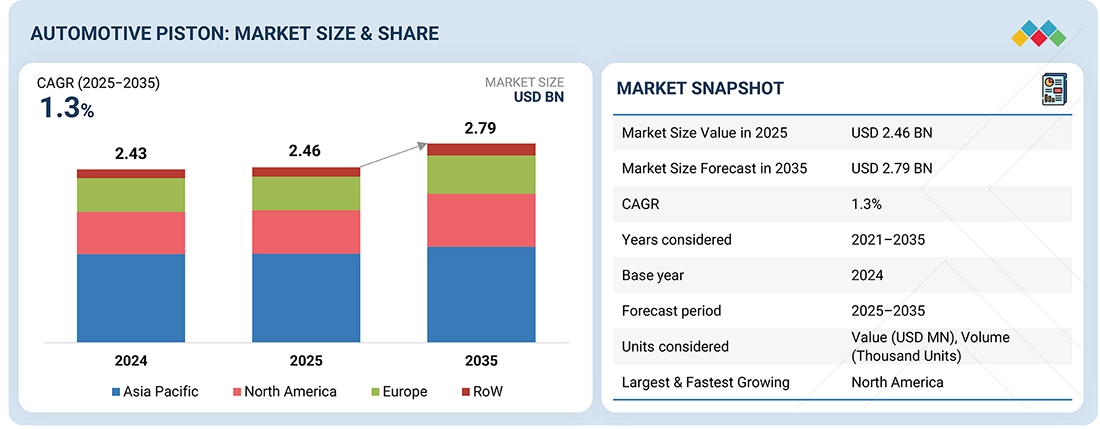
The automotive piston market is projected to rise from USD 2.46 billion in 2025 to USD 2.79 billion by 2035, with a CAGR of 1.3%. The steady demand for automotive piston is mainly driven by the growing sales of ICE passenger cars. The advancements in the automotive piston market are growing due to the trend of engine downsizing and turbocharging, which necessitates lightweight, high-strength pistons (e.g., aluminum and steel) to endure increased pressure. Growth is further supported by hybridization, which requires pistons optimized for frequent start-stop cycles and thermal efficiency. Conversely, the market is constrained by the accelerated shift toward EVs, which eliminates pistons, and the high R&D and manufacturing costs associated with developing advanced materials and coatings.
KEY TAKEAWAYS
-
BY VEHICLE TYPEThe SUV market is expected to expand through 2030, driven by the increasing adoption of hybrid and plug-in models in North America and Europe. Passenger cars still account for over 60% of piston demand globally. Despite rising EV adoption, sustained requirements from hybrid and ICE segments—including cost-efficient CNG/GDI vehicles—will keep the piston market resilient. The industry must strategically balance EV growth with ongoing innovation in hybrid and ICE technologies
-
BY MATERIAL TYPEAluminum pistons dominate the automotive market due to their lightweight design, superior thermal stability, and high strength-to-weight ratio, ensuring efficient combustion across standard and turbocharged engines. Their adoption is increasing even in heavy commercial vehicles due to high speed-bearing capability. Manufacturers are focusing on hypereutectic alloys and specialized coatings to further boost durability and efficiency. Aluminum pistons will remain the preferred choice, supported by continuous material innovation and rising global vehicle output
-
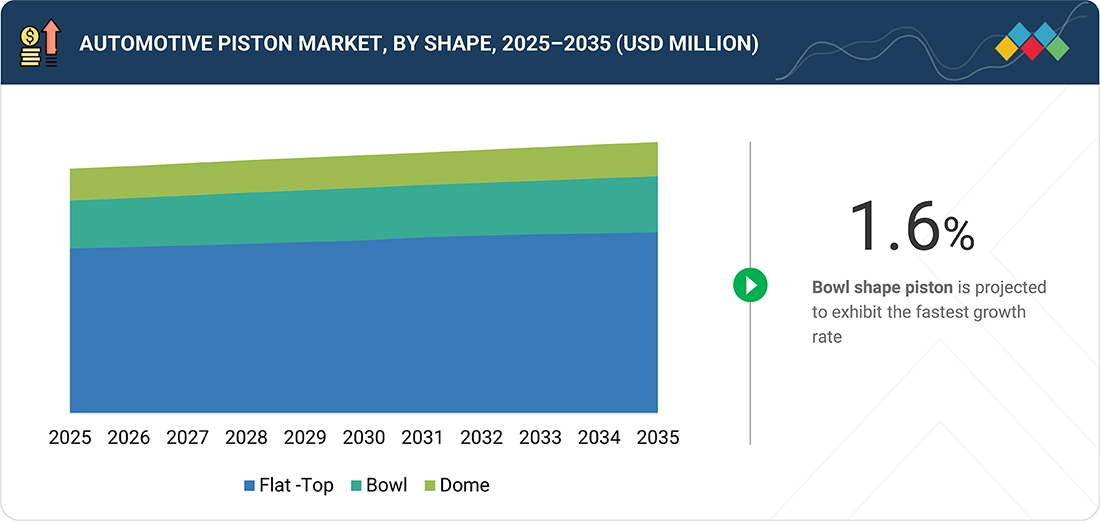
BY SHAPEThe demand for Bowl-shaped pistons is set for the fastest CAGR, primarily because their design enables superior air-fuel mixing crucial for efficient combustion and reduced NOX emissions. This directly addresses tightening global regulations like Euro 6 and BS-VI. Demand is rising across diesel commercial and off-highway vehicles, leading to increased OEM collaborations for customized solutions. Their growth is supported by advanced manufacturing (like 3D printing), solidifying their pivotal role in diesel engine compliance and efficiency.
-
BY COATINGThe dry film lubricant coating segment is estimated to lead the automotive piston market during the forecast period. A shift toward downsized, turbocharged engines requires pistons with high wear resistance due to increased thermal and mechanical stress. Dry film lubricant coating improves lubrication under extreme conditions, making it essential for high-performance gasoline and diesel engines. Additionally, in commercial vehicles, this coating helps extend piston lifespan, reduce maintenance costs, and ensure consistent engine performance under heavy loads.
-
BY REGIONThe Asia Pacific region is dominating the automotive piston market due to the high vehicle production and sales in countries like China, India, and Japan. The growing demand for passenger cars and commercial vehicles, driven by rising disposable incomes and urbanization, further supports market growth. Additionally, the presence of major OEMs and a well-established automotive supply chain contributes to the region’s market leadership. The continued adoption of internal combustion engine vehicles, despite the EV transition, also sustains piston demand.
-
COMPETITIVE LANDSCAPEThe automotive piston market is led by globally established players such as MAHLE GmbH (Germany), Tenneco Inc. (US), AISIN CORPORATION (Japan), Kolbenschmidt (Germany), and Shriram Pistons & Rings Limited (India). Major companies’ key strategies to maintain their position in the global automotive piston market are vital global networking, new product launches, partnerships, and mergers & acquisitions.
The rising international trade, driven by the expansion of ports, distribution hubs, and the rapid growth of e-commerce, has significantly increased cargo movement volumes. This growing port, distribution hubs, and growth in the e-commerce industry are creating strong demand for terminal tractors as important assets to ensure faster turnaround times and seamless cargo handling. The integration of automation and AI into terminal tractors is further transforming operations—delivering higher efficiency, predictive safety, and reduced downtime—which positions them as a important equipment of next-generation logistics infrastructure. North America leads the global terminal tractor market, owing to advanced port infrastructure and early adoption of smart technologies.
TRENDS & DISRUPTIONS IMPACTING CUSTOMERS' CUSTOMERS
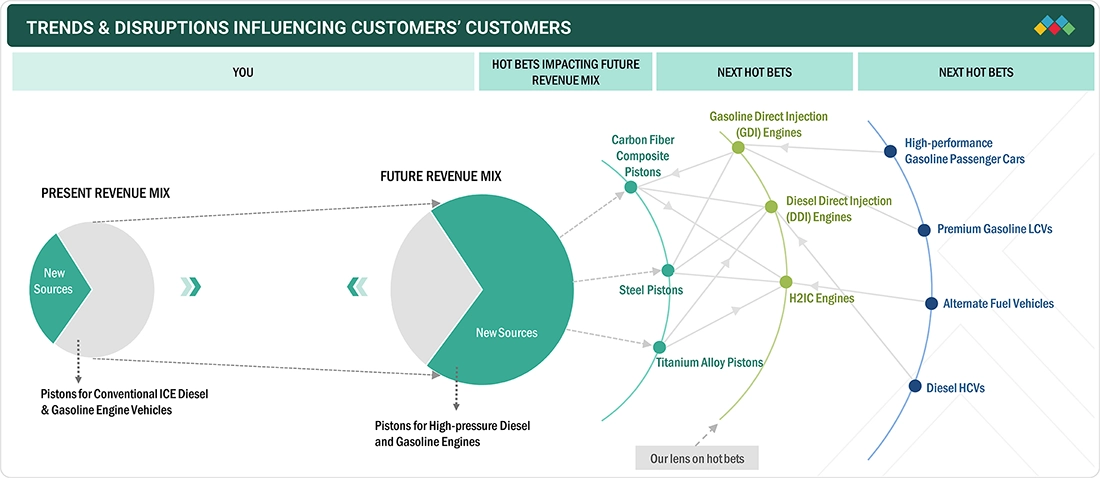
The automotive piston market is evolving amid stricter emission norms, engine downsizing, and growing electrification. OEMs are demanding lightweight, high-performance pistons with advanced coatings to enhance efficiency and durability. While EV adoption is reducing ICE component demand, hybrid vehicles are creating opportunities for specialized piston technologies, driving continuous innovation in design and materials.
Source: Secondary Research, Interviews with Experts, MarketsandMarkets Analysis
MARKET DYNAMICS

Level
-
Increased demand for gasoline pistone

-
Rise in demand for lightweight pistons


Level
-
Increase in adoption of electric vehicles

-
Growing trend for engine downsizing


Level
-
Manufacturing of pistons using alternative materials and advanced manufacturing processes


Level
-
Manufacturing high-quality cost effective pistons

Source: Secondary Research, Interviews with Experts, MarketsandMarkets Analysis
Driver: Increased demand for gasoline pistone
Despite the accelerating shift toward electrification, gasoline engines continue to dominate global vehicle sales owing to their affordability, mature fueling infrastructure, and strong consumer acceptance. In 2024, according to ACEA the gasoline cars accounted for ~30% of the European car market. Similarly, the the gasoline and diesel cars in China account for 51% in 2024, and >75% in India, and >85% in the US. The transition away from diesel, particularly in Europe, where countries like Germany, France, and Spain reported 60–70% gasoline car sales, has further strengthened this trend. As OEMs continue to refine ICE efficiency alongside hybrid technologies, the sustained production of gasoline-powered vehicles is expected to ensure stable demand and long-term growth opportunities for the automotive piston market.
Restraint: Growing trend for engine downsizing
Engine downsizing is gaining traction among OEMs such as Maruti, Volkswagen, Skoda, Toyota, and Ford, with 1.0–1.5 L 3-cylinder engines delivering similar power as larger 4-cylinder units. This shift helps automakers reduce emissions, enhance fuel efficiency, and meet strict regulatory norms. However, downsizing results in fewer cylinders and pistons per engine, posing a restraint for the automotive piston market. While it supports sustainability and cost efficiency, it challenges piston suppliers to innovate with high-strength, lightweight, and thermally efficient designs suited for turbocharged downsized engines to maintain market competitiveness.
Opportunity: Manufacturing of pistons using alternative materials and advanced manufacturing processes
The demand for fuel-efficient, sustainable, and high-performance engines is driving innovation in piston manufacturing. Lightweight materials like aluminum alloys, composites, and carbon reduce weight while enhancing strength and thermal stability. Forged aluminum pistons, such as MAHLE’s ECOFORM, and steel variants for turbocharged engines are gaining prominence. Advanced coatings like DLC and thermal barriers improve wear resistance and heat management, while plasma-sprayed ceramics boost durability in hybrid and downsized engines. Techniques like 3D printing and high-pressure die casting (HPDC) enable complex designs, reduce material waste, and lower CO2 emissions. These innovations are shaping the future of sustainable, high-performance automotive engines.
Challenge: Manufacturing high-quality cost effective pistons
Aluminum and steel alloys are commonly preferred for their strength, wear resistance, thermal stability, and mechanical performance. Steel enables compact designs, potentially reducing compression height by up to 30%, while advanced high-strength aluminum alloys and lightweight composites offer improved fuel efficiency and lower emissions, though at higher costs. The growing trend of engine downsizing and turbocharging increases stress on pistons, requiring materials that can withstand high temperatures and pressures. Manufacturers must balance performance, durability, and cost while meeting OEM expectations, making the adoption of innovative materials and advanced manufacturing techniques a strategic challenge for the industry
MARKET ECOSYSTEM
The ecosystem analysis examines the connections and interdependence within a complex system. It can be applied to various fields. An ecosystem analysis of the automotive piston market offers a comprehensive overview of the interconnected stakeholders, technologies, and market dynamics that influence the industry's development. This highlights piston manufacturers in the ecosystem, component suppliers, OEMs, engine manufacturers, aftermarket & replacement part suppliers, and regulatory bodies.

Logos and trademarks shown above are the property of their respective owners. Their use here is for informational and illustrative purposes only.
MARKET SEGMENTS
Source: Secondary Research, Interviews with Experts, MarketsandMarkets Analysis
Automotive Piston Market, By Vehicle Type
Passenger cars hold the largest market share across all vehicle types, owing to their maximum contribution across all vehicle categories at the global level. Despite the growing adoption of electric vehicles, the volume of existing ICE vehicles and the continuous production of hybrid vehicles maintain a substantial market for passenger car pistons. Notably, the demand for gasoline-powered vehicles has been declining in regions like China and Europe. Conversely, the popularity of SUVs and pickup trucks, especially those equipped with larger gasoline engines, has been on the rise in other markets, impacting piston demand. The SUV market is anticipated to cross 50 million units by 2030, driven by consumer demand for vehicles that offer a blend of comfort, utility, and performance. Emerging economies such as India, Thailand, and Indonesia have shown positive growth in passenger car demand between 2021 and 2024.
Automotive Piston Market, By Fuel Type
Gasoline engines are the most common type of internal combustion engine, particularly in passenger vehicles and LCVs. Gasoline engines typically have 4 or 6 cylinders, which means they usually contain 4 to 6 pistons. Gasoline engines are generally spark-ignited. The trend toward engine size reduction has significantly impacted the gasoline engine market. As manufacturers strive to produce smaller, lighter engines without compromising performance, they are increasingly turning to turbocharged 3-cylinder and 4-cylinder configurations. Moreover, the growth of hybrid vehicles, which often incorporate gasoline engines, further supports the market growth for gasoline pistons. While the long-term shift toward electrification is undeniable.
Automotive Piston Market, By Material Type
Aluminum pistons are widely used in all types of vehicles, including passenger cars, light commercial vehicles, and heavy commercial vehicles. Due to their ideal properties, such as corrosion resistance, excellent wear resistance, low coefficient of thermal expansion, and high strength, aluminum pistons have a wider acceptance. The main advantage of aluminum pistons is their lightweight design. The weight of an aluminum piston is almost ~30–40% lighter than steel. Leading global and regional piston manufacturers, such as MAHLE, Shriram Pistons & Rings, RIKEN, and Tenneco, are investing in advanced aluminum piston technologies, including hypereutectic aluminum alloys and advanced coatings, to improve durability and efficiency. All these factors drive the market for aluminum pistons in the Asia Pacific region.
Automotive Piston Market, By Shape
Flat-top pistons are a prominent type of piston used in the automotive industry; they are known for their straightforward design and ability to promote efficient combustion. A flat piston head often results in a faster and more complete burn of the air-fuel mixture, as it helps to prevent the mixture from detonating prematurely. As a result, flat-top pistons are widely utilized in mass-produced vehicles, contributing significantly to their popularity within the automotive piston market. Their simple design reduces manufacturing costs, which in turn lowers engine costs. Also, the high compression ratio offered by these pistons makes them more suitable for mass-produced engines.
Automotive Piston Market, By Coating
The dry film lubricant coating segment is estimated to lead the automotive piston market during the forecast period. A shift toward downsized, turbocharged engines requires pistons with high wear resistance due to increased thermal and mechanical stress. Dry film lubricant coating improves lubrication under extreme conditions, making it essential for high-performance gasoline and diesel engines. Additionally, in commercial vehicles, this coating helps extend piston lifespan, reduce maintenance costs, and ensure consistent engine performance under heavy loads.
Automotive Piston Market, By Component
The piston heads segment is estimated to hold the largest share of the automotive piston market in 2025, driven by the essential role of piston heads in all gasoline, diesel, and alternative fuel passenger and commercial vehicles. The newer generation of vehicles requires stronger and more heat-resistant piston heads to withstand higher combustion pressures. Additionally, there is a rising adoption of piston heads made of lightweight materials like aluminum and advanced coatings to help reduce friction and improve thermal management, which is essential for meeting regulatory standards. Advancements in piston head design, materials, and surface treatments are paramount to enhancing engine efficiency, performance, and durability. Specialized coatings are applied to improve thermal management and reduce friction. For instance, ceramic thin-film thermal barrier coatings, such as Cerakote's V Series Piston Coat, are engineered to be applied to the tops of pistons, valves, and combustion chambers.
Automotive Piston Aftermarket, By Component
Piston rings hold the largest market share in the piston aftermarket segment due to high wear and frequent replacement. These rings are constantly exposed to high temperatures, friction, and combustion pressure, leading to gradual wear and tear. This makes them one of the most frequently replaced engine components in the aftermarket. Additionally, piston rings are relatively low-cost compared to replacing the entire piston assembly. The US and Canada have a high demand for pickup trucks and SUVs, which make up over ~70–75% of total light vehicle sales. These vehicles often come with high-displacement engines like V6, V8, etc., which leads to greater piston ring wear over time due to increased stress and heat generation.
REGION
Asia Pacific is expected to be the largest region in the global Automotive Piston market during the forecast period.
The Asia Pacific region dominates the global automotive piston market, holding over 50% share in 2024, driven by strong demand from China, Japan, South Korea, and India. Despite rising EV adoption, most countries in the region continue to rely heavily on gasoline-powered vehicles, sustaining robust demand for 3- and 4-cylinder engines. Asia remains a key hub for compact and mid-size SUV production, supported by GDI engine growth. This consistent demand positions the region as a long-term stronghold for piston manufacturers. Major players such as AISIN, Dongsuh Federal-Mogul, and Shriram Pistons are leveraging this momentum to strengthen regional leadership.
AUTOMOTIVE PISTON MARKET: COMPANY EVALUATION MATRIX
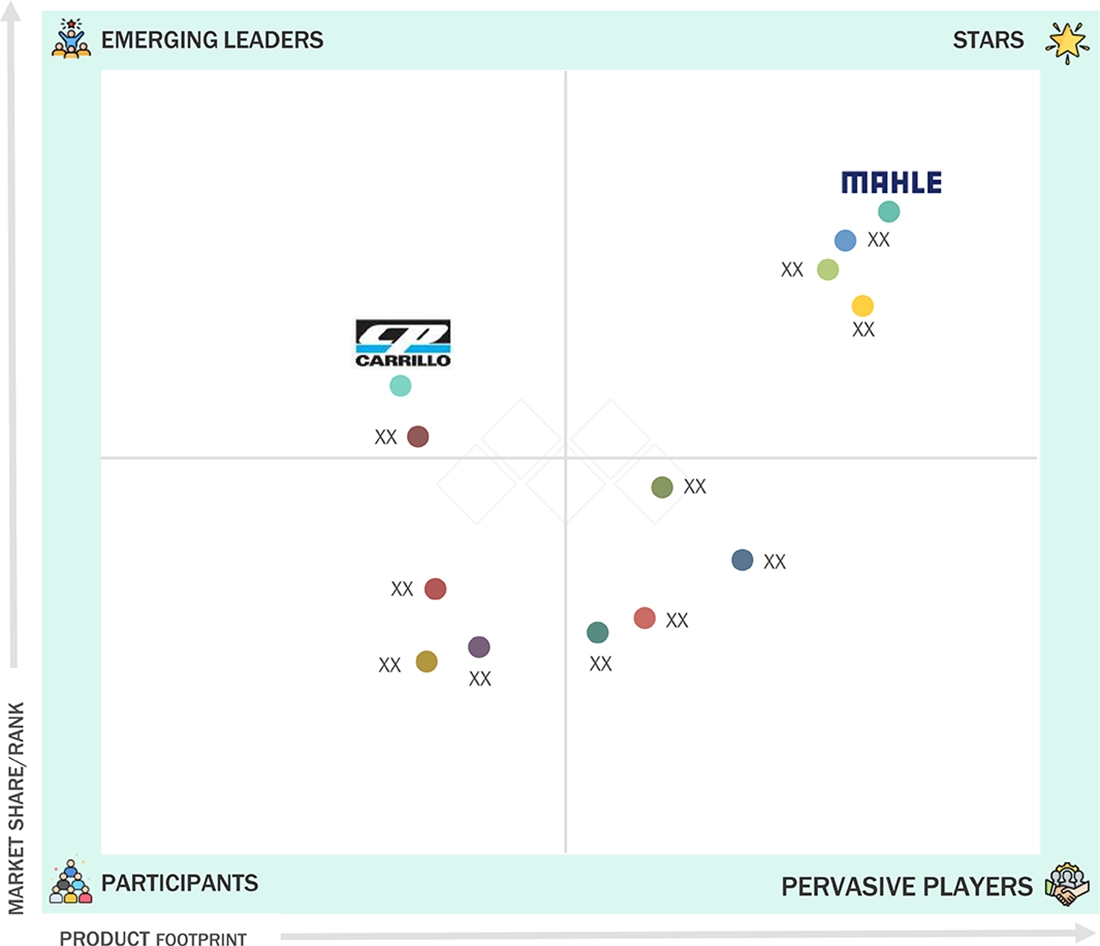
The figure illustrates the competitive landscape of the global automotive piston market, positioning key players based on their market share and product footprint. In the automotive piston market matrix, Mahle GmbH (Germany) (Star) leads with a strong market presence, a wide product portfolio, and innovation in R&D in 2024, improving its position in the market. CP Carrillo (US) (Emerging Leader) is gaining traction in the automotive piston market by developing high-performance pistons for racing cars and high-performance cars. Further, CP Carrillo is expanding its global presence through its subsidiaries operating in Austria, the UK, the US, Slovakia, and Japan
Source: Secondary Research, Interviews with Experts, MarketsandMarkets Analysis
KEY MARKET PLAYERS
MARKET SCOPE
| REPORT METRIC | DETAILS |
|---|---|
| Market Size Value in 2025 | USD 2.46 Billion |
| Market Size Forecast in 2032 | USD 2.79 Billion |
| Growth Rate | 0.013 |
| Actual data | 2021 – 2035 |
| Base year | 2024 |
| Forecast period | 2035 |
| Units considered | Volume (Thousand Units), Value (USD Million) |
| Report Coverage | Revenue forecast, Global Market Shares, Competitive Landscape, Driving factors, Trends & Disruption, OEM Analysis, and others |
| Segments Covered | By Fuel Type (Gasoline, Diesel, and CNG) By Vehicle Type (Passenger Cars, LCVs, and HCVs) By Material Type (Steel and Aluminum) By Shape (Flat Head, Bowl, and Domed Shape) By Coating Type (Thermal Barrier Coating, Dry Film Lubricant Coating, and Oil Shedding Coating) |
| Regional Scope | Asia Pacific, Europe, North America, and the Rest of the World. |
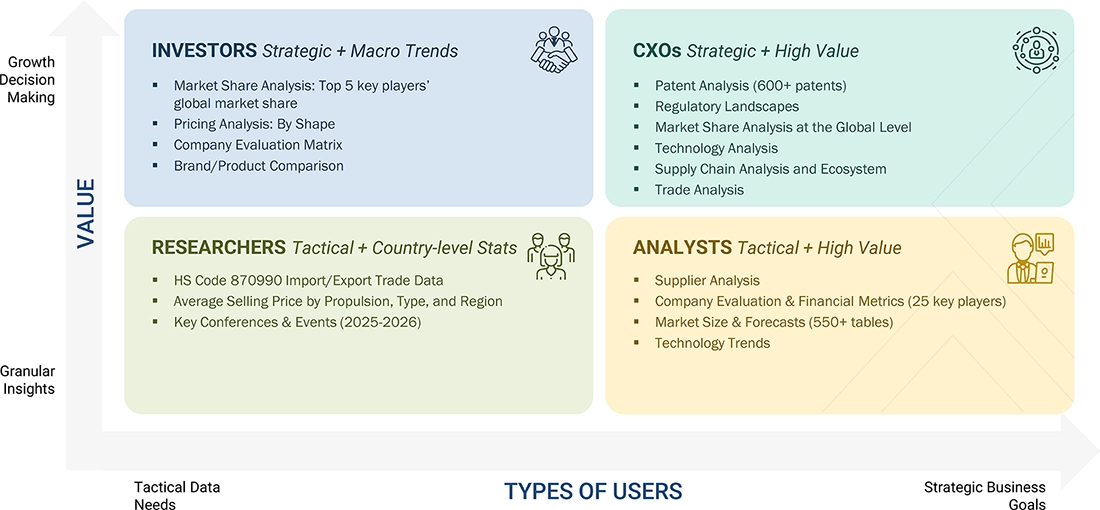
WHAT IS IN IT FOR YOU: AUTOMOTIVE PISTON MARKET REPORT CONTENT GUIDE
RECENT DEVELOPMENTS
- November 2024 : Commercial vehicle manufacturer MAN Truck & Bus (Germany) commissioned MAHLE to supply components for the hydrogen engine of its "MAN hTGX" truck. The truck will have a direct-injection engine with 6 cylinders, 16.8 L displacement, and 383 kW power output. It will have a hydrogen power cell unit consisting of a piston, piston rings, piston pins, and cylinder liner.
- April 2021 : Rheinmetall Group's subsidiary KS Kolbenschmidt GmbH, ZYNP Corporation of China, and Riken Corporation of Japan opened a tech center in Nanjing, China, to develop modern steel pistons.
- July 2021 : Rheinmetall secured a contract to develop and produce customized LiteKS aluminum pistons for a new four-cylinder petrol engine in the North American market.
Table of Contents
 Exclusive indicates content/data unique to MarketsandMarkets and not available with any competitors.
Methodology
The study encompassed four primary tasks to determine the present and future scope of the automotive piston market. Initially, extensive secondary research was conducted to gather data on the market, its related sectors, and overarching industries. Subsequently, primary research involving industry experts across the value chain corroborated and validated these findings and assumptions. The complete market size was estimated by using both top-down and bottom-up methodologies. Following this, a market breakdown and data triangulation approaches were utilized to determine the size of specific segments and subsegments within the market.
Secondary Research
The secondary sources referred to for this research study include auto industry organizations (such as OICA), corporate filings (such as annual reports, investor presentations, and financial statements), and trade, business, and automotive associations. The secondary data was collected and analyzed to determine the overall market size, which was further validated through primary research.
Primary Research
Extensive primary research was conducted after understanding the automotive piston system market scenario through secondary research. Several primary interviews were conducted with market experts from the demand (OEM) and supply side (automotive piston manufacturers and distributors) players across four major regions—namely, North America, Europe, Asia Pacific, and the Rest of the World. Approximately 30% of primary interviews were conducted on the demand side and 70% on the supply side.
Primary data was collected through questionnaires, mail, and telephonic interviews. In the canvassing of primaries, various departments within organizations, such as sales, operations, administration, and so on, were covered to provide a holistic viewpoint in the report.
After interacting with industry participants, brief sessions were conducted with highly experienced independent consultants to reinforce the findings from the primaries. This and the opinions of the in-house subject matter experts led to the findings described in the remainder of this report.
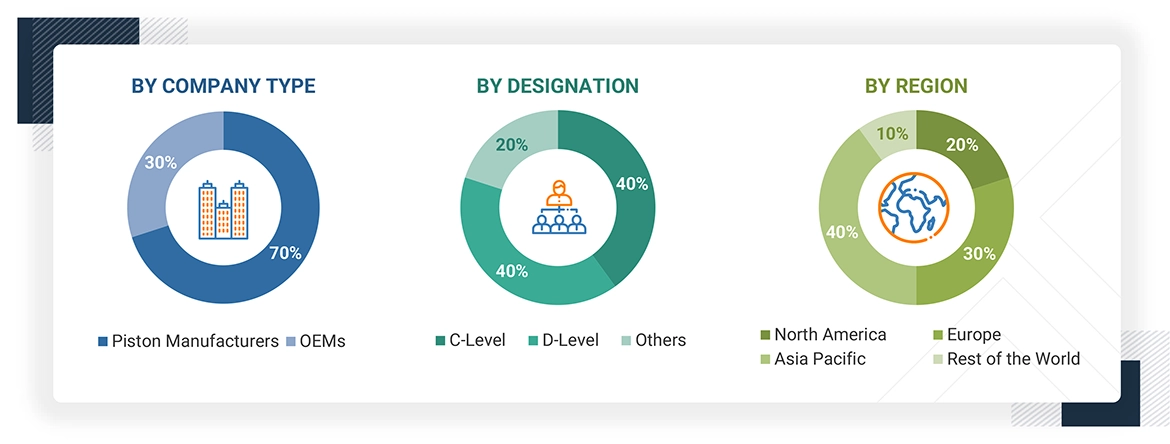
Note 1: Others include sales managers, marketing managers, and product managers.
Note 2: Tier 1 companies’ revenues are more than USD 10 billion; tier 2 companies’ revenues range between USD 1 and 10 billion; and tier 3 companies’ revenues range between USD 500 million and USD 1 billion.
Source: Industry Experts
To know about the assumptions considered for the study, download the pdf brochure
Market Size Estimation
Both top-down and bottom-up approaches were used to estimate and validate the total size of the automotive piston market. These methods were also used extensively to estimate the size of various subsegments in the market. The research methodology used to estimate the market size includes the following:
Bottom-up Approach
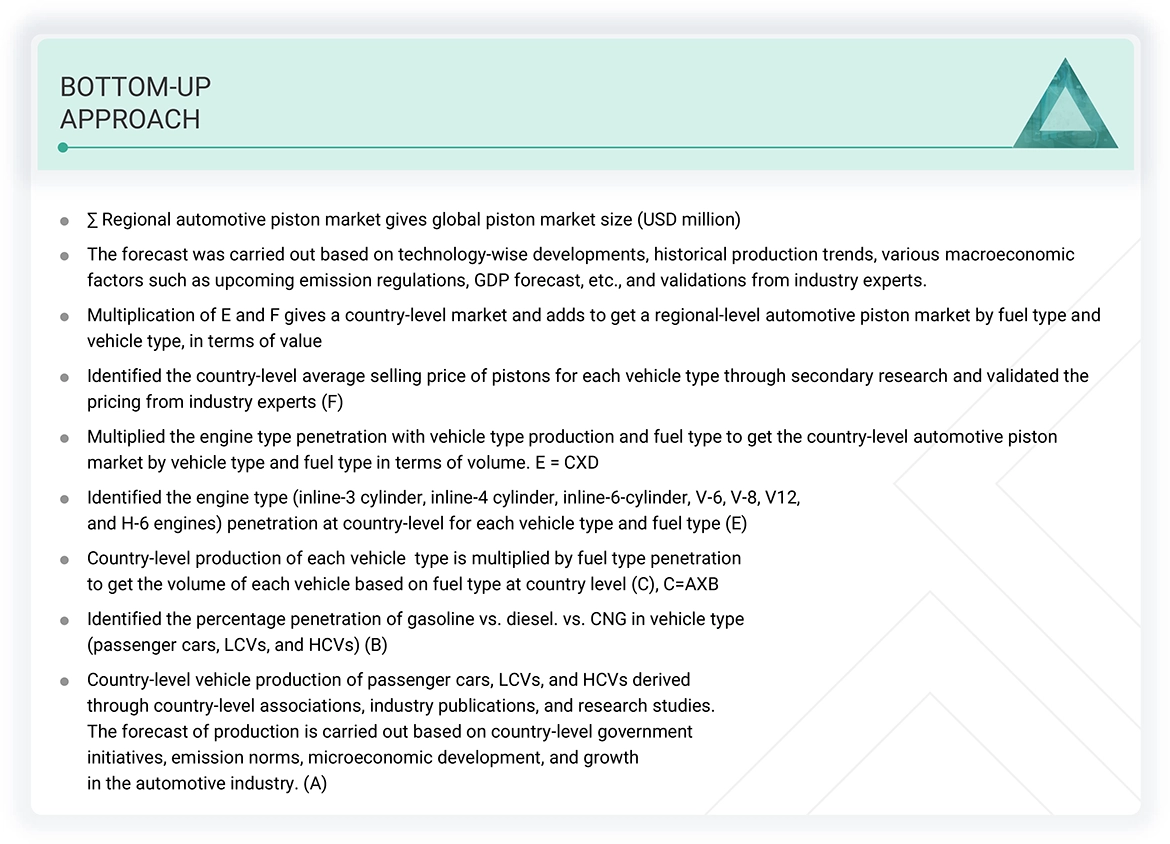
The global market size was estimated and validated using a bottom-up approach, analyzing country-level vehicle production (passenger cars, LCVs, HCVs) through industry associations and OICA. Market forecasts are based on macroeconomic indicators, emissions regulations, industry growth, GDP, and government initiatives. Piston market volume was calculated by multiplying vehicle production by country-specific fuel type distribution (diesel, gasoline, alternative), then further multiplied by engine configuration penetration (inline-3/4/5/6, V-6/8/12, H-6) identified through model mapping, giving the country-level automotive piston market volumes by fuel type.
Further, the country-level piston market size, by volume, was multiplied by the country-level average OE price (AOP) of each fuel type for each vehicle type to get the country-level piston market by fuel type in terms of value.
The summation of the country-level market gives the regional market; further summation of the regional market provides the global automotive piston market by fuel type. A similar methodology was followed for the automotive piston market by vehicle type (passenger cars, LCVs, HCVs).
Automotive Piston Market : Bottom-Up Approach
Data Triangulation
All percentage shares, splits, and breakdowns were determined using secondary sources and verified through primary sources. All parameters that are said to affect the markets covered in this research study were accounted for, viewed in extensive detail, verified through primary research, and analyzed to obtain the final quantitative and qualitative data. This data was consolidated, supplemented with detailed inputs and analysis from MarketsandMarkets, and presented in the report.
Market Definition
Pistons are essential components in internal combustion engines that transform combustion's thermal energy into mechanical work. Sealed within cylinders by piston rings, they maintain gas-tight conditions while transferring expansion force to the crankshaft via connecting rods, enabling the engine's power generation process.
The main functions of the piston are: -
- To transmit the gas forces via a connecting rod to the crankshaft.
- To seal the clearance between piston rings and cylinder liner against gas leakage to the crankcase and prevent oil infiltration into the combustion chamber.
Stakeholders
- Automotive component manufacturers
- Associations, forums, and alliances related to automobiles
- Automotive original equipment manufacturers
- Automotive investors
- Manufacturers of automotive piston systems
- Raw material suppliers for automotive piston systems
- Traders, distributors, and suppliers of automotive piston systems
- The automotive industry as an end-use industry and regional automobile associations
- Government agencies and policymakers
Report Objectives
-
To define, describe, and forecast the size of the automotive piston market in terms of value (USD million) and volume (thousand units) based on the following segments:
- By Component (Piston Heads, Piston Rings, and Piston Pins)
- By Coating (Dry Film Lubricant, Thermal Barrier, and Oil Shedding)
- By Shape (Flat-top Pistons, Bowl Pistons, and Dome Pistons)
- By Vehicle Type (Passenger Vehicles, Light Commercial Vehicles, and Heavy Commercial Vehicles)
- By Fuel Type (Gasoline, Diesel, and Alternate Fuels)
- By Material (Steel and Aluminum)
- By Aftermarket Component ( Piston Heads, Piston Rings, and Piston Pins)
- By Region (Asia Pacific, Europe, North America, and Rest of the World)
- To understand the market dynamics (drivers, restraints, opportunities, and challenges)
- To analyze the share of key players operating in the market
- To analyze the competitive landscape and prepare a competitive leadership mapping for the global market players
- To analyze recent developments, alliances, joint ventures, mergers & acquisitions, new product launches, and other activities carried out by key industry participants in the market
-
To study the following with respect to the market
- Trends and Disruptions Impacting Customer Business
- Ecosystem Analysis
- Technology Analysis
- Supply Chain Analysis
- Patent Analysis
- Regulatory Landscape
- Case Study Analysis
- Key Stakeholders and Buying Criteria
- Key Conferences and Events
- Trade Analysis
- Pricing Analysis
- To analyze the supplier analysis of the market to understand the OEM-wise piston suppliers
- To analyze and give MnM insights on the impact of biofuel & e-fuel-based vehicles on automotive pistons
- To strategically profile key players and analyze their strategies and core competencies
Available Customizations
Along with the market data, MarketsandMarkets offers customizations per company-specific needs.
The following customization options are available for the report:
AUTOMOTIVE PISTON MARKET, BY COUNTRY AND VEHICLE TYPE
- Passenger Cars
- LCVs
- HCVs
Note: This market will be provided at the country level in terms of volume and value.
AUTOMOTIVE PISTON AFTERMARKET, BY COUNTRY AND COMPONENT
- Piston Heads
- Piston Rings
- Piston Pins
Note: This market will be provided at the country level in terms of volume and value.
AUTOMOTIVE PISTON MARKET, BY COUNTRY AND COMPONENT
- Piston Heads
- Piston Rings
- Piston Pins
Note: This market will be provided at the country level in terms of volume and value.


Personalize This Research
- Triangulate with your Own Data
- Get Data as per your Format and Definition
- Gain a Deeper Dive on a Specific Application, Geography, Customer or Competitor
- Any level of Personalization
Let Us Help You
- What are the Known and Unknown Adjacencies Impacting the Automotive Piston Market
- What will your New Revenue Sources be?
- Who will be your Top Customer; what will make them switch?
- Defend your Market Share or Win Competitors
- Get a Scorecard for Target Partners

Custom Market Research Services
We Will Customise The Research For You, In Case The Report Listed Above Does Not Meet With Your Requirements
Get 10% Free CustomisationTESTIMONIALS

JIM NAAS
PRODUCT DIRECTOR, WEASLER
Weasler Engineering, a CentroMotion organization
Global Provider of Industrial Actuation & Control Solutionswww.weasler.com
Our organization was interested in learning more about the attractiveness of a particular market space. We contacted MarketsandMarkets to help us based on previous positive experiences we had with them. The results did not disappoint! We discussed our objectives with them, and the team at MarketsandMarkets developed and executed a proposal that met our needs precisely. We were very impressed by their level of expertise, the quality of the analysis and their insightful recommendations. We would not hesitate in working with them again in the future.

Matt Kardel,
Vice President
Aptiv,
A global technology company that develops safer, greener and more connected solutions.www.aptiv.com
We contracted with
MarketsandMarkets to evaluate the value chain and potential go-to-market partners related to our
interest in the Fleet Management space. The team successfully completed the work on time and at the
pricing agreed. MarketsandMarkets listened and understood our objectives and collaborated well with
us to help us get the visibility we needed to make an investment.
We have subsequently used
MarketsandMarkets again related to Smart Cities to good results.
- China Automotive Piston Market
- India Automotive Piston Market
- Japan Automotive Piston Market
- South Korea Automotive Piston Market
- Germany Automotive Piston Market
- UK Automotive Piston Market
- France Automotive Piston Market
- Spain Automotive Piston Market
- Mexico Automotive Piston Market
- Canada Automotive Piston Market
- US Automotive Piston Market
- Rest Of Europe Automotive Piston Market
- Rest Of Asia Pacific Automotive Piston Market
Growth opportunities and latent adjacency in Automotive Piston Market






Amey
Nov, 2019
I would like to ask you for a sample of this analysis o the piston market especially in Europe. Thank you best regards Lukas .
Amey
Nov, 2019
Selected tables in the report describing the names and locations of piston manufacturers to target sales actions of raw materials used in the industry. .
Amey
Nov, 2019
Piston pin Market in India and top suppliers in India and news on any player wanting to foothold in European market.
apoorv
Jul, 2019
we wanna contract market research but some of them there is no real in our opinion. So we decide to first know that. We control the piston market in Europe and we wanna you to counteract and after that if we have the same control or ideas of the market...speech with your company to contract you. We have been working 2 years with market research with no good experience..