Bakers Yeast Market

Bakers Yeast Market by Application (Cakes & Pastries, Bread, Biscuits), Form (Solid, Liquid/Cream, Dry/Powdered), Product, End User, Genus, and Region - Global Forecast to 2031




OVERVIEW
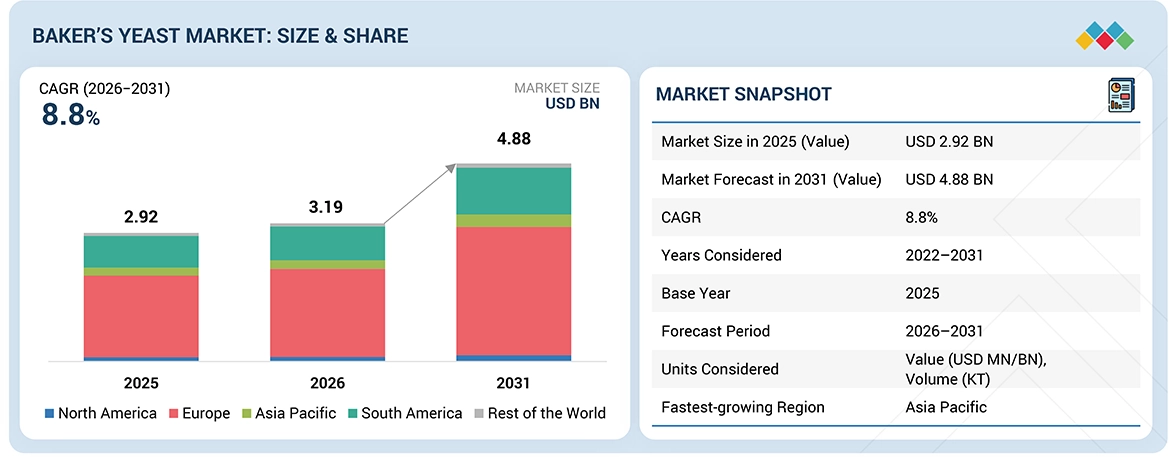
Source: Secondary Research, Interviews with Experts, MarketsandMarkets Analysis
The baker's yeast market is expected to reach USD 4.88 billion by 2031, from USD 3.19 billion in 2026, with a CAGR of 8.8%. This growth is mainly driven by increasing consumer demand for baked goods like bread, cakes, and pastries. The rising popularity of convenience foods in the form of packaged baked products further supports the growth of the baker’s yeast market.
Market Size and Forecast:
- Market Size Value in 2025: USD 2.92 Billion
- Market Size Value in 2026: USD 3.19 Billion
- Revenue Forecast in 2031: USD 4.88 Billion
- Growth Rate: CAGR of 8.8% from 2026 to 2031
- Base year: 2025
- Forecast period: 2026–2031
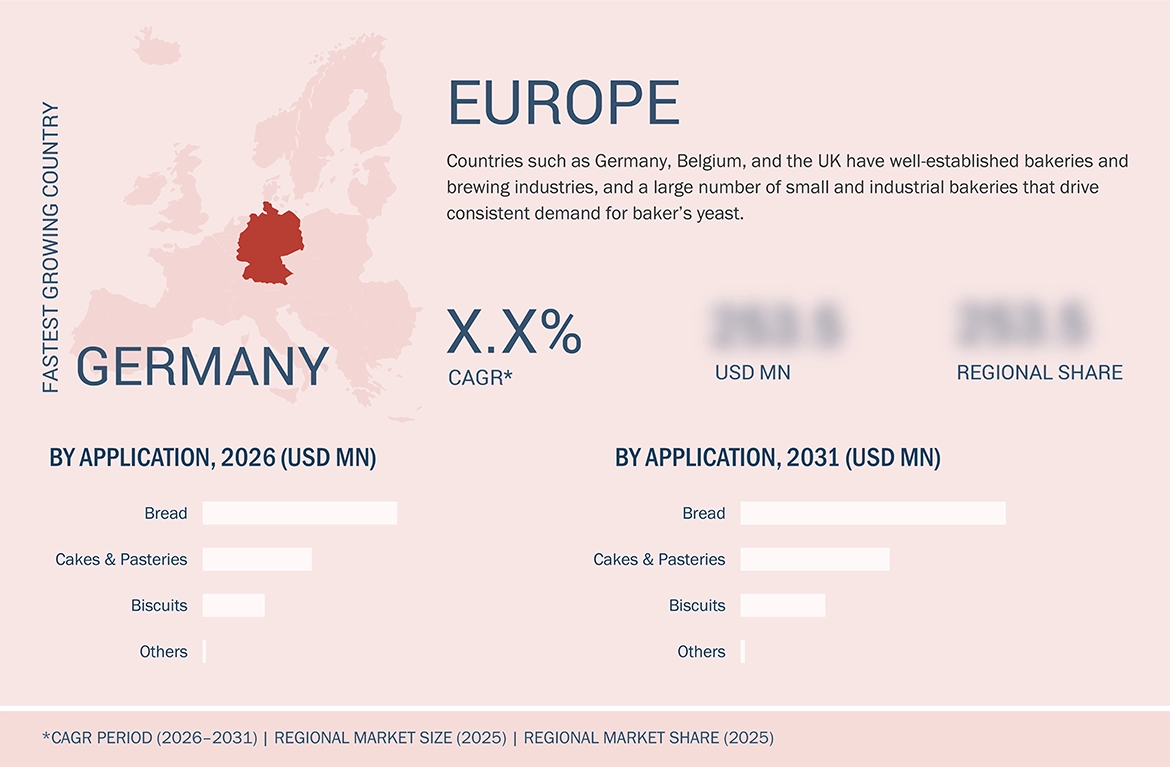
- Europe is estimated to account for 39.2% of the baker's yeast market in 2026.
- The dry/powdered segment is expected to grow at a CAGR of 9.2% from 2026 to 2031.
Key Market Trends and Insights
- By Type: The Dry Yeast segment accounts for a significant share of the baker’s yeast market, driven by its longer shelf life, ease of storage, convenient handling, and extensive use across commercial and industrial baking applications.
- Industry Dynamics: Bakery manufacturers are increasingly utilizing baker’s yeast solutions to improve dough performance, enhance product consistency, support large-scale production, and meet growing consumer demand for baked goods.
- Market Drivers: Rising consumption of bakery products, growing demand for convenience foods, expansion of the foodservice sector, and increasing investments in industrial baking operations are supporting market growth.
- Future Opportunities: Significant opportunities are emerging in clean-label bakery ingredients, specialty yeast products, artisanal baking applications, innovative fermentation technologies, and value-added yeast solutions designed to improve product quality and production efficiency.
KEY TAKEAWAYS
-
BY REGIONEurope is estimated to account for 39.2% of the baker's yeast market in 2026.
-
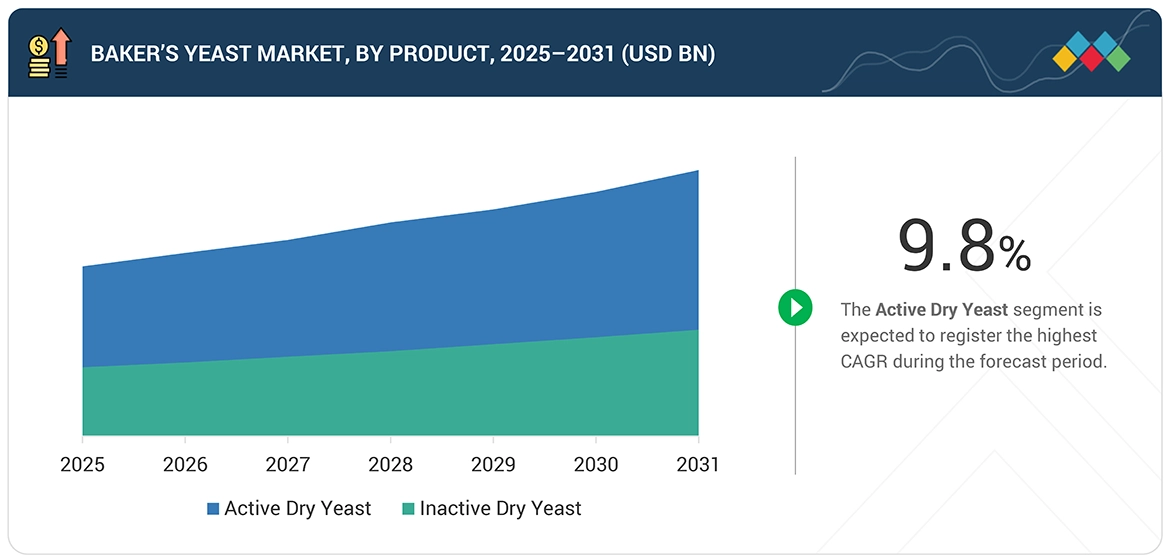
BY PRODUCTThe active dry yeast segment is estimated to lead the baker's yeast market with a 37.3% share in 2026.
-
BY FORMThe dry/powdered segment is expected to grow at a CAGR of 9.2% from 2026 to 2031.
-
BY GENUSSaccharomyces is expected to capture a 41.34% share during the forecast period.
-
BY APPLICATIONBread is expected to surpass other segments during the forecast period.
-
BY END USERBakery is expected to be the largest segment during the forecast period.
-
COMPETITIVE LANDSCAPE - KEY PLAYERSAngelYeast Co., Ltd., Associated British Foods plc, ADM, Nisshin Seifun Group Inc., and Kothari Fermentation and Biochem Ltd are among the leading market players, given their global presence and strong product portfolios.
-
COMPETITIVE LANDSCAPE - START-UPSAGRANO GMBH & CO. KG, Biorigin, and ABN Aplicaciones Biológicas a la Nutrició, among others, have distinguished themselves among start-ups and SMEs by securing strong footholds in specialized niche areas, underscoring their potential as emerging market leaders.
Growth in the bakery and food industry significantly drives the market for baker’s yeast. The rising demand for bread, cakes, pastries, and other baked goods encourages manufacturers to adopt advanced fermentation techniques for more efficient yeast production. Medium- and large-scale yeast producers are expanding their regional markets by meeting the evolving bakery and food needs. Additionally, ongoing innovation, development, and patent registrations by leading companies are boosting the baker’s yeast market.
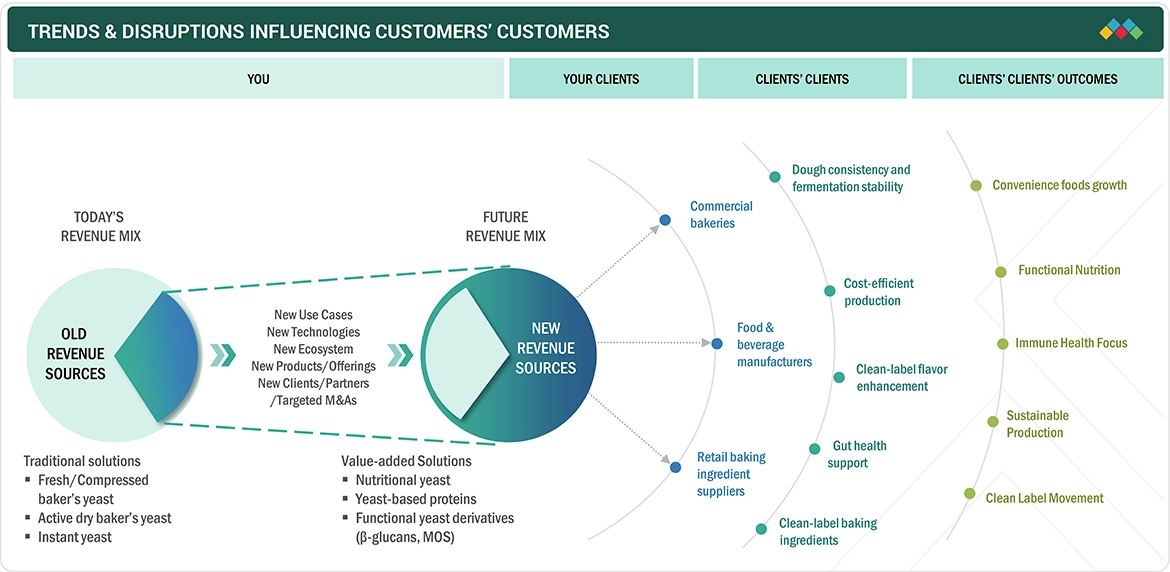
TRENDS & DISRUPTIONS IMPACTING CUSTOMERS' CUSTOMERS
The shift from traditional baking ingredients to value-added yeast solutions is increasingly impacting the baker's yeast market. Commercial bakeries focus on maintaining dough consistency, enhancing fermentation stability, and ensuring cost-effective production to satisfy rising demand for baked goods and convenience foods. Food and beverage producers utilize yeast-based ingredients to meet flavor and clean label standards, while baking ingredient manufacturers expand their product ranges to address the growing interest in home baking and specialty baking. These evolving customer needs largely reflect consumer preferences for convenient foods, nutrition and health benefits, immune support, sustainable practices, and clean label ingredients.
Source: Secondary Research, Interviews with Experts, MarketsandMarkets Analysis
MARKET DYNAMICS

Level
-
Expansion of bakeries globally

-
Surge in demand for bread, pastries, and other convenience bakery products


Level
-
Concerns regarding allergenic potential of yeast

-
Shortage of raw materials


Level
-
Strategic collaborations and partnerships between yeast manufacturers and other players

-
New variants of yeast ingredients for improved functionality


Level
-
Difficulty in achieving consistent product quality and performance due to variations in raw materials, fermentation conditions, and strain characteristics

-
High research and development costs

Source: Secondary Research, Interviews with Experts, MarketsandMarkets Analysis
Driver: Expansion of bakeries globally
Bakeries worldwide have seen notable growth, especially in emerging economies, fueled by rapid urbanization and a shift in consumer preferences. This has heightened the need for baker's yeast, a key ingredient in bread. Yeast functions as the leavening agent for fermentation, giving bread its desired texture. Consumer demand for convenient foods, such as packaged bread and pastries, further drives the baker's yeast market.
Restraint: Shortage of raw materials
The yeast market faces challenges due to a global shortage of raw materials, especially affecting baker's yeast products that rely on molasses, a sugar by-product. Shortages in molasses result from various factors, including poor sugarcane and sugar beet harvests, which have caused molasses prices to increase by 50%, leading to a 10% rise in yeast prices. Although industrial sugar can be used as an alternative, converting it into yeast requires additional investment to improve process efficiency. Molasses is a key ingredient in several industries, which further limits its availability for yeast production.
Opportunity: New variants of yeast ingredients for improved functionality
The global yeast ingredients industry is evolving. Supplying products to a wide range of sectors, from food to non-food, requires a diverse selection of ingredients to meet the needs of various customer groups. As revenue from the food sector increases, food manufacturers are eager to offer a clean-label portfolio to health-conscious consumers and meet their demand for organic and natural ingredients. Yeast extract manufacturers aim to capitalize on this trend by offering customer-focused products. Expanding into new application areas will significantly enhance the industry's credibility and viability. Most global manufacturers are exploring the development of customer-specific solutions as a means to expand their product and business portfolios by introducing new applications for existing products.
Challenge: High research and development costs
High R&D costs create significant hurdles for smaller producers in the baker's yeast market, especially when developing new yeast strains or enhancing existing production methods. These expenses include several activities, such as scientific research, labor, materials, equipment, and regulatory compliance. Scientific research in yeast production involves examining complex microbial genetics, fermentation processes, and other biological systems, often requiring specialized equipment and facilities. The salaries and benefits of skilled researchers, microbiologists, and biotechnologists add to R&D costs, along with the expenses for raw materials, reagents, and consumables.
BAKERS YEAST MARKET: COMMERCIAL USE CASES ACROSS INDUSTRIES
| COMPANY | USE CASE DESCRIPTION | BENEFITS |
|---|---|---|
 |
AngelYeast has expanded its baker’s yeast portfolio by developing high-performance yeast strains designed for commercial and industrial baking applications. The company focuses on improving fermentation efficiency, dough stability, and shelf life of baked goods while supporting the growing demand for bakery and convenience food products. | These initiatives help bakeries achieve faster fermentation, consistent dough performance, and improved product quality. They also support large-scale bakery production while meeting consumer demand for fresh and high-quality baked goods. |
 |
AB Mauri develops specialized baker’s yeast tailored for different baking applications such as bread, cakes, and pastries. The company focuses on strain optimization, fermentation control, and advanced yeast propagation technologies to enhance baking efficiency and product consistency. | These solutions enable bakeries to improve dough handling, maintain consistent fermentation performance, and achieve uniform texture and flavor in baked products. Customized yeast strains also support innovation in premium and artisanal bakery products. |
 |
ADM leverages its fermentation expertise to develop yeast-based ingredients and baker’s yeast solutions for the food and bakery industry. The company integrates fermentation technologies with its broader ingredient portfolio to support bakery manufacturers and expand yeast applications across food products. | ADM’s yeast-based ingredients enhance dough performance, improve baking efficiency, and support clean-label bakery formulations. This approach also helps expand baker’s yeast applications beyond traditional baking into functional food ingredients. |
Logos and trademarks shown above are the property of their respective owners. Their use here is for informational and illustrative purposes only.
MARKET ECOSYSTEM
The baker’s yeast ecosystem comprises manufacturers, regulatory organizations, end users, and start-ups. Large-scale manufacturers like AngelYeast, ADM, Alltech, AB Mauri, and Lallemand contribute to the development of advanced technology in yeast fermentation. Regulatory organizations, such as ISO, USDA, EFSA, and FSSAI, ensure the safe use of baker’s yeast in the production of various foods. Bakery product manufacturers and food producers are the primary end users of baker’s yeast. At the same time, start-ups have been contributing to the development of baker’s yeast technology.
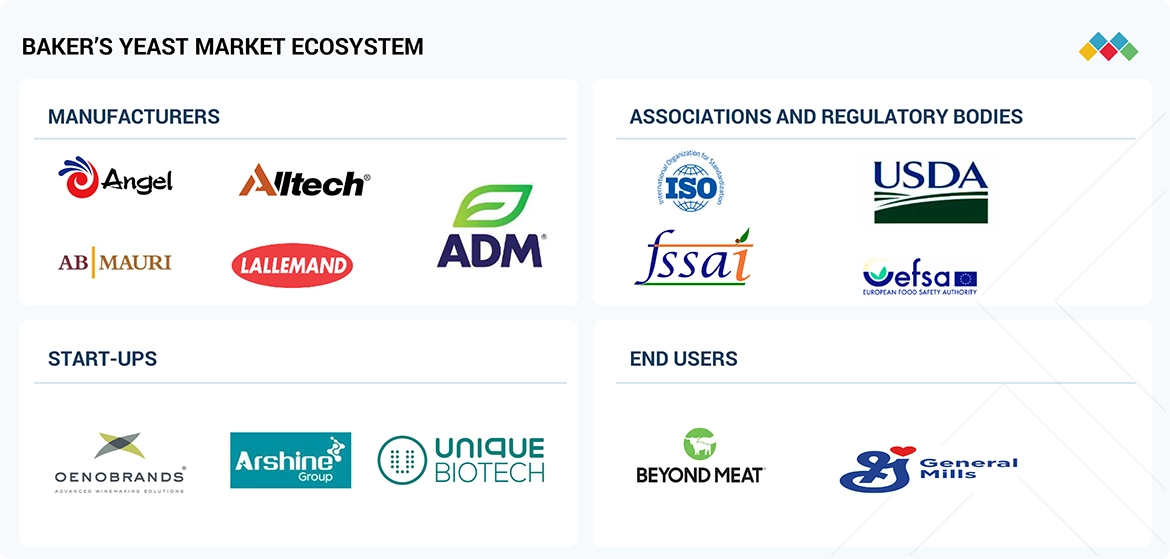
Logos and trademarks shown above are the property of their respective owners. Their use here is for informational and illustrative purposes only.
MARKET SEGMENTS
Source: Secondary Research, Interviews with Experts, MarketsandMarkets Analysis
Baker's Yeast Market, By Product
Active dry yeast holds the largest market share due to its long shelf life, ease of storage, and fermentation qualities compared to fresh yeast. It does not require strict refrigeration, making it easier to handle and transport, especially in areas with limited refrigeration. Active dry yeast is used in both commercial bakeries and homes because of its effective fermentation properties and versatility in baking products like bread, rolls, and pastries. It is also cost-effective and simple to use, making it the most popular choice among bakers.
Baker's Yeast Market, By Form
Solid yeast holds the largest market share due to its high fermentation capacity and performance in industrial bakery operations. It has a high concentration of yeast cells, which facilitates faster fermentation and dough rising. It can also withstand other ingredients in dough, such as sugar, salt, and fat, making it more versatile in bakery applications. It can be easily mixed with dough during kneading, improving the texture, volume, and flavor of the final product.
Baker's Yeast Market, By Application
Bread is the largest application segment, as it accounts for the highest consumption of baker’s yeast worldwide. As a major food item, bread is eaten daily in many countries and regions, making it one of the top-selling products in bakeries and restaurants. Baker's yeast is responsible for fermentation and the overall texture of bread. It also produces carbon dioxide gas, which is essential for making bread rise.
Baker's Yeast Market, By End User
Bakery is the largest end-user segment, considering the production volume and variety of baked goods such as cakes, biscuits, and rolls, among others. Baker’s yeast is a key ingredient in baked foods, used for dough fermentation, which causes the dough to rise and improves the taste, texture, and volume of these products. The high consumption of staple baked goods like bread drives the demand for baker’s yeast in both industrial and artisanal bakeries. Growing demand for convenience foods, packaged baked goods, and ready-to-eat baked products has also increased production in industrial bakeries.
REGION
Europe to dominate global market
The market for baker’s yeast in Europe is expanding rapidly, mainly due to the rising consumption of processed bakery items and increasing demand for bread and other baked goods. The market primarily revolves around bread production, as bread is a staple food in many European countries. Additionally, the growth of commercial bakeries and packaged baked goods drives the demand for baker’s yeast.
BAKERS YEAST MARKET: COMPANY EVALUATION MATRIX
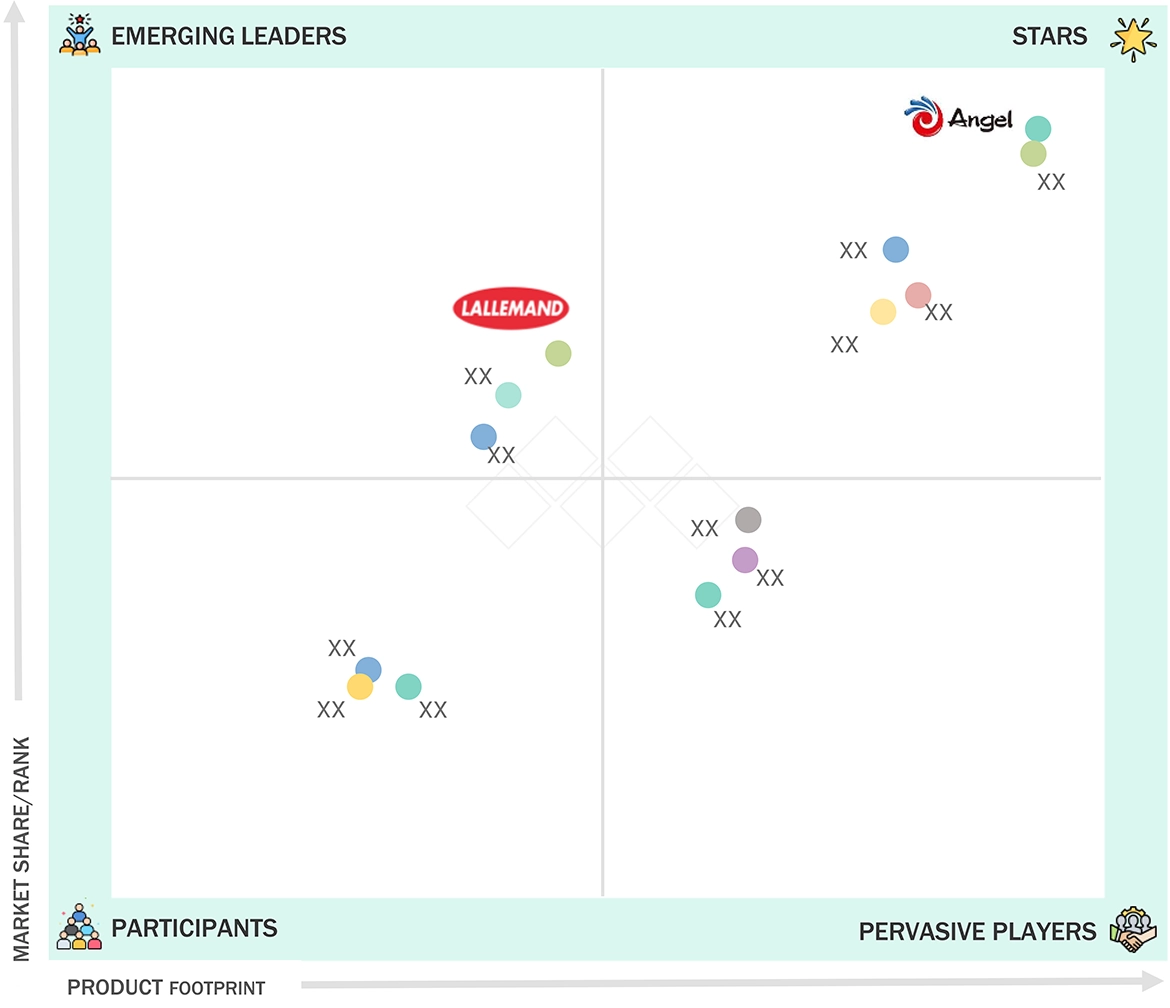
AngelYeast Co., Ltd. (Star) leads with a moderate market share and extensive product footprint for yeast products, driven by their strong geographical presence, significant formulation and distribution capabilities, and strong ties with food manufacturers and bakeries. Lallemand (Emerging Leader) is gaining visibility with its specialized yeast offerings, strengthening its position through strong product offerings.
Source: Secondary Research, Interviews with Experts, MarketsandMarkets Analysis
KEY MARKET PLAYERS
- ASSOCIATED BRITISH FOODS PLC
- ANGELYEAST CO., LTD.
- CHR. HANSEN HOLDING A/S
- KONINKLIJKE DSM N.V
- LALLEMAND INC
- LEIBER GMBH
- LESAFFRE GROUP
- ORIENTAL YEAST CO., LTD.
- SYNERGY FLAVORS
- HALCYON PROTEINS PVY. LTD.
- FOOD CHEM INTERNATIONAL CORPORATION
- SENSIENT TECHNOLOGIES CORPORATION
- PACIFIC FERMENTATION INDUSTRIES
- KERRY GROUP PLC
MARKET SCOPE
| REPORT METRIC | DETAILS |
|---|---|
| Market Size in 2024 (Value) | USD 2.92 BN |
| Market Forecast in 2031 (Value) | USD 4.88 BN |
| Growth Rate | CAGR of 8.8% from 2026 to 2031 |
| Years Considered | 2022–2031 |
| Base Year | 2025 |
| Forecast Period | 2026–2031 |
| Units Considered | Value (USD MN/BN), Volume (KT) |
| Report Coverage | Revenue Forecast, Company Ranking, Competitive Landscape, Growth Factors, and Trends |
| Segments Covered |
|
| Regions Covered | North America, Europe, Asia Pacific, South America, Rest of the World |
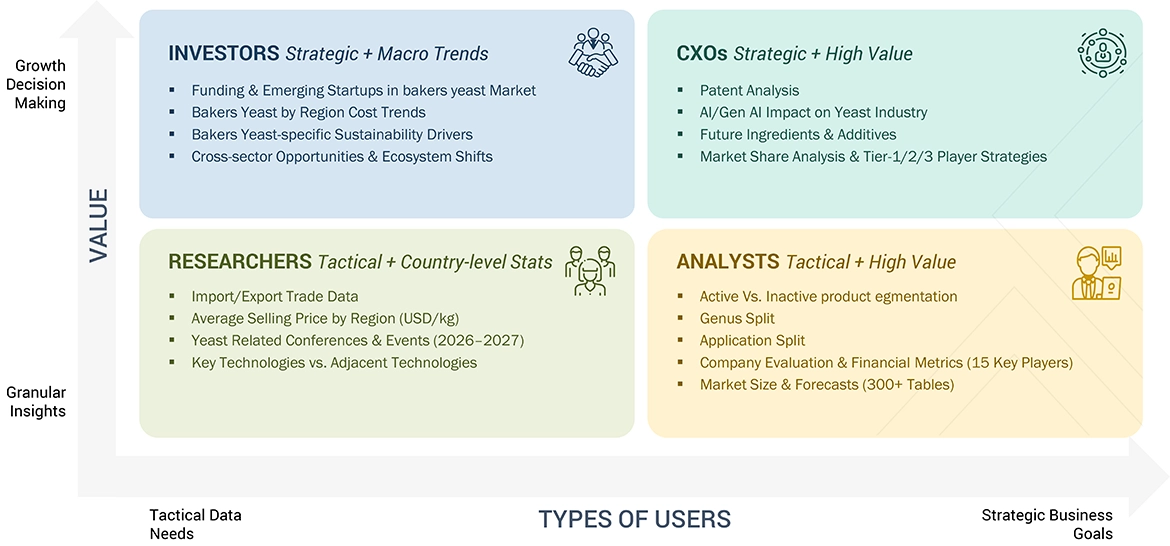
WHAT IS IN IT FOR YOU: BAKERS YEAST MARKET REPORT CONTENT GUIDE
DELIVERED CUSTOMIZATIONS
We have successfully delivered the following deep-dive customizations:
| CLIENT REQUEST | CUSTOMIZATION DELIVERED | VALUE ADDS |
|---|---|---|
| Europe-based baker's yeast manufacturers | Detailed yeast market analysis, competitive landscape, and competitor benchmarking (financials, product portfolios) | Identified and profiled 20+ baker's yeast producers |
| Baker's Yeast derivative segment assessment | Segmentation of baker’s yeast demand by application (bread, cakes, pastries, biscuits, others) and form (solid/compressed, dry/powdered, liquid/cream) across bakery, food, feed, and other end-use sectors. | Benchmarking yeast strain adoption and fermentation performance across regions |
RECENT DEVELOPMENTS
- June 2025 : AngelYeast aims to increase its footprint in Africa by establishing a joint venture in Algeria with the Bosaba Company through its subsidiary in Egypt. The joint venture will specialize in the production of yeast and food ingredients, with a registered capital of about USD 1.4 million, with the subsidiary contributing USD 938,000 to the joint venture. This move aligns with the expansion strategy of the company in the international market, increasing its footprint in the region and making it more competitive in the global yeast market.
- February 2025 : Asahi Group Foods has signed a supply agreement with ADM Wild Valencia to distribute its proprietary lactic acid bacteria Lactobacillus gasseri CP2305 internationally. Starting in March, ADM Wild Valencia will supply the ingredient to food manufacturers across North America, Europe, and Asia for use in supplements and health foods. This is the first time Asahi Group Foods is selling this probiotic outside its group, aiming to capitalize on rising global demand for health-focused food and beverage ingredients.
- August 2024 : AB Mauri, the ingredients division of Associated British Foods, acquired Romix Foods Limited, a specialist food blending company based in the UK. The acquisition is expected to increase the presence of AB Mauri in the bakery ingredients market and its manufacturing capabilities in the UK.
Table of Contents
 Exclusive indicates content/data unique to MarketsandMarkets and not available with any competitors.
Methodology
The study involved two major segments in estimating the current size of the Bakers yeast market. Exhaustive secondary research was done to collect information on the market, peer, and parent markets. The next step was to validate these findings, assumptions, and sizing with industry experts across the value chain through primary research. Both top-down and bottom-up approaches were employed to estimate the complete market size. After that, market breakdown and data triangulation were used to estimate the market size of segments and subsegments.
Secondary Research
This research study involved the extensive use of secondary sources—directories and databases such as Bloomberg Businessweek and Factiva—to identify and collect information useful for a technical, market-oriented, and commercial study of the market.
In the secondary research process, various sources such as annual reports, press releases & investor presentations of companies, white papers, food journals, certified publications, articles from recognized authors, directories, and databases, were referred to identify and collect information.
Secondary research was mainly used to obtain key information about the industry’s supply chain, the total pool of key players, and market classification and segmentation as per the industry trends to the bottom-most level, regional markets, and key developments from both market- and technology-oriented perspectives.
Primary Research
Extensive primary research was conducted after obtaining information regarding the Bakers yeast market scenario through secondary research. Several primary interviews were conducted with market experts from both the demand and supply sides across major countries of North America, Europe, Asia Pacific, South America, and the Rest of the World. Primary data was collected through questionnaires, emails, and telephonic interviews. The primary sources from the supply side included various industry experts, such as Chief X Officers (CXOs), Vice Presidents (VPs), Directors, from business development, marketing, research, and development teams, and related key executives from distributors, and key opinion leaders. Primary interviews were conducted to gather insights such as market statistics, data on revenue collected from the products and services, market breakdowns, market size estimations, market forecasting, and data triangulation. Primary research also helped in understanding the various trends related to yeast, type, form, application, and region. Stakeholders from the demand side, such as processed food and functional food products manufacturers who manufacture the products, were interviewed to understand the buyer’s perspective on the suppliers, products, and their current usage of yeast and the outlook of their business, which will affect the overall market.
Market Size Estimation
Both the top-down and bottom-up approaches were used to estimate and validate the total size of the Bakers yeast market. These approaches were also used extensively to determine the size of various subsegments in the market. The research methodology used to estimate the market size includes the following details:
- The key players in the industry and the overall markets were identified through extensive secondary research.
- All shares, splits, and breakdowns were determined using secondary sources and verified through primary sources.
- All possible parameters that affect the market covered in this research study were accounted for, viewed in extensive detail, verified through primary research, and analyzed to obtain final quantitative and qualitative data.
- The research included the study of reports, reviews, and newsletters of top market players, along with extensive interviews for opinions from leaders, such as CEOs, directors, and marketing executives.
Data Triangulation
After arriving at the overall market size from the estimation process explained above, the total market was split into several segments and subsegments. Data triangulation and market breakdown procedures were employed to estimate the Bakers yeast market and arrive at the exact statistics for all segments and subsegments. The data was triangulated by studying numerous factors and trends from the demand and supply sides. The market size was also validated using both the top-down and bottom-up approaches.
Market Definition
According to the FAO, yeast is a unicellular fungus that reproduces asexually by budding or division, particularly the genus Saccharomyces, which is important in food fermentations. It is used in the preparation of food products, animal nutrition, and pet nutrition products, which help in improving the health and performance of animals. According to Lallemand Inc., “the ban of antibiotic growth promoters in feed for production of animal foods in the European Union has led to increased interest in evaluating the effect of yeast products on the gastrointestinal ecosystem, rumen microbial populations, and overall animal performance.”
Furthermore, the large-scale industrial production and commercial use of yeasts were initiated around the end of the 19th century. Yeasts approved for use in food products are rich in nutrition, proteins, enzymes, and vitamins. Hence, yeast can be used in the food industry as a nutritional supplement. Yeast is used in basic cultures for manufacturing specific fermented food products, such as dairy, bakery, fermented meat and vegetable products, and vinegar.
Key Stakeholders
- Yeast manufacturers
- Yeast importers and exporters
- Yeast traders, distributors, and suppliers
-
Food additive manufacturers, importers, and exporters
Feed manufacturers - Food associations of several countries
- Intermediary suppliers, including traders and distributors of food & beverage, feed, and bio-ethanol products
- Research organizations and associations such as the Food and Agriculture Organization (FAO), Food and Drug Administration (FDA), European Animal Protein Association (EAPA), Food Standards Australia New Zealand (FSANZ), European Food Safety Authority (EFSA), and United States Department of Agriculture (USDA)
- Regulatory bodies such as
- US Food and Drug Administration (FDA)
- European Commission (EC)
- United States Department of Agriculture (USDA)
- Commercial research & development (R&D) institutions and financial institutions
- Food and Agriculture Organization (FAO)
Report Objectives
- To determine and project the size of the Bakers yeast market with respect to the type, applications, form, genus, yeast extract (qualitative), and region in terms of value and volume over five years, ranging from 2026 to 2031
- To identify the attractive opportunities in the market by determining the largest and fastest-growing segments across regions
- To provide detailed information about the key factors influencing market growth (drivers, restraints, opportunities, and challenges)
- To analyze the opportunities in the market for stakeholders and provide details of the competitive landscape for market leaders
- To analyze the micro-markets with respect to individual growth trends, prospects, and their contribution to the total market
- To identify and profile the key players in the Bakers yeast market
- To understand the competitive landscape and identify the major growth strategies adopted by players across the key regions
- To provide insights into key product innovations and investments in the Bakers yeast market
Available customizations:
With the given market data, MarketsandMarkets offers customizations according to company-specific scientific needs.
The following customization options are available for the report:
Product Analysis
- Product Matrix, which gives a detailed comparison of the product portfolio of each company.
Geographic Analysis
With the given market data, MarketsandMarkets offers customizations according to company-specific scientific needs.
- Further breakdown of the European Bakers yeast market into its key countries, the Netherlands, Russia, Switzerland, Greece, and Poland.
- Further breakdown of the Rest of Asia Pacific Bakers yeast market into its key countries, the Philippines, Indonesia, Malaysia, Vietnam, Singapore, and Thailand.
Company Information
- Detailed analyses and profiling of additional market players (up to five).
Key Questions Addressed by the Report
What is the projected size of the global baker's yeast market?
The global baker's yeast market is projected to grow from USD 3.19 billion in 2026 to USD 4.88 billion by 2031, at a CAGR of 8.8% during the forecast period. Growth is driven by increasing consumption of bread, cakes, pastries, and other baked goods, along with rising demand for convenience foods.
Which segment holds the largest share of the baker's yeast market?
The active dry yeast segment is expected to hold the largest product share, accounting for 37.3% of the market in 2026. Its long shelf life, ease of storage, and excellent fermentation performance make it the preferred choice for commercial and household baking applications.
What are the key trends driving the baker's yeast market?
Key trends include growing demand for clean-label bakery ingredients, advancements in fermentation technologies, increasing production of packaged bakery products, expansion of industrial bakeries, and rising consumer preference for high-quality baked goods.
Which region holds the largest share of the baker's yeast market?
Europe is expected to hold the largest share of the global baker's yeast market, accounting for 39.2% in 2026. The region's strong bakery culture, high bread consumption, and well-established commercial baking industry continue to support market growth.
Who are the key players in the baker's yeast market?
Key companies operating in the baker's yeast market include AngelYeast Co., Ltd. (China), Associated British Foods plc (UK), ADM (US), Nisshin Seifun Group Inc. (Japan), Kothari Fermentation and Biochem Ltd. (India), Lallemand Inc. (Canada), and Lesaffre (France). These companies focus on expanding production capacity, developing innovative yeast products, and strengthening their global presence.


Personalize This Research
- Triangulate with your Own Data
- Get Data as per your Format and Definition
- Gain a Deeper Dive on a Specific Application, Geography, Customer or Competitor
- Any level of Personalization
Let Us Help You
- What are the Known and Unknown Adjacencies Impacting the Bakers Yeast Market
- What will your New Revenue Sources be?
- Who will be your Top Customer; what will make them switch?
- Defend your Market Share or Win Competitors
- Get a Scorecard for Target Partners

Custom Market Research Services
We Will Customise The Research For You, In Case The Report Listed Above Does Not Meet With Your Requirements
Get 10% Free CustomisationTESTIMONIALS

Business Innovation Director
US Based Leading Agribusiness,
Food and Ingredients ManufacturerI highly appreciate the team's efficiency for a well conducted study that helped us clarify some blind spots in food and agricultural niche markets. Although compiling information for B2B markets is very difficult, the MnM team pulled out the task successfully. The quality of research, level of insights, and responsiveness of team were commendable.






Growth opportunities and latent adjacency in Bakers Yeast Market