Battery Passport Market Size, Share & Analysis

Battery Passport Market by Type (Lithium-ion, Lead-acid, Sodium-ion), Technology (Blockchain, Cloud, IoT & AI-integrated), Industry (Automotive, Energy & Utility, Off-Highway/Industrial), End User, Business Model, Region - Global Forecast to 2035




OVERVIEW
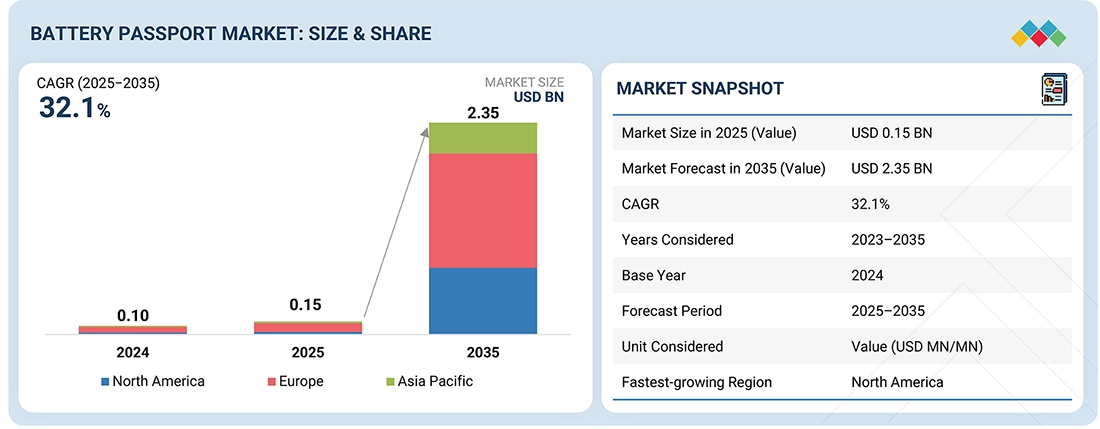
Source: Secondary Research, Interviews with Experts, MarketsandMarkets Analysis
The global battery passport market is projected to grow from USD 0.15 billion in 2025 to USD 2.35 billion by 2035, registering a CAGR of 32.1%. The market growth is due to governments and automotive manufacturers moving toward mandatory battery traceability and lifecycle transparency. Under the EU Battery Regulation, digital battery passports will become mandatory for EV and industrial batteries from February 2027, requiring detailed information on material origin, carbon footprint, recycled content, performance, and end of life management. This is pushing battery manufacturers, OEMs, and supply chain participants to invest in digital tracking and compliance platforms.
Battery Passport Market Size and Forecast:
- Market Size Value in 2024: USD 0.10 Billion
- Market Size Value in 2025: USD 0.15 Billion
- Revenue Forecast in 2035: USD 2.35 Billion
- Growth Rate: CAGR of 32.1% from 2025 to 2035
- Data available from 2023 to 2035
- Base year: 2024
- Forecast period: 2025–2035
Key Market Trends and Insights
- Market Growth: Growth is driven by mandatory battery traceability regulations and increasing demand for lifecycle transparency across the battery value chain.
-
IoT Impact: IoT enables real-time battery monitoring and data collection, supporting battery traceability and lifecycle management.
- Growing Trends: The market is witnessing growing adoption of digital traceability, battery analytics, and AI-enabled lifecycle management solutions.
- Growth Opportunities: Opportunities are driven by blockchain, AI, and digital twin adoption in battery traceability.
KEY TAKEAWAYS
-
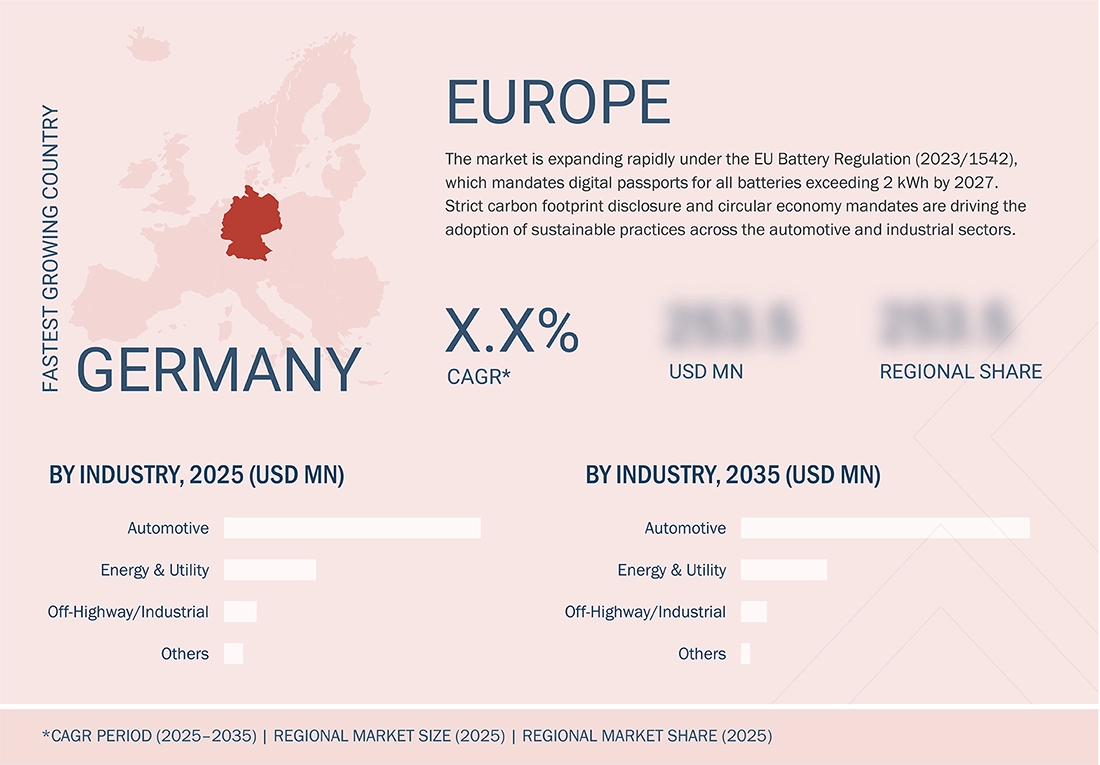
By RegionThe Europe region in terms of value has the largest share of >65% in global battery passport market in 2026.
-
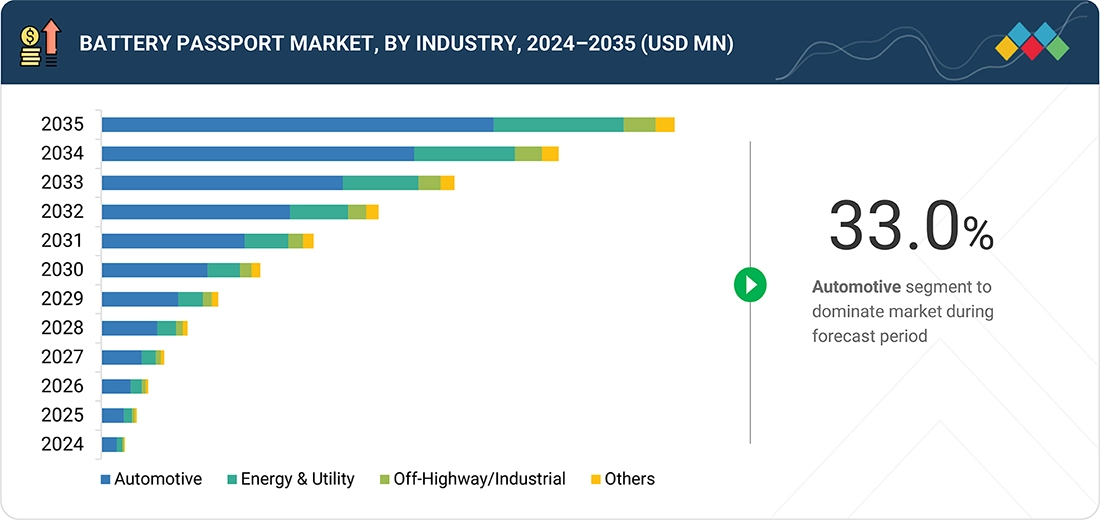
By IndustryBy industry, the automotive segment is expected to dominate the market during the forecast period.
-
By TechnologyBy technology, the IoT & AI-integrated battery passport segment will grow at the fastest rate from 2025 to 2035.
-
By Battery TypeBy battery type, the sodium-ion segment is expected to record the highest CAGR of 77.1% during the forecast period.
-
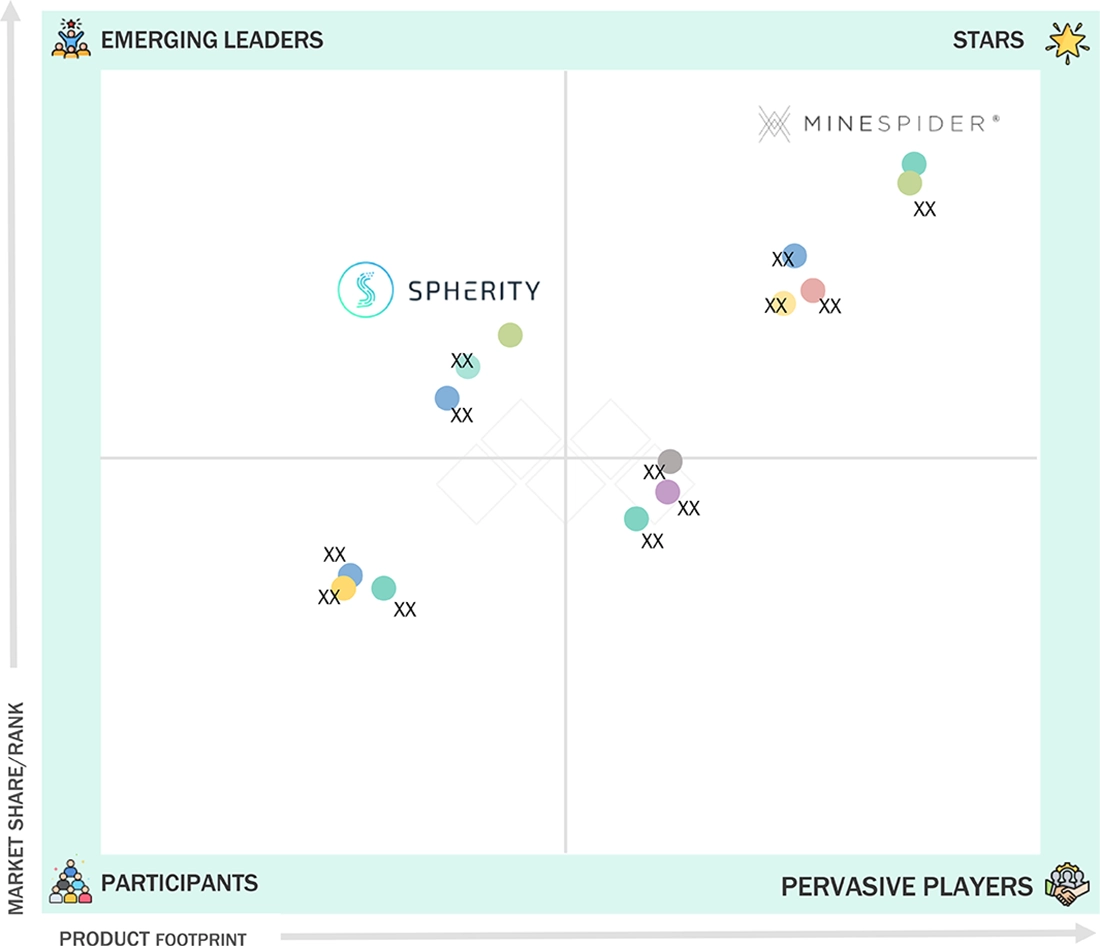
Competitive LandscapeCompanies such as Minespider GmbH, AVL, Siemens, and Circulor were identified as key players in the global battery passport market due to their strong business networks and strategic growth, which have helped these companies establish their market positions. BloqSens AG and Spherity GmbH, among others, have distinguished themselves among start-ups and SMEs by an innovative portfolio and a robust potential to build strong business strategies.
The battery passport market is gaining momentum due to increasing emphasis on responsible sourcing of critical battery minerals, growing battery recycling activities, and the need to support second life battery applications. At the same time, advances in digital traceability technologies and the rising complexity of global battery supply chains are encouraging manufacturers to adopt standardized battery data management and verification systems. IOT- driven inputs enable continuous monitoring of material origins, state of health, and cross-border movements, thereby strengthening compliance and procurement controls. Europe is driving early adoption through strict regulatory milestones, with North America and Asia upgrading systems to align with cross-regional requirements.
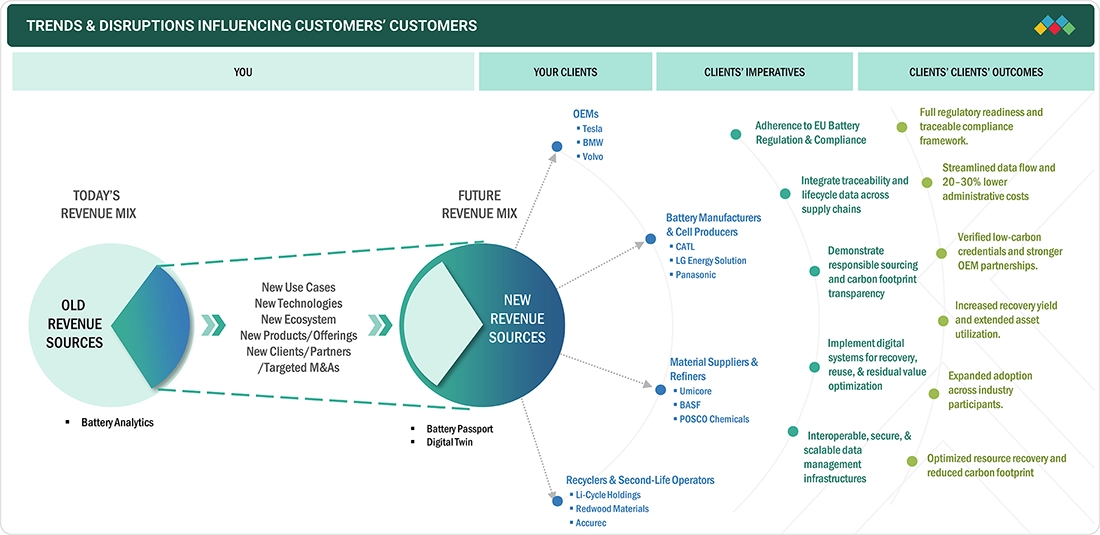
TRENDS & DISRUPTIONS IMPACTING CUSTOMERS' CUSTOMERS
The battery passport market is being shaped digital supply chain traceability, circular economy initiatives, and increasing adoption of battery analytics platforms. At the same time, disruptions including evolving regulatory requirements, rapid advances in battery chemistries, and the integration of blockchain, digital twin, and AI based tracking technologies are accelerating the shift toward more transparent, data driven battery lifecycle management systems.
Source: Secondary Research, Interviews with Experts, MarketsandMarkets Analysis
MARKET DYNAMICS

Level
-
Battery supply chain transparency and sustainability

-
Regulatory enforcement and compliance mandates


Level
-
High CapEx and OpEx for compliance

-
Data confidentiality and market reluctance


Level
-
Battery industry’s shift toward circular economy

-
Rise of Battery-as-a-Service model


Level
-
Transition and implementation constraints

-
Technical complexity

Source: Secondary Research, Interviews with Experts, MarketsandMarkets Analysis
Driver: Battery supply chain transparency and sustainability
The battery passport is becoming a core compliance tool, utilizing secure digital identifiers to track raw materials such as cobalt, lithium, and nickel throughout the extraction, processing, manufacturing, use, and end-of-life stages. Embedded sensors collect performance and movement data, which is then fed into encrypted systems, enabling reliable verification against sustainability frameworks such as RMAP and CFSI. This strengthens transparency, operational control, and supplier accountability across multi-tier chains.
Restraint: High CapEx and OpEx for compliance
Deploying battery passport systems requires substantial IT and integration expenditures, including blockchain registries, secure cloud infrastructure, and alignment with global data standards. Large OEMs can integrate these requirements into broader digital programs, while smaller suppliers face higher relative costs due to limited readiness. Continuous audits, data governance workflows, and cybersecurity compliance further raise operational expenditure.
Opportunity: Rise of Battery-as-a-Service model
The Battery-as-a-Service (BaaS) model can scale in the future by reducing high upfront costs for customers, offering predictable subscription-based expenses, and providing flexibility to upgrade or replace batteries as they degrade. From the customer perspective, it lowers financial barriers, ensures convenience, and improves the total cost of ownership while addressing concerns over battery lifespan and performance. For OEMs, the model presents challenges in managing battery inventory, monitoring degradation, ensuring safety and compliance, and handling significant capital and operational expenditures, which require advanced digital platforms and standardized infrastructure to operate efficiently at scale.
Challenge: Transition and implementation challenges
Shifting to digital traceability demands coordinated upgrades in ERP, MES, and recycler systems to achieve interoperability across cloud and blockchain-linked architectures. Many smaller players lack technical depth, making it challenging to align with standardized data schemas and secure API workflows. Differences in regional rules and certification schedules add complexity, increasing the risk of fragmented implementation without industry-wide coordination.
BATTERY PASSPORT MARKET SIZE, SHARE & ANALYSIS: COMMERCIAL USE CASES ACROSS INDUSTRIES
| COMPANY | USE CASE DESCRIPTION | BENEFITS |
|---|---|---|
 |
Implements battery passports for EV models with QR-linked lifecycle data covering chemistry, carbon footprint, sourcing, and in-use parameters | Lower compliance exposure, stronger asset valuation and clearer sustainability reporting |
 |
Applies digital passports with blockchain-backed material tracing for lithium, nickel, and cobalt across supplier tiers | Higher sourcing assurance, faster audit cycles and improved ESG validation |
 |
Runs integrated traceability systems capturing material origin, production steps, carbon intensity, and recycling inputs for passport fields | Reliable upstream data, improved lifecycle oversight and stronger circular supply-chain control |
 |
Supplies recycled-content and recovery-rate data aligned to passport reporting formats for OEMs | Verified recycled input, easier OEM compliance preparation and stronger circularity metrics |
 |
Configures data export and lifecycle telemetry pathways to support passport obligations for battery modules delivered into EU market | Streamlined conformity readiness, better lifecycle analytics and improved recycling coordination |
Logos and trademarks shown above are the property of their respective owners. Their use here is for informational and illustrative purposes only.
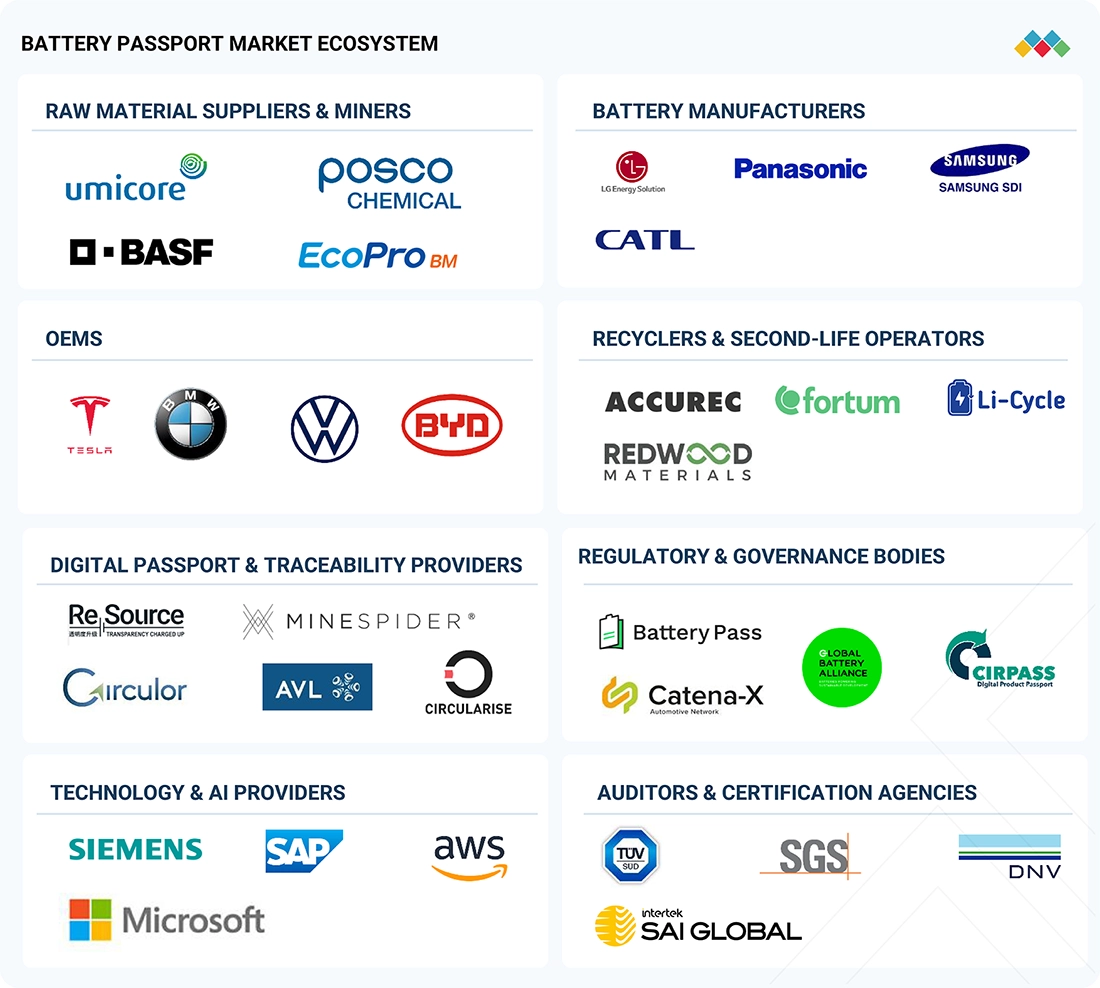
MARKET ECOSYSTEM
The ecosystem analysis highlights various players in the battery passport market ecosystem, primarily represented by raw material suppliers & miners, digital passport & traceability providers, battery manufacturers, OEMs, technology & AI providers, recyclers & second-life operators, auditors & certification agencies, and regulatory authorities & governance organizations. Some major digital passport & traceability providers include Circulor (UK), Minespider (Switzerland), Everledger (UK), Optel Group (Canada), Circularise (Netherlands), and AVL (Austria).
Logos and trademarks shown above are the property of their respective owners. Their use here is for informational and illustrative purposes only.
MARKET SEGMENTS
Source: Secondary Research, Interviews with Experts, MarketsandMarkets Analysis
Battery Passport Market, By Industry
The automotive industry dominates battery passport deployment, with EV powertrains offering a range of battery capacities, from 40 kWh in compact models to 100 kWh in premium vehicles. Electric vehicles represent the largest and most regulated application for advanced batteries, with OEMs facing stringent requirements for battery traceability, carbon footprint reporting, critical mineral sourcing, and end of life management. OEMs leverage datasets to quantify residual battery value and validate material provenance against EU 2023/1542 reporting standards. By integrating with PLM and ERP systems, passports transform raw operational data into actionable intelligence, reducing compliance overhead and enabling strategic sourcing decisions for critical metals such as cobalt, nickel, and lithium.
Battery Passport Market, By Battery Type
Lithium-ion batteries account for the majority of passported units as they are the primary energy storage technology used in electric vehicles, the main focus of emerging battery traceability and sustainability regulations. Their complex supply chains, reliance on critical minerals such as lithium, cobalt, and nickel, and growing recycling requirements create a greater need for detailed lifecycle tracking and compliance documentation compared with other battery technologies. However, the focus is shifting toward variant chemistries, such as NMC, LFP, and LFP-NMC hybrids, due to their differing energy density, degradation rates, and recyclability profiles. Passports now encode cell-level metadata, including voltage uniformity, thermal stability, and material batch identifiers, allowing OEMs and recyclers to model degradation curves, optimize battery pack disassembly, and forecast material recovery yields.
Battery Passport Market, By Technology
Blockchain dominates this market as it provides a secure, tamper resistant, and auditable record of battery data across multiple stakeholders, including raw material suppliers, battery manufacturers, OEMs, and recyclers. As regulatory frameworks require verifiable information on battery origin, carbon footprint, and material flows, blockchain offers a trusted mechanism for maintaining data integrity and traceability throughout the battery lifecycle. Platforms by Circulor and Minespider extend beyond provenance, capturing real-time sensor feeds, including BMS telemetry, temperature, and cycle count, while embedding audit-ready, cryptographically signed datasets. This reduces reconciliation costs between OEMs, battery assemblers, and recyclers, thereby supporting scenario modeling for circular economy interventions such as end-of-life repurposing or targeted cathode material recovery.
Battery Passport Market, By Business Model
SaaS-based battery passport platforms now provide modular microservices for lifecycle analytics, regulatory reporting, fleet monitoring, and resale evaluation, allowing stakeholders to tailor adoption by battery chemistry, region, and application. APIs integrate directly with OEM telematics and BMS systems to deliver real-time SOC, SOH, and thermal anomaly detection. For recyclers, predictive recovery dashboards estimate material yield and optimize logistics for mixed chemistries. SaaS monetization captures recurring revenue from both licensing and advanced analytics services while enabling continuous alignment with evolving EU compliance, ESG reporting, and circular economy targets.
REGION
During the forecast period, Europe is expected to be the largest regional market for battery passports globally.
Europe is the largest and most advanced market for battery-passport deployment, anchored by Regulation (EU) 2023/1542 and its requirements for machine-readable passports and interoperable data structures. Initiatives and consortia such as Battery Pass, CIRPASS/CIRPASS-2, and Catena-X are shaping Europe’s position as the largest market for battery passport deployment. They are aligning schemas, secure identifiers, and standardized APIs that connect BMS telemetry, MES/ERP data, and conformity records. Their pilots in Germany and the expansion of Catena-X hubs in France and Sweden are validating cross-party consent models, data exchange gateways, and analytics for cycle and thermal history. With Regulation (EU) 2023/1542 nearing phased enforcement, Europe’s coordinated regulatory and technical ecosystem offers the fastest pathway to implementing high-resolution, standards-driven battery passports.
BATTERY PASSPORT MARKET SIZE, SHARE & ANALYSIS: COMPANY EVALUATION MATRIX
In the battery passport market matrix, Minespider (Star) is reinforcing its market leadership by providing EU regulation ready digital battery passports and traceability platforms that enable end-to-end battery lifecycle tracking, responsible sourcing verification, compliance management, and recycling support across global battery supply chains. Spherity (Emerging Player) is strengthening its market presence through its digital product passport platform, which helps manufacturers create interoperable and verifiable battery passports, integrate with EU digital identity infrastructure, and comply with upcoming EU Battery Regulation requirements..
Source: Secondary Research, Interviews with Experts, MarketsandMarkets Analysis
KEY MARKET PLAYERS
- Minespider GmbH (US)
- AVL (Austria)
- Siemens (Germany)
- Circulor GmbH (Germany)
- Optel Group (Canada)
- iPoint-systems GmbH
- DENSO Corporation (Japan)
- RCS Global (UK)
- Circularise (Netherlands)
- ChargeZone (India)
MARKET SCOPE
| REPORT METRIC | DETAILS |
|---|---|
| Market Size in 2025 (Value) | USD 0.15 BN |
| Market Size in 2035 (Value) | USD 2.35 BN |
| Growth Rate | CAGR of 32.1% from 2025–2035 |
| Years Considered | 2023–2035 |
| Base Year | 2024 |
| Forecast Period | 2025–2035 |
| Unit Considered | Value (USD MN/BN) |
| Report Coverage | Revenue forecast, company ranking, competitive landscape, growth factors, and trends |
| Segments Covered |
|
| Regions Covered | Asia Pacific, Europe, North America |
WHAT IS IN IT FOR YOU: BATTERY PASSPORT MARKET SIZE, SHARE & ANALYSIS REPORT CONTENT GUIDE
DELIVERED CUSTOMIZATIONS
We have successfully delivered the following deep-dive customizations:
| CLIENT REQUEST | CUSTOMIZATION DELIVERED | VALUE ADDS |
|---|---|---|
| Global Battery Manufacturer | Assessment of EU Battery Regulation requirements, battery passport data fields, and traceability obligations across the battery value chain. | Enabled compliance planning and improved supply chain transparency. |
| Automotive OEM | Benchmarking of battery passport implementation strategies across leading OEMs and analysis of integration with battery management systems. | Supported regulatory readiness and battery lifecycle management initiatives. |
| Battery Passport Platform Provider | Competitive analysis of digital battery passport platforms, interoperability standards, and data exchange frameworks. | Identified product differentiation opportunities and partnership prospects. |
| Recycling & Circular Economy Company | Evaluation of battery traceability requirements for end of life battery collection, recycling, and material recovery processes. | Improved access to battery composition data and supported circular economy goals. |
RECENT DEVELOPMENTS
- January 2026 : Spherity joined the BatteryPass-Ready ecosystem to support implementation readiness for the EU Battery Passport. The initiative focuses on building a dedicated test environment for validating passport systems, improving interoperability, and supporting SMEs in preparing compliant lifecycle data workflows.
- February 2026 : Circularise joined the BatteryPass-Ready ecosystem as a supporting partner. The initiative develops a shared test environment for Digital Battery Passport implementation, focusing on validating data completeness, system interoperability, and real-world usability of passport frameworks across supply chains ahead of EU rollout.
- February 2026 : Sigma Technology Origo launched the ORIGO Product Cloud, a digital platform designed to support EU Digital Battery Passport compliance. The system creates a continuous digital record of each battery across production, use, repurposing, and recycling, while embedding regulatory validation rules aligned with the EU Battery Regulation to ensure passport data accuracy and compliance readiness ahead of the 2027 mandate.
- March 2026 : TNO and NXP advanced the Secure Battery Passport Demonstrator (SeBaPaD) initiative to improve reliability of battery condition data. The system focuses on secure, interoperable monitoring of battery health and lifecycle metrics to support trustworthy passport data under EU regulatory requirements.
Table of Contents
 Exclusive indicates content/data unique to MarketsandMarkets and not available with any competitors.
Methodology
The study involved four major activities in estimating the current size of the battery passport market. Exhaustive secondary research was conducted to gather information on the market, its peer market, and the parent market. The next step was to validate these findings, assumptions, and sizing with the industry experts across value chains through primary research. The bottom-up and top-down approaches were employed to estimate the complete market size. Thereafter, market breakdown and data triangulation processes were used to estimate the market size of segments and subsegments.
Secondary Research
The battery passport market is directly dependent on vehicle production. Battery passport sales/registration volume was derived through secondary sources, including corporate filings (such as annual reports, investor presentations, and financial statements), paid repositories, relevant associations (like IEA, Avicenne Energy), and industry production statistics. The EU’s plans regarding the adoption of battery passport data were compiled and analyzed, and industry trends were considered to inform the forecast, which was subsequently validated through primary research.
Primary Research
In the primary research process, various primary sources from both the supply and demand sides were interviewed to obtain qualitative and quantitative information on the market. Primary sources from the supply side included industry experts, such as CXOs, vice presidents, directors from business development, marketing, and product development/innovation teams, and related key executives from key companies. Various system integrators, industry associations, independent consultants/industry veterans, as well as key opinion leaders, were also interviewed.
Primary interviews were conducted to gather insights in the battery passport market, including battery passport sales and registrations, market forecasts, future technology trends, and upcoming technologies in the industry. Data triangulation was carried out using the information gathered from secondary research and model mapping to triangulate all these points. Stakeholders from the demand and supply sides were interviewed to understand their views on the aforementioned points.
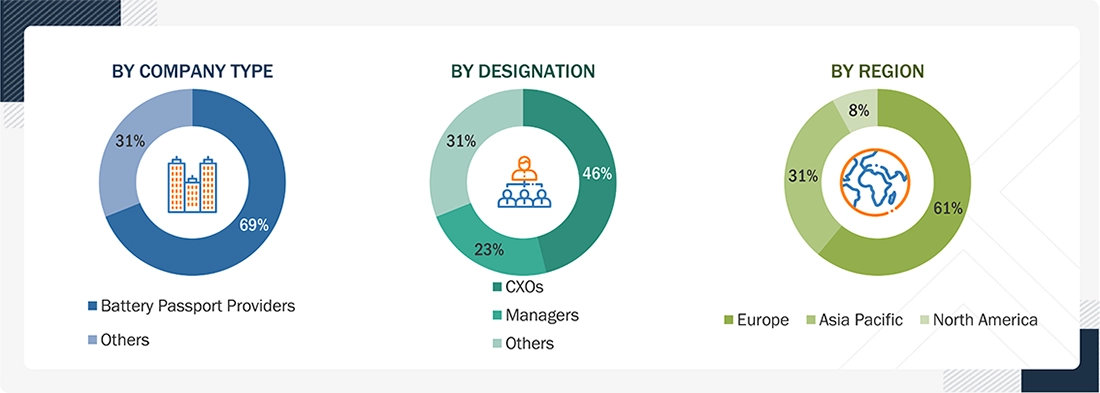
Primary interviews were conducted with market experts from both the demand (battery passport manufacturers) and supply (OEMs, battery swapping service providers, etc.) sides across three major regions: North America, Europe, and Asia Pacific. Approximately 69% and 31% of primary interviews were conducted with battery passport service providers and others, respectively. Primary data was collected through questionnaires, emails, and telephonic interviews. During the canvassing of primaries, various departments within organizations, including sales, marketing, operations, R&D, and aftermarket, were covered to provide a holistic perspective in the report.
After interacting with industry experts, brief sessions were conducted with highly experienced independent consultants to reinforce the findings from primaries. This, along with the in-house subject matter expert opinions, led to the findings as described in the remainder of this report.
To know about the assumptions considered for the study, download the pdf brochure
Market Size Estimation
A detailed market estimation approach was followed to estimate and validate the value of the battery passport market and other dependent submarkets, as mentioned below:
- Key players in the market were identified through secondary research, and their global market shares were determined through a combination of primary and secondary research.
- The research methodology included a study of annual and quarterly financial reports and regulatory filings of major market players (public), as well as interviews with industry experts for detailed market insights.
- All industry-level penetration rates, percentage shares, splits, and breakdowns for the market were determined using secondary sources and verified through primary sources.
- All key macro indicators affecting the revenue growth of the market segments and subsegments were accounted for, viewed in extensive detail, verified through primary research, and analyzed to obtain validated and verified quantitative and qualitative data.
- The gathered market data was consolidated and added with detailed inputs, analyzed, and presented in this report.
- Qualitative aspects, including market drivers, restraints, opportunities, and challenges, were taken into consideration when calculating and forecasting the market size.
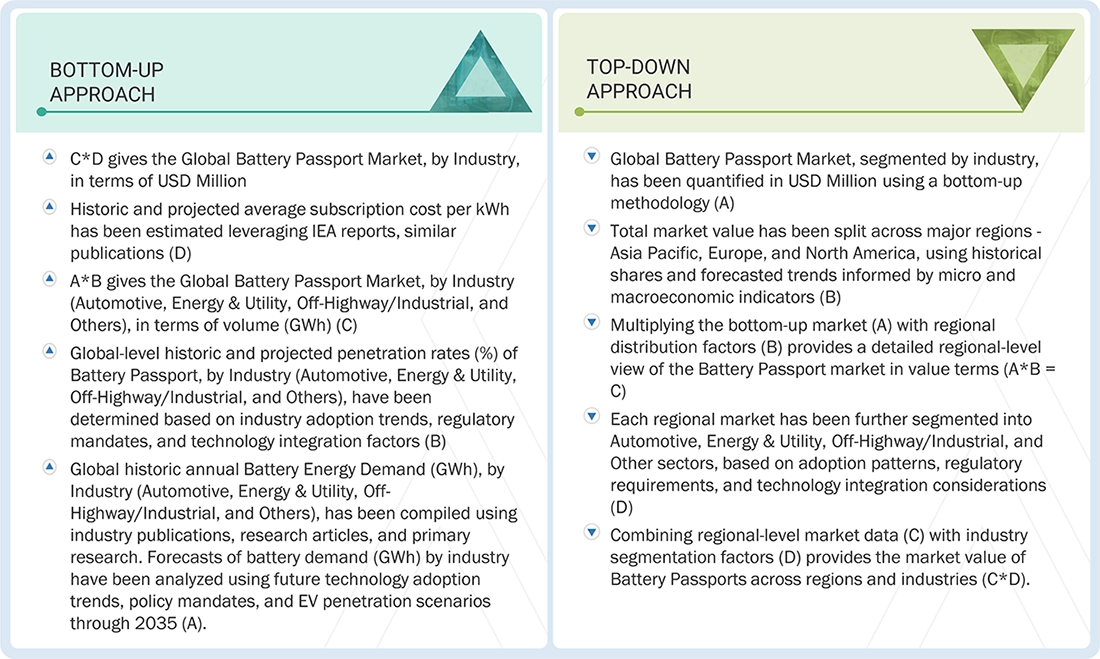
Battery Passport Market : Top-Down and Bottom-Up Approach
Data Triangulation
After determining the overall market size using the market size estimation processes explained above, the market was divided into several segments and subsegments. To complete the overall market engineering process and arrive at the exact statistics of each market segment and subsegment, data triangulation and market breakdown procedures were employed, wherever applicable. The data was triangulated by studying various factors and trends from both the demand and supply sides.
Market Definition
The backscatter X-ray devices market involves the development of non-intrusive inspection systems that use low-energy X-rays to detect concealed threats in vehicles, cargo, baggage, and on-person scenarios. These systems provide real-time imaging, which is crucial for border security and law enforcement, enabling the identification of substances such as explosives and narcotics. Backscatter technologies utilize advanced detector arrays, X-ray modules, and automated algorithms for efficient screening, which are deployed at customs, airports, and military bases. The market growth is driven by rising cross-border trade, increasing smuggling, and stricter security regulations. Innovations such as AI-assisted image analysis and portable units enhance detection and operational efficiency, making backscatter X-ray devices essential for reliable security inspections worldwide.
Key Stakeholders
- Global battery passport companies
- Battery manufacturers
- EV manufacturers
- Battery recyclers
- Energy storage system integrators
- Utility operators
- Fleet operators
- Battery technology providers
Report Objectives
-
To define, describe, segment, and forecast the size of the battery passport market in terms of value (USD million) based on
- Industry (automotive, energy & utility, off-highway/industrial, other industries)
- Battery type (lithium-ion, lead-acid, sodium-ion, other batteries)
- Technology (blockchain-based battery passport, cloud-based battery passport, IoT & AI-integrated battery passport, other technologies)
- Region (Asia Pacific, Europe, North America)
- To analyze the market qualitatively based on compliance (EU Battery Regulation-compliant batteries, batteries under pilot schemes, non-compliant/legacy batteries), end user (compliance end users, operational end users), and business model (software-as-a-service platform, white-label solution, on-demand deployment, subscription, licensing, pay-per-use)
- To identify and analyze key drivers, restraints, opportunities, and challenges influencing market growth
- To strategically analyze the market, including macroeconomic outlook, trends/disruptions impacting buyers, case studies, patent analysis, supply chain analysis, market ecosystem, regulatory analysis, impact of AI/Gen AI, brand comparison, and technology trends
- To understand the competition in the market and position players as stars, emerging leaders, pervasive players, and participants based on their product portfolios and business strategies
- To analyze the ranking of leading market players and evaluate the competitive leadership mapping
- To strategically analyze key player strategies/right to win and company revenues
- To analyze the opportunities in the market for stakeholders and provide details of the competitive landscape for market leaders
- To provide an analysis of recent developments, such as joint ventures, mergers & acquisitions, product launches/developments, and other activities carried out by key market players
Customization Options:
With the given market data, MarketsandMarkets offers customizations tailored to the company’s specific needs.
- Battery Passport Market, By Battery Type, at Country Level (For Countries Covered in Report)
- Battery Passport Market, By Industry, at Country Level (For Countries Covered in Report)
Company Information
- Profiling of Up to Five Additional Market Players


Personalize This Research
- Triangulate with your Own Data
- Get Data as per your Format and Definition
- Gain a Deeper Dive on a Specific Application, Geography, Customer or Competitor
- Any level of Personalization
Let Us Help You
- What are the Known and Unknown Adjacencies Impacting the Battery Passport Market
- What will your New Revenue Sources be?
- Who will be your Top Customer; what will make them switch?
- Defend your Market Share or Win Competitors
- Get a Scorecard for Target Partners

Custom Market Research Services
We Will Customise The Research For You, In Case The Report Listed Above Does Not Meet With Your Requirements
Get 10% Free CustomisationTESTIMONIALS

JIM NAAS
PRODUCT DIRECTOR, WEASLER
Weasler Engineering, a CentroMotion organization
Global Provider of Industrial Actuation & Control Solutionswww.weasler.com
Our organization was interested in learning more about the attractiveness of a particular market space. We contacted MarketsandMarkets to help us based on previous positive experiences we had with them. The results did not disappoint! We discussed our objectives with them, and the team at MarketsandMarkets developed and executed a proposal that met our needs precisely. We were very impressed by their level of expertise, the quality of the analysis and their insightful recommendations. We would not hesitate in working with them again in the future.

Matt Kardel,
Vice President
Aptiv,
A global technology company that develops safer, greener and more connected solutions.www.aptiv.com
We contracted with
MarketsandMarkets to evaluate the value chain and potential go-to-market partners related to our
interest in the Fleet Management space. The team successfully completed the work on time and at the
pricing agreed. MarketsandMarkets listened and understood our objectives and collaborated well with
us to help us get the visibility we needed to make an investment.
We have subsequently used
MarketsandMarkets again related to Smart Cities to good results.






Growth opportunities and latent adjacency in Battery Passport Market