Bidirectional Charging Market by Application (V2G, V2H, V2L), Propulsion Type (BEV and PHEV), Vehicle Type (Passenger Car and Light Commercial Vehicle), Charging Type (AC Charging and DC Charging), End Use, and Region - Global Forecast to 2035

icon1
USD 844.1 BN
MARKET SIZE, 2035
icon2
CAGR 28.3%
(2025-2035)
icon3
298
REPORT PAGES
icon4
150
MARKET TABLES

OVERVIEW

Bidirectional Charging Market Overview

Source: Secondary Research, Interviews with Experts, MarketsandMarkets Analysis

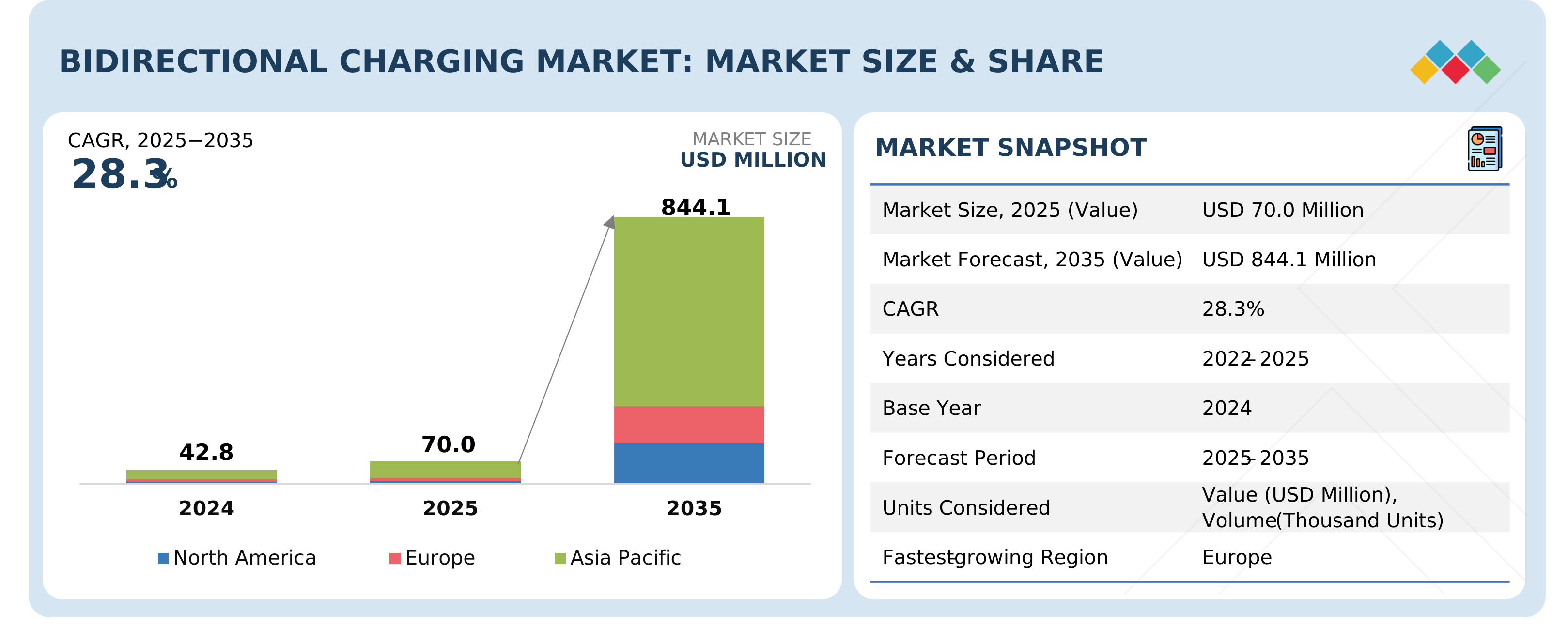
The bidirectional charging market is projected to grow from USD 70.0 million in 2025 to USD 844.1 million by 2035, at a CAGR of 28.3%. The market is rapidly growing as electric vehicles increasingly serve as mobile energy storage, enabling electricity flow both to and from the grid. This technology enhances grid flexibility, supports renewable integration, and offers energy resilience through V2G, V2H, and V2L applications.

KEY TAKEAWAYS

  • BY APPLICATION
    The bidirectional charging market is dominated by V2L applications, as consumers seek flexible ways to power tools, appliances, and devices directly from their electric vehicles. V2L is now a key differentiator among EV models, driving new value propositions for both residential and lifestyle segments.
  • BY PROPULSION TYPE
    BEVs are estimated to lead the market by a significant margin, with most OEMs integrating V2H/V2L functionality in newer models. PHEVs represent a minimal share, due to limited battery capacity and only one mainstream V2X-compatible offering.
  • BY VEHICLE TYPE
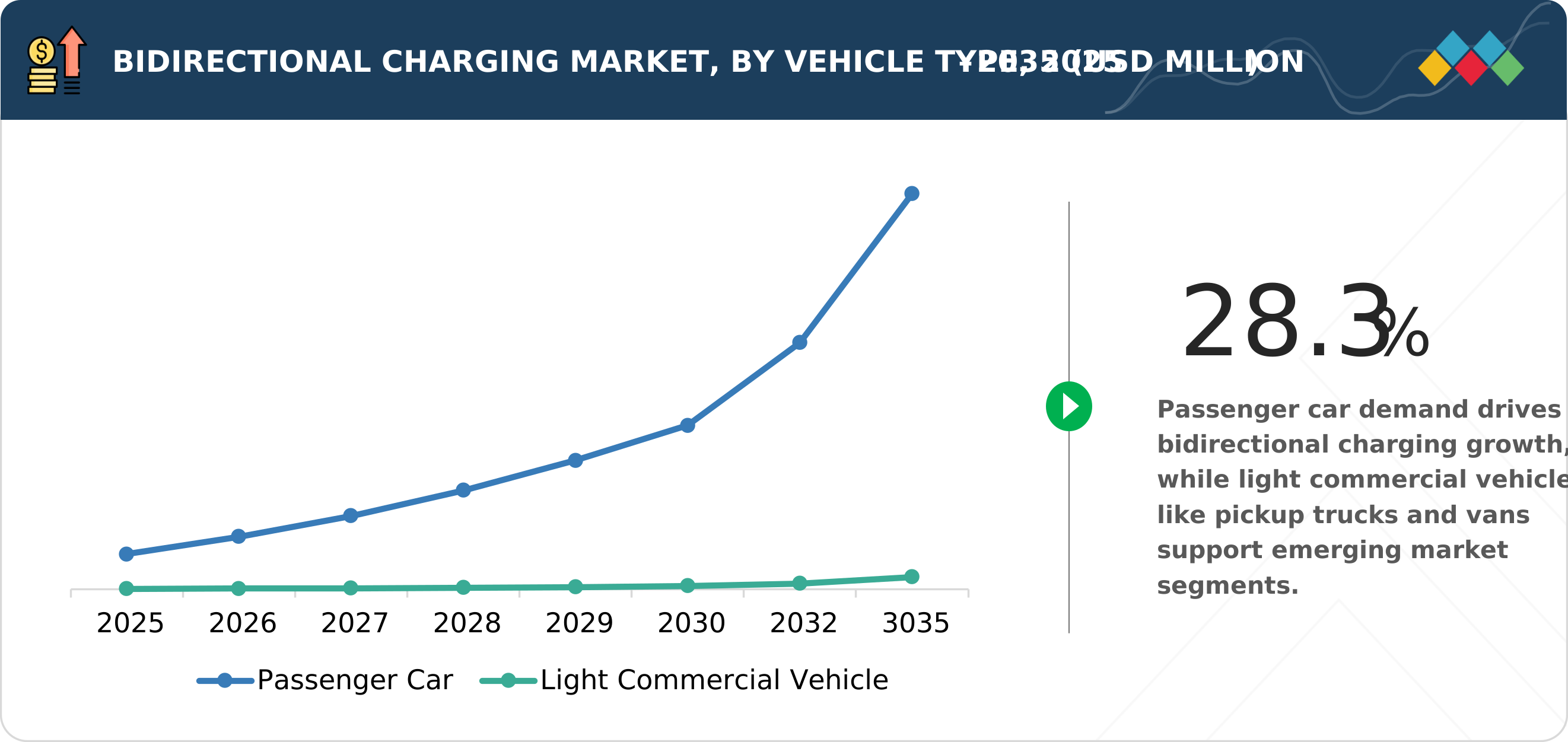
    Passenger cars are estimated to constitute the larger share, propelled by rapid OEM adoption of bidirectional hardware and growing consumer demand for home energy management features. Commercial fleet adoption is rising as well, along with personal electric pickup trucks and commercial vans.
  • BY CHARGING TYPE
    AC bidirectional chargers are favored in fleet depots and heavy-duty operations for their higher power ratings and smart management capability. AC chargers also maintain a strong presence in home and small business installations, owing to cost advantages and compatibility with single-phase networks.
  • BY END USE
    Commercial, municipal, and utility fleet operators are the primary end users, leveraging bidirectional charging to optimize energy costs, participate in grid services, and improve fleet resilience. Consumer residential markets are expanding, especially in regions with energy flexibility and backup power incentives.
  • BY REGION
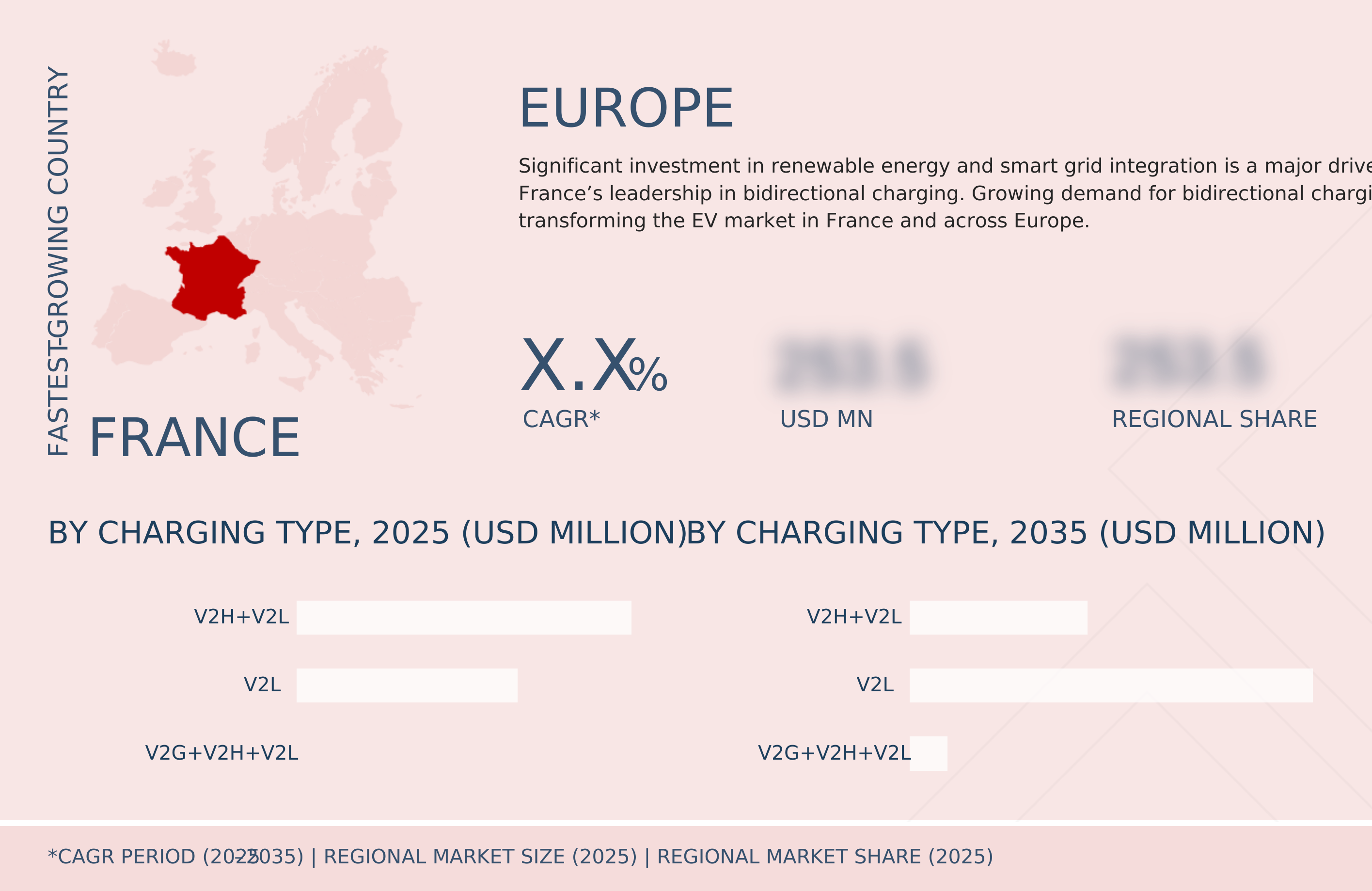
    Europe is projected to be the fastest-growing region, driven by ambitious EV rollout targets, grid modernization programs, and early-stage integration of V2G infrastructure across national and local grids. Regulatory support and large-scale pilot projects are accelerating commercialization across Western and Northern Europe.
  • COMPETITIVE LANDSCAPE
    Market leaders include charging solution providers and specialized V2X technology companies. The landscape is characterized by strategic alliances, rapid technology cycles, and a race to secure utility-scale demonstration projects and long-term service contracts.

The global bidirectional charging market is advancing rapidly, fueled by the pivotal role bidirectional technologies play in grid flexibility, EV energy management, Consumer preference due to V2L, and revenue generation. Electrification is accelerating adoption across passenger, fleet, and light commercial vehicle segments, with DC and AC bidirectional chargers enabling V2G, V2L, and V2H functionalities for applications ranging from grid services and backup power to portable device charging and fleet optimization.

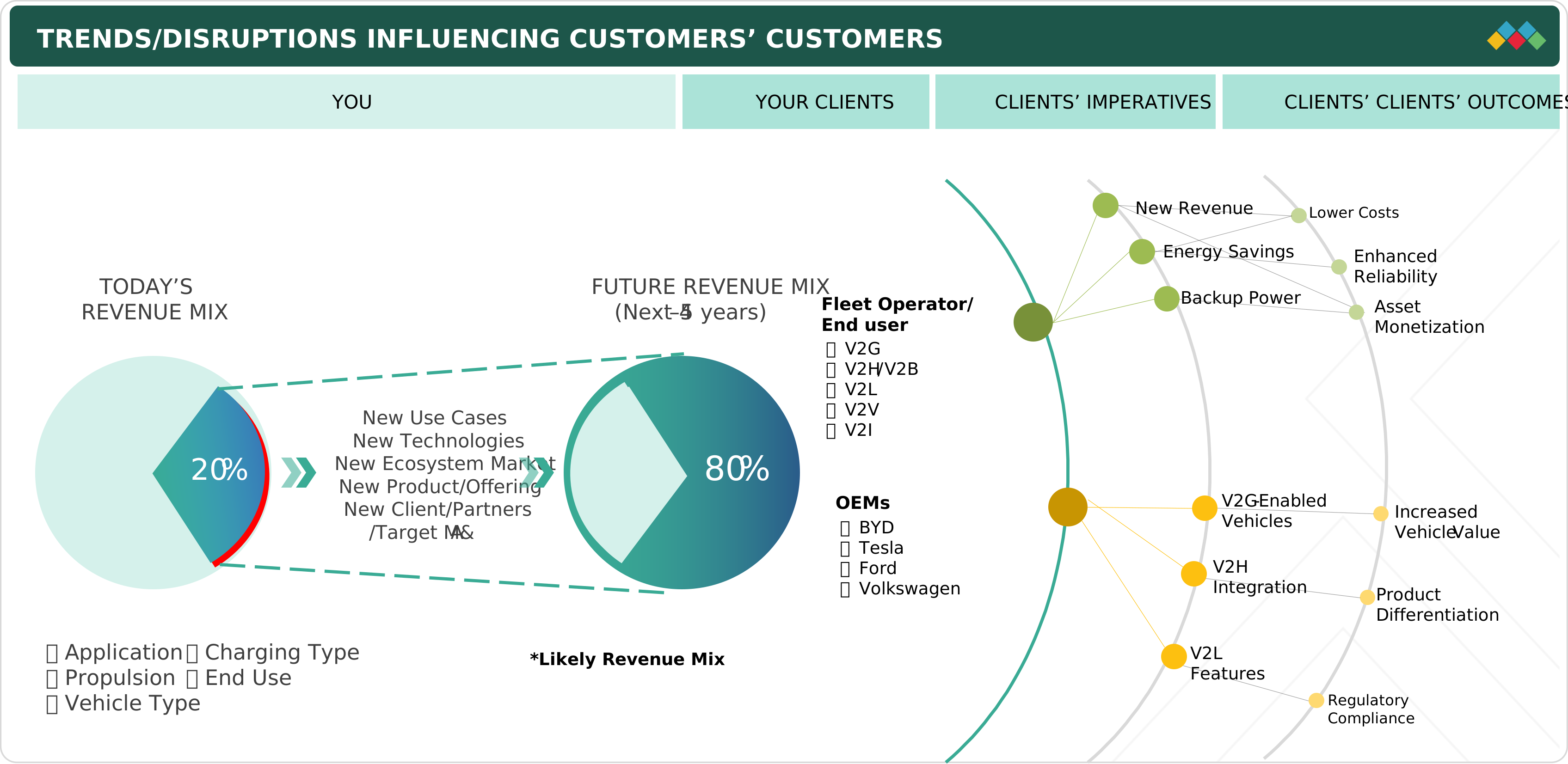
TRENDS & DISRUPTIONS IMPACTING CUSTOMERS' CUSTOMERS

As EVs become integrated energy assets, bidirectional charging is positioned as a core enabler of energy resilience, renewable integration, and cost optimization for both residential and commercial users. The expansion is driven by increasing electric vehicle adoption, growing demand for grid flexibility, and rising interest in V2G, V2H, and V2L solutions.

Bidirectional Charging Market Disruptions

Source: Secondary Research, Interviews with Experts, MarketsandMarkets Analysis

MARKET DYNAMICS

Drivers
Impact
Level
  • Growing availability of bidirectional chargeable vehicle models
  • Strong governmental support for emission-free and safe electric vehicles
RESTRAINTS
Impact
Level
  • High cost and complexity of integrating in-vehicle charger systems
  • Limited home charging suitability; not all properties support bidirectional system
OPPORTUNITIES
Impact
Level
  • Integration of bidirectional charging with automated smart parking systems
  • Fleet electrification and car sharing platforms would increase deployment
CHALLENGES
Impact
Level
  • Global regulatory inconsistencies and Fragmented incentive qualification

Source: Secondary Research, Interviews with Experts, MarketsandMarkets Analysis

Driver: Growing availability of bidirectional chargeable vehicle models

The rapid expansion in the availability of bidirectional chargeable electric vehicle models is a significant driver for the bidirectional charging market. Technological advancements in both vehicles and charging infrastructures, such as the development of compatible bidirectional chargers supporting CCS and CHAdeMO connectors, are reducing barriers for end users. Additionally, the V2L feature is easily deployable at minimal cost, accelerating widespread adoption by enabling users to power external devices directly from their vehicles without complex installation.

Restraint: EV resale values and accelerated depreciation impacts buyer confidence

Electric vehicle resale values are significantly influenced by accelerated battery degradation, particularly due to the frequent charge and discharge cycles inherent in bidirectional charging. As a result, concerns over faster battery wear and lower residual values may limit consumer willingness to adopt bidirectional charging without clear long-term performance assurances from OEMs.

Opportunity: Integration of bidirectional charging with automated smart parking systems

Integration of bidirectional charging with automated smart parking systems is poised to transform urban mobility and distributed energy management, leveraging IoT-enabled monitoring, dynamic scheduling, and real-time optimization.

Challenge: Global regulatory inconsistencies and Fragmented incentive qualification

Global regulatory inconsistencies and fragmented incentive qualification processes present formidable restraints that hamper the broader adoption and seamless deployment of electric vehicles and associated technologies.

bidirectional charging market: COMMERCIAL USE CASES ACROSS INDUSTRIES

COMPANY USE CASE DESCRIPTION BENEFITS
Deploying bidirectional chargers for residential and fleet applications, enabling vehicle-to-home (V2H) and vehicle-to-grid (V2G) integration Supports grid balancing, provides backup power to households, and reduces energy costs by enabling energy trading
Partnering with utilities, schools, and fleet operators to enable V2G solutions for electric buses and commercial fleets Enhances grid stability, generates additional revenue streams for fleet operators, and promotes renewable energy integration
Developing smart charging infrastructure that integrates V2G technology for commercial fleets and energy companies Facilitates large-scale energy management, supports renewable integration, and provides cost savings for fleet operators
Offering scalable charging solutions with potential V2X functionalities for commercial and residential sectors Optimizes charging infrastructure, supports efficient energy distribution, and enables future readiness for V2G
Supplying bidirectional chargers for pilot projects with utilities and fleets, focusing on V2G integration at scale Enables energy storage through EVs, improves grid resilience, and lowers operational costs for commercial users

Logos and trademarks shown above are the property of their respective owners. Their use here is for informational and illustrative purposes only.

MARKET ECOSYSTEM

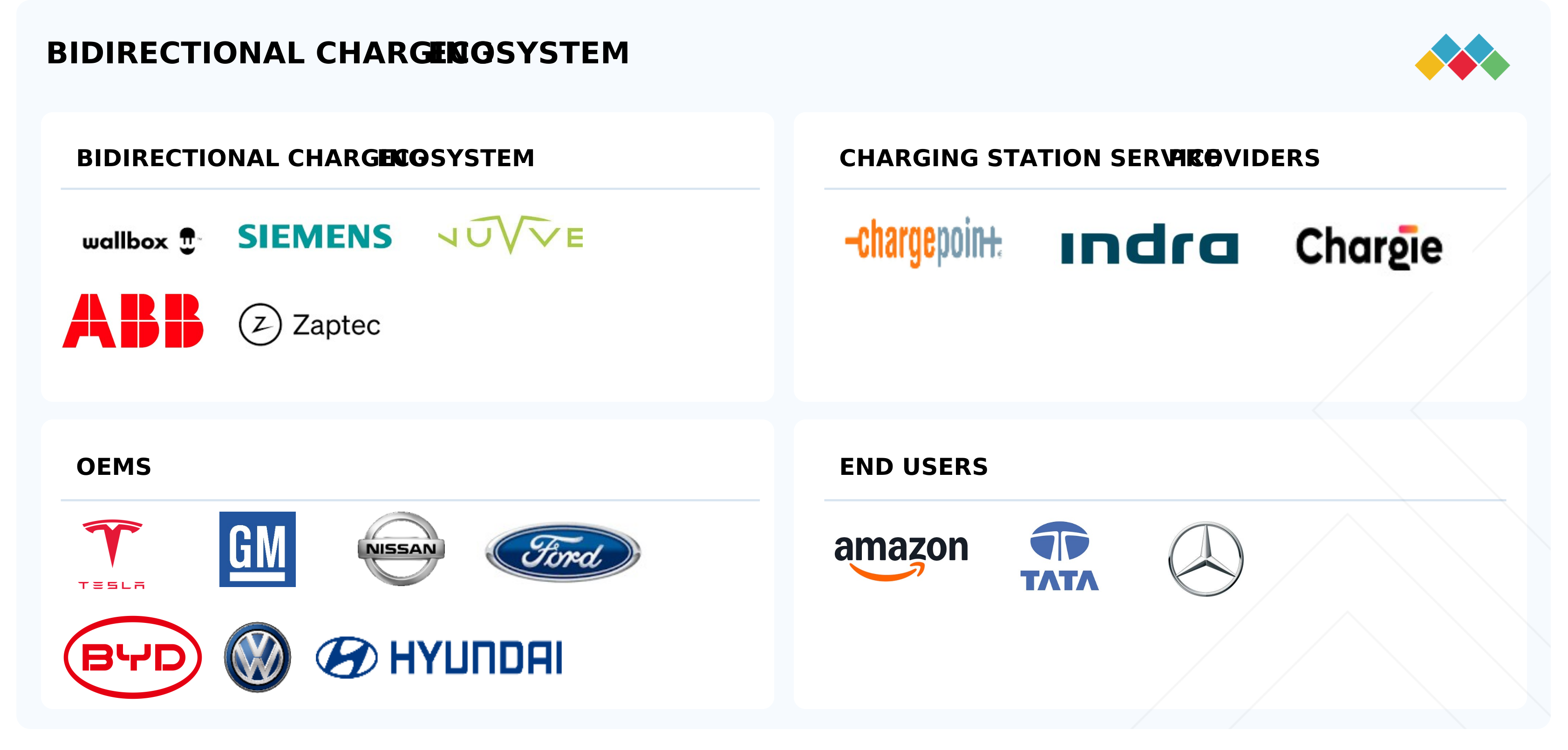
The ecosystem analysis highlights various players in the bidirectional charging market for the electric vehicle’s ecosystem, which is primarily represented by OEMs, bidirectional EV charging system providers, and end users.

Bidirectional Charging Market Ecosystem

Logos and trademarks shown above are the property of their respective owners. Their use here is for informational and illustrative purposes only.

MARKET SEGMENTS

Bidirectional Charging Market Segments

Source: Secondary Research, Interviews with Experts, MarketsandMarkets Analysis

Bidirectional Charging Market, by Application

V2L, V2H, and V2G represent the three main applications of bidirectional charging, each offering different levels of value for consumers, businesses, and utilities. V2L currently dominates the bidirectional charging use case due to easy implementation, portable, and flexible power options to EV buyers.

Bidirectional Charging Market, by Charging Type

AC uses the vehicle’s onboard charger, offering low-cost, scalable residential solutions compatible with existing grids. DC supports high-power, fast charging critical for commercial fleets and grid services, driving infrastructure upgrades and energy market participation. This differentiation shapes technology investments and business models across stakeholders.

Bidirectional Charging Market, by End Use

Bidirectional charging is expected to become central to the way electric vehicles interact with energy systems, extending their role beyond transportation. By enabling EV batteries to both draw and supply electricity, it supports use cases across households, commercial fleets, and wider grid services.

Bidirectional Charging Market, by Propulsion

Most OEMs focus bidirectional charging on BEVs because their larger batteries provide the necessary capacity and power for efficient two-way energy flow. PHEVs, with smaller batteries and hybrid drivetrains, lack the energy storage and electrical architecture to support effective bidirectional functions, making integration costly and technically complex. Hence, BEVs offer a more practical and economically viable platform for bidirectional charging technologies.

Bidirectional Charging Market, by Vehicle Type

Segments based on vehicle type, covering passenger cars and light commercial vehicles separately, with passenger cars and commercial vehicles serving distinct use cases, adoption patterns are developing differently across regions.

REGION

Europe to be fastest growing region in global bidirectional charging market during forecast period

Europe is projected to be the fastest-growing bidirectional charging market during the forecast period. Regionally, Europe’s regulatory incentives and smart grid investments are accelerating adoption, while growing focus on battery warranty impacts and degradation-aware charging is driving technology innovation. These specific trends position bidirectional charging as a critical enabler for grid stability and sustainable electrification of commercial transportation sectors.

Bidirectional Charging Market Region

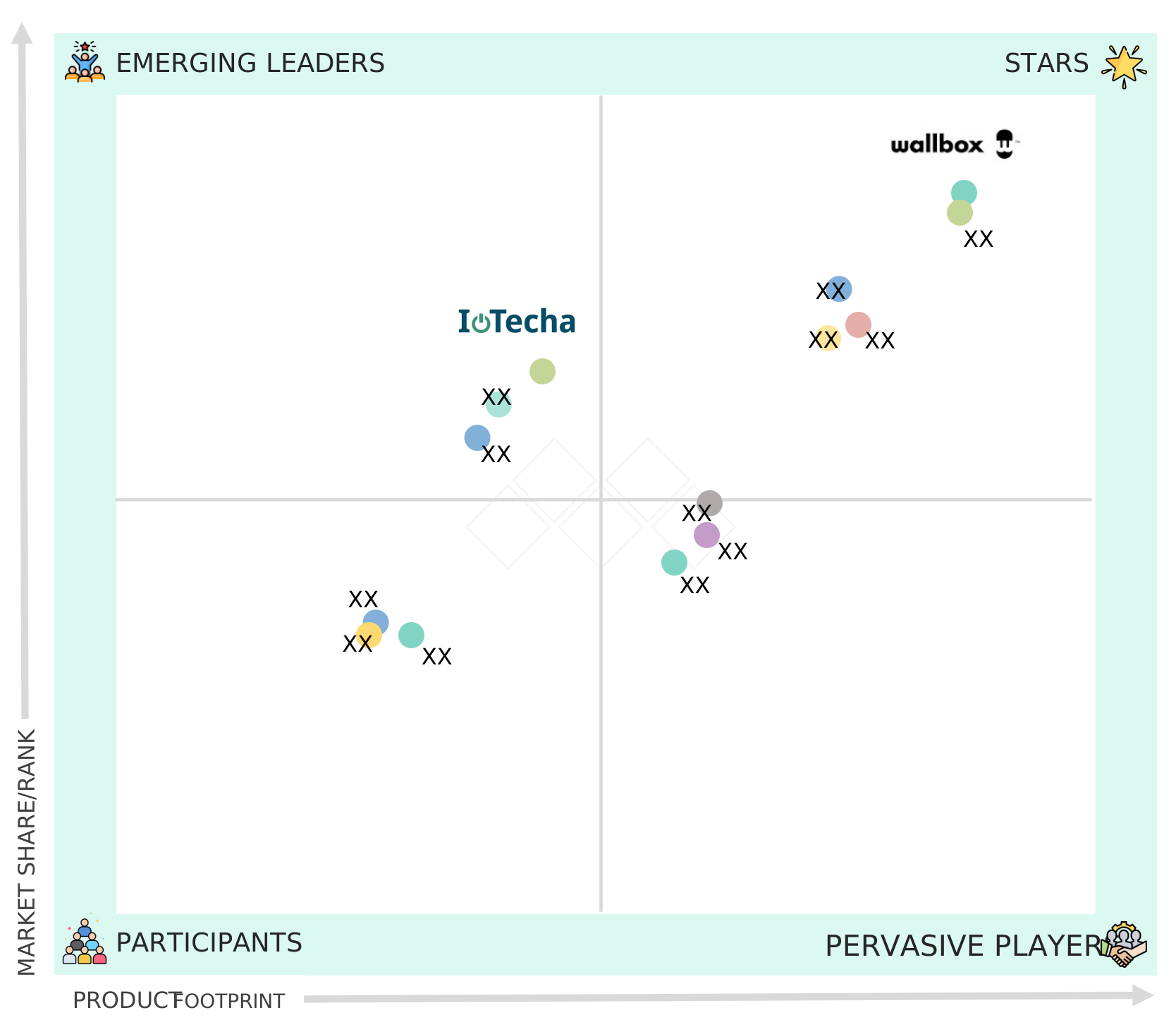
bidirectional charging market: COMPANY EVALUATION MATRIX

Micro-quadrants provide information about the major players in the bidirectional charging market, outline the findings, and analyze how well each market player performs within the predefined micro-quadrant criteria. In the bidirectional EV charging market, Wallbox is in the 'Stars' quadrant with global scale, a broad hardware-software portfolio, and flagship Quasar solutions that integrate V2H, V2G, and energy management, reinforcing its role as a cornerstone of distributed energy flexibility. In the 'Emerging Leaders' quadrant, IoTecha is accelerating momentum through intelligent charge controllers and ISO 15118/OCPP-driven interoperability, carving a critical position as a software-centric enabler of smart grid integration and seamless V2X connectivity.

Bidirectional Charging Market Evaluation Matrics

Source: Secondary Research, Interviews with Experts, MarketsandMarkets Analysis

MARKET SCOPE

REPORT METRIC DETAILS
Market Size, 2025 (Value) USD 70.0 Million
Market Forecast, 2035 (Value) USD 844.1 Million
Growth Rate CAGR of 28.3% from 2025 to 2035
Years Considered 2022–2035
Base Year 2024
Forecast Period 2025–2035
Units Considered Value (USD Million), Volume (Thousand Units)
Report Coverage Revenue Forecast, Competitive Landscape, Company Share, Growth Factors and Trends
Segments Covered
  • By Application:
    • V2G
    • V2H
    • V2L
  • Propulsion Type - BEV and PHEV
  • By Vehicle Type - Passenger Car and Commercial Vehicle
  • Charging Type: AC Charging and DC Charging
  • By End Use:
    • Residential
    • Commercial Fleets
    • Semi-public
    • and Utility Applications
Regional Scope Asia Pacific, North America, Europe

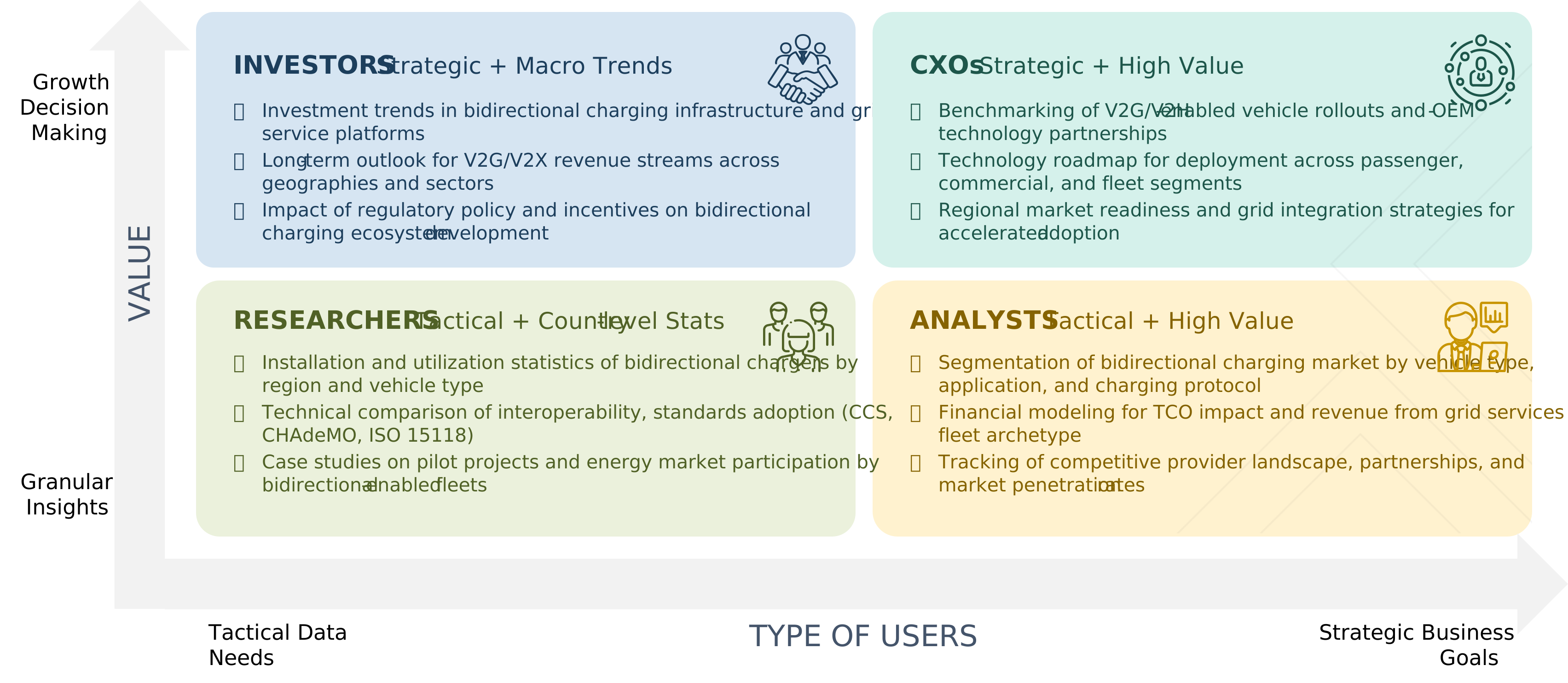
WHAT IS IN IT FOR YOU: bidirectional charging market REPORT CONTENT GUIDE

Bidirectional Charging Market Content Guide

DELIVERED CUSTOMIZATIONS

We have successfully delivered the following deep-dive customizations:

CLIENT REQUEST CUSTOMIZATION DELIVERED VALUE ADDS
Automotive OEMs V2G/V2H roadmap, pilot site benchmarking Enhanced market positioning, compliance leadership
Charger Manufacturers Protocol analysis, product compatibility Optimized product offerings, partnership expansion
Utility/Energy Companies Aggregator partnerships, revenue modeling New grid services, energy market entry
Fleet Operators/Logistics Cos. Fleet optimization, depot deployment plans Cost savings, revenue from grid services
Investment Funds Competitive landscape, growth projections Informed investment strategy, risk mitigation
Component Suppliers Interoperability insights, supplier mapping Improved sales channels, technical differentiation

RECENT DEVELOPMENTS

  • June 2025 : Wall box chargers launched Quasar 2 to help EV owners save on home energy costs through vehicle-to-home V2H and vehicle-to-grid V2G functionality. Quasar 2 was designed to transform an EV into a powerful energy storage device.
  • March 2025 : Emphase Energy launched a Smart EV charger designed with embedded support for AC bidirectional charging. It seamlessly connected with Enphase solar and battery solutions, while also functioning independently, making it suitable for both present-day charging needs and future vehicle-to-home or vehicle-to-grid applications.
  • November 2025 : ABB entered into a licensing agreement with Black Box Innovations to manufacture EV energy management systems in Canada. These systems supported the installation of EV chargers on existing electrical panels, facilitating the adoption of bidirectional charging solutions without the need for panel upgrades.
  • September 2025 : Siemens developed, in collaboration with Ford, this 80-amp Level 2 charger, the first bidirectional-ready EV charger to receive UL 9741 certification. It enabled the F-150 Lightning to provide backup power to homes through Ford's Intelligent Backup Power system.


Table of Contents

Exclusive indicates content/data unique to MarketsandMarkets and not available with any competitors.

TITLE
PAGE NO
1
INTRODUCTION


27
2
RESEARCH METHODOLOGY


33
3
EXECUTIVE SUMMARY


46
4
PREMIUM INSIGHTS


50
5
MARKET OVERVIEW
Bidirectional charging and declining battery costs revolutionize electric vehicle affordability and grid stability.


53
 
5.1
INTRODUCTION


5.2
MARKET DYNAMICS


5.2.1
DRIVERS


5.2.1.1
GROWING AVAILABILITY OF BIDIRECTIONAL CHARGEABLE VEHICLE MODELS


5.2.1.2
STRONG GOVERNMENT SUPPORT FOR ELECTRIC VEHICLES


5.2.1.3
DECLINING BATTERY COSTS STRENGTHENING ELECTRIC VEHICLE AFFORDABILITY AND OWNERSHIP ECONOMICS


5.2.1.4
GRID STABILITY ACHIEVED DUE TO INTELLIGENT BIDIRECTIONAL CHARGING DEPLOYMENT


5.2.2
RESTRAINTS


5.2.2.1
HIGH COST AND COMPLEXITY OF INTEGRATING IN-VEHICLE CHARGER SYSTEMS


5.2.2.2
LIMITED HOME CHARGING SUITABILITY


5.2.2.3
ELECTRIC VEHICLE RESALE VALUES AND ACCELERATED DEPRECIATION IMPACTING BUYER CONFIDENCE


5.2.3
OPPORTUNITIES


5.2.3.1
INTEGRATION OF BIDIRECTIONAL CHARGING WITH AUTOMATED SMART PARKING SYSTEMS


5.2.3.2
FLEET ELECTRIFICATION AND CAR-SHARING PLATFORMS TO INCREASE DEPLOYMENT


5.2.4
CHALLENGES


5.2.4.1
REGULATORY INCONSISTENCIES AND FRAGMENTED INCENTIVE QUALIFICATION
 
6
INDUSTRY TRENDS
Explore emerging bidirectional charging trends reshaping global EV industry and monetization strategies.


63
 
6.1
MACROECONOMIC INDICATORS


6.1.1
INTRODUCTION


6.1.2
GDP TRENDS AND FORECAST


6.1.3
TRENDS IN GLOBAL ELECTRIC VEHICLE CHARGING INDUSTRY


6.1.4
TRENDS IN GLOBAL AUTOMOTIVE & TRANSPORTATION INDUSTRY


6.2
ECOSYSTEM ANALYSIS


6.2.1
BIDIRECTIONAL CHARGING SYSTEM PROVIDERS


6.2.2
OEMS


6.2.3
CHARGING STATION SERVICE PROVIDERS


6.2.4
END USERS


6.3
VALUE CHAIN ANALYSIS


6.4
EMERGING BUSINESS MODELS IN BIDIRECTIONAL SERVICES


6.4.1
NEW MONETIZATION OPPORTUNITIES FOR OEMS, BIDIRECTIONAL CHARGER PROVIDERS, AND UTILITIES


6.4.2
SUBSCRIPTION-BASED ENERGY SERVICES


6.5
REGIONAL-LEVEL READINESS INDEX FOR BIDIRECTIONAL CHARGING


6.5.1
ELECTRIC VEHICLE MODELS AVAILABLE WITH BIDIRECTIONAL CHARGING FEATURE, BY REGION


6.5.2
ENERGY FLOW MONITORING ANALYSIS BY KEY MODELS


6.6
BIDIRECTIONAL CHARGING PROTOCOLS AND STANDARDS


6.7
BIDIRECTIONAL CHARGING INFRASTRUCTURE READINESS INDEX


6.8
BIDIRECTIONAL CHARGING OEM ADOPTION DETAILS


6.9
PRICING ANALYSIS


6.9.1
AVERAGE SELLING PRICE, BY KEY PLAYERS, 2024


6.9.2
AVERAGE SELLING PRICE, BY APPLICATION, 2022–2024


6.9.3
AVERAGE SELLING PRICE TREND, BY REGION, 2022–2024


6.10
TRENDS AND DISRUPTIONS IMPACTING CUSTOMER BUSINESS


6.11
INVESTMENT AND FUNDING SCENARIO


6.12
TRADE ANALYSIS


6.12.1
IMPORT SCENARIO (HS CODE 8504)


6.12.2
EXPORT SCENARIO (HS CODE 8504)


6.13
KEY CONFERENCES AND EVENTS, 2025–2026


6.14
CASE STUDY ANALYSIS


6.14.1
WHITE PLAINS, NEW YORK, US: ELECTRIC SCHOOL BUSES WITH BIDIRECTIONAL CHARGING


6.14.2
CANBERRA, AUSTRALIA: ELECTRIC VEHICLES AS EMERGENCY BACKUP POWER


6.14.3
VIRGINIA, US: DOMINION ENERGY ELECTRIC SCHOOL BUS PROGRAM


6.14.4
HEVO & VEHYA: INSTALLATION PARTNERSHIP FOR WIRELESS ELECTRIC VEHICLE CHARGING SOLUTIONS


6.15
MNM INSIGHTS ON ELECTRIC VEHICLE BATTERY REQUIREMENTS FOR BIDIRECTIONAL CHARGERS


6.15.1
BMS REQUIREMENTS FOR CHARGING AND DISCHARGING CYCLES


6.15.2
REQUIREMENT FOR BATTERIES WITH HIGHER THERMAL STABILITY


6.15.3
IMPACT ON ELECTRIC VEHICLE BATTERY LIFE CYCLE
 
 
7
STRATEGIC DISRUPTION THROUGH TECHNOLOGY, PATENTS, DIGITAL, AND AI ADOPTION
Revolutionize energy ecosystems with AI-driven dynamic forecasting and V2X technology innovations.


90
 
7.1
TECHNOLOGY ANALYSIS


7.1.1
INTRODUCTION


7.1.2
KEY EMERGING TECHNOLOGIES


7.1.2.1
PEER-TO-PEER ENERGY SHARING: VEHICLE-TO-VEHICLE (V2V) CHARGING


7.1.2.2
SMART URBAN POWER NODES: VEHICLE-TO-INFRASTRUCTURE (V2I) CHARGING


7.1.2.3
WIRELESS BIDIRECTIONAL CHARGING (W-V2X)


7.1.3
COMPLEMENTARY TECHNOLOGIES


7.1.3.1
SOFTWARE-DEFINED VEHICLES AS ENERGY GATEWAYS


7.1.3.2
CLOUD-BASED ENERGY ORCHESTRATION PLATFORMS


7.1.4
ADJACENT TECHNOLOGIES


7.1.4.1
DISTRIBUTED ENERGY RESOURCES (DER) INTEGRATION


7.1.4.2
SMART CHARGING AND LOAD MANAGEMENT


7.1.4.3
ENERGY MANAGEMENT PLATFORMS
 
 
7.2
TECHNOLOGY/PRODUCT ROADMAP


7.3
PATENT ANALYSIS


7.3.1
INTRODUCTION


7.3.1.1
METHODOLOGY


7.3.1.2
DOCUMENT TYPE


7.3.1.3
INSIGHTS


7.3.1.4
LEGAL STATUS OF PATENTS


7.3.1.5
JURISDICTION ANALYSIS


7.3.1.6
TOP APPLICANTS


7.3.1.7
LIST OF PATENTS
 
 
7.4
FUTURE APPLICATIONS


7.4.1
DISASTER-RESILIENT POWER BACKUP WITH BIDIRECTIONAL CHARGING


7.4.2
SMART CITIES AS ENERGY-INTEGRATED MOBILITY ECOSYSTEM


7.5
IMPACT OF AI/GEN AI ON BIDIRECTIONAL CHARGING MARKET


7.5.1
TOP USE CASES AND MARKET POTENTIAL: AI-DRIVEN DYNAMIC ENERGY FORECASTING


7.5.2
ACCELERATED V2X TECHNOLOGY DESIGN AND SIMULATION


7.5.3
ENHANCED CYBERSECURITY AND FRAUD DETECTION


7.6
SUCCESS STORIES AND REAL-WORLD APPLICATIONS


7.6.1
UTRECHT, NETHERLANDS: WE DRIVE SOLAR V2G CAR-SHARING


7.6.2
OAKLAND, CALIFORNIA, US: ELECTRIC SCHOOL BUSES WITH V2G
 
 
8
SUSTAINABILITY AND REGULATORY LANDSCAPE
Navigate evolving regulations and incentives to drive sustainable electric vehicle adoption globally.


104
 
8.1
REGULATORY LANDSCAPE


8.1.1
REGULATORY BODIES, GOVERNMENT AGENCIES, AND OTHER ORGANIZATIONS


8.1.2
ELECTRIC VEHICLE INCENTIVES, BY KEY COUNTRIES


8.1.2.1
GERMANY


8.1.2.2
FRANCE


8.1.2.3
UK


8.1.2.4
CHINA


8.1.2.5
US
 
 
8.2
FUNDING BY USE CASE APPLICATION


8.2.1
INDUSTRY STANDARDS


8.3
SUSTAINABILITY INITIATIVES


8.3.1
PROMOTING RENEWABLE ENERGY UTILIZATION THROUGH V2H AND V2G INTEGRATION


8.3.2
ENABLING GRID STABILITY AND LOAD MANAGEMENT WITH V2G PILOTS


8.3.3
EXTENDING BATTERY LIFE AND REDUCING WASTE THROUGH SMART ENERGY MANAGEMENT


8.4
CERTIFICATIONS, LABELING, AND ECO-STANDARDS


9
CUSTOMER LANDSCAPE AND BUYER BEHAVIOR
Unlock buyer insights: navigate stakeholder influence, adoption barriers, and unmet needs in bidirectional charging.


115
 
9.1
DECISION-MAKING PROCESS


9.2
KEY STAKEHOLDERS AND BUYING CRITERIA


9.2.1
KEY STAKEHOLDERS IN BUYING PROCESS


9.2.2
BUYING CRITERIA


9.3
ADOPTION BARRIERS AND INTERNAL CHALLENGES


9.3.1
HIGH COST AND COMPLEX INSTALLATION


9.3.2
COMPATIBILITY WITH EXISTING INFRASTRUCTURE


9.3.3
BATTERY DEGRADATION AND MAINTENANCE


9.3.4
LACK OF UNIFIED STANDARDS AND REGULATIONS


9.3.5
INTEROPERABILITY AND CYBERSECURITY ISSUES


9.3.6
UNDEFINED BUSINESS MODELS AND INCENTIVES


9.4
UNMET NEEDS FROM VARIOUS END-USE INDUSTRIES


9.5
MARKET PROFITABILITY


9.5.1
REVENUE POTENTIAL


9.5.2
COST DYNAMICS


9.5.3
MARGIN OPPORTUNITIES BY APPLICATION
 
 
10
BIDIRECTIONAL CHARGING MARKET, BY CHARGING TYPE
Market Size & Growth Rate Forecast Analysis to 2035 in USD Million and Units | 11 Data Tables


122
 
10.1
INTRODUCTION


10.2
AC BIDIRECTIONAL CHARGING


10.2.1
GROWING VEHICLE COMPATIBILITY TO DRIVE WIDER ADOPTION OF AC BIDIRECTIONAL CHARGING FOR HOME AND GRID APPLICATIONS


10.3
DC BIDIRECTIONAL CHARGING


10.3.1
SUITABLE FOR COMMERCIAL FLEETS, DEPOTS, AND HIGH-POWER RESIDENTIAL OR MICROGRID SETTINGS


10.4
KEY PRIMARY INSIGHTS


11
BIDIRECTIONAL CHARGING MARKET, BY PROPULSION TYPE
Market Size & Growth Rate Forecast Analysis to 2035 in USD Million and Units | 8 Data Tables


129
 
11.1
INTRODUCTION


11.2
BATTERY ELECTRIC VEHICLE (BEV)


11.2.1
LARGER BATTERY CAPACITY AND FULL ELECTRIFICATION OF BATTERY ELECTRIC VEHICLES TO DRIVE MARKET


11.3
PLUG-IN HYBRID ELECTRIC VEHICLE (PHEV)


11.3.1
RISING POPULARITY OF LUXURY PHEVS TO DRIVE GROWTH


11.4
KEY PRIMARY INSIGHTS


12
BIDIRECTIONAL CHARGING MARKET, BY VEHICLE TYPE
Market Size & Growth Rate Forecast Analysis to 2035 in USD Million and Units | 12 Data Tables


134
 
12.1
INTRODUCTION


12.2
PASSENGER CAR


12.2.1
V2L TO BE ATTRACTIVE OFFERINGS FOR PASSENGER CAR SEGMENT DUE TO INCREASED USER CONVENIENCE


12.3
LIGHT COMMERCIAL VEHICLE


12.3.1
GROWING DEMAND FOR V2H IN ELECTRIC PICKUP TRUCKS IN US AND VANS IN EUROPE TO DRIVE MARKET


12.4
KEY PRIMARY INSIGHTS


13
BIDIRECTIONAL CHARGING MARKET, BY APPLICATION
Market Size & Growth Rate Forecast Analysis to 2035 in USD Million and Units | 14 Data Tables


140
 
13.1
INTRODUCTION


13.2
VEHICLE-TO-LOAD (V2L)


13.2.1
LOW INFRASTRUCTURE REQUIREMENTS TO DRIVE DEMAND


13.3
VEHICLE-TO-HOME (V2H) + VEHICLE-TO-LOAD (V2L)


13.3.1
ABILITY TO PROVIDE RELIABLE EMERGENCY BACKUP DURING GRID OUTAGES TO DRIVE DEMAND


13.4
VEHICLE-TO-GRID (V2G) + VEHICLE-TO-HOME (V2H) + VEHICLE-TO-LOAD (V2L)


13.4.1
ABILITY TO OFFER BROADEST VALUE PROPOSITION TO DRIVE GROWTH


13.5
KEY PRIMARY INSIGHTS


14
BIDIRECTIONAL CHARGING MARKET, BY END USE
Market Size & Growth Rate Forecast Analysis


147
 
14.1
INTRODUCTION


14.2
RESIDENTIAL


14.3
COMMERCIAL FLEETS


14.4
PUBLIC/SEMI-PUBLIC UTILITY CHARGING


15
BIDIRECTIONAL CHARGING MARKET, BY REGION
Comprehensive coverage of 3 Regions with country-level deep-dive of 11 Countries|58 Data Tables.


149
 
15.1
INTRODUCTION


15.2
ASIA PACIFIC


15.2.1
MACROECONOMIC OUTLOOK


15.2.2
CHINA


15.2.2.1
GOVERNMENT-BACKED LARGE-SCALE PILOTS AND INITIATIVES PROMOTING ENERGY SECURITY TO DRIVE GROWTH


15.2.3
INDIA


15.2.3.1
GROWTH OF V2L ADOPTION TO DRIVE GROWTH


15.2.4
JAPAN


15.2.4.1
GOVERNMENT-BACKED V2G PILOTS ALIGNING WITH NATIONAL ENERGY STRATEGY TO DRIVE GROWTH


15.2.5
SOUTH KOREA


15.2.5.1
DEVELOPMENT OF SUPPORTIVE ECOSYSTEM FOR BROADER BIDIRECTIONAL USE TO DRIVE GROWTH
 
 
15.3
EUROPE


15.3.1
MACROECONOMIC OUTLOOK


15.3.2
FRANCE


15.3.2.1
SMART GRID INVESTMENT AND CROSS-SECTOR PARTNERSHIPS TO DRIVE GROWTH


15.3.3
ITALY


15.3.3.1
CROSS-SECTOR COLLABORATION AND RENEWABLE INTEGRATION TO DRIVE GROWTH


15.3.4
GERMANY


15.3.4.1
CONSUMER ACCEPTANCE AND RENEWABLE ENERGY INTEGRATION TO DRIVE GROWTH


15.3.5
SPAIN


15.3.5.1
STRATEGIC COLLABORATIONS BETWEEN ENERGY FIRMS, TECHNOLOGY COMPANIES, AND CITY AUTHORITIES TO DRIVE MARKET


15.3.6
UK


15.3.6.1
INTEGRATION OF ADVANCED SMART CHARGING PLATFORMS WITH V2G HARDWARE TO DRIVE MARKET
 
 
15.4
NORTH AMERICA


15.4.1
MACROECONOMIC OUTLOOK


15.4.2
CANADA


15.4.2.1
GOVERNMENT SUPPORT FOR ELECTRIC VEHICLES AND OEM PLANS TO PROVIDE V2H AND V2L TO DRIVE MARKET


15.4.3
US


15.4.3.1
OEM SUPPORT FOR V2H AND GROWING DEMAND FOR V2L DUE TO USER CONVENIENCE TO DRIVE MARKET
 
16
COMPETITIVE LANDSCAPE
Unveil market dominance with strategic insights into key players, emerging leaders, and competitive benchmarks.


185
 
16.1
INTRODUCTION


16.2
KEY PLAYER STRATEGIES/RIGHT TO WIN


16.3
MARKET SHARE ANALYSIS, 2024


16.4
REVENUE ANALYSIS, 2020–2024


16.5
COMPANY VALUATION AND FINANCIAL METRICS


16.5.1
COMPANY VALUATION


16.5.2
FINANCIAL METRICS


16.6
BRAND/PRODUCT COMPARISON


16.7
COMPANY EVALUATION MATRIX: KEY PLAYERS, 2024


16.7.1
STARS


16.7.2
EMERGING LEADERS


16.7.3
PERVASIVE PLAYERS


16.7.4
PARTICIPANTS


16.7.5
COMPANY FOOTPRINT KEY PLAYERS, 2024


16.7.5.1
COMPANY FOOTPRINT


16.7.5.2
REGION FOOTPRINT


16.7.5.3
CHARGING TYPE FOOTPRINT


16.7.5.4
APPLICATION FOOTPRINT
 
 
16.8
COMPANY EVALUATION MATRIX: STARTUPS/SMES, 2024


16.8.1
PROGRESSIVE COMPANIES


16.8.2
RESPONSIVE COMPANIES


16.8.3
DYNAMIC COMPANIES


16.8.4
STARTING BLOCKS


16.9
COMPETITIVE BENCHMARKING


16.9.1
LIST OF KEY STARTUPS/SMES


16.9.2
COMPETITIVE BENCHMARKING OF KEY STARTUPS/SMES


16.10
COMPETITIVE SCENARIO


16.10.1
PRODUCT LAUNCHES


16.10.2
DEALS


16.10.3
EXPANSIONS


16.10.4
OTHER DEVELOPMENTS
 
 
17
COMPANY PROFILES
In-depth Company Profiles of Leading Market Players with detailed Business Overview, Product and Service Portfolio, Recent Developments, and Unique Analyst Perspective (MnM View)


206
 
17.1
BIDIRECTIONAL CHARGER PROVIDERS


17.1.1
WALLBOX CHARGERS


17.1.1.1
BUSINESS OVERVIEW


17.1.1.2
PRODUCTS OFFERED


17.1.1.3
RECENT DEVELOPMENTS


17.1.1.4
MNM VIEW


17.1.2
NUVVE HOLDING CORP.


17.1.3
SIEMENS


17.1.4
ABB


17.1.5
ZAPTEC AS


17.1.6
IOTECHA


17.1.7
ENPHASE ENERGY


17.1.8
GISMOPOWER


17.2
OEMS


17.2.1
TESLA


17.2.2
GENERAL MOTORS


17.2.3
HYUNDAI MOTOR COMPANY


17.2.4
NISSAN MOTOR CO., LTD.


17.2.5
BYD COMPANY LTD


17.2.6
MG MOTOR


17.2.7
FORD MOTOR COMPANY


17.3
OTHER KEY PLAYERS


17.3.1
OSSIACO


17.3.2
FERMATA ENERGY


17.3.3
CHARGETRONIX, INC.


17.3.4
ZENION


17.3.5
THE MOBILITY HOUSE GMBH


17.3.6
SWITCH EV


17.3.7
CHARGESCAPE INC.


17.3.8
INDRA SISTEMAS S.A.


17.3.9
EVBOX


17.3.10
CHARGEPOINT, INC.


17.3.11
HELIOX ENERGY
 
 
18
RECOMMENDATIONS BY MARKETSANDMARKETS


253
 
18.1
RECOMMENDATIONS FOR OEMS


18.1.1
ASIA PACIFIC TO BE KEY MARKET FOR BIDIRECTIONAL CHARGING, WITH GROWING LUXURY ELECTRIC VEHICLE DEMAND IN CHINA


18.1.2
LEVERAGING CONSUMER MOMENTUM IN V2L AS CATALYST TO ACCELERATE V2H AND V2G ADOPTION


18.1.3
LOWER COSTS AND HOME INTEGRATION DRIVING AC BIDIRECTIONAL CHARGING UPTAKE


18.2
RECOMMENDATIONS FOR BIDIRECTIONAL CHARGER PROVIDERS


18.2.1
DEVELOPING UTILITY PARTNERSHIPS FOR V2G PILOT PROGRAMS


18.2.2
ENERGY MANAGEMENT PLATFORMS EMPOWER V2G, V2H, AND V2L ADOPTION AND UNLOCK RECURRING REVENUE OPPORTUNITIES


18.2.3
STANDARDS COMPLIANCE DRIVES INTEROPERABILITY AND ACCELERATES BIDIRECTIONAL CHARGING ADOPTION


18.3
CONCLUSION


19
APPENDIX


257
 
19.1
KEY INSIGHTS OF INDUSTRY EXPERTS


19.2
DISCUSSION GUIDE


19.3
KNOWLEDGESTORE: MARKETSANDMARKETS’ SUBSCRIPTION PORTAL


19.4
CUSTOMIZATION OPTIONS


19.4.1
BIDIRECTIONAL CHARGING MARKET, BY CHARGER PLUG TYPE AT REGIONAL LEVEL


19.4.2
BIDIRECTIONAL CHARGING MARKET, BY VEHICLE BODY TYPE AT REGIONAL LEVEL


19.5
RELATED REPORTS


19.6
AUTHOR DETAILS


LIST OF TABLES


TABLE 1
MARKET DEFINITION, BY CHARGING TYPE


TABLE 2
MARKET DEFINITION, BY VEHICLE TYPE


TABLE 3
MARKET DEFINITION, BY PROPULSION TYPE


TABLE 4
MARKET DEFINITION, BY APPLICATION


TABLE 5
MARKET DEFINITION, BY END USE


TABLE 6
USD EXCHANGE RATES, 2021–2025


TABLE 7
GLOBAL ADOPTION OF BIDIRECTIONAL CHARGING-ENABLED VEHICLES, 2019–2024


TABLE 8
IMPACT OF MARKET DYNAMICS


TABLE 9
GDP PERCENTAGE CHANGE, BY KEY COUNTRY, 2021–2030


TABLE 10
ROLE OF COMPANIES IN ECOSYSTEM


TABLE 11
MONETIZATION SCENARIOS AND BENEFICIARIES IN BIDIRECTIONAL CHARGING ECOSYSTEM


TABLE 12
BIDIRECTIONAL-READY MODELS IN DIFFERENT REGIONS


TABLE 13
EVOLUTION OF BIDIRECTIONAL CHARGING


TABLE 14
GLOBAL STANDARDS ENABLING BIDIRECTIONAL ELECTRIC VEHICLE CHARGING AND INTEROPERABILITY


TABLE 15
COMPARATIVE READINESS OF REGIONS FOR BIDIRECTIONAL ELECTRIC VEHICLE CHARGING


TABLE 16
ADOPTION OF BIDIRECTIONAL CHARGING BY OEMS


TABLE 17
AVERAGE SELLING PRICE, BY KEY PLAYERS, 2024 (USD)


TABLE 18
AVERAGE SELLING PRICE, BY APPLICATION, 2022–2024 (USD)


TABLE 19
AVERAGE SELLING PRICE, BY REGION, 2022–2024 (USD)


TABLE 20
LIST OF FUNDING, 2023–2024


TABLE 21
IMPORT DATA FOR HS CODE 8504-COMPLIANT PRODUCTS, BY COUNTRY, 2020–2024 (USD BILLION)


TABLE 22
EXPORT DATA FOR HS CODE 8504-COMPLIANT PRODUCTS, BY COUNTRY, 2020–2024 (USD BILLION)


TABLE 23
BIDIRECTIONAL CHARGING MARKET: KEY CONFERENCES AND EVENTS, 2025–2026


TABLE 24
ELECTRIC SCHOOL BUSES: GRID SUPPORT AND OPTIMIZED FLEET UTILIZATION


TABLE 25
EMERGENCY GRID STABILIZATION VIA RAPID-RESPONSE V2G ELECTRIC VEHICLE AGGREGATION


TABLE 26
LARGE-SCALE V2G SCHOOL BUS DEPLOYMENT FOR GRID STABILITY


TABLE 27
COMMERCIAL V2G FLEET AGGREGATION FOR FREQUENCY REGULATION IN DENMARK


TABLE 28
COMPARISON OF BIDIRECTIONAL SUPPORTED ELECTRIC VEHICLES AND BATTERY THERMAL MANAGEMENT SYSTEMS


TABLE 29
LIST OF ELECTRIC VEHICLES WITH VEHICLE-TO-VEHICLE (V2V)


TABLE 30
LIST OF ELECTRIC VEHICLES WITH VEHICLE-TO-INFRASTRUCTURE (V2I)


TABLE 31
BIDIRECTIONAL CHARGING MARKET: TOTAL NUMBER OF PATENTS, JANUARY 2014–DECEMBER 2024


TABLE 32
IMPORTANT PATENT REGISTRATIONS RELATED TO BIDIRECTIONAL CHARGING MARKET


TABLE 33
NORTH AMERICA: REGULATORY BODIES, GOVERNMENT AGENCIES, AND OTHER ORGANIZATIONS


TABLE 34
EUROPE: REGULATORY BODIES, GOVERNMENT AGENCIES, AND OTHER ORGANIZATIONS


TABLE 35
ASIA PACIFIC: REGULATORY BODIES, GOVERNMENT AGENCIES, AND OTHER ORGANIZATIONS


TABLE 36
GERMANY: ELECTRIC VEHICLE INCENTIVES


TABLE 37
GERMANY: ELECTRIC VEHICLE CHARGING STATION INCENTIVES


TABLE 38
FRANCE: ELECTRIC VEHICLE INCENTIVES


TABLE 39
FRANCE: ELECTRIC VEHICLE CHARGING STATION INCENTIVES


TABLE 40
UK: ELECTRIC VEHICLE INCENTIVES


TABLE 41
UK: ELECTRIC VEHICLE CHARGING STATION INCENTIVES


TABLE 42
CHINA: ELECTRIC VEHICLE INCENTIVES


TABLE 43
CHINA: ELECTRIC VEHICLE CHARGING STATION INCENTIVES


TABLE 44
US: ELECTRIC VEHICLE INCENTIVES


TABLE 45
US: ELECTRIC VEHICLE CHARGING STATION INCENTIVES


TABLE 46
FUNDING BY USE CASE APPLICATION


TABLE 47
GLOBAL INDUSTRY STANDARDS IN ELECTRIC VEHICLE MARKET


TABLE 48
CERTIFICATIONS, LABELING, AND ECO-STANDARDS IN BIDIRECTIONAL CHARGING MARKET


TABLE 49
INFLUENCE OF STAKEHOLDERS ON BUYING PROCESS IN BIDIRECTIONAL CHARGING MARKET, BY APPLICATION


TABLE 50
KEY BUYING CRITERIA FOR BIDIRECTIONAL CHARGERS, BY APPLICATION


TABLE 51
UNMET NEEDS IN BIDIRECTIONAL CHARGING MARKET, BY END USERS


TABLE 52
TECHNICAL DIFFERENCES, ADVANTAGES, AND LIMITATIONS


TABLE 53
BIDIRECTIONAL CHARGING MARKET, BY CHARGING TYPE, 2022–2024 (THOUSAND UNITS)


TABLE 54
BIDIRECTIONAL CHARGING MARKET, BY CHARGING TYPE, 2025–2035 (THOUSAND UNITS)


TABLE 55
BIDIRECTIONAL CHARGING MARKET, BY CHARGING TYPE, 2022–2024 (USD MILLION)


TABLE 56
BIDIRECTIONAL CHARGING MARKET, BY CHARGING TYPE, 2025–2035 (USD MILLION)


TABLE 57
AC CHARGING: BIDIRECTIONAL CHARGING MARKET, BY REGION, 2022–2024 (THOUSAND UNITS)


TABLE 58
AC CHARGING: BIDIRECTIONAL CHARGING MARKET, BY REGION, 2025–2035 (THOUSAND UNITS)


TABLE 59
AC CHARGING: BIDIRECTIONAL CHARGING MARKET, BY REGION, 2022–2024 (USD MILLION)


TABLE 60
AC CHARGING: BIDIRECTIONAL CHARGING MARKET, BY REGION, 2025–2035 (USD MILLION)


TABLE 61
DC CHARGING: BIDIRECTIONAL CHARGING MARKET, BY REGION, 2025–2035 (THOUSAND UNITS)


TABLE 62
DC CHARGING: BIDIRECTIONAL CHARGING MARKET, BY REGION, 2025–2035 (USD MILLION)


TABLE 63
BIDIRECTIONAL CHARGING MARKET, BY PROPULSION TYPE, 2022–2024 (THOUSAND UNITS)


TABLE 64
BIDIRECTIONAL CHARGING MARKET, BY PROPULSION TYPE, 2025–2035 (THOUSAND UNITS)


TABLE 65
BIDIRECTIONAL CHARGING MARKET, BY PROPULSION TYPE, 2022–2024 (USD MILLION)


TABLE 66
BIDIRECTIONAL CHARGING MARKET, BY PROPULSION TYPE, 2025–2035 (USD MILLION)


TABLE 67
BIDIRECTIONAL CHARGING MARKET FOR BATTERY ELECTRIC VEHICLES, BY REGION, 2022–2024 (THOUSAND UNITS)


TABLE 68
BIDIRECTIONAL CHARGING MARKET FOR BATTERY ELECTRIC VEHICLES, BY REGION, 2025–2035 (THOUSAND UNITS)


TABLE 69
BIDIRECTIONAL CHARGING MARKET FOR BATTERY ELECTRIC VEHICLES, BY REGION, 2022–2024 (USD MILLION)


TABLE 70
BIDIRECTIONAL CHARGING MARKET FOR BATTERY ELECTRIC VEHICLES, BY REGION, 2025–2035 (USD MILLION)


TABLE 71
BIDIRECTIONAL CHARGING MARKET, BY VEHICLE TYPE, 2022–2024 (THOUSAND UNITS)


TABLE 72
BIDIRECTIONAL CHARGING MARKET, BY VEHICLE TYPE, 2025–2035 (THOUSAND UNITS)


TABLE 73
BIDIRECTIONAL CHARGING MARKET, BY VEHICLE TYPE, 2022–2024 (USD MILLION)


TABLE 74
BIDIRECTIONAL CHARGING MARKET, BY VEHICLE TYPE, 2025–2035 (USD MILLION)


TABLE 75
PASSENGER CAR BIDIRECTIONAL CHARGING MARKET, BY REGION, 2022–2024 (THOUSAND UNITS)


TABLE 76
PASSENGER CAR BIDIRECTIONAL CHARGING MARKET, BY REGION, 2025–2035 (THOUSAND UNITS)


TABLE 77
PASSENGER CAR BIDIRECTIONAL CHARGING MARKET, BY REGION, 2022–2024 (USD MILLION)


TABLE 78
PASSENGER CAR BIDIRECTIONAL CHARGING MARKET, BY REGION, 2025–2035 (USD MILLION)


TABLE 79
LIGHT COMMERCIAL VEHICLE BIDIRECTIONAL CHARGING MARKET, BY REGION, 2022–2024 (THOUSAND UNITS)


TABLE 80
LIGHT COMMERCIAL VEHICLE BIDIRECTIONAL CHARGING MARKET, BY REGION, 2025–2035 (THOUSAND UNITS)


TABLE 81
LIGHT COMMERCIAL VEHICLE BIDIRECTIONAL CHARGING MARKET, BY REGION, 2022–2024 (USD MILLION)


TABLE 82
LIGHT COMMERCIAL VEHICLE BIDIRECTIONAL CHARGING MARKET, BY REGION, 2025–2035 (USD MILLION)


TABLE 83
BIDIRECTIONAL CHARGING MARKET, BY APPLICATION, 2022–2024 (THOUSAND UNITS)


TABLE 84
BIDIRECTIONAL CHARGING MARKET, BY APPLICATION, 2025–2035 (THOUSAND UNITS)


TABLE 85
BIDIRECTIONAL CHARGING MARKET, BY APPLICATION, 2022–2024 (USD MILLION)


TABLE 86
BIDIRECTIONAL CHARGING MARKET, BY APPLICATION, 2025–2035 (USD MILLION)


TABLE 87
V2L BIDIRECTIONAL CHARGING MARKET, BY REGION, 2022–2024 (THOUSAND UNITS)


TABLE 88
V2L BIDIRECTIONAL CHARGING MARKET, BY REGION, 2025–2035 (THOUSAND UNITS)


TABLE 89
V2L BIDIRECTIONAL CHARGING MARKET, BY REGION, 2022–2024 (USD MILLION)


TABLE 90
V2L BIDIRECTIONAL CHARGING MARKET, BY REGION, 2025–2035 (USD MILLION)


TABLE 91
V2H + V2L BIDIRECTIONAL CHARGING MARKET, BY REGION, 2022–2024 (THOUSAND UNITS)


TABLE 92
V2H + V2L BIDIRECTIONAL CHARGING MARKET, BY REGION, 2025–2035 (THOUSAND UNITS)


TABLE 93
V2H + V2L BIDIRECTIONAL CHARGING MARKET, BY REGION, 2022–2024 (USD MILLION)


TABLE 94
V2H + V2L BIDIRECTIONAL CHARGING MARKET, BY REGION, 2025–2035 (USD MILLION)


TABLE 95
V2G + V2H + V2L BIDIRECTIONAL CHARGING MARKET, BY REGION, 2025–2035 (THOUSAND UNITS)


TABLE 96
V2G + V2H + V2L BIDIRECTIONAL CHARGING MARKET, BY REGION, 2025–2035 (USD MILLION)


TABLE 97
BIDIRECTIONAL CHARGING MARKET, BY REGION, 2022–2024 (THOUSAND UNITS)


TABLE 98
BIDIRECTIONAL CHARGING MARKET, BY REGION, 2025–2035 (THOUSAND UNITS)


TABLE 99
BIDIRECTIONAL CHARGING MARKET, BY REGION, 2022–2024 (USD MILLION)


TABLE 100
BIDIRECTIONAL CHARGING MARKET, BY REGION, 2025–2035 (USD MILLION)


TABLE 101
ASIA PACIFIC: BIDIRECTIONAL CHARGING MARKET, BY COUNTRY, 2022–2024 (THOUSAND UNITS)


TABLE 102
ASIA PACIFIC: BIDIRECTIONAL CHARGING MARKET, BY COUNTRY, 2025–2035 (THOUSAND UNITS)


TABLE 103
ASIA PACIFIC: BIDIRECTIONAL CHARGING MARKET, BY COUNTRY, 2022–2024 (USD MILLION)


TABLE 104
ASIA PACIFIC: BIDIRECTIONAL CHARGING MARKET, BY COUNTRY, 2025–2035 (USD MILLION)


TABLE 105
CHINA: BIDIRECTIONAL CHARGING MARKET, BY APPLICATION, 2022–2024 (THOUSAND UNITS)


TABLE 106
CHINA: BIDIRECTIONAL CHARGING MARKET, BY APPLICATION, 2025–2035 (THOUSAND UNITS)


TABLE 107
CHINA: BIDIRECTIONAL CHARGING MARKET, BY APPLICATION, 2022–2024 (USD MILLION)


TABLE 108
CHINA: BIDIRECTIONAL CHARGING MARKET, BY APPLICATION, 2025–2035 (USD MILLION)


TABLE 109
INDIA: BIDIRECTIONAL CHARGING MARKET, BY APPLICATION, 2022–2024 (THOUSAND UNITS)


TABLE 110
INDIA: BIDIRECTIONAL CHARGING MARKET, BY APPLICATION, 2025–2035 (THOUSAND UNITS)


TABLE 111
INDIA: BIDIRECTIONAL CHARGING MARKET, BY APPLICATION, 2022–2024 (USD MILLION)


TABLE 112
INDIA: BIDIRECTIONAL CHARGING MARKET, BY APPLICATION, 2025–2035 (USD MILLION)


TABLE 113
JAPAN: BIDIRECTIONAL CHARGING MARKET, BY APPLICATION, 2025–2035 (THOUSAND UNITS)


TABLE 114
JAPAN: BIDIRECTIONAL CHARGING MARKET, BY APPLICATION, 2025–2035 (USD MILLION)


TABLE 115
SOUTH KOREA: BIDIRECTIONAL CHARGING MARKET, BY APPLICATION, 2022–2024 (THOUSAND UNITS)


TABLE 116
SOUTH KOREA: BIDIRECTIONAL CHARGING MARKET, BY APPLICATION, 2025–2035 (THOUSAND UNITS)


TABLE 117
SOUTH KOREA: BIDIRECTIONAL CHARGING MARKET, BY APPLICATION, 2022–2024 (USD MILLION)


TABLE 118
SOUTH KOREA: BIDIRECTIONAL CHARGING MARKET, BY APPLICATION, 2025–2035 (USD MILLION)


TABLE 119
EUROPE: BIDIRECTIONAL CHARGING MARKET, BY COUNTRY, 2022–2024 (THOUSAND UNITS)


TABLE 120
EUROPE: BIDIRECTIONAL CHARGING MARKET, BY COUNTRY, 2025–2035 (THOUSAND UNITS)


TABLE 121
EUROPE: BIDIRECTIONAL CHARGING MARKET, BY COUNTRY, 2022–2024 (USD MILLION)


TABLE 122
EUROPE: BIDIRECTIONAL CHARGING MARKET, BY COUNTRY, 2025–2035 (USD MILLION)


TABLE 123
FRANCE: BIDIRECTIONAL CHARGING MARKET, BY APPLICATION, 2022–2024 (THOUSAND UNITS)


TABLE 124
FRANCE: BIDIRECTIONAL CHARGING MARKET, BY APPLICATION, 2025–2035 (THOUSAND UNITS)


TABLE 125
FRANCE: BIDIRECTIONAL CHARGING MARKET, BY APPLICATION, 2022–2024 (USD MILLION)


TABLE 126
FRANCE: BIDIRECTIONAL CHARGING MARKET, BY APPLICATION, 2025–2035 (USD MILLION)


TABLE 127
ITALY: BIDIRECTIONAL CHARGING MARKET, BY APPLICATION, 2022–2024 (THOUSAND UNITS)


TABLE 128
ITALY: BIDIRECTIONAL CHARGING MARKET, BY APPLICATION, 2025–2035 (THOUSAND UNITS)


TABLE 129
ITALY: BIDIRECTIONAL CHARGING MARKET, BY APPLICATION, 2022–2024 (USD MILLION)


TABLE 130
ITALY: BIDIRECTIONAL CHARGING MARKET, BY APPLICATION, 2025–2035 (USD MILLION)


TABLE 131
GERMANY: BIDIRECTIONAL CHARGING MARKET, BY APPLICATION, 2022–2024 (THOUSAND UNITS)


TABLE 132
GERMANY: BIDIRECTIONAL CHARGING MARKET, BY APPLICATION, 2025–2035 (THOUSAND UNITS)


TABLE 133
GERMANY: BIDIRECTIONAL CHARGING MARKET, BY APPLICATION, 2022–2024 (USD MILLION)


TABLE 134
GERMANY: BIDIRECTIONAL CHARGING MARKET, BY APPLICATION, 2025–2035 (USD MILLION)


TABLE 135
SPAIN: BIDIRECTIONAL CHARGING MARKET, BY APPLICATION, 2022–2024 (THOUSAND UNITS)


TABLE 136
SPAIN: BIDIRECTIONAL CHARGING MARKET, BY APPLICATION, 2025–2035 (THOUSAND UNITS)


TABLE 137
SPAIN: BIDIRECTIONAL CHARGING MARKET, BY APPLICATION, 2022–2024 (USD MILLION)


TABLE 138
SPAIN: BIDIRECTIONAL CHARGING MARKET, BY APPLICATION, 2025–2035 (USD MILLION)


TABLE 139
UK: BIDIRECTIONAL CHARGING MARKET, BY APPLICATION, 2022–2024 (THOUSAND UNITS)


TABLE 140
UK: BIDIRECTIONAL CHARGING MARKET, BY APPLICATION, 2025–2035 (THOUSAND UNITS)


TABLE 141
UK: BIDIRECTIONAL CHARGING MARKET, BY APPLICATION, 2022–2024 (USD MILLION)


TABLE 142
UK: BIDIRECTIONAL CHARGING MARKET, BY APPLICATION, 2025–2035 (USD MILLION)


TABLE 143
NORTH AMERICA: BIDIRECTIONAL CHARGING MARKET, BY COUNTRY, 2022–2024 (THOUSAND UNITS)


TABLE 144
NORTH AMERICA: BIDIRECTIONAL CHARGING MARKET, BY COUNTRY, 2025–2035 (THOUSAND UNITS)


TABLE 145
NORTH AMERICA: BIDIRECTIONAL CHARGING MARKET, BY COUNTRY, 2022–2024 (USD MILLION)


TABLE 146
NORTH AMERICA: BIDIRECTIONAL CHARGING MARKET, BY COUNTRY, 2025–2035 (USD MILLION)


TABLE 147
CANADA: BIDIRECTIONAL CHARGING MARKET, BY APPLICATION, 2022–2024 (THOUSAND UNITS)


TABLE 148
CANADA: BIDIRECTIONAL CHARGING MARKET, BY APPLICATION, 2025–2035 (THOUSAND UNITS)


TABLE 149
CANADA: BIDIRECTIONAL CHARGING MARKET, BY APPLICATION, 2022–2024 (USD MILLION)


TABLE 150
CANADA: BIDIRECTIONAL CHARGING MARKET, BY APPLICATION, 2025–2035 (USD MILLION)


TABLE 151
US: BIDIRECTIONAL CHARGING MARKET, BY APPLICATION, 2022–2024 (THOUSAND UNITS)


TABLE 152
US: BIDIRECTIONAL CHARGING MARKET, BY APPLICATION, 2025–2035 (THOUSAND UNITS)


TABLE 153
US: BIDIRECTIONAL CHARGING MARKET, BY APPLICATION, 2022–2024 (USD MILLION)


TABLE 154
US: BIDIRECTIONAL CHARGING MARKET, BY APPLICATION, 2025–2035 (USD MILLION)


TABLE 155
KEY PLAYER STRATEGIES/RIGHT TO WIN, JANUARY 2021–SEPTEMBER 2025


TABLE 156
BIDIRECTIONAL CHARGING MARKET: DEGREE OF COMPETITION, 2024


TABLE 157
BIDIRECTIONAL CHARGING MARKET: REGION FOOTPRINT


TABLE 158
BIDIRECTIONAL CHARGING MARKET: CHARGING TYPE FOOTPRINT


TABLE 159
BIDIRECTIONAL CHARGING MARKET: APPLICATION FOOTPRINT


TABLE 160
BIDIRECTIONAL CHARGING MARKET: LIST OF KEY STARTUPS/SMES


TABLE 161
BIDIRECTIONAL CHARGING MARKET: COMPETITIVE BENCHMARKING OF KEY STARTUPS/SMES


TABLE 162
BIDIRECTIONAL CHARGING MARKET: PRODUCT LAUNCHES, AUGUST 2021–JUNE 2025


TABLE 163
BIDIRECTIONAL CHARGING MARKET: DEALS, OCTOBER 2020–JUNE 2025


TABLE 164
BIDIRECTIONAL CHARGING MARKET: EXPANSIONS, NOVEMBER 2024–MARCH 2025


TABLE 165
BIDIRECTIONAL CHARGING MARKET: OTHER DEVELOPMENTS, AUGUST 2023–JUNE 2025


TABLE 166
WALLBOX CHARGERS: COMPANY OVERVIEW


TABLE 167
WALLBOX CHARGERS: PRODUCTS OFFERED


TABLE 168
WALLBOX CHARGERS: PRODUCT LAUNCHES


TABLE 169
WALLBOX CHARGERS: DEALS


TABLE 170
NUVVE HOLDING CORP.: COMPANY OVERVIEW


TABLE 171
NUVVE HOLDING CORP.: PRODUCTS OFFERED


TABLE 172
NUVVE HOLDING CORP.: PRODUCT LAUNCHES


TABLE 173
NUVVE HOLDING CORP.: DEALS


TABLE 174
NUVVE HOLDING CORP.: EXPANSIONS


TABLE 175
NUVVE HOLDING CORP.: OTHERS


TABLE 176
SIEMENS: COMPANY OVERVIEW


TABLE 177
SIEMENS: PRODUCTS OFFERED


TABLE 178
SIEMENS: PRODUCT DEVELOPMENTS


TABLE 179
SIEMENS: DEALS


TABLE 180
ABB: COMPANY OVERVIEW


TABLE 181
ABB: PRODUCTS OFFERED


TABLE 182
ABB: DEALS


TABLE 183
ABB: EXPANSIONS


TABLE 184
ABB: OTHERS


TABLE 185
ZAPTEC AS: COMPANY OVERVIEW


TABLE 186
ZAPTEC AS: PRODUCTS OFFERED


TABLE 187
ZAPTEC AS: PRODUCT LAUNCHES/DEVELOPMENTS


TABLE 188
ZAPTEC AS: DEALS


TABLE 189
IOTECHA: COMPANY OVERVIEW


TABLE 190
IOTECHA: PRODUCTS OFFERED


TABLE 191
IOTECHA: DEALS


TABLE 192
IOTECHA: OTHERS


TABLE 193
ENPHASE ENERGY: COMPANY OVERVIEW


TABLE 194
ENPHASE ENERGY: PRODUCTS OFFERED


TABLE 195
ENPHASE ENERGY: PRODUCT DEVELOPMENTS


TABLE 196
ENPHASE ENERGY: DEALS


TABLE 197
GISMOPOWER: COMPANY OVERVIEW


TABLE 198
GISMOPOWER: PRODUCTS OFFERED


TABLE 199
GISMOPOWER: OTHERS


TABLE 200
TESLA: COMPANY OVERVIEW


TABLE 201
TESLA: PRODUCTS OFFERED


TABLE 202
TESLA: PRODUCT DEVELOPMENTS


TABLE 203
TESLA: OTHERS


TABLE 204
GENERAL MOTORS: COMPANY OVERVIEW


TABLE 205
GENERAL MOTORS: PRODUCTS OFFERED


TABLE 206
GENERAL MOTORS: PRODUCT LAUNCHES / DEVELOPMENTS


TABLE 207
GENERAL MOTORS: DEALS


TABLE 208
GENERAL MOTORS: OTHERS


TABLE 209
HYUNDAI MOTOR COMPANY: COMPANY OVERVIEW


TABLE 210
HYUNDAI MOTOR COMPANY: PRODUCTS OFFERED


TABLE 211
HYUNDAI MOTOR COMPANY: PRODUCT LAUNCHES


TABLE 212
HYUNDAI MOTOR COMPANY: DEALS


TABLE 213
HYUNDAI MOTOR COMPANY: OTHERS


TABLE 214
NISSAN MOTOR CO., LTD.: COMPANY OVERVIEW


TABLE 215
NISSAN MOTOR CO., LTD.: PRODUCTS OFFERED


TABLE 216
NISSAN MOTOR CO., LTD.: DEALS


TABLE 217
NISSAN MOTOR CO., LTD.: OTHERS


TABLE 218
BYD COMPANY LIMITED: COMPANY OVERVIEW


TABLE 219
BYD COMPANY LIMITED: PRODUCTS OFFERED


TABLE 220
BYD COMPANY LIMITED: DEALS


TABLE 221
MG MOTOR: COMPANY OVERVIEW


TABLE 222
MG MOTOR: PRODUCTS OFFERED


TABLE 223
MG MOTOR: DEALS


TABLE 224
MG MOTOR: OTHERS


TABLE 225
FORD MOTOR COMPANY: COMPANY OVERVIEW


TABLE 226
FORD MOTOR COMPANY: PRODUCTS OFFERED


TABLE 227
FORD MOTOR COMPANY: DEALS


TABLE 228
OSSIACO: COMPANY OVERVIEW


TABLE 229
FERMATA ENERGY: COMPANY OVERVIEW


TABLE 230
CHARGETRONIX, INC.: COMPANY OVERVIEW


TABLE 231
ZENION: COMPANY OVERVIEW


TABLE 232
THE MOBILITY HOUSE GMBH: COMPANY OVERVIEW


TABLE 233
SWITCH EV: COMPANY OVERVIEW


TABLE 234
CHARGESCAPE INC.: COMPANY OVERVIEW


TABLE 235
INDRA SISTEMAS S.A.: COMPANY OVERVIEW


TABLE 236
EVBOX: COMPANY OVERVIEW


TABLE 237
CHARGEPOINT, INC.: COMPANY OVERVIEW


TABLE 238
HELIOX ENERGY: COMPANY OVERVIEW


LIST OF FIGURES


FIGURE 1
BIDIRECTIONAL CHARGING MARKET: MARKET SEGMENTATION


FIGURE 2
RESEARCH DESIGN


FIGURE 3
RESEARCH DESIGN MODEL


FIGURE 4
RESEARCH METHODOLOGY: HYPOTHESIS BUILDING


FIGURE 5
BOTTOM-UP APPROACH


FIGURE 6
TOP-DOWN APPROACH


FIGURE 7
DATA TRIANGULATION


FIGURE 8
FACTOR ANALYSIS FOR MARKET SIZING: DEMAND AND SUPPLY SIDES


FIGURE 9
BIDIRECTIONAL CHARGING MARKET OVERVIEW


FIGURE 10
BIDIRECTIONAL CHARGING MARKET, BY REGION, 2025–2035


FIGURE 11
BIDIRECTIONAL CHARGING MARKET, BY APPLICATION, 2025 VS. 2035


FIGURE 12
KEY PLAYERS IN BIDIRECTIONAL CHARGING MARKET


FIGURE 13
OPPORTUNITIES IN GRID FLEXIBILITY AND HOME POWER BACKUP TO DRIVE MARKET


FIGURE 14
PASSENGER CAR SEGMENT TO LEAD MARKET IN 2035


FIGURE 15
V2L TO LEAD MARKET IN 2035


FIGURE 16
AC CHARGING SEGMENT TO LEAD MARKET IN 2035


FIGURE 17
ASIA PACIFIC TO DOMINATE BIDIRECTIONAL CHARGING MARKET IN 2024


FIGURE 18
BIDIRECTIONAL CHARGING MARKET: DRIVERS, RESTRAINTS, OPPORTUNITIES, AND CHALLENGES


FIGURE 19
SHIFT TO ELECTRIC VEHICLES AND TARGETS OF COUNTRIES WORLDWIDE


FIGURE 20
AI-ENABLED V2X BIDIRECTIONAL CHARGING ECOSYSTEM


FIGURE 21
SYSTEM LAYOUT OF BIDIRECTIONAL ELECTRIC VEHICLE CHARGING INFRASTRUCTURE


FIGURE 22
ECOSYSTEM ANALYSIS OF BIDIRECTIONAL CHARGING MARKET


FIGURE 23
VALUE CHAIN ANALYSIS OF BIDIRECTIONAL CHARGING MARKET


FIGURE 24
SUBSCRIPTION-BASED MODELS UNLOCK VALUE IN BIDIRECTIONAL EV CHARGING


FIGURE 25
AVERAGE SELLING PRICE, BY KEY PLAYERS, 2024 (USD)


FIGURE 26
AVERAGE SELLING PRICE, BY APPLICATION, 2022–2024 (USD)


FIGURE 27
AVERAGE SELLING PRICE, BY REGION, 2022–2024 (USD)


FIGURE 28
TRENDS AND DISRUPTIONS IMPACTING CUSTOMER BUSINESS


FIGURE 29
INVESTMENT SCENARIO, 2020–2024


FIGURE 30
IMPORT DATA FOR HS CODE 8504-COMPLIANT PRODUCTS, BY COUNTRY, 2020–2024 (USD BILLION)


FIGURE 31
EXPORT DATA FOR HS CODE 8504-COMPLIANT PRODUCTS, BY COUNTRY, 2020–2024 (USD BILLION)


FIGURE 32
CAPACITY RETENTION UNDER CYCLE-AGING


FIGURE 33
HOW VEHICLE-TO-VEHICLE (V2V) CHARGING WORKS


FIGURE 34
WIRELESS BIDIRECTIONAL CHARGING


FIGURE 35
ROADMAP OF BIDIRECTIONAL CHARGING MARKET


FIGURE 36
PATENT ANALYSIS, BY DOCUMENT TYPE, JANUARY 2014–DECEMBER 2024


FIGURE 37
PATENT PUBLICATION TRENDS, 2014−2024


FIGURE 38
BIDIRECTIONAL CHARGING MARKET: LEGAL STATUS OF PATENTS, JANUARY 2014–DECEMBER 2024


FIGURE 39
JURISDICTION OF US REGISTERED HIGHEST PERCENTAGE OF PATENTS, 2014–2024


FIGURE 40
TOP PATENT APPLICANTS, JANUARY 2014–DECEMBER 2024


FIGURE 41
INFLUENCE OF STAKEHOLDERS ON BUYING PROCESS IN BIDIRECTIONAL CHARGING MARKET, BY APPLICATION


FIGURE 42
KEY BUYING CRITERIA FOR BIDIRECTIONAL CHARGERS, BY APPLICATION


FIGURE 43
ENERGY FLOW IN AC BIDIRECTIONAL ELECTRIC VEHICLE CHARGING CYCLE


FIGURE 44
DC BIDIRECTIONAL ELECTRIC VEHICLE CHARGING CYCLE


FIGURE 45
BATTERY ELECTRIC VEHICLE VS. PLUG-IN HYBRID ELECTRIC VEHICLE


FIGURE 46
BIDIRECTIONAL CHARGING MARKET, BY VEHICLE TYPE, 2025 VS. 2035 (USD MILLION)


FIGURE 47
BIDIRECTIONAL CHARGING MARKET, BY APPLICATION, 2025 VS. 2035 (USD MILLION)


FIGURE 48
BIDIRECTIONAL CHARGING PROCESS FOR ADVANCED GRID APPLICATIONS


FIGURE 49
BIDIRECTIONAL CHARGING MARKET, BY REGION, 2025 VS. 2035 (USD MILLION)


FIGURE 50
ASIA PACIFIC: BIDIRECTIONAL CHARGING MARKET SNAPSHOT


FIGURE 51
ASIA PACIFIC: REAL GDP GROWTH RATE, BY COUNTRY, 2024–2026


FIGURE 52
ASIA PACIFIC: GDP PER CAPITA, BY COUNTRY, 2024–2026


FIGURE 53
ASIA PACIFIC: INFLATION RATE AVERAGE CONSUMER PRICES, BY COUNTRY, 2024–2026


FIGURE 54
ASIA PACIFIC: MANUFACTURING INDUSTRY’S CONTRIBUTION TO GDP, 2024


FIGURE 55
EUROPE: BIDIRECTIONAL CHARGING MARKET, BY COUNTRY, 2025–2035 (USD MILLION)


FIGURE 56
EUROPE: REAL GDP GROWTH RATE, BY COUNTRY, 2024-2026


FIGURE 57
EUROPE: GDP PER CAPITA, BY COUNTRY, 2024-2026


FIGURE 58
EUROPE: INFLATION RATE AVERAGE CONSUMER PRICES, BY COUNTRY, 2024-2026


FIGURE 59
EUROPE: MANUFACTURING INDUSTRY’S CONTRIBUTION TO GDP, 2024


FIGURE 60
NORTH AMERICA: BIDIRECTIONAL CHARGING MARKET SNAPSHOT


FIGURE 61
NORTH AMERICA: REAL GDP GROWTH RATE, BY COUNTRY, 2024–2026


FIGURE 62
NORTH AMERICA: GDP PER CAPITA, BY COUNTRY, 2024–2026


FIGURE 63
NORTH AMERICA: CPI INFLATION RATE, BY COUNTRY, 2024–2026


FIGURE 64
NORTH AMERICA: MANUFACTURING INDUSTRY’S CONTRIBUTION TO GDP, 2024


FIGURE 65
MARKET RANKING ANALYSIS OF BIDIRECTIONAL CHARGING MANUFACTURERS, 2024


FIGURE 66
MARKET SHARE ANALYSIS OF TOP OEMS PROVIDING BIDIRECTIONAL CHARGING FEATURE, 2024


FIGURE 67
REVENUE ANALYSIS OF KEY PLAYERS IN BIDIRECTIONAL CHARGING MARKET, 2020–2024 (USD BILLION)


FIGURE 68
COMPANY VALUATION OF KEY PLAYERS, 2025


FIGURE 69
FINANCIAL METRICS OF KEY PLAYERS, 2025


FIGURE 70
BRAND/PRODUCT COMPARISON IN BIDIRECTIONAL CHARGING MARKET


FIGURE 71
BIDIRECTIONAL CHARGING MARKET: COMPANY EVALUATION MATRIX (KEY PLAYERS), 2024


FIGURE 72
BIDIRECTIONAL CHARGING MARKET: COMPANY FOOTPRINT


FIGURE 73
BIDIRECTIONAL CHARGING MARKET: COMPANY EVALUATION MATRIX (STARTUPS/SMES), 2024


FIGURE 74
WALLBOX CHARGERS: COMPANY SNAPSHOT


FIGURE 75
NUVVE HOLDING CORP.: COMPANY SNAPSHOT


FIGURE 76
SIEMENS: COMPANY SNAPSHOT


FIGURE 77
ABB: COMPANY SNAPSHOT


FIGURE 78
ZAPTEC AS: COMPANY SNAPSHOT


FIGURE 79
TESLA: COMPANY SNAPSHOT


FIGURE 80
GENERAL MOTORS: COMPANY SNAPSHOT


FIGURE 81
HYUNDAI MOTOR COMPANY: COMPANY SNAPSHOT


FIGURE 82
NISSAN MOTOR CO., LTD.: COMPANY SNAPSHOT


FIGURE 83
BYD COMPANY LIMITED: COMPANY SNAPSHOT


FIGURE 84
FORD MOTOR COMPANY: COMPANY SNAPSHOT


Methodology

The research study involved extensive use of secondary sources such as company annual reports/presentations, industry association publications, magazines, directories, technical handbooks, World Economic Outlook, trade websites, technical articles, and databases to identify and collect information on the bidirectional charging market. In-depth interviews were conducted with various primary sources experts from related industries, bidirectional charging providers, EV manufacturers, and component suppliers to obtain and verify critical information and assess the growth prospects and market estimations.

Secondary Research

In the secondary research process, various secondary sources were used to identify and collect information on the bidirectional charging market for this study. Secondary sources included annual reports, press releases, and investor presentations of companies; whitepapers, certified publications, and articles from recognized authors; directories; databases; and articles from recognized associations and government publishing sources.

Primary Research

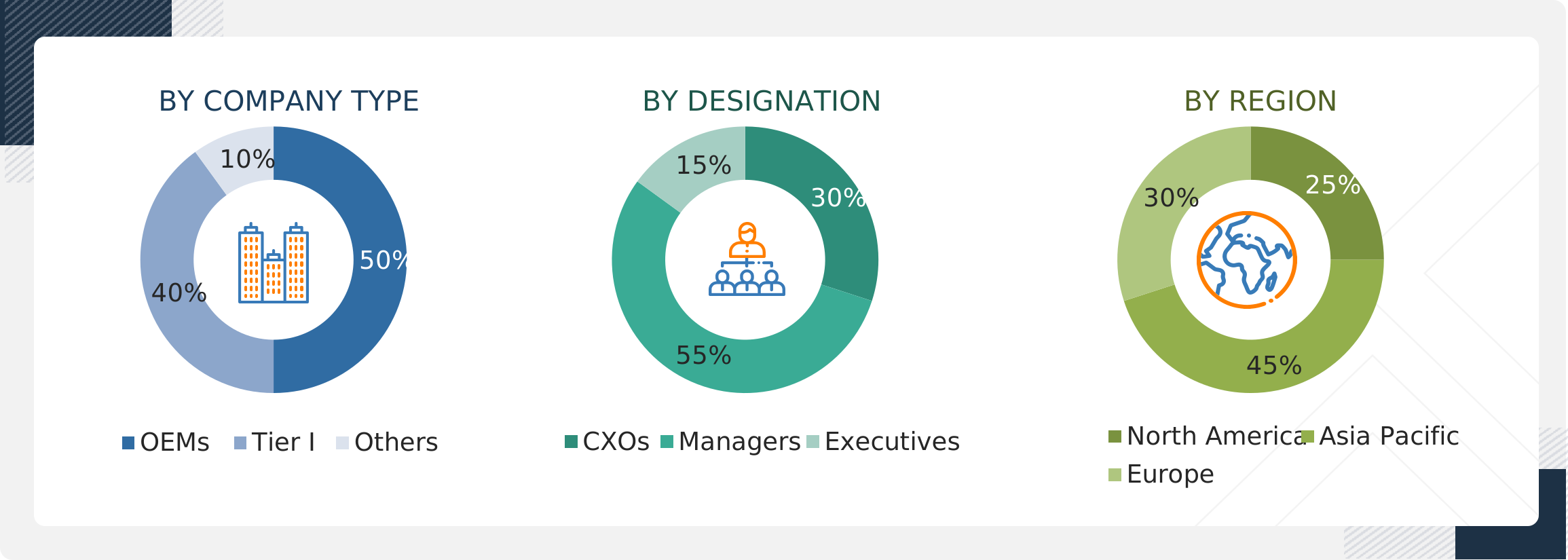
Extensive primary research was conducted after understanding the bidirectional charging market scenario through secondary research. Several primary interviews were conducted with market experts from both the demand and supply sides across North America, Europe, and Asia Pacific. Approximately 45% and 55% of primary interviews were conducted from the demand and supply sides. Primary data was collected through questionnaires, emails, and telephonic interviews.

In the canvassing of primaries, various departments within organizations, such as sales, operations, and marketing, were covered to provide a holistic viewpoint in the report. After interacting with industry experts, brief sessions were conducted with experienced independent consultants to reinforce the findings from the primaries. This, along with the opinions of in-house subject matter experts, led to the conclusions described in the remainder of this report.

Bidirectional Charging Market Size, and Share

Note: Tiers are based on the value chain of the bidirectional charging market; companies’ revenues were not considered. Tier I companies include
bidirectional charger providers, while others include the remaining companies in the bidirectional charging ecosystem.

To know about the assumptions considered for the study, download the pdf brochure

Market Size Estimation

A detailed market estimation approach was followed to estimate and validate the value and volume of the bidirectional charging market and other dependent submarkets, as mentioned below:

  • The market size was derived using parameters such as sales of bidirectional charger-enabled vehicle models and corresponding penetration of the trims.
  • Key players in the bidirectional charging market were identified through secondary research, and their global market rankings were determined through primary and secondary research.
  • The research methodology included the study of annual and quarterly financial reports, regulatory filings of major market players, and interviews with industry experts to gain detailed market insights.
  • All major penetration rates, percentage shares, splits, and breakdowns for the bidirectional charging market were determined through secondary sources and verified through primary sources.
  • All key macro indicators affecting the revenue growth of the market segments and subsegments have been accounted for, viewed in extensive detail, verified through primary research, and analyzed to get the validated and verified quantitative & qualitative data.

The market data gathered was consolidated and added with detailed inputs, analyzed, and presented in this report.

Bidirectional Charging Market : Top-Down and Bottom-Up Approach

Bidirectional Charging Market Top Down and Bottom Up Approach

Data Triangulation

After arriving at the overall market size of the global market through the above-mentioned methodology, this market was split into several segments and subsegments. The data triangulation and market breakdown procedures were employed, wherever applicable, to complete the overall market engineering process and arrive at the exact data for the market by value for the key segments and subsegments. The extrapolated market data was triangulated by studying various macro indicators and regional trends from both the demand and supply-side participants.

Market Definition

Bidirectional charging allows energy to flow from and to an electric vehicle through a compatible charging system, unlike traditional charging, which only sends power to the EV. This capability enables various applications, such as Vehicle-to-Grid (V2G) for returning power to the electrical grid, Vehicle-to-Home (V2H) to power a household during an outage, and Vehicle-to-Load (V2L) to operate external devices directly from the EV.

Stakeholders

  • Association of European Automotive and Industrial Battery Manufacturers (EUROBAT)
  • Alternative Fuels Data Center (AFDC)
  • Departments of Transportation across governments
  • Electric Vehicle Association of Asia Pacific (EVAAP)
  • Environmental Protection Agency (EPA)
  • European Alternative Fuels Observatory (EAFO)
  • European Automobile Manufacturers’ Association (ACEA)
  • EV Charging station service providers
  • International Council on Clean Transportation (ICCT)
  • International Organization of Motor Vehicle Manufacturers (OICA)
  • International Energy Agency (IEA)
  • Investor presentations and annual reports of key market players
  • Regional EV charging associations
  • Regional electric vehicle regulatory authorities
  • Society of Manufacturers of Electric Vehicles (SMEV)
  • World Electric Vehicle Association (WEVA)

Report Objectives

  • To define, segment, and forecast the bidirectional charging market, in terms of volume (thousand units) and value (USD million)
  • To segment the market and forecast its size by charging type, vehicle type, propulsion, application, end use, and region
    • To segment the market and forecast its size, by volume and value, based on charging type - AC charging and DC charging
    • To segment the market and forecast its size, by volume and value, based on propulsion - battery electric vehicle (BEV) and plug-in hybrid electric vehicle (PHEV)
    • To segment the market and forecast its size, by volume and value, based on Vehicle type – passenger car, light commercial vehicle
    • To segment the market and forecast its size, by volume and value, based on application - V2G, V2H, V2L
    • To segment the market and forecast its size, by volume and value, based on end use - residential, commercial fleets, public/semi-public utility charging
    • To forecast the market size with respect to key regions, namely North America, Europe, and Asia Pacific
  • To provide detailed information regarding the major factors influencing market growth (drivers, challenges, restraints, and opportunities)
  • To study the following concerning the market
    • Supply chain analysis
    • Ecosystem analysis
    • Technology analysis
    • Trade analysis
    • Case study analysis
    • Patent analysis
    • Regulatory landscape
    • Pricing analysis
    • Trends and disruptions impacting customer business
    • Impact of AI/Gen AI
    • Key stakeholders and buying criteria
    • Key conferences and events
  • To strategically analyze the market with respect to individual growth trends, prospects, and contribution to the total market
  • To strategically profile key players and comprehensively analyze their market shares and core competencies
  • To analyze the opportunities for stakeholders and the competitive landscape for market leaders
  • To track and analyze competitive developments such as joint ventures, mergers & acquisitions, new product launches, expansions, and other activities carried out by key industry participants.

Available Customizations

With the given market data, MarketsandMarkets offers customizations in accordance with a company’s specific needs. The following are examples of those available:

  • Bidirectional charging market, by plug type, at the regional level
  • Bidirectional charging market, by vehicle body type, at the regional level

Company Information

  • Profiling of additional market players (up to five)

Personalize This Research

  • Triangulate with your Own Data
  • Get Data as per your Format and Definition
  • Gain a Deeper Dive on a Specific Application, Geography, Customer or Competitor
  • Any level of Personalization
Request A Free Customisation

Let Us Help You

  • What are the Known and Unknown Adjacencies Impacting the Bidirectional Charging Market

  • What will your New Revenue Sources be?
  • Who will be your Top Customer; what will make them switch?
  • Defend your Market Share or Win Competitors
  • Get a Scorecard for Target Partners
Customized Workshop Request

Custom Market Research Services

We Will Customise The Research For You, In Case The Report Listed Above Does Not Meet With Your Requirements

Get 10% Free Customisation

Growth opportunities and latent adjacency in Bidirectional Charging Market

DMCA.com Protection Status