China Cybersecurity Market Size, Industry Share, Forecast 2030

China Cybersecurity Market, by Security Type (Network Security, Endpoint Security, Cloud Security, Application Security), Deployment Mode (On-Premises, Cloud, Hybrid), Organization Size (Large Enterprises, SMEs) - Forecast to 2030




OVERVIEW
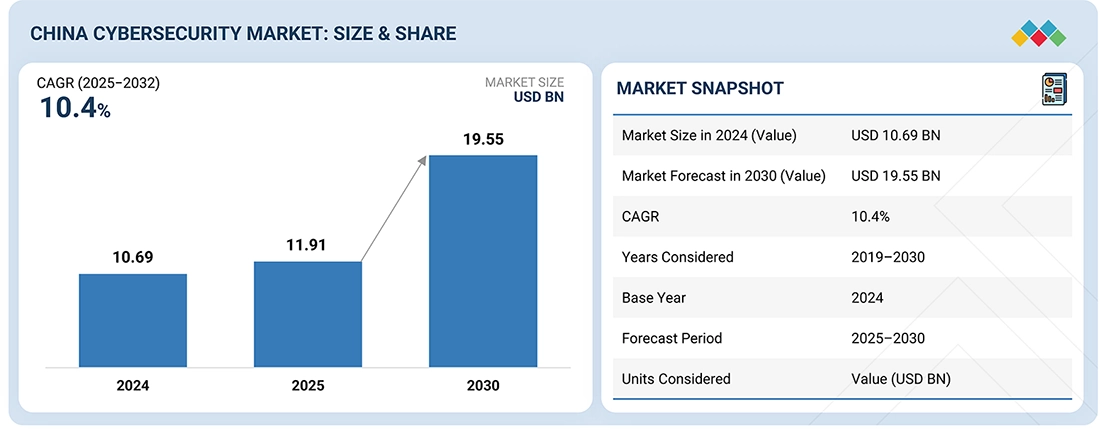
Source: Secondary Research, Interviews with Experts, MarketsandMarkets Analysis
The China Cybersecurity market size is projected to grow from USD 11.91 billion in 2025 to USD 19.55 billion by 2030 at a Compound Annual Growth Rate (CAGR) of 10.4% during the forecast period. Cybersecurity is the set of technologies, procedures, and practices that are directed at preventing attack, damage, or unauthorized access of networks, devices, programs, and data. These solutions are implemented to secure digital infrastructure and provide confidentiality, integrity and availability of information systems across various sectors.
KEY TAKEAWAYS
-
BY OFFERINGBy offering, cybersecurity solutions are projected to dominate the China market in terms of market share in the forecast period.
-
BY SOLUTION TYPEBy solution type, the log management & SIEM segment is projected to lead in terms of growth rate of 11.6%.
-
BY SECURITY TYPEBy security type, network security are estimated to dominate the market with 34.5% market share in 2025.
-
BY ORGANIZATION SIZEBy organization size, the SMEs type segment is projected to grow at the highest CAGR.
-
BY DEPLOYMENT MODECloud deployment of cybersecurity is projected to grow at the fastest rate of 11.8% from 2025 to 2030.
-
BY VERTICALBy vertical, the healthcare & life sciences segment is projected to grow the fastest during the forecast period at the highest CAGR.
-
COMPETITIVE LANDSCAPE - KEY PLAYERSHuawei, Qihoo 360, Qianxin, Venustech, NSFOCUS, Alibaba Cloud, Tencent Security, Sangfor Technologies, and ASIAINFO lead China’s cybersecurity market with broad portfolios across network, cloud, endpoint, and critical infrastructure security. Their strong government and enterprise presence positions them as preferred partners for large-scale national and industry security programs.
-
COMPETITIVE LANDSCAPE - STARTUPSThreatBook, Knownsec, Bangcle Security, Tophant Technology, CyberKunlun Technology, and InnTech IT Solutions focus on threat intelligence, vulnerability research, and application security. Their niche expertise and agile models make them competitive providers for specialized enterprise security needs.
The growth of digital infrastructure, the use of clouds and the massive implementation of smart technologies in the China cybersecurity market are causing organizations to focus on data security, system resilience, and ongoing threat monitoring in government, finance, manufacturing, and digital platforms. Enforcement of compliance-based security investments is being strengthened by strong government control, stringent data protection laws, and national strategies on cybersecurity, and enterprises are moving towards integrated security architectures to help them deal with risks in cloud, IoT and enterprise IT systems. This regulatory enforcement and fast-paced digital transformation coupled with the increasing attention to domestic technology ecosystems is reinforcing national cyber resilience and continuing to invest in cybersecurity solutions in the long term.
TRENDS & DISRUPTIONS IMPACTING CUSTOMERS' CUSTOMERS
China cybersecurity market is in the innovation and rapid adoption stage. The manufacturing industry, finance industry, healthcare industry, government, and technology sectors are some of the organizations whose cybersecurity solutions and regulatory frameworks are changing. This is in accordance with the emerging trends of cloud security, artificial intelligence-based threat detection, and zero-trust architecture. Businesses and government agencies in China are increasingly adopting advanced security software, endpoint security systems, and cloud security solutions. Such solutions will facilitate threat visibility, faster incident response, reduced vulnerability exposure, and digital transformation and data protection requirements. The government agencies and regulators are encouraging the development of local cybersecurity technology, localization of data, and collaboration between the government and the private sector regarding security standards. Such activities help in improving national cyber defense and further development of security platforms that are made locally and are compatible and fulfill the needs of Chinese organizations.
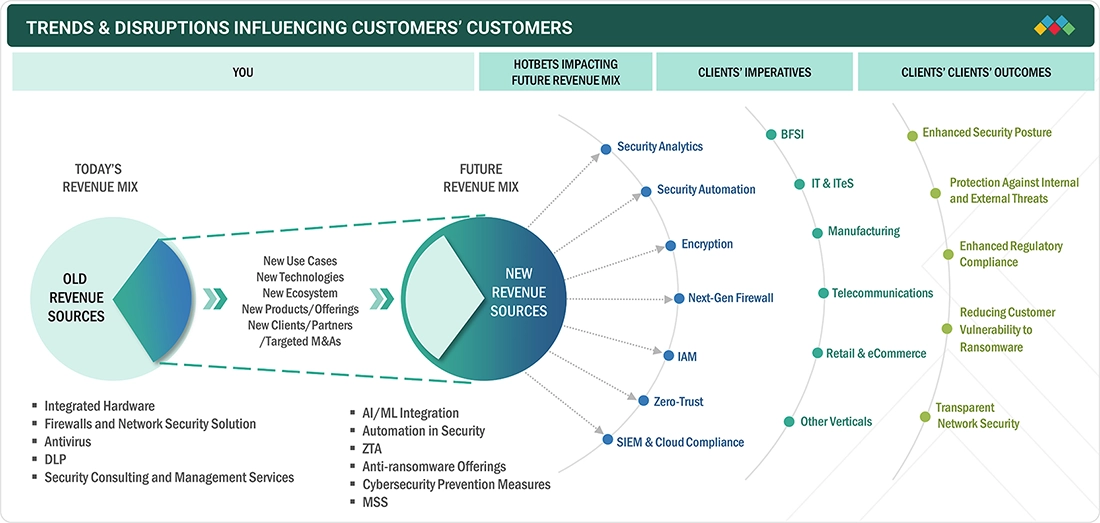
Source: Secondary Research, Interviews with Experts, MarketsandMarkets Analysis
MARKET DYNAMICS

Level
-
Rapid digitalization across government, BFSI, manufacturing, and smart infrastructure.

-
Rising cyber threats targeting critical industries and digital platforms.


Level
-
High compliance and localization requirements increasing operational costs.

-
Shortage of advanced cybersecurity professionals in specialized domains.


Level
-
Growing demand for cloud security, zero-trust, and data protection solutions.

-
Increased investments in domestic cybersecurity innovation and platforms


Level
-
Complex and frequently evolving regulatory framework

-
Balancing innovation, data privacy, and government oversight.

Source: Secondary Research, Interviews with Experts, MarketsandMarkets Analysis
Driver: Rapid digitalization across government, BFSI, manufacturing, and smart infrastructure
As China continues to accelerate in digitalization of government, BFSI, manufacturing, and smart infrastructure, the use of cloud-based systems, big data, and connected systems is increasing. This is expanding organizational attack surfaces and generating a long-term requirement to purchase advanced network security, endpoint protection and data security solutions. The investments in cybersecurity infrastructures are also being boosted by the massive implementation of digital government services and automation in industries.
Restraint: High compliance and localization requirements increasing operational costs
Cybersecurity laws, stringent data localization requirements and industry-specific compliance requirements are complicating operations and making them more costly to enterprises and vendors. Organizations have to spend a lot of money on localized data centers, regulatory reporting and tailored security frameworks. Such requirements may restrict flexibility and slow down the adoption of technology, particularly by foreign and mid-sized providers.
Opportunity: Growing demand for cloud security, zero-trust, and data protection solutions
The rise in the use of cloud computing, remote working settings, and online services is creating a high demand of cloud security, zero-trust architecture, and advanced data protection solutions. Companies are also incurring higher costs in identity management, encryption and access control systems to make sure that sensitive information is secured and these systems contribute to the development of digital operations in different sectors in a compliant way.
Challenge: Complex and frequently evolving regulatory framework
The Chinese cybersecurity environment is governed by a number of overlapping regulations that are regularly updated. Companies are finding it hard to maintain security practices in accordance with new compliance requirements, audits, and reporting standards. One of the key concerns to the enterprises and solution providers is balancing the regulatory risks and operational efficiency.
CHINA CYBERSECURITY MARKET: COMMERCIAL USE CASES ACROSS INDUSTRIES
| COMPANY | USE CASE DESCRIPTION | BENEFITS |
|---|---|---|
 |
Provides integrated cybersecurity platforms, SOC solutions, and secure cloud and telecom networks for government and enterprise users in China. | Stronger threat detection, centralized security management, improved compliance, and higher infrastructure resilience. |
 |
Delivers AI-driven network security, SASE, VPN, and cloud security solutions for enterprises and service providers. | Enhanced perimeter protection, secure remote access, scalable cloud security, and reduced cyber risks. |
 |
Offers integrated platforms including SIEM, NDR, EDR, and SOC services for critical infrastructure and large enterprises. | Unified visibility, faster incident response, improved endpoint and network security, and lower operational risk. |
Logos and trademarks shown above are the property of their respective owners. Their use here is for informational and illustrative purposes only.
MARKET ECOSYSTEM
China cybersecurity market is a collaborative ecosystem where the solution providers, service companies, technology companies, research institutions and end-user organizations work together to develop and implement security measures across the digital landscape. The companies within the region are offering a variety of cybersecurity products, including network security, endpoint protection, cloud security, and application security products. Consulting firms, managed security service providers and research institutions help in the design, implementation and further management of security infrastructure. Lastly, organizations in the government, finance, healthcare, manufacturing, and technology industries use these cybersecurity solutions, and they have a positive regulatory environment and emerging standards of security.
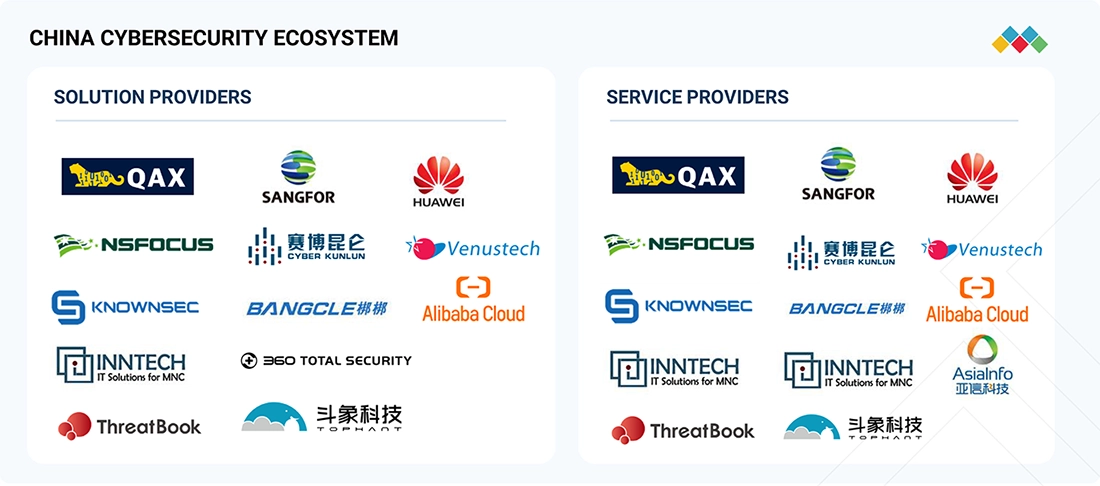
Logos and trademarks shown above are the property of their respective owners. Their use here is for informational and illustrative purposes only.
MARKET SEGMENTS
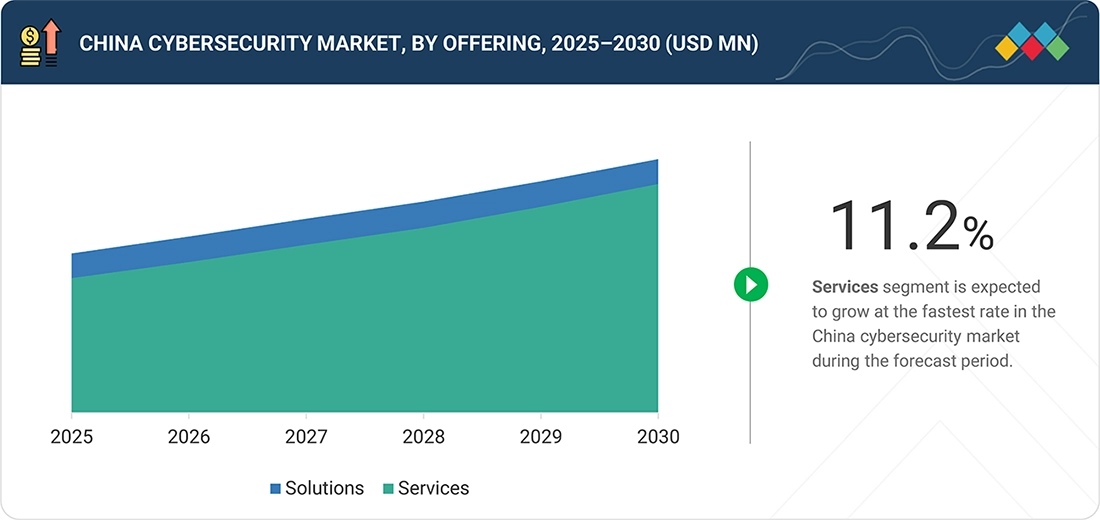
Source: Secondary Research, Interviews with Experts, MarketsandMarkets Analysis
China Cybersecurity Market, by Offering
Solutions account for a significant share of the China cybersecurity market, as a result of high demand in integrated platform comprising of network, cloud, endpoint, and data security. Businesses and government organizations are focusing on holistic solution implementations to guarantee compliance with regulations, secure critical infrastructure, and digital transformation programs. The rising level of threat sophistication and the changing national data protection requirements further enhance the modernization of security across the enterprise.
China Cybersecurity Market, by Solution Type
Log Management & SIEM account for a significant share of the market because organizations need centralized visibility, real-time threat detection and quicker incident response in complex IT and OT environments. The emergence of hybrid infrastructure and the adoption of the cloud necessitates the need to have sophisticated log analytics and AI-based threat correlation. Sustained implementation of SIEM is also facilitated by regulatory reporting requirements.
China Cybersecurity Market, by Security Type
Network security accounts for a significant share because of the large use of firewalls, intrusion prevention systems, and secure gateways to protect enterprise networks and other critical infrastructures. The fast growth of 5G, IoT, and industrial connectivity increases the risk of necessity of more robust perimeter and internal network security. Implementation of zero-trust systems also supports investment in network security applications.
China Cybersecurity Market, by Deployment Mode
On-premises deployment accounts for a significant share, as it is backed by stringent data sovereignty policies and the necessity to have more control over sensitive data in government, BFSI, and critical organizations. Most of the big businesses and government owned organizations are more comfortable with localized infrastructure to comply and audit requirements. On-premises demand is also maintained by security issues that are associated with external cloud exposure.
China Cybersecurity Market, by Organization Size
Large enterprises account for a significant share of the market since they have more complex digital ecosystems, are more vulnerable to cyber risks, and invest large amounts of budgets in advanced cybersecurity technologies. Their multi branch operations need centralized monitoring and governance structures. Continuous security investment is further encouraged by more and more targeted sophisticated attacks.
China Cybersecurity Market, by Vertical
BFSI accounts for a significant share of the market due to high volumes of digital transactions, strict regulatory oversight, and the need to protect sensitive financial data and payment systems. The rapid expansion of digital banking, fintech platforms, and mobile payment ecosystems increases cyber risk exposure. Consequently, financial institutions prioritize advanced threat detection, fraud prevention, and data security solutions.
REGION
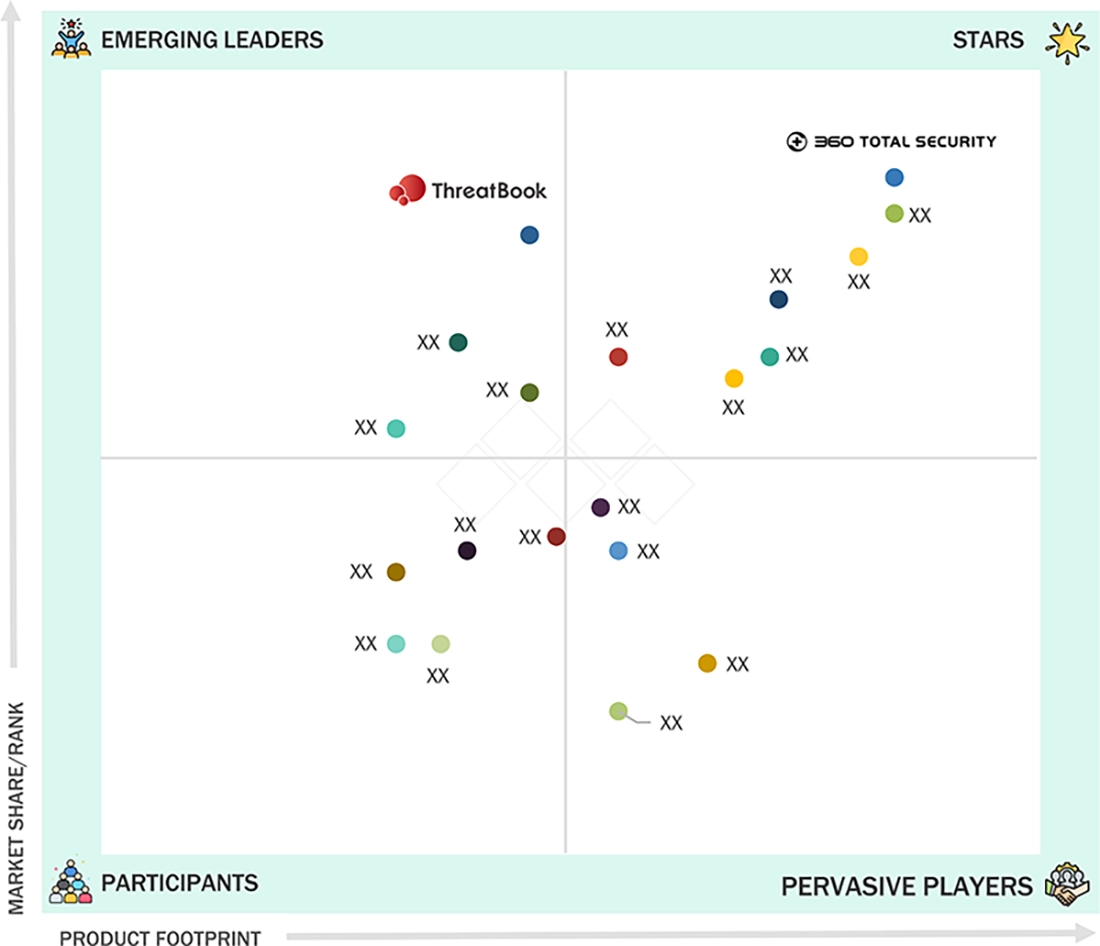
CHINA CYBERSECURITY MARKET: COMPANY EVALUATION MATRIX
The China cybersecurity market features a mix of dominant national champions and fast-growing innovators. Qihoo 360, a “star” player, leads with strong endpoint security, threat intelligence, and deep penetration across government and enterprise sectors. ThreatBook, an emerging player, is expanding rapidly through advanced threat intelligence platforms and AI-driven security analytics, strengthening proactive cyber defense capabilities.
Source: Secondary Research, Interviews with Experts, MarketsandMarkets Analysis
KEY MARKET PLAYERS
- Sangfor Technologies (China)
- Huawei (China)
- Qianxin (China)
- Venustech (China)
- NSFOCUS (China)
- Bangcle Security (China)
- Knownsec (China)
- Tencent (China)
- ThreatBook (China)
- Tophant (China)
- CyberKunlun Technology (China)
- InnTech IT Solutions (China)
- Qihoo 360 (China)
- Alibaba Cloud (China)
- ASIAINFO (China)
MARKET SCOPE
| REPORT METRIC | DETAILS |
|---|---|
| Market Size, 2024 (Value) | USD 10.69 Billion |
| Market Forecast, 2030 (Value) | USD 19.55 Billion |
| Growth Rate | CAGR of 10.4% from 2025 to 2030 |
| Years Considered | 2019–2030 |
| Base Year | 2024 |
| Forecast Period | 2025–2030 |
| Units Considered | Value (USD Million/Billion) |
| Report Coverage | Revenue Forecast, Company Ranking, Competitive Landscape, Growth Factors, and Trends |
| Segments Covered |
|
WHAT IS IN IT FOR YOU: CHINA CYBERSECURITY MARKET REPORT CONTENT GUIDE
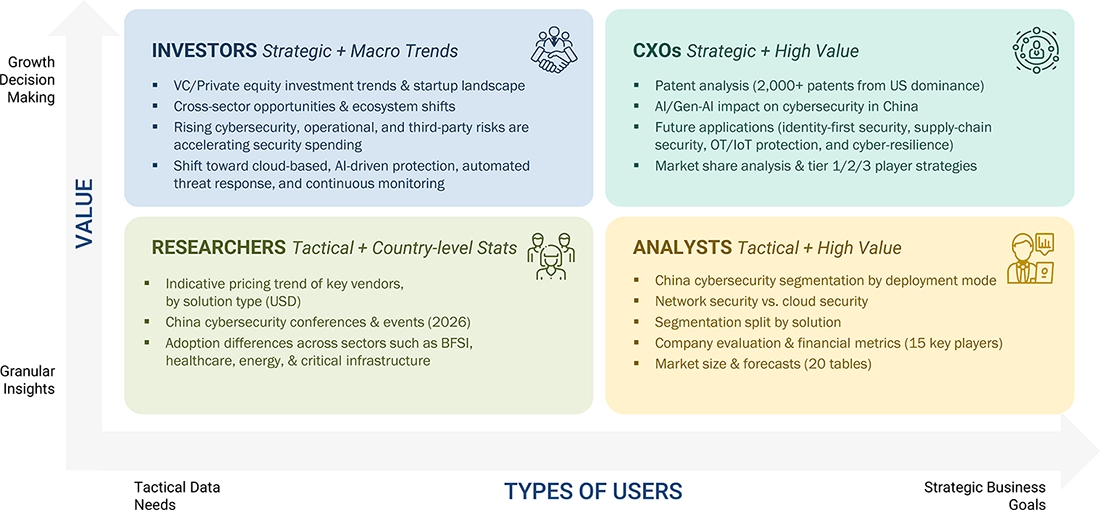
DELIVERED CUSTOMIZATIONS
We have successfully delivered the following deep-dive customizations:
| CLIENT REQUEST | CUSTOMIZATION DELIVERED | VALUE ADDS |
|---|---|---|
| Leading Solution Provider (China) | Solution Benchmarking: Comprehensive comparison of cybersecurity portfolios across leading Chinese vendors, including network security, cloud protection, SIEM, endpoint security, zero trust, and threat intelligence solutions aligned with domestic regulations and data sovereignty requirements. | Improved understanding of competitive positioning, technology differentiation, and localization strategies, enabling stronger market penetration and regulatory compliance. |
| Leading Service Provider (China) | Company Profiles: In-depth profiling of major service-driven cybersecurity providers (up to 5), covering managed security services, SOC operations, incident response, cloud security management, and integration capabilities across key Chinese industries. | Actionable insights into partnership opportunities, service capability gaps, and go-to-market strategies to strengthen presence in high-growth sectors such as finance, manufacturing, and government. |
RECENT DEVELOPMENTS
- October 2025 : ThreatBook launched a new APAC-focused Advanced Threat Intelligence (ATI) platform to deliver deep regional threat insights for SOCs and analysts.
- September 2025 : Venustech expands internationally by establishing a dedicated cybersecurity presence in Hong Kong to serve government & judiciary clients and pursue projects in Singapore and Dubai.
- September 2024 : Tencent announced that Palo Alto Networks’ VM-Series firewall is now supported and deployable on Tencent Cloud, allowing enterprises to launch and manage Palo Alto’s next-gen firewall within Tencent’s cloud environment for enhanced hybrid cloud network security.
Table of Contents
 Exclusive indicates content/data unique to MarketsandMarkets and not available with any competitors.
Methodology
Secondary research was conducted to collect information useful for this technical, market-oriented, and commercial study of the China Cybersecurity Market . The next step was to validate these findings, assumptions, and sizing with industry experts across the value chain using primary research. Different approaches, such as top-down and bottom-up, were employed to estimate the total market size. After that, the market breakup and data triangulation procedures were used to estimate the market size of the segments and subsegments of the China Cybersecurity Market .
Secondary Research
In the secondary research process, various secondary sources were referred to for identifying and collecting information regarding the study. The secondary sources included annual reports, press releases, investor presentations of cybersecurity solution and service vendors, forums, certified publications, and whitepapers. The secondary research was mainly used to obtain key information about the industry’s supply chain, the total pool of key players, market classification and segmentation according to industry trends to the bottom-most level, regional markets, and key developments from both market- and technology-oriented perspectives, all of which were further validated by primary sources.
Primary Research
In the primary research process, various primary sources from both the supply and demand sides were interviewed to obtain qualitative and quantitative information for this report. The primary sources from the supply side included various industry experts, including Chief Executive Officers (CEOs), Vice Presidents (VPs), marketing directors, technology and innovation directors, and related key executives from various key companies and organizations operating in the China Cybersecurity Market .
In the market engineering process, top-down and bottom-up approaches were extensively used, along with several data triangulation methods, to perform the market estimation and market forecasting for the overall market segments and subsegments listed in this report. Extensive qualitative and quantitative analysis was performed on the complete market engineering process to list key information/insights throughout the report.
After the complete market engineering process (including calculations for market statistics, market breakups, market size estimations, market forecasts, and data triangulation), extensive primary research was conducted to gather information and verify & validate the critical numbers arrived at. The primary research was also conducted to identify the segmentation, industry trends, competitive landscape of China Cybersecurity Market players, and key market dynamics, such as drivers, restraints, opportunities, challenges, industry trends, and key strategies.
Market Size Estimation
Top-down and bottom-up approaches were used to estimate and validate the size of the China Cybersecurity Market and the size of various dependent sub-segments in the overall China Cybersecurity Market . The research methodology used to estimate the market size includes the following details: critical players in the market were identified through secondary research, and their market shares in the respective regions were determined through primary and secondary research. This entire procedure included the study of the annual and financial reports of the top market players, and extensive interviews were conducted for key insights from the industry leaders, such as CEOs, VPs, directors, and marketing executives.
All percentage splits and breakdowns were determined using secondary sources and verified through primary sources. All possible parameters that affect the market covered in this research study have been accounted for, viewed in extensive detail, verified through primary research, and analyzed to get the final quantitative and qualitative data. This data is consolidated and added to detailed input and analysis from MarketsandMarkets.
Data Triangulation
The market was split into several segments and subsegments after arriving at the overall market size using the market size estimation processes explained above. The data triangulation and market breakup procedures were employed, wherever applicable, to complete the overall market engineering process and arrive at the exact statistics of each market segment and subsegment. The data was triangulated by studying various factors and trends from both the demand and supply sides.
Market Definition
According to MarketsandMarkets, cybersecurity is a set of technologies, processes, and practices to fortify critical systems, such as networks, physical devices, programs, and information, from unauthorized access, insider threats, and malicious attacks. These cyberattacks can affect data transmission across the networks, cause operational disruptions, and result in money extortion/ransomware. Cybersecurity, or information security, can be provided through hardware, software, and services.
Stakeholders
- Chief Technology and Data Officers
- Consulting Service Providers
- Managed Security Services Professionals
- Business Analysts
- Information Technology (IT) Professionals
- Government Agencies
- Investors and Venture Capitalists
- Small and Medium-sized Enterprises (SMEs) and Large Enterprises
- Third-party Providers
- Consultants/Consultancies/Advisory Firms
- Managed and Professional Service Providers
Report Objectives
- To describe and forecast the China Cybersecurity Market by offering, solution type, security type, deployment mode, organization size, vertical, and region from 2025 to 2030, and analyze the various macroeconomic and microeconomic factors that affect market growth
- To analyze the subsegments of the market with respect to individual growth trends, prospects, and contributions to the overall market
- To provide detailed information regarding major factors (drivers, restraints, opportunities, and challenges) influencing the growth of the market
- To analyze opportunities in the market for stakeholders and provide details of the competitive landscape of major players
- To profile key market players; provide a comparative analysis based on the business overviews, regional presence, product offerings, business strategies, and key financials; and illustrate the competitive landscape of the marketTo analyze competitive developments, such as mergers & acquisitions, product developments, partnerships and collaborations, and research & development (R&D) activities, in the market
Available Customizations
With the given market data, MarketsandMarkets offers customizations based on company-specific needs. The following customization options are available for the report:
Company Information
- Detailed analysis and profiling of additional market players (up to 5)
Key Questions Addressed by the Report
What is the projected size of the China Cybersecurity Market by 2030?
According to MarketsandMarkets, the China Cybersecurity Market is projected to reach USD 19.55 billion by 2030, growing at a CAGR of 10.4% from 2025 to 2030.
What is driving the growth of the China Cybersecurity Market?
Market growth is driven by digital transformation, cloud adoption, stricter cybersecurity regulations, and increasing investments in protecting critical infrastructure.
Which cybersecurity segment holds the largest market share in China?
Network security is expected to dominate the China Cybersecurity Market with 34.5% market share in 2025
Who are the leading companies in the China Cybersecurity Market?
Key players include Huawei, Qihoo 360, Qianxin, Venustech, NSFOCUS, Alibaba Cloud, Tencent Security, Sangfor Technologies, and ASIAINFO.
What trends are shaping the future of the China Cybersecurity Market?
Key trends include integrated security platforms, AI-driven threat detection, cloud security adoption, IoT protection, and continuous security monitoring.
What opportunities exist for cybersecurity vendors in China?
Vendors can capitalize on growing demand for cloud security, endpoint protection, SIEM, threat intelligence, and critical infrastructure security solutions.
How is cloud adoption impacting the China Cybersecurity Market?
Rising cloud migration is increasing demand for cloud-native security solutions that protect enterprise workloads, applications, and data environments.


Personalize This Research
- Triangulate with your Own Data
- Get Data as per your Format and Definition
- Gain a Deeper Dive on a Specific Application, Geography, Customer or Competitor
- Any level of Personalization
Let Us Help You
- What are the Known and Unknown Adjacencies Impacting the China Cybersecurity
- What will your New Revenue Sources be?
- Who will be your Top Customer; what will make them switch?
- Defend your Market Share or Win Competitors
- Get a Scorecard for Target Partners

Custom Market Research Services
We Will Customise The Research For You, In Case The Report Listed Above Does Not Meet With Your Requirements
Get 10% Free CustomisationTESTIMONIALS






Growth opportunities and latent adjacency in China Cybersecurity