
Construction Industry Plasticizers Market

Construction Industry Plasticizers Market by Type (Phthalates, Non-Phthalates), Construction Application (Flooring & Coverings, Pipes & Fittings, Wire & Cable, Roofing Membranes, Sealants & Adhesives), End Use (Residential, Commercial, Infrastructure), and Region - Global Forecast to 2030




OVERVIEW
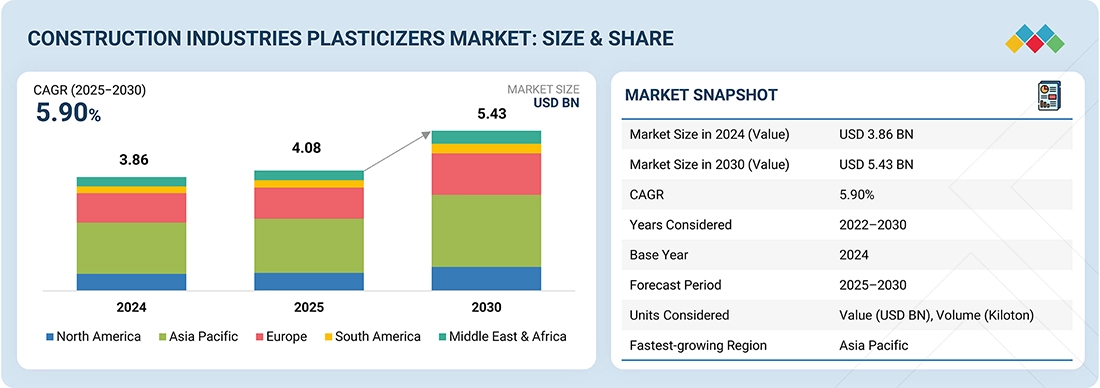
Source: Secondary Research, Interviews with Experts, MarketsandMarkets Analysis
The construction industry plasticizers market is projected to grow from USD 4.08 billion in 2025 to USD 5.43 billion by 2030, at a CAGR of 5.9% during the forecast period. The market is experiencing consistent growth, primarily driven by rising consumption of flexible PVC materials across construction applications such as flooring & coverings, pipes & fittings, wire & cable insulation, roofing membranes, and sealants & adhesives. Plasticizers are the main factors that help enhance the flexibility, workability, durability, and long-term performance of PVC and other polymer systems, which are widely used in both residential and commercial construction projects. The rapid urbanization in the Asia Pacific, the booming infrastructure development, and the increasing demand for low-maintenance, affordable building materials are the major factors driving the rapid adoption of plasticizers. There is a strong and growing demand for PVC pipes and cable insulation materials. This surge is driven by increased investments in smart grids, water distribution systems, and upgrades to urban infrastructure. Additionally, the shift toward low-VOC, non-phthalate, and environmentally friendly plasticizers is transforming product offerings across the industry. In Europe and North America, construction chemical manufacturers are facing regulatory pressures while a global trend toward healthier indoor environments continues to gain momentum.
KEY TAKEAWAYS
-
By RegionThe Asia Pacific accounted for a 52.3% share of the construction industry plasticizers market in 2024.
-
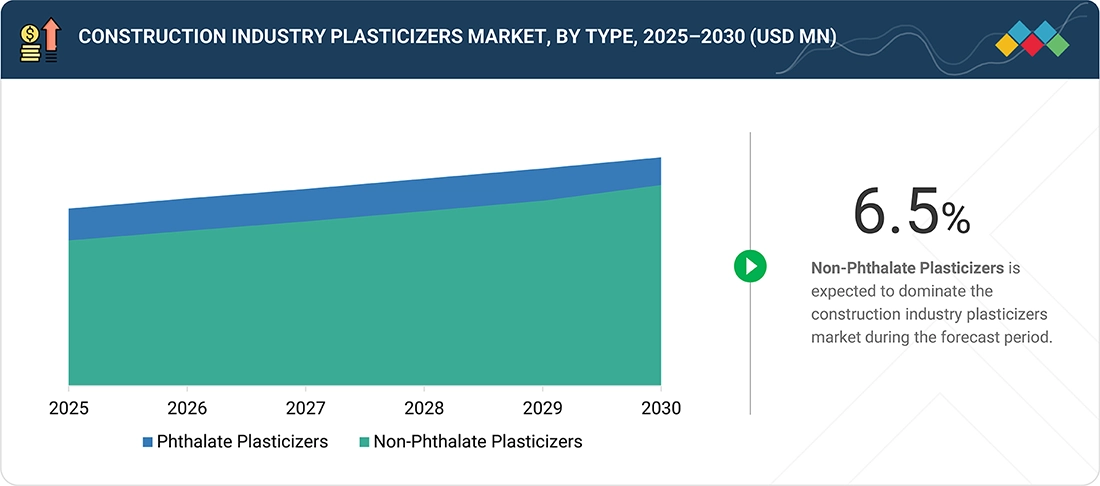
By TypeBy type, the non-phthalate plasticizers segment is expected to register the highest CAGR of 7.2% during the forecast period.
-
By Construction ApplicationBy construction application, the pipes & fittings segment is projected to grow at the fastest rate of 6.1% from 2025 to 2030.
-
By End-useBy end use, the infrastructure segment will grow at the fastest rate during the forecast period.
-
Competitive Landscape - Key PlayersBASF, Eastman Chemical Company, and Evonik Industries were identified as Star players in the construction industry plasticizers market, as they have focused on innovation and offer broad portfolios.
-
Competitive Landscape - StartupsShandong Bluesail Chemical Co., Ltd., Valtris Specialty Chemicals, and other emerging companies have distinguished themselves among startups and SMEs by securing strong footholds in specialized non-phthalate and eco-friendly product areas, underscoring their potential as emerging market leaders.
Plasticizers are essential additives in the construction industry that enhance the flexibility, lifespan, and processability of PVC and other polymers. These materials are widely used in various applications, such as pipes and fittings, flooring and coverings, wire and cable insulation, roofing membranes, and sealants and adhesives. Without these plasticizers, it would be impossible to create soft-touch surfaces, durable flooring, flexible piping, vibration-resistant insulation, waterproof sealants, and long-lasting protective membranes for residential, commercial, and infrastructure projects. Regulatory authorities, including the European Chemicals Agency (ECHA) and the US Environmental Protection Agency (EPA), as well as those in Asia, are intensifying oversight of phthalate content, VOC emissions, and material safety under REACH and other construction chemical standards. The combination of these regulatory pressures and the growing preference among builders and developers for non-phthalate, low-VOC, and environmentally friendly products has triggered a rapid global shift toward high-performance green plasticizers. Additionally, the demand for large-scale infrastructure projects, smart cities, and energy-efficient commercial buildings is driving the plasticizers industry to innovate. Manufacturers are focusing on developing plasticizers that offer excellent thermal stability, long-term durability, chemical resistance, and compliance with building codes and safety standards. These trends are transforming the construction plastics value chain, prompting manufacturers to develop advanced, low-emission, eco-friendly plasticizer solutions that meet modern construction requirements.
TRENDS & DISRUPTIONS IMPACTING CUSTOMERS' CUSTOMERS
The consumer-oriented sectors of the construction industry plasticizers market are experiencing changes in demand driven by shifts in material preferences, the implementation of strict global chemical regulations, and rapid advancements in building technologies. Large-scale construction firms, infrastructure developers, and commercial contractors are key players in this market. Additionally, regional construction material manufacturers, small to medium-sized PVC processors, and specialty elastomer suppliers serving residential, commercial, and infrastructure projects play significant roles. The target segments in this market include pipes and fittings, flooring and coverings, wire and cable insulation, roofing membranes, sealants and adhesives, and elastomer-based specialty construction materials. Regions with stricter limits on VOCs and phthalates, along with a growing preference for non-phthalate, low-migration, and REACH-compliant plasticizers, are significantly influencing procurement strategies, material qualifications, and specification changes throughout the construction supply chain. Developers and contractors seek plasticizer systems that are environmentally friendly, odorless, thermally stable, and durable, ensuring compliance with building codes while maintaining long-term performance and improving indoor air quality. Changes in functionality, regulations, and sustainability requirements directly affect the consumption rates of primary application segments, which, in turn, affect the revenue streams of key players that depend heavily on plasticizers to provide flexibility, durability, and processing efficiency in PVC- and elastomer-based construction materials.
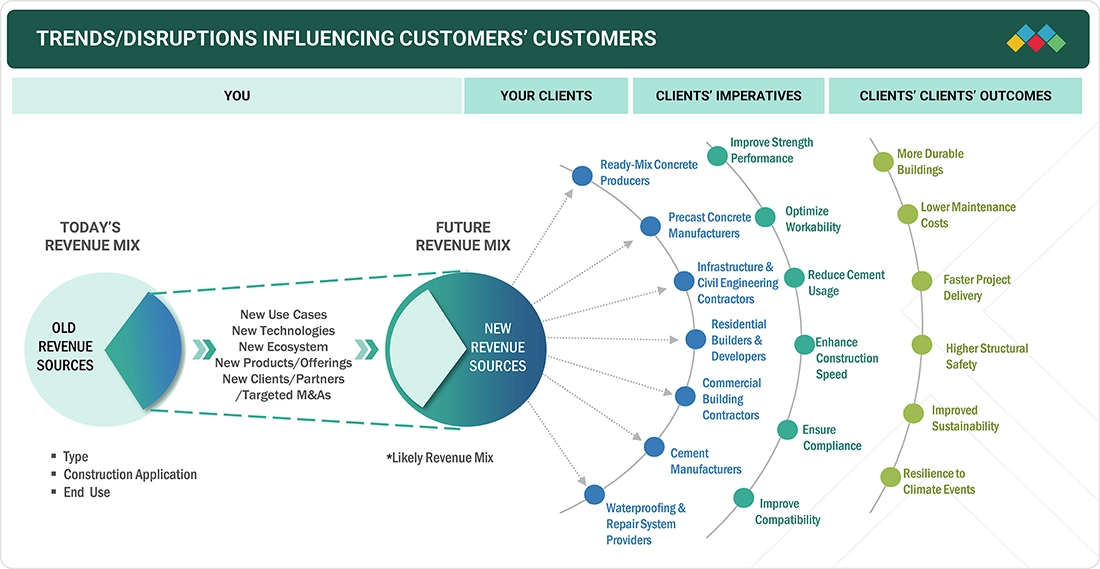
Source: Secondary Research, Interviews with Experts, MarketsandMarkets Analysis
MARKET DYNAMICS

Level
-
Rising demand for flexible PVC in construction

-
Increasing regulatory focus on eco-friendly materials


Level
-
High raw material costs

-
Volatility in crude oil and feedstock prices


Level
-
Growth in infrastructure and urban development projects

-
Adoption of non-phthalate and bio-based plasticizers


Level
-
Regulatory restrictions on phthalates and VOCs

-
Compatibility and performance concerns with new polymer systems

Source: Secondary Research, Interviews with Experts, MarketsandMarkets Analysis
Driver: Rising demand for flexible PVC in construction
The global construction industry plasticizers market is witnessing growing demand for flexible PVC and other polymer-based materials used in applications such as pipes & fittings, flooring & coverings, wire & cable insulation, roofing membranes, and sealants & adhesives is propelling the global construction industry plasticizers market to show strong upward trend. The trends of urbanization, population growth, and rising construction activities in the Asia Pacific, North America, and Europe regions are the main factors behind the increased demand for materials that are not only durable but also flexible and long-lasting, thereby leading to higher plasticizer consumption.
Restraint: High raw material costs
Governments and regulatory bodies, including ECHA, EPA, and national construction chemical authorities, are imposing stricter limits on phthalates, VOCs, and toxic emissions. This is encouraging the adoption of non-phthalate, low- migration, and environmentally compliant plasticizers, which not only improve sustainability but also support compliance with green building standards and LEED certifications, expanding market potential.
Opportunity: Growth in infrastructure and urban development projects
Urbanization at a high rate and various infrastructure projects in countries like India, China, Southeast Asia, and Latin America have led to a growing demand for high-performance plasticizers in the areas of pipes, flooring, and cable insulation. The above-mentioned regions are experiencing the inflow of capital in smart cities, public utilities, and commercial construction, which in turn, are opening doors of opportunities for the organizations that provide long-lasting, secure, and regulation-compliant plasticizer solutions.
Challenge: Regulatory restrictions on phthalates and VOCs
Despite attempts to bring the global plasticizers supply chain back to normal, it remains highly vulnerable to fluctuations in petrochemical feedstock supply, political tensions, difficulties in the movement of goods, and the uneven distribution of production capacity across regions. Where non-phthalate specialty plasticizers are concerned, they are largely reliant on complex, multi-step synthesis routes and on only a handful of worldwide manufacturing locations for trimellitates, DINCH, and polymeric variants. Thus, this situation exposes OEMs and Tier-1 suppliers to risks involved in procurement, long lead times, and price volatility. Besides, the problem of continuous scaling to meet rapidly growing demand for EVs hampers the industry. The industry must diversify factory locations, implement backward integration, and enhance supply strength to address the challenge.
CONSTRUCTION INDUSTRY PLASTICIZERS MARKET: COMMERCIAL USE CASES ACROSS INDUSTRIES
| COMPANY | USE CASE DESCRIPTION | BENEFITS |
|---|---|---|
 |
Incorporated non-phthalate plasticizers into PVC pipes and flooring products for commercial buildings in Europe, improving flexibility and chemical resistance. | Enhanced material durability, reduced cracking in flooring, improved processing efficiency, and compliance with REACH and low-VOC regulations. |
 |
Supplied DOTP and other non-phthalate plasticizers for wire & cable insulation in large infrastructure projects globally. | Improved electrical insulation performance, flexibility for tight installations, better thermal stability, and low-VOC compliance. |
 |
Provided specialty plasticizers for roofing membranes and sealants to ensure long-term elasticity and UV stability in European and Asia Pacific construction projects. | Maintained elasticity under cyclic stress, reduced cracking, and improved weathering and thermal resistance. |
 |
Integrated non-phthalate plasticizers into flexible PVC pipes and adhesives used in high-rise commercial buildings in the Asia Pacific. | Increased flexibility, better impact resistance, and improved processing efficiency while meeting stringent low-VOC and phthalate regulations. |
Logos and trademarks shown above are the property of their respective owners. Their use here is for informational and illustrative purposes only.
MARKET ECOSYSTEM
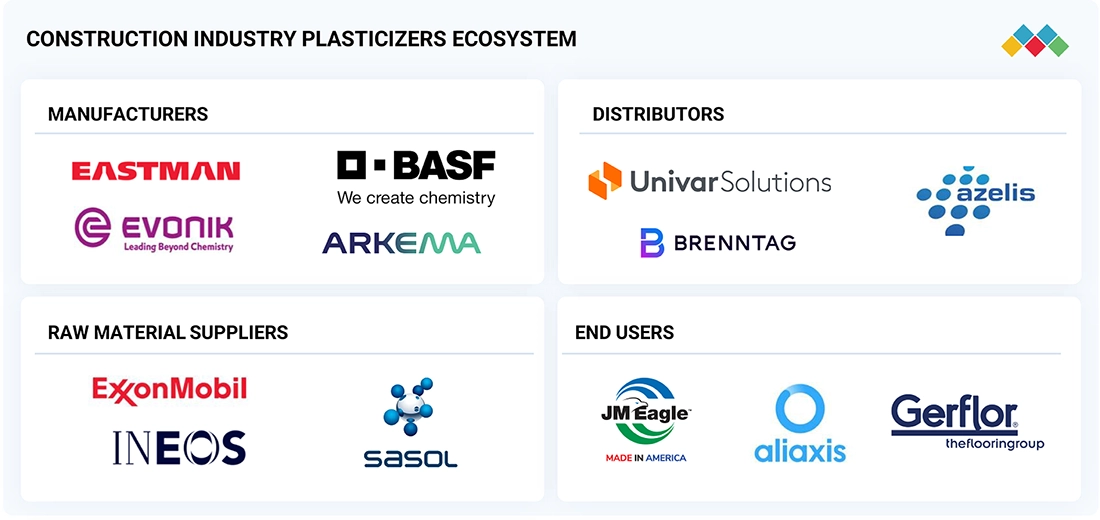
The plasticizers ecosystem for the global construction industry consists of a network of raw material suppliers, manufacturers, distributors, and end users. This network works together to ensure that products perform well and meet compliance standards. Key raw material suppliers, such as ExxonMobil Chemical, LG Chem, BASF, Eastman Chemical Company, Evonik Industries, and Shandong Bluesail Chemical Co., Ltd., provide essential materials like alcohols, phthalic anhydride, adipic acid, and specialty esters. Manufacturers like BASF, Evonik Industries AG, UPC Technology Corporation, Perstorp, LG Chem, Valtris Specialty Chemicals, and Zhejiang Jiaao Environmental Protection Technology use these raw materials to produce both phthalate and non-phthalate plasticizers, including DOTP, DINCH, DEHT, and ATBC. These products comply with REACH regulations, are low-VOC, and meet green building standards. Distributors, including Azelis, Brenntag, IMCD Group, and Univar Solutions LLC, offer logistics, formulation guidance, and regulatory support. End users, such as companies in the construction sector, infrastructure developers, and residential and commercial builders, utilize these plasticizers in applications like PVC pipes, flooring, wiring insulation, roofing membranes, sealants, and elastomer-based components. This ensures that the products have desirable characteristics, such as flexibility, durability, and thermal and chemical resistance, while also meeting sustainability requirements.
Logos and trademarks shown above are the property of their respective owners. Their use here is for informational and illustrative purposes only.
MARKET SEGMENTS
Source: Secondary Research, Interviews with Experts, MarketsandMarkets Analysis
Construction Industry Plasticizers Market, by Type
The global construction sector is increasingly shifting toward safer, more sustainable, and regulation-compliant materials. As a result, non-phthalate plasticizers are expected to be the fastest-growing segment in this industry. This trend is driven by the gradual regulation of traditional phthalates (such as DOP/DEHP and DBP) through international regulations like REACH, low-VOC building standards, and regional construction chemical guidelines. Consequently, there is a rapid transition to alternatives such as DOTP, DINCH, ATBC, adipates, and trimellitates. Non-phthalate plasticizers not only reduce the release of harmful substances in indoor environments but also offer advantages such as improved thermal stability, reduced migration, greater aging resistance, and greater durability. These characteristics make them suitable for flexible PVC products like pipes, flooring, wire and cable insulation, roofing membranes, and sealants and adhesives. The consumption of non-phthalate plasticizers has surged as developers and contractors seek low-VOC, environmentally friendly, and recyclable polymer systems for residential, commercial, and infrastructure projects. This segment is the primary growth driver of the market, making non-phthalate plasticizers the preferred choice for modern construction materials due to their performance, regulatory compliance, and sustainability.
Construction Industry Plasticizers Market, by Construction Application
The pipes and fittings segment is expected to experience the highest growth rate in the construction industry plasticizers market. This growth is driven by the increasing demand for durable, flexible water supply, drainage, and sewer systems in residential, commercial, and infrastructure projects. Plasticized PVC and elastomer-based materials are commonly used in pipes, flooring and coverings, wire and cable insulation, roofing membranes, and sealants and adhesives. Key factors contributing to their use include flexibility, chemical resistance, thermal stability, and long-term performance. Additionally, there is a growing trend toward high-performance, low-VOC, and eco-friendly building materials. This shift is encouraging developers and contractors to focus more on durable flooring, weather-resistant roofing membranes, and vibration- and impact-resistant piping systems. Furthermore, plasticizers in wire insulation, sealants, and adhesives benefit from their ability to maintain elasticity under cyclic stress, resist cracking from temperature changes, and meet stringent environmental and building regulations. The potential of this segment is enhanced by the adoption of sustainable construction practices, green building certifications, and regulatory compliance—all of which rely on advanced plasticizer technologies to ensure excellent material performance.
Construction Industry Plasticizers Market, by End-use
The infrastructure segment is expected to be the fastest-growing category in the global construction industry plasticizers market. Infrastructure projects, such as water supply and sewage pipelines, metro and railway construction, commercial utilities, and large-scale public buildings, consume significant amounts of plasticized PVC, flexible flooring, wire and cable insulation, sealants, and roofing membranes. This growth is driven by government investments in smart cities, transportation networks, and utilities, as well as the increasing demand for durable, flexible, and low-VOC materials that meet strict environmental and building regulations. In comparison, the commercial sector remains stable, with products primarily used in offices, shopping centers, hospitals, and educational buildings through the application of plasticizers in flooring, wiring insulation, sealants, and flexible construction membranes. However, its development is slower than that of the infrastructure sector due to shorter project timelines and smaller project volumes. The residential segment, which includes housing projects, apartments, and single-family homes, also significantly drives demand for plasticizers, particularly in flooring, piping, and interior sealants.
CONSTRUCTION INDUSTRY PLASTICIZERS MARKET: COMPANY EVALUATION MATRIX
BASF (Star) is a significant player in the construction industry plasticizers market, offering a wide range of non-phthalate and high-performance phthalate alternative products. These include DOTP, DINCH, and specialty adipates, which are utilized in applications such as PVC pipes, flexible flooring, wire and cable insulation, roofing membranes, and sealants and adhesives. The company benefits from a robust global production base, advanced R&D capabilities, and a long history of partnerships with manufacturers of construction materials and contractors. This enables BASF to produce plasticizers that exhibit low migration, heat resistance, and low volatile organic compounds (VOCs) on a large scale. These attributes make BASF’s products suitable for large-volume industrial applications while also meeting stringent regional environmental regulations and green building standards. Eastman Chemical Company (Emerging Leader) is making significant strides in the construction market with its focus on bio-based, non-phthalate plasticizers and high-performance specialty formulations for flexible PVC pipes, flooring, wiring insulation, and sealants. The company is strategically repositioning its product portfolio by introducing application-specific plasticizers. These new products aim to provide improved thermal stability, chemical resistance, long-term elasticity, and low-VOC compliance, aligning with the requirements of eco-friendly, high-durability residential, commercial, and infrastructure projects that are becoming increasingly popular.
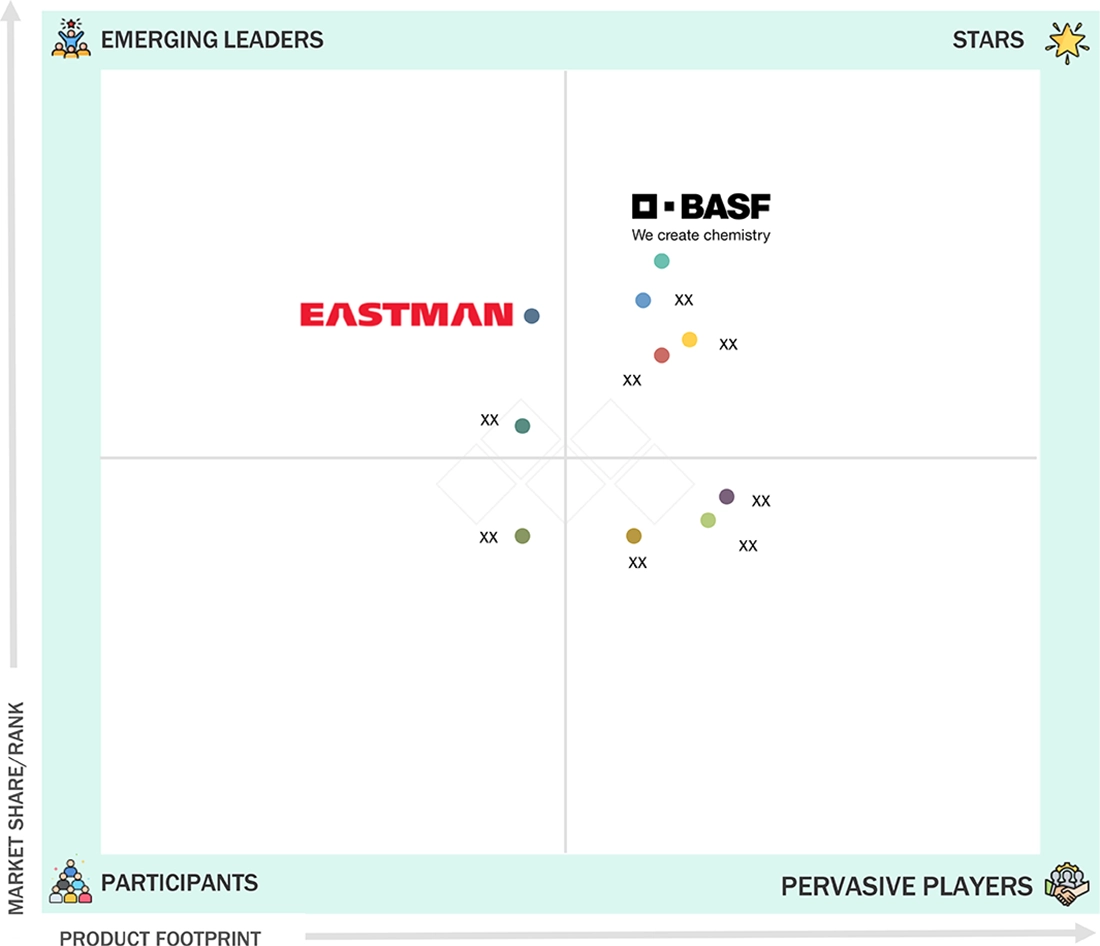
Source: Secondary Research, Interviews with Experts, MarketsandMarkets Analysis
KEY MARKET PLAYERS
- BASF (Germany)
- Evonik Industries AG (Germany)
- Arkema (France)
- Eastman Chemical Company (US)
- LG Chem (South Korea)
- UPC Technology Corporation (Tawain)
- Perstorp Holding AB (Sweden)
- Aekyung Chemical (South Korea)
- Oxea GmbH (Germany)
- KLJ Group (India)
- ADEKA
MARKET SCOPE
| REPORT METRIC | DETAILS |
|---|---|
| Market Size in 2024 (Value) | USD 3.86 Billion |
| Market Forecast in 2030 (Value) | USD 5.43 Billion |
| Growth Rate | CAGR of 5.90% from 2025 to 2030 |
| Years Considered | 2022–2030 |
| Base Year | 2024 |
| Forecast Period | 2025–2030 |
| Units Considered | Value (USD Billion), Volume (Kiloton) |
| Report Coverage | Revenue forecast, company ranking, competitive landscape, growth factors, and trends |
| Segments Covered |
|
| Regions Covered | North America, Asia Pacific, Europe, South America, Middle East & Africa |
WHAT IS IN IT FOR YOU: CONSTRUCTION INDUSTRY PLASTICIZERS MARKET REPORT CONTENT GUIDE
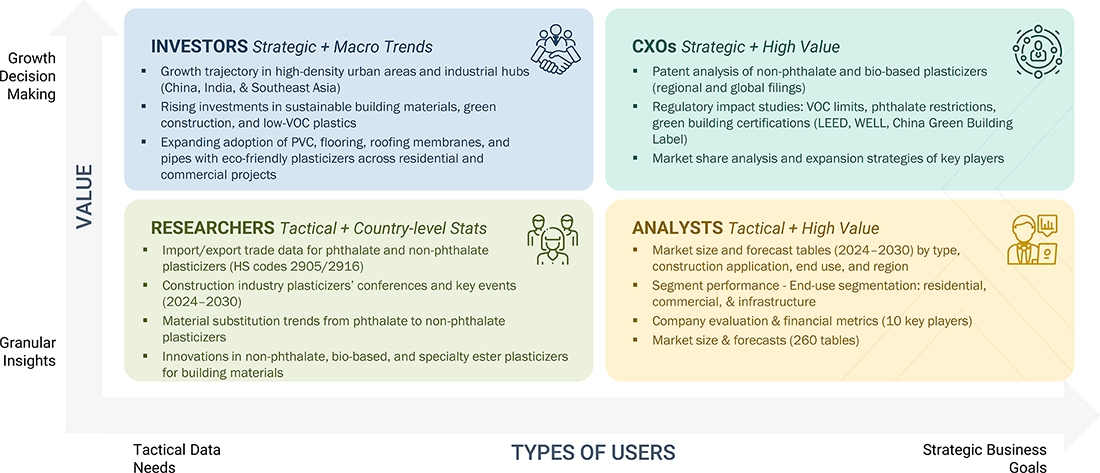
DELIVERED CUSTOMIZATIONS
We have successfully delivered the following deep-dive customizations:
| CLIENT REQUEST | CUSTOMIZATION DELIVERED | VALUE ADDS |
|---|---|---|
| PVC Pipe & Fittings Manufacturer |
|
|
| Flexible Flooring & Coverings Producer |
|
|
| Wire & Cable/Electrical Insulation Supplier |
|
|
RECENT DEVELOPMENTS
- June 2025 : BASF announced the expansion of its non-phthalate plasticizer the non-phthalate plasticizer production capacity (Hexamoll, DINCH & Palatinol series) at its Ludwigshafen site to serve the increasing global demand from PVC flooring, pipes & fittings, wall coverings, and roofing membranes in the construction sector. The reconstruction of the plant will enhance the supply of the product in Europe and Asia, which is the result of the greening of building material standards.
- September 2024 : Eastman unveiled the high-performance non-phthalate plasticizer, Eastman Dominator, for PVC flooring and wall-covering applications. The product is specifically intended to address stricter VOC limits, migration resistance, and durability improvement in healthcare, hospitality, and public infrastructure projects.
- May 2023 : LG Chem made public a series of new investments that would increase the production of DOTP (dioctyl terephthalate) at its Yeosu plant and thus help meet the demand in the construction sector for the safer, REACH-compliant alternatives of PVC pipes, window profiles, flooring, and insulation materials.
- April 2022 : UPC Technology Corporation expanded its plasticizer production capacity in China by installing new esterification reactors to produce the environmentally friendly trimellitate and terephthalate plasticizers, thereby meeting demand from the infrastructure cable, high-temperature sealant, and durable PVC roofing membrane industries.
- February 2021 : Arkema broadened its portfolio of plasticizers with the bio-based Vikteno series made from castor oil, thereby directing green-building applications like eco-friendly flooring, wall coverings, and sealants. The growth is in line with various global sustainability standards (LEED, BREEAM, WELL).
- October 2020 : OQ Chemicals (Oxea) completed its capacity expansion for oxo-alcohols (2-EH, INA), key raw materials for DOTP, DINP, and DPHP plasticizers, strengthening supply reliability for construction-oriented PVC flexible products, including cables, pipes, membrane sheets, and gaskets.
Table of Contents
 Exclusive indicates content/data unique to MarketsandMarkets and not available with any competitors.
Methodology
The study involved major activities in estimating the current size of the North America Plasticizers market. Exhaustive secondary research was done to collect information on the peer and parent markets. The next step was to validate these findings, assumptions, and sizing with industry experts across the value chain through primary research. Both top-down and bottom-up approaches were employed to estimate the complete market size. Thereafter, market breakdown and data triangulation were used to estimate the market size of the segments and subsegments.
Secondary Research
In the secondary research process, various sources, such as annual reports, press releases, investor presentations of companies, white papers, certified publications, articles from recognized authors, and databases, were considered for identifying and collecting information for this study. Secondary research was mainly conducted to obtain key information about the supply chain of the industry, monetary chain of the market, the total number of market players, market classification and segmentation according to industry trends to the bottom-most level, regional markets, and key developments from both market- and technology-oriented perspectives.
Primary Research
In the primary research process, various primary sources from both supply and demand sides were interviewed to obtain qualitative and quantitative information for this report. Primary sources from the supply side include industry experts, such as chief executive officers (CEOs), vice presidents (VPs), marketing directors, technology and innovation directors, consultants, and related key executives from major companies and organizations operating in the market. Primary sources from the demand side include lab technicians, technologists, and sales/purchase managers in the industry. Following is the breakdown of primary respondents:
Market Size Estimation
Both top-down and bottom-up approaches were used to estimate and validate the total size of the North America Plasticizers market. These methods were also used extensively to estimate the size of various subsegments in the market. The research methodology used to estimate the market size includes the following:
- The key players in the industry and market have been identified through extensive secondary research, and their market share in the respective regions have been determined through both primary and secondary research.
- The industry’s value chain and market size, in terms of value, have been determined through primary and secondary research processes.
- All percentage shares, splits, and breakdowns have been determined using secondary sources and verified through primary sources.
Data Triangulation
After arriving at the overall market size from the estimation process explained above, the total market has been split into several segments and subsegments. To complete the overall market engineering process and arrive at the exact statistics for all the segments and subsegments, the data triangulation and market breakdown processes have been employed, wherever applicable. The data has been triangulated by studying various factors and trends from both the demand- and supply sides. Along with this, the market has been validated using both the top-down and bottom-up approaches.
Definition
Plasticizers are low molecular weight compounds added to other polymeric substances to aid polymer processing and impart flexibility, plasticity, softness, and reduce brittleness. They are primarily used in PVC cables, PVC resins, wire jacketing, vinyl flooring, medical equipment, automobile parts, and others. Plasticizers make the polymer solution more suitable for various applications such as films & coatings.
The key stakeholders of the North America plasticizers market include Raw Material Suppliers, Manufacturers (Plasticizer Manufacturers), Plasticizer Traders, Distributors, and Suppliers, End-use Industry Participants, Government and Research Organizations, Associations and Industrial Bodies, Research and Consulting Firms, Research & Development (R&D) Institutions, Environmental Support Agencies.
Objectives of the Study
- To define, describe, segment, and forecast the North America Plasticizers market size, by technology, meter type, component, and application
- To provide detailed information on the major drivers, restraints, opportunities, and industry-specific challenges influencing the growth of the North America Plasticizers market
- To strategically analyze the North America Plasticizers market with respect to individual growth trends, prospects, and contributions of each segment to the market
- To analyze market opportunities for stakeholders and provide a detailed competitive landscape for market leaders
- To strategically profile key players and comprehensively analyze their market ranking and core competencies
- To track and analyze competitive developments such as new product developments, contracts & agreements, investments & expansions, and mergers & acquisitions in the North America Plasticizers market
Available Customizations:
With the given market data, MarketsandMarkets offers customizations as per the client’s specific needs. The following customization options are available for this report:
Geographic Analysis
- Further breakdown of region or country-specific analysis
Company Information
- Detailed analyses and profiling of additional market players (up to 5)
Need a Tailored Report?
Customize this report to your needs
Get 10% FREE Customization
Customize This ReportPersonalize This Research
- Triangulate with your Own Data
- Get Data as per your Format and Definition
- Gain a Deeper Dive on a Specific Application, Geography, Customer or Competitor
- Any level of Personalization
Let Us Help You
- What are the Known and Unknown Adjacencies Impacting the Construction Industry Plasticizers Market
- What will your New Revenue Sources be?
- Who will be your Top Customer; what will make them switch?
- Defend your Market Share or Win Competitors
- Get a Scorecard for Target Partners

Custom Market Research Services
We Will Customise The Research For You, In Case The Report Listed Above Does Not Meet With Your Requirements
Get 10% Free Customisation
Still Researching the
Construction Industry Plasticizers Ecosystem?
See the competitors, opportunities, and growth signals shaping it - instantly.
Generate 15+ consulting-grade strategic insights tailored to your growth question.






Growth opportunities and latent adjacency in Construction Industry Plasticizers Market