Data Center Chip Market Size, Share, Trends & Growth Report

Data Center Chip Market Size, Share & Trends by Component (Processors, Memory, Network, Sensors, Power Management, Analog & Mixed-Signal ICS), Application (AI, General-purpose Computing), Data Center Size, & End User - Global Forecast to 2032




DATA CENTER CHIP MARKET SIZE, SHARE & TRENDS
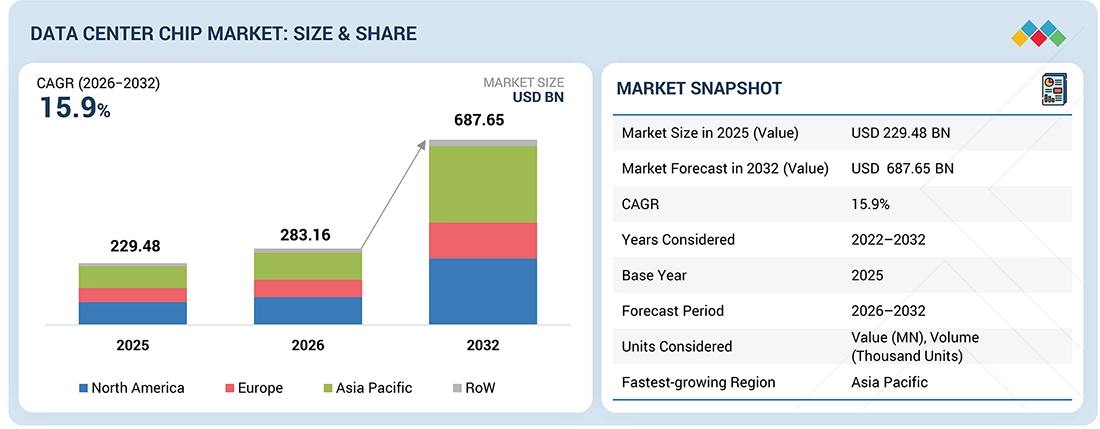
According to Marketsandmarkets, the global data center chip market size is projected to grow from USD 283.16 billion in 2026 to USD 687.65 billion by 2032, growing at a CAGR of 15.9% from 2026 to 2032. The growth of the data center chip market is driven by increasing adoption of AI, cloud, and data-intensive applications, growing demand for high-performance and energy-efficient processors that facilitate faster data processin and scalable data center operations.
MARKET SNAPSHOT TABLE
| REPORT METRIC | DETAILS |
|---|---|
| Market Size in 2026 (Value) | USD 283.16 Billion |
| Market Forecast in 2032 (Value) | USD 687.65 Billion |
| Growth Rate | CAGR of 15.9% from 2026-2032 |
| Years Considered | 2022-2032 |
| Base Year | 2025 |
| Forecast Period | 2026-2032 |
| Units Considered | Value (USD Million), Volume (Thousand Units) |
| Report Coverage | Revenue forecast, company ranking, competitive landscape, growth factors, and trends |
| Top Companies |
|
| Growth Driver |
|
| Segments Covered |
|
| Regions Covered | North America, Europe, Asia Pacific, RoW |
KEY TAKEAWAYS
-
By RegionThe North America data center chip market size accounted for a 36.7% revenue share in 2025.
-
By ComponentBy component, the memory segment is expected to register the highest CAGR of 16.7%.
-
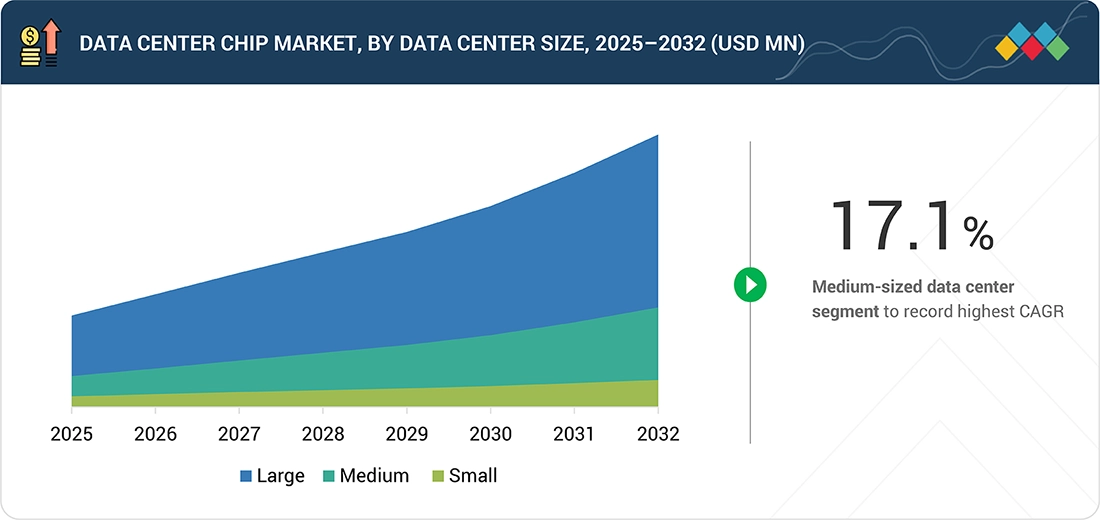
By Data Center SizeBy data center size, the medium-sized segment is projected to grow at the fastest rate from 2025 to 2032.
-
By End UserBy end user, the cloud service provider segment is expected to dominate the market.
-
Competitive Landscape -Key PlayersNVIDIA Corporation, Advanced Micro Devices, Inc., SAMSUNG, SK HYNIX INC., and Micron Technology, Inc. were identified as some of the star players in the data center chip market (global), given their strong market share and product footprint.
-
Competitive Landscape - StartupsBlaize, Kneron, Inc., and Rebellions Inc. among others, have distinguished themselves among startups and SMEs by securing strong footholds in specialized niche areas, underscoring their potential as emerging market leaders.
The data center chip industry is fueled by the rapid growth of hyperscale data centers and cloud-native architectures, supporting better processing efficiency, optimized resource use, and scalable performance with advanced chips, thus enabling faster data handling and dependable computing operations.
Source: Secondary Research, Interviews with Experts, MarketsandMarkets Analysis
TRENDS & DISRUPTIONS IMPACTING CUSTOMERS' CUSTOMERS
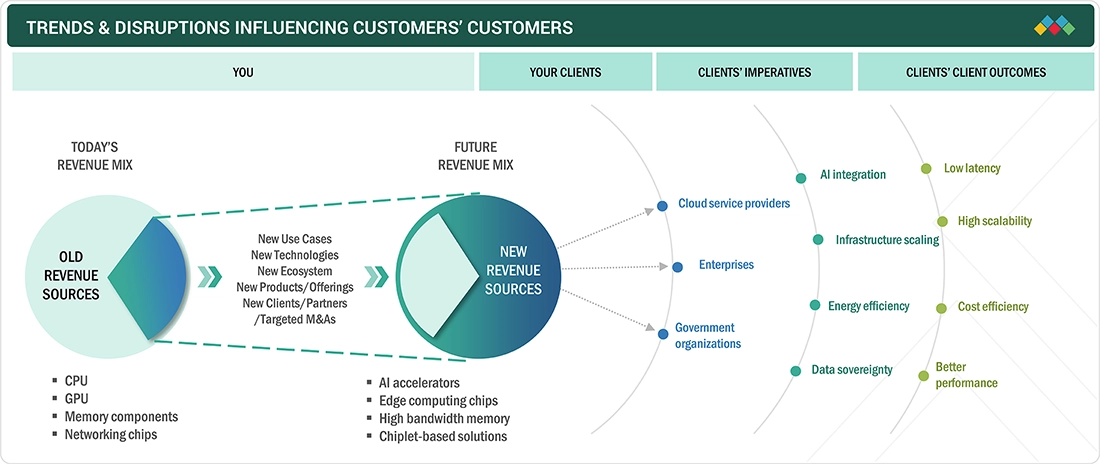
Changing customer needs and industry disruptions among cloud service providers, enterprises and government organisations, the primary end users of data center chips, are driving key data center chip market trends shaping demand. The changes in AI accelerator, edge computing chip, high bandwidth memory and chiplet based solution toward CPU, GPU, memory components and networking chips have a direct impact on the end users’ operational performance and revenues. These factors in turn fuel the demand for data center chips, which determines the market’s growth trajectory.
Source: Secondary Research, Interviews with Experts, MarketsandMarkets Analysis
DATA CENTER CHIP MARKET DYNAMICS

Level
-
Rapid expansion of hyperscale data centers

-
Increasing deployment of AI and machine learning workloads


Level
-
High cost and limited supply of advanced GPUs and AI accelerators

-
Concentration of advanced semiconductor manufacturing capacity


Level
-
Emergence of sovereign AI infrastructure initiatives

-
Increasing adoption of FPGA and custom accelerators in data centers


Level
-
High energy consumption of data center infrastructure

-
Hardware security vulnerabilities in computing systems

Source: Secondary Research, Interviews with Experts, MarketsandMarkets Analysis
Driver: Rapid expansion of hyperscale data centers
The rapid growth of hyperscale data centers is fueling high demand for high-performance chips, including CPUs, GPUs, and specialized accelerators to support AI, cloud computing, and large-scale data processing. Furthermore, ongoing capacity expansion and regular infrastructure upgrades by hyperscale operators are speeding up the adoption of next-generation, energy-efficient semiconductor technologies.
Restraint: High cost and limited supply of advanced GPUs and AI accelerators
The high cost and limited supply of advanced GPUs and AI accelerators act as a key restraint in the data center chip market, as these components are critical for handling AI and high-performance workloads but remain expensive and supply-constrained. This limits accessibility for small and medium-sized enterprises and delays large-scale deployments, while supply chain bottlenecks and high manufacturing complexity further restrict availability, ultimately slowing down overall market growth.
Opportunity: Emergence of sovereign AI infrastructure initiatives
The emergence of sovereign AI infrastructure initiatives presents a significant opportunity for the data center chip market, as governments and enterprises increasingly invest in localized AI capabilities to ensure data security, regulatory compliance, and technological independence. These initiatives are driving the development of domestic data centers and national AI ecosystems, leading to increased demand for high-performance processors, memory, and AI accelerators. Additionally, the focus on building self-reliant semiconductor and computing infrastructure is encouraging regional investments, partnerships, and innovation, thereby creating new growth avenues for data center chip providers globally.
Challenge: High energy consumption of data center infrastructure
High energy consumption of data center infrastructure is a major challenge in the data center chip market, as increasing demand for AI, cloud computing, and high-performance workloads significantly raises power requirements and operational costs. Advanced chips, particularly GPUs and AI accelerators, consume substantial energy and generate heat, creating pressure on cooling systems and overall efficiency. This not only impacts sustainability goals but also limits scalability for data center operators, driving the need for more energy-efficient chip designs and optimized architectures.
DATA CENTER CHIP MARKET SIZE, SHARE AND TRENDS: COMMERCIAL USE CASES ACROSS INDUSTRIES
| COMPANY | USE CASE DESCRIPTION | BENEFITS |
|---|---|---|
 |
STMicroelectronics improved its R&D data center performance by deploying servers powered by AMD EPYC processors. This enabled the better handling of complex chip design workloads while improving computational efficiency and maintaining sustainability goals. The solution delivered higher performance and optimized energy use across data center operations. | Delivered 12% performance improvement and 30% lower power consumption per core, leading to a 33% reduction in overall electricity usage while supporting efficiency and sustainability goals |
|
|
JOCDN enhanced its broadcast video streaming capabilities by integrating AMD EPYC processors into its server infrastructure. The upgrade improved processing power and optimized resource utilization, enabling the system to handle increasing streaming demand while maintaining quality and performance standards efficiently. | Enabled 2x throughput while reducing CPU usage by 40% and power consumption by 20%, improving operational efficiency and lowering overall infrastructure costs |
|
|
DBS Bank modernized its data center infrastructure by deploying Dell servers powered by AMD EPYC processors. The transition improved workload virtualization, enhanced overall system performance, and addressed challenges related to high hardware costs and energy consumption, while supporting the bank’s efficiency and sustainability objectives. | Achieved 75% reduction in hardware costs, 50% lower power consumption, and nearly 99% workload virtualization, significantly improving operational efficiency and sustainability |
 |
NVIDIA Corporation deployed its H100 Tensor Core GPUs across hyperscale and enterprise data centers to support generative AI and large language model workloads. Integrated with high-speed interconnects and optimized AI software stacks, the solution enabled efficient parallel processing and reduced latency. | Delivered faster AI training and inference with improved energy efficiency and scalability, enabling high-performance processing of large-scale generative AI workloads across data centers |
Logos and trademarks shown above are the property of their respective owners. Their use here is for informational and illustrative purposes only.
DATA CENTER CHIP MARKET ECOSYSTEM
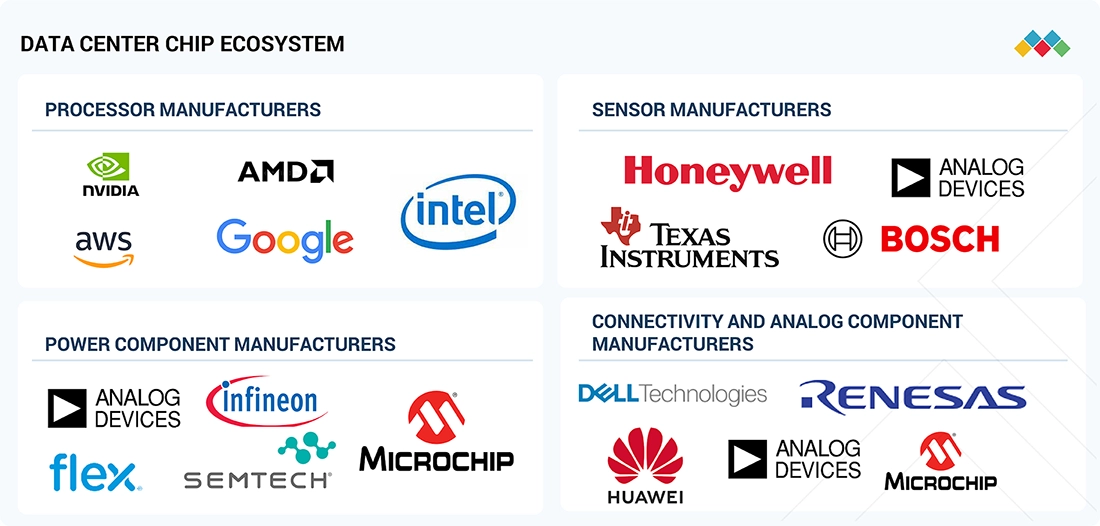
The data center chip market ecosystem comprises prominent processor manufacturers (NVIDIA Corporation, Advanced Micro Devices, Inc., Amazon Web Services, Inc., Google), sensor manufacturers (Texas Instruments Incorporated, Analogue Devices, Inc., Honeywell International Inc.), power component manufacturers (Analogue Devices, Inc., Microchip Technology Inc., Infineon Technologies AG), and connectivity and analogue component manufacturers (Dell Inc., Huawei Technologies Co., Ltd., Analogue Devices, Inc.). The ecosystem involves processor manufacturers that manage the computing workload, sensor suppliers that observe the system conditions and connectivity, and analogue players that facilitate signal processing and data transfer. Power component manufacturers ensure efficient energy management and stable operation of the entire data center infrastructure
The Data Center Chip Market is expanding as AI, generative AI, cloud computing, and data-intensive workloads increase demand for high-performance and energy-efficient semiconductor solutions. The Data Center Chip Market Analysis highlights growing adoption of processors, memory, networking chips, sensors, power management components, and analog and mixed-signal ICs across modern data center infrastructure. Data Center Chip Market Statistics indicate that the market is being supported by the rapid expansion of hyperscale data centers, AI computing, advanced networking, and heterogeneous computing technologies..
Logos and trademarks shown above are the property of their respective owners. Their use here is for informational and illustrative purposes only.
Also Read: Data Center Busways Market Report
DATA CENTER CHIP MARKET SEGMENTS
Source: Secondary Research, Interviews with Experts, MarketsandMarkets Analysis
Data Center Chip Market, By Component
Processors hold the largest share in the data center chip market because they are the main computing units responsible for handling complex workloads like AI, cloud computing, and data analytics. The rising demand for high-performance and energy-efficient processing drives ongoing innovation in CPUs and GPUs, making processors the most vital and widely used components in data center infrastructure.
Data Center Chip Market, By Data Center Size
Large data centers have the largest share in the data center chip industry because they need high-performance processors, GPUs, and accelerators to handle huge data volumes and complex tasks. Their extensive infrastructure and ongoing expansion to support AI and cloud services boost demand for advanced, scalable, and energy-efficient chips.
Data Center Chip Market, By Application
AI leads the data center chip market because of its high compute demands and need for parallel processing, which boosts demand for GPUs and AI accelerators. Moreover, the quick uptake of AI applications like generative AI and real-time analytics is raising chip usage compared to general-purpose computing.
Data Center Chip Market, By End User
By end user, cloud service providers hold the largest market share in the data center chip sector due to their extensive deployment of data centers to meet the rising demand for cloud computing, AI workloads, and data storage. Their ongoing investment in high-performance, energy-efficient chips to ensure scalability, reliability, and faster data processing makes them the leading market adopters.
DATA CENTER CHIP MARKET BY REGION
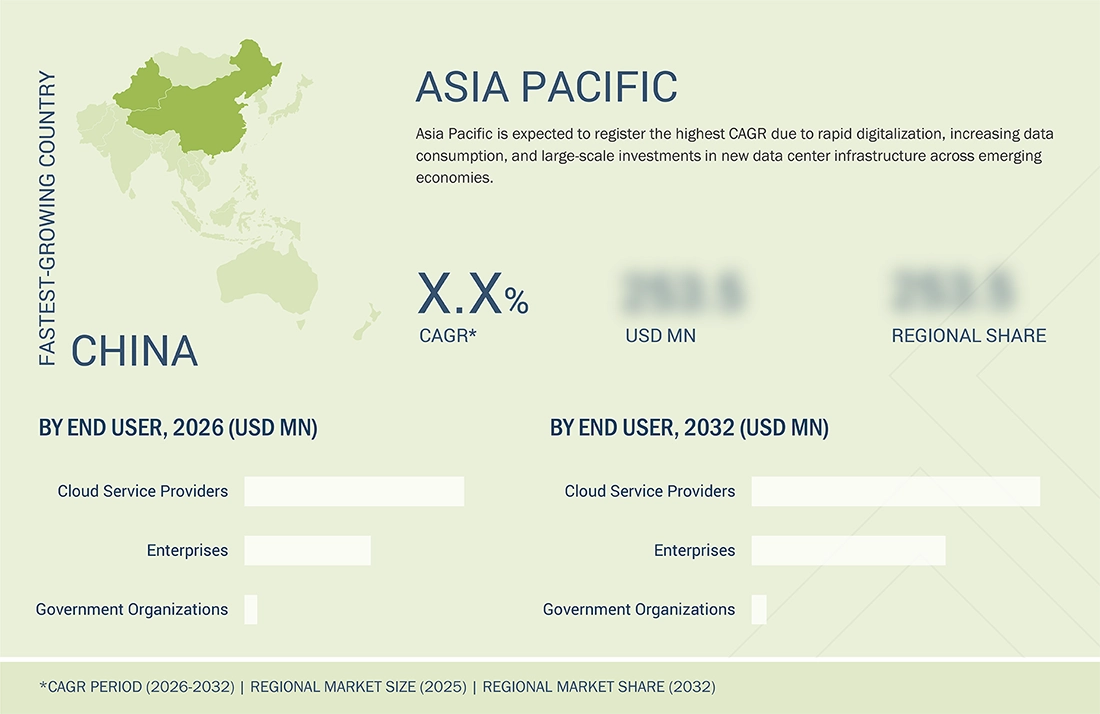
Asia Pacific to be fastest-growing region in global data center chip market during forecast period
The data center chip market in Asia Pacific is expected to register the highest CAGR over the forecast period owing to the rapid development of data center infrastructure, increasing investments in semiconductor manufacturing, and growing adoption of cloud and artificial intelligence (AI) technologies. The market growth is further boosted by the increasing demand for digital services coupled with a robust presence of chip fabrication and assembly facilities across the region.
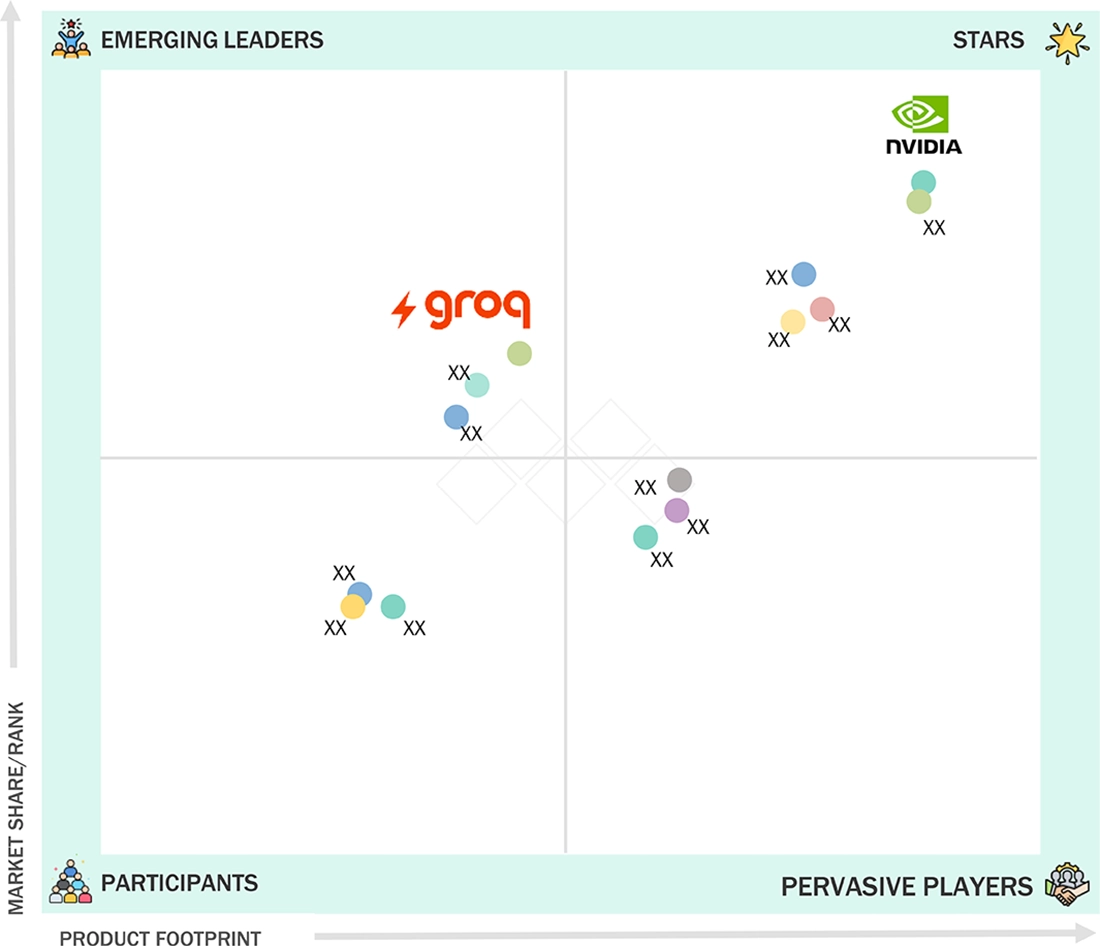
DATA CENTER CHIP MARKET SIZE, SHARE AND TRENDS: COMPANY EVALUATION MATRIX
In the data center chip companies, NVIDIA Corporation (Star) leads with a significant market share and a diverse portfolio of GPUs and AI accelerators widely used in AI and hyperscale data center workloads. The company benefits from its integrated hardware-software ecosystem, supporting broad adoption. Groq, Inc. (Emerging Leader) is gaining momentum with its AI inference-focused processors, delivering high-speed and low-latency performance. NVIDIA Corporation (US) maintains its leadership through ongoing innovation and scale, while Groq, Inc. (US) is strengthening its position with specialized AI processing capabilities.
Source: Secondary Research, Interviews with Experts, MarketsandMarkets Analysis
KEY MARKET PLAYERS
- NVIDIA Corporation (US)
- Advanced Micro Devices, Inc. (US)
- Intel Corporation (US)
- SAMSUNG (South Korea)
- SK HYNIX INC. (South Korea)
- Google (US)
- Amazon Web Services, Inc. (US)
- Monolithic Power Systems, Inc. (US)
- Texas Instruments Incorporated (US)
- Analog Devices, Inc. (US)
- Micron Technology, Inc. (US)
- Microsoft (US)
- Altera Corporation (US)
- Imagination Technologies (UK)
- Graphcore (UK)
WHAT IS IN IT FOR YOU: DATA CENTER CHIP MARKET SIZE, SHARE AND TRENDS REPORT CONTENT GUIDE
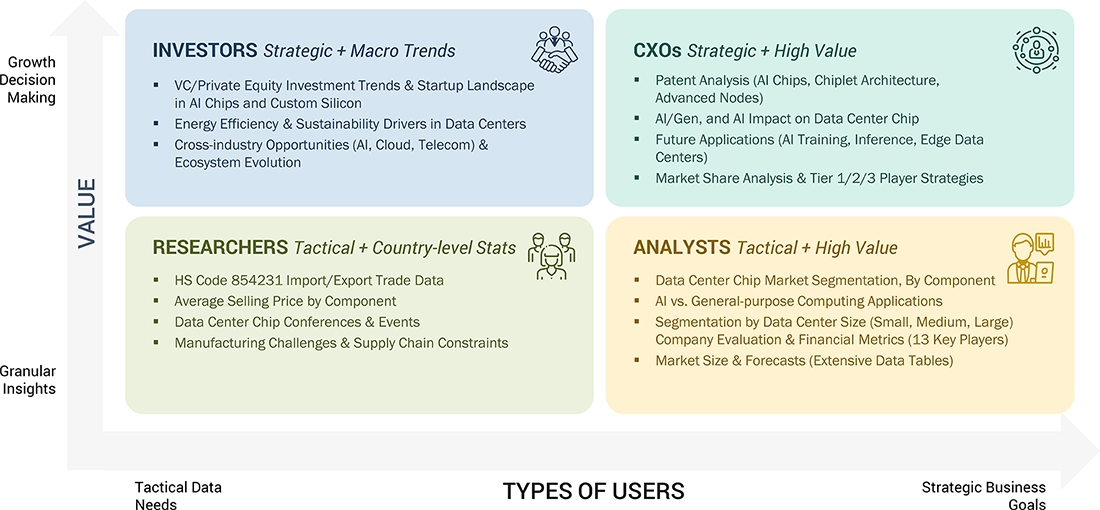
DELIVERED CUSTOMIZATIONS
We have successfully delivered the following deep-dive customizations:
| CLIENT REQUEST | CUSTOMIZATION DELIVERED | VALUE ADDS |
|---|---|---|
| Oil & Gas Operators | Competitive profiling of DFOS vendors and benchmarking of DTS (Distributed Temperature Sensing), DAS (Distributed Acoustic Sensing), and DVS (Distributed Vibration Sensing) for pipeline monitoring | Identify high-performance vendors and improve pipeline safety and leak detection |
| Power & Utility Companies | Deployment benchmarking for grid monitoring, cable fault detection, and substation applications across regions | Enhance grid reliability and reduce downtime through real-time monitoring |
| Infrastructure & Smart Cities | Application roadmap for structural health monitoring, tunnel safety, and smart infrastructure integration | Support smart infrastructure development and enable predictive maintenance |
| Railway & Transportation Authorities | Use-case analysis for track monitoring, intrusion detection, and asset protection systems | Improve operational safety and reduce accidents and maintenance costs |
| Mining & Industrial Operators | Cost-benefit analysis of real-time monitoring systems for harsh environments and industrial assets | Optimize operational efficiency and ensure worker safety in critical environments |
RECENT DEVELOPMENTS IN DATA CENTER CHIP MARKET
- August 2026 : onsemi forecast third-quarter revenue of $1.65–$1.75 billion, supported by rising demand for power-management chips in AI data centers. Its AI Data Center business is expected to more than double in 2026, making it the company’s fastest-growing segment. The growth reflects increasing adoption of intelligent power solutions across AI infrastructure. onsemi is also advancing its $7 billion acquisition of Synaptics to expand into AI devices and robotics. The momentum strengthens onsemi’s position in the fast-growing AI data center power-management market.
- August 2026 : Advanced Micro Devices, Inc. expanded its data-center chip portfolio with the Instinct MI455X GPU, designed for frontier-scale AI training and inference. The accelerator provides 432 GB of HBM4 memory and uses 3D chip-stack packaging, targeting high-performance AI computing in data-center environments. The development strengthens AMD's portfolio of data-center chips for large-scale AI workloads and supports the company's broader push into high-performance AI infrastructure.
- July 2026 : Google introduced its eighth-generation TPU platform, comprising TPU 8t for training and TPU 8i for inference. The new custom AI chips are designed for Google's data-center infrastructure, with TPU 8t targeting large-scale training workloads and TPU 8i optimized for inference. The development advances Google's purpose-built data-center chip portfolio by providing a new generation of custom accelerators for AI computing.
- June 2026 : Amazon Web Services, Inc. made its Graviton5 processors generally available through Amazon EC2 M9g and M9gd instances. The fifth-generation AWS-designed processors provide higher compute performance, larger caches and improved memory and I/O scalability, with AWS reporting up to 25% higher compute performance than Graviton4. The development adds a new generation of AWS-designed processors to its cloud computing infrastructure and strengthens its internally developed data-center processor portfolio.
- May 2026 : Intel Corporation unveiled Crescent Island, a new AI accelerator designed specifically for data-center workloads, with sampling planned for the second half of 2026. The accelerator is positioned for high-performance AI inference and is intended to compete in the data-center accelerator market alongside NVIDIA and AMD solutions. The development represents Intel's direct expansion into a new generation of AI-focused data-center chips.
Table of Contents
 Exclusive indicates content/data unique to MarketsandMarkets and not available with any competitors.
Methodology
The research process for this technical, market-focused, and commercial study of the data center chip market involved systematic collection, recording, and analysis of data concerning companies operating within the market. It relied heavily on secondary sources, directories, and databases (Factiva, Oanda) to identify and gather relevant information. In-depth interviews were conducted with various primary respondents, including experts from core and related industries and preferred manufacturers, to obtain and verify essential qualitative and quantitative data, as well as to evaluate the market's growth prospects. Key players in the data center chip market were identified through secondary research, and their market rankings were established through a combination of primary and secondary research. This process included reviewing annual reports of leading companies and interviewing key industry figures, such as CEOs, directors, and marketing executives.
Secondary Research
In the secondary research process, various secondary sources have been consulted to identify and gather information relevant to this study. Secondary sources include annual reports, press releases, and investor presentations from companies; white papers, certified publications, and articles by recognized authors; directories; and databases. The main purpose of secondary research has been to obtain key information about the industry supply, identify a total pool of key players, and segment the market based on industry trends, geographic regions, and significant developments from both market and technology perspectives.
Primary Research
In the primary research process, interviews were conducted with primary sources from both the supply and demand sides to gather qualitative and quantitative information for this report. Supply-side sources include experts such as CEOs, vice presidents, marketing directors, technology and innovation directors, subject-matter experts, consultants, and other key executives from major companies and organizations operating in the data center chip market.
After completing the market engineering process—which includes market statistics calculations, market breakdown, market size estimations, market forecasting, and data triangulation—extensive primary research has been conducted to gather information and verify and validate the critical market figures.
Several primary interviews were conducted with experts from both demand and supply sides across four major regions—North America, Europe, Asia Pacific, and RoW. About 25% of these interviews involved demand-side experts, while 75% involved supply-side experts. The primary data was collected through questionnaires, emails, and telephonic interviews.
BREAKDOWN OF PRIMARY INTERVIEW PARTICIPANTS
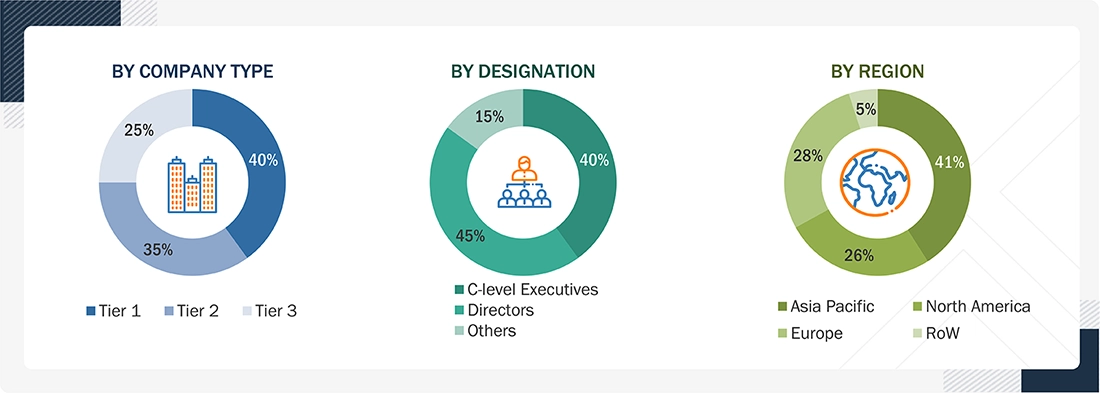
Notes: Tier 1 companies include market players with revenues above USD 500 million; tier 2 companies earn revenues between USD 100 million and USD 500 million; and tier 3 companies earn revenues up to USD 100 million.
To know about the assumptions considered for the study, download the pdf brochure
Market Size Estimation
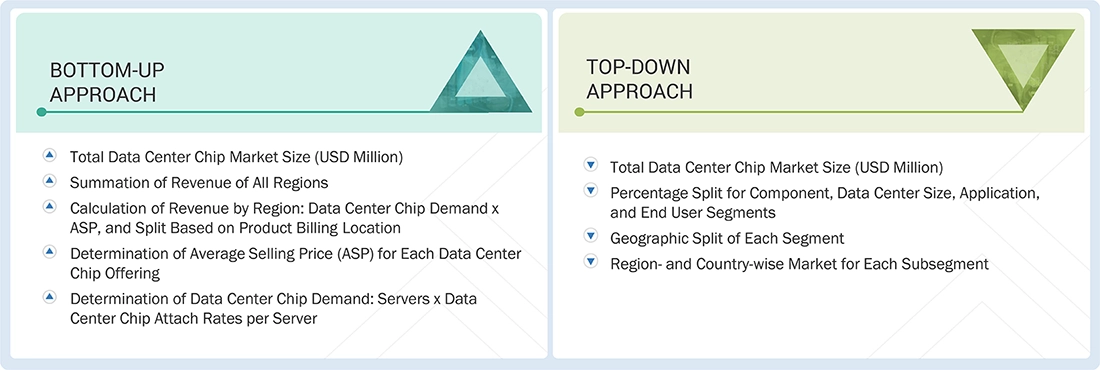
In the comprehensive market estimation process, both top-down and bottom-up approaches were employed, along with several data triangulation methods, to estimate and forecast the size of the market and its segments and subsegments listed in the report. Extensive qualitative and quantitative analyses have been conducted on the entire market engineering process to identify key information and insights related to the data center chip market.
Key players in the data center chip market were identified through secondary research, and their rankings in each region have been determined through both primary and secondary research. This process involved analyzing the annual and financial reports of leading companies and conducting interviews with industry experts such as chief executive officers, vice presidents, directors, and marketing executives to gather both quantitative and qualitative insights. All percentage shares, splits, and breakdowns were established using secondary sources and verified through primary sources. Every parameter influencing the markets covered in this study was thoroughly examined, verified through primary research, and analyzed to produce the final quantitative and qualitative data. This information was consolidated and enhanced with detailed inputs from MarketsandMarkets and presented in this report.
DATA CENTER CHIP MARKET - BOTTOM-UP AND TOP-DOWN APPROACHES
Data Triangulation
After estimating the overall market size as described above, the market has been divided into several segments and subsegments. To finalize the market engineering process and obtain precise statistics for all segments and subsegments, market breakdown and data triangulation methods have been used where applicable. Data has been triangulated by examining various factors and trends from both the demand and supply sides. Additionally, the market size has been validated using both top-down and bottom-up approaches.
Market Definition
A data center is a centralized facility that houses computing, storage, and networking equipment, along with the necessary infrastructure for managing and processing large volumes of data, supporting organizations' IT needs. The data center chip market encompasses a wide range of components and technologies aimed at optimizing, managing, and improving the efficiency, reliability, and security of data centers.
Key Stakeholders
- Government and financial institutions and investment communities
- Analysts and strategic business planners
- Semiconductor product designers and fabricators
- Application providers
- AI solution providers
- AI platform providers
- Business providers
- Professional service/solution providers
- Research organizations
- Technology standard organizations, forums, alliances, and associations
- Technology investors.
Report Objectives
- To define, describe, and forecast the data center chip market size, in terms of value and volume, by component, application, data center size, end user, and region
- To describe and forecast the market size across four key regions, namely, North America, Europe, Asia Pacific, and the Rest of the World (RoW), along with their respective country-level market size, in terms of value
- To provide detailed information regarding the drivers, restraints, opportunities, and challenges in the data center chip market
- To strategically analyze micromarkets concerning the individual growth trends, prospects, and their contribution to the data center chip market
- To map competitive intelligence based on company profiles, key player strategies, and key developments
- To analyze trends/disruptions impacting customer business; interconnected markets and cross-sector opportunities; strategic moves by tier-1/2/3 players; pricing analysis; patents analysis; trade analysis (export and import scenario); Porter's Five Forces analysis; macroeconomic indicators; case studies; investment and funding scenario; decision-making process; buyer stakeholders and buying evaluation criteria; adoption barriers & internal challenges; unmet needs from various industries; technology analysis; technology roadmap; ecosystem analysis; regional regulations and compliance; impact of 2025 US tariff; and key conferences and events related to the data center chip market.
- To benchmark market players using the proprietary Company Evaluation Matrix framework, which analyzes them on various parameters within the broad categories of market ranking/share and product portfolio
- To analyze competitive developments such as contracts, acquisitions, product launches & developments, collaborations, and partnerships, along with research & development (R&D), in the data center chip market.
Available customizations:
With the given market data, MarketsandMarkets offers customizations according to the company’s specific needs. The following customization options are available for the report:
COMPANY INFORMATION
- Detailed analysis and profiling of additional market players (up to 7)
Key Questions Addressed by the Report
How big is the data center chip market?
The data center chip market size was USD 229.48 billion in 2025 and is expected to grow to USD 687.65 billion by 2032.
How fast will the data center chip market grow through 2032?
The data center chip market is expected to grow at a CAGR of 15.9% from 2026 to 2032, reaching USD 687.65 billion by 2032.
Which companies lead the data center chip market?
NVIDIA Corporation, Advanced Micro Devices, Inc., SAMSUNG, SK HYNIX INC., and Micron Technology, Inc. lead the data center chip market as top companies, given their strong market share and product footprint. NVIDIA Corporation holds the leading position, supported by its diverse portfolio of GPUs and AI accelerators.
What trends are shaping demand for data center chips?
Key trends include a shift toward AI accelerators, edge computing chips, high-bandwidth memory, and chiplet-based solutions, driven by evolving needs of cloud service providers, enterprises, and government organizations as the primary end users of data center chips.
Who has the best market research report on data center chips?
This data center chip market research report provides revenue forecasts, company rankings, competitive landscape, growth factors, and trends, covering the global data center chip market across component, data center size, application, and end-user segments through 2032.
What is driving growth in the data center chip market?
Data center chip market growth is driven by rising adoption of AI, cloud, and data-intensive applications, along with increasing demand for high-performance, energy-efficient processors that enable faster data processing and scalable data center operations.
Which region leads the data center chip market?
North America accounted for a 36.7% revenue share of the global data center chip market in 2025, while Asia Pacific is expected to register the highest CAGR during the forecast period.
Which component segment is growing fastest in the data center chip market?
By component, the memory segment is expected to register the highest CAGR of 16.7% in the data center chip market during the forecast period.
Which end user dominates the data center chip market?
By end user, cloud service providers hold the largest market share in the data center chip market due to their extensive deployment of data centers to meet rising demand for cloud computing, AI workloads, and data storage.
What are the key challenges facing the data center chip market?
Key challenges include high energy consumption of data center infrastructure and hardware security vulnerabilities in computing systems, while the high cost and limited supply of advanced GPUs and AI accelerators remain a significant market restraint.


Personalize This Research
- Triangulate with your Own Data
- Get Data as per your Format and Definition
- Gain a Deeper Dive on a Specific Application, Geography, Customer or Competitor
- Any level of Personalization
Let Us Help You
- What are the Known and Unknown Adjacencies Impacting the Data Center Chip Market
- What will your New Revenue Sources be?
- Who will be your Top Customer; what will make them switch?
- Defend your Market Share or Win Competitors
- Get a Scorecard for Target Partners

Custom Market Research Services
We Will Customise The Research For You, In Case The Report Listed Above Does Not Meet With Your Requirements
Get 10% Free CustomisationTESTIMONIALS

Tetsuya Ohhira
Business Development Manager-Technology Business
Nikon Corporation,
Leading Japanese MNC specializing in optics and imaging productswww.nikon.com
MarketsandMarkets™ response
is quick. Their attitude is flexible and positive. Analyst Insights are globally considered and
significant. Client Services quickly respond to our inquiry and demand. Their wide range of global
surveys help us make our strategic plan.
We hope Knowledge Store will be easier to search
for a report.
VP - Marketing & Business Development
Leading Provider of Process Control Solutions
We engaged with MarketsandMarkets on a study to perform an analysis and recommend a Go-To-Market strategy for metrology and process control in the semiconductor market. The study was tailored to our targets and needs with well-defined milestones. Our overall experience with the MarketsandMarkets team was very good throughout the project in all aspects including the analysis methodologies used, the quality and depth of primary and secondary data sets, the professionalism and flexibility of the team and the ability to meet the target schedule and milestones. We want to thank MarketsandMarkets team for a job well done.
- GCC Countries Data Center Chip Market
- US Data Center Chip Market
- Canada Data Center Chip Market
- Mexico Data Center Chip Market
- Germany Data Center Chip Market
- UK Data Center Chip Market
- France Data Center Chip Market
- Rest Of Europe Data Center Chip Market
- China Data Center Chip Market
- Japan Data Center Chip Market
- India Data Center Chip Market
- Rest Of Asia Pacific Data Center Chip Market






Growth opportunities and latent adjacency in Data Center Chip Market