Display Module Market Size, Share & Trends

Display Module Market Size, Share, Growth & Trends by Optical Display Module, Electronic Display Module, OLEDOS, TFT LCD, LCOS, MicroLED, LCD, OLED, LED, Micro-LED, E-paper, Display Size (Microdisplays, Small & Medium-sized Display, Large Displays) - Global Forecast to 2032




DISPLAY MODULE MARKET OVERVIEW
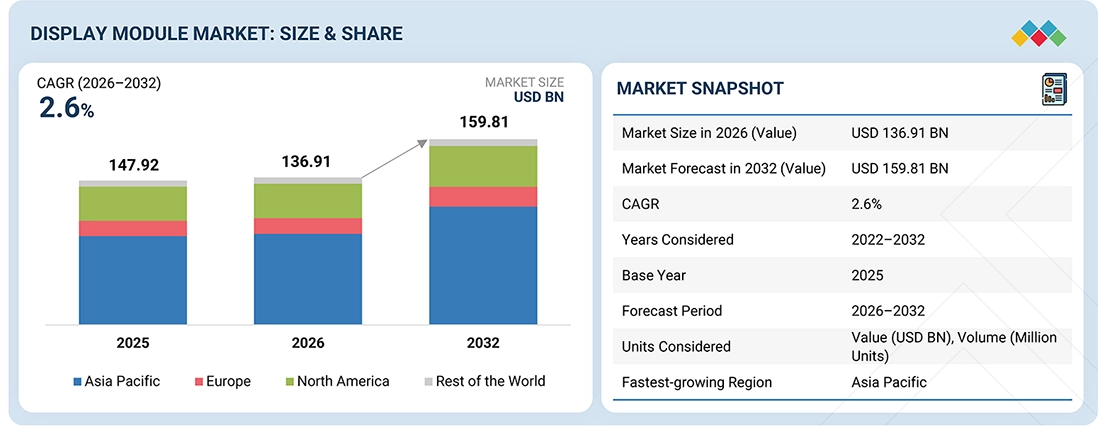
According to Marketsandmarkets, the global display module market size is projected to grow from USD 136.91 billion in 2026 to USD 159.81 billion by 2032, at a CAGR of 2.6% from 2026 to 2032. The display module market is witnessing steady growth, driven by increasing demand for high-performance displays across consumer electronics, automotive, healthcare, industrial, and commercial applications. Rising adoption of advanced display technologies such as OLED, AMOLED, Mini-LED, and MicroLED, coupled with growing shipments of smartphones, laptops, televisions, wearables, and automotive infotainment systems, continues to fuel market expansion. Continuous advancements in flexible, foldable, and energy-efficient display modules, along with investments in next-generation manufacturing technologies, are further strengthening the market. Additionally, the rapid expansion of consumer electronics manufacturing in the Asia Pacific and the increasing integration of display modules into connected and intelligent devices are expected to support sustained growth throughout the forecast period.
The Display Module Market measures the value of fully integrated display modules supplied to OEMs and device manufacturers. Because this report measures the value of the complete integrated display module, its market size is not directly comparable with reports that measure only display panels or display technologies.
REPORT SCOPE
| REPORT METRIC | DETAILS |
|---|---|
| Market Size in 2025 (Value) | USD 147.92 BN |
| Market Size in 2026 (Value) | USD 136.91 BN |
| Market Forecast in 2032 (Value) | USD 159.81 BN |
| Growth Rate | CAGR of 2.6% from 2026 to 2032 |
| Years Considered | 2022–2032 |
| Base Year | 2025 |
| Forecast Period | 2026–2032 |
| Units Considered | Value (USD BN), Volume (Million Units) |
| Report Coverage | Revenue Forecast, Company Ranking, Competitive Landscape, Growth Factors, and Trends |
| Top Companies |
|
| Key Growth Drivers |
|
| Segments Covered |
|
| Regional Scope | North America, Europe, Asia Pacific, Rest of the World |
KEY TAKEAWAYS
-
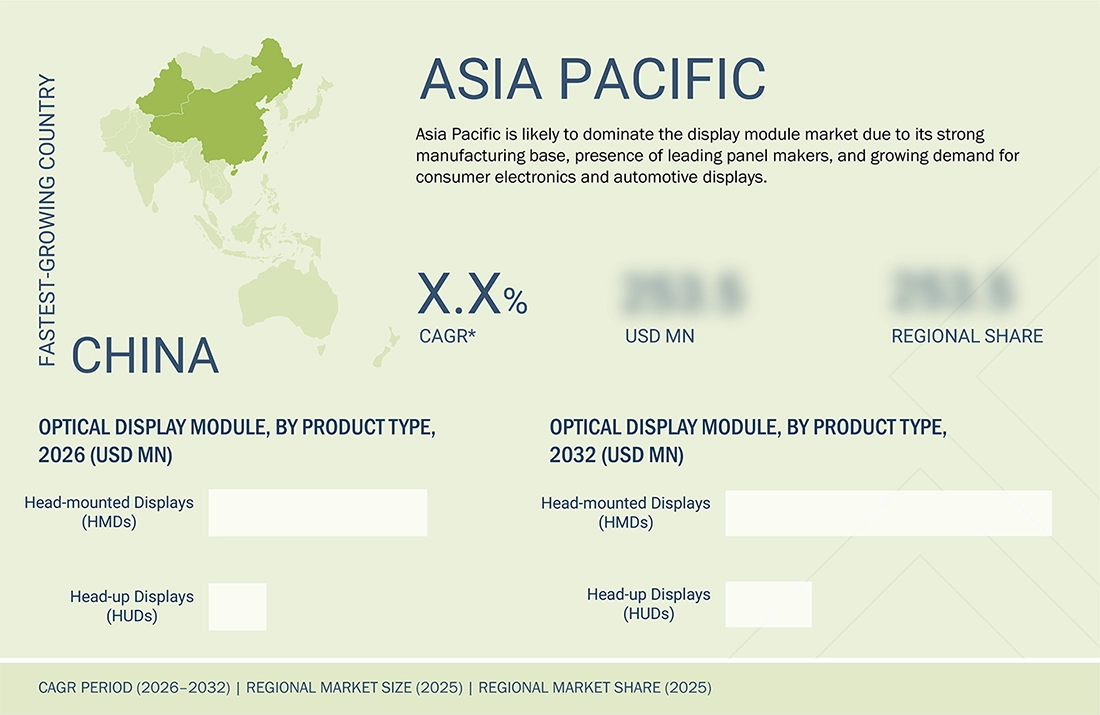
BY REGIONThe Asia Pacific is projected to register the highest CAGR of ~24.7% of the optical display module market.
-
BY PRODUCT TYPEThe non-optical display modules segment held the largest market share of ~97.4% in 2025.
-
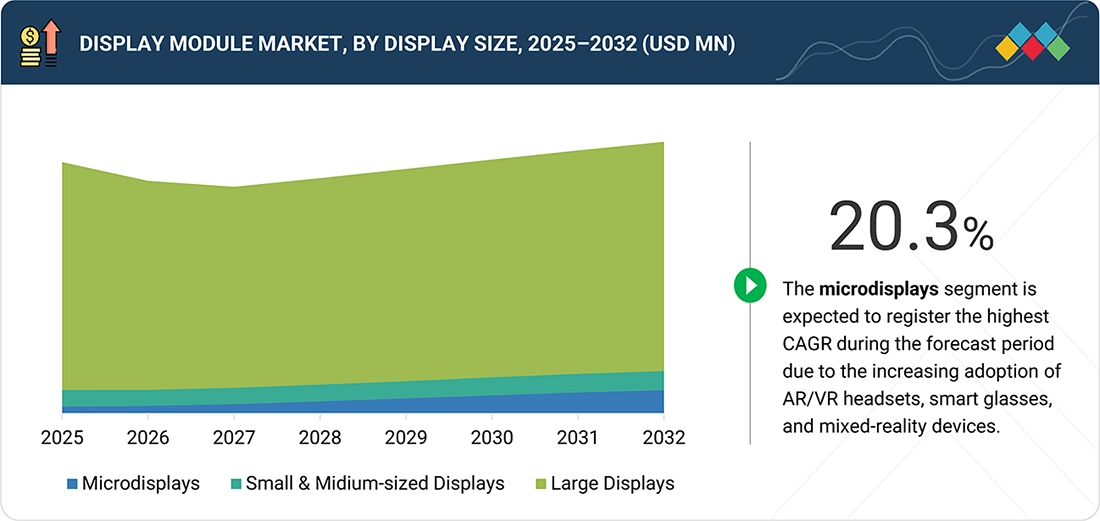
BY DISPLAY SIZEMicrodisplays are expected to grow at the highest CAGR of ~20.3%.
-
BY END-USE INDUSTRYThe consumer electronics end-use industry held the largest market share in 2025.
-
COMPETITIVE LANDSCAPE: KEY PLAYERSSamsung Display, LG Display, BOE Technology Group, and AUO Corporation were identified as key players in the display module market due to their heavy investments in fabrication facilities, process technologies, and research and development to improve resolution, brightness, energy efficiency, and form factors.
-
COMPETITIVE LANDSCAPE: STARTUPS/SMESPorotech, Aledia, and VueReal are notable startups and SMEs that are gaining traction owing to their focus on niche applications, rapid innovation, and customized solutions for wearables, smart glasses, automotive, healthcare, and industrial devices, enabling them to compete effectively with established display manufacturers.
The increasing demand for high-performance display modules is a major factor driving the display module market. Growing adoption of display modules across smartphones, tablets, laptops, televisions, wearable devices, automotive displays, and industrial equipment is accelerating market growth. End users increasingly prefer display modules that offer higher resolution, improved color accuracy, faster refresh rates, lower power consumption, and slimmer form factors to enhance user experience. This trend is encouraging manufacturers to invest in advanced display module technologies such as OLED, AMOLED, Mini-LED, and MicroLED, while expanding production capacity and developing innovative, energy-efficient display solutions for next-generation electronic devices.
The display module industry is undergoing a significant technology transition as manufacturers increasingly shift from conventional LCD display modules toward OLED, Mini-LED, and MicroLED technologies. While LCD modules continue to account for the largest share of global shipments due to their cost-effectiveness and widespread use in televisions, monitors, industrial equipment, and entry-level consumer electronics, OLED display modules are experiencing faster adoption because they offer higher contrast ratios, faster response times, lower power consumption, thinner form factors, and greater design flexibility.
Source: Secondary Research, Interviews with Experts, MarketsandMarkets Analysis
TRENDS & DISRUPTIONS IMPACTING CUSTOMERS' CUSTOMERS
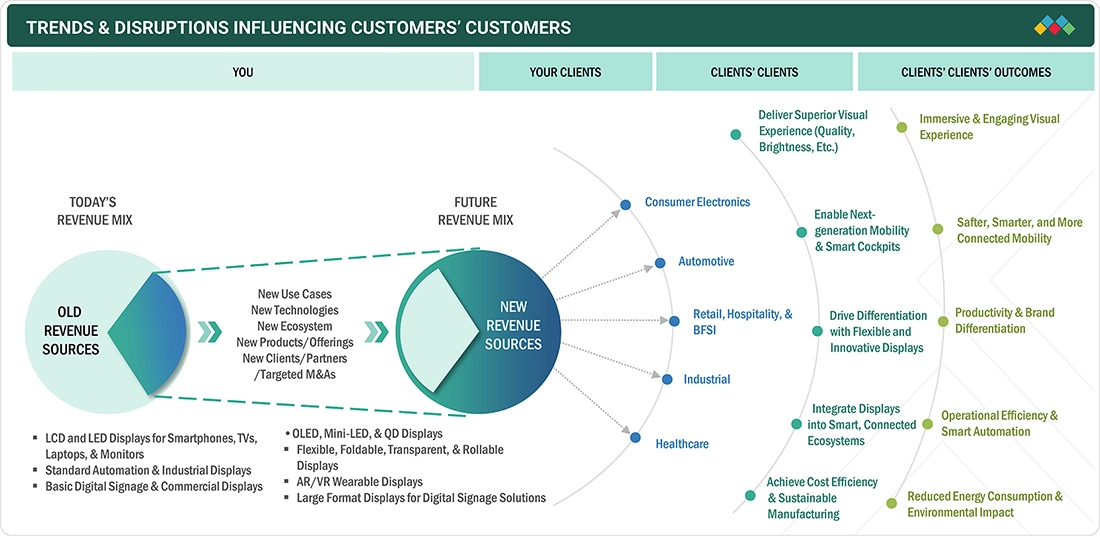
The display module market is undergoing a significant transformation as demand shifts from conventional LCD and LED modules toward advanced OLED, Mini-LED, Micro-LED, and quantum dot (QD)-based display technologies. Emerging applications in automotive digital cockpits, AR/VR devices, foldable smartphones, industrial automation, healthcare equipment, and smart retail are expanding the market beyond traditional consumer electronics. These disruptions are driving manufacturers to prioritize superior visual performance, energy efficiency, flexible form factors, and seamless integration with AI-enabled connected ecosystems. As a result, companies are investing in next-generation manufacturing capabilities, innovative display materials, and strategic partnerships to develop differentiated products, improve production efficiency, and unlock new revenue streams while delivering immersive user experiences, enhanced operational efficiency, and sustainable display solutions.
Source: Secondary Research, Interviews with Experts, MarketsandMarkets Analysis
MARKET DYNAMICS

Level
-
Rising demand for high-resolution and premium display modules across consumer electronics

-
Increasing adoption of OLED, Mini-LED, Micro-LED, and LTPO technologies


Level
-
Declining average selling prices (ASPs) due to intense market competition

-
High production costs and low manufacturing yields of advanced display modules


Level
-
Growing adoption of foldable, transparent, and automotive display modules

-
Expanding demand for AR/VR, wearable, and AI-enabled smart display devices


Level
-
Supply chain disruptions and dependence on critical display materials

-
Cost-effective mass production of Micro-LED and next-generation display modules remains challenging

Source: Secondary Research, Interviews with Experts, MarketsandMarkets Analysis
Driver: Rising demand for high-resolution and premium display modules across consumer electronics
The growing consumer preference for enhanced visual experiences is driving demand for high-resolution display modules in smartphones, TVs, laptops, gaming devices, and tablets. Features such as higher brightness, improved color accuracy, faster refresh rates, and lower power consumption are becoming standard expectations. This trend is encouraging manufacturers to invest in advanced display technologies such as OLED, Mini-LED, and Micro-LED, thereby accelerating market growth.
Restraint: Declining average selling prices (ASPs) due to intense market competition
Increasing competition among display manufacturers, particularly in the LCD segment, has led to continuous declines in average selling prices. Manufacturers face pressure to reduce costs while maintaining product quality and technological innovation. This pricing pressure impacts profit margins and limits the ability of smaller players to invest in next-generation display technologies.
Opportunity: Growing adoption of foldable, transparent, and automotive display modules
The increasing commercialization of foldable smartphones, transparent displays, and advanced automotive cockpit displays is creating significant growth opportunities for display module manufacturers. Automakers are integrating large, curved, and OLED-based displays into connected vehicles, while consumer electronics brands continue to innovate with flexible form factors. These emerging applications are expanding the addressable market beyond traditional display devices.
Challenge: Supply chain disruptions and dependence on critical display materials
The display module industry relies heavily on specialized materials such as glass substrates, semiconductors, display driver ICs, OLED materials, and rare earth elements. Supply chain disruptions, geopolitical uncertainties, and fluctuations in raw material availability can delay production and increase manufacturing costs. Ensuring a stable supply chain while scaling advanced display technologies remains a major challenge for manufacturers.
DISPLAY MODULE MARKET: COMMERCIAL USE CASES ACROSS INDUSTRIES
| COMPANY | USE CASE DESCRIPTION | BENEFITS |
|---|---|---|
 |
Expanding OLED, AMOLED, and foldable display modules for smartphones, automotive displays, IT devices, and XR applications, with a focus on thinner, energy-efficient, and high-performance modules | Enhanced display quality and power efficiency | Advanced flexible display solutions | Stronger premium product positioning |
 |
Increasing production of OLED, Mini-LED, and flexible display modules while expanding manufacturing capacity for consumer electronics, automotive, and industrial applications | Higher production scalability | Improved display module performance | Expanded customer reach |
 |
Developing OLED and large-format display modules for TVs, automotive, gaming, and commercial applications with enhanced brightness, durability, and energy efficiency | Superior visual performance | Improved energy efficiency | Broader adoption in premium and automotive applications |
Logos and trademarks shown above are the property of their respective owners. Their use here is for informational and illustrative purposes only.
MARKET ECOSYSTEM
The display module market ecosystem consists of a collaborative value chain that begins with display material and component suppliers, such as Corning, Merck, and Synaptics, which provide essential materials, glass substrates, chemicals, and display driver ICs. These components are integrated by display panel manufacturers, including Samsung Display, LG Display, and BOE, to produce advanced LCD and OLED display modules. The finished display modules are then adopted by device manufacturers and system integrators such as Apple, LG Electronics, and Sony for integration into smartphones, televisions, laptops, automotive displays, wearables, and other smart electronic devices, driving innovation and commercialization across end-use industries.
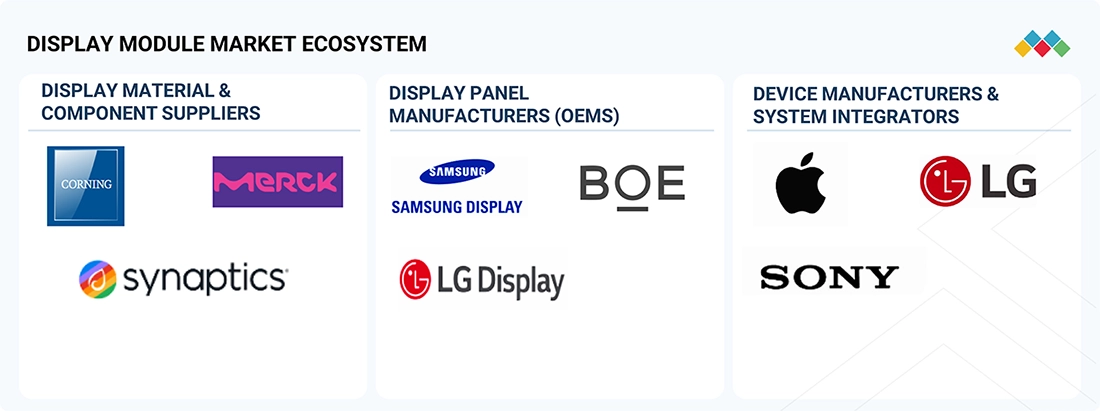
Logos and trademarks shown above are the property of their respective owners. Their use here is for informational and illustrative purposes only.
MARKET SEGMENTS
Source: Secondary Research, Interviews with Experts, MarketsandMarkets Analysis
Optical Display Module Market, by Display Technology
LCD-based display modules hold the largest share of the display module market owing to their cost-effectiveness, well-established manufacturing ecosystem, high production volumes, and extensive adoption across televisions, monitors, laptops, smartphones, digital signage, automotive displays, and industrial equipment. While OLED, Mini-LED, and Micro-LED display modules are gaining traction in premium applications, LCD display modules continue to dominate high-volume and cost-sensitive segments by offering an optimal balance of performance, reliability, and affordability.
Display Module Market, by Product Type
Non-optical display modules hold the largest share of the display module market due to their widespread adoption across consumer electronics, automotive, industrial equipment, medical devices, and commercial displays. Technologies such as LCD, OLED, Mini-LED, and Micro-LED offer superior image quality, energy efficiency, and design flexibility, making them the preferred choice for smartphones, televisions, laptops, monitors, and digital signage. Continuous advancements in display resolution, brightness, refresh rates, and power efficiency further strengthen the dominance of non-optical display modules across both consumer and industrial applications.
Display Module Market, by End-use Industry
Consumer electronics hold the largest share of the display module market due to the high production volumes of smartphones, televisions, laptops, tablets, monitors, smartwatches, and gaming devices. Growing consumer demand for high-resolution, energy-efficient, and premium displays has accelerated the adoption of advanced display modules such as LCD, OLED, and Mini-LED across these devices. Frequent product launches, shorter device replacement cycles, and continuous innovations in display quality further reinforce the dominance of the consumer electronics segment in the global display module market.
Display Module Market, by Display Size
Display modules larger than 9 inches hold the largest share of the display module market in 2025 due to their extensive use in televisions, monitors, laptops, automotive infotainment systems, digital signage, and industrial control panels. The increasing demand for larger, high-resolution displays in both consumer and commercial applications, coupled with the adoption of advanced technologies such as OLED, Mini-LED, and high-refresh-rate LCDs, continues to drive this segment. Additionally, the growing integration of large-format displays in smart vehicles and enterprise environments further strengthens the market dominance of display modules exceeding 9 inches.
REGION
Asia Pacific is expected to be the fastest-growing region in the global display module market during the forecast period.
Asia Pacific holds the largest share of the display module market due to the strong presence of leading display panel manufacturers, well-established electronics manufacturing hubs, and an extensive cross-country supply chain, including China, South Korea, Japan, and Taiwan. The region benefits from high production volumes of smartphones, televisions, laptops, and automotive displays, supported by growing consumer demand and continuous investments in OLED, Mini-LED, and Micro-LED technologies. Favorable government policies, lower manufacturing costs, and increasing exports of display modules further reinforce Asia Pacific's market leadership.
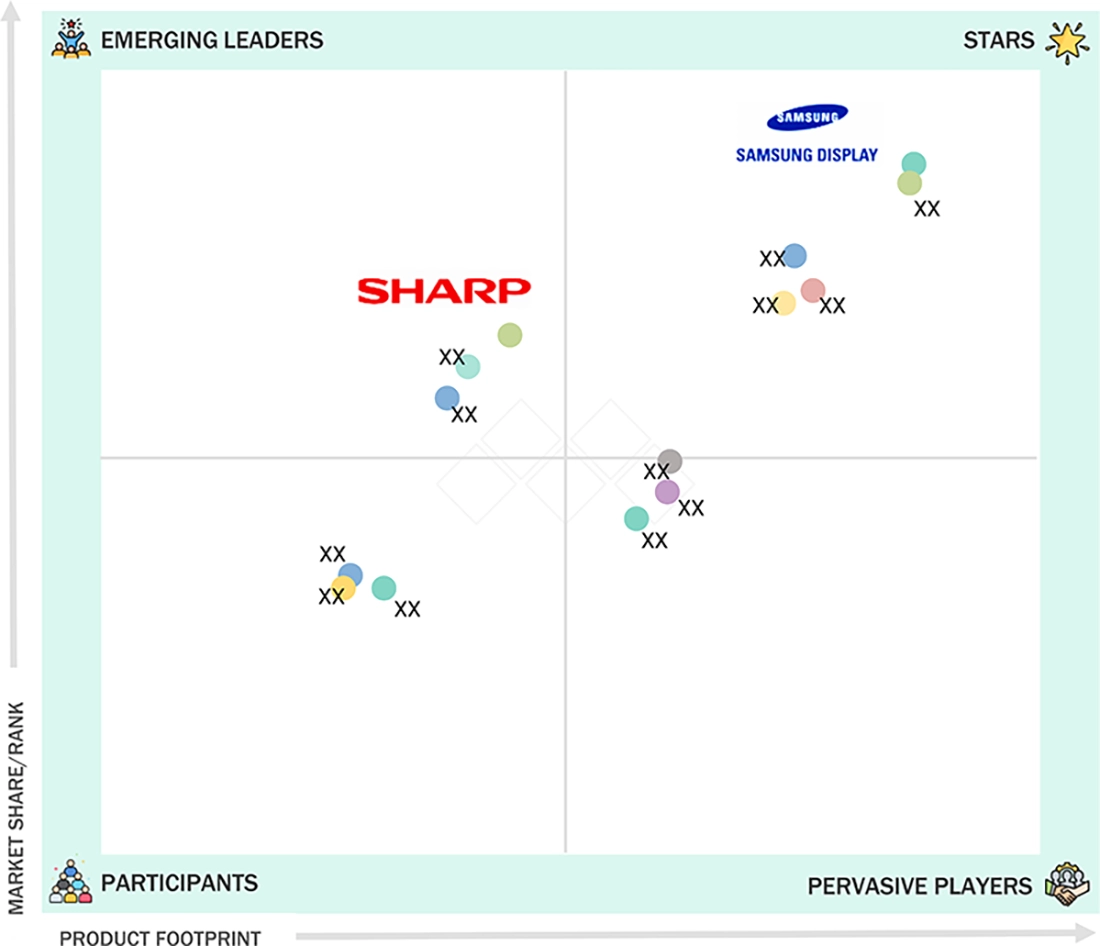
DISPLAY MODULE MARKET: COMPANY EVALUATION MATRIX
Samsung Display is a star player in the display module market owing to its leadership in OLED technologies, large-scale manufacturing capabilities, and continuous innovation in next-generation displays. In contrast, Sharp Corporation is emerging as a leader by expanding its presence in high-value segments such as automotive, industrial, and large-format displays, leveraging its expertise in advanced display technologies and niche applications.
Source: Secondary Research, Interviews with Experts, MarketsandMarkets Analysis
KEY MARKET PLAYERS
- Samsung Display (South Korea)
- LG Display (South Korea)
- BOE Technology Group (China)
- AUO Corporation (Taiwan)
- Innolux Corporation (Taiwan)
- Sharp Corporation (Japan)
- Tianma Microelectronics (China)
- Sony Group Corporation (Japan)
- Japan Display Inc. (Japan)
- Visionox (China)
WHAT IS IN IT FOR YOU: DISPLAY MODULE MARKET REPORT CONTENT GUIDE
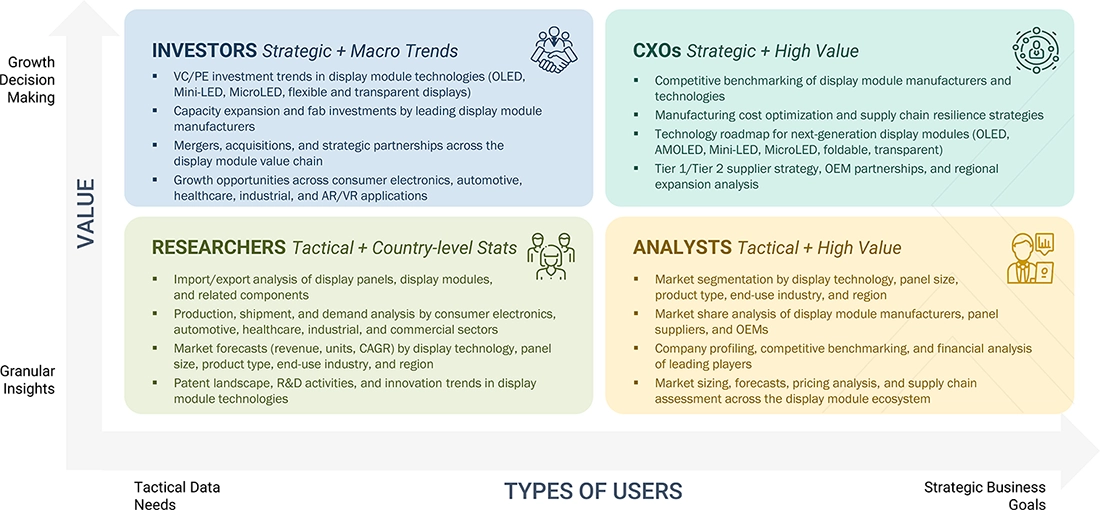
DELIVERED CUSTOMIZATIONS
We have successfully delivered the following deep-dive customizations:
| CLIENT REQUEST | CUSTOMIZATION DELIVERED | VALUE ADDS |
|---|---|---|
| Display module manufacturer/Panel OEM |
|
Identified high-growth technology segments, capacity expansion opportunities, and competitive positioning strategies to strengthen market share |
| Consumer electronics OEM (Smartphones, TVs, Laptops, Wearables) | Assessed display module sourcing strategies, supplier landscape, technology adoption trends, and cost-performance trade-offs across smartphones, televisions, laptops, tablets, and wearable devices | Recommended supplier diversification strategies and next-generation display technology adoption to optimize product differentiation and supply chain resilience |
| Automotive OEM/Tier-1 Supplier | Evaluated the adoption of automotive display modules for digital instrument clusters, infotainment systems, central control displays, passenger displays, and head-up displays (HUDs), including supplier benchmarking and regional demand analysis | Identified emerging opportunities in connected, electric, and software-defined vehicles while benchmarking automotive display innovations and regulatory requirements |
| Material supplier/Display component manufacturer |
|
Mapped the display ecosystem, identified supply chain risks, localization opportunities, and strategic partnerships with leading panel manufacturers and device OEMs |
| Investment firm/Private equity/Strategic investor | Performed market attractiveness assessment covering technology evolution, regional manufacturing hubs, competitive intensity, M&A activity, and investment opportunities across the display module value chain | Identified high-growth investment areas, emerging display technologies, and potential acquisition targets with strong long-term revenue potential |
RECENT DEVELOPMENTS
- August 2026 : Minda Instruments, a subsidiary of Minda Corporation, received government approval under the Electronics Components Manufacturing Scheme (ECMS) to manufacture TFT Display Module Sub-Assemblies. The company will establish a greenfield facility to localize display manufacturing and reduce import dependence. The facility will support Minda’s existing instrument-cluster business while also supplying external automotive OEMs. The move strengthens backward integration and supply-chain resilience across India’s automotive electronics ecosystem. Minda Corporation is expanding its capabilities in advanced vehicle displays and intelligent cockpit electronics.
- August 2026: LG Display unveiled FLiPP (FMM-Less innovative Pixel Patterning), a new OLED pixel-patterning technology that replaces conventional fine metal masks with photolithography and UV-based patterning. LG Display says the process enables 1.6× higher brightness, 2.4× longer panel lifespan and 13% lower power consumption while providing greater flexibility in display size and resolution. The technology is planned initially for IT displays such as tablets and monitors and represents a significant advancement in next-generation OLED display-panel manufacturing.
- June 2026: Sharp Corporation announced a new 40.5-inch ePoster display module, extending its low-power reflective-display portfolio into large-format applications designed as alternatives to printed posters. The module follows the ISO A1 poster standard and is intended for high-visibility applications while maintaining the low-power characteristics of Sharp’s reflective display technology. The launch is a direct new-product development in display modules.
- June 2026: BOE Technology Group launched China’s first Gen 8.6 AMOLED production line, marking the transition of its high-end mid-size OLED technology from development to mass production. The new line is designed to manufacture advanced OLED products for applications including laptops and tablets, strengthening BOE’s ability to scale high-end display production. The development directly expands BOE’s manufacturing capabilities for next-generation display modules and panels.
- May 2026: Tianma Microelectronics showcased advanced display technologies at SID Display Week 2026, including Oxide LCD, AM-OLED and high-refresh-rate display solutions for notebooks, tablets, industrial, medical and gaming applications. The company highlighted new display architectures focused on higher refresh rates, lower power consumption and enhanced 2D/3D visualization, reflecting continued development of advanced display solutions and modules across multiple applications.
Table of Contents
 Exclusive indicates content/data unique to MarketsandMarkets and not available with any competitors.
Methodology
The study involved four major activities in estimating the current size of the display module market. Exhaustive secondary research was conducted to gather information on the market, adjacent markets, and the overall high-end refractometer landscape. These findings, along with assumptions and projections, were validated through primary research involving interviews with industry experts and key stakeholders across the value chain. Both top-down and bottom-up approaches were utilized to estimate the overall market size. Subsequently, market breakdown and data triangulation techniques were applied to determine the sizes of various segments and subsegments. Two key sources, secondary and primary, were leveraged to conduct a comprehensive technical and commercial assessment of the display module market.
Secondary Research
The secondary research process referred to various secondary sources to identify and collect necessary information for this study. The secondary sources included annual reports, press releases, and investor presentations of companies; white papers; journals and certified publications; and articles from recognized authors, websites, directories, and databases. Secondary research was conducted to obtain key information about the industry’s supply chain, the market’s value chain, the total pool of key players, market segmentation according to the industry trends (to the bottom-most level), regional markets, and key developments from market- and technology-oriented perspectives. The secondary data was collected and analyzed to determine the overall market size, which is further validated through primary research.
Primary Research
Extensive primary research was conducted after gaining knowledge about the current scenario of the display module market through secondary research. Several primary interviews were conducted with experts from the demand and supply sides across five major regions—North America, Europe, Asia Pacific, and the RoW. This primary data was collected through questionnaires, emails, and telephonic interviews.
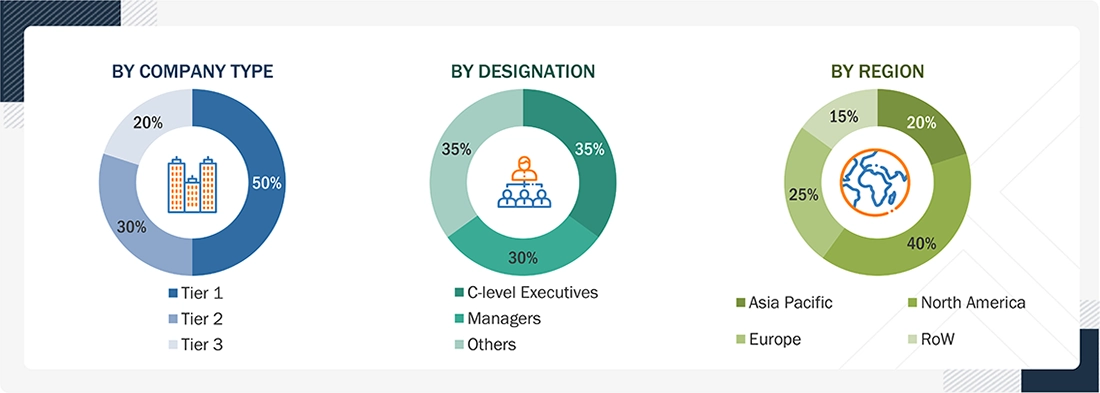
Notes: The three tiers of companies have been defined based on their total revenue as of 2025. The categorization given below has been applied:
To know about the assumptions considered for the study, download the pdf brochure
Market Size Estimation
In the complete market engineering process, top-down and bottom-up approaches and several data triangulation methods were used to estimate and forecast the overall market segments and subsegments listed in this report. Key players in the market were identified through secondary research, and their market shares in the respective regions were determined through primary and secondary research. This entire procedure included the study of annual and financial reports of the top market players and extensive interviews for key insights (quantitative and qualitative) with industry experts (CEOs, VPs, directors, and marketing executives).
All percentage shares, splits, and breakdowns were determined using secondary sources and verified through primary sources. All the parameters affecting the markets covered in this research study were accounted for, viewed in detail, verified through primary research, and analyzed to obtain the final quantitative and qualitative data. This data was consolidated and supplemented with detailed inputs and analysis from MarketsandMarkets and presented in this report.
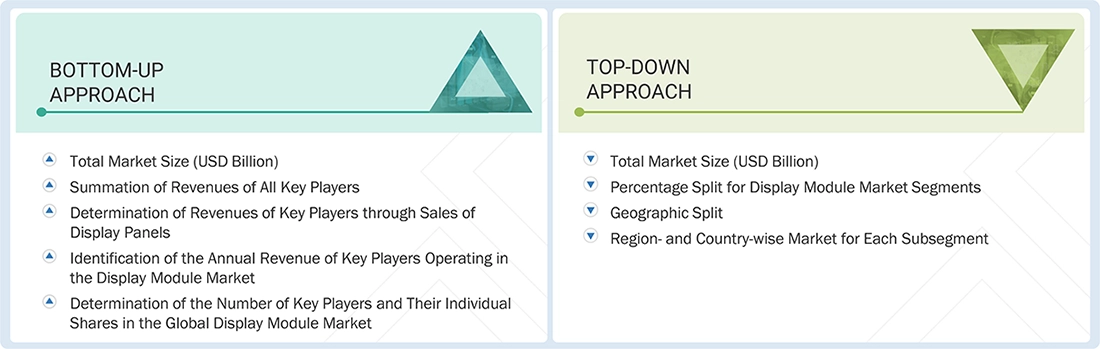
- Approach to arrive at market size using bottom-up analysis (demand side)
- Companies offering display panels were identified, and their offerings were mapped based on technology and panel size footprint.
- The global display module market size was derived through the data sanity method. The revenues of display panel providers were analyzed through annual reports and press releases and summed up to derive the overall market size.
- For each company, a percentage was assigned to the overall revenue to derive the revenues from display panels.
- Each company’s percentage was assigned after analyzing various factors, including its product offerings, geographic presence, R&D expenditures and initiatives, and recent developments/strategies adopted for growth in the display module market.
- For the CAGR, the market trend analysis of display panels was carried out by understanding the industry penetration rate and the demand and supply of display panels to different verticals.
- Estimates at every level were verified and cross-checked by discussing them with key opinion leaders, including sales heads, directors, operations managers, and market domain experts of MarketsandMarkets.
- Various paid and unpaid information sources, such as annual reports, press releases, white papers, and databases, were studied.
The top-down approach was used to estimate and validate the total size of the display module market.
- Focusing initially on the top-line investments and expenditures being made in the ecosystem of displays, further splitting into display technology, product type, display size, end-use industry, and display resolution, and listing key developments in key market areas
- Identifying all major players in the display module market and their product portfolio for various verticals through secondary research, as well as verifying with a brief discussion with industry experts
- Analyzing revenues, product mix, geographic presence, and key verticals for which all identified players serve, display products/technologies to estimate and arrive at the percentage splits for all key segments
- Discussing these splits with the industry experts to validate the information and identify key growth pockets across all key segments
- Breaking down the total market based on verified splits and key growth pockets across all segments
The market size was arrived at using the following approaches:
Data Triangulation
After estimating the overall market size, the label identification market was classified into subsegments. The overall market engineering process was finalized through data triangulation and market segmentation, yielding accurate statistics for all segments and subsegments. This triangulation involved analyzing various trends and factors on both the demand and supply sides. Furthermore, label identification market data were verified and validated using both top-down and bottom-up approaches.
Market Definition
The label identification market comprises technologies, instruments, software, and consumables used to accurately identify, authenticate, and track biological, chemical, and material samples in laboratory environments. These technologies include barcode and RFID systems, laboratory information management systems (LIMS), sample labeling and tracking solutions, molecular identification technologies, microbial identification systems, and automated data management platforms. Label identification is widely used across pharmaceutical and biotechnology companies, clinical and diagnostic laboratories, academic and research institutes, food and beverage testing, environmental testing, and forensic laboratories to improve sample traceability, workflow efficiency, regulatory compliance, data integrity, and the accuracy of analytical and diagnostic results.
Key Stakeholders
- Research & Development Directors
- Analytical Laboratory Managers
- Scientists
- Quality Control (QC) Managers
- Quality Assurance (QA) Directors
- Procurement Managers
- Supply Chain Managers
- Bioprocessing Managers
- Manufacturing Operations Directors
- Clinical Research Managers
- Product Development Scientists
- Regulatory Affairs Managers
- Laboratory Directors
- Sales & Marketing Directors
- CRO/CDMO Operations Managers
Report Objectives
- To define, describe, and forecast the size of the label identification market based on product type, technology, application, and region
- To provide detailed information regarding the factors influencing the growth potential of the global label identification market (drivers, restraints, opportunities, challenges, and trends)
- To analyze micromarkets with respect to individual growth trends, prospects, and contributions to the global label identification market
- To analyze key growth opportunities in the global label identification market for key stakeholders and provide details of the competitive landscape for market leaders
- To forecast the size of market segments and/or subsegments concerning five regions, namely, North America (US and Canada), Europe (Germany, France, the UK, Spain, Italy, and the Rest of Europe), Asia Pacific (Japan, China, India, Australia, South Korea, and the Rest of Asia Pacific), Latin America (Brazil, Mexico, and the Rest of Latin America), and the Middle East & Africa (GCC Countries and the Rest of Middle East & Africa)
- To profile the key players in the label identification market and comprehensively analyze their market shares and core competencies
- To track and analyze the competitive developments undertaken in the global label identification market, such as product launches/approvals, agreements, expansions, collaborations, and acquisitions.
Available customizations:
With the market data given, MarketsandMarkets offers customizations according to the company’s specific needs. The following customization options are available for the report:
Company Information:
- Detailed analysis and profiling of additional market players (up to five)
Key Questions Addressed by the Report
What is the current and projected size of the global display module market?
The global display module market is estimated to reach USD 159.81 billion by 2032 from USD 136.91 billion in 2026, at a CAGR of 2.6% during the forecast period.
What is the expected growth rate of the display module market?
The display module market is projected to grow at a CAGR of 2.6% from 2026 to 2032, supported by increasing demand for advanced display technologies across consumer electronics, automotive, and industrial applications.
What are the key growth drivers of the display module market?
Major growth drivers include rising demand for smartphones and tablets, increasing adoption of OLED and MicroLED displays, expanding automotive digital cockpit applications, growth in smart consumer devices, and advancements in display manufacturing technologies.
Which industries are the major end users of display modules?
Display modules are widely used in consumer electronics, automotive, healthcare, industrial equipment, retail, aerospace & defense, gaming, and smart home devices, where high-performance visual interfaces are essential.
Which region dominates the display module market?
Asia Pacific is expected to dominate the display module market due to the presence of leading display manufacturers, large-scale electronics production, and strong demand from countries such as China, South Korea, Japan, and Taiwan.
Which region is expected to witness the fastest growth in the display module market?
Asia Pacific is also anticipated to register the fastest growth, driven by increasing investments in display manufacturing, expanding semiconductor ecosystems, and rising demand for advanced consumer electronics and electric vehicles.
Who are the leading companies operating in the display module market?
Key players include Samsung Display, LG Display, BOE Technology Group, AUO Corporation, Innolux Corporation, Japan Display Inc. (JDI), Sharp Corporation, Tianma Microelectronics, Visionox, and Truly International Holdings.
What are the latest trends shaping the display module market?
Key trends include the growing adoption of OLED, Mini-LED, MicroLED, foldable and flexible displays, high-refresh-rate panels, energy-efficient display technologies, and AI-enabled smart displays across multiple industries.
What challenges could impact the growth of the display module market?
Challenges include high manufacturing costs for advanced display technologies, supply chain disruptions, fluctuating raw material prices, intense pricing competition, and the complexity of scaling next-generation display production.
What does the MarketsandMarkets display module market report analyze?
The MarketsandMarkets report provides detailed analysis of the market size (USD 136.91 billion in 2026 to USD 159.81 billion by 2032), CAGR (2.6%), market trends, growth drivers, restraints, opportunities, technology analysis, segmentation by display technology and application, regional outlook, competitive landscape, and profiles of leading companies.


Personalize This Research
- Triangulate with your Own Data
- Get Data as per your Format and Definition
- Gain a Deeper Dive on a Specific Application, Geography, Customer or Competitor
- Any level of Personalization
Let Us Help You
- What are the Known and Unknown Adjacencies Impacting the Display Module Market
- What will your New Revenue Sources be?
- Who will be your Top Customer; what will make them switch?
- Defend your Market Share or Win Competitors
- Get a Scorecard for Target Partners

Custom Market Research Services
We Will Customise The Research For You, In Case The Report Listed Above Does Not Meet With Your Requirements
Get 10% Free CustomisationTESTIMONIALS

Tetsuya Ohhira
Business Development Manager-Technology Business
Nikon Corporation,
Leading Japanese MNC specializing in optics and imaging productswww.nikon.com
MarketsandMarkets™ response
is quick. Their attitude is flexible and positive. Analyst Insights are globally considered and
significant. Client Services quickly respond to our inquiry and demand. Their wide range of global
surveys help us make our strategic plan.
We hope Knowledge Store will be easier to search
for a report.
VP - Marketing & Business Development
Leading Provider of Process Control Solutions
We engaged with MarketsandMarkets on a study to perform an analysis and recommend a Go-To-Market strategy for metrology and process control in the semiconductor market. The study was tailored to our targets and needs with well-defined milestones. Our overall experience with the MarketsandMarkets team was very good throughout the project in all aspects including the analysis methodologies used, the quality and depth of primary and secondary data sets, the professionalism and flexibility of the team and the ability to meet the target schedule and milestones. We want to thank MarketsandMarkets team for a job well done.
- US Display Module Market
- Canada Display Module Market
- Mexico Display Module Market
- Germany Display Module Market
- UK Display Module Market
- France Display Module Market
- Italy Display Module Market
- China Display Module Market
- Japan Display Module Market
- South Korea Display Module Market
- Taiwan Display Module Market
- India Display Module Market
- Rest Of Europe Display Module Market
- Rest Of Asia Pacific Display Module Market
- GCC Countries Display Module Market






Growth opportunities and latent adjacency in Display Module Market