Dry Shampoo Market

Dry Shampoo Market by Product Form (Spray/Aerosol, Powder) By Function (Daily Care/Refresh, Anti-Dandruff, Color Protection), by Distribution Channel (Store Based, Non-Store Based), End User (Individual Consumers, Professional/Salon Use) And Region - Global Forecast to 2030




DRY SHAMPOO MARKET

Source: Secondary Research, Interviews with Experts, MarketsandMarkets Analysis | Updated on : September 16, 2026
The Dry Shampoo Market is projected to grow from USD 4.4 billion in 2025 to USD 5.4 billion by 2030, registering a CAGR of 4.3% from 2025 to 2030. The market is growing as people demand hair care products that work quickly and require little effort. With the expansion of urban areas, people increasingly seek personal grooming products they can use at any time throughout the day. Dry shampoo allows users to wash their hair without water, extending the time between standard hair-washing sessions and reducing the time needed for hairstyling, which suits people on tight schedules, frequent travelers, and business travelers. The growing power of social media platforms, along with beauty influencers and public awareness of scalp and hair health, has created an environment that supports the adoption of dry shampoo.
KEY TAKEAWAYS
-
By RegionEurope dominated the dry shampoo market with a share of 31.3%, in terms of value, in 2024.
-
By Product FormThe spray/aerosol segment dominates the dry shampoo market by product form with a market share of 68.7%, in terms of value, in 2024.
-
By FunctionBased on function, the multi-function segment is projected to register the highest CAGR of 6.2% in the dry shampoo market during the forecast period.
-
By End UserThe individual consumers segment holds the highest market share of 91.8% , in terms of value, during the forecast period.
-
By Distribution ChannelBased on distribution channel, the subscription services segment is projected to register the highest CAGR of 10.3% in the dry shampoo market during the forecast period.
-
COMPETITIVE LANDSCAPE- KEY PLAYERSCompanies such as Unilever PLC, Procter & Gamble, and L'Oréal S.A. were identified as some of the star players in the dry shampoo market, given their strong market share and product footprint.
-
COMPETITIVE LANDSCAPE- STARTUPSAmika, Moroccanoil, and Juicy Chemistry, among others, have distinguished themselves among startups and SMEs by securing strong footholds in specialized niche areas, underscoring their potential as emerging market leaders.
The dry shampoo market is experiencing continuous growth driven by changing consumer lifestyles and urbanization. There is increasing demand for personal grooming and hygiene products. The increasing number of women entering the workforce and their busy lifestyles is fueling the adoption of convenient haircare solutions. The popularity of social media platforms, beauty influencers, and digital marketing campaigns increases product recognition in the beauty and personal care industry. Continuous product development through new formulations that create products that protect scalp health, eliminate sulfates, and feature natural ingredients and color protection capabilities supports market growth.
TRENDS & DISRUPTIONS IMPACTING CUSTOMERS' CUSTOMERS
The dry shampoo market is expanding as people increasingly use dry shampoo products for daily grooming, travel, fitness, and professional hairstyling. The industry is witnessing continuous scientific research to develop new product formulas that offer better oil-absorbing technologies, more precise aerosol distribution systems, and color-changing powders that leave no residue. Market evolution is further shaped by stricter environmental and safety regulations, which limit aerosol propellant use and require ingredient disclosure, thereby driving the transition to non-aerosol products that meet clean-label, talc-free, and biodegradable standards. Sustainability requirements mandate the adoption of eco-friendly propellants, the use of refillable or recyclable packaging, and the implementation of water-saving beauty concepts. The market is changing through supply chain realignments, premiumization trends, and increased spending on research and development dedicated to scalp health products that dermatologists test and that produce low irritation.

Source: Secondary Research, Interviews with Experts, MarketsandMarkets Analysis
MARKET DYNAMICS

Level
-
Rising demand for convenience and time-saving hair care solutions

-
Growing influence of social media, beauty influencers, and digital marketing


Level
-
Concerns related to product safety and ingredient scrutiny

-
Preference for traditional wet shampoos in price-sensitive and rural markets


Level
-
Expansion of clean-label, natural, and sustainable product offerings

-
Growth of e-commerce and direct-to-consumer (DTC) channels


Level
-
Increasing regulatory pressure on aerosol formulations and cosmetic ingredients

-
Intense competition and brand proliferation

Source: Secondary Research, Interviews with Experts, MarketsandMarkets Analysis
Driver: Rising demand for convenience and time-saving hair care solutions
The dry shampoo market is expanding as customers demand haircare products that offer quick, simple solutions for their fast-paced, active lifestyles. New hair-washing habits have emerged among working professionals and students who face challenges posed by rapid urban growth and longer workdays. Dry shampoo lets users refresh their hair quickly without washing. The product offers quick, simple operation, making it ideal for travelers who go to the gym and for people with packed schedules. People now use dry shampoo as an essential product as they prefer to use beauty products that require less time to apply and need minimal maintenance. The product strengthens its value proposition through its ability to prolong hairstyle duration while providing volume and decreasing heat and water consumption. There is a growing trend toward portable packaging for water-saving products, leading to greater acceptance in both urban and semi-urban areas. The dry shampoo product has become a necessary element of contemporary hair care practices, as customers now prefer products that deliver quick, effective results.
Restraint: Concerns related to product safety and ingredient scrutiny
Increased public knowledge about health hazards from aerosol propellants, talc contamination, and specific chemical substances has led to greater distrust among consumers who prioritize health and environmental protection. The combination of regulatory recalls, media coverage, and social media discussions about scalp irritation, hair buildup, and clogged follicles and inhalation dangers has decreased consumer trust and damaged brand reputation. The implementation of stricter cosmetic safety regulations and mandatory labeling standards across multiple regions has resulted in higher compliance costs for manufacturers, while their product development process becomes longer. These factors make it harder to develop innovative products. Dermatologists and haircare professionals advise against excessive product use. Potential customers become more hesitant, and they continue using conventional wet shampoos. The growing importance of ingredient transparency as a purchasing factor will lead to brands facing slow customer acceptance and decreased repeat sales as they fail to provide safe products with clean formulas and transparent safety information.
Opportunity: Expansion of clean-label, natural, and sustainable product offerings
The dry shampoo market will experience substantial growth as consumers increasingly demand beauty products that are safe to use, provide transparent product information, and contain environmentally friendly ingredients. Brands are reformulating their products to use plant-based absorbents, biodegradable ingredients, and dermatologically tested formulations. Clean-label positioning establishes consumer trust through its transparent ingredient disclosure system and certification process, which enables companies to charge higher prices for their products. Environmental sustainability factors, such as recyclable or refillable packaging, eco-friendly propellants, and water-saving beauty concepts, make dry shampoo products more appealing to consumers who care about environmental issues. Natural vegan non-aerosol product formats allow manufacturers to create unique product lines that let them reach new customers who have sensitive scalps. Clean innovation based on sustainable practices will drive business growth as regulatory pressure and consumer scrutiny lead to increased brand loyalty in both developed and emerging markets.
Challenge: Increasing regulatory pressure on aerosol formulations and cosmetic ingredients
The dry shampoo market faces major difficulties as governments and regulatory bodies establish stricter safety standards and environmental protection requirements for aerosol products and cosmetic ingredients. Regulations that target volatile organic compounds (VOCs), aerosol propellants, and dangerous substances, such as talc contaminants and certain preservatives, force manufacturers to change their product formulas and evaluate their raw-material choices. The need to comply with multiple regional cosmetic regulations, including ingredient restrictions, labeling standards, and testing methods, creates challenges that lead to higher costs and longer product development timelines. The existing pressures affect innovation, delay product introduction, and restrict the distribution of aerosol products in certain geographical areas. The changing regulatory environment requires manufacturers to achieve compliance while maintaining product performance and controlling costs.
DRY SHAMPOO MARKET: COMMERCIAL USE CASES ACROSS INDUSTRIES
| COMPANY | USE CASE DESCRIPTION | BENEFITS |
|---|---|---|
 |
Develops and markets dry shampoo products under mass and premium personal care brands, targeting everyday consumers seeking quick hair refresh solutions; Focuses on high-volume retail distribution through supermarkets, pharmacies, and e-commerce platforms, supported by strong marketing and global reach | Broad consumer accessibility, affordability, strong brand trust, fast-moving consumer adoption, and scalable product launches across regions |
 |
Supplies dry shampoo products positioned around performance, scalp care, and hair health, leveraging advanced formulation science and consumer insights; Commercial strategy emphasizes innovation-led differentiation and omnichannel penetration in developed and emerging markets | Consistent product performance, strong R&D-backed claims, high consumer loyalty, and efficient global supply chain execution |
 |
Offers dry shampoo solutions across mass, premium, and professional segments, catering to consumers and salon professionals; Focuses on styling benefits, color-safe formulations, and premiumization, supported by strong influencer and salon partnerships | Premium brand positioning, professional endorsement, advanced formulations, high margins, and strong presence in salon and specialty retail channels |
 |
Markets dry shampoo products primarily through professional haircare and selective consumer brands, targeting salon use and style-conscious consumers; Emphasizes styling performance, lightweight feel, and residue-free formulations | Strong professional credibility, styling-focused benefits, differentiation through salon heritage, and loyal stylist-driven demand |
 |
Commercializes dry shampoo products under value-driven and performance-oriented brands, focusing on mass-market consumers; Strategy centers on cost-effective formulations, high retail visibility, and repeat usage | Competitive pricing, strong retail penetration, high volume sales, brand familiarity, and consistent demand from everyday consumers |
Logos and trademarks shown above are the property of their respective owners. Their use here is for informational and illustrative purposes only.
MARKET ECOSYSTEM
The dry shampoo market ecosystem is structured around integrated personal care ingredient suppliers, contract manufacturers, and global beauty and FMCG companies that formulate and market aerosol and non-aerosol dry shampoo products using oil-absorbing agents, fragrances, conditioning polymers, and propellants. The advanced blending, together with filling and packaging procedures, transforms these formulations into sprays, powders, foams, and wipes that people use to refresh and style their hair. The strong beauty and personal care infrastructure, high consumer awareness, digital marketing impact, and changing regulatory and sustainability standards are driving the production and consumption of dry shampoo in North America, Europe, and Asia Pacific.

Logos and trademarks shown above are the property of their respective owners. Their use here is for informational and illustrative purposes only.
MARKET SEGMENTS

Source: Secondary Research, Interviews with Experts, MarketsandMarkets Analysis
Dry Shampoo Market, By Product Form
The dry shampoo market is segmented by product form into spray/aerosol, powder, and other formats. The spray/aerosol segment accounts for the largest share of the overall market, as it offers ease of application and fast oil absorption. Urban consumers and professionals prefer aerosol formats because they offer high convenience, create minimal mess, and deliver immediate styling results. Eco-conscious users are increasingly adopting powders and other formats, but aerosol products remain dominant due to their widespread availability and strong brand recognition.
Dry Shampoo Market, By Function
The dry shampoo market is segmented by function into daily care/refresh, anti-dandruff, color protection, hair loss prevention, and multi-function. Daily care/refresh products lead the market, as people use dry shampoo to quickly clean their hair and restore its appearance between scheduled hair washes. The product has become an essential part of daily personal grooming, as it provides oil absorption, freshness restoration, and volume enhancement.
Dry Shampoo Market, By Distribution Channel
The dry shampoo market is segmented by distribution channel into store-based and non-store-based channels. The store-based channels lead the market as customers prefer to buy personal care products from supermarkets, hypermarkets, pharmacies, and specialty beauty stores. Physical retail allows consumers to compare brands, check ingredient lists, and take advantage of in-store promotions and discounts. The presence of products on store shelves creates opportunities for customers to make unplanned purchases, thereby increasing revenue. The primary sales channel for international markets currently operates through store-based retailing, despite online channels experiencing rapid growth.
Dry Shampoo Market, By End User
The dry shampoo market is segmented by end user into two categories: individual consumers and professional/salon use. The market is mainly dominated by individual consumers who use dry shampoo for their personal grooming and daily hair maintenance at home. Individual consumption is increasing as products are easily accessible through both retail stores and online shopping platforms. The market for the professional use segment is driven by hairstyling and special occasions in salons.
REGION
The South America to be fastest-growing region in dry shampoo market during forecast period
South America is projected to be the fastest-growing market for dry shampoo globally. The market in the region is driven by the expansion of urban areas, changing lifestyles, and increased awareness of new haircare solutions. The demand for quick and effective beauty solutions in Brazil, Argentina, and Colombia is increasing as more people enter the middle class and more women join the workforce. The popularity of social media platforms and beauty influencers, along with the development of global haircare brands, supports the market growth. The development of organized retail stores, pharmacies, and e-commerce platforms improves product access for consumers in urban and semi-urban areas. People in South America are adopting new products as international brands enter the market and prices become more affordable.

DRY SHAMPOO MARKET: COMPANY EVALUATION MATRIX
Church & Dwight Co., Inc. (Star) has established a competitive advantage in the global dry shampoo market through its well-known mass-market brands and wide distribution to multiple retail outlets. The company is dedicated to creating effective yet inexpensive hair products. The company achieves its sales success through three factors: customers' ability to recall its brand name, efficient supply chain, and its products' presence in supermarkets, pharmacies, and online shopping sites. Henkel AG & Co. KGaA (Emerging Player) uses its professional hair care expertise, together with its research & development capacity and salon-oriented product lines, to develop its business. Through premium, styling-oriented, and residue-free formulations, combined with selective premiumization and professional endorsements, Henkel is strengthening its competitiveness and positioning itself as a fast-growing emerging player in the global dry shampoo market.

Source: Secondary Research, Interviews with Experts, MarketsandMarkets Analysis
KEY MARKET PLAYERS
- 1. Unilever PLC (UK)
- 2. Procter & Gamble (US)
- 3. L'Oréal S.A. (France)
- 4. Henkel AG & Co. KGaA (Germany)
- 5. Church & Dwight Co., Inc. (US)
- 6. Kao Corporation (Japan)
- 7. The Estée Lauder Companies Inc. (US)
- 8. Shiseido Company, Limited (Japan)
- 9.Wella Company (Switzerland)
- 10. Revlon (US)
MARKET SCOPE
| REPORT METRIC | DETAILS |
|---|---|
| Market Size in 2025 (Value) | USD 4.35 Billion |
| Market Forecast in 2030 (value) | USD 5.37 Billion |
| Growth Rate | CAGR of 4.3% from 2025-2030 |
| Years Considered | 2021-2030 |
| Base Year | 2024 |
| Forecast Period | 2025–2030 |
| Units Considered | Value (USD Billion) |
| Report Coverage | Revenue forecast, company ranking, competitive landscape, growth factors, and trends |
| Segments Covered |
|
| Regions Covered | North America, Asia Pacific, Europe, South America, Middle East & Africa |
WHAT IS IN IT FOR YOU: DRY SHAMPOO MARKET REPORT CONTENT GUIDE

DELIVERED CUSTOMIZATIONS
We have successfully delivered the following deep-dive customizations:
| CLIENT REQUEST | CUSTOMIZATION DELIVERED | VALUE ADDS |
|---|---|---|
| Demand for country-specific market insights | Provided detailed analysis of dry shampoo demand, penetration levels, pricing trends, consumer behavior, and regulatory frameworks across key countries in North America, Europe, South America, and Asia Pacific | Helps clients identify high-growth markets, assess regional demand drivers, and plan market entry or expansion strategies |
| Request for competitor benchmarking | Delivered a comparative assessment of leading dry shampoo manufacturers, covering brand portfolios, product positioning, distribution reach, pricing strategies, innovation focus, and recent developments | Enables strategic positioning, highlights competitive gaps, and identifies differentiation and growth opportunities |
| Product-form and function-specific insights | Provided insights across spray/aerosol, powder, and alternative formats, as well as functional segments such as daily refresh, anti-dandruff, color protection, and multifunctional products | Supports product portfolio optimization and alignment with high-demand segments and consumer preferences |
| Formulation and innovation support | Evaluated trends in clean-label, natural, talc-free, and non-aerosol formulations, including sustainability-driven packaging and ingredient innovations | Reduces time-to-market, supports innovation roadmaps, and strengthens compliance with evolving consumer and regulatory expectations |
| Regulatory and compliance assessment | Provided analysis of cosmetic regulations related to aerosol propellants, ingredient safety, labeling, and environmental standards across major regions | Ensures regulatory compliance, mitigates risk, and supports sustainable product development and commercialization strategies |
RECENT DEVELOPMENTS
- January 2024 : Henkel opened a new Asia R&D center for Consumer Brands in Shanghai with an investment of around USD 14.49 million.
- December 2023 : Unilever announced an agreement to acquire K18, a fast-growing premium biotech haircare brand founded in 2020, as part of its strategy to focus on higher-growth, science-led beauty segments.
- February 2023 : Unilever announced the sale of its Suave brand in North America to Yellow Wood Partners, aligning with its strategy to focus on higher-growth categories. Suave remains under Unilever’s ownership outside the US and Canada.
- October 2022 : Schwarzkopf Professional introduces SalonLab&Me, a hyper-personalized B2B2C hair care line (shampoo, conditioner, mask) with customization via salon tech, enabling tailored solutions such as custom oil control to address broader personalization trends.
- February 2022 : Henkel agreed to acquire Shiseido’s Asia Pacific Hair Professional business, adding premium salon brands such as Sublimic and Primience under a licensed Shiseido Professional trademark.
Table of Contents
 Exclusive indicates content/data unique to MarketsandMarkets and not available with any competitors.
Methodology
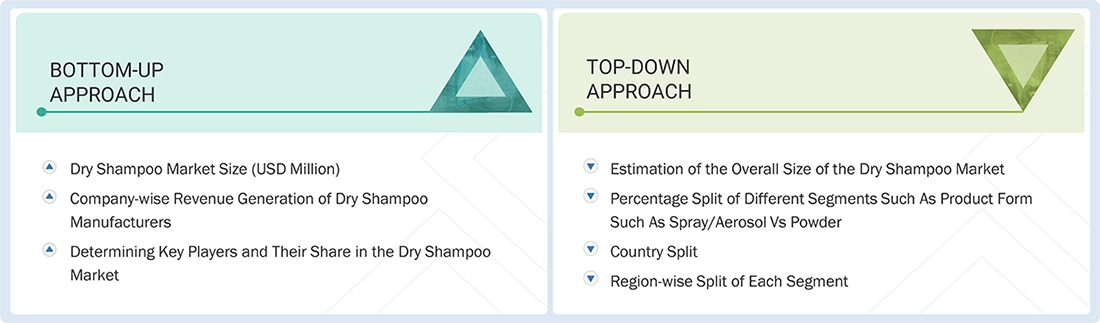
The study involves two major activities in estimating the current size of the dry shampoo market. Exhaustive secondary research was done to collect information on the market, peer market, and parent market. The next step was to validate these findings, assumptions, and sizing with industry experts across the value chain through primary research. Both top-down and bottom-up approaches were employed to estimate the complete market size. After that, market breakdown and data triangulation were used to estimate the market size of segments and subsegments.
Secondary Research
Secondary sources referred to for this research study include financial statements of companies offering dry shampoo and information from various trade, business, and professional associations. Secondary research has been used to obtain critical information about the industry's value chain, the total pool of key players, market classification, and segmentation according to industry trends to the bottom-most level and regional markets. Secondary data was collected and analyzed to arrive at the overall size of the dry shampoo market, which was validated by primary respondents.
Primary Research
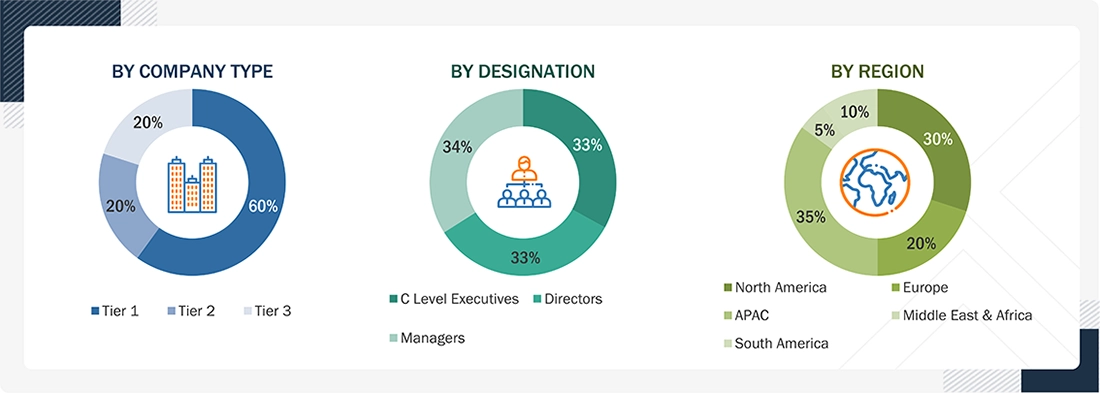
Extensive primary research was conducted after obtaining information regarding the dry shampoo market scenario through secondary research. Several primary interviews were conducted with market experts from both the demand and supply sides across major countries of North America, Europe, Asia Pacific, the Middle East & Africa, and South America. Primary data was collected through questionnaires, emails, and telephonic interviews. The primary sources from the supply side included various industry experts, such as Chief X Officers (CXOs), Vice Presidents (VPs), Directors from business development, marketing, product development/innovation teams, and related key executives from dry shampoo industry vendors; material providers; distributors; and key opinion leaders. Primary interviews were conducted to gather insights such as market statistics, data on revenue collected from the products and services, market breakdowns, market size estimations, market forecasting, and data triangulation. Primary research also helped in understanding the various trends related to product forms, functions, end users, distribution channels, and regions. Stakeholders from the demand side, such as CIOs, CTOs, CSOs, and customer/end users who are seeking dry shampoo, were interviewed to understand the buyer's perspective on the suppliers, products, and their current usage of dry shampoo.
Breakup of Primary Interviews:
To know about the assumptions considered for the study, download the pdf brochure
Market Size Estimation
The research methodology used to estimate the size of the dry shampoo market includes the following details. The market sizing of the market was undertaken from the demand side. The market was upsized based on the demand for dry shampoo in different end user segments at the regional level. This provides information on the demand aspects of the dry shampoo market for each end user. For each end user, all possible segments of the dry shampoo market were integrated and mapped.
Dry Shampoo Market : Top-Down and Bottom-Up Approach
Data Triangulation
After arriving at the overall size from the market size estimation process explained above, the total market was split into several segments and subsegments. The data triangulation and market breakdown procedures explained below were implemented, wherever applicable, to complete the overall market engineering process and arrive at the exact statistics for various market segments and subsegments. The data was triangulated by studying various factors and trends from the demand and supply sides. Along with this, the market size was validated using both the top-down and bottom-up approaches.
Market Definition
The dry shampoo market consists of haircare products that enable users to clean and refresh their hair through oil absorption, sweat absorption, and impurity removal from their scalp without using water. Dry shampoos come in spray and powder formats, which extend the duration between standard hair washing while they add hair volume and enhance hair texture. They serve customers who want grooming products that provide convenience, save time, and enable them to groom themselves while they travel. Dry shampoos provide two types of products: basic oil-absorbing dry shampoos and multifunctional variants that deliver multiple advantages, such as odor control, scalp care, color protection, and hair loss prevention.
Key Stakeholders
- Dry shampoo manufacturers
- Dry shampoo distributors and suppliers
- End-use industries
- Universities, governments, and research organizations
- Associations and industrial bodies
- R&D institutes
- Environmental support agencies
- Investment banks and private equity firms
- Research and consulting firms
Report Objectives
- To define, describe, and forecast the dry shampoo market size in terms of volume and value
- To provide detailed information regarding the key factors, such as drivers, restraints, opportunities, and challenges influencing the market growth
- To analyze and forecast the market by product form, function, distribution channel, end-user, and region
- To forecast the market size concerning five main regions (along with country-level data), namely, North America, Europe, Asia Pacific, the Middle East & Africa, and South America, and analyze the significant region-specific trends
- To strategically analyze micromarkets with respect to individual growth trends, prospects, and contributions of the submarkets to the overall market
- To analyze the market opportunities and the competitive landscape for stakeholders and market leaders
- To assess recent market developments and competitive strategies, such as agreements, contracts, acquisitions, partnerships & collaborations, and new product developments/new product launches, to draw the competitive landscape
- To strategically profile the key market players and comprehensively analyze their core competencies
Available customizations:
MarketsandMarkets offers the following customizations for this market report:
- Additional country-level analysis of the dry shampoo market
Product Analysis
- Product matrix, which provides a detailed comparison of the product portfolio of each company's market
Key Questions Addressed by the Report
What are the key applications of the Dry Shampoo Market?
The Dry Shampoo Market is widely used across industries such as automotive, construction, electronics, packaging, and industrial manufacturing where high-performance materials and components are essential.
What factors are driving the growth of the Dry Shampoo Market?
The growth of the Dry Shampoo Market is driven by rising industrial demand, expanding end-use industries, technological advancements, and increasing global manufacturing activities.
Which regions dominate the Dry Shampoo Market?
Asia-Pacific, North America, and Europe are major regions in the Dry Shampoo Market due to strong manufacturing bases, growing industrial infrastructure, and increasing investments in advanced materials.
Who are the major end-users in the Dry Shampoo Market?
Key end-users in the Dry Shampoo Market include automotive, aerospace, construction, electronics, consumer goods, and energy industries that require reliable and high-quality materials.
What challenges are affecting the Dry Shampoo Market?
Major challenges in the Dry Shampoo Market include fluctuating raw material prices, environmental regulations, supply chain disruptions, and the need for continuous innovation to stay competitive.


Personalize This Research
- Triangulate with your Own Data
- Get Data as per your Format and Definition
- Gain a Deeper Dive on a Specific Application, Geography, Customer or Competitor
- Any level of Personalization
Let Us Help You
- What are the Known and Unknown Adjacencies Impacting the Dry Shampoo Market
- What will your New Revenue Sources be?
- Who will be your Top Customer; what will make them switch?
- Defend your Market Share or Win Competitors
- Get a Scorecard for Target Partners

Custom Market Research Services
We Will Customise The Research For You, In Case The Report Listed Above Does Not Meet With Your Requirements
Get 10% Free CustomisationTESTIMONIALS
We at Nissan Chemicals Corporation have been clients of MarketsandMarkets for more than a year now. We recently consulted MarketsandMarkets for a study, the team at MarketsandMarkets was extremely professional and organized. The business insights were very detailed and aligned well with our expectations that really helped us formulate the Business Plans and device new strategies for development themes. MarketsandMarkets offers a unique combination of expertise and dedicated engagement model. Their research findings have helped us in designing our Pricing Strategy which will make it easier for us to predict the future sales and profits for the next ten years. We look forward to working with MarketsandMarkets in the future.
VP of Strategy & New Business Development
Leading Specialty Chemical Company
The MarketsandMarkets Engagement Model, composed of both the Knowledge Store and advisory custom research, has greatly helped us in understanding our markets and making strategic decisions. The Knowledge Store is a fast way to allow everyone in our organization to understand more about most any market they are interested in. The ability to then get custom research done and get answers to specific strategic questions and market insight has been spectacular. The Markets and Markets team feel more like colleagues than vendors and their services have helped us change our culture where statements of things like growth opportunities and competitive position are always backed by industry research.

Rich Gibson,
Director, Corporate Strategy
Milliken & Company,
Leading Industrial Manufacturer of specialty chemical, floor covering, performance and protective textile materials, and healthcaremilliken.com
MarketsandMarkets is a trusted resource that helps us to better understand markets that are near-adjacencies-whether its technology, value chain or geography. Their Knowledge Store platform provides a dashboard of markets and their characteristics which is easy to use and saves us time.
Adam Shaw,
Market Development and Strategy Manager
AdvanSix Inc. USA,
An American Leader in Chemicalswww.advansix.com
The Knowledge Store from MarketsandMarkets is a valuable tool which has helped my team acquire greater insight in to the end markets that our business serves. This has enabled us to help our company build stronger strategies throughout our planning process.
TOSHIO KINOSHITA
Senior Chif Consultion Research & Consulting Division
Mitsubishi Chemical Research Corporation,
Leading Manufacturer of Chemical Productswww.mitsubishichem-res.co.jp/en/

We recently engaged with MarketsandMarkets for a study, the team not only clearly understood our business objectives but was also extremely professional in the way they handled the entire project. The study was efficiently conducted in a phase-wise manner, and the engagement model furnished us with high-quality business insights that far exceeded our expectations at each phase. We were especially happy that MarketsandMarkets could provide us with both, an English as well as a Japanese version of the study. A special thanks to the Analyst Team and Client Services Team, whose fluency in Japanese enhanced our comfort level, as we could converse with them in our preferred language.
Independent entrepreneurs
Arrow Precision
We approached MarketsandMarkets for study on Proppants Market, and their work exceeded our expectations. The study conducted was comprehensive and enabled us to view the market through the various dimensions. In addition, the team was extraordinarily responsive throughout the process and resolved our queries on time. I strongly recommend MarketsandMarkets and will certainly consider them for additional market assessments we will need in the future.
Global engineering company, Japan
Deputy Manager,
Strategic Planning OfficeThe high-quality insights shared by the MarketsandMarkets team helped us understand the pharmaceutical plant designers in a specific geography. It also captured the risks that we may likely face in communicating with our potential partners. The study would enable us identify partners, which would impact our future growth.
- Japan Dry Shampoo Market
- South Korea Dry Shampoo Market
- Australia Dry Shampoo Market
- Saudi Arabia Dry Shampoo Market
- UAE Dry Shampoo Market
- South Africa Dry Shampoo Market
- Brazil Dry Shampoo Market
- Argentina Dry Shampoo Market
- Rest Of Europe Dry Shampoo Market
- Rest Of Asia Pacific Dry Shampoo Market
- US Dry Shampoo Market
- Canada Dry Shampoo Market
- Mexico Dry Shampoo Market
- Germany Dry Shampoo Market
- France Dry Shampoo Market
- UK Dry Shampoo Market
- Italy Dry Shampoo Market
- Spain Dry Shampoo Market
- China Dry Shampoo Market
- India Dry Shampoo Market






Growth opportunities and latent adjacency in Dry Shampoo Market