E-Motorcycle Market Size, Share & Analysis

E-motorcycle Market by Battery Type (Lithium-ion, Lead Acid, Others), Battery Capacity (3–7 kWh, 8–15 kWh, 16–30 kWh, > 30 kWh), Usage (Commercial, Private), Motor Type (Hub Motor, Mid Motor), Drive Type (Chain, Belt), and Region – Global Forecast to 2032




OVERVIEW
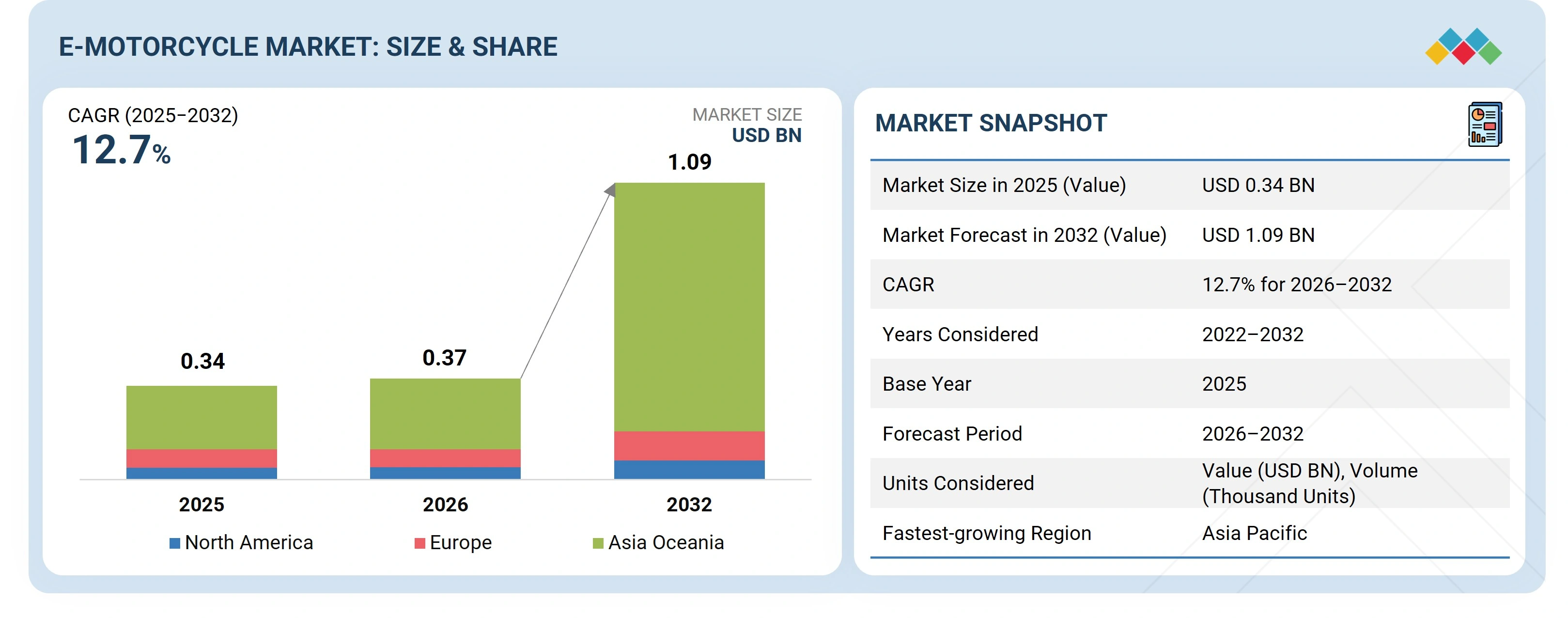
Source: Secondary Research, Interviews with Experts, MarketsandMarkets Analysis
The e-motorcycle market is projected to grow from USD 0.37 billion in 2026 to USD 1.09 billion by 2032, at a CAGR of 12.7%. This growth is driven by rapid technological advancements, changing rider preferences, and the expansion of urban and highway infrastructure. Additionally, increasing community engagement, brand-led events, and fleet programs are enhancing awareness and encouraging peer-driven adoption. Supportive regulatory incentives, investments in charging networks, and the introduction of high-performance models are also contributing to market expansion. Together, product innovation, improved performance, and robust adoption ecosystems are fueling the rapid growth of the e-motorcycle market.
KEY TAKEAWAYS
-
By RegionThe Asia Pacific e-motorcycle market accounted for a share of over 60% in 2025.
-
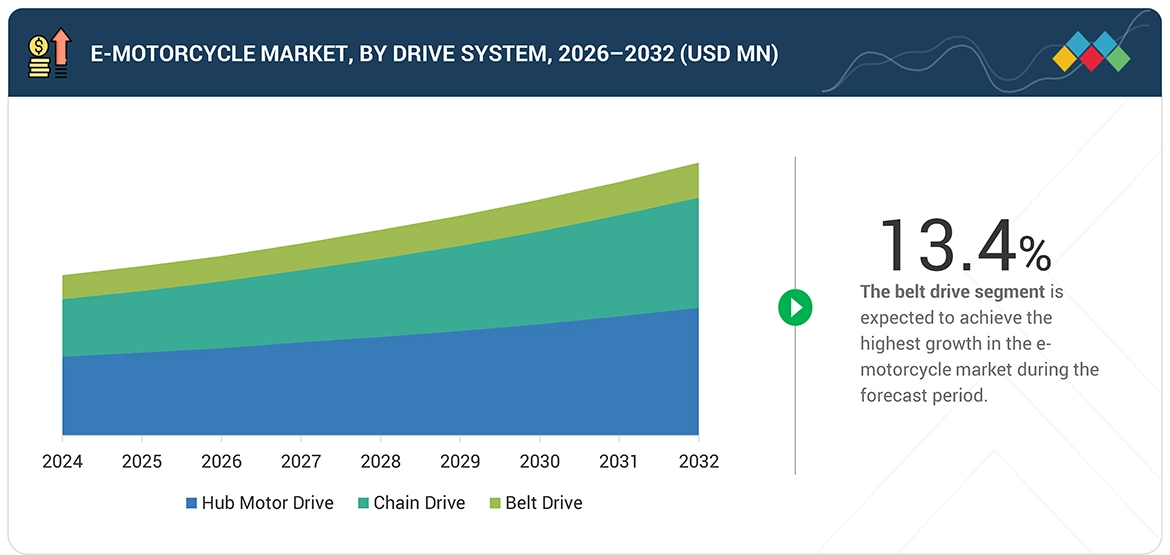
By Drive SystemThe belt drive segment is expected to register the highest growth of 13.4% during the forecast period.
-
By Battery CapacityThe 3–7 kWh segment is expected to dominate the market during the forecast period.
-
By Battery TypeThe lithium-ion segment is expected to dominate the e-motorcycle market during the forecast period.
-
By Motor TypeThe mid-drive motor segment is expected to grow at the highest CAGR during the forecast period.
-
By UsageThe commercial segment is expected to register a higher CAGR than the private segment during the forecast period.
-
Competitive Landscape - Key PlayersCompanies Zero Motorcycles Inc. and NIU Technologies were identified as STAR players in the global e-motorcycles market, primarily due to their strong business networks and strategic growth, which have enabled these companies to establish their market positions.
-
Competitive Landscape - Startups/SMEsLiveWire (US), Tork Motors (India), and Emflux Motors (India) among others, have distinguished themselves among startups and SMEs by securing strong footholds in specialized niche areas, underscoring their potential as emerging market leaders.
The e-motorcycle market is experiencing rapid growth, driven by advancements in battery technology that provide an urban range of 60 to 120 km, continuous motor power of 600 to 1000 W, and peak torque of 50 to 100 Nm, all while reducing weight and costs. The integration of IoT and connected features—such as real-time battery monitoring, GPS tracking, and app-based ride analytics—is enhancing the rider experience, safety, and fleet efficiency. Product innovations, including lightweight aluminum or modular composite frames, high-performance mid-drive and hub motors, and advanced thermal management systems, are contributing to increased adoption among urban commuters, premium riders, and commercial fleets. Recent OEM launches with these specifications are accelerating market penetration in Europe, North America, and the Asia Pacific region.
TRENDS & DISRUPTIONS IMPACTING CUSTOMERS' CUSTOMERS
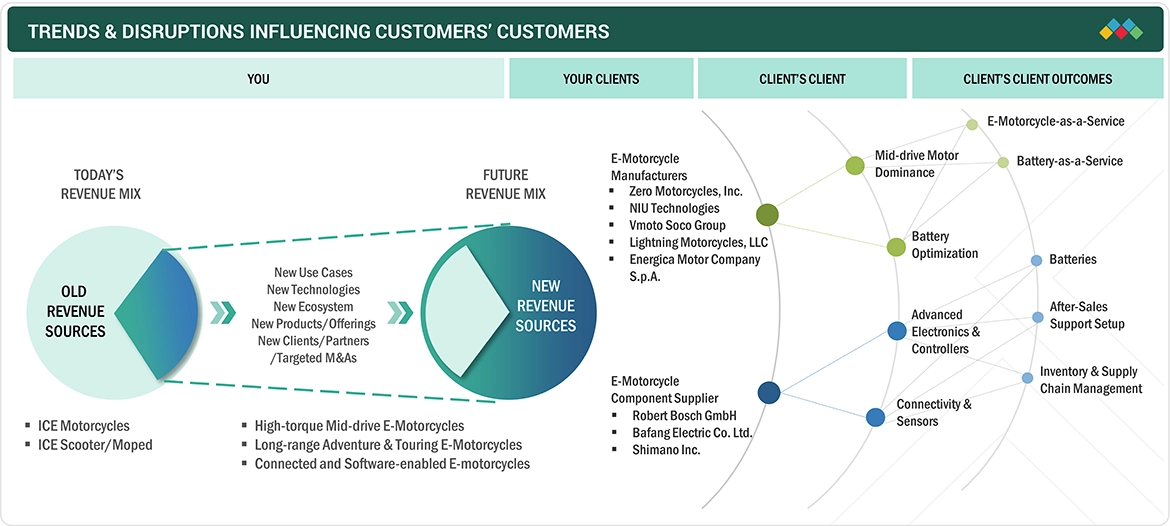
The e-motorcycle market is undergoing rapid transformation driven by advancements in battery technology, motor efficiency, and digital connectivity, all of which are redefining performance, range, and usability. Innovations in mid-drive and hub motor systems, lightweight designs, and high-capacity lithium-ion batteries are making it possible for longer rides, faster charging, and an enhanced riding experience. As a result, there is increasing adoption of e-motorcycles in urban commuting and premium performance segments. Additionally, there is a shift towards premium performance e-motorcycles, advanced mid-drive and hub motor systems, next-generation battery technologies, and electrification solutions for commercial and fleet use.
Source: Secondary Research, Interviews with Experts, MarketsandMarkets Analysis
MARKET DYNAMICS

Level
-
Rapid adoption in urban mobility and last-mile delivery

-
Improvements in battery performance and cost-efficiency


Level
-
Limited public charging coverage and range constraints in emerging markets

-
Thermal instability and extended charging durations


Level
-
Advanced lightweight engineering and platform integration

-
Development of integrated software and digital service platforms


Level
-
Battery weight, thermal stress, and lifecycle durability

Source: Secondary Research, Interviews with Experts, MarketsandMarkets Analysis
Driver: Rapid adoption in urban mobility and last-mile delivery
The e-motorcycle market is gaining momentum as urbanization increases in key regions, including Asia Pacific (including China, India, and Southeast Asia) and Europe (particularly in Western European cities). In these areas, dense traffic and short-distance travel make electric 2-wheelers an attractive option. Additionally, the growth of e-commerce and on-demand delivery services is driving the electrification of fleets, as operators aim to reduce operating costs and comply with stricter emission regulations. In North America, municipal incentives and low-emission zones are encouraging more individual commuters to adopt e-motorcycles. Government subsidies and tax benefits in regions like India and Germany are also enhancing affordability. The combination of rising demand for urban logistics and supportive policies is expanding the use of e-motorcycles beyond just personal transportation. Furthermore, integrated fleet telematics and route optimization technologies are improving operational efficiency, which is reinforcing this trend of adoption.
Restraint: Thermal instability and extended charging durations
Battery packs undergo thermal stress during continuous high-load operation, especially with mid- to high-power motors ranging from 600 to 1000 W and peak torque between 50 and 100 Nm. This stress accelerates degradation and affects performance consistency. In hotter climates across Asia and the Middle East, poor thermal management can reduce the usable range from 120–150 km to under 90 km, while also shortening the batteries' overall lifespan. Extended charging times, typically lasting between 4 and 6 hours for standard 3–7 kWh packs, reduce vehicle uptime, which is particularly critical for delivery fleets and commercial operations when compared to internal combustion engine alternatives. Even fast-charging solutions, which can charge batteries from 0 to 80% in 60 to 90 minutes, can negatively impact battery health if not managed properly, leading to increased maintenance and replacement costs. Together, these technical and operational challenges diminish user confidence and hinder adoption beyond early adopter segments.
Opportunity: Expansion of modular and swappable battery ecosystems
Modular and swappable battery systems offer a strategic solution to address range and infrastructure challenges, especially in urban and peri-urban areas. Standardized swappable battery packs, typically ranging from 3 to 7 kWh in capacity and providing an output of 48 to 72 V, can be quickly replaced at charging stations in under five minutes. This rapid replacement process increases operational uptime for fleet operators and reduces dependence on fixed charging points. In countries like China and India, swappable battery ecosystems are becoming more popular due to supportive government policies and the widespread use of two-wheelers. These systems often incorporate an integrated battery management system (BMS) for effective thermal management and cell balancing, promoting safe operation and extending battery life. Additionally, this innovation allows for second-life applications and supports circular economy models. Original Equipment Manufacturers (OEMs) can utilize modular designs to reduce cost volatility, simplify maintenance, and enhance revenue from aftermarket services, facilitating broader market penetration.
Challenge: Battery weight, thermal stress, and lifecycle durability
Heavy battery systems increase the overall mass of vehicles, negatively affecting handling, efficiency, and ride quality. This issue is particularly significant in high-performance segments that are in demand in Western markets. Moreover, thermal management challenges during extended high-load operations can accelerate cell wear, increasing replacement costs and impacting lifecycle economics. Current battery chemistries face trade-offs among energy density, durability, and cost, creating engineering constraints for original equipment manufacturers (OEMs). In regions with extreme temperatures, such as the Middle East and parts of the United States, maintaining consistent performance over time is a challenge. Addressing these durability issues is crucial for long-term consumer confidence and operational reliability, especially as electric motorcycles expand into a broader range of use cases.
E-MOTORCYCLE MARKET: COMMERCIAL USE CASES ACROSS INDUSTRIES
| COMPANY | USE CASE DESCRIPTION | BENEFITS |
|---|---|---|
 |
Urban commuting & delivery fleets: High-performance electric motorcycles are deployed for city logistics, courier services, and daily commuting | Reduces operating costs with lower energy and maintenance expenses | Supports zero-emission compliance | Improves efficiency in dense urban traffic |
 |
Performance & sport riding: Energica electric motorcycles are used for track training, high-speed touring, and recreational sport riding | Provides high torque and acceleration for performance applications | Reduces rider fatigue with smooth power delivery | Supports extended range for sport-touring usage |
 |
Urban & highway commuting: Lightning e-motorcycles are used by enthusiasts for city-to-highway commuting and weekend rides | Delivers long-range performance, rapid acceleration, and reliable handling | Improves commute times and rider experience |
 |
Last-mile delivery & urban mobility: NIU e-motorcycles are deployed in dense cities for deliveries and personal transportation | Offers low total cost of ownership, compact size for easy parking, and efficient energy use | Improves operational productivity |
Logos and trademarks shown above are the property of their respective owners. Their use here is for informational and illustrative purposes only.
MARKET ECOSYSTEM
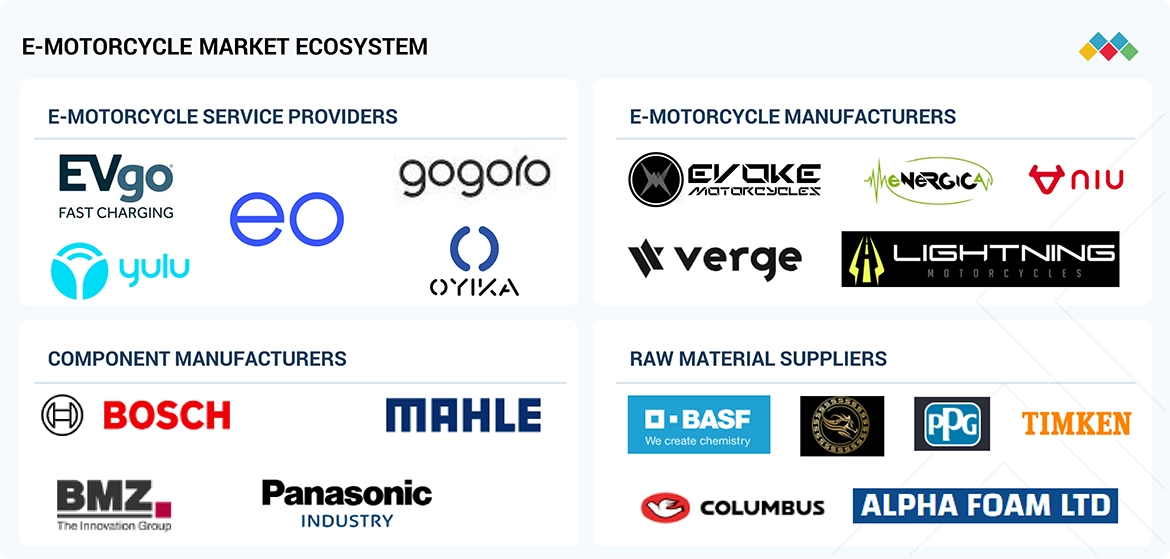
The e-motorcycle ecosystem covers important participants, namely raw material suppliers, component manufacturers, e-motorcycle manufacturers, and e-motorcycle service providers. Raw material suppliers provide essential materials, such as lithium, aluminum, steel, and rare earth elements required for battery production and vehicle manufacturing. Component manufacturers design and produce key e-motorcycle parts including batteries, electric motors, power electronics, controllers, sensors, and electronic systems. E-motorcycle manufacturers (OEMs) integrate components into complete vehicles, manage design, assembly, branding, compliance, and market distribution. E-motorcycle service providers deliver connected services, maintenance, charging solutions, software updates, fleet management, and after-sales customer support.
Logos and trademarks shown above are the property of their respective owners. Their use here is for informational and illustrative purposes only.
MARKET SEGMENTS
Source: Secondary Research, Interviews with Experts, MarketsandMarkets Analysis
E-Motorcycle Market, By Battery Type
The lithium-ion segment is expected to account for the largest share of the market during the forecast period due to the high energy density, light weight, and long lifespan of lithium-ion batteries compared to other battery types. These advantages lead to a longer riding range, better acceleration, and overall improved performance. The declining cost of lithium-ion cells, supported by large-scale global EV production, is making these batteries more affordable. China is the leading supplier of lithium and essential battery materials, ensuring a reliable and cost-effective supply for global original equipment manufacturers (OEMs). Following market trends, in September 2025, Honda introduced the Honda WN7 electric motorcycle at EICMA, featuring a fixed lithium-ion battery. Production is scheduled for late 2025, with deliveries expected in 2026. Additionally, in November 2025, Yamaha announced its entry into India’s electric two-wheeler market with lithium-ion-powered models, supporting a broader rollout of electric vehicles through 2026.
E-Motorcycle Market, By Drive Type
The chain drive segment is expected to account for the largest market share in the e-motorcycle segment during the forecast period due to the high mechanical efficiency, reliability, and compatibility of chain drive systems with mid-drive and hub motor systems. These drivetrains effectively transmit torque from the motor to the rear wheel while fully utilizing the gearbox, which is essential for urban commuting, navigating steep climbs, and managing high-load performance. Additionally, chain systems are lighter and easier to maintain compared to belt or shaft drives, making them popular among cost-sensitive consumers and fleet operators alike. Manufacturers such as Zero Motorcycles, NIU Technologies, and Super Soco utilize chain-based designs in their models aimed at urban and performance e-motorcycles, which support high-volume production. The widespread availability of replacement parts, ease of customization, and proven durability in various riding conditions further enhance the demand for chain drivetrains. Consequently, they are expected to remain dominant through 2032, especially in regions like Asia Pacific and Latin America, where affordability, ease of maintenance, and performance are key factors influencing adoption.
E-Motorcycle Market, By Battery Capacity
The 3–7 kWh segment is expected to maintain the largest share of the market during the forecast period due to its ideal balance of range, weight, cost, and performance in urban environments. Motorcycles in this segment typically offer a range of 70–140 km, with battery outputs between 600–750 W and peak torque around 40–60 Nm. This combination enables efficient commuting in cities while keeping the vehicle's weight manageable. Original Equipment Manufacturers (OEMs) like NIU Technologies and Super Soco are focusing on high-volume urban models, such as the TC Max and ROI Sport, which are designed for easy maneuverability and quick acceleration in heavy traffic. The growing demand in this market is driven by cost-conscious consumers and fleet operators. These stakeholders benefit from lower upfront costs and a reduced total cost of ownership. Additionally, policy incentives for entry-level electric motorcycles are encouraging further adoption. The lightweight frame designs, efficient thermal management, and manageable charging requirements make this battery segment particularly appealing in emerging markets such as Asia Pacific and the Americas.
E-Motorcycle Market, By Motor Type
The mid-drive segment is expected to account for the largest share of the market during the forecast period. These motors are rapidly becoming the most popular option in the market due to their superior torque, drivetrain efficiency, weight distribution, and thermal performance when compared to hub motors. By delivering power through the gearbox, mid-drive systems make full use of the gear range, resulting in improved performance on steep climbs, sustained high-load operation, and precise acceleration control. The central and low placement of the motor enhances handling, stability, and suspension response, which are critical for high-performance riding. In contrast, hub motors introduce unsprung mass, which reduces suspension efficiency and leads to high thermal stress, ultimately limiting performance under continuous load. As a result, leading e-motorcycle brands like Zero Motorcycles, Energica, and Lightning Motorcycle are increasingly adopting mid-drive systems. These systems typically offer torque outputs between 85 and 100 Nm and utilize battery packs ranging from 600 to 750 W, incorporating advanced thermal management. Consequently, mid-drive architectures are quickly becoming the standard for next-generation high-performance e-motorcycles in Europe and North America.
E-Motorcycle Market, By Usage
The commercial segment is the fastest-growing segment in the market. This growth is driven by high daily demand for rides, lower operating costs, and the performance advantages of lithium-ion battery systems over older technologies. Delivery, logistics, and ride-hailing operations prioritize reliability, range, and fast charging, making electric motorcycles with lithium-ion batteries an economically attractive option for commercial use. Governments in regions such as India and Europe are supporting the electrification of commercial vehicles through incentives and urban emissions regulations that encourage adoption. By 2025, urban delivery fleets in Europe are expected to increase their use of electric two-wheelers in cities across Germany, France, and the UK as part of low-emission logistics initiatives. Key markets like India and China provide targeted subsidies and incentives for commercial electric vehicle (EV) fleets, further accelerating their adoption. For example, in India, delivery operators such as Swiggy and Zomato are set to expand their fleets of lithium-ion electric two-wheelers by 2025 to reduce fuel costs and downtime. In Southeast Asia, Grab's electric delivery pilot program is utilizing lithium-ion motorcycles to increase daily range and lower maintenance costs. Meanwhile, consumer adoption of electric motorcycles for personal commuting is rising, albeit at a slower rate due to price sensitivity and lower usage. Overall, commercial applications are driving growth in the electric motorcycle market.
REGION
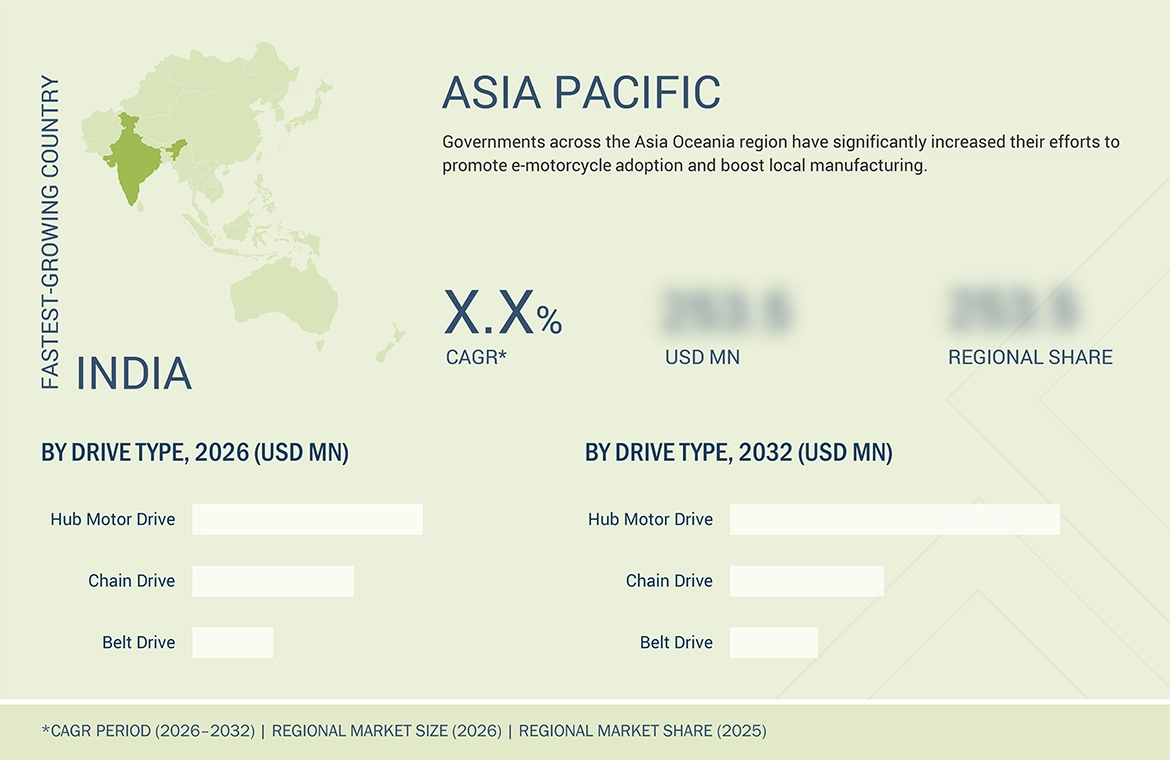
Asia Pacific is expected to be the largest region in the global e-motorcycle market during the forecast period.
The Asia Pacific market is steadily expanding, driven by the rising demand for cost-efficient and performance-oriented mobility in countries such as China, India, Vietnam, and Taiwan. E-motorcycles offer operating expenses that are 60–75% lower compared to internal combustion engine models. This reduction is attributed to lower energy costs per kilometer, decreased servicing needs, and fewer moving components. Market growth is further supported by production-linked incentives, purchase subsidies, and registration benefits in key economies like China, India, and Japan. For example, in India, prominent local e-motorcycle manufacturers such as Ola Electric and Ather Energy are expanding their manufacturing capacity and increasing the localization of battery packs and power electronics to lower costs. In Vietnam, companies like VinFast and Dat Bike are ramping up domestic production, backed by government policies encouraging a transition from petrol motorcycles to electric models. The rapid development of public charging networks and battery-swapping systems is also helping to alleviate range limitations, particularly in densely populated urban areas. Additionally, strong domestic demand in China and India, combined with large-scale export-oriented manufacturing, is establishing the region as a central hub for the production and supply of e-motorcycles worldwide.
E-MOTORCYCLE MARKET: COMPANY EVALUATION MATRIX
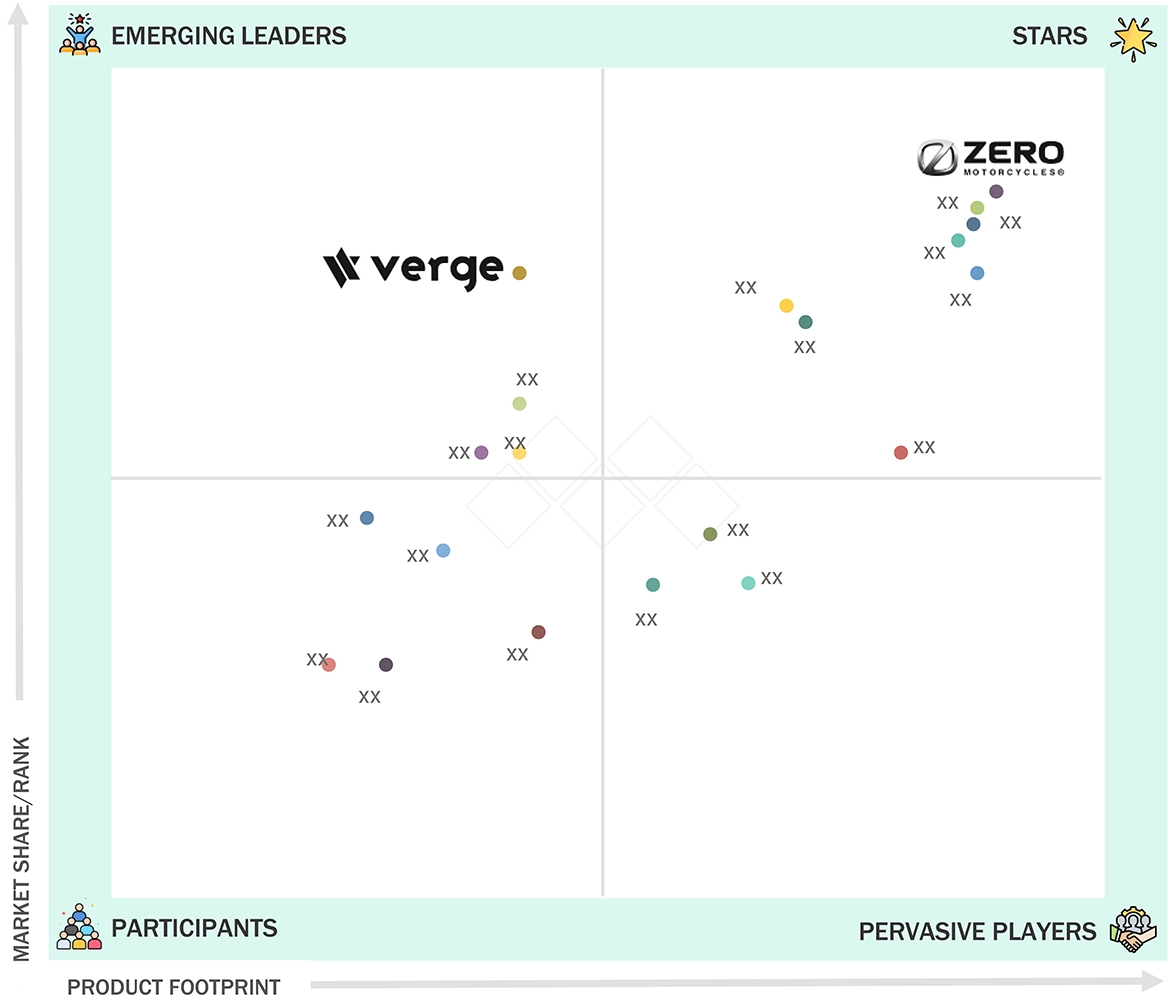
Micro-quadrant provides information on major players that offer e-motorcycles and outlines the findings and analysis of how well each vendor performs within the predefined criteria. The company evaluation matrix for the e-motorcycles market positions players based on market share/rank and product footprint. Zero Motorcycles Inc., (Star) leads the e-motorcycles market with strong market presence and wide product portfolio. On the other hand, Verge Motorcycles (Emerging Player) focuses on high-performance electric motorcycles and unique hub-less motor technology.
Source: Secondary Research, Interviews with Experts, MarketsandMarkets Analysis
KEY MARKET PLAYERS
- Zero Motorcycles, Inc. (US)
- NIU Technologies (China)
- Vmoto Soco Group (Australia)
- Lightning Motorcycles, LLC (US)
- Energica Motor Company S.p.A. (Italy)
- LiveWire Motor Company (US)
- Damon Motors Inc. (Canada)
- Evoke Motorcycles (China)
- Verge Motorcycles Ltd. (Estonia)
- Fonz Moto Pty Ltd (Australia)
MARKET SCOPE
| REPORT METRIC | DETAILS |
|---|---|
| Market Size in 2025 | USD 0.34 Billion |
| Market Forecast in 2032 | USD 1.09 Billion |
| Growth Rate | 12.7% from 2026–2032 |
| Years Considered | 2022–2032 |
| Base Year | 2025 |
| Forecast Period | 2026–2032 |
| Units Considered | Value (USD Billion), Volume (Thousand Units) |
| Report Coverage | Revenue Forecast, Regional Market Share, Competitive Landscape, Driving factors, Trends & Disruption, OEM Analysis, Bill of Materials, Total Cost of Ownership, and Others |
| Segments Covered |
|
| Regional Scope | Asia Oceania, Europe, North America |
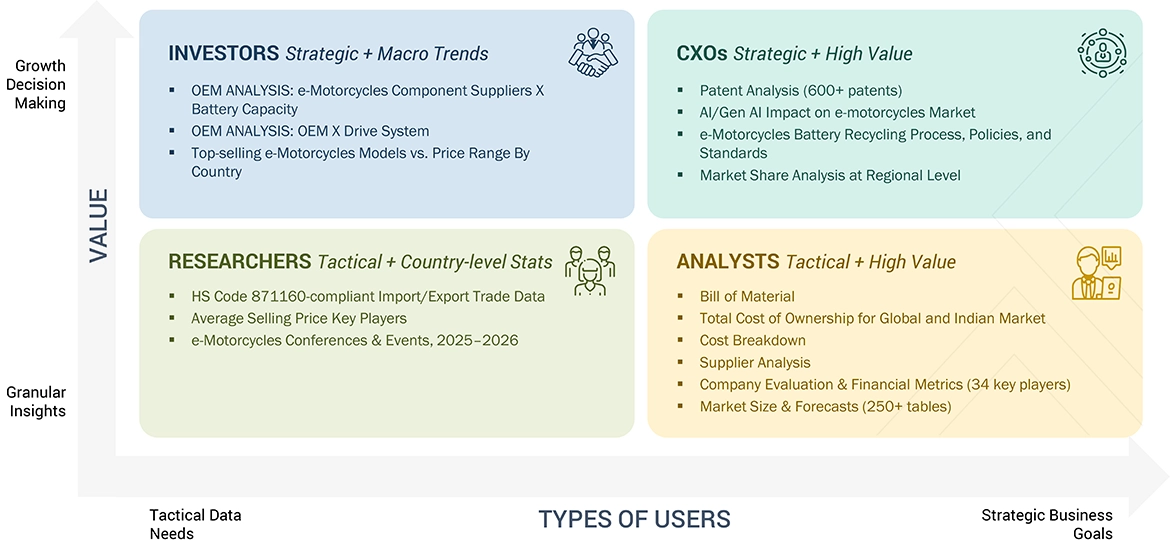
WHAT IS IN IT FOR YOU: E-MOTORCYCLE MARKET REPORT CONTENT GUIDE
DELIVERED CUSTOMIZATIONS
We have successfully delivered the following deep-dive customizations:
| CLIENT REQUEST | CUSTOMIZATION DELIVERED | VALUE ADDS |
|---|---|---|
| E-Motorcycle Manufacturer | Provided regional market sizing and forecast models for electric motorcycles in the US and Europe with separate projections | Enables prioritization of regions based on growth rate, demand intensity, and regulatory environment |
| E-Motorcycle OEM | Delivered OEM-wise global market share analysis for Zero Motorcycles, NIU Technology, Energica, Lightning Motorcycle, Super Soco, and Hero MotoCorp for 2023–2024 | Offers a competitive landscape view showing electric motorcycle OEM positioning and relative strength |
| E-Motorcycle OEM | Included market dynamics and technology trend analysis for key electric motorcycle players, highlighting growth, product launches, and strategic initiatives | Enhances decision-making with short-term insights (2023–2024) for strategic planning and market entry |
RECENT DEVELOPMENTS
- January 2026 : Hero MotoCorp filed a design patent in India for the Vida VXZ electric motorcycle, co-developed with Zero and initially showcased at EICMA 2025, signaling an upcoming entry into the electric motorcycle segment.
- January 2026 : At CES 2026, Verge Motorcycles announced a production motorcycle with solid-state battery technology capable of extended range and rapid charge times, highlighting potential future directions for high-end electric motorcycles.
- November 2025 : Zero Motorcycles unveiled the LS1 electric scooter and the Lompico Concept at EICMA 2025, while also revealing updates to its 2026 model year lineup, with first deliveries of the LS1 planned for December 2025.
- November 2025 : NIU Technology showcased its 2026 product lineup at EICMA 2025, featuring enhancements to the NQiX series with improved range and Google Maps integration, the new FQiX urban series, and upgraded XQi off-road models. The company also presented the Concept 06 maxi-scooter as a preview of its future design direction.
Table of Contents
 Exclusive indicates content/data unique to MarketsandMarkets and not available with any competitors.
Methodology
The research study involved various secondary sources, such as company annual reports/presentations, industry association publications, e-motorcycle magazine articles, directories, technical handbooks, World Economic Outlook, trade websites, technical articles, and databases, which were used to identify and collect information for an extensive study of the e-motorcycle market. Primary sources—experts from related industries, automobile OEMs, and suppliers—were interviewed to obtain and verify critical information and assess prospects and market estimations.
Secondary Research
Secondary sources for this research study included the e-motorcycle industry association, internal databases, corporate filings (such as annual reports, investor presentations, and financial statements), and data from trade and business. Secondary data was collected and analyzed to determine the overall market size, further validated by primary research.
Primary Research
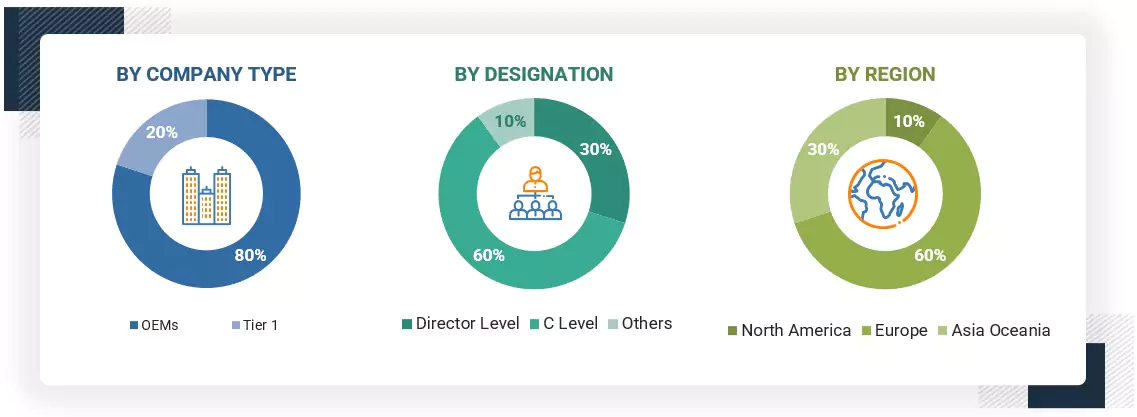
In the primary research process, several primary interviews were conducted with market experts from the demand and supply sides across three major regions: North America, Europe, and Asia Oceania. 20% and 80% of primary interviews were conducted with the OEMs and Tier-1 players, respectively.
Primary data was collected through questionnaires, e-mails, and telephonic interviews. In the canvassing of primaries, various departments within organizations, such as sales, operations, and administration, were covered to provide a holistic viewpoint in the report. After interacting with industry experts, brief sessions were conducted with highly experienced independent consultants to validate the findings from the primaries. This and insights by in-house subject-matter experts led to the conclusions described in the remainder of this report.
Note: Others include sales, marketing, and product managers.
Source: Secondary Research, Primary Interviews, and MarketsandMarkets Analysis
To know about the assumptions considered for the study, download the pdf brochure
Market Size Estimation
The bottom-up approach was used to derive the e-motorcycle market size based on volume and value. This was followed by primary interviews and feature mapping on a regional basis from the MarketsandMarkets repository.
The market size was validated through in-depth interviews with industry experts—excerpts available in the discussion guide in the appendix—and secondary research. The report-writing phase began after arriving at the final numbers for the market size.
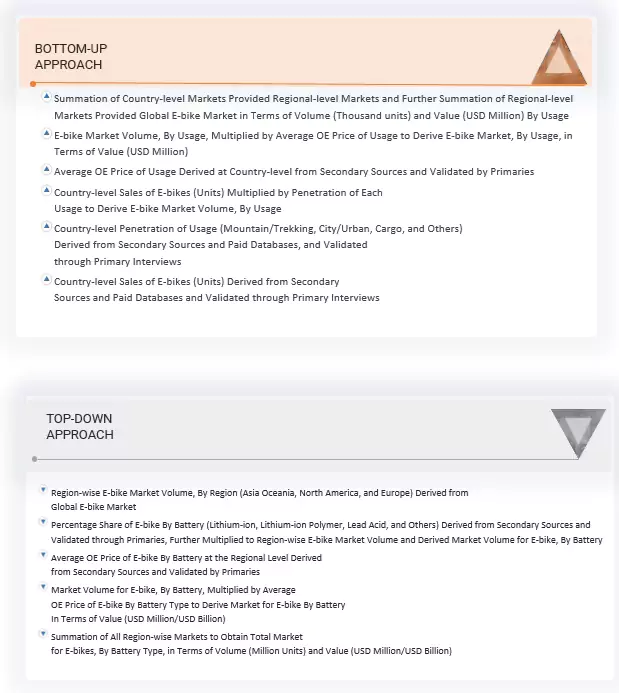
By estimating the regional market size for e-motorcycles by battery type, the global market was derived in terms of volume. The percentage share of e-motorcycles by battery type (lithium-ion, lithium-ion polymer, lead-acid, and others) was derived from secondary sources and validated through primary sources. It was multiplied by the region-wise market volume. The market volume for e-motorcycles, by battery type, was derived from this. The average OE price of an e-motorcycle by battery type at the regional level was derived from secondary sources, and primary sources validated the same. The market volume for e-motorcycles, by battery type, was multiplied by the average OE price of e-motorcycles. The market for e-motorcycles by battery type was derived in terms of value (USD million). All region-wise markets were summed to obtain the total market for e-motorcycles by battery type in terms of volume (thousand units) and value (USD million).
A similar approach was followed to obtain the market by motor type, mode, component, and speed.
Market Size Estimation Methodology-Bottom-up approach
The bottom-up approach was used to estimate and validate the size of the e-motorcycle market by usage. Country-level e-motorcycle sales (in terms of volume) were derived from secondary sources such as country-wise manufacturing associations. They paid for databases and validated them through primary interviews to determine the size of the market by class and usage in terms of volume. Country-level penetration by usage type (mountain/trekking bikes, city/urban, cargo, and others) was derived from secondary sources and paid databases and validated through primary interviews.
The market was then forecasted based on various parameters such as analysis of the historical data, market trends, and growth drivers such as increasing bike sales, an increase in infrastructural development activities, economic conditions, and government incentives and subsidies. Technological advancements in e-motorcycle motors, emerging market opportunities, and competitive landscape assessments were also considered to arrive at the country-wise forecast of the e-motorcycles by usage.
The country-level e-motorcycle sales (by volume) were multiplied by the penetration of each usage type. The e-motorcycle market volume, by usage type, was derived through this. The average OE price by usage type was derived from secondary sources, and primary sources validated the same. The market volume, by usage, was multiplied by the average OE usage price. The market, by usage type, in terms of value (USD million), was derived through this. The summation of country-level markets provided the regional-level market. Further summation of the regional-level markets provided the global market in terms of volume (thousand units) and value (USD million) by usage.
E-motorcycle Market : Top-Down and Bottom-Up Approach
Data Triangulation
All percentage shares, splits, and breakdowns were determined using secondary sources and verified through primary sources. All parameters expected to affect the markets covered in this research study were accounted for, viewed in extensive detail, verified through primary research, and analyzed to obtain the final quantitative and qualitative data. This data was consolidated, supplemented with detailed inputs and analysis from MarketsandMarkets, and presented in the report.
Market Definition
An e-motorcycle is a bicycle with a small electric motor and a rechargeable battery to assist the power provided by the rider. The batteries can be recharged by connecting them to a plug. A typical e-motorcycle needs 6 to 8 hours to charge the battery and has a range of 35 to 50 km at a speed of about 20 km/h.
Stakeholders
- e-motorcycle manufacturers
- e-motorcycle battery & motor manufacturers
- Component suppliers for e-motorcycles
- Raw material suppliers for e-motorcycles
- Country-level associations
- Traders, distributors, and suppliers of e-motorcycles
Report Objectives
-
To define, describe, and forecast the size of the global e-motorcycle market in terms of value (USD million) and volume (thousand units)
- By Class (Class-I, Class-II, Class-III) at the regional level
- By Speed (up to 25 km/h, 25-45 km/h) at the regional level
- By Battery Type (Lithium-ion, Lithium-ion Polymer, Lead Acid, and Others) at the regional level
- By Motor Type (Hub and Mid) at the regional level
- By Mode (Pedal Assist and Throttle) at the regional level
- By Component (Batteries, Electric Motors, Frames With Forks, Wheels, Crank Gears, Brake Systems, and Motor Controller) at the regional level
- By Usage (Mountain/Trekking, City/Urban, Cargo, and Others) at the regional level
- By Ownership (Shared and Personal)
- By Battery Capacity (<250W, >250 & <450W, >450 & <650W, and >650W)
- By Motor Weight (<2 kg, >2 kg & <2.4 kg, >2.4 kg)
- By Motor Power (<40nm, >40nm-<70nm, >70nm)
- Country-level analysis of class-wise and usage-wise segments (Asia Oceania, Europe, and North America)
- To understand the dynamics (drivers, restraints, opportunities, and challenges) of the market
- To strategically analyze the market with trade analysis, pricing analysis, recession impact, case study analysis, patent analysis, technology analysis, regulatory analysis, key conferences and events, bill of material, the total cost of ownership, pricing analysis trends/disruptions impacting buyers, financial matrix, investment, and funding case scenario
- To analyze the competitive landscape of the global players in the market, along with their market share/ranking
- To analyze the competitive leadership mapping of the global and regional e-motorcycle manufacturers and e-motorcycle component suppliers in the market
- To analyze a detailed listing of OEMs and their brands, OEM-wise technical specifications, mergers & acquisitions, partnerships, collaborations, expansions, and new product launches/developments undertaken by critical participants in the market
Available Customizations
Along with the market data, MarketsandMarkets offers customizations per company-specific needs. The following customization options are available for the report:
BY DESIGN
- Foldable
- Unfoldable
BY FRAME MATERIAL
- Carbon Fiber
- Carbon Steel
- Aluminum
- Aluminum Alloy


Personalize This Research
- Triangulate with your Own Data
- Get Data as per your Format and Definition
- Gain a Deeper Dive on a Specific Application, Geography, Customer or Competitor
- Any level of Personalization
Let Us Help You
- What are the Known and Unknown Adjacencies Impacting the E-motorcycle Market
- What will your New Revenue Sources be?
- Who will be your Top Customer; what will make them switch?
- Defend your Market Share or Win Competitors
- Get a Scorecard for Target Partners

Custom Market Research Services
We Will Customise The Research For You, In Case The Report Listed Above Does Not Meet With Your Requirements
Get 10% Free CustomisationTESTIMONIALS

JIM NAAS
PRODUCT DIRECTOR, WEASLER
Weasler Engineering, a CentroMotion organization
Global Provider of Industrial Actuation & Control Solutionswww.weasler.com
Our organization was interested in learning more about the attractiveness of a particular market space. We contacted MarketsandMarkets to help us based on previous positive experiences we had with them. The results did not disappoint! We discussed our objectives with them, and the team at MarketsandMarkets developed and executed a proposal that met our needs precisely. We were very impressed by their level of expertise, the quality of the analysis and their insightful recommendations. We would not hesitate in working with them again in the future.

Matt Kardel,
Vice President
Aptiv,
A global technology company that develops safer, greener and more connected solutions.www.aptiv.com
We contracted with
MarketsandMarkets to evaluate the value chain and potential go-to-market partners related to our
interest in the Fleet Management space. The team successfully completed the work on time and at the
pricing agreed. MarketsandMarkets listened and understood our objectives and collaborated well with
us to help us get the visibility we needed to make an investment.
We have subsequently used
MarketsandMarkets again related to Smart Cities to good results.






Growth opportunities and latent adjacency in E-motorcycle Market