Ecommerce Platform Market by Solutions (Payment & Billing Solutions, Ecommerce Management Platform, End-To-End Platform), Ecommerce Model (B2B, B2C), By Industry (Beauty & Personal Care, Consumer Electronics, Fashion & Apparel) - Global Forecast to 2030

icon1
USD 16.51 BN
MARKET SIZE, 2030
icon2
CAGR 12.7%
(2025-2030)
icon3
264
REPORT PAGES
icon4
242
MARKET TABLES

OVERVIEW

Ecommerce Platform Market Overview

Source: Secondary Research, Interviews with Experts, MarketsandMarkets Analysis

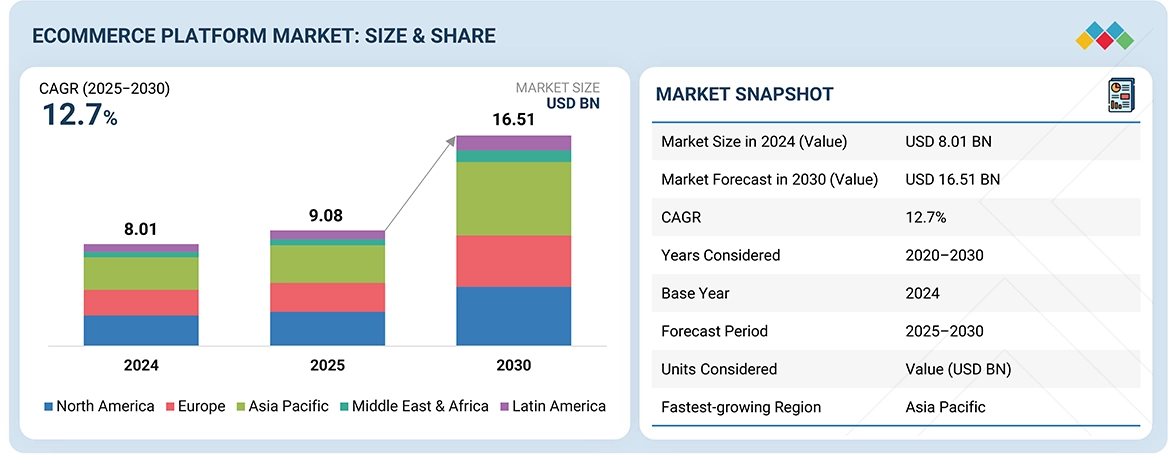
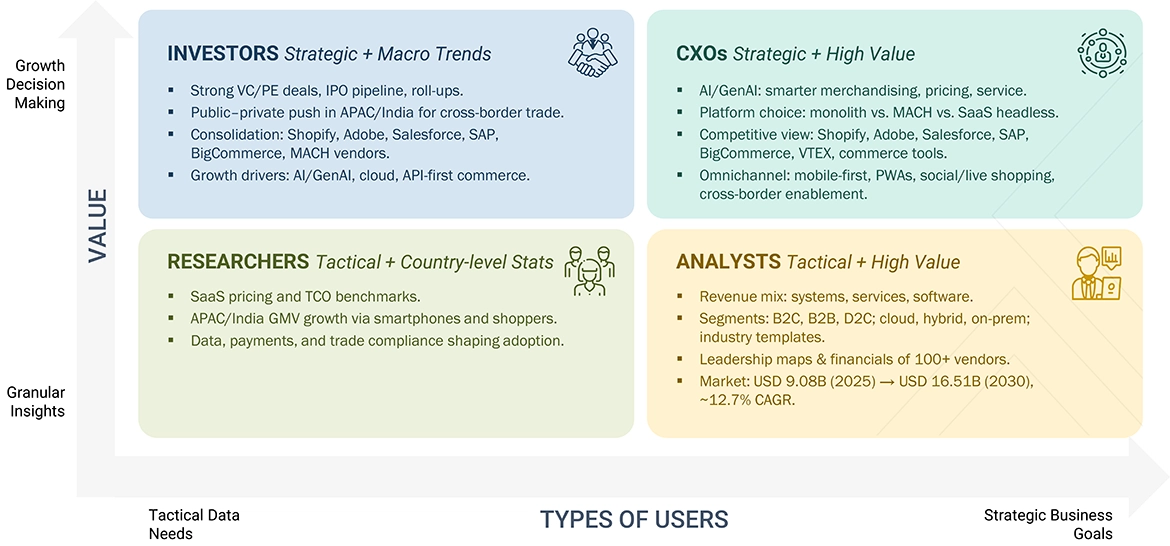
The eCommerce platform market is projected to grow from USD 9.08 billion in 2025 to USD 16.51 billion by 2030 at a CAGR of 12.7% from 2025 to 2030. The eCommerce platform market is being rapidly reshaped by the convergence of digitalization, evolving consumer behavior, and technological innovation. Businesses across industries are shifting toward digital commerce models to meet rising demand for convenience, personalization, and 24/7 availability. Key operational challenges such as fragmented customer journeys, inefficient inventory management, and limited scalability are being addressed through unified commerce platforms that support end-to-end selling, fulfillment, and engagement.

KEY TAKEAWAYS

  • The North America eCommerce platform market accounted for a 28.2% revenue share in 2030.
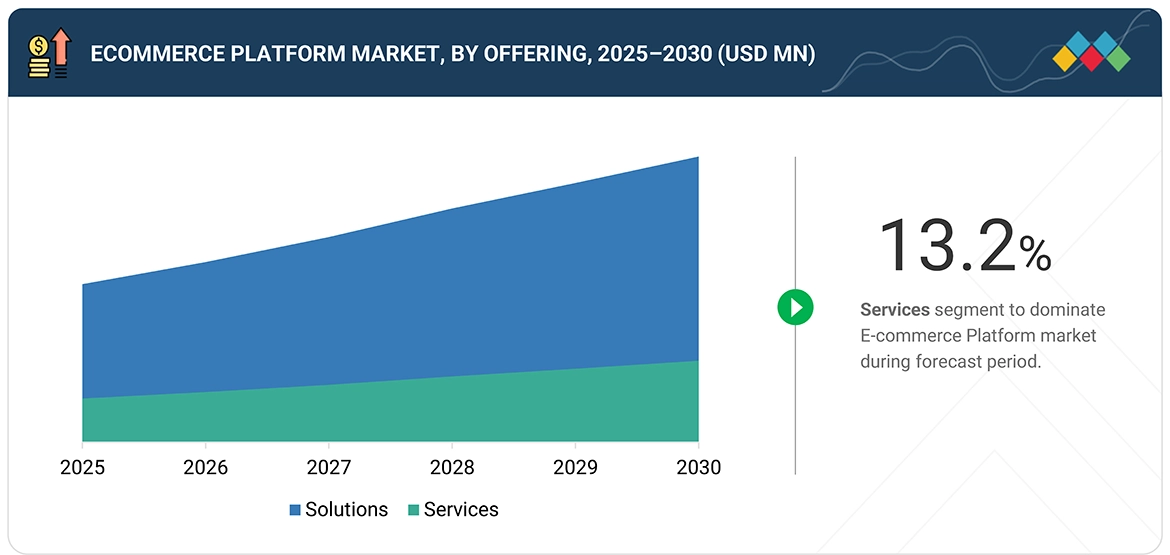
  • By offering, the services segment is expected to register the highest CAGR of 13.2%.
  • By eCommerce Model, the B2C segment is expected to dominate the market.
  • Shopify, Adobe Commerce, and Square were identified as Star players because they offer scalable, omnichannel commerce stacks, rich customization, integrated payments and POS, extensive third-party marketplaces and developer ecosystems, enterprise-grade features, and SME-friendly turnkey tools that accelerate merchant growth and conversions.
  • WooCommerce, Lightspeed, and OpenCart have distinguished themselves among startups and SMEs by offering extensible, open-source or cloud-native platforms that unite content/POS-commerce, rapid store setup, and developer-friendly APIs for scalable merchant growth.

The eCommerce platform market is revolutionizing the global retail landscape by enabling businesses to efficiently manage their digital operations, from product listings to order fulfillment. Driven by technologies such as cloud-based hosting, AI-powered personalization, content management systems, CRM integration, and secure payment gateways, these platforms deliver scalable and unified solutions for online commerce. Market expansion is fueled by increasing smartphone adoption, growing internet access, and rising demand for personalized, omnichannel shopping experiences. Industries such as fashion, electronics, and health and wellness are leveraging eCommerce platforms to boost customer engagement, optimize workflows, and strengthen their digital presence. Offering capabilities like real-time analytics, loyalty management, social commerce, and cross-border functionality, these platforms have become essential for both SMEs and large enterprises. As organizations accelerate their digital transformation, eCommerce platforms are evolving into foundational infrastructure that enables sustainable growth, global reach, and data-driven commerce. They are reshaping the future of online retail through innovation, efficiency, and customer-centricity.

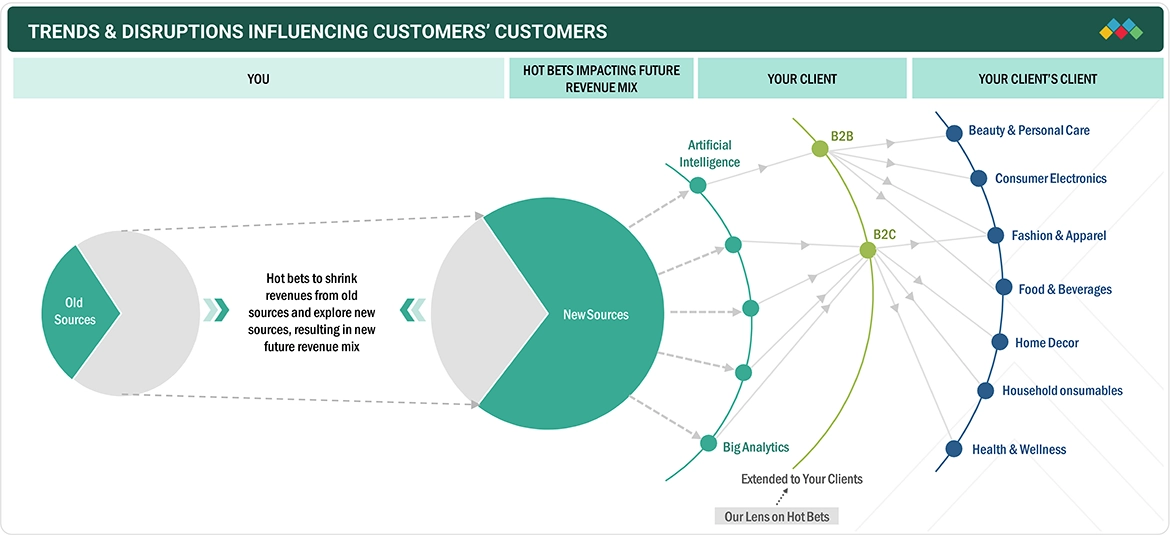
TRENDS & DISRUPTIONS IMPACTING CUSTOMERS' CUSTOMERS

The ecommerce platform market is shifting from traditional revenue streams to new ecosystems, technologies, and partnerships, with leading players focusing on scaling sellers, AI-driven personalization, embedded finance, logistics, and omnichannel integration to deliver faster fulfillment, broader access, personalized shopping, secure payments, and trusted experiences for end customers.

Ecommerce Platform Market Disruptions

Source: Secondary Research, Interviews with Experts, MarketsandMarkets Analysis

MARKET DYNAMICS

Drivers
Impact
Level
  • Increasing online consumer base with growing adoption of smartphones to fuel demand for eCommerce platforms
  • Omnichannel retailing to drive demand for eCommerce platforms
RESTRAINTS
Impact
Level
  • Cybersecurity threats and online scams
  • Delivering real-time, personalized customer experiences at scale
OPPORTUNITIES
Impact
Level
  • Development of super apps to offer more simple and convenient shopping options
  • Rising investments in eCommerce sector
CHALLENGES
Impact
Level
  • Handling logistics and managing inventory to pose substantial challenges for businesses
  • Customer acquisition and retention to be expensive in competitive era

Source: Secondary Research, Interviews with Experts, MarketsandMarkets Analysis

Driver: Rising use of internet and smartphones

Over the past two decades, the internet has fundamentally transformed global consumer behaviors, redefining communication, retail, and entertainment consumption patterns. The substantial increase in internet penetration, coupled with the swift adoption of smartphones and digital technologies, has disrupted traditional business paradigms and accelerated the growth of the eCommerce sector. Enhanced connectivity and mobile optimization have facilitated smoother, more secure, and efficient online transactions, empowering organizations to tap into wider markets while minimizing operational costs. As a result, businesses are better positioned to leverage digital channels for scalable growth and competitive advantage in an increasingly dynamic marketplace. The digital transformation has fundamentally altered consumer behavior, leading to a significant shift towards convenience-driven, real-time purchasing experiences. This change underlines the importance of increased internet penetration as a crucial enabler of eCommerce platform adoption, thereby fostering growth in digital commerce across both developed and emerging markets. The continued integration of high-speed broadband and 5G networks is anticipated to further accelerate market expansion by improving platform performance, transaction speed, and user engagement. This evolution positions eCommerce as a pivotal component of the contemporary digital economy, influencing business strategies and consumer interactions on a global scale.

Restraint: Cybersecurity threats and online scams

The proliferation of digital technologies has significantly empowered consumers to streamline their purchasing processes, enabling direct access to a diverse range of products and services from the convenience of their homes. This digital transformation continues to reshape multiple industry verticals, including eCommerce, financial services, travel, and hospitality, by optimizing business operations via integrated online platforms. The increasing implementation of digitalization initiatives, particularly in emerging markets, has prompted public and private sector entities to leverage cloud computing and mobile applications, thereby enhancing operational efficiency and fostering improved customer engagement. This paradigm shift underscores the critical importance of digital strategy in driving competitive advantage and business sustainability. The ongoing transition to digital ecosystems has significantly heightened the vulnerability of business data and infrastructure to cyber threats. As enterprises increasingly rely on digital platforms for real-time service delivery, the necessity for robust cybersecurity frameworks and comprehensive data protection solutions has become paramount. Consequently, data security and risk mitigation strategies are emerging as essential components of the digital transformation journey, particularly in the eCommerce platform market. Additionally, fostering a culture of security awareness among employees and stakeholders is vital for ensuring compliance and resilience against potential breaches. By integrating these practices into their digital strategies, businesses can enhance their security posture and protect their critical assets in an increasingly interconnected landscape.

Opportunity: Rising investment in the eCommerce sector

The recent surge in digital literacy has catalyzed substantial capital inflows into the global eCommerce sector, creating a favorable landscape for emerging enterprises to penetrate the market and deploy disruptive innovations. This increase in investment presents eCommerce platform providers with a numerous strategic opportunities. Enhanced access to capital empowers these platforms to strengthen their research and development capabilities, integrate cutting-edge technologies such as artificial intelligence and machine learning, and scale their operations into untapped regional markets. This dynamic environment not only supports the evolution of existing platforms but also paves the way for new entrants to challenge the status quo and drive transformative change within the industry. Moreover, increased funding supports diversification of service offerings, improved infrastructure scalability, and optimized user experiences. It also allows for robust marketing strategies, strategic collaborations with complementary businesses, and the creation of employment opportunities across the digital economy. As a result, investment growth is not only driving market expansion but also reinforcing the competitive landscape of the eCommerce platform market by enabling continuous innovation, improved service delivery, and long-term value creation for stakeholders.

Challenge: Customer acquisition and retention

In the competitive eCommerce landscape, customer acquisition has become a complex and costly challenge. Businesses are significantly investing in digital marketing strategies, including pay-per-click advertising, social media engagement, influencer partnerships, and search engine optimization (SEO) to enhance visibility and conversion rates. To stand out, eCommerce platforms must offer compelling value propositions along with strategic incentives such as personalized offers, loyalty programs, and exclusive discounts. These initiatives should be underpinned by advanced data analytics to effectively target consumer personas and optimize user experiences. An agile, data-driven approach that adapts to market trends and customer feedback is crucial for sustaining growth in this dynamic environment. Furthermore, ensuring a seamless and user-centric experience is critical for customer retention. This includes responsive website and mobile app interfaces, intuitive navigation, fast page loading speeds, and a streamlined checkout process. By prioritizing ease of use, visual appeal, and reliability, eCommerce platforms can enhance customer satisfaction and drive conversion rates. As customer expectations continue to evolve, offering a superior digital experience becomes a key driver of sustained growth and long-term success in the eCommerce platform market.

Ecommerce Platform Market: COMMERCIAL USE CASES ACROSS INDUSTRIES

COMPANY USE CASE DESCRIPTION BENEFITS
Replatformed its digital experience to Shopify in 90 days to build a fast, mobile-first, and flexible flagship site that removes previous tech limitations. Achieved 45% YoY revenue growth, reduced load times significantly, launched global sites within weeks, saved millions by simplifying tech stack, and enabled rapid product launches without performance issues.
Implemented a global digital commerce platform to scale operations and improve user experience across regions. Enhanced customer engagement, increased sales through unified scalable platform, reduced checkout friction, supported faster merchandise launches, and grew global e-commerce performance.
Adopted VTEX to create a customer-centric e-commerce solution mapping individual journeys and boosting multichannel engagement. Delivered higher customer satisfaction, faster checkout with VTEX Personal Shopper, increased sales participation (~25%), quick customer service response times, and improved brand loyalty with continuous engagement.

Logos and trademarks shown above are the property of their respective owners. Their use here is for informational and illustrative purposes only.

MARKET ECOSYSTEM

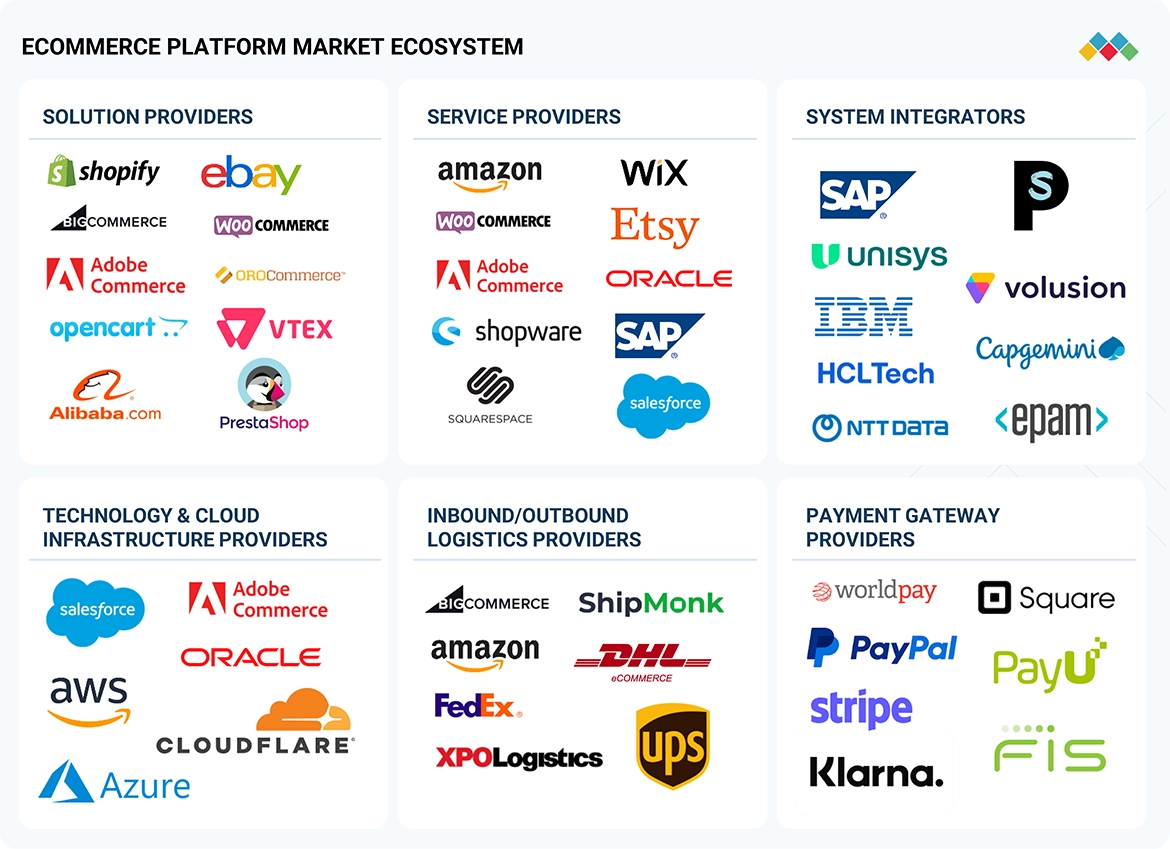
The ecommerce platform market ecosystem consists of diverse participants, including solution providers, service providers, system integrators, technology and cloud infrastructure providers, logistics players, and payment gateway providers. Solution providers such as Shopify, Adobe Commerce, and Alibaba supply core platform technologies, while service providers like Amazon and Wix deliver additional tools and marketplaces for business operations. System integrators including SAP, IBM, and Capgemini support platform customization and integration. Technology infrastructure is offered by firms such as AWS, Oracle, and Azure, providing cloud-based deployments. Logistics companies like DHL, UPS, and FedEx manage inbound and outbound supply chains, while payment gateways such as PayPal, Stripe, and Klarna enable efficient financial transactions for e-commerce businesses.?

Ecommerce Platform Market Ecosystem

Logos and trademarks shown above are the property of their respective owners. Their use here is for informational and illustrative purposes only.

MARKET SEGMENTS

Ecommerce Platform Market Segments

Source: Secondary Research, Interviews with Experts, MarketsandMarkets Analysis

Ecommerce Platform Market, By Offering

Based on solutions, the global eCommerce platform market is categorized into billing and subscription management solutions, eCommerce management platforms, and comprehensive end-to-end platforms. Building a customized eCommerce website from scratch typically demands significant time, financial investment, and technical expertise, often requiring dedicated software developers. However, modern eCommerce platforms address these challenges by providing pre-configured, scalable, and user-friendly solutions that enable businesses to launch and manage their online stores efficiently. These platforms are equipped with product catalog management, payment integration, order processing, inventory tracking, and customer support tools, streamlining the entire eCommerce lifecycle. As a result, businesses of all sizes, mainly small and medium-sized enterprises (SMEs), are increasingly turning to turnkey eCommerce platform solutions to accelerate time-to-market, reduce operational costs, and enhance digital presence. This growing preference for ready-to-deploy solutions is significantly driving the demand within the eCommerce platform market.

Ecommerce Platform Market, By Ecommerce Model

The B2B eCommerce model is projected to experience the fastest growth in the global eCommerce platform market, driven by accelerating digital transformation and the growing need for streamlined procurement and supply chain operations. Enterprises are increasingly adopting B2B eCommerce platforms to manage large-volume transactions, negotiate pricing, process bulk orders, and enable efficient delivery through a centralized digital ecosystem. These platforms provide advanced capabilities such as account-based pricing, bulk order management, ERP integration, and customizable workflows tailored to business buyers. The rising focus on automation, cost optimization, and real-time data insights is further boosting B2B adoption. Additionally, the shift from traditional sales channels to digital procurement is being fueled by greater smartphone penetration, enhanced internet connectivity, and increasing demand for seamless online transactions among corporate buyers. As manufacturers, wholesalers, and distributors modernize operations and strengthen customer engagement, B2B eCommerce platforms are becoming vital for achieving operational efficiency, scalability, and long-term competitiveness.

Ecommerce Platform Market, By End-use Industry

Electronics companies are increasingly leveraging eCommerce platforms to expand their global presence and offer a wide range of products, including devices for entertainment, communication, and leisure. This digital transformation allows brands to connect directly with consumers across diverse markets, improving accessibility and convenience. According to the Consumer Electronics and Appliances Manufacturers Association (CEAMA), India’s consumer electronics sector is expected to witness strong growth over the next three years, supported by rising domestic demand and higher disposable incomes. Moreover, India is rapidly emerging as a major hub for consumer electronics manufacturing and sales, positioned as both a fast-growing market and a competitive alternative to China and other Southeast Asian economies, driven by robust economic growth and favorable government policies.

REGION

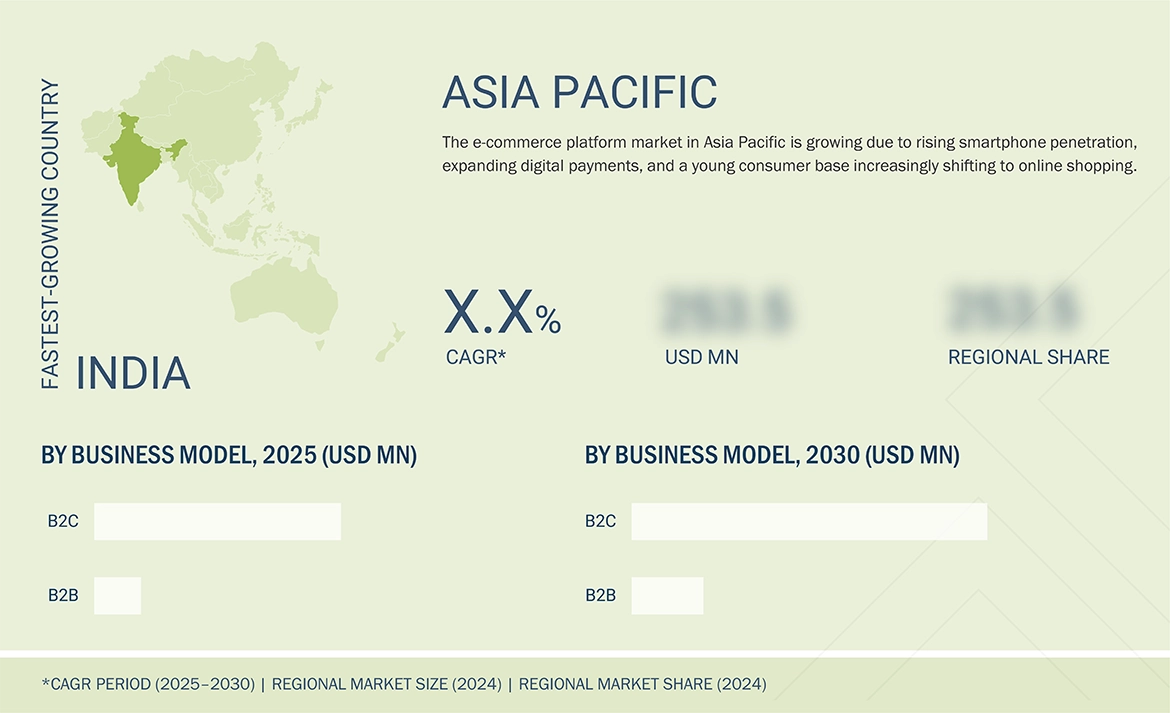
Asia Pacific to be fastest-growing region in global ecommerce platform market during forecast period

The Asia Pacific region is experiencing a notable surge in the adoption of eCommerce platform solutions, particularly within sectors such as hospitality, consumer electronics, and fashion & apparel. It is expected to record the highest CAGR during the forecast period. This trend is largely attributed to the increasing penetration of the internet and enhanced digital connectivity. Key drivers include a burgeoning population of internet-savvy consumers, rising disposable incomes, the proliferation of mobile commerce, and improvements in last-mile logistics infrastructure. In response to these market dynamics, businesses are channeling investments into sophisticated eCommerce platforms that can handle high traffic volumes, seamlessly integrate a variety of payment gateways, and provide an intuitive and engaging user experience. This regional shift is indicative of a broader movement toward digital transformation, enabling scalable online retail ecosystems in burgeoning Asian markets. Stakeholders must remain agile and adaptive, leveraging these technological advancements to meet the evolving demands of consumers in this vibrant landscape.

Ecommerce Platform Market Region

Ecommerce Platform Market: COMPANY EVALUATION MATRIX

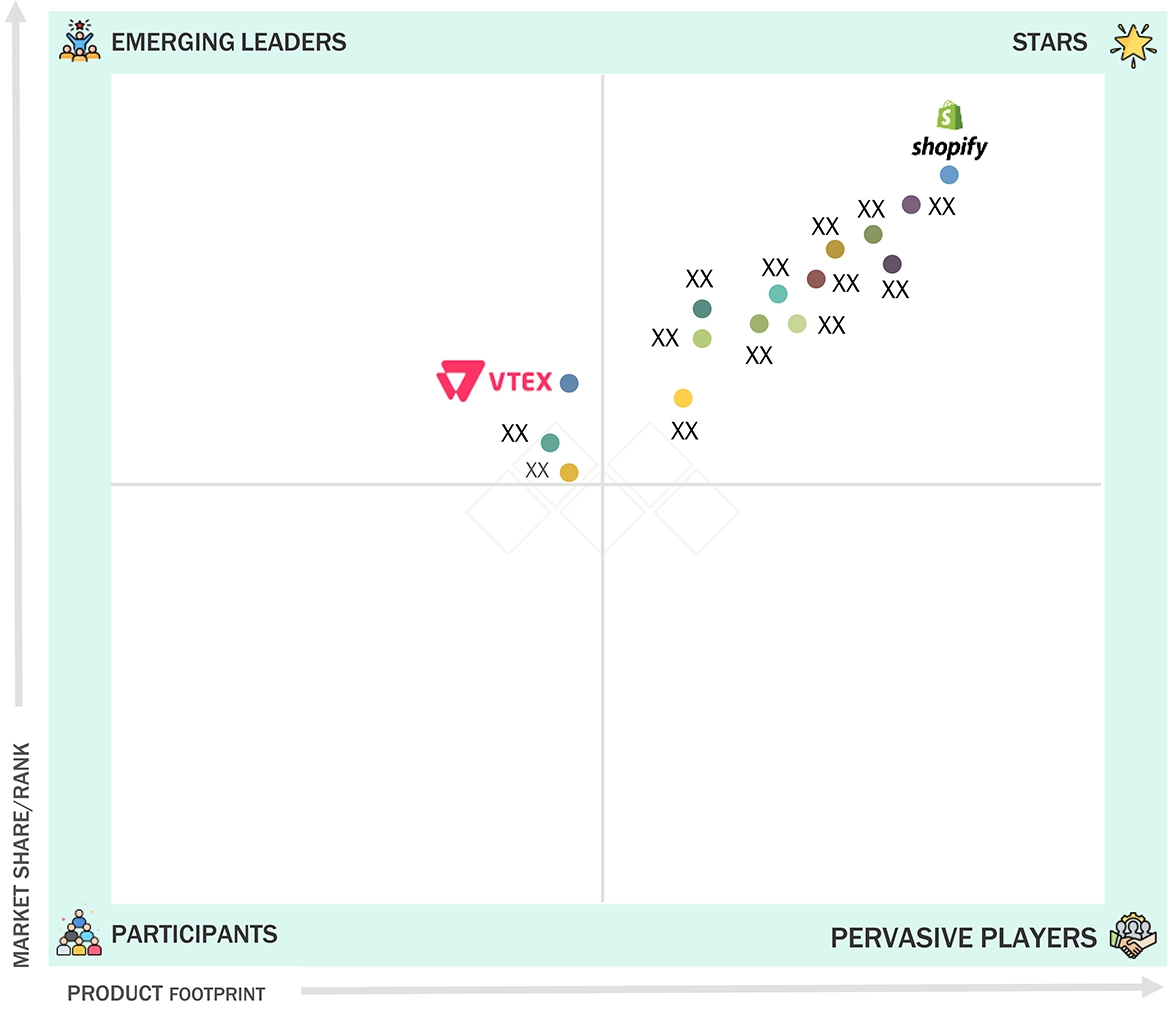
In the ecommerce platform market matrix, Shopify (Star) leads with a strong market share and extensive product footprint, driven by its user-friendly interface, extensive app ecosystem, scalable solutions for businesses of all sizes, and strong global merchant support. VTEX (Emerging Leader) is gaining visibility with its cloud-native, enterprise-grade solution that enables seamless B2B and B2C commerce, integrated marketplace capabilities, and omnichannel support, driving rapid adoption across Latin America and global markets. Shopify excels with ease of use, a vast app ecosystem, and global reach for SMEs, while VTEX focuses on enterprise-grade B2B/B2C solutions, marketplace integration, and omnichannel capabilities, targeting larger businesses.

Ecommerce Platform Market Evaluation Metrics

Source: Secondary Research, Interviews with Experts, MarketsandMarkets Analysis

MARKET SCOPE

REPORT METRIC DETAILS
Market Size in 2024 (Value) USD 8.01 Billion
Market Forecast in 2030 (Value) USD 16.51 Billion
Growth Rate CAGR of 12.7% from 2025-2030
Years Considered 2020-2030
Base Year 2024
Forecast Period 2025-2030
Units Considered Value (USD Million/Billion)
Report Coverage Revenue Forecast, Company Ranking, Competitive Landscape, Growth Factors, and Trends
Segments Covered
  • By Offering:
    • Solutions
    • Services
  • By Ecommerce Model:
    • B2B
    • B2C
  • By End-use Industry:
    • Beauty & Personal Care
    • Consumer Electronics
    • Fashion & Apparel
    • Food & Beverage
    • Home Décor
    • Health & Wellness
    • Household Consumables
    • Other Industries
Regions Covered North America, Asia Pacific, Europe, South America, Middle East & Africa

WHAT IS IN IT FOR YOU: Ecommerce Platform Market REPORT CONTENT GUIDE

Ecommerce Platform Market Content Guide

DELIVERED CUSTOMIZATIONS

We have successfully delivered the following deep-dive customizations:

CLIENT REQUEST CUSTOMIZATION DELIVERED VALUE ADDS
Leading Ecommerce Platform
  • Further breakdown of the North American ecommerce platform market
  • Further breakdown of the European ecommerce platform market
  • Identified key growth drivers and adoption trends unique to each geography
  • Distinguished end-user priorities across End-use Industries
Leading Consumer Electronics OEM Detailed analysis and profiling of additional market players operating in the Consumer Electronics End-use Industry
  • Identified best practices in B2C Consumer Electronics logistics
  • Helped align services competitively within global supply chains
  • Identified strengths, weaknesses, and strategies of ecommerce platform vendors catering to consumer electronics end-use industry

RECENT DEVELOPMENTS

  • May 2025 : Square launched the Square?Handheld, a sleek, pocket-sized POS device designed for restaurants and retailers. Weighing just 11?ounces with IP54 durability, it features a 6.2″ Gorilla Glass touchscreen, barcode scanner, 16?MP camera, and full payment capabilities.
  • May 2025 : Wix introduced Wixel, a standalone AI-powered visual design platform, democratizing professional-grade design for all users. Integrated with intuitive tools and OpenAI’s image-generation model, Wixel enables effortless background removal, context switching, and style customization within minutes.
  • April 2025 : eBay strengthened its global strategic partnership with Klarna, introducing flexible payment methods, including Pay in 4, financing options, and reselling tools to US shoppers. This expansion enhances eBay’s checkout experience by improving affordability across categories such as electronics, fashion, and collectibles. The integration empowers structured payments and circular commerce, reflecting a growing commitment to seamless, customer-centric commerce enabled by Buy Now Pay Later innovation and sustainable shopping practices.
  • April 2025 : BigCommerce announced an expanded commercial partnership with Noibu, integrating their eCommerce intelligence directly into BigCommerce’s platform. This collaboration enables one-click activation of Noibu’s enterprise-grade error detection and prioritization tools without separate contracts. The integration accelerates time-to-value, enhances proactive revenue protection by resolving technical and performance issues early, and fosters joint merchant success across growth stages.
  • April 2024 : Shopify partnered with Cognizant and Google Cloud to advance the future of enterprise commerce. This strategic collaboration integrates Shopify’s powerful commerce platform with Google Cloud’s AI infrastructure and Cognizant’s implementation expertise. The partnership empowers global retailers to deliver personalized, AI-driven shopping experiences at scale, enhancing digital transformation through cloud-native solutions, real-time customer engagement, and seamless end-to-end commerce journeys tailored for the enterprise segment.


Table of Contents

Exclusive indicates content/data unique to MarketsandMarkets and not available with any competitors.

TITLE
PAGE NO
1
INTRODUCTION


28
2
RESEARCH METHODOLOGY


32
3
EXECUTIVE SUMMARY


42
4
PREMIUM INSIGHTS


46
5
MARKET OVERVIEW AND INDUSTRY TRENDS
Ecommerce platforms to surge with smartphone adoption, despite cybersecurity and logistical challenges.


49
 
5.1
MARKET OVERVIEW


5.2
MARKET DYNAMICS


5.2.1
DRIVERS


5.2.1.1
INCREASING ONLINE CONSUMER BASE WITH GROWING ADOPTION OF SMARTPHONES TO FUEL DEMAND FOR ECOMMERCE PLATFORMS


5.2.1.2
OMNICHANNEL RETAILING TO DRIVE DEMAND FOR ECOMMERCE PLATFORMS


5.2.1.3
INCREASING INTERNET PENETRATION WORLDWIDE TO FUEL ADOPTION OF ECOMMERCE PLATFORMS


5.2.1.4
RISING NEED TO ENHANCE GLOBAL PRESENCE TO INCREASE ADOPTION OF ECOMMERCE PLATFORMS


5.2.2
RESTRAINTS


5.2.2.1
CYBERSECURITY ISSUES AND ONLINE SCAMS TO HINDER MARKET GROWTH


5.2.3
OPPORTUNITIES


5.2.3.1
DEVELOPMENT OF SUPER APPS TO OFFER MORE SIMPLE AND CONVENIENT SHOPPING OPTIONS


5.2.3.2
RISING INVESTMENTS IN ECOMMERCE SECTOR


5.2.3.3
BUY NOW PAY LATER (BNPL) TO SUPPORT GROWTH OF ECOMMERCE PLATFORM MARKET


5.2.4
CHALLENGES


5.2.4.1
HANDLING LOGISTICS AND MANAGING INVENTORY TO POSE SUBSTANTIAL CHALLENGES FOR BUSINESSES


5.2.4.2
CUSTOMER ACQUISITION AND RETENTION TO BE EXPENSIVE IN COMPETITIVE ERA
 
 
5.3
BRIEF HISTORY OF ECOMMERCE PLATFORM


5.4
ECOSYSTEM ANALYSIS


5.5
SUPPLY CHAIN ANALYSIS


5.5.1
PLATFORM PROVIDERS


5.5.2
SERVICE PROVIDERS


5.5.3
SYSTEM INTEGRATORS


5.5.4
LOGISTICS PROVIDERS


5.5.5
PAYMENT GATEWAY PROVIDERS


5.5.6
END USERS


5.6
PRICING ANALYSIS


5.6.1
AVERAGE SELLING PRICE OF ECOMMERCE PLATFORM SOLUTIONS, BY KEY PLAYERS, 2024


5.6.2
INDICATIVE PRICING ANALYSIS OF ECOMMERCE PLATFORM SERVICES, BY KEY PLAYERS, 2024


5.7
INDUSTRY USE CASES


5.7.1
USE CASE 1: MOORE BROTHERS WINE COMPANY ADOPTED BIGCOMMERCE PLATFORM


5.7.2
USE CASE 2: BIGCOMMERCE HELPED BULK NUTRIENTS TO IMPROVE ITS WEBSITE PERFORMANCE


5.7.3
USE CASE 3: NZ POST ADOPTED BIGCOMMERCE ECOMMERCE SOLUTION TO ENHANCE ITS GLOBAL PRESENCE


5.7.4
USE CASE 4: HARVEY NORMAN IMPROVED DELIVERY EXPERIENCE WITH SHIPPIT


5.7.5
CASE STUDY 5: HMD GLOBAL ADOPTED BIGCOMMERCE PLATFORM TO ENHANCE CUSTOMER EXPERIENCE DURING ONLINE SHOPPING


5.7.6
CASE STUDY 6: EBAY ENABLED TEMPLE & WEBSTER TO MANAGE AND SELL PRODUCTS MORE EFFICIENTLY ON ONLINE PLATFORMS


5.7.7
CASE STUDY 7: KMART MIGRATED ITS COMMERCE SOLUTION INTO CLOUD-BASED OFFERING WITH COMMERCETOOLS


5.7.8
CASE STUDY 8: SHOPIFY PLUS ENABLED JB HI-FI TO SERVE CUSTOMERS MORE EFFICIENTLY DURING HOLIDAY SEASON


5.8
PATENT ANALYSIS


5.8.1
METHODOLOGY


5.8.2
ECOMMERCE PLATFORM MARKET: KEY PATENTS, 2016–2025


5.9
TRENDS AND DISRUPTIONS IMPACTING CUSTOMER BUSINESS


5.10
PORTER’S FIVE FORCES ANALYSIS


5.10.1
THREAT OF NEW ENTRANTS


5.10.2
THREAT OF SUBSTITUTES


5.10.3
BARGAINING POWER OF BUYERS


5.10.4
BARGAINING POWER OF SUPPLIERS


5.10.5
INTENSITY OF COMPETITIVE RIVALRY


5.11
REGULATORY LANDSCAPE


5.11.1
REGULATORY BODIES, GOVERNMENT AGENCIES, AND OTHER ORGANIZATIONS


5.11.2
KEY REGULATIONS AND FRAMEWORKS


5.11.2.1
ISO/TC 184/SC 4


5.11.2.2
ISO/TC 184


5.11.2.3
GENERAL PERSONAL DATA PROTECTION LAW


5.11.2.4
GENERAL DATA PROTECTION REGULATION


5.11.2.5
CALIFORNIA DATA PRIVACY PROTECTION ACT
 
 
5.12
KEY STAKEHOLDERS AND BUYING CRITERIA


5.12.1
KEY STAKEHOLDERS IN BUYING PROCESS


5.12.2
BUYING CRITERIA


5.13
KEY CONFERENCES AND EVENTS, 2025–2026


5.14
TECHNOLOGY ANALYSIS


5.14.1
INTRODUCTION


5.14.2
KEY TECHNOLOGIES


5.14.2.1
CONTENT MANAGEMENT SYSTEMS


5.14.2.2
DATABASE MANAGEMENT SYSTEMS


5.14.2.3
CLOUD COMPUTING


5.14.3
ADJACENT TECHNOLOGIES


5.14.3.1
PAYMENT GATEWAYS


5.14.3.2
CUSTOMER RELATIONSHIP MANAGEMENT


5.14.3.3
CONTENT DELIVERY NETWORKS


5.14.4
COMPLEMENTARY TECHNOLOGIES


5.14.4.1
AUGMENTED REALITY


5.14.4.2
HEADLESS COMMERCE ARCHITECTURE


5.14.4.3
WAREHOUSE AUTOMATION
 
 
5.15
BEST PRACTICES IN ECOMMERCE PLATFORM MARKET


5.16
TECHNOLOGY ROADMAP FOR ECOMMERCE PLATFORM MARKET


5.16.1
ECOMMERCE PLATFORM ROADMAP TILL 2033


5.16.1.1
SHORT-TERM ROADMAP (2025-2027)


5.16.1.2
MID-TERM ROADMAP (2028-2030)


5.16.1.3
LONG-TERM ROADMAP (2031-2033)
 
 
5.17
IMPACT OF AI/GENERATIVE AI ON ECOMMERCE PLATFORM MARKET


5.17.1
USE CASES OF GENERATIVE AI IN ECOMMERCE PLATFORM


5.18
INVESTMENT AND FUNDING SCENARIO (2024)


5.19
IMPACT OF 2025 US TARIFF–ECOMMERCE PLATFORM MARKET


5.19.1
INTRODUCTION


5.19.2
KEY TARIFF RATES


5.19.3
PRICE IMPACT ANALYSIS


5.19.3.1
STRATEGIC SHIFTS AND EMERGING TRENDS


5.19.4
IMPACT ON COUNTRY/REGION


5.19.4.1
US


5.19.4.2
CHINA


5.19.4.3
EUROPE


5.19.4.4
ASIA PACIFIC (EXCLUDING CHINA)


5.19.5
IMPACT ON END-USE INDUSTRY


5.19.5.1
BEAUTY & PERSONAL CARE


5.19.5.2
CONSUMER ELECTRONICS


5.19.5.3
FASHION & APPAREL


5.19.5.4
FOOD & BEVERAGE


5.19.5.5
HOME DÉCOR


5.19.5.6
HEALTH & WELLNESS


5.19.5.7
HOUSEHOLD CONSUMABLES


5.19.5.8
OTHER INDUSTRIES
 
6
ECOMMERCE PLATFORM MARKET, BY OFFERING
Market Size & Growth Rate Forecast Analysis to 2030 in USD Million | 14 Data Tables


92
 
6.1
INTRODUCTION


6.1.1
OFFERING: ECOMMERCE PLATFORM MARKET DRIVERS


6.2
SOLUTIONS


6.2.1
REDUCE EXPENSIVE AND TIME-CONSUMING PROCESSES FOR DEVELOPERS TO BUILD ECOMMERCE STORES


6.2.2
PAYMENT & BILLING SOLUTIONS


6.2.3
ECOMMERCE MANAGEMENT PLATFORM


6.2.4
END-TO-END PLATFORM


6.3
SERVICES


6.3.1
ENTERPRISES TO DEPLOY APPROPRIATE SERVICES TO IMPROVE OPERATIONAL EFFICIENCY
 
 
7
ECOMMERCE PLATFORM MARKET, BY ECOMMERCE MODEL
Market Size & Growth Rate Forecast Analysis to 2030 in USD Million | 6 Data Tables


101
 
7.1
INTRODUCTION


7.1.1
ECOMMERCE MODEL: ECOMMERCE PLATFORM MARKET DRIVERS


7.2
BUSINESS-TO-BUSINESS


7.2.1
CATERS TO COMPLEX PURCHASING NEEDS OF BUSINESS-TO-BUSINESS CUSTOMERS


7.3
BUSINESS-TO-CUSTOMER (B2C)


7.3.1
PROVIDE UNIFIED EXPERIENCE FOR CUSTOMERS SHOPPING ONLINE OR BRICK-AND-MORTAR STORES
 
 
8
ECOMMERCE PLATFORM MARKET, BY END-USE INDUSTRY
Market Size & Growth Rate Forecast Analysis to 2030 in USD Million | 18 Data Tables


106
 
8.1
INTRODUCTION


8.1.1
INDUSTRY: ECOMMERCE PLATFORM MARKET DRIVERS


8.2
BEAUTY & PERSONAL CARE


8.2.1
GROWING FOCUS ON PERSONAL CARE BY CONSUMERS TO DRIVE MARKET


8.2.2
USE CASES


8.2.2.1
KASH BEAUTY BROKE BOUNDARIES AND SALES RECORDS WITH SHOPIFY PLUS PLATFORM


8.2.2.2
BEARD & BLADE WITNESSED REMARKABLE GROWTH AFTER DEPLOYING SHOPIFY
 
 
8.3
CONSUMER ELECTRONICS


8.3.1
SOCIAL MEDIA TOOLS TO ENHANCE ONLINE PRESENCE OF CONSUMER ELECTRONICS INDUSTRY


8.3.2
USE CASES


8.3.2.1
SONY SIMPLIFIED PROCESS OF BUYING SECURITY SOLUTIONS WITH AMAZON MARKETPLACE


8.3.2.2
STAPLES ADOPTED SHOPIFY PLUS AS NEW ONLINE MARKETPLACE
 
 
8.4
FASHION & APPAREL


8.4.1
EXPOSURE OF PEOPLE TO INTERNATIONAL FASHION TO DRIVE MARKET


8.4.2
USE CASES


8.4.2.1
SADDLEBACK ADOPTED BIGCOMMERCE TO ENHANCE ITS ONLINE PRESENCE


8.4.2.2
AGUA BENDITA EXPANDED INTERNATIONALLY WITH ECOMMERCE PLATFORMS FROM STRIPE AND VTEX
 
 
8.5
FOOD & BEVERAGE


8.5.1
ECOMMERCE PLATFORMS TO HELP ENHANCE CROSS-BORDER SALES


8.5.2
USE CASES


8.5.2.1
BEER CARTEL ADOPTED BIGCOMMERCE PLATFORM TO SELL PRODUCTS DIRECTLY FROM WEBSITE


8.5.2.2
BIGCOMMERCE STREAMLINED LINZ SHOP’S ECOMMERCE OPERATIONS
 
 
8.6
HOME DECOR


8.6.1
CONVENIENCE AND COMPETITIVE PRICES OFFERED BY ECOMMERCE PLATFORMS EXPECTED TO DRIVE MARKET


8.6.2
USE CASES


8.6.2.1
STOREHIPPO'S ECOMMERCE PLATFORM TO SUPPORT BRAND GROWTH


8.6.2.2
SHOPIFY CAPITAL TO BOOST INVENTORY FOR FABLE
 
 
8.7
HEALTH & WELLNESS


8.7.1
INCREASING ONLINE HEALTH AND WELLNESS CONSULTING SERVICES TO FUEL DEMAND FOR ECOMMERCE PLATFORMS


8.7.2
USE CASE


8.7.2.1
AWS MARKETPLACE EMPOWERED DECISION-MAKERS AT TUFTS MEDICINE TO ACHIEVE MORE WITH GREATER EFFICIENCY AND CONSISTENCY


8.7.2.2
AMBRA HEALTH SUCCESSFULLY STREAMLINED ITS SOFTWARE PROCUREMENTS WITH AWS


8.7.2.3
HUBBLE GENERATED OVER USD 30 MILLION IN SALES USING SHOPIFY PLUS
 
 
8.8
HOUSEHOLD CONSUMABLES


8.8.1
RISING COMPETITION TO LEAD TO MORE DISCOUNTS AND OFFERS IN FMCG SECTOR


8.8.2
USE CASES


8.8.2.1
BERGER PAINTS ADOPTED ECOMMERCE PLATFORM TO OFFER FAST AND CONVENIENT PAINTING SERVICES
 
 
8.9
OTHER INDUSTRIES


9
ECOMMERCE PLATFORM MARKET, BY REGION
Comprehensive coverage of 7 Regions with country-level deep-dive of 16 Countries | 124 Data Tables.


121
 
9.1
INTRODUCTION


9.2
NORTH AMERICA


9.2.1
NORTH AMERICA: MACROECONOMIC OUTLOOK


9.2.2
US


9.2.2.1
PRESENCE OF KEY MARKET PLAYERS TO DRIVE DEMAND FOR ECOMMERCE PLATFORMS


9.2.3
CANADA


9.2.3.1
IMPLEMENTING POLICIES RELATED TO IT AND ECOMMERCE PLATFORMS TO ADVANCE CYBERSECURITY AND SAFEGUARD CRITICAL INFRASTRUCTURE NETWORKS
 
 
9.3
EUROPE


9.3.1
EUROPE: MACROECONOMIC OUTLOOK


9.3.2
UK


9.3.2.1
ENTRY OF SUPERMARKETS AND DEPARTMENT STORES INTO ONLINE SHOPPING ARENA TO FUEL DEMAND FOR ECOMMERCE PLATFORMS


9.3.3
GERMANY


9.3.3.1
ECOMMERCE PLATFORMS TO OFFER BETTER PRICE CONDITIONS, WIDER PRODUCT SELECTION, AND ENHANCED CONVENIENCE


9.3.4
FRANCE


9.3.4.1
GAINING TRACTION OF DIGITAL WALLETS AND ONLINE SHOPPING TO DRIVE FRENCH MARKET


9.3.5
SPAIN


9.3.5.1
RAPID SHIFT IN CONSUMER BEHAVIOR FROM TRADITIONAL BRICK-AND-MORTAR RETAIL TO ONLINE SHOPPING TO DRIVE SPANISH MARKET


9.3.6
ITALY


9.3.6.1
INCREASING INVESTMENT BY RETAILERS IN ITALY TO SHIFT OFFLINE PLATFORMS TO ONLINE


9.3.7
REST OF EUROPE


9.4
ASIA PACIFIC


9.4.1
ASIA PACIFIC: MACROECONOMIC OUTLOOK


9.4.2
CHINA


9.4.2.1
EARLY ADOPTION OF DIGITAL PLATFORMS TO DRIVE MARKET


9.4.3
INDIA


9.4.3.1
MAKE IN INDIA INITIATIVE TO RAISE GLOBAL COMPETITIVENESS


9.4.4
JAPAN


9.4.4.1
RISING ADOPTION OF CLOUD-BASED SOLUTIONS TO DRIVE ADOPTION OF ECOMMERCE PLATFORMS


9.4.5
SINGAPORE


9.4.5.1
RISING YOUNG AND AFFLUENT POPULATION TO DRIVE ADOPTION OF ECOMMERCE PLATFORMS


9.4.6
AUSTRALIA & NEW ZEALAND (ANZ)


9.4.6.1
TECHNOLOGICAL ADVANCEMENTS TO DRIVE GROWTH OF ECOMMERCE MARKET


9.4.7
REST OF ASIA PACIFIC


9.5
MIDDLE EAST & AFRICA


9.5.1
MIDDLE EAST & AFRICA: MACROECONOMIC OUTLOOK


9.5.2
MIDDLE EAST


9.5.2.1
KINGDOM OF SAUDI ARABIA


9.5.2.2
UNITED ARAB EMIRATES


9.5.2.3
REST OF MIDDLE EAST


9.5.3
AFRICA


9.5.3.1
INCREASING DIGITAL SKILLS OF CITIZENS AND RISING SMARTPHONE ADOPTION TO ACCELERATE ECOMMERCE PLATFORM MARKET GROWTH
 
 
9.6
LATIN AMERICA


9.6.1
LATIN AMERICA: MACROECONOMIC OUTLOOK


9.6.2
BRAZIL


9.6.2.1
CONVENIENCE AND ATTRACTIVE PROMOTIONS OFFERED BY ECOMMERCE TO ATTRACT SHOPPERS


9.6.3
MEXICO


9.6.3.1
INCREASING ADOPTION OF IOT TO BOOST GROWTH OF ECOMMERCE PLATFORM MARKET


9.6.4
REST OF LATIN AMERICA
 
 
10
COMPETITIVE LANDSCAPE
Discover top players' strategies and market share dynamics shaping the competitive ecommerce landscape.


170
 
10.1
OVERVIEW


10.2
STRATEGIES ADOPTED BY KEY PLAYERS


10.3
REVENUE ANALYSIS, 2020–2024


10.4
MARKET SHARE ANALYSIS OF TOP PLAYERS, 2024


10.5
COMPANY VALUATION AND FINANCIAL METRICS


10.6
BRAND/PRODUCT COMPARISON


10.7
COMPANY EVALUATION MATRIX: KEY PLAYERS, 2025


10.7.1
STARS


10.7.2
EMERGING LEADERS


10.7.3
PERVASIVE PLAYERS


10.7.4
PARTICIPANTS


10.7.5
COMPANY FOOTPRINT: KEY PLAYERS, 2025


10.7.5.1
COMPANY FOOTPRINT


10.7.5.2
REGIONAL FOOTPRINT


10.7.5.3
OFFERING FOOTPRINT


10.7.5.4
ECOMMERCE MODEL FOOTPRINT
 
 
10.8
COMPANY EVALUATION MATRIX: STARTUPS/SMES, 2025


10.8.1
PROGRESSIVE COMPANIES


10.8.2
RESPONSIVE COMPANIES


10.8.3
DYNAMIC COMPANIES


10.8.4
STARTING BLOCKS


10.8.5
COMPETITIVE BENCHMARKING: STARTUPS/SMES, 2025


10.8.5.1
DETAILED LIST OF KEY STARTUPS/SMES


10.8.5.2
COMPETITIVE BENCHMARKING OF KEY STARTUPS/SMES
 
 
10.9
COMPETITIVE SCENARIO


10.9.1
PRODUCT LAUNCHES


10.9.2
DEALS
 
 
11
COMPANY PROFILES
In-depth Company Profiles of Leading Market Players with detailed Business Overview, Product and Service Portfolio, Recent Developments, and Unique Analyst Perspective (MnM View)


198
 
11.1
MAJOR PLAYERS


11.1.1
SHOPIFY


11.1.1.1
BUSINESS OVERVIEW


11.1.1.2
PRODUCTS/SOLUTIONS/SERVICES OFFERED


11.1.1.3
RECENT DEVELOPMENTS


11.1.1.4
MNM VIEW


11.1.2
EBAY


11.1.3
ETSY


11.1.4
SQUARE


11.1.5
BIGCOMMERCE


11.1.6
AMAZON


11.1.7
ADOBE


11.1.8
WIX


11.1.9
ORACLE


11.1.10
SQUARESPACE


11.1.11
SAP


11.1.12
SALESFORCE


11.1.13
VTEX


11.1.14
TRADE ME


11.2
SMES/STARTUPS


11.2.1
WOOCOMMERCE


11.2.2
STOREHIPPO


11.2.3
LIGHTSPEED


11.2.4
OPENCART


11.2.5
VOLUSION


11.2.6
PRESTASHOP


11.2.7
SHIFT4SHOP


11.2.8
FASTSPRING


11.2.9
NUVEMSHOP


11.2.10
TRAY.IO


11.2.11
SHOPWARE
 
 
12
ADJACENT/RELATED MARKETS


251
 
12.1
INTRODUCTION TO ADJACENT MARKETS


12.2
LIMITATIONS


12.3
ARTIFICIAL INTELLIGENCE IN RETAIL MARKET


12.3.1
MARKET DEFINITION


12.3.2
ARTIFICIAL INTELLIGENCE IN RETAIL MARKET, BY OFFERING


12.3.3
ARTIFICIAL INTELLIGENCE IN RETAIL MARKET, BY TYPE


12.3.4
ARTIFICIAL INTELLIGENCE IN RETAIL MARKET, BY BUSINESS FUNCTION


12.3.5
ARTIFICIAL INTELLIGENCE IN RETAIL MARKET, BY END USER


12.4
RETAIL CLOUD MARKET


12.4.1
MARKET DEFINITION


12.4.2
RETAIL CLOUD MARKET, BY COMPONENT


12.4.3
RETAIL CLOUD MARKET, BY SERVICE MODEL


12.4.4
RETAIL CLOUD MARKET, BY DEPLOYMENT MODEL


12.4.5
RETAIL CLOUD MARKET, BY ORGANIZATION SIZE
 
 
13
APPENDIX


257
 
13.1
DISCUSSION GUIDE


13.2
KNOWLEDGESTORE: MARKETSANDMARKETS’ SUBSCRIPTION PORTAL


13.3
CUSTOMIZATION OPTIONS


13.4
RELATED REPORTS


13.5
AUTHOR DETAILS


LIST OF TABLES


TABLE 1
USD EXCHANGE RATES, 2020–2024


TABLE 2
FACTOR ANALYSIS


TABLE 3
ROLE OF COMPANIES IN ECOMMERCE PLATFORM MARKET


TABLE 4
PRICING MODELS AND PRICE POINTS, 2024


TABLE 5
INDICATIVE PRICING ANALYSIS FOR ECOMMERCE PLATFORM SERVICES, 2024


TABLE 6
LIST OF MAJOR PATENTS


TABLE 7
ECOMMERCE PLATFORM MARKET: PORTER’S FIVE FORCES MODEL


TABLE 8
NORTH AMERICA: REGULATORY BODIES, GOVERNMENT AGENCIES, AND OTHER ORGANIZATIONS


TABLE 9
EUROPE: REGULATORY BODIES, GOVERNMENT AGENCIES, AND OTHER ORGANIZATIONS


TABLE 10
ASIA PACIFIC: LIST OF REGULATORY BODIES, GOVERNMENT AGENCIES, AND OTHER ORGANIZATIONS


TABLE 11
REST OF THE WORLD: REGULATORY BODIES, GOVERNMENT AGENCIES, AND OTHER ORGANIZATIONS


TABLE 12
INFLUENCE OF STAKEHOLDERS ON BUYING PROCESS


TABLE 13
KEY BUYING CRITERIA


TABLE 14
ECOMMERCE PLATFORM MARKET: DETAILED LIST OF CONFERENCES AND EVENTS, 2025–2026


TABLE 15
US ADJUSTED RECIPROCAL TARIFF RATES


TABLE 16
ECOMMERCE PLATFORM MARKET, BY OFFERING, 2020–2024 (USD MILLION)


TABLE 17
ECOMMERCE PLATFORM MARKET, BY OFFERING, 2025–2030 (USD MILLION)


TABLE 18
SOLUTIONS: ECOMMERCE PLATFORM MARKET, BY REGION, 2020–2024 (USD MILLION)


TABLE 19
SOLUTIONS: ECOMMERCE PLATFORM MARKET, BY REGION, 2025–2030 (USD MILLION)


TABLE 20
SOLUTIONS: ECOMMERCE PLATFORM MARKET, BY TYPE, 2020–2024 (USD MILLION)


TABLE 21
SOLUTIONS: ECOMMERCE PLATFORM MARKET, BY TYPE, 2025–2030 (USD MILLION)


TABLE 22
PAYMENT & BILLING SOLUTIONS: ECOMMERCE PLATFORM MARKET, BY REGION, 2020–2024 (USD MILLION)


TABLE 23
PAYMENT & BILLING SOLUTIONS: ECOMMERCE PLATFORM MARKET, BY REGION, 2025–2030 (USD MILLION)


TABLE 24
ECOMMERCE MANAGEMENT PLATFORM: ECOMMERCE PLATFORM MARKET, BY REGION, 2020–2024 (USD MILLION)


TABLE 25
ECOMMERCE MANAGEMENT PLATFORM: ECOMMERCE PLATFORM MARKET, BY REGION, 2025–2030 (USD MILLION)


TABLE 26
END-TO-END PLATFORM: ECOMMERCE PLATFORM MARKET, BY REGION, 2020–2024 (USD MILLION)


TABLE 27
END-TO-END PLATFORM: ECOMMERCE PLATFORM MARKET, BY REGION, 2025–2030 (USD MILLION)


TABLE 28
SERVICES: ECOMMERCE PLATFORM MARKET, BY REGION, 2020–2024 (USD MILLION)


TABLE 29
SERVICES: ECOMMERCE PLATFORM MARKET, BY REGION, 2025–2030 (USD MILLION)


TABLE 30
ECOMMERCE PLATFORM MARKET, BY ECOMMERCE MODEL, 2020–2024 (USD MILLION)


TABLE 31
ECOMMERCE PLATFORM MARKET, BY ECOMMERCE MODEL, 2025–2030 (USD MILLION)


TABLE 32
B2B: ECOMMERCE PLATFORM MARKET, BY REGION, 2020–2024 (USD MILLION)


TABLE 33
B2B: ECOMMERCE PLATFORM MARKET, BY REGION, 2025–2030 (USD MILLION)


TABLE 34
B2C: ECOMMERCE PLATFORM MARKET, BY REGION, 2020–2024 (USD MILLION)


TABLE 35
B2C: ECOMMERCE PLATFORM MARKET, BY REGION, 2025–2030 (USD MILLION)


TABLE 36
ECOMMERCE PLATFORM MARKET, BY INDUSTRY, 2020–2024 (USD MILLION)


TABLE 37
ECOMMERCE PLATFORM MARKET, BY INDUSTRY, 2025–2030 (USD MILLION)


TABLE 38
BEAUTY & PERSONAL CARE: ECOMMERCE PLATFORM MARKET, BY REGION, 2020–2024 (USD MILLION)


TABLE 39
BEAUTY & PERSONAL CARE: ECOMMERCE PLATFORM MARKET, BY REGION, 2025–2030 (USD MILLION)


TABLE 40
CONSUMER ELECTRONICS: ECOMMERCE PLATFORM MARKET, BY REGION, 2020–2024 (USD MILLION)


TABLE 41
CONSUMER ELECTRONICS: ECOMMERCE PLATFORM MARKET, BY REGION, 2025–2030 (USD MILLION)


TABLE 42
FASHION & APPAREL: ECOMMERCE PLATFORM MARKET, BY REGION, 2020–2024 (USD MILLION)


TABLE 43
FASHION & APPAREL: ECOMMERCE PLATFORM MARKET, BY REGION, 2025–2030 (USD MILLION)


TABLE 44
FOOD & BEVERAGE: ECOMMERCE PLATFORM MARKET, BY REGION, 2020–2024 (USD MILLION)


TABLE 45
FOOD & BEVERAGE: ECOMMERCE PLATFORM MARKET, BY REGION, 2025–2030 (USD MILLION)


TABLE 46
HOME DECOR: ECOMMERCE PLATFORM MARKET, BY REGION, 2020–2024 (USD MILLION)


TABLE 47
HOME DECOR: ECOMMERCE PLATFORM MARKET, BY REGION, 2025–2030 (USD MILLION)


TABLE 48
HEALTH & WELLNESS: ECOMMERCE PLATFORM MARKET, BY REGION, 2020–2024 (USD MILLION)


TABLE 49
HEALTH & WELLNESS: ECOMMERCE PLATFORM MARKET, BY REGION, 2025–2030 (USD MILLION)


TABLE 50
HOUSEHOLD CONSUMABLES: ECOMMERCE PLATFORM MARKET, BY REGION, 2020–2024 (USD MILLION)


TABLE 51
HOUSEHOLD CONSUMABLES: ECOMMERCE PLATFORM MARKET, BY REGION, 2025–2030 (USD MILLION)


TABLE 52
OTHER INDUSTRIES: ECOMMERCE PLATFORM MARKET, BY REGION, 2020–2024 (USD MILLION)


TABLE 53
OTHER INDUSTRIES: ECOMMERCE PLATFORM MARKET, BY REGION, 2025–2030 (USD MILLION)


TABLE 54
ECOMMERCE PLATFORM MARKET, BY REGION, 2020–2024 (USD MILLION)


TABLE 55
ECOMMERCE PLATFORM MARKET, BY REGION, 2025–2030 (USD MILLION)


TABLE 56
NORTH AMERICA: ECOMMERCE PLATFORM MARKET, BY OFFERING, 2020–2024 (USD MILLION)


TABLE 57
NORTH AMERICA: ECOMMERCE PLATFORM MARKET, BY OFFERING, 2025–2030 (USD MILLION)


TABLE 58
NORTH AMERICA: ECOMMERCE PLATFORM MARKET, BY SOLUTION, 2020–2024 (USD MILLION)


TABLE 59
NORTH AMERICA: ECOMMERCE PLATFORM MARKET, BY SOLUTION, 2025–2030 (USD MILLION)


TABLE 60
NORTH AMERICA: ECOMMERCE PLATFORM MARKET, BY INDUSTRY, 2020–2024 (USD MILLION)


TABLE 61
NORTH AMERICA: ECOMMERCE PLATFORM MARKET, BY INDUSTRY, 2025–2030 (USD MILLION)


TABLE 62
NORTH AMERICA: ECOMMERCE PLATFORM MARKET, BY ECOMMERCE MODEL, 2020–2024 (USD MILLION)


TABLE 63
NORTH AMERICA: ECOMMERCE PLATFORM MARKET, BY ECOMMERCE MODEL, 2025–2030 (USD MILLION)


TABLE 64
NORTH AMERICA: ECOMMERCE PLATFORM MARKET, BY COUNTRY, 2020–2024 (USD MILLION)


TABLE 65
NORTH AMERICA: ECOMMERCE PLATFORM MARKET, BY COUNTRY, 2025–2030 (USD MILLION)


TABLE 66
US: ECOMMERCE PLATFORM MARKET, BY OFFERING, 2020–2024 (USD MILLION)


TABLE 67
US: ECOMMERCE PLATFORM MARKET, BY OFFERING, 2025–2030 (USD MILLION)


TABLE 68
US: ECOMMERCE PLATFORM MARKET, BY SOLUTION, 2020–2024 (USD MILLION)


TABLE 69
US: ECOMMERCE PLATFORM MARKET, BY SOLUTION, 2025–2030 (USD MILLION)


TABLE 70
US: ECOMMERCE PLATFORM MARKET, BY INDUSTRY, 2020–2024 (USD MILLION)


TABLE 71
US: ECOMMERCE PLATFORM MARKET, BY INDUSTRY, 2025–2030 (USD MILLION)


TABLE 72
US: ECOMMERCE PLATFORM MARKET, BY ECOMMERCE MODEL, 2020–2024 (USD MILLION)


TABLE 73
US: ECOMMERCE PLATFORM MARKET, BY ECOMMERCE MODEL, 2025–2030 (USD MILLION)


TABLE 74
CANADA: ECOMMERCE PLATFORM MARKET, BY OFFERING, 2020–2024 (USD MILLION)


TABLE 75
CANADA: ECOMMERCE PLATFORM MARKET, BY OFFERING, 2025–2030 (USD MILLION)


TABLE 76
CANADA: ECOMMERCE PLATFORM MARKET, BY SOLUTION, 2020–2024 (USD MILLION)


TABLE 77
CANADA: ECOMMERCE PLATFORM MARKET, BY SOLUTION, 2025–2030 (USD MILLION)


TABLE 78
CANADA: ECOMMERCE PLATFORM MARKET, BY INDUSTRY, 2020–2024 (USD MILLION)


TABLE 79
CANADA: ECOMMERCE PLATFORM MARKET, BY INDUSTRY, 2025–2030 (USD MILLION)


TABLE 80
CANADA: ECOMMERCE PLATFORM MARKET, BY ECOMMERCE MODEL, 2020–2024 (USD MILLION)


TABLE 81
CANADA: ECOMMERCE PLATFORM MARKET, BY ECOMMERCE MODEL, 2025–2030 (USD MILLION)


TABLE 82
EUROPE: ECOMMERCE PLATFORM MARKET, BY OFFERING, 2020–2024 (USD MILLION)


TABLE 83
EUROPE: ECOMMERCE PLATFORM MARKET, BY OFFERING, 2025–2030 (USD MILLION)


TABLE 84
EUROPE: ECOMMERCE PLATFORM MARKET, BY SOLUTION, 2020–2024 (USD MILLION)


TABLE 85
EUROPE: ECOMMERCE PLATFORM MARKET, BY SOLUTION, 2025–2030 (USD MILLION)


TABLE 86
EUROPE: ECOMMERCE PLATFORM MARKET, BY INDUSTRY, 2020–2024 (USD MILLION)


TABLE 87
EUROPE: ECOMMERCE PLATFORM MARKET, BY INDUSTRY, 2025–2030 (USD MILLION)


TABLE 88
EUROPE: ECOMMERCE PLATFORM MARKET, BY ECOMMERCE MODEL, 2020–2024 (USD MILLION)


TABLE 89
EUROPE: ECOMMERCE PLATFORM MARKET, BY ECOMMERCE MODEL, 2025–2030 (USD MILLION)


TABLE 90
EUROPE: ECOMMERCE PLATFORM MARKET, BY COUNTRY, 2020–2024 (USD MILLION)


TABLE 91
EUROPE: ECOMMERCE PLATFORM MARKET, BY COUNTRY, 2025–2030 (USD MILLION)


TABLE 92
UK: ECOMMERCE PLATFORM MARKET, BY OFFERING, 2020–2024 (USD MILLION)


TABLE 93
UK: ECOMMERCE PLATFORM MARKET, BY OFFERING, 2025–2030 (USD MILLION)


TABLE 94
UK: ECOMMERCE PLATFORM MARKET, BY SOLUTION, 2020–2024 (USD MILLION)


TABLE 95
UK: ECOMMERCE PLATFORM MARKET, BY SOLUTION, 2025–2030 (USD MILLION)


TABLE 96
UK: ECOMMERCE PLATFORM MARKET, BY INDUSTRY, 2020–2024 (USD MILLION)


TABLE 97
UK: ECOMMERCE PLATFORM MARKET, BY INDUSTRY, 2025–2030 (USD MILLION)


TABLE 98
UK: ECOMMERCE PLATFORM MARKET, BY ECOMMERCE MODEL, 2020–2024 (USD MILLION)


TABLE 99
UK: ECOMMERCE PLATFORM MARKET, BY ECOMMERCE MODEL, 2025–2030 (USD MILLION)


TABLE 100
GERMANY: ECOMMERCE PLATFORM MARKET, BY OFFERING, 2020–2024 (USD MILLION)


TABLE 101
GERMANY: ECOMMERCE PLATFORM MARKET, BY OFFERING, 2025–2030 (USD MILLION)


TABLE 102
GERMANY: ECOMMERCE PLATFORM MARKET, BY SOLUTION, 2020–2024 (USD MILLION)


TABLE 103
GERMANY: ECOMMERCE PLATFORM MARKET, BY SOLUTION, 2025–2030 (USD MILLION)


TABLE 104
GERMANY: ECOMMERCE PLATFORM MARKET, BY INDUSTRY, 2020–2024 (USD MILLION)


TABLE 105
GERMANY: ECOMMERCE PLATFORM MARKET, BY INDUSTRY, 2025–2030 (USD MILLION)


TABLE 106
GERMANY: ECOMMERCE PLATFORM MARKET, BY ECOMMERCE MODEL, 2020–2024 (USD MILLION)


TABLE 107
GERMANY: ECOMMERCE PLATFORM MARKET, BY ECOMMERCE MODEL, 2025–2030 (USD MILLION)


TABLE 108
ASIA PACIFIC: ECOMMERCE PLATFORM MARKET, BY OFFERING, 2020–2024 (USD MILLION)


TABLE 109
ASIA PACIFIC: ECOMMERCE PLATFORM MARKET, BY OFFERING, 2025–2030 (USD MILLION)


TABLE 110
ASIA PACIFIC: ECOMMERCE PLATFORM MARKET, BY SOLUTION, 2020–2024 (USD MILLION)


TABLE 111
ASIA PACIFIC: ECOMMERCE PLATFORM MARKET, BY SOLUTION, 2025–2030 (USD MILLION)


TABLE 112
ASIA PACIFIC: ECOMMERCE PLATFORM MARKET, BY INDUSTRY, 2020–2024 (USD MILLION)


TABLE 113
ASIA PACIFIC: ECOMMERCE PLATFORM MARKET, BY INDUSTRY, 2025–2030 (USD MILLION)


TABLE 114
ASIA PACIFIC: ECOMMERCE PLATFORM MARKET, BY ECOMMERCE MODEL, 2020–2024 (USD MILLION)


TABLE 115
ASIA PACIFIC: ECOMMERCE PLATFORM MARKET, BY ECOMMERCE MODEL, 2025–2030 (USD MILLION)


TABLE 116
ASIA PACIFIC: ECOMMERCE PLATFORM MARKET, BY COUNTRY, 2020–2024 (USD MILLION)


TABLE 117
ASIA PACIFIC: ECOMMERCE PLATFORM MARKET, BY COUNTRY, 2025–2030 (USD MILLION)


TABLE 118
CHINA: ECOMMERCE PLATFORM MARKET, BY OFFERING, 2020–2024 (USD MILLION)


TABLE 119
CHINA: ECOMMERCE PLATFORM MARKET, BY OFFERING, 2025–2030 (USD MILLION)


TABLE 120
CHINA: ECOMMERCE PLATFORM MARKET, BY SOLUTION, 2020–2024 (USD MILLION)


TABLE 121
CHINA: ECOMMERCE PLATFORM MARKET, BY SOLUTION, 2025–2030 (USD MILLION)


TABLE 122
CHINA: ECOMMERCE PLATFORM MARKET, BY INDUSTRY, 2020–2024 (USD MILLION)


TABLE 123
CHINA: ECOMMERCE PLATFORM MARKET, BY INDUSTRY, 2025–2030 (USD MILLION)


TABLE 124
CHINA: ECOMMERCE PLATFORM MARKET, BY ECOMMERCE MODEL, 2020–2024 (USD MILLION)


TABLE 125
CHINA: ECOMMERCE PLATFORM MARKET, BY ECOMMERCE MODEL, 2025–2030 (USD MILLION)


TABLE 126
INDIA: ECOMMERCE PLATFORM MARKET, BY OFFERING, 2020–2024 (USD MILLION)


TABLE 127
INDIA: ECOMMERCE PLATFORM MARKET, BY OFFERING, 2025–2030 (USD MILLION)


TABLE 128
INDIA: ECOMMERCE PLATFORM MARKET, BY SOLUTION, 2020–2024 (USD MILLION)


TABLE 129
INDIA: ECOMMERCE PLATFORM MARKET, BY SOLUTION, 2025–2030 (USD MILLION)


TABLE 130
INDIA: ECOMMERCE PLATFORM MARKET, BY INDUSTRY, 2020–2024 (USD MILLION)


TABLE 131
INDIA: ECOMMERCE PLATFORM MARKET, BY INDUSTRY, 2025–2030 (USD MILLION)


TABLE 132
INDIA: ECOMMERCE PLATFORM MARKET, BY ECOMMERCE MODEL, 2020–2024 (USD MILLION)


TABLE 133
INDIA: ECOMMERCE PLATFORM MARKET, BY ECOMMERCE MODEL, 2025–2030 (USD MILLION)


TABLE 134
AUSTRALIA & NEW ZEALAND: ECOMMERCE PLATFORM MARKET, BY OFFERING, 2020–2024 (USD MILLION)


TABLE 135
AUSTRALIA & NEW ZEALAND: ECOMMERCE PLATFORM MARKET, BY OFFERING, 2025–2030 (USD MILLION)


TABLE 136
AUSTRALIA & NEW ZEALAND: ECOMMERCE PLATFORM MARKET, BY SOLUTION, 2020–2024 (USD MILLION)


TABLE 137
AUSTRALIA & NEW ZEALAND: ECOMMERCE PLATFORM MARKET, BY SOLUTION, 2025–2030 (USD MILLION)


TABLE 138
AUSTRALIA & NEW ZEALAND: ECOMMERCE PLATFORM MARKET, BY INDUSTRY, 2020–2024 (USD MILLION)


TABLE 139
AUSTRALIA & NEW ZEALAND: ECOMMERCE PLATFORM MARKET, BY INDUSTRY, 2025–2030 (USD MILLION)


TABLE 140
AUSTRALIA & NEW ZEALAND: ECOMMERCE PLATFORM MARKET, BY ECOMMERCE MODEL, 2020–2024 (USD MILLION)


TABLE 141
AUSTRALIA & NEW ZEALAND: ECOMMERCE PLATFORM MARKET, BY ECOMMERCE MODEL, 2025–2030 (USD MILLION)


TABLE 142
MIDDLE EAST & AFRICA: ECOMMERCE PLATFORM MARKET, BY OFFERING, 2020–2024 (USD MILLION)


TABLE 143
MIDDLE EAST & AFRICA: ECOMMERCE PLATFORM MARKET, BY OFFERING, 2025–2030 (USD MILLION)


TABLE 144
MIDDLE EAST & AFRICA: ECOMMERCE PLATFORM MARKET, BY SOLUTION, 2020–2024 (USD MILLION)


TABLE 145
MIDDLE EAST & AFRICA: ECOMMERCE PLATFORM MARKET, BY SOLUTION, 2025–2030 (USD MILLION)


TABLE 146
MIDDLE EAST & AFRICA: ECOMMERCE PLATFORM MARKET, BY INDUSTRY, 2020–2024 (USD MILLION)


TABLE 147
MIDDLE EAST & AFRICA: ECOMMERCE PLATFORM MARKET, BY INDUSTRY, 2025–2030 (USD MILLION)


TABLE 148
MIDDLE EAST & AFRICA: ECOMMERCE PLATFORM MARKET, BY ECOMMERCE MODEL, 2020–2024 (USD MILLION)


TABLE 149
MIDDLE EAST & AFRICA: ECOMMERCE PLATFORM MARKET, BY ECOMMERCE MODEL, 2025–2030 (USD MILLION)


TABLE 150
MIDDLE EAST & AFRICA: ECOMMERCE PLATFORM MARKET, BY COUNTRY, 2020–2024 (USD MILLION)


TABLE 151
MIDDLE EAST & AFRICA: ECOMMERCE PLATFORM MARKET, BY COUNTRY, 2025–2030 (USD MILLION)


TABLE 152
UNITED ARAB EMIRATES: ECOMMERCE PLATFORM MARKET, BY OFFERING, 2020–2024 (USD MILLION)


TABLE 153
UNITED ARAB EMIRATES: ECOMMERCE PLATFORM MARKET, BY OFFERING, 2025–2030 (USD MILLION)


TABLE 154
UNITED ARAB EMIRATES: ECOMMERCE PLATFORM MARKET, BY SOLUTION, 2020–2024 (USD MILLION)


TABLE 155
UNITED ARAB EMIRATES: ECOMMERCE PLATFORM MARKET, BY SOLUTION, 2025–2030 (USD MILLION)


TABLE 156
UNITED ARAB EMIRATES: ECOMMERCE PLATFORM MARKET, BY INDUSTRY, 2020–2024 (USD MILLION)


TABLE 157
UNITED ARAB EMIRATES: ECOMMERCE PLATFORM MARKET, BY INDUSTRY, 2025–2030 (USD MILLION)


TABLE 158
UNITED ARAB EMIRATES: ECOMMERCE PLATFORM MARKET, BY ECOMMERCE MODEL, 2020–2024 (USD MILLION)


TABLE 159
UNITED ARAB EMIRATES: ECOMMERCE PLATFORM MARKET, BY ECOMMERCE MODEL, 2025–2030 (USD MILLION)


TABLE 160
LATIN AMERICA: ECOMMERCE PLATFORM MARKET, BY OFFERING, 2020–2024 (USD MILLION)


TABLE 161
LATIN AMERICA: ECOMMERCE PLATFORM MARKET, BY OFFERING, 2025–2030 (USD MILLION)


TABLE 162
LATIN AMERICA: ECOMMERCE PLATFORM MARKET, BY SOLUTION, 2020–2024 (USD MILLION)


TABLE 163
LATIN AMERICA: ECOMMERCE PLATFORM MARKET, BY SOLUTION, 2025–2030 (USD MILLION)


TABLE 164
LATIN AMERICA: ECOMMERCE PLATFORM MARKET, BY INDUSTRY, 2020–2024 (USD MILLION)


TABLE 165
LATIN AMERICA: ECOMMERCE PLATFORM MARKET, BY INDUSTRY, 2025–2030 (USD MILLION)


TABLE 166
LATIN AMERICA: ECOMMERCE PLATFORM MARKET, BY ECOMMERCE MODEL, 2020–2024 (USD MILLION)


TABLE 167
LATIN AMERICA: ECOMMERCE PLATFORM MARKET, BY ECOMMERCE MODEL, 2025–2030 (USD MILLION)


TABLE 168
LATIN AMERICA: ECOMMERCE PLATFORM MARKET, BY COUNTRY, 2020–2024 (USD MILLION)


TABLE 169
LATIN AMERICA: ECOMMERCE PLATFORM MARKET, BY COUNTRY, 2025–2030 (USD MILLION)


TABLE 170
BRAZIL: ECOMMERCE PLATFORM MARKET, BY OFFERING, 2020–2024 (USD MILLION)


TABLE 171
BRAZIL: ECOMMERCE PLATFORM MARKET, BY OFFERING, 2025–2030 (USD MILLION)


TABLE 172
BRAZIL: ECOMMERCE PLATFORM MARKET, BY SOLUTION, 2020–2024 (USD MILLION)


TABLE 173
BRAZIL: ECOMMERCE PLATFORM MARKET, BY SOLUTION, 2025–2030 (USD MILLION)


TABLE 174
BRAZIL: ECOMMERCE PLATFORM MARKET, BY INDUSTRY, 2020–2024 (USD MILLION)


TABLE 175
BRAZIL: ECOMMERCE PLATFORM MARKET, BY INDUSTRY, 2025–2030 (USD MILLION)


TABLE 176
BRAZIL: ECOMMERCE PLATFORM MARKET, BY ECOMMERCE MODEL, 2020–2024 (USD MILLION)


TABLE 177
BRAZIL: ECOMMERCE PLATFORM MARKET, BY ECOMMERCE MODEL, 2025–2030 (USD MILLION)


TABLE 178
OVERVIEW OF STRATEGIES ADOPTED BY KEY PLAYERS IN ECOMMERCE PLATFORM MARKET


TABLE 179
ECOMMERCE PLATFORM MARKET: DEGREE OF COMPETITION


TABLE 180
ECOMMERCE PLATFORM MARKET: REGIONAL FOOTPRINT


TABLE 181
ECOMMERCE PLATFORM MARKET: OFFERING FOOTPRINT


TABLE 182
ECOMMERCE MARKET: ECOMMERCE MODEL FOOTPRINT


TABLE 183
ECOMMERCE PLATFORM MARKET: DETAILED LIST OF KEY STARTUP/SMES


TABLE 184
COMPETITIVE BENCHMARKING OF KEY STARTUPS/SMES, BY OFFERING, ECOMMERCE MODEL, AND REGION


TABLE 185
ECOMMERCE PLATFORM MARKET: PRODUCT LAUNCHES AND ENHANCEMENTS, JANUARY 2022–MAY 2025


TABLE 186
ECOMMERCE PLATFORM MARKET: DEALS, JANUARY 2022–MAY 2025


TABLE 187
SHOPIFY: BUSINESS OVERVIEW


TABLE 188
SHOPIFY: PRODUCTS/SOLUTIONS/SERVICES OFFERED


TABLE 189
SHOPIFY: PRODUCT LAUNCHES AND ENHANCEMENTS


TABLE 190
SHOPIFY: DEALS


TABLE 191
EBAY: BUSINESS OVERVIEW


TABLE 192
EBAY: PRODUCTS/SOLUTIONS/SERVICES OFFERED


TABLE 193
EBAY: PRODUCT LAUNCHES


TABLE 194
EBAY: DEALS


TABLE 195
ETSY: BUSINESS OVERVIEW


TABLE 196
ETSY: PRODUCTS/SOLUTIONS/SERVICES OFFERED


TABLE 197
ETSY: PRODUCT LAUNCHES


TABLE 198
SQUARE: BUSINESS OVERVIEW


TABLE 199
SQUARE: PRODUCTS/SOLUTIONS/SERVICES OFFERED


TABLE 200
SQUARE: PRODUCT LAUNCHES AND ENHANCEMENTS


TABLE 201
BIGCOMMERCE: BUSINESS OVERVIEW


TABLE 202
BIGCOMMERCE: PRODUCTS/SOLUTIONS/SERVICES OFFERED


TABLE 203
BIGCOMMERCE: PRODUCT LAUNCHES AND ENHANCEMENTS


TABLE 204
BIGCOMMERCE: DEALS


TABLE 205
AMAZON: BUSINESS OVERVIEW


TABLE 206
AMAZON: PRODUCTS/SOLUTIONS/SERVICES OFFERED


TABLE 207
AMAZON: DEALS


TABLE 208
ADOBE: BUSINESS OVERVIEW


TABLE 209
ADOBE: PRODUCTS/SOLUTIONS/SERVICES OFFERED


TABLE 210
ADOBE: PRODUCT LAUNCHES


TABLE 211
ADOBE: DEALS


TABLE 212
WIX: BUSINESS OVERVIEW


TABLE 213
WIX: PRODUCTS/SOLUTIONS/SERVICES OFFERED


TABLE 214
WIX: PRODUCT LAUNCHES


TABLE 215
WIX: DEALS


TABLE 216
ORACLE: BUSINESS OVERVIEW


TABLE 217
ORACLE: PRODUCTS/SOLUTIONS/SERVICES OFFERED


TABLE 218
ORACLE: DEALS


TABLE 219
SQUARESPACE: BUSINESS OVERVIEW


TABLE 220
SQUARESPACE: PRODUCTS/SOLUTIONS/SERVICES OFFERED


TABLE 221
SQUARESPACE: PRODUCT LAUNCHES


TABLE 222
SQUARESPACE: DEALS


TABLE 223
WOOCOMMERCE: BUSINESS OVERVIEW


TABLE 224
WOOCOMMERCE: PRODUCTS/SOLUTIONS/SERVICES OFFERED


TABLE 225
WOOCOMMERCE: PRODUCT LAUNCHES


TABLE 226
ADJACENT MARKETS AND FORECASTS


TABLE 227
ARTIFICIAL INTELLIGENCE IN RETAIL MARKET, BY OFFERING, 2019–2023 (USD MILLION)


TABLE 228
ARTIFICIAL INTELLIGENCE IN RETAIL MARKET, BY OFFERING, 2024–2030 (USD MILLION)


TABLE 229
ARTIFICIAL INTELLIGENCE IN RETAIL MARKET, BY TYPE, 2019–2023 (USD MILLION)


TABLE 230
ARTIFICIAL INTELLIGENCE IN RETAIL MARKET, BY TYPE, 2024–2030 (USD MILLION)


TABLE 231
ARTIFICIAL INTELLIGENCE IN RETAIL MARKET, BY BUSINESS FUNCTION, 2019–2023 (USD MILLION)


TABLE 232
ARTIFICIAL INTELLIGENCE IN RETAIL MARKET, BY BUSINESS FUNCTION, 2024–2030 (USD MILLION)


TABLE 233
ARTIFICIAL INTELLIGENCE IN RETAIL MARKET, BY END USER, 2019–2023 (USD MILLION)


TABLE 234
ARTIFICIAL INTELLIGENCE IN RETAIL MARKET, BY END USER, 2024–2030 (USD MILLION)


TABLE 235
RETAIL CLOUD MARKET, BY COMPONENT, 2019–2022 (USD MILLION)


TABLE 236
RETAIL CLOUD MARKET, BY COMPONENT, 2023–2028 (USD MILLION)


TABLE 237
RETAIL CLOUD MARKET, BY SERVICE MODEL, 2019–2022 (USD MILLION)


TABLE 238
RETAIL CLOUD MARKET, BY SERVICE MODEL, 2023–2028 (USD MILLION)


TABLE 239
RETAIL CLOUD MARKET, BY DEPLOYMENT MODEL, 2019–2022 (USD MILLION)


TABLE 240
RETAIL CLOUD MARKET, BY DEPLOYMENT MODEL, 2023–2028 (USD MILLION)


TABLE 241
RETAIL CLOUD MARKET, BY ORGANIZATION SIZE, 2019–2022 (USD MILLION)


TABLE 242
RETAIL CLOUD MARKET, BY ORGANIZATION SIZE, 2023–2028 (USD MILLION)


LIST OF FIGURES


FIGURE 1
ECOMMERCE PLATFORM MARKET: RESEARCH DESIGN


FIGURE 2
BREAKUP OF INTERVIEWS WITH EXPERTS: BY COMPANY, DESIGNATION, AND REGION


FIGURE 3
ECOMMERCE PLATFORM MARKET: APPROACHES USED FOR MARKET SIZE ESTIMATION


FIGURE 4
MARKET SIZE ESTIMATION METHODOLOGY, APPROACH 1: SUPPLY-SIDE ANALYSIS OF REVENUE FROM SOLUTIONS AND SERVICES


FIGURE 5
BOTTOM-UP APPROACH


FIGURE 6
MARKET SIZE ESTIMATION METHODOLOGY – APPROACH 1, BOTTOM-UP (SUPPLY SIDE): COLLECTIVE REVENUE OF ECOMMERCE PLATFORM VENDORS


FIGURE 7
TOP-DOWN APPROACH


FIGURE 8
MARKET SIZE ESTIMATION METHODOLOGY: DEMAND-SIDE ANALYSIS


FIGURE 9
ECOMMERCE PLATFORM MARKET: DATA TRIANGULATION


FIGURE 10
GLOBAL ECOMMERCE PLATFORM MARKET, 2023–2030


FIGURE 11
ECOMMERCE PLATFORM MARKET, BY OFFERING, 2025 VS. 2030


FIGURE 12
ECOMMERCE PLATFORM MARKET, BY END-USE INDUSTRY, 2025 VS. 2030 (USD MILLION)


FIGURE 13
ECOMMERCE PLATFORM MARKET, BY REGION, 2025


FIGURE 14
INCREASING USE OF ONLINE PLATFORMS TO DRIVE MARKET GROWTH


FIGURE 15
FASHION & APPAREL SEGMENT TO DOMINATE MARKET DURING FORECAST PERIOD


FIGURE 16
B2C SEGMENT TO DOMINATE MARKET DURING FORECAST PERIOD


FIGURE 17
FASHION & APPAREL SEGMENT AND US ESTIMATED TO LEAD IN NORTH AMERICAN MARKET IN 2025


FIGURE 18
FASHION & APPAREL SEGMENT AND CHINA ESTIMATED TO LEAD ASIA PACIFIC MARKET IN 2025


FIGURE 19
FASHION & APPAREL SEGMENT AND GERMANY ESTIMATED TO LEAD EUROPEAN MARKET IN 2025


FIGURE 20
DRIVERS, RESTRAINTS, OPPORTUNITIES, AND CHALLENGES: ECOMMERCE PLATFORM MARKET


FIGURE 21
SMARTPHONE ADOPTION TREND, BY REGION, 2024 VS. 2030


FIGURE 22
BRIEF HISTORY OF ECOMMERCE PLATFORMS


FIGURE 23
ECOMMERCE PLATFORM ECOSYSTEM


FIGURE 24
ECOMMERCE PLATFORM MARKET: SUPPLY CHAIN ANALYSIS


FIGURE 25
LIST OF MAJOR PATENTS FOR ECOMMERCE PLATFORM, 2016–2025


FIGURE 26
TRENDS/DISRUPTIONS IMPACTING CUSTOMER BUSINESS


FIGURE 27
ECOMMERCE PLATFORM MARKET: PORTER’S FIVE FORCES ANALYSIS


FIGURE 28
INFLUENCE OF STAKEHOLDERS ON BUYING PROCESS


FIGURE 29
KEY BUYING CRITERIA


FIGURE 30
USE CASES OF GENERATIVE AI IN ECOMMERCE PLATFORM


FIGURE 31
ECOMMERCE PLATFORM MARKET: INVESTMENT AND FUNDING SCENARIO (USD MILLION)


FIGURE 32
SERVICES TO GROW AT HIGHER CAGR DURING FORECAST PERIOD


FIGURE 33
B2B SEGMENT TO GROW AT HIGHER CAGR DURING FORECAST PERIOD


FIGURE 34
HEALTH & WELLNESS TO GROW AT HIGHEST CAGR DURING FORECAST PERIOD


FIGURE 35
NORTH AMERICA: MARKET SNAPSHOT


FIGURE 36
ASIA PACIFIC: MARKET SNAPSHOT


FIGURE 37
REVENUE ANALYSIS OF KEY COMPANIES FROM 2020 TO 2024


FIGURE 38
SHARE OF LEADING COMPANIES IN ECOMMERCE PLATFORM MARKET, 2024


FIGURE 39
FINANCIAL METRICS OF KEY ECOMMERCE PLATFORM VENDORS


FIGURE 40
COMPANY VALUATION OF KEY VENDORS IN ECOMMERCE PLATFORM MARKET


FIGURE 41
BRAND/PRODUCT COMPARISON


FIGURE 42
ECOMMERCE PLATFORM MARKET: COMPANY EVALUATION MATRIX (KEY PLAYERS), 2025


FIGURE 43
ECOMMERCE PLATFORM MARKET: COMPANY FOOTPRINT


FIGURE 44
ECOMMERCE PLATFORM MARKET: COMPANY EVALUATION MATRIX (STARTUPS/SMES), 2025


FIGURE 45
SHOPIFY: COMPANY SNAPSHOT


FIGURE 46
EBAY: COMPANY SNAPSHOT


FIGURE 47
ETSY: COMPANY SNAPSHOT


FIGURE 48
SQUARE: COMPANY SNAPSHOT


FIGURE 49
BIGCOMMERCE: COMPANY SNAPSHOT


FIGURE 50
AMAZON: COMPANY SNAPSHOT


FIGURE 51
ADOBE: COMPANY SNAPSHOT


FIGURE 52
WIX: COMPANY SNAPSHOT


FIGURE 53
ORACLE: COMPANY SNAPSHOT


Methodology

This research study involved extensive secondary sources, directories, and databases, such as Dun & Bradstreet, D&B Hoovers, and Bloomberg BusinessWeek, to identify and collect valuable information for a technical, market-oriented, and commercial study of the eCommerce platform market. The primary sources have been mainly industry experts from the core and related industries and preferred suppliers, manufacturers, distributors, service providers, technology developers, alliances, and organizations related to all segments of the value chain of this market. In-depth interviews were conducted with primary respondents, including key industry participants, subject matter experts, C-level executives of key market players, and industry consultants, to obtain and verify critical qualitative and quantitative information.

Secondary Research

In the secondary research process, various secondary sources were referred to identify and collect information for the study. The secondary sources included annual reports, press releases, investor presentations of companies, white papers, certified publications, and articles from recognized associations and government publishing sources. Several journals and associations were also referred to, such as the Journal of Electronic Commerce Research (JECR) and the Journal of Electronic Commerce in Organizations (JECO). Secondary research was used to obtain key information about industry insights, the market’s monetary chain, the overall pool of key players, market classification and segmentation according to industry trends to the bottom-most level, regional markets, and key developments from both the market and technology-oriented perspectives.

Primary Research

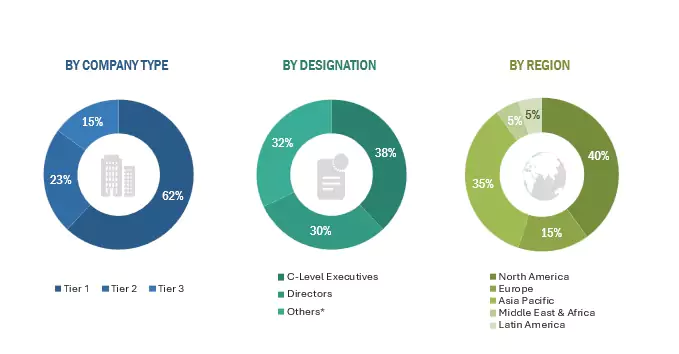
In the primary research process, various primary sources from the supply and demand sides were interviewed to obtain qualitative and quantitative information for the report. The primary sources from the supply side included industry experts, such as chief executive officers (CEOs), chief technology officers (CTOs), chief operating officers (COOs), vice presidents (VPs), marketing directors, technology and innovation directors, and related key executives from various key companies and organizations operating in the eCommerce platform market. The primary sources from the demand side included eCommerce platform end users, consultants/specialists, chief information officers (CIOs), and subject-matter experts from enterprises and government associations.

Ecommerce Platform Market Size, and Share

Note: Others include sales managers, marketing managers, and product managers.
Tier 1 companies’ revenue is more than USD 1 billion; Tier 2 companies ‘revenue ranges between USD 500 million
and USD 1 billion; and Tier 3 companies’ revenue ranges between USD 100 million and USD 500 million.

To know about the assumptions considered for the study, download the pdf brochure

Market Size Estimation

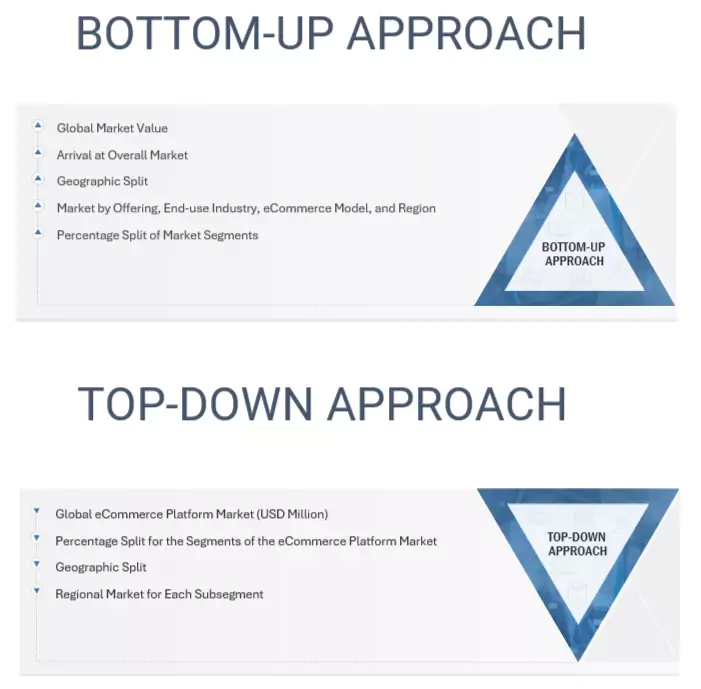
Multiple approaches were adopted to estimate and forecast the size of the eCommerce platform market. The first approach involves estimating market size by summing up the revenue companies generate through selling eCommerce platform solutions.

The top-down and bottom-up approaches were used to estimate and validate the total size of the eCommerce platform market. These methods were extensively used to estimate the size of various segments in the market. The research methodology used to estimate the market size includes the following:

  • Key players in the market have been identified through extensive secondary research.
  • In terms of value, the industry’s supply chain and market size have been determined through primary and secondary research processes.
  • All percentage shares, splits, and breakups have been determined using secondary sources and verified through primary sources.

Ecommerce Platform Market : Top-Down and Bottom-Up Approach

Ecommerce Platform Market Top Down and Bottom Up Approach

Data Triangulation

After determining the overall market size, the eCommerce platform market was divided into several segments and subsegments. A data triangulation procedure was used to complete the overall market engineering process and determine the exact statistics for all segments and subsegments, wherever applicable. The data was triangulated by studying various factors and trends from the demand and supply sides. Along with data triangulation and market breakdown, the market size was validated by the top-down and bottom-up approaches.

Market Definition

An eCommerce platform comprises various technologies that facilitate buying and selling over the internet. It assists vendors in showcasing their products, providing discounts, and keeping customers engaged. On the buyer’s end, these technologies help consumers search for products they want, create shopping lists, and pay for their purchases online. It is a tool that enables businesses to manage their virtual assets, omnichannel marketing, digital sales, and operations all in one place.

According to Shopify, an eCommerce platform is a software application that facilitates online commerce between merchants and consumers. These platforms can handle web hosting, inventory management, payment processing, marketing, order fulfillment, and more.

Stakeholders

  • eCommerce Platform Providers
  • eCommerce Software Providers
  • Government Organizations
  • Regulatory Authorities
  • Policymakers and Financial Organizations
  • Consulting Firms
  • Research Organizations
  • Academic Institutions
  • Resellers and Distributors
  • Training Providers

Report Objectives

  • To analyze and forecast the global eCommerce platform market from 2025 to 2030 for the following segments: Offerings: Solutions and Services; eCommerce Models: B2B (Business-to-Business) and B2C (Business-to-Consumer); and End-use Industries: Beauty & Personal Care, Consumer Electronics, Fashion & Apparel, Food & Beverage, Home Décor, Health & Wellness, Household Consumables, and Other Industries
  • To examine the various macroeconomic and microeconomic factors that influence market growth
  • To forecast the size of the market segments for North America, Europe, Asia Pacific (APAC), Latin America, and the Middle East & Africa (MEA)
  • To provide detailed information about the major factors (drivers, restraints, opportunities, and challenges) influencing the growth of the eCommerce platform market
  • To analyze each submarket concerning individual growth trends, prospects, and contributions to the overall eCommerce platform market
  • To analyze the opportunities in the market for stakeholders by identifying the high-growth segments of the eCommerce platform market
  • To profile the key market players, provide a comparative analysis based on business overviews, regional presence, product offerings, business strategies, and key financials, and illustrate the market’s competitive landscape
  • To track and analyze competitive developments in the market, such as mergers and acquisitions, product developments, partnerships and collaborations, and research and development (R&D) activities

Available Customizations

With the given market data, MarketsandMarkets offers customizations based on the company’s specific needs. The following customization options are available for the report.

Geographic Analysis as per Feasibility

  • Analysis for additional countries (up to five)

Company Information

  • Detailed analysis and profiling of additional market players (up to 5)

Key Questions Addressed by the Report

What is the definition of the eCommerce platform market?

An eCommerce platform consists of various technologies that facilitate the process of buying and selling over the internet. According to Shopify, an eCommerce platform is a software application that facilitates online commerce between merchants and consumers. These platforms can handle tasks such as web hosting, inventory management, payment processing, marketing, order fulfillment, and more.

What is the market size of the eCommerce platform market?

The eCommerce platform market is estimated at USD 9,078.2 million in 2025 and is expected to reach USD 16,506.9 million by 2030 at a compound annual growth rate (CAGR) of 12.7% from 2025 to 2030.

What are the major drivers in the eCommerce platform market?

The eCommerce platform market is primarily driven by the growing global shift toward digital commerce, accelerated by increasing internet penetration and smartphone adoption. The rising consumer preference for online shopping, coupled with advancements in payment and logistics infrastructure, is fostering platform adoption. The demand for omnichannel retailing, integration of AI-powered tools, and the need for scalable, cloud-based infrastructure are further propelling market growth across diverse industry verticals and geographic regions.

Who are the key players operating in the eCommerce platform market?

The key market players profiled in the eCommerce Platform market include Shopify (Canada), eBay (US), Etsy (US), Square (US), BigCommerce (US), Amazon (US), Adobe (US), Wix (Israel), Oracle (US), Squarespace (US), SAP (Germany), Salesforce (US), VTEX (UK), Trade Me (New Zealand), WooCommerce (US), StoreHippo (India), Lightspeed (US), OpenCart (China), Volusion (US), PrestaShop (France), Shift4Shop (US), FastSpring (US), Nuvemshop (Brazil), Tray.io (US), and Shopware (Germany).

What are the key technological trends in the eCommerce platform market?

Artificial Intelligence (AI) and Machine Learning (ML) are enabling personalized customer experiences through recommendation engines, dynamic pricing, and intelligent chatbots. The integration of Augmented Reality (AR) and Virtual Reality (VR) is enhancing product visualization, allowing consumers to interact with products in immersive environments.
Headless commerce architecture is gaining traction, offering greater flexibility and scalability by decoupling the frontend from the backend. Blockchain technology is also emerging as a secure solution for payments, data transparency, and supply chain traceability.

Personalize This Research

  • Triangulate with your Own Data
  • Get Data as per your Format and Definition
  • Gain a Deeper Dive on a Specific Application, Geography, Customer or Competitor
  • Any level of Personalization
Request A Free Customisation

Let Us Help You

  • What are the Known and Unknown Adjacencies Impacting the Ecommerce Platform Market

  • What will your New Revenue Sources be?
  • Who will be your Top Customer; what will make them switch?
  • Defend your Market Share or Win Competitors
  • Get a Scorecard for Target Partners
Customized Workshop Request

Custom Market Research Services

We Will Customise The Research For You, In Case The Report Listed Above Does Not Meet With Your Requirements

Get 10% Free Customisation

Growth opportunities and latent adjacency in Ecommerce Platform Market

DMCA.com Protection Status