eFuse Market

eFuse Market by Type (Auto Retry, Latched), Packaging Type (Small Outline No Lead, Dual Flat No Leads, Quad Flat No Leads, Thin Shrink Small Outline Package), Application, Vertical (Automotive, Aerospace, Healthcare, IT), and Region - Global Forecast to 2030




OVERVIEW
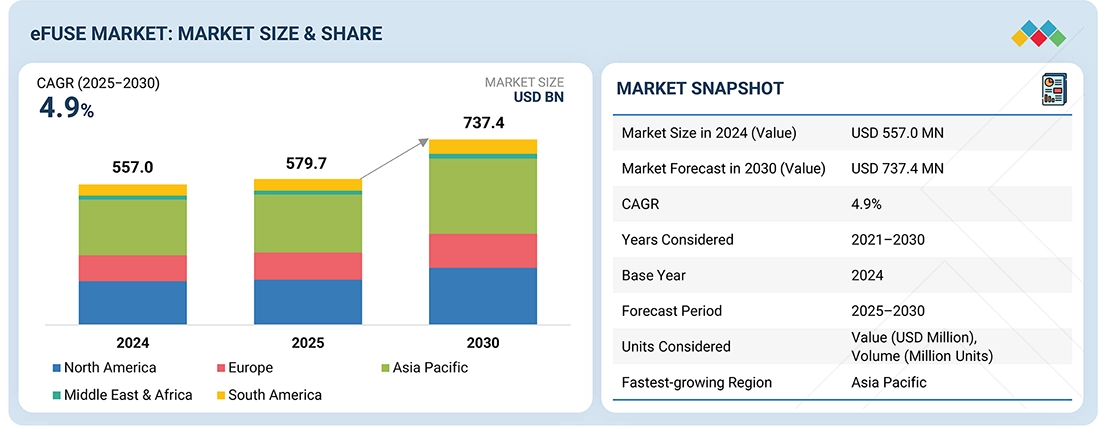
Source: Secondary Research, Interviews with Experts, MarketsandMarkets Analysis
The eFuse market is projected to grow from USD 579.7 million in 2025 to USD 737.4 million by 2030, at a CAGR of 4.9% due to the growing adoption of electric vehicles (EVs) and advanced automotive electronics, which require reliable overcurrent and thermal protection in high-voltage battery and power systems.
Market Size and Forecast:
- 2025 Market Size: USD 579.7 Million
- 2030 Projected Market Size: USD 737.4 Million
- Growth Rate (2025-2030): CAGR of 4.9%
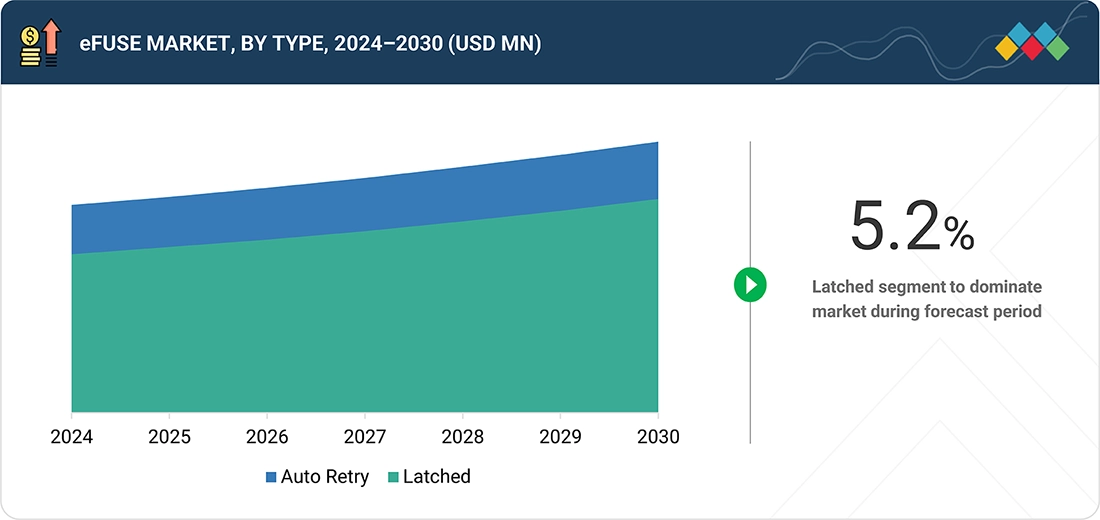
- Latched eFuse segment is expected to account for the largest market share during the forecast period
- Automotive electronics segment is projected to witness the fastest growth by application
- Forecast period: 2025–2030
- Asia Pacific is expected to remain the largest and fastest-growing regional market
- Quad Flat No Leads (QFN) package segment is anticipated to register significant growth due to its compact design and superior thermal performance
- Automotive & transportation vertical is projected to lead demand, driven by EV adoption and advanced safety systems
Key Market Trends and Insights:
- Rising electrification of vehicles and increasing deployment of ADAS technologies are accelerating eFuse adoption in automotive applications
- Growing demand for compact, resettable, and programmable circuit protection solutions is driving the transition from traditional fuses to eFuses
- Latched eFuses continue to gain traction in mission-critical applications requiring persistent fault isolation and enhanced system safety
- Expansion of data centers, cloud computing infrastructure, and 5G networks is increasing the need for precise power protection solutions
- QFN package designs are witnessing strong growth due to their space-saving characteristics, improved thermal performance, and suitability for high-density electronics
- Integration of eFuses into IoT devices, wearables, and advanced consumer electronics is creating new growth opportunities for manufacturers
- Asia Pacific remains the leading growth region, supported by strong semiconductor manufacturing capabilities, EV production, and expanding consumer electronics demand
KEY TAKEAWAYS
-
BY VERTICALThe vertical segment encompasses automotive & transportation, aerospace & defense, consumer electronics, healthcare, IT & telecommunication, among others. The automotive & transportation sector is exhibiting the most rapid growth, primarily driven by electrification, advanced ADAS, and electric vehicle (EV) safety initiatives, which are collectively fostering the highest adoption rates of eFuse for secure, high-voltage vehicle platforms and enhanced system reliability.
-
BY TYPEThe type segment includes auto retry and latched. The latched segment is driven by safety standards in mission-critical applications, requiring continuous fault isolation to prevent repeated errors in automotive and industrial use cases.
-
BY APPLICATIONThe application segment includes solid state drives, hard disk drives, servers and data center equipment, automotive electronics, and other applications. The automotive electronics segment is likely to grow for eFuses for power distribution, fault protection, and enabling ADAS and EV functions within next-generation automotive platforms, fueling rapid application growth.
-
BY PACKAGE TYPEThe package type segment includes small outline no lead (SON), dual flat no leads (DFN), quad flat no leads (QFN), thin shrink small outline package (TSSOP), and others. The demand for quad flat no leads is likely to increase due to their compact size, superior thermal management, and easy integration into high-density automotive ECUs and advanced driver-assistance modules.
-
BY REGIONThe regions considered are North America, Europe, Asia Pacific, Middle East & Africa, and South America. Asia Pacific is the fastest-growing region due to rapid industrialization, surging automotive electronics production, and massive investments in electric vehicles and renewable energy. Robust consumer electronics demand, large-scale semiconductor manufacturing, and supportive government policies further accelerate adoption. Localized supply chains, aggressive R&D, and favorable export conditions drive wide-scale integration of eFuse devices in diverse high-growth sectors throughout the region.
-
COMPETITIVE LANDSCAPEThe major market players have adopted both organic and inorganic strategies, including acquisition and expansion. For instance, Littelfuse, Inc. and Analog Devices, Inc. have acquired companies to strengthen their presence in those regions and to establish a strong foothold with their products in those countries.
eFuse technology plays a crucial role in modern electronic systems due to its ability to provide reliable, customizable, and efficient circuit protection. Increasing power density and complexity in data centers and networking equipment drive the need for precise, fast-acting circuit protection to prevent downtime and hardware damage. Additionally, expanding consumer electronics markets, such as smartphones, wearables, and IoT devices, require compact, intelligent protection solutions to improve safety and battery life. Government policies promoting energy efficiency and sustainability further boost eFuse adoption in smart grids and renewable energy infrastructures. Moreover, the rise of digital transformation, cloud computing, and 5G networks increases demand for robust protection in telecommunications and IT infrastructure.
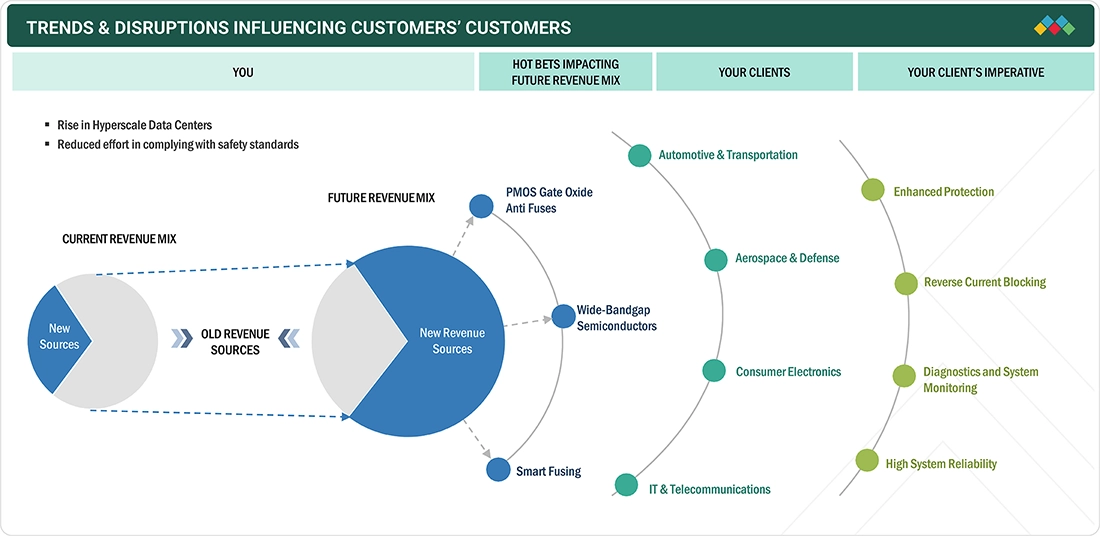
TRENDS & DISRUPTIONS IMPACTING CUSTOMERS' CUSTOMERS
The eFuse market is set for significant growth in the coming years, fueled by the increasing adoption of high-voltage architectures in electric vehicles and the expansion of hyperscale data centers, which require advanced eFuse solutions. These developments are transforming how eFuses are designed, monitored, and maintained, leading to improved operational efficiency and lower costs across various industries. Key trends driving this growth include predictive maintenance powered by AI, energy-efficient systems, and the integration of IoT-enabled devices, all helping companies optimize uptime and reduce maintenance expenses. Rising customer expectations for customization and flexibility, especially in sectors like healthcare, IT, and telecommunications, are pushing companies to innovate and develop more specialized, digitally integrated solutions. As a result, these changes are creating new revenue streams for eFuse manufacturers while supporting the global emphasis on energy efficiency and sustainable business practices.
Source: Secondary Research, Interviews with Experts, MarketsandMarkets Analysis
MARKET DYNAMICS

Level
-
Growing applications of high voltage architecture in EVs

-
Reduced downtime and maintenance costs


Level
-
Design complexities and biased current during operation of efuse


Level
-
Reduced certification workload

-
Rise in hyperscale data centers


Level
-
Limited awareness of eFuse technology

Source: Secondary Research, Interviews with Experts, MarketsandMarkets Analysis
Driver: Growing applications of high voltage architecture in Evs
In EVs, electrical architecture refers to the network of components that manage the flow of electricity, including the battery, motor, and control systems. Traditionally, these systems operated around 400 volts DC (Direct Current). High voltage architecture, however, refers to systems operating in the range of 600-800 volts DC and even pushing toward 1200 volts in some cases. One benefit of High Voltage Architecture is faster charging times. By increasing voltage, you can reduce current for the same amount of power. This results in quicker charging at DC fast-charging stations. Higher voltage systems can significantly cut charging times, making EVs more attractive for long-distance travel. In this scenario, traditional low-voltage fuses might not be adequate for the higher voltage environments of 800-volt or even 1200-volt EV systems. eFuses in this context offer several advantages over traditional fuses in these high-voltage applications, such as: 1. Precise control: eFuses can be electronically programmed for more accurate trip currents, ensuring better protection for sensitive EV components. 2. Faster response times: eFuses react much quicker than traditional fuses, providing superior protection against transient voltage spikes or short circuits. 3. Integration and communication: eFuses can be integrated into the vehicle's electronic control systems, enabling real-time monitoring and data collection for improved diagnostics and safety features.
Restraint: Design complexities and biased current during operation of eFuse
While eFuses offer significant advantages over traditional fuses, two key factors may serve as constraints to broader market adoption: biased current requirements and design complexities. Increased Terminal Count: Unlike traditional fuses with merely two terminals (input and output), eFuses, as integrated circuits, generally necessitate at least three terminals for proper operation. Input: The point at which power enters the eFuse. Output: The point at which power exits the eFuse to the protected circuit. Ground: Essential for the proper functioning of the internal circuitry within the eFuse. In certain applications with limited space, the presence of an additional terminal can complicate PCB layout routing.
Opportunity: Reduced certification workload
Previously, electronic equipment had to meet various safety standards depending on the type of device. This meant that devices needed certification for multiple standards. Two key standards were IEC 60950-1, which covered information and communication equipment, and IEC 60065, which applied to audio-visual gear. In December 2020, a new standard, IEC 62368-1, was introduced. This standard combines the requirements of the older standards into a single guideline for both information and communication equipment and audio-visual gear. As a result, manufacturers only need to certify their equipment to one standard, reducing their certification workload.
Challenge: Limited awareness of eFuse technology
A major obstacle to widespread eFuse adoption is the lack of awareness. Many engineers, designers, and decision-makers may not know about the capabilities and benefits eFuses offer compared to traditional fuses. This limited understanding can cause hesitation in integrating this potentially valuable technology into existing systems or new designs. To address this issue, targeted education and awareness campaigns are essential. Creating informative materials, partnering with industry leaders, and highlighting successful applications can effectively communicate the value of eFuses. This will enable decision-makers to see eFuse as a practical and advantageous choice. Another persistent barrier is the unfamiliarity among engineers and decision-makers with eFuse’s advanced features, such as self-resetting mechanisms, programmable thresholds, and diagnostic tools. Many still rely on traditional fuses due to ingrained design habits or uncertainty about eFuse’s capabilities. This knowledge gap is worsened by the lack of visibility into long-term cost savings, like reduced downtime from auto-retry functions and compliance with standards such as IEC 62368-1. For example, while eFuses provide 150ns fault response (compared to minutes for conventional fuses) and include features like reverse current blocking, their advantages are often overlooked in sectors like medical devices and EV charging, where precision and reliability are critical.
eFuse Market: COMMERCIAL USE CASES ACROSS INDUSTRIES
| COMPANY | USE CASE DESCRIPTION | BENEFITS |
|---|---|---|
 |
Denso incorporates eFuse technology in advanced automotive electronics, mainly for battery management and power distribution units in electric and hybrid vehicles. These eFuses replace traditional fuses in zonal electrical systems, enabling smart control of high-current automotive loads and improving modular electrical system designs. | Using eFuses, Denso provides faster and more reliable circuit protection, allowing efficient power distribution with quick self-resetting after faults. This method improves battery efficiency, enhances safety through accurate current limiting, and reduces maintenance needs, all supporting longer vehicle range and lower operating costs. |
 |
eFuses provide Cisco with reliable overcurrent and short-circuit protection that reacts instantly to faults. These electronic fuses minimize downtime, remove the need for physical fuse replacement, and ensure consistent performance across a wide range of operating conditions, supporting Cisco’s reliability and service standards in large-scale IT environments. | eFuses provide Cisco with reliable overcurrent and short-circuit protection that reacts instantly to faults. These electronic fuses minimize downtime, remove the need for physical fuse replacement, and ensure consistent performance across a wide range of operating conditions, supporting Cisco’s reliability and service standards in large-scale IT environments. |
 |
Dell Technologies uses eFuses in the power management modules of its enterprise servers, storage solutions, and commercial computing devices. The eFuses protect against inrush currents during hot-swapping of drives and ensure controlled power sequencing in layered circuit boards. | Using eFuses helps Dell reduce the risk of hardware failures caused by current surges, allowing safe hot-swapping and extending product lifespan. The small size of eFuses supports compact PCB designs, and their programmability provides customized protection without needing hardware redesigns, enhancing Dell’s flexibility and lowering maintenance costs. |
Logos and trademarks shown above are the property of their respective owners. Their use here is for informational and illustrative purposes only.
MARKET ECOSYSTEM
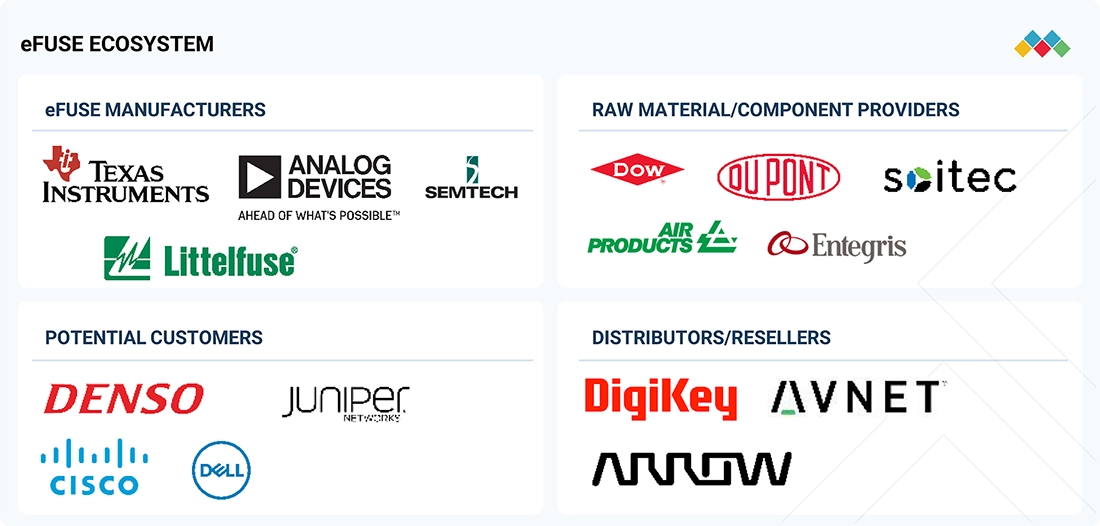
The eFuse market ecosystem comprises raw material suppliers, manufacturers, distributors, end users and regulatory bodies/standards organizations. End users of the eFuse market primarily include automotive & transportation, IT & telecommunications, and consumer electronics.
Logos and trademarks shown above are the property of their respective owners. Their use here is for informational and illustrative purposes only.
MARKET SEGMENTS
Source: Secondary Research, Interviews with Experts, MarketsandMarkets Analysis
eFuse Market, By Application
Solid-state drives is the largest segment. eFuses are vital for protecting solid-state drives (SSD) by providing advanced front-end protection features such as overcurrent, overvoltage, and reverse current safeguarding. They detect faults quickly, prevent damage, streamline maintenance, and eliminate the need for traditional fuse replacement. Enhanced features like input overvoltage clamp ensure stable power supply and efficient system reliability. With energy savings and improved system longevity, eFuses help manufacturers reduce costs and support broader adoption of SSDs in consumer electronics, IT, telecommunications, and industrial sectors, contributing to overall operational efficiency and stable drive performance.
eFuse Market, By Type
Most industries prefer auto retry type eFuses because they offer better system reliability and stability. The auto retry feature in eFuses allows devices to reset automatically after a temporary overload, bringing the circuit back online without human intervention. This enhances overall system dependability by enabling faster recovery from glitches or faults. Auto retry also reduces downtime during shutdowns. Minimizing downtime is especially important in sectors like automotive and data centers. The benefits of auto retry eFuses for reliability, reduced downtime, and improved performance make them a popular choice among consumers.
eFuse Market, By Package Type
The Quad Flat No Leads (QFN) is the largest segment. The QFN segment held a significant market share of 30.0% in 2024. QFN eFuses offer a good balance between footprint and functionality. These fuses have a slightly larger surface area compared to SON or DFN, which allows for potentially more complex circuitry or the integration of additional features like diagnostics. The QFN package's design, with its exposed top and bottom surfaces, helps improve heat dissipation compared to leadless packages like SON. This is especially important for applications where eFuses face high thermal loads or operate in environments with limited airflow. Additionally, the flat shape of the QFN makes it easier to assemble than DFN packages, as it allows for straightforward pick-and-place placement during PCB assembly, potentially streamlining the manufacturing process of integrated circuits.
eFuse Market, By Vertical
eFuse in the automotive and transportation sectors significantly impacts safety, efficiency, and reliability. It is a vital component that protects electronic systems from overcurrent conditions. In automotive and transportation applications, eFuse plays a crucial role in safeguarding sensitive electronic components and maintaining the overall integrity of the system. One key use of eFuse in the automotive industry is in electric vehicles (EVs). Since EVs depend heavily on electronic systems for propulsion, battery management, and vehicle operation, implementing eFuse is essential to prevent overcurrent events that could cause damage or malfunction. For example, in EV battery management systems, eFuse can monitor and control current flow to prevent overheating or short circuits, thereby enhancing safety and extending the battery's lifespan. Additionally, in intelligent transportation systems (ITS), eFuse can protect critical electronic components such as traffic management systems, vehicle-to-vehicle communication modules, and onboard sensors. By integrating eFuse technology, these systems can operate continuously without interruption, avoid damage from electrical faults, and improve the overall reliability of transportation infrastructure. In conclusion, incorporating eFuse in automotive and transportation applications provides a strong solution for protecting electronic systems, boosting safety, and increasing the efficiency of modern vehicles and transportation networks..
REGION
Asia Pacific to be largest-growing region in global eFuse market during forecast period
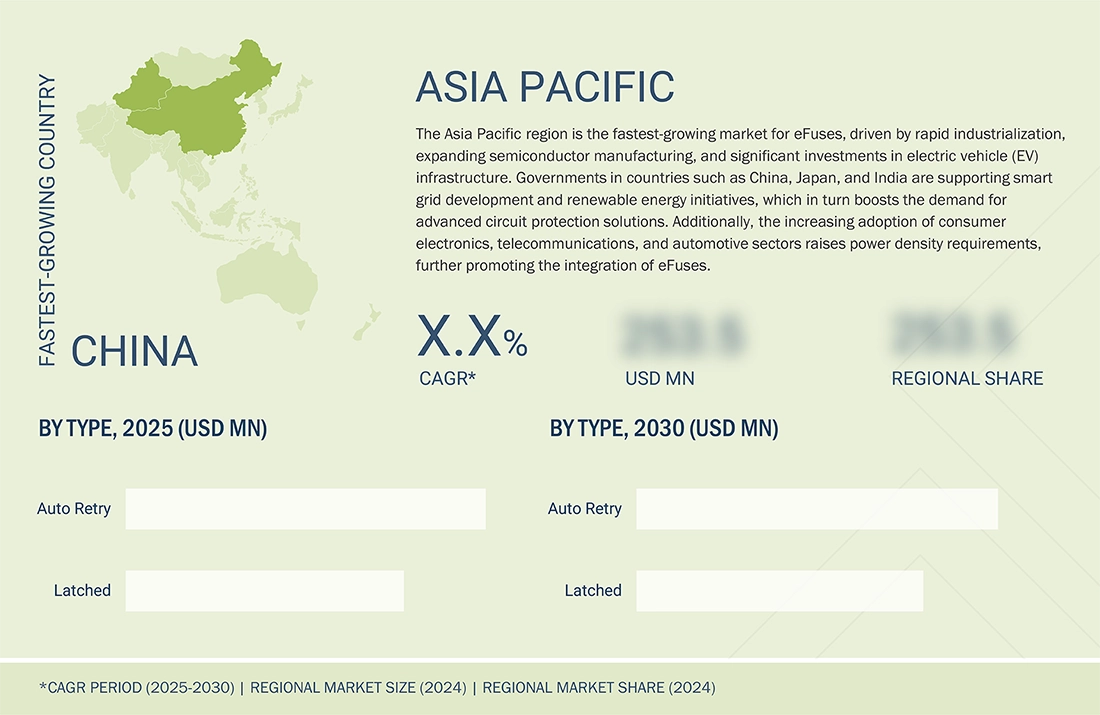
Asia Pacific accounted for a 39.6% share of the eFuse market in 2024. The region includes countries such as China, India, Japan, South Korea, Malaysia, Singapore, Indonesia, Vietnam, and Thailand. China led the Asia Pacific market with a 47.3% share, followed by Japan at 14.0% and India at 13.1%. Rapid development is driven by major economies like China, India, South Korea, and Japan, with strong economic growth supporting the market. Automotive and consumer electronics industries are major consumers of eFuses, requiring reliable and compact protection solutions. Trends such as smart cities and increased digitalization boost the adoption of intelligent eFuses, which provide remote monitoring, proactive maintenance, and enhanced safety. Asia Pacific is the largest semiconductor market, with China leading growth, as eFuses are widely used in semiconductors for circuit protection.
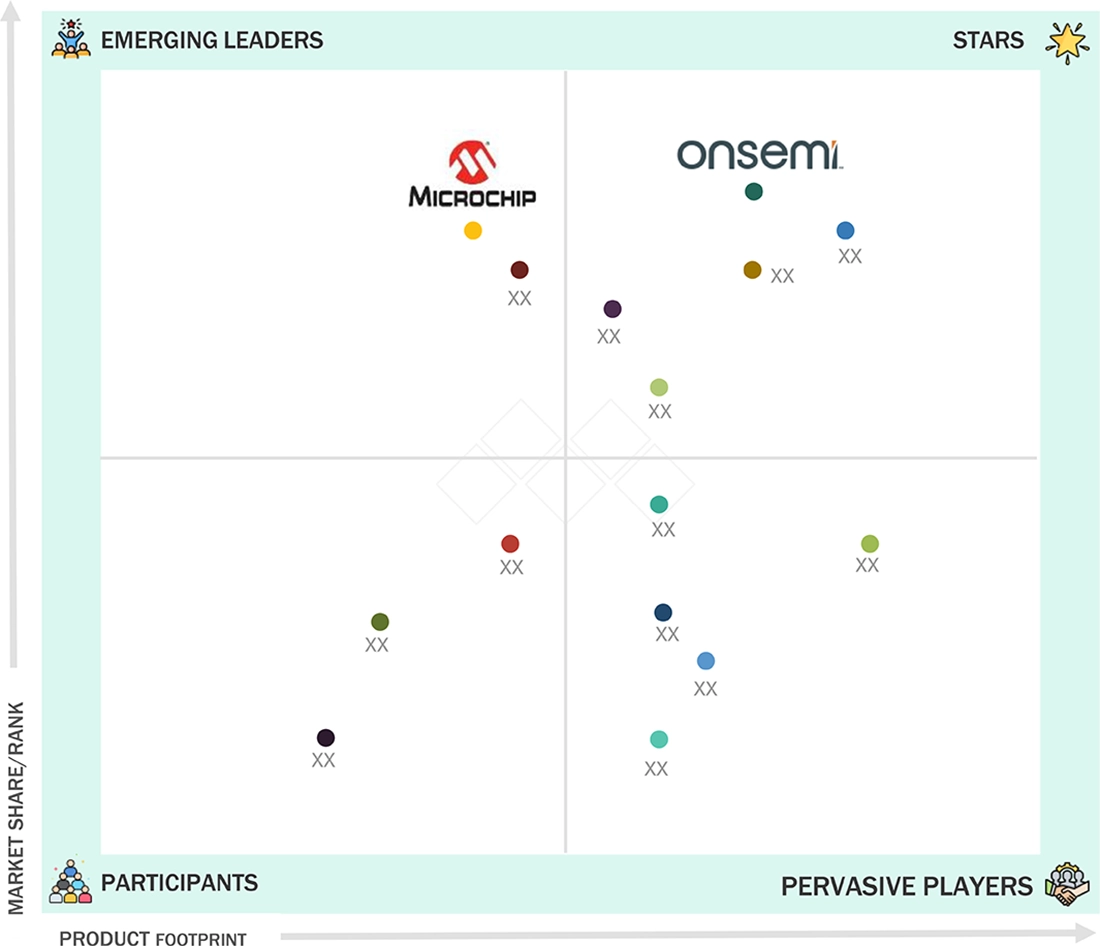
eFuse Market: COMPANY EVALUATION MATRIX
Littelfuse, Inc. (Stars) leads with the acquisition of a 200mm wafer fabrication facility in Dortmund, Germany, from Elmos Semiconductor. Its diversified portfolio and emphasis on industrial technology establish it as a prominent entity driving market expansion. Onsemi (Semiconductor Component Industries, LLC) announced the establishment of its Analog and Mixed-Signal Group (AMG), a strategic initiative aimed at broadening its product offerings in power management and sensor interface devices. This initiative is anticipated to enhance growth in the automotive, industrial, and cloud-centric sectors by strengthening Onsemi’s presence in these vital markets. Through the introduction of new products via the AMG, Onsemi is strategically positioning itself to better fulfill the increasing demand for advanced semiconductor solutions.
Source: Secondary Research, Interviews with Experts, MarketsandMarkets Analysis
KEY MARKET PLAYERS
MARKET SCOPE
| REPORT METRIC | DETAILS |
|---|---|
| Market Size in 2024 (Value) | USD 557.0 MN |
| Market Forecast in 2030 (Value) | USD 737.4 MN |
| Growth Rate | 4.90% |
| Years Considered | 2021–2030 |
| Base Year | 2024 |
| Forecast Period | 2025–2030 |
| Units Considered | Value (USD Million), Volume (Million Units) |
| Report Coverage | Revenue forecast, company ranking, competitive landscape, growth factors, and trends |
| Segments Covered |
|
| Regions Covered | North America, Asia Pacific, Europe, Middle East & Africa, South America |
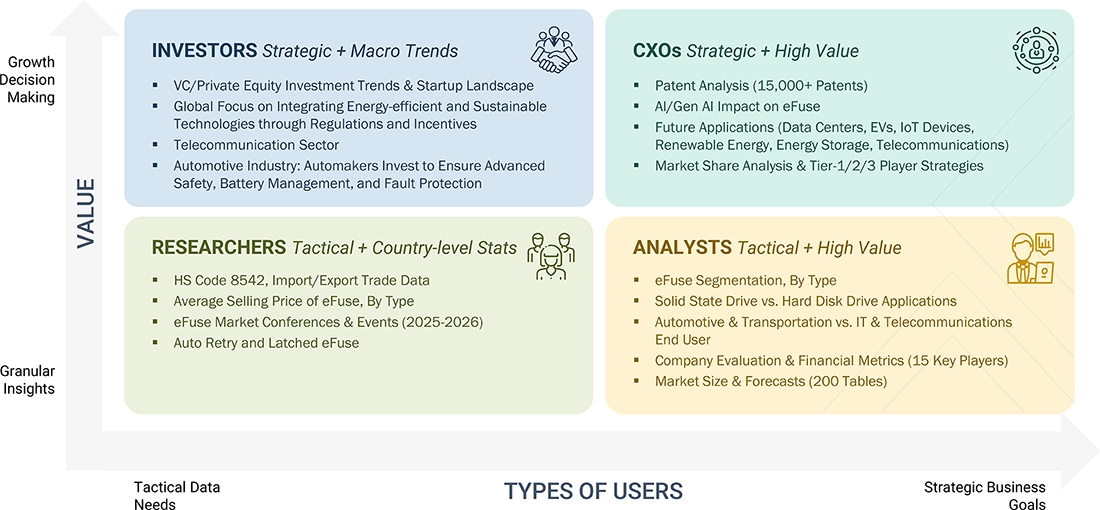
WHAT IS IN IT FOR YOU: eFuse Market REPORT CONTENT GUIDE
DELIVERED CUSTOMIZATIONS
We have successfully delivered the following deep-dive customizations:
| CLIENT REQUEST | CUSTOMIZATION DELIVERED | VALUE ADDS |
|---|---|---|
| eFuse Market | Market sizing for Asia Pacific countries - China, India, Japan, South Korea, and Rest of Asia Pacific | Country-level analysis, key insights on verticals, potential application of eFuse |
RECENT DEVELOPMENTS
- October 2023 : Littelfuse, Inc. introduced its innovative eFuse Super Capacitor Protection ICs for backup power charging applications on October 17, 2023. The LS0502SCD33 eFuse offers a highly efficient integrated SuperCap charging solution, including features like over-current protection, over-voltage protection, and active cell balancing.
- December 2024 : Littelfuse, Inc. completed its acquisition of the 200mm wafer fab in Dortmund, Germany, from Elmos Semiconductor. The move enhances Littelfuse's long-term power semiconductor capabilities across key industrial sectors such as energy storage, automation, motor drives, renewables, power supplies, and charging infrastructure.
- February 2023 : Analog Devices Inc. finalized the acquisition of Maxim Integrated Products, Inc. on August 26, 2021. This deal further strengthened Analog Devices' position as a leading high-performance analog semiconductor company.
- July 2023 : Microchip Technology Inc. announced a USD 300 million multi-year investment plan to grow its presence in India. This important move is designed to improve the company's operations in the country. The investment is part of Microchip's strategic efforts to expand its footprint and activities in India.
Table of Contents
 Exclusive indicates content/data unique to MarketsandMarkets and not available with any competitors.
Methodology
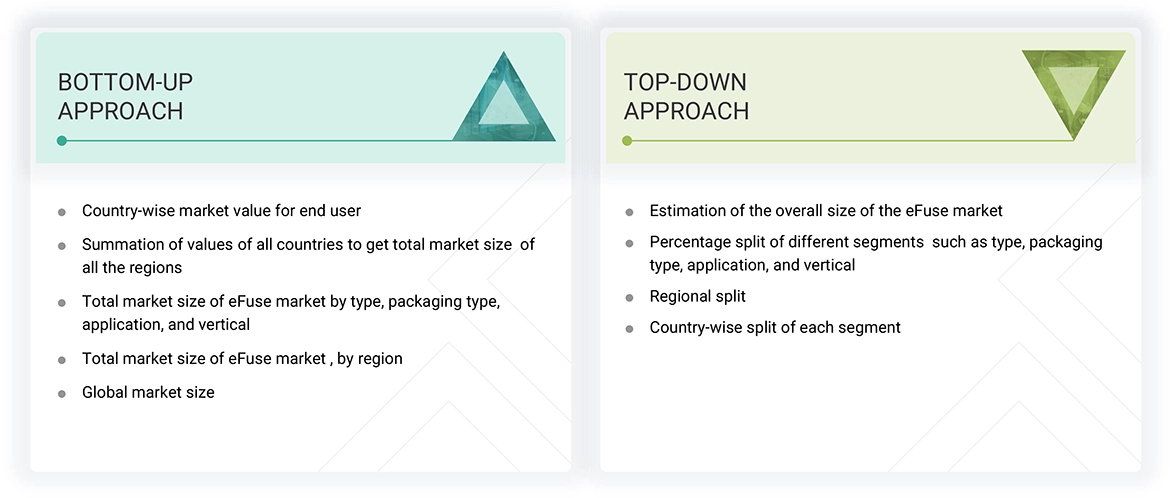
The study involved major activities in estimating the current size of the eFuse market. Exhaustive secondary research was done to collect information on the peer and parent markets. The next step was to validate these findings, assumptions, and sizing with industry experts across the value chain through primary research. Both top-down and bottom-up approaches were employed to estimate the complete market size. Thereafter, market breakdown and data triangulation were used to estimate the market size of the segments and subsegments.
Secondary Research
This research study on the eFuse market involved the use of extensive secondary sources, directories, and databases, such as Hoovers, Bloomberg, Businessweek, Factiva, International Energy Agency, and BP Statistical Review of World Energy, to identify and collect information useful for a technical, market-oriented, and commercial study of the global eFuse market. The other secondary sources included annual reports, press releases, and investor presentations of companies, white papers, certified publications, articles by recognized authors, manufacturer associations, trade directories, and databases.
Primary Research
The eFuse market comprises stakeholders such as eFuse manufacturers, technology providers, and support providers in the supply chain. The demand side of this market is characterized by the rising demand for eFuse in nations to reduce the non-revenue water losses and to improve the power infrastructure. The supply side is characterized by rising demand for contracts from the distribution utilities, and mergers and acquisitions among big players. Various primary sources from both the supply and demand sides of the market were interviewed to obtain qualitative and quantitative information. The following is the breakdown of primary respondents:
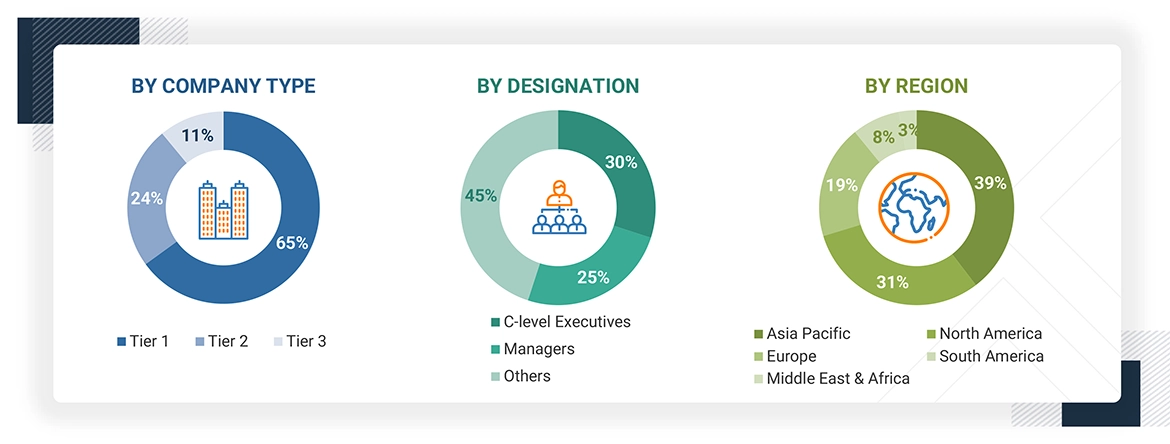
Note 1: Others include sales managers, marketing managers, and product managers.
Note 2: Tier 1 companies’ revenues are more than USD 10 billion; tier 2 companies’ revenues range between USD 1 and 10 billion; and tier 3 companies’ revenues range between USD 500 million and USD 1 billion.
Source: Industry Experts
To know about the assumptions considered for the study, download the pdf brochure
Market Size Estimation
Both the top-down and bottom-up approaches were used to estimate and validate the size of the eFuse market and its dependent submarkets. The key players in the market were identified through secondary research, and their market share in the respective regions was obtained through primary and secondary research. The research methodology includes the study of the annual and financial reports of top market players and interviews with industry experts, such as chief executive officers, vice presidents, directors, sales managers, and marketing executives, for key quantitative and qualitative insights related to the eFuse market.
eFuse Market : Top-Down and Bottom-Up Approach
Data Triangulation
After arriving at the overall market size from the estimation process explained above, the total market has been split into several segments and subsegments. To complete the overall market engineering process and arrive at the exact statistics for all the segments and subsegments, the data triangulation and market breakdown processes have been employed, wherever applicable. The data has been triangulated by studying various factors and trends from both the demand and supply sides. Along with this, the market has been validated using both the top-down and bottom-up approaches.
Market Definition
eFuses are used to safeguard circuits in the consumer electronics, automotive, industrial, and telecommunications sectors by continuously monitoring and controlling temperature, voltage, and current. eFuse integration improves the reliability and safety of systems by enabling quick fault detection, thermal shutdown, and overcurrent protection. By employing state-of-the-art semiconductor technology and diagnostic features to optimize power distribution, reduce downtime, and enable remote monitoring via IoT and cloud-based platforms, eFuses offer seamless integration and efficiency in modern electronic systems.
Stakeholders
- Suppliers of Raw materials
- Technology Investors
- Automotive Companies
- Semiconductor Equipment Manufacturers
- Original Equipment Manufacturers (OEMs)
- Third-party Service Providers
- Government Labs
- System Integrators
- Semiconductor Manufacturing Equipment Forums, Alliances, Consortia, and Associations
- Distributors, Resellers, and Traders
Report Objectives
- To define, describe, segment, and forecast the eFuse market based on type, package type, application, and vertical
- To describe and forecast the market size of various segments across five key regions—North America, South America, Europe, Asia Pacific, and the Middle East & Africa
- To provide detailed information regarding the drivers, restraints, opportunities, and challenges influencing the growth of the eFuse market
- To forecast the eFuse market, by region, in terms of volume
- To provide detailed information on the market map, value chain, case studies, technologies, market ecosystem, tariff & regulatory landscape, Porter’s Five Forces, and trends/disruptions impacting customers’ businesses that are specific to the eFuse market
- To analyze market opportunities for stakeholders in the eFuse market and draw a competitive landscape for market players
- To benchmark players within the market using the company evaluation matrix, which analyzes market players on various parameters within the broad categories of business excellence and strength of product portfolio
- To compare key market players with respect to market share, product specifications, and end users
- To strategically analyze micromarkets with regard to individual growth trends, prospects, and contributions to the total market
- To strategically profile the key players and comprehensively analyze their market share and core competencies
- To analyze competitive developments in the eFuse market, such as expansions, product launches, and acquisitions
Available Customizations
MarketsandMarkets offers customizations according to the specific needs of the companies with the given market data.
The following customization options are available for the report:
Product Analysis
- Product matrix, which gives a detailed comparison of the product portfolio of each company
Geographic Analysis as per Feasibility
- Further breakdown of the eFuse, by country
Company Information
- Detailed analysis and profiling of additional market players (up to five)
Key Questions Addressed by the Report
What was the size of the eFuse market in 2024?
The eFuse market size was USD 557.0 million in 2024.
What are the major drivers for the eFuse market?
The eFuse market is mainly driven by growing applications of high voltage architectures and reduced downtime and maintenance costs.
Which region is projected to be the fastest-growing eFuse market during the forecast period?
Asia Pacific is expected to be the fastest-growing market between 2025 and 2030, fueled by rapid industrialization, urbanization, and government-led initiatives.
Which will be the largest segment, by type, in the eFuse market during the forecast period?
The auto retry segment is expected to hold the dominant share in the eFuse market.
Which segment is projected to be the largest, by vertical, in the eFuse market during the forecast period?
Automotive & transportation is likely to account for the largest market share during the forecast period.


Personalize This Research
- Triangulate with your Own Data
- Get Data as per your Format and Definition
- Gain a Deeper Dive on a Specific Application, Geography, Customer or Competitor
- Any level of Personalization
Let Us Help You
- What are the Known and Unknown Adjacencies Impacting the eFuse Market
- What will your New Revenue Sources be?
- Who will be your Top Customer; what will make them switch?
- Defend your Market Share or Win Competitors
- Get a Scorecard for Target Partners

Custom Market Research Services
We Will Customise The Research For You, In Case The Report Listed Above Does Not Meet With Your Requirements
Get 10% Free CustomisationTESTIMONIALS

Kimberly Murphy
GLOBAL MARKETING DIRECTOR
Bently Nevada,
Leading Condition Monitoring & Asset Protectionwww.bakerhughesds.com/bently-nevada

MarketsandMarkets™ showed consistent rigor for success and relentlessly worked with Bently Nevada stakeholders to positively impact go-to-market strategy. Their proactiveness and flexibility has been instrumental in achieving the objectives to grow our sales pipeline in key industrial markets.

DARRICK HUEBER
Business Development Leader
Nexus Controls LLC,
Leading Manufacturer of Automation System & Electrical Panelswww.bakerhughesds.com/nexus-controls

We partnered with MarketsandMarkets to expand our business further by tapping into new industrial segments. It was critical for us to gather crucial business insights about specific markets to achieve this goal. MarketsandMarkets engagement model and client services helped us provide those insights, it was really impressive and valuable for my business. The team was extremely flexible and helpful.

Mike Schoff
Global Industrial Commercial Strategy Leader
Nexus Controls LLC
Leading Manufacturer of Automation System & Electrical Panelswww.bakerhughesds.com/nexus-controls
We consulted MarketsandMarkets for potential Partner Identification. Overall, it was a good experience. The insights provided through interviews conducted by the team helped us put together the questionnaire required for discussion with the selected partners. Their ability to provide insights through interviews with customers in a timely manner was quite impressive.
- US eFuse Market
- Canada eFuse Market
- Mexico eFuse Market
- Germany eFuse Market
- UK eFuse Market
- France eFuse Market
- Italy eFuse Market
- China eFuse Market
- Japan eFuse Market
- India eFuse Market
- South Korea eFuse Market
- Brazil eFuse Market
- Saudi Arabia eFuse Market
- Rest Of Europe eFuse Market
- Rest Of Asia Pacific eFuse Market
- GCC eFuse Market
- Rest Of South America eFuse Market
- Rest Of GCC eFuse Market






Growth opportunities and latent adjacency in eFuse Market