Electronic Hydrofluoric Acid Market

Electronic Hydrofluoric Acid Market by Grade (El Grade, Up Grade, Up-S, Up-Ss, Up-Sss), Type (Fluorosilicic Acid Based, Fluorite Based), Application (Semiconductor Wafers, Solar Cells, Flat Panel Display, Led And Compound Semiconductor, Electronic Components, Mems, Optical Fibers And Photonics), & Region – Forecast to 2030




OVERVIEW
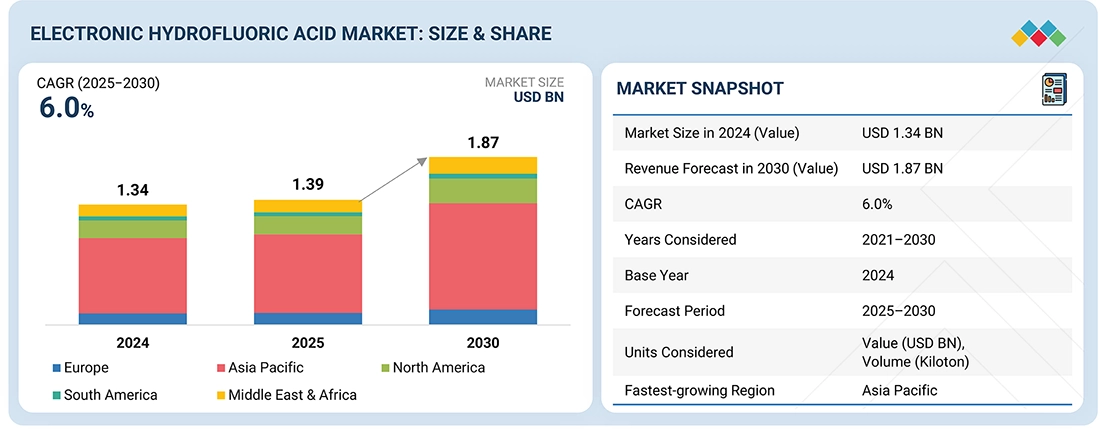
Source: Secondary Research, Interviews with Experts, MarketsandMarkets Analysis
The electronic hydrofluoric acid market is growing at a steady CAGR of 6.0%, driven by the sustained expansion of the semiconductor, electronics, and photovoltaic industries, which are the primary consumers of high-purity hydrofluoric acid. Growth is stable rather than rapid because semiconductor capacity expansions are controlled and based on planned fab schedules, ensuring predictable hydrofluoric acid demand.
KEY TAKEAWAYS
-
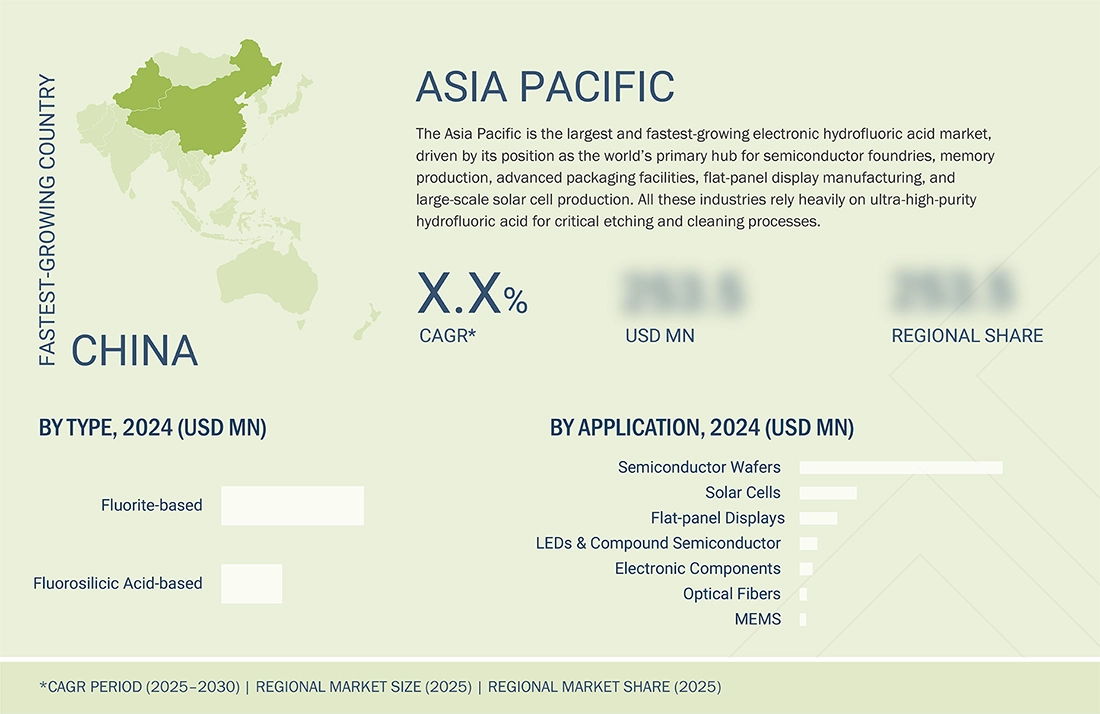
BY REGIONAsia Pacific is the fastest-growing region in the electronic hydrofluoric acid market, with a CAGR of 6.3%.
-
BY GRADEBy grade, the UP-SSS grade is the largest and fastest-growing segment during the forecast period. In 2024, the segment accounted for a market share of 33.4%.
-
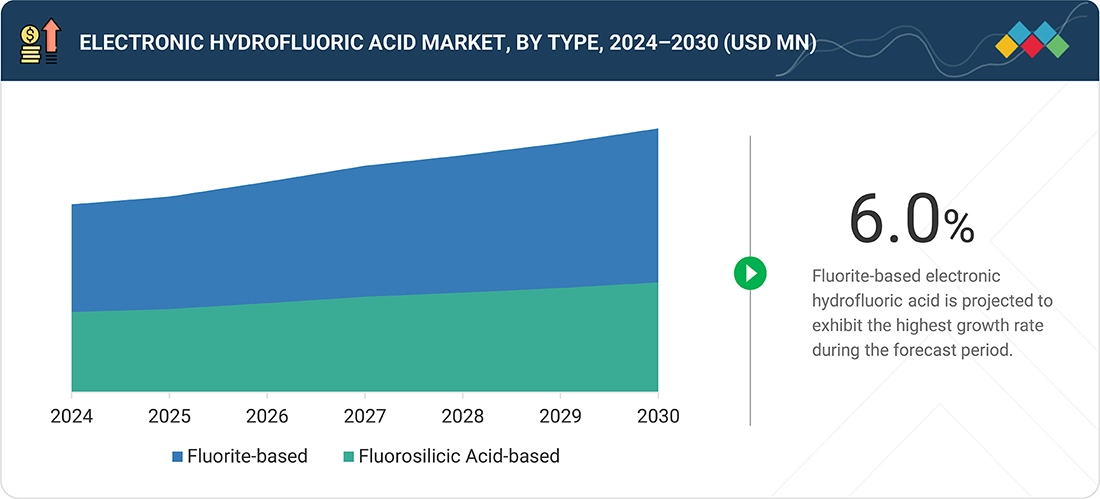
BY TYPEBy type, the fluorite-based segment accounted for the largest share of 70.0% of the electronic hydrofluoric acid market in 2024.
-
BY APPLICATIONBy application, semiconductor wafers accounted for the largest share of 59.2% of the electronic hydrofluoric acid market in 2024.
-
COMPETITIVE LANDSCAPE- KEY PLAYERSHoneywell International Inc. (US), Solvay (Belgium), LANXESS (Germany), and Stella Chemifa Corporation (Japan) are identified as star players in the electronic hydrofluoric acid market, given their strong market share and product footprint.
-
COMPETITIVE LANDSCAPE- STARTUPSCompanies like Halopolymer and Sinochem Lantian Co., Ltd., among others, have distinguished themselves among startups and SMEs by securing strong footholds in specialized niche areas, underscoring their potential as progressive companies.
The electronic hydrofluoric acid market is expanding at a steady CAGR of 6.0%, supported by ongoing growth in the semiconductor, electronics, and photovoltaic sectors, which are the main consumers of high-purity hydrofluoric acid. Market growth remains stable rather than explosive, as semiconductor capacity increases are carefully planned and aligned with fab expansion schedules, providing predictable and consistent demand for electronic hydrofluoric acid.
TRENDS & DISRUPTIONS IMPACTING CUSTOMERS' CUSTOMERS
Shifts in industrial demand patterns or regulatory changes directly affect the electronic hydrofluoric acid industry. Changes in the use of fluorochemicals, fluoropolymers, or aluminum fluoride can greatly impact the purchasing habits of hydrofluoric acid end users, such as fluorochemical, semiconductor, and other manufacturers. These fluctuations directly influence the revenues of electronic hydrofluoric acid suppliers and the operational stability of producers along the fluorochemical supply chain. As the market increasingly relies on high-purity and environmentally friendly hydrofluoric acid grades, even small disruptions in industrial output, environmental policies, or raw material supply can have significant effects throughout the hydrofluoric acid supply network.
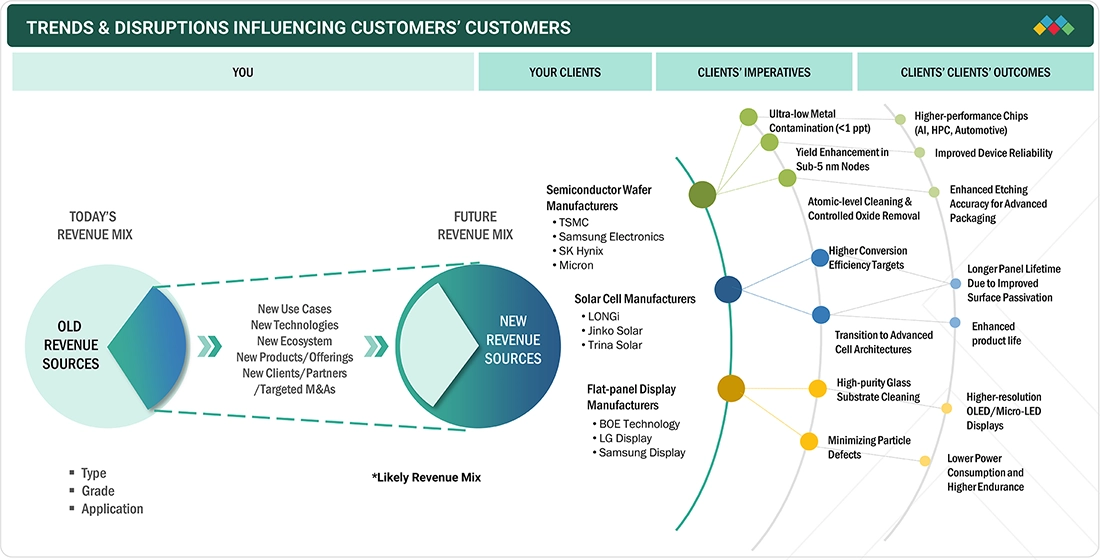
Source: Secondary Research, Interviews with Experts, MarketsandMarkets Analysis
MARKET DYNAMICS

Level
-
Surging semiconductor and advanced electronics demand

-
High-purity hydrofluoric acid's consumption for silicon wafer edge cleaning and glass processing grows with large-scale PV and OLED/LCD fabs


Level
-
Hydrofluoric acid’s extreme corrosivity and health risk raise OSHA/EPA compliance, emergency response, and insurance costs for producers and logistics providers


Level
-
Fabs prefer shorter lead times and lower transport risk; small modular hydrofluoric acid purification units located near semiconductor clusters (US, Europe, India, & Southeast Asia) can win premium contracts


Level
-
Demonstrating sub-ppb metal levels, trace organic control, and consistent batch-to-batch purity need advanced analytics, cleanroom packaging, and certified traceability

Source: Secondary Research, Interviews with Experts, MarketsandMarkets Analysis
Driver: Surging semiconductor and advanced electronics demand
The electronic hydrofluoric acid market is propelled by surging global demand for advanced semiconductors (sub-3 nm logic, 1α–1γ DRAM, 300+ layer 3D NAND) and high-efficiency solar cells (TOPCon, HJT). The rapid expansion of AI data centers, 5G/6G infrastructure, electric vehicles, and renewable energy targets is driving double-digit consumption growth, with leading fabs adding hundreds of wet-etch/cleaning steps per wafer.
Restraint: Hydrofluoric acid’s extreme corrosivity and health risk raise OSHA/EPA compliance, emergency response, and insurance costs for producers and logistics providers
Hydrofluoric acid is extremely corrosive and toxic, necessitating strict compliance with OSHA and EPA regulations. This requires costly specialized containment, emergency response systems, and worker safety protocols. Transportation and storage risks further increase insurance premiums and logistics expenses for both producers and users.
Opportunity: Fabs prefer shorter lead times and lower transport risk; small modular hydrofluoric acid purification units located near semiconductor clusters (US, Europe, India, & Southeast Asia) can win premium contracts
Fabs increasingly favor localized, small-scale “modular” ultra-purification units placed near semiconductor clusters (US, Europe, India, & Southeast Asia) to shorten lead times, reduce transport risks, and secure premium long-term contracts. Rising demand for on-site or near-site purification creates new revenue streams for specialty chemical firms.
Challenge: Demonstrating sub-ppb metal levels, trace organic control, and consistent batch-to-batch purity needs advanced analytics, cleanroom packaging, and certified traceability
Achieving consistent sub-ppt metal purity and trace organic control across batches remains technically demanding. Advanced analytical requirements, cleanroom packaging, and full batch-to-batch traceability significantly increase production complexity and cost, limiting the number of capable suppliers worldwide.
ELECTRONIC HYDROFLUORIC ACID MARKET: COMMERCIAL USE CASES ACROSS INDUSTRIES
| COMPANY | USE CASE DESCRIPTION | BENEFITS |
|---|---|---|
 |
Development of electronic hydrofluoric acid solutions for advanced semiconductor wafer cleaning and etching in AI and 5G chip fabrication, including Puranal grades with zero-liquid-discharge systems for sustainable production. | Enhanced yield in sub-3nm nodes by minimizing ppt-level impurities, reduced environmental impact through recycling innovations, and strengthened supply chain resilience amid 2025 CHIPS Act expansions, supporting over 90 new US fabs. |
 |
Incorporation of 10 ppb-grade electronic hydrofluoric acid as a buffered isotropic etching agent combined with ammonium fluoride for precise oxide removal in photovoltaic and microelectronics wafer processing. | Improved light absorption in high-efficiency solar cells (>25% conversion), eco-friendly waste reduction via hydrofluoric acid recycling, and reliable supply for Asia Pacific's $5B+ PV investments in 2025, enabling cleaner label solutions for renewable energy manufacturers. |
 |
Production of 12N-purity electronic hydrofluoric acid for critical cleaning and etching in leading-edge semiconductor devices, including GAAFETs and high-layer 3D NAND, with proprietary refining for lithium-ion battery applications. | Superior defect prevention at parts-per-quadrillion levels for next-gen chips, disaster-resilient global supply chains post-2025 expansions, and enhanced durability in high-temperature environments align with Japan’s semiconductor ecosystem goals. |
 |
Supply of straight and buffered electronic hydrofluoric acid variants for high-selectivity oxide layer etching in LCD/OLED panels and advanced memory chips, integrated with microelectronic cleaning solutions. | Precise control for 90nm-5nm processes, reducing surface roughness, low metallic impurities, boosting efficiency in 5G/AI devices, and sustainable R&D investments capturing 15-19% of the Asia Pacific's share through capacity expansions in 2025. |
Logos and trademarks shown above are the property of their respective owners. Their use here is for informational and illustrative purposes only.
MARKET ECOSYSTEM
The electronic hydrofluoric acid ecosystem analysis involves identifying and analyzing interconnected relationships among various stakeholders, including raw material suppliers, manufacturers, distributors, and end users. The raw material suppliers provide high-purity fluorite (CaF2) and fluorosilicic acid precursors to manufacturers. Distributors and suppliers establish contact between manufacturing companies and end users to streamline the supply chain, thereby increasing operational efficiency and profitability.
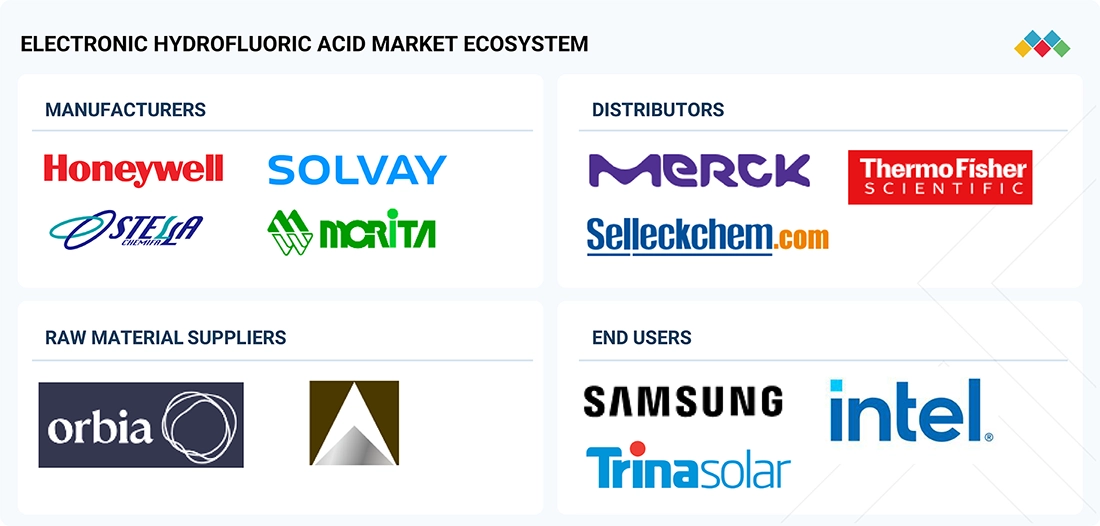
Logos and trademarks shown above are the property of their respective owners. Their use here is for informational and illustrative purposes only.
MARKET SEGMENTS
Source: Secondary Research, Interviews with Experts, MarketsandMarkets Analysis
Electronic Hydrofluoric Acid Market, by Type
Fluorite-based electronic hydrofluoric acid dominates the global market because it is the only feedstock capable of consistently delivering the ultra-high purity required for advanced semiconductor, display, and solar applications. The natural fluorspar route allows precise control over metallic impurities, particulates, and silicates, ensuring hydrofluoric acid meets stringent contamination thresholds critical for cutting-edge wafer fabrication and high-efficiency photovoltaic cells. In contrast, hydrofluoric acid derived from fluorosilicic acid contains higher baseline impurities and is costly and technically challenging to purify to electronic-grade standards, limiting its use to lower-purity industrial applications.
Electronic Hydrofluoric Acid Market, by Grade
The UP-SSS grade is the largest and fastest-growing segment of the electronic hydrofluoric acid market, as it is uniquely able to meet the extremely stringent purity requirements of advanced semiconductor manufacturing, including 3 nm logic nodes, next-generation DRAM, and high-stack 3D NAND architectures. At these advanced technology nodes, even trace-level metallic contamination can lead to critical defects, reduced yield, or long-term reliability issues, making UP-SSS essential for the numerous HF-based etching and cleaning processes in both logic and memory fabrication. Leading semiconductor companies, such as TSMC, Samsung, Intel, SK hynix, and Micron, have standardized the use of UP-SSS in all critical wet-process steps, driving strong and sustained demand. While consumption per wafer is relatively low, UP-SSS commands a significant price premium over lower-grade HF, and its adoption continues to grow alongside the increasing production of cutting-edge wafers.
Electronic Hydrofluoric Acid Market, by Application
Semiconductor wafers constitute the largest application segment in the electronic hydrofluoric acid market, driven by the critical need for ultra-high-purity chemicals in wafer fabrication. Hydrofluoric acid is extensively used for etching, cleaning, and surface preparation, where even minute impurities can lead to defects, reduced yield, or compromised device reliability. The demand is further driven by the expansion of semiconductor fabs, the adoption of smaller technology nodes, and the production of advanced devices, including 3D NAND, DRAM, and EUV-enabled logic chips. Leading manufacturers, including TSMC, Samsung, Intel, and Micron, rely on electronic hydrofluoric acid for their wet-process operations, making wafers the primary driver of both volume and revenue in the electronic hydrofluoric acid market.
REGION
Asia Pacific to be fastest-growing region in global electronic hydrofluoric acid market during forecast period
Asia Pacific is the largest and fastest-growing region in the electronic hydrofluoric acid market, driven by its role as a global hub for semiconductor manufacturing, advanced packaging, display production, and solar cell fabrication, sectors that consume the highest volumes of ultra-pure hydrofluoric acid. Leading countries, including China, Taiwan, South Korea, and Japan, host the world’s largest foundries, memory fabs, and display panel facilities, generating sustained demand for high-purity etching and cleaning chemicals.
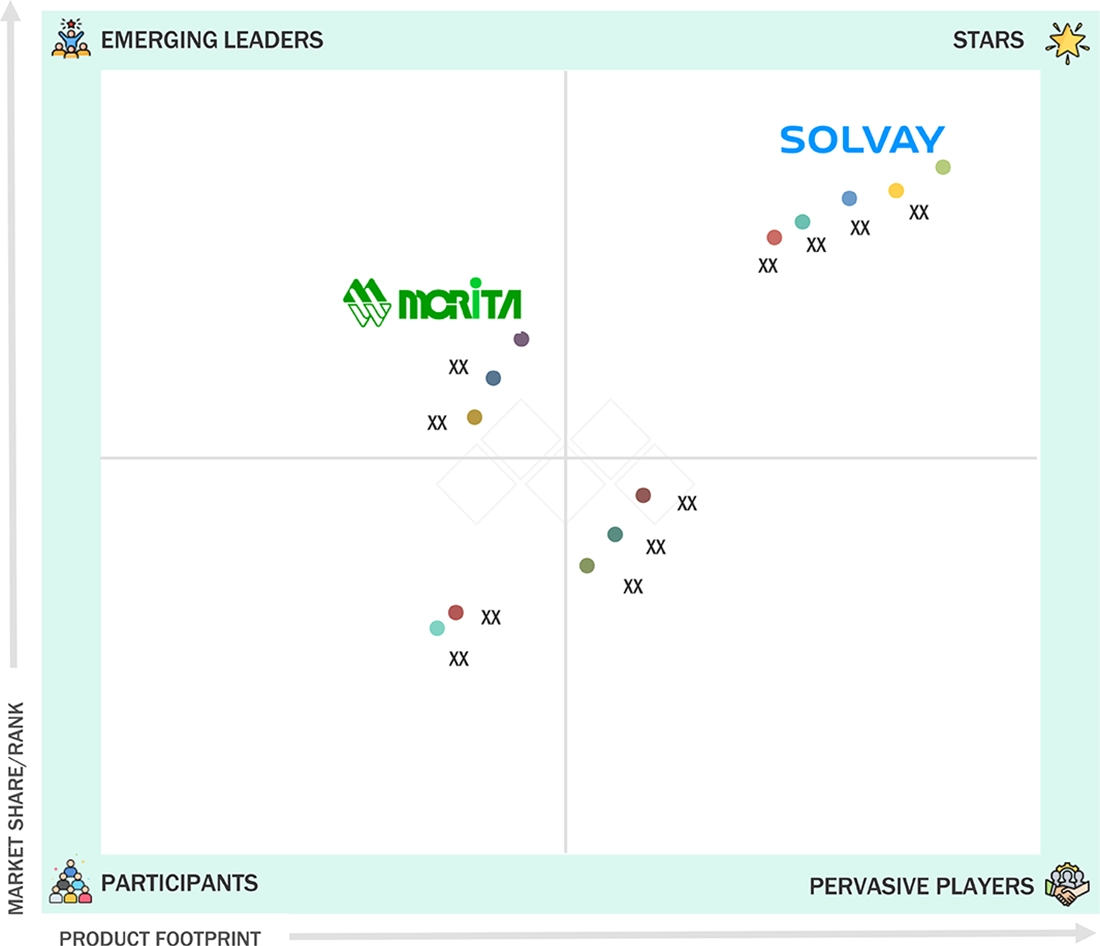
ELECTRONIC HYDROFLUORIC ACID MARKET: COMPANY EVALUATION MATRIX
In the electronic hydrofluoric acid market matrix, fluorite-based hydrofluoric acid producers such as Solvay (Star) lead with a dominant market share and a robust global presence, supported by their extensive production capacity and high-purity hydrofluoric acid products used across semiconductor, display, and solar PV applications. Morital Chemicals Co., Ltd. (Emerging leaders) leverages its strong mining and refining capabilities to expand its footprint, particularly in the Asia Pacific, strengthening its competitive positioning. While Solvay maintains leadership through scale, technological depth, and consistent product quality, Morita Chemical Co., Ltd. demonstrates rising potential to capture greater market share as demand for ultra-high-purity hydrofluoric acid in leading-edge semiconductor manufacturing and high-efficiency solar cells continues to grow.
Source: Secondary Research, Interviews with Experts, MarketsandMarkets Analysis
KEY MARKET PLAYERS
- Honeywell International Inc. (US)
- Solvay (Belgium)
- LANXESS (Germany)
- Soulbrain (South Korea)
- Morita Chemical Co., Ltd. (Japan)
- Stella Chemifa Corporation (Japan)
- Dongyue Group Ltd. (China)
- Juhua Technology Inc.(China)
- Gulf Flour (UAE)
- Formosa Daikin Advanced Chemicals Co., Ltd. (Taiwan)
MARKET SCOPE
| REPORT METRIC | DETAILS |
|---|---|
| Market Size in 2024 (Value) | USD 1.34 Billion |
| Revenue Forecast in 2030 (Value) | USD 1.87 Billion |
| Growth Rate | CAGR of 6.0% from 2025–2030 |
| Actual data | 2021–2030 |
| Base year | 2024 |
| Forecast period | 2025–2030 |
| Units considered | Value (USD Million), Volume Kilotons) |
| Report Coverage | Revenue Forecast, Company Ranking, Competitive Landscape, Growth Factors, and Trends |
| Segments Covered |
|
| Regions Covered | North America, Asia Pacific, Europe, South America, Middle East & Africa |
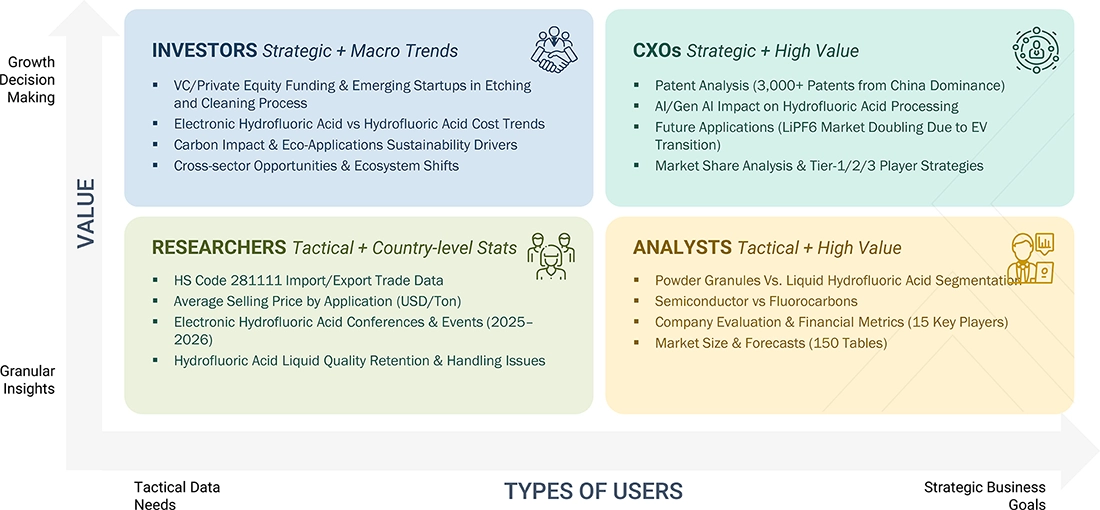
WHAT IS IN IT FOR YOU: ELECTRONIC HYDROFLUORIC ACID MARKET REPORT CONTENT GUIDE
DELIVERED CUSTOMIZATIONS
We have successfully delivered the following deep-dive customizations:
| CLIENT REQUEST | CUSTOMIZATION DELIVERED | VALUE ADDS |
|---|---|---|
| Country-Level Breakdown | In-depth analysis of electronic hydrofluoric acid demand and supply across 20+ key countries/regions (China, Taiwan, South Korea, Japan, USA, Germany, Singapore, Malaysia, India, etc.), including fab capacity expansion plans, import/export flows, local content policies, and regulatory trends | Helps stakeholders pinpoint fastest-growing national markets, design accurate market-entry or localization strategies, and forecast regional demand with high precision. |
| Application-specific Deep Dive |
|
Enables clients to target the most profitable applications, optimize R&D budgets toward UP-SS/UP-SSS grades, and build application-focused product portfolios |
| Purity/Form Type Customization | Detailed comparative analysis of electronic hydrofluoric acid by purity grade (EL, UP, UP-S, UP-SS, UP-SSS) and form (anhydrous vs aqueous, standard vs buffered HF), covering technical specifications, price bands, supplier capability matrix, and suitability for ≤ 3 nm nodes vs solar vs display | Allows manufacturers and buyers to select optimal grade/form based on performance-cost trade-offs, while identifying premium pricing opportunities in UP-SSS and solar-grade segments |
| Competitive Benchmarking | Extended profiling of 15+ global and regional players (Honeywell, Solvay, Stella Chemifa, MORITA, Soulbrain, Do-Fluoride, Jiangyin Jianghua, Shaowu Huaxi, etc.), including plant locations, capacity, purity capabilities, customer base, pricing strategy, on-site purification partnerships, and innovation pipelines | Provides clients with a clear competitive landscape to identify positioning gaps, potential M&A targets, strategic partners, and areas for differentiation in a highly concentrated market |
RECENT DEVELOPMENTS
- August 2024 : Honeywell International Inc. acquired CAES, which provides advanced electronics for the aerospace and defense industries, including RF and microelectronic components. This acquisition strengthened Honeywell’s position in semiconductor-related markets, where electronic hydrofluoric acid is vital for etching and cleaning processes.
Table of Contents
 Exclusive indicates content/data unique to MarketsandMarkets and not available with any competitors.
Methodology
The study involved four key activities to determine the current size of the global hydrofluoric acid market. Comprehensive secondary research was conducted to gather information on the market, related product markets, and the broader product group. The next step was to validate these findings, assumptions, and estimates with industry experts across the hydrofluoric acid value chain through primary research. Both top-down and bottom-up approaches were used to estimate the overall market size. Following this, market segmentation and data triangulation processes were applied to define the size of various segments and sub-segments.
Secondary Research
The market for companies offering hydrofluoric acid is determined through secondary data from paid and free sources, analyzing the product portfolios of leading firms in the industry, and rating these companies by their performance and quality. Secondary sources such as Business Standard, Bloomberg, World Bank, and Factiva were used to gather information for this study on the hydrofluoric acid market. Multiple sources were consulted during the secondary research process to collect relevant data. These sources included annual reports, press releases, investor presentations of luxury vinyl tile vendors, forums, certified publications, and white papers. This secondary research provided essential insights into the industry’s value chain, the pool of key players, market classification, and segmentation from both market and technology perspectives.
Primary Research
In the primary research process, various primary sources from both the supply and demand sides were interviewed to gather qualitative and quantitative information for this report. The supply-side sources included industry experts such as Chief Executive Officers (CEOs), Vice Presidents (VPs), marketing directors, technology and innovation directors, and other key executives from several leading companies and organizations operating in the Hydrofluoric acid market. After completing the market engineering process—which involved calculations for market statistics, market breakdowns, market size estimations, market forecasting, and data triangulation—extensive primary research was conducted to collect information and verify the critical figures obtained. Primary research also identified the segmentation types, industry trends, competitive landscape of Hydrofluoric acid offered by various market players, and key market dynamics, including drivers, restraints, opportunities, challenges, industry trends, and strategies of major players. Throughout the complete market engineering process, the top-down and bottom-up approaches and several data triangulation methods were extensively used to estimate and forecast market segments and subsegments listed in this report. In-depth qualitative and quantitative analysis was performed on the entire market engineering process to highlight key insights and information throughout the report.
Market Size Estimation
The top-down and bottom-up methods were used to estimate and verify the size of the global hydrofluoric acid market. These methods were also widely employed to determine the size of various related market segments. The research approach for estimating the market size included the following:
Data Triangulation
After determining the overall market size through estimation methods, the market was divided into various segments and subsegments. Data triangulation and market breakdown procedures were used, where applicable, to complete the overall market analysis and determine precise statistics for each segment and subsegment. The data was triangulated by examining different factors and trends from both the demand and supply sides.
Market Definition
The reaction between a hydrogen atom and a fluorine atom produces hydrogen fluoride, a colorless, corrosive liquid or vapor with a strong, unpleasant, pungent odor. Hydrofluoric acid forms when hydrogen fluoride dissolves in water. The report divides the hydrofluoric acid market based on its grades, applications, and regions. It is available in different grades depending on the acid's concentration levels. In terms of its uses, hydrofluoric acid is employed in several industries, such as chemical manufacturing and glass etching.
Stakeholders
- Hydrofluoric Acid Manufacturers
- Raw Material Suppliers
- Traders and Distributors
- Industry Associations
- Research Organizations, Trade Associations, and Government Agencies
- Commercial R&D Institutes
- End-use Industries
Report Objectives
- To define, describe, and forecast the size of the global hydrofluoric acid market based on grade, application, and region in terms of value and volume
- To provide detailed information on the significant drivers, restraints, opportunities, and challenges influencing the market
- To strategically analyze micromarkets concerning individual growth trends, prospects, and their contribution to the market
- To assess the growth opportunities in the market for stakeholders and provide details on the competitive landscape for market leaders
- To forecast the market size of segments and subsegments for North America, Europe, the Asia Pacific, South America, and the Middle East & Africa
- To strategically profile key players and comprehensively analyze their market shares and core competencies
- To analyze competitive developments such as product launches, acquisitions, expansions, partnerships, and agreements in the hydrofluoric acid market
- To provide the impact of AI/Gen AI on the market
Key Questions Addressed by the Report
How is the semiconductor industry influencing the Electronic Hydrofluoric Acid Market?
Rising demand for semiconductors and microelectronics drives the need for electronic-grade hydrofluoric acid used in etching and cleaning processes.
What technological innovations are shaping the Electronic Hydrofluoric Acid Market?
Advancements include ultra-pure acid production, automated handling systems, and safer storage solutions to minimize contamination and hazards.
How are environmental regulations impacting the Electronic Hydrofluoric Acid Market?
Strict regulations on chemical handling, emissions, and worker safety encourage the adoption of eco-friendly processes and controlled acid management systems.
Which regions are leading the Electronic Hydrofluoric Acid Market?
Asia-Pacific dominates due to semiconductor manufacturing hubs in China, Taiwan, and South Korea, while North America focuses on high-purity applications.
What role does recycling and recovery play in this Electronic Hydrofluoric Acid Market?
Recovery and reuse of hydrofluoric acid reduce costs, minimize hazardous waste, and support sustainability in semiconductor production.


Personalize This Research
- Triangulate with your Own Data
- Get Data as per your Format and Definition
- Gain a Deeper Dive on a Specific Application, Geography, Customer or Competitor
- Any level of Personalization
Let Us Help You
- What are the Known and Unknown Adjacencies Impacting the Electronic Hydrofluoric Acid Market
- What will your New Revenue Sources be?
- Who will be your Top Customer; what will make them switch?
- Defend your Market Share or Win Competitors
- Get a Scorecard for Target Partners

Custom Market Research Services
We Will Customise The Research For You, In Case The Report Listed Above Does Not Meet With Your Requirements
Get 10% Free CustomisationTESTIMONIALS
We at Nissan Chemicals Corporation have been clients of MarketsandMarkets for more than a year now. We recently consulted MarketsandMarkets for a study, the team at MarketsandMarkets was extremely professional and organized. The business insights were very detailed and aligned well with our expectations that really helped us formulate the Business Plans and device new strategies for development themes. MarketsandMarkets offers a unique combination of expertise and dedicated engagement model. Their research findings have helped us in designing our Pricing Strategy which will make it easier for us to predict the future sales and profits for the next ten years. We look forward to working with MarketsandMarkets in the future.
VP of Strategy & New Business Development
Leading Specialty Chemical Company
The MarketsandMarkets Engagement Model, composed of both the Knowledge Store and advisory custom research, has greatly helped us in understanding our markets and making strategic decisions. The Knowledge Store is a fast way to allow everyone in our organization to understand more about most any market they are interested in. The ability to then get custom research done and get answers to specific strategic questions and market insight has been spectacular. The Markets and Markets team feel more like colleagues than vendors and their services have helped us change our culture where statements of things like growth opportunities and competitive position are always backed by industry research.

Rich Gibson,
Director, Corporate Strategy
Milliken & Company,
Leading Industrial Manufacturer of specialty chemical, floor covering, performance and protective textile materials, and healthcaremilliken.com
MarketsandMarkets is a trusted resource that helps us to better understand markets that are near-adjacencies-whether its technology, value chain or geography. Their Knowledge Store platform provides a dashboard of markets and their characteristics which is easy to use and saves us time.
Adam Shaw,
Market Development and Strategy Manager
AdvanSix Inc. USA,
An American Leader in Chemicalswww.advansix.com
The Knowledge Store from MarketsandMarkets is a valuable tool which has helped my team acquire greater insight in to the end markets that our business serves. This has enabled us to help our company build stronger strategies throughout our planning process.
TOSHIO KINOSHITA
Senior Chif Consultion Research & Consulting Division
Mitsubishi Chemical Research Corporation,
Leading Manufacturer of Chemical Productswww.mitsubishichem-res.co.jp/en/

We recently engaged with MarketsandMarkets for a study, the team not only clearly understood our business objectives but was also extremely professional in the way they handled the entire project. The study was efficiently conducted in a phase-wise manner, and the engagement model furnished us with high-quality business insights that far exceeded our expectations at each phase. We were especially happy that MarketsandMarkets could provide us with both, an English as well as a Japanese version of the study. A special thanks to the Analyst Team and Client Services Team, whose fluency in Japanese enhanced our comfort level, as we could converse with them in our preferred language.
Independent entrepreneurs
Arrow Precision
We approached MarketsandMarkets for study on Proppants Market, and their work exceeded our expectations. The study conducted was comprehensive and enabled us to view the market through the various dimensions. In addition, the team was extraordinarily responsive throughout the process and resolved our queries on time. I strongly recommend MarketsandMarkets and will certainly consider them for additional market assessments we will need in the future.
Global engineering company, Japan
Deputy Manager,
Strategic Planning OfficeThe high-quality insights shared by the MarketsandMarkets team helped us understand the pharmaceutical plant designers in a specific geography. It also captured the risks that we may likely face in communicating with our potential partners. The study would enable us identify partners, which would impact our future growth.
- China Electronic Hydrofluoric Acid Market
- Japan Electronic Hydrofluoric Acid Market
- India Electronic Hydrofluoric Acid Market
- South Korea Electronic Hydrofluoric Acid Market
- Canada Electronic Hydrofluoric Acid Market
- Mexico Electronic Hydrofluoric Acid Market
- US Electronic Hydrofluoric Acid Market
- Germany Electronic Hydrofluoric Acid Market
- Italy Electronic Hydrofluoric Acid Market
- France Electronic Hydrofluoric Acid Market
- Spain Electronic Hydrofluoric Acid Market
- UK Electronic Hydrofluoric Acid Market
- South Africa Electronic Hydrofluoric Acid Market
- Brazil Electronic Hydrofluoric Acid Market
- Argentina Electronic Hydrofluoric Acid Market
- Rest Of Europe Electronic Hydrofluoric Acid Market
- Rest Of Asia Pacific Electronic Hydrofluoric Acid Market
- GCC Countries Electronic Hydrofluoric Acid Market
- –Rest Of GCC Electronic Hydrofluoric Acid Market






Growth opportunities and latent adjacency in Electronic Hydrofluoric Acid Market