Enterprise Risk Management (ERM) Market

Enterprise Risk Management (ERM) Market by Solution (Operational Risk Management, Cyber Risk Management, Financial Risk Management, Incident and Crisis Management, Third-party Risk Management) & Service (Professional, Managed) - Global Forecast to 2030




OVERVIEW
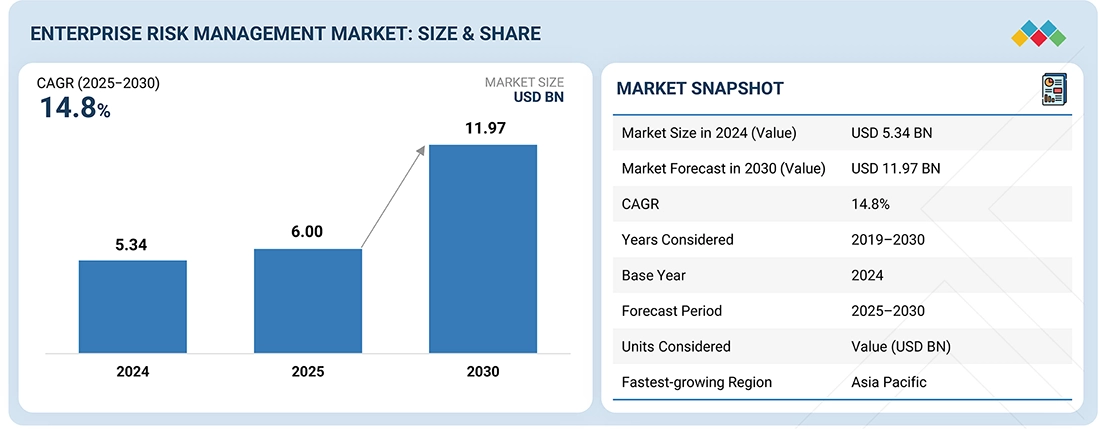
Source: Secondary Research, Interviews with Experts, MarketsandMarkets Analysis
The enterprise risk management (ERM) market is projected to reach USD 11.97 billion by 2030 from USD 6.00 billion in 2025, at a CAGR of 14.8% from 2025 to 2030. Increasing cases of cyber threats, expanding digital transformation initiatives, and a rapidly evolving regulatory landscape across industries are the primary growth drivers for the ERM market. Real-time visibility into enterprise-wide risks, automated compliance workflows, and strengthened resilience against cyber incidents, supply chain volatility, and geopolitical uncertainties are key factors driving the adoption of risk management platforms. Emerging use cases, such as AI-integrated risk analytics, continuous risk monitoring, and unified governance frameworks, are further accelerating the adoption of ERM solutions and services.
KEY TAKEAWAYS
-
BY REGIONNorth America is expected to account for a ~38% share of the ERM market in 2025.
-
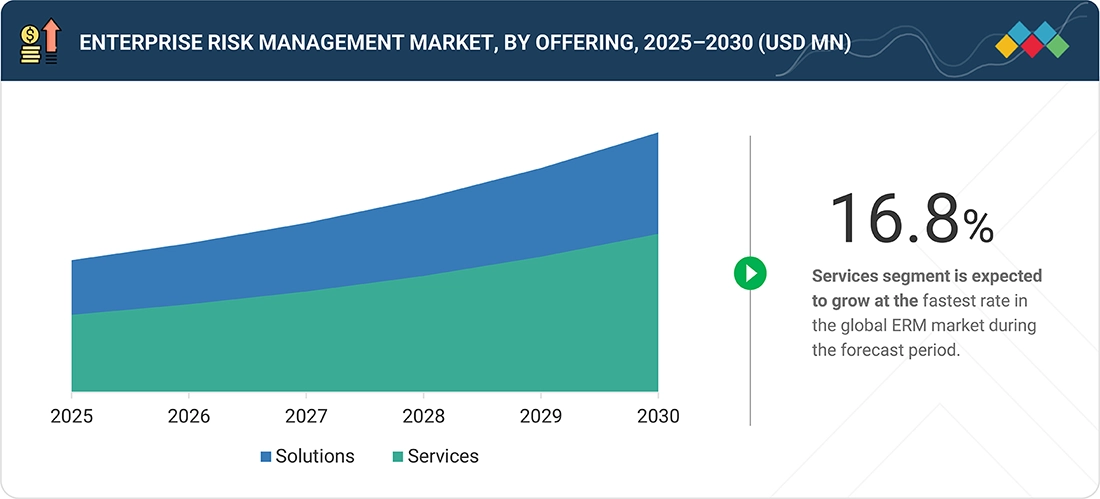
BY OFFERINGBy offering, the services segment is expected to register the highest CAGR of 16.8% during the forecast period.
-
BY SOLUTIONBy solution, the cyber risk management segment is projected to grow at the fastest rate from 2025 to 2030.
-
BY DEPLOYMENT MODEBy deployment mode, the cloud segment is projected to grow at the fastest rate during the forecast period.
-
BY ORGANIZATION SIZEBy organization size, the large enterprises segment is expected to dominate the market with a share of ~65% in 2025.
-
BY VERTICALBy vertical, the IT & ITeS segment will grow at the fastest rate during the forecast period.
-
COMPETITIVE LANDSCAPE - KEY PLAYERSLeading ERM vendors, including MetricStream, Archer, IBM, ServiceNow, SAP, and Wolters Kluwer, are recognized as star players in the ERM market.
-
COMPETITIVE LANDSCAPE - KEY PLAYERSEmerging and fast-growing ERM providers, including AuditBoard, LogicGate, Riskonnect, OneTrust, and SureCloud, are gaining momentum among midmarket and digitally transforming enterprises.
Organizations are supporting digital transformation, regulatory compliance, and complex risk remediations by investing in unified ERM ecosystems. The adoption of AI-integrated ERM solutions is further enabling enterprises to continuously monitor controls and gain predictive insights, thereby strengthening transparency, agility, and enterprise-wide resilience.
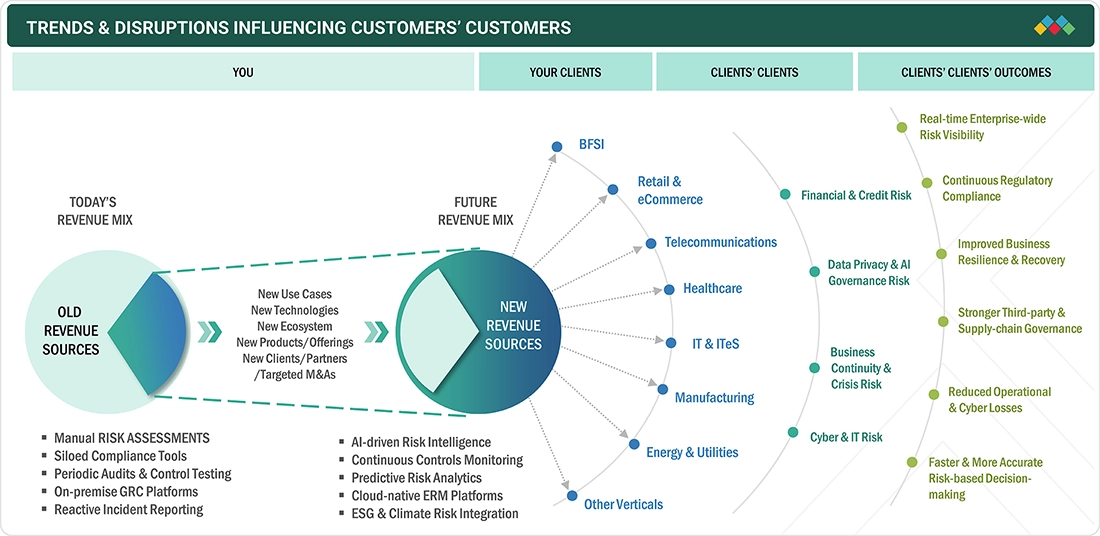
TRENDS & DISRUPTIONS IMPACTING CUSTOMERS' CUSTOMERS
This figure illustrates the shift in the ERM market from traditional, manual, and reactive risk practices to next-generation, intelligence-driven ERM platforms. Currently, enterprise revenue is partly derived from fragmented tools, such as siloed compliance systems and periodic audits, which are shifting towards AI-enabled, cloud-native, and fully integrated ERM ecosystems. As enterprises manage complex risk domains, such as cyber, third-party, ESG, regulatory, and resilience risks, the adoption of AI-enabled risk management solutions is increasing. The ultimate business outcomes of this transition are real-time enterprise-wide risk visibility, continuous compliance, reduced losses, stronger resilience, and enhanced board-level decision-making. This is reinforcing ERM’s evolution from a compliance function into a strategic business enabler.
Source: Secondary Research, Interviews with Experts, MarketsandMarkets Analysis
MARKET DYNAMICS

Level
-
Cyber–Operational Risk Convergence

-
RegTech Integration & Continuous Compliance Automation


Level
-
Complex Data Integration Across ERP, IAM, SIEM, and Finance Systems

-
Lack of Standardized Risk Taxonomies Across Industries


Level
-
Third-party Risk As Core ERM Control Layer

-
ERM + Business Continuity & Resilience Orchestration


Level
-
Managing Risks Across Hybrid IT and Multi-cloud Environments

-
Vendor Differentiation in Crowded Market

Source: Secondary Research, Interviews with Experts, MarketsandMarkets Analysis
Driver: Cyber–Operational Risk Convergence
Cyber risks are no longer isolated IT issues. Attacks are more targeted, more disruptive, and more expensive to recover from. When a breach happens, it often leads to downtime, compliance penalties, customer trust issues, and supply-chain disruptions. Because of this ripple effect, many organizations are now treating cyber risk, IT risk, and operational risk as one connected problem. This shift is pushing enterprises to adopt ERM platforms that give a clear, real-time view of risks and help teams respond faster across IT, operations, and business functions.
Restraint: Complex Data Integration Across ERP, IAM, SIEM, and Finance Systems
One major reason for the slow adoption of ERM solutions is data fragmentation. Risk information is spread across various systems, including ERP, HR, finance, identity and access management (IAM), security information and event management (SIEM), procurement, and cloud platforms. These systems were not designed to work together, leading to differences in data formats, inconsistent risk definitions, and additional complexity from legacy tools. Consequently, organizations often require additional integrations, custom APIs, and data cleanup. For companies using older infrastructure, this can extend project timelines and increase implementation costs.
Opportunity: Third-party Risk As Core ERM Control Layer
Third-party risk has become a significant concern for enterprises that rely heavily on vendors, cloud service providers, and outsourced partners for their day-to-day operations. When a supplier experiences a failure or a cyber incident, the repercussions can quickly spread to the enterprise. Additionally, regulators are increasingly focusing on vendor oversight, making third-party risk management an essential component of ERM programs. As a result, ERM platforms that offer features such as continuous vendor monitoring, ESG-linked risk assessments, contract risk analysis, and automated due diligence are experiencing heightened demand. Consequently, third-party risk management (TPRM) has emerged as one of the fastest-growing use cases within ERM. Third-party risk has become a significant concern for enterprises that rely heavily on vendors, cloud service providers, and outsourced partners for their day-to-day operations. When a supplier experiences a failure or a cyber incident, the repercussions can quickly spread to the enterprise. Additionally, regulators are increasingly focusing on vendor oversight, making third-party risk management an essential component of ERM programs.
Challenge: Managing Risks Across Hybrid IT and Multi-cloud Environment
Cloud adoption adds another layer of pressure. Most organizations now operate in hybrid or multi-cloud environments. These setups introduce new risks that traditional ERM tools were not built to handle. Risk teams must deal with shared responsibility models, cloud misconfigurations, API exposure, and inconsistent controls across providers. Gaining a single, end-to-end risk view becomes difficult, especially for organizations still dependent on legacy systems. In many cases, this leads to longer deployments, higher operating costs, and the need for cloud-specific risk expertise within ERM teams.
ENTERPRISE RISK MANAGEMENT (ERM) MARKET: COMMERCIAL USE CASES ACROSS INDUSTRIES
| COMPANY | USE CASE DESCRIPTION | BENEFITS |
|---|---|---|
 |
A Fortune 500 company in a highly regulated industry selected MetricStream’s Risk Analysis and Risk Self-Assessment module to build a centralized ERM framework. The organization had complex operations, multiple business units, and a demanding compliance environment, and sought an ERM system that could identify, assess, and manage risks consistently across the enterprise. MetricStream’s solution provided configurable methodologies, automated reporting, and real-time dashboards to align risk management and internal control activities. | Achieved enterprise-wide risk inventory for the first time, enabling holistic risk visibility | Automated consolidated risk reporting with executive dashboards and flexible ad-hoc analysis | Improved prioritization of risk responses through configurable risk metrics and KRI monitoring |
 |
ServiceNow’s GRC solution helped AEON Bank unify risk, compliance, and operational controls into one system, automating workflows and dashboards. The GRC solution significantly reduced manual reconciliation and improved executive-level risk reporting. | Unified risk and compliance operations across divisions | Automated risk assessments and control testing, reducing manual effort by 40–60% | Real-time dashboards for executives and board reporting, improving decision transparency |
 |
A large healthcare organization adopted LogicGate’s Risk Cloud to automate risk workflows, incident escalation, and compliance tracking across clinical, IT, and operational units. The provider struggled with disparate risk processes and manual incident reporting, particularly across regions with differing regulations. | Automated risk escalation and incident workflows, increasing responsiveness | Regional compliance alignment, with logic workflows that respect local regulations | Unified incident and risk registers, reducing duplicate entry and improving accuracy |
Logos and trademarks shown above are the property of their respective owners. Their use here is for informational and illustrative purposes only.
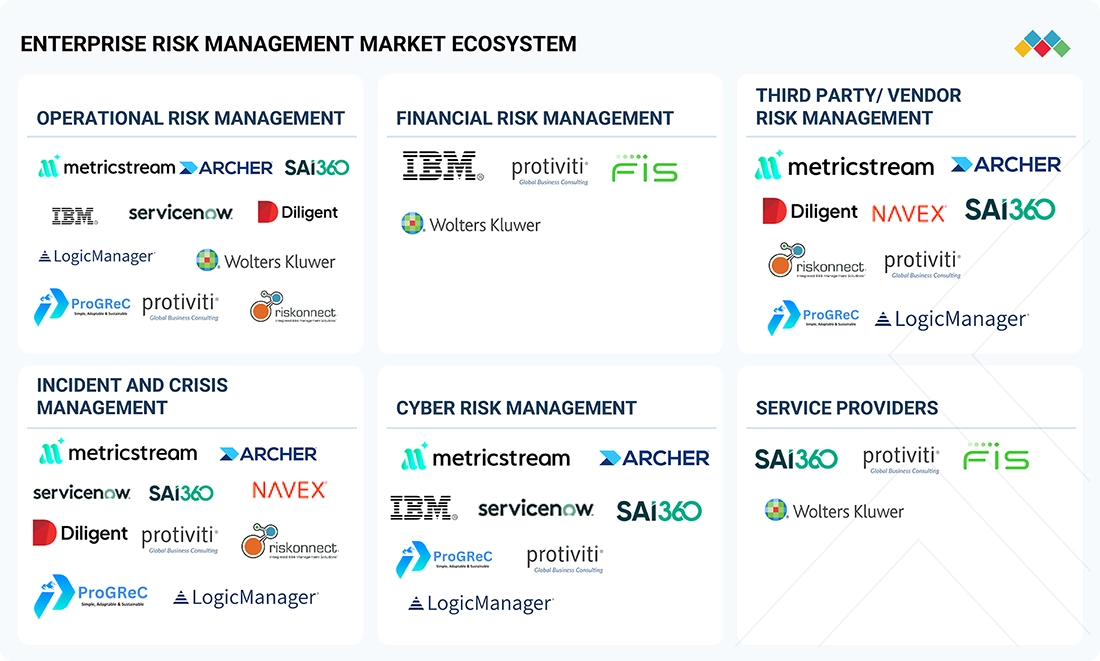
MARKET ECOSYSTEM
The ERM ecosystem comprises solution and service providers, technology vendors, and integrators. The vendors are categorized into 6 major ERM types, namely, operational risk, financial risk, third-party/vendor risk, incident and crisis, and cyber risk management, along with services.
Logos and trademarks shown above are the property of their respective owners. Their use here is for informational and illustrative purposes only.
MARKET SEGMENTS
Source: Secondary Research, Interviews with Experts, MarketsandMarkets Analysis
ERM Market, by Offering
Due to growing demand for integrated platforms that combine operational, cyber, compliance, financial, and third-party risk management, solutions dominate the ERM market. As organizations have adopted full-service ERM solutions, they have realized that having a consolidated view of risk across their operations provides them with the timely information needed for continuous monitoring and compliance reporting. The capabilities provided by these platforms enable organizations to better manage their risk exposure, make more informed decisions, and build stronger governance structures. As such, ERM solutions represent the largest contributor to the overall market revenue.
ERM Market, by Solution
Operational risk management continues to be the largest segment of the ERM service category because organizations are attempting to create consistent means of identifying, assessing, mitigating, and monitoring operational risk within their organizations regardless of which area they operate in. The overall increase in operational risk management is also encouraged due to the increased frequency of cyber attacks and the growing number of vendors and partners organizations work with, and the increased scrutiny of regulatory agencies on all types of operational risk. Together these factors create a perfect storm of reason for organizations to implement all the different types of modules that encompass cyber risk, third-party/vendor risk, incident & crisis risk management, financial risk, and integrated risk management. The continuing trend toward utilizing AI to quantify risk and automating the monitoring of control environments continues to drive adoption across all ERM categories.
ERM Market, by Deployment Mode
On-premises ERM solutions are popular due to the ability to provide robust internal governance, mitigate risks through less reliance on outside service providers, and allow for high levels of customization. However, with the deployment costs at a considerably lower rate than on-premise solutions and the ability to rapidly grow, cloud-based ERM solutions are being more widely adopted, particularly in the technology sector and the mid-market segment of the industry, as companies rapidly move toward their digital transformation agendas.
ERM Market, by Organization Size
The majority of the ERM market share is dominated by large enterprises. This dominance is largely due to the complexity of their business operations, extensive global supply chains, and a heightened exposure to financial, cyber, and operational risks. Large enterprises tend to invest significantly in ERM platforms to develop and utilize standardized risk frameworks and reference models. They also need to meet more stringent regulatory requirements, establish global regional governance structures, and shape their ERM strategies by leveraging risk insights for strategic planning. In contrast, there is a growing trend among small to medium-sized businesses (SMEs) to adopt cloud-based ERM solutions. These solutions offer SMEs affordable options, simplified implementation processes, and increased awareness of the cyber risks and vulnerabilities associated with third-party relationships.
ERM Market, by Vertical
The BFSI sector accounts for the largest share of the ERM market due to strict regulatory mandates, resiliency requirements, and heightened cyber risk exposure. Banks and other financial institutions are leveraging ERM platforms to manage credit, market, operational, and cyber & third-party risks, streamline their compliance reporting processes, and build resilience. Other high-growth sectors include IT & ITeS, healthcare, manufacturing, energy & utilities, and government, all driven by increased digitalization, supply chain dependencies, and an evolving regulatory environment.
REGION
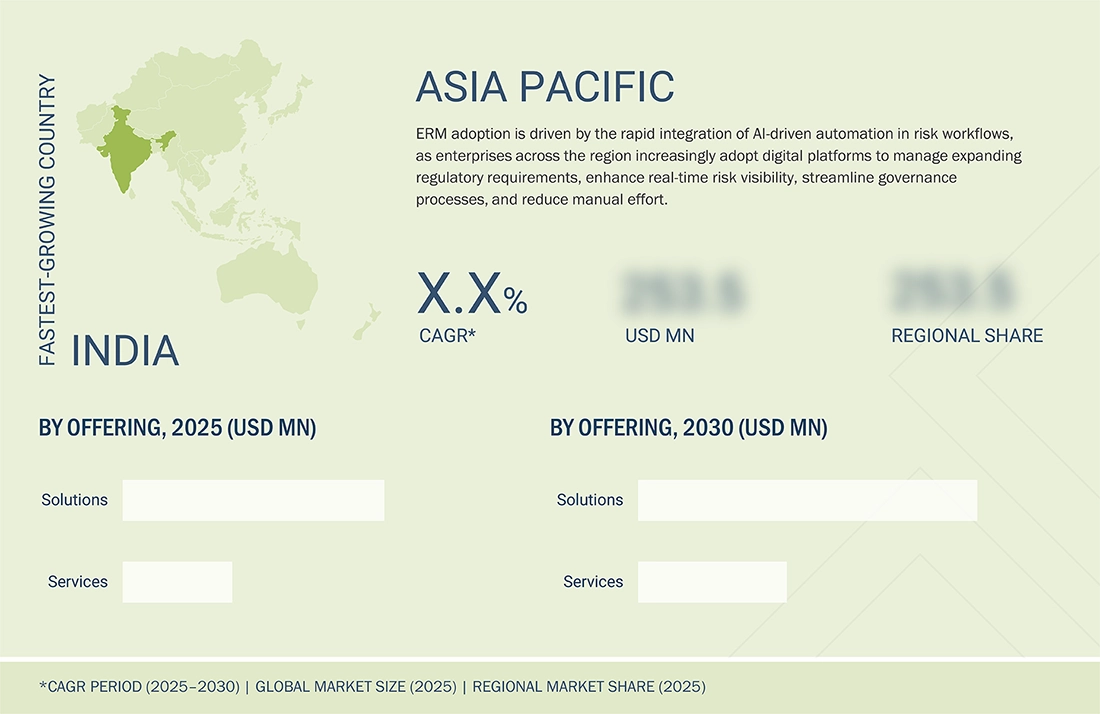
Asia Pacific to be fastest-growing region in global ERM market during forecast period
The rapid development of AI, the growing importance of data sovereignty, and the greater use of cloud-based tools have increased the overall surface exposure of enterprises in the Asia Pacific region. Countries such as India, China, Japan, and various parts of Southeast Asia are undergoing significant digital transformation across their financial, healthcare, information technology (IT), and supply chain management (SCM) sectors. The movement toward digital solutions and platforms has exposed many of the enterprise organizations' most critical assets and operations to significant amounts of risk, due to government-provided infrastructure and funding for digital transformation efforts. As a result, there has been significant growth and development of scalable, cloud-based ERM systems in the Asia Pacific region.
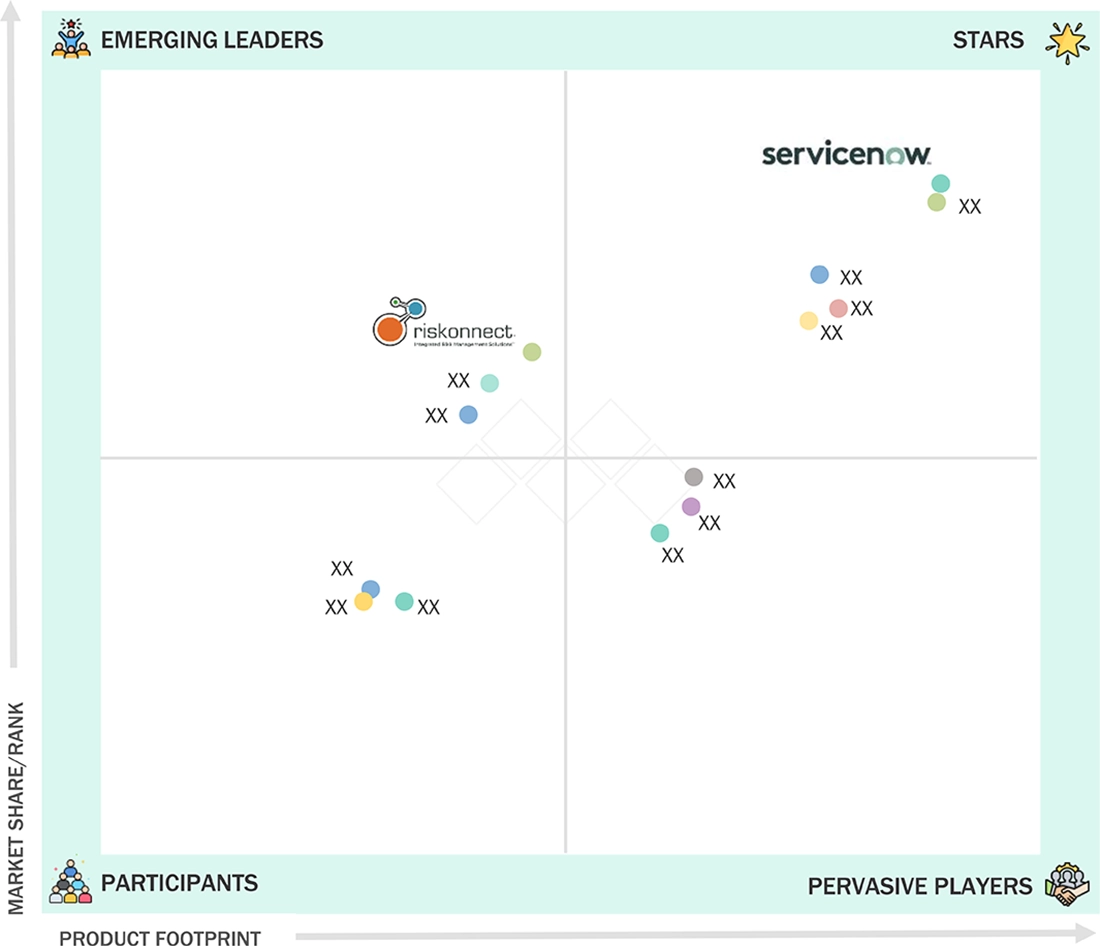
ENTERPRISE RISK MANAGEMENT (ERM) MARKET: COMPANY EVALUATION MATRIX
ServiceNow is one of the key ERM vendors, with a robust, highly scalable integrated risk platform. ServiceNow also has strong capabilities for delivering automated, AI-based analytics. As a leading provider of a risk management platform with scalability and integration with enterprise systems, ServiceNow is a preferred choice for larger organizations seeking a single platform for continuous, real-time visibility across all aspects of risk. Riskonnect is an emerging leader with proven capabilities in operational risk, incident management, claims management, and third-party risk management and is rapidly gaining momentum. As a cloud-native solution with an industry-oriented design, Riskonnect enables businesses to modernize their fragmented risk processes. This has led to increased adoption of Riskonnect by mid-sized and regulated enterprises as they seek to modernize how they manage risk.
Source: Secondary Research, Interviews with Experts, MarketsandMarkets Analysis
KEY MARKET PLAYERS
- ServiceNow (US)
- Wolters Kluwer (Netherlands)
- LexisNexis (US)
- Archer Technologies (US)
- MetricStream (US)
- Riskonnect (US)
- Diligent (US)
- LogicManager (US)
- FIS (US)
- IBM (US)
- Microsoft (US)
- Oracle (US)
- SAP SE (Germany)
- SAS Institute (US)
- Navex Global (US)
- OneTrust (US)
- ReadiNow (Australia)
- Auditboard (US)
- SAI360 (US)
- Protiviti (US)
- SureCloud (UK)
- ProGreC (India)
MARKET SCOPE
| REPORT METRIC | DETAILS |
|---|---|
| Market Size in 2024 (Value) | USD 5.34 Billion |
| Market Forecast in 2030 (Value) | USD 11.97 Billion |
| Growth Rate | CAGR of 14.8% from 2025–2030 |
| Years Considered | 2019–2030 |
| Base Year | 2024 |
| Forecast Period | 2025–2030 |
| Units Considered | Value (USD Million/Billion) |
| Report Coverage | Revenue Forecast, Company Ranking, Competitive Landscape, Growth Factors, and Trends |
| Segments Covered |
|
| Regions Covered | North America, Asia Pacific, Europe, Middle East & Africa, Latin America |
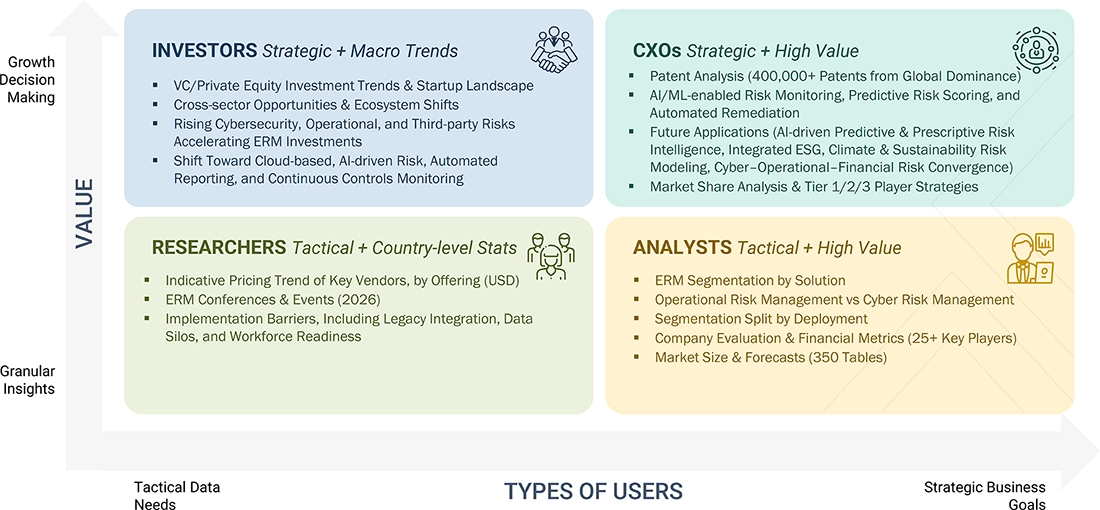
WHAT IS IN IT FOR YOU: ENTERPRISE RISK MANAGEMENT (ERM) MARKET REPORT CONTENT GUIDE
DELIVERED CUSTOMIZATIONS
We have successfully delivered the following deep-dive customizations:
| CLIENT REQUEST | CUSTOMIZATION DELIVERED | VALUE ADDS |
|---|---|---|
| Leading Solution Provider (US) | Product Analysis: Product Matrix, which gives a detailed comparison of the product portfolio of each company | Improved clarity on competitive positioning and product strengths to drive informed decision-making |
| Leading Service Provider (EU) | Company Information: Detailed analysis and profiling of additional market players (up to 5) | Comprehensive insights into market landscape and opportunities for strategic collaborations |
RECENT DEVELOPMENTS
- April 2025 : Diligent introduced Diligent AI Risk Essentials, a new ERM solution designed to help organizations initiate and strengthen their enterprise risk management programs. The offering integrates AI-driven risk insights with structured frameworks to accelerate ERM adoption and improve decision-making.
- March 2025 : ServiceNow and NVIDIA have expanded their partnership to bring advanced agentic AI to the enterprise, integrating NVIDIA’s Llama Nemotron reasoning models into the ServiceNow Platform to enhance automation, decision-making, and workflow intelligence. The collaboration introduces new AI agent evaluation tools and ServiceNow’s AI Agent Orchestrator, enabling organizations to deploy more reliable, context-aware agents that improve performance and deliver stronger business outcomes.
- September 2024 : Oracle announced its Oracle Financial Crime and Compliance Management (FCCM) Monitor Cloud Service aimed at financial institutions. This solution provides a centralized compliance and risk monitoring interface that enhances detection of potential financial-crime risks and streamlines proactive risk mitigation efforts.
Table of Contents
 Exclusive indicates content/data unique to MarketsandMarkets and not available with any competitors.
Methodology
The Enterprise Risk Management (ERM) Market research study involved extensive secondary sources, directories, journals, and paid databases. Primary sources were mainly industry experts from the core and related industries, preferred providers, third-party service providers, consulting service providers, end users, and other commercial enterprises. In-depth interviews were conducted with various primary respondents, including key industry participants and subject matter experts, to obtain and verify critical qualitative and quantitative information and assess the market’s prospects.
Secondary Research
In the secondary research process, various sources were referred to, for identifying and collecting information for this study. Secondary sources included annual reports, press releases, and investor presentations of companies; white papers, journals, and certified publications; and articles from recognized authors, directories, and databases. The data was also collected from other secondary sources, such as journals, government websites, blogs, and vendors' websites. Additionally, AI Model Risk Management spending of various countries was extracted from the respective sources. Secondary research was mainly used to obtain key information related to the industry’s value chain and supply chain to identify key players based on software, services, market classification, and segmentation according to offerings of major players, industry trends related to software, deployment mode, services, risk type, application, vertical, and regions, and key developments from both market- and technology-oriented perspectives.
Primary Research
In the primary research process, various primary sources from both the supply and demand sides were interviewed to obtain qualitative and quantitative information on the market. The primary sources from the supply side included various industry experts, including Chief Experience Officers (CXOs); Vice Presidents (VPs); directors from business development, marketing, and expertise; related key executives from AI Model Risk Management solution vendors, SIs, professional service providers, and industry associations; and key opinion leaders.
Primary interviews were conducted to gather insights, such as market statistics, revenue data collected from software and services, market breakups, market size estimations, market forecasts, and data triangulation. Primary research also helped understand various trends related to technologies, applications, deployments, and regions. Stakeholders from the demand side, such as Chief Information Officers (CIOs), Chief Technology Officers (CTOs), Chief Strategy Officers (CSOs), and end users using solutions, were interviewed to understand the buyer’s perspective on suppliers, products, service providers, and their current usage of AI Model Risk Management software and services, which would impact the overall Enterprise Risk Management (ERM) Market.
Market Size Estimation
In the bottom-up approach, the adoption rate of AI Model Risk Management software and services among different end users in key countries concerning their regions contributing the most to the market share was identified. For cross-validation, the adoption of AI Model Risk Management software and services among industries and different use cases concerning their regions was identified and extrapolated. Use cases identified in different regions were given weightage for the market size calculation.
Based on the market numbers, the regional split was determined by primary and secondary sources. The procedure included the analysis of the Enterprise Risk Management (ERM) Market’s regional penetration. Based on secondary research, the regional spending on Information and Communications Technology (ICT), socioeconomic analysis of each country, strategic vendor analysis of major providers, and organic and inorganic business development activities of regional and global players were estimated. With the data triangulation procedure and data validation through primaries, the exact values of the overall Enterprise Risk Management (ERM) Market size and segments’ size were determined and confirmed using the study.
Data Triangulation
Based on the market numbers, the regional split was determined by primary and secondary sources. The procedure included the analysis of the Enterprise Risk Management (ERM) Market’s regional penetration. Based on secondary research, the regional spending on Information and Communications Technology (ICT), socioeconomic analysis of each country, strategic vendor analysis of major providers, and organic and inorganic business development activities of regional and global players were estimated. With the data triangulation procedure and data validation through primaries, the exact values of the overall Enterprise Risk Management (ERM) Market size and segments’ size were determined and confirmed using the study.
Market Definition
AI model risk management software is a comprehensive tool designed to help organizations effectively manage and mitigate the potential risks associated with their models. It uses advanced data analytics and modeling techniques to identify and evaluate potential risks, allowing businesses to make more informed decisions. As per Databricks, AI Model Risk Management software involves identifying, assessing, and mitigating risks associated with AI models to ensure their reliability, accuracy, and compliance with regulatory standards. This process is crucial for maintaining the integrity and performance of AI models, especially as they are increasingly used in critical applications across various industries.
STAKEHOLDERS
- Risk Assessment and Software Developers
- AI Model Risk Management vendors
- Risk Managers
- Cloud Service Providers
- Consulting service providers
- Business owners
- Distributors and value-added Resellers (VARs)
- Independent software vendors
- Managed service providers
- Support and maintenance service providers
- System Integrators (Sis)/migration service providers
- OEMs
- Technology providers
Report Objectives
- To define, describe, and predict the AI model risk management market by offering (software [by type and deployment mode] and services), risk type, application, vertical, and region
- To provide detailed information related to major factors (drivers, restraints, opportunities, and industry-specific challenges) influencing the market growth
- To analyze the micro markets with respect to individual growth trends, prospects, and their contributions to the total market
- To analyze the opportunities in the market for stakeholders by identifying the high-growth segments of the market
- To analyze opportunities in the market and provide details of the competitive landscape for stakeholders and market leaders
- To forecast the market size of five main regions: North America, Europe, Asia Pacific, the Middle East & Africa, and Latin America
- To profile key players and comprehensively analyze their market rankings and core competencies
- To analyze competitive developments, such as partnerships, new product launches, and mergers & acquisitions, in the market
- To analyze the impact of the recession across all regions in the AI model risk management market
Available Customizations
With the given market data, MarketsandMarkets offers customizations as per your company’s specific needs. The following customization options are available for the report:
Product Analysis
- Product quadrant, which gives a detailed comparison of the product portfolio of each company.
Geographic Analysis
- Further breakup of the North American Enterprise Risk Management (ERM) Market
- Further breakup of the European Enterprise Risk Management (ERM) Market
- Further breakup of the Asia Pacific Enterprise Risk Management (ERM) Market
- Further breakup of the Middle Eastern & African Enterprise Risk Management (ERM) Market
- Further breakup of the Latin America Enterprise Risk Management (ERM) Market
Company Information
- Detailed analysis and profiling of additional market players (up to five)
Key Questions Addressed by the Report
What is the projected size of the Enterprise Risk Management (ERM) Market by 2030?
The enterprise risk management (ERM) market is projected to grow from USD 6.00 billion in 2025 to USD 11.97 billion by 2030, at a CAGR of 14.8% during the forecast period.
Which ERM solution segment is expected to drive market growth?
Cyber risk management is expected to be a key solution segment driving market growth as organizations strengthen resilience against evolving cyber threats.
Which service type is gaining traction in the Enterprise Risk Management Market?
Managed services are gaining traction as organizations seek continuous risk monitoring and specialized expertise.
What is the primary factor driving the Enterprise Risk Management Market?
The market is driven by increasing regulatory compliance requirements, rising cybersecurity risks, and the need for integrated enterprise-wide risk visibility.
Which industries are accelerating the adoption of Enterprise Risk Management solutions?
BFSI, healthcare, manufacturing, government, and IT & telecommunications are among the leading adopters of enterprise risk management solutions.
Why are organizations investing in enterprise risk management platforms?
Organizations are investing in enterprise risk management platforms to proactively identify, assess, mitigate, and monitor risks while improving governance and business resilience.


Personalize This Research
- Triangulate with your Own Data
- Get Data as per your Format and Definition
- Gain a Deeper Dive on a Specific Application, Geography, Customer or Competitor
- Any level of Personalization
Let Us Help You
- What are the Known and Unknown Adjacencies Impacting the Enterprise Risk Management (ERM) Market
- What will your New Revenue Sources be?
- Who will be your Top Customer; what will make them switch?
- Defend your Market Share or Win Competitors
- Get a Scorecard for Target Partners

Custom Market Research Services
We Will Customise The Research For You, In Case The Report Listed Above Does Not Meet With Your Requirements
Get 10% Free CustomisationTESTIMONIALS






Growth opportunities and latent adjacency in Enterprise Risk Management (ERM) Market