Environment, Health and Safety Market Size, Growth, Trends & Forecast to 2032

Environment, Health, and Safety Market by Offering (Software and Services (Analytics, Project Deployment and Implementation, Audit, Assessment, and Regulatory Compliance, Certification)), Application, Vertical, and Region - Global Forecast to 2032


OVERVIEW
Source: Secondary Research, Interviews with Experts, MarketsandMarkets Analysis
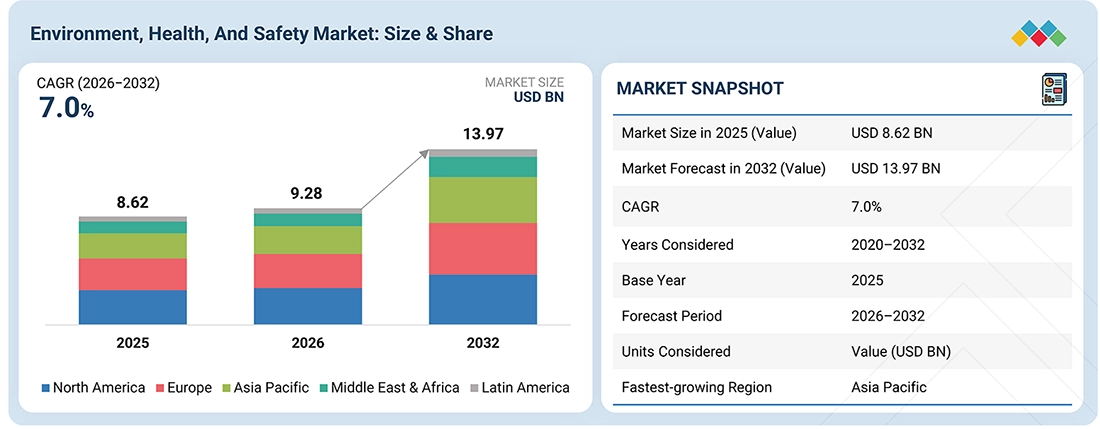
The global environment, health, and safety (EHS) market is estimated to reach USD 9.28 billion in 2026 and is projected to grow to USD 13.97 billion by 2032, registering a CAGR of 7.0% during the forecast period. The global EHS market is witnessing strong growth, driven by increasing regulatory requirements, growing focus on workplace safety, and the need for organizations to manage environmental and occupational risks more effectively. EHS solutions enable centralized incident management, risk assessment, compliance monitoring, environmental reporting, audits, inspections, and worker safety management. The adoption of cloud-based EHS platforms, AI, analytics, IoT, and mobile technologies is further accelerating digital transformation across EHS operations. Growing emphasis on sustainability, ESG reporting, climate risk management, and proactive safety programs is increasing demand for scalable, integrated, and data-driven EHS solutions across industries such as manufacturing, energy and utilities, construction, chemicals, healthcare, and transportation.
Market Size and Forecast:
- 2025 Market Size: USD 8.62 Billion
- 2026 Projected Market Size: USD 9.28 Billion
- 2032 Forecasted Market Size: USD 13.97 Billion
- Growth Rate (2026-2032): CAGR of 7.0%
- Data available from 2024 to 2032
Key Market Trends and Insights
- Fastest Growing Region: Asia Pacific
-
Growth Factors: stricter regulations, ESG goals, and rising workplace safety digitization
- Latest Trends: AI-driven risk analytics, ESG compliance, IoT-based monitoring, and cloud EHS adoption.
- Biggest Opportunities: ESG compliance automation, AI risk prediction, and cloud-based safety management.
- AI Impact: AI is transforming the Environment, Health, and Safety Market through predictive risk detection, automated compliance, and real-time workplace safety monitoring.
- Top Companies: VelocityEHS (US), Wolters Kluwer (Netherlands), Intelex Technologies (Canada), Benchmark ESG (US)
KEY TAKEAWAYS
-
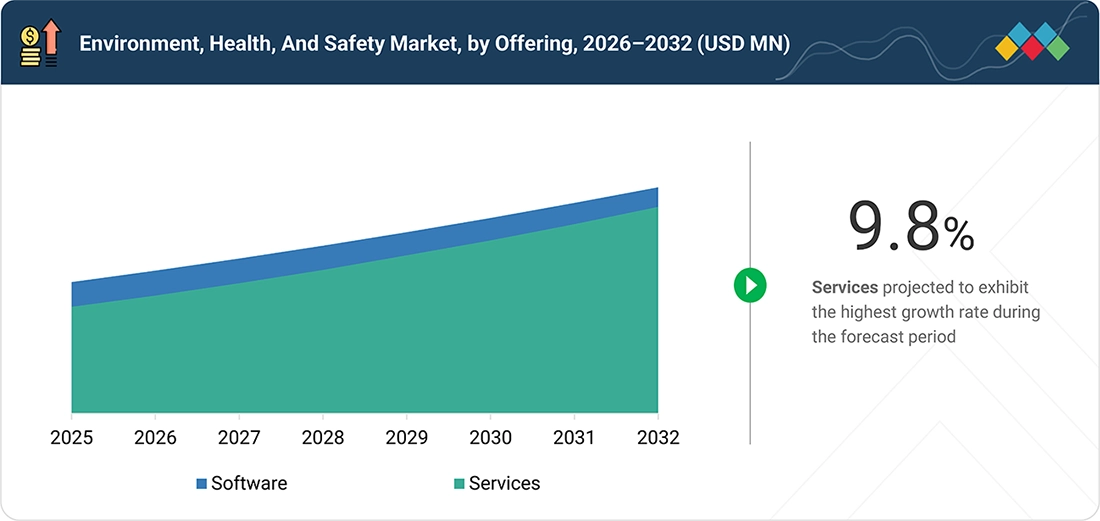
By OfferingBy offering, the services segment is expected to register the highest CAGR of 9.8%.
-
By VerticalBy vertical, the energy & utilities segment is projected to grow at the fastest rate from 2026 to 2032.
-
By RegionAsia Pacific is projected to be the fastest-growing region in the global environment, health, and safety market.
-
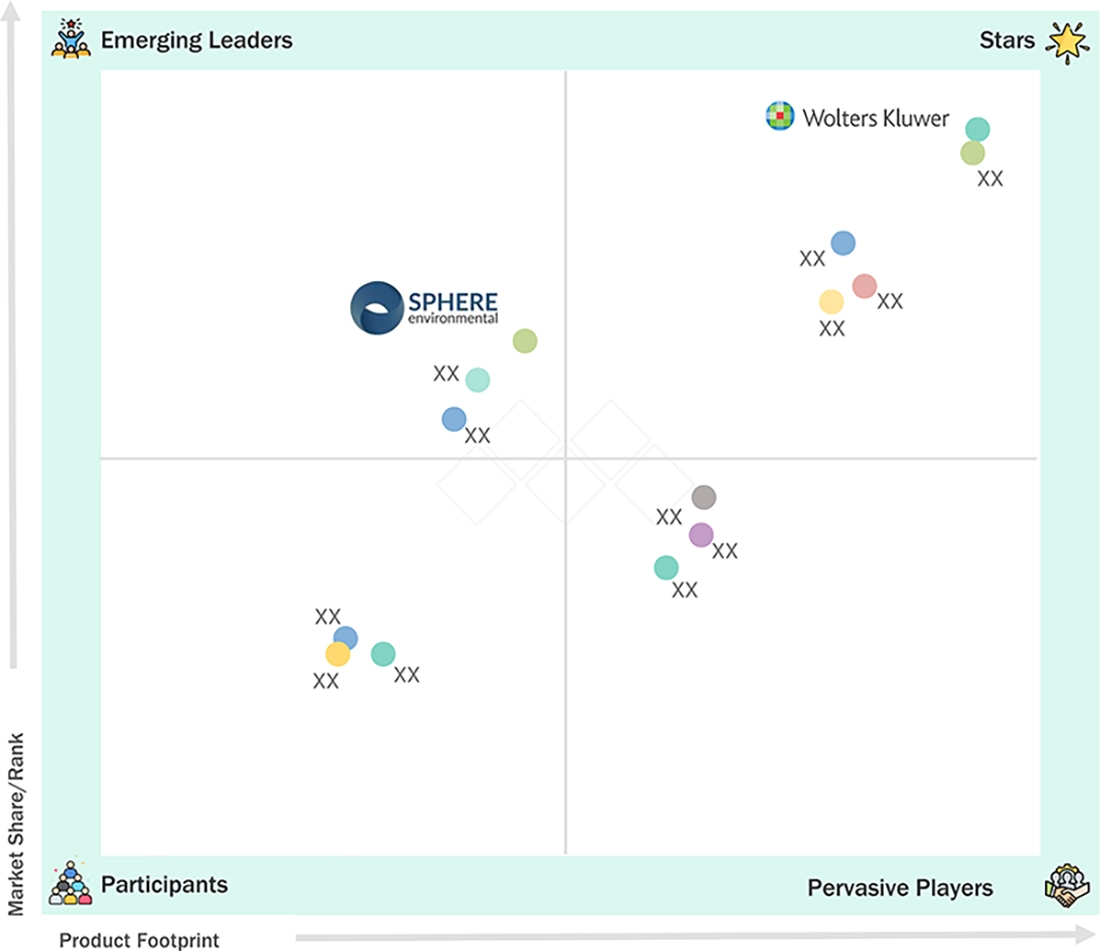
Competitive Landscape - Key PlayersWolters Kluwer, Cority, and VelocityEHS were identified as star players in the environment, health, and safety market, given their strong market share and product footprint.
-
Competitive Landscape - Startups/SMEsPro-Sapien, TrueContext, Inicia, and ComplianceQuest have distinguished themselves among startups and SMEs in the environment, health, and safety market.
Adoption of environmental, health, and safety solutions is accelerating as organizations face growing pressure to improve workplace safety, strengthen environmental compliance, manage operational risks, and meet increasingly complex regulatory requirements. Enterprises are deploying EHS solutions to automate incident reporting, risk assessments, inspections, audits, environmental monitoring, compliance management, and employee safety processes. These capabilities help reduce workplace incidents, improve regulatory compliance, streamline reporting, and provide greater visibility into safety and environmental performance. As organizations expand operations across multiple locations and face stricter sustainability and occupational safety requirements, they require centralized and intelligent EHS management capabilities. Cloud-based EHS platforms enable organizations to consolidate data, monitor risks in real time, automate routine workflows, and support faster, data-driven decision-making. Increasing adoption of analytics, mobile applications, IoT-enabled monitoring, and AI is further enhancing predictive risk management and proactive safety programs. This growing focus on digital and integrated EHS management is strengthening the role of EHS solutions as a critical component of safer, compliant, and sustainable business operations.
TRENDS & DISRUPTIONS IMPACTING CUSTOMERS' CUSTOMERS
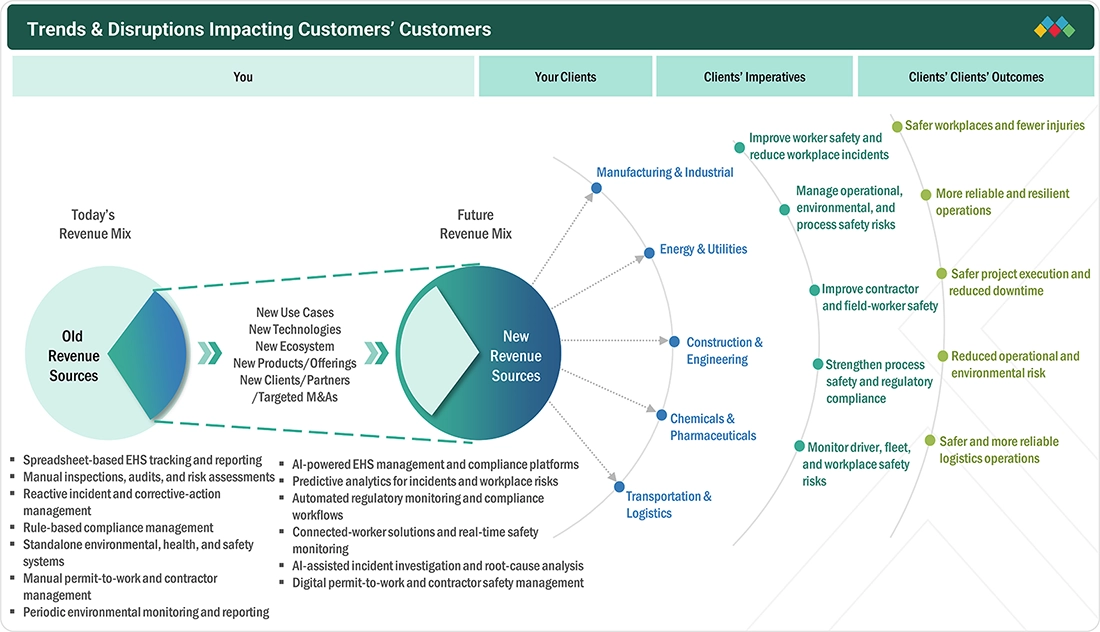
The Environment, Health, and Safety (EHS) market is transitioning from fragmented, manually managed safety and compliance processes toward AI-powered, connected, and proactive EHS management, with the revenue mix expected to shift from approximately 20% today to 80% in the future. This transformation is driven by new use cases, technologies, ecosystems, product offerings, and targeted M&As. Traditional spreadsheet-based EHS tracking, manual inspections and audits, reactive incident management, rule-based compliance, standalone EHS systems, manual permit-to-work processes, and periodic environmental monitoring are evolving toward AI-powered EHS management and compliance platforms, predictive incident and workplace-risk analytics, automated regulatory monitoring, connected-worker solutions, real-time safety monitoring, AI-assisted incident investigation and root-cause analysis, and digital permit-to-work and contractor safety management. These trends are reshaping requirements across manufacturing and industrial, energy and utilities, construction and engineering, chemicals and pharmaceuticals, and transportation and logistics organizations, enabling them to improve worker safety, manage operational and environmental risks, strengthen regulatory compliance, improve contractor and field-worker safety, and monitor fleet and workplace risks. Ultimately, customers’ customers benefit from safer workplaces with fewer injuries, more reliable and resilient operations, safer project execution with reduced downtime, lower operational and environmental risk, and safer and more reliable logistics operations.
Source: Secondary Research, Interviews with Experts, MarketsandMarkets Analysis
MARKET DYNAMICS

Level
-
Increase in government initiatives to follow workforce safety and environmental regulations and standards

-
Digitally connected workforce with connected wearables for safe operations to improve EHS management


Level
-
Lack of qualified EHS professionals

-
Data silos and information gaps


Level
-
Increase in government initiatives for low-carbon emission policies

-
Technological innovations to help various industries achieve worker engagement and adopt quality programs


Level
-
Technological integration and data management

-
Poor regulatory frameworks in emerging economies

Source: Secondary Research, Interviews with Experts, MarketsandMarkets Analysis
Driver: Increase in government initiatives to follow workforce safety and environmental regulations and standards
Governments across regions are strengthening workplace safety, environmental protection, and occupational health regulations, driving organizations to adopt advanced EHS solutions. Regulatory bodies are introducing stricter requirements for incident reporting, hazardous material management, emissions monitoring, worker safety, and environmental compliance. Organizations are increasingly using EHS management platforms to automate compliance tracking, maintain digital records, monitor regulatory changes, and standardize safety procedures across multiple facilities. Growing penalties for non-compliance and increased regulatory scrutiny are further encouraging enterprises to invest in centralized EHS systems. The expansion of regulatory frameworks across industries such as manufacturing, energy, construction, chemicals, and healthcare is expected to support continued adoption of EHS technologies.
Restraint: Lack of qualified EHS professionals
The shortage of qualified EHS professionals remains a significant restraint for the EHS market. Organizations require skilled personnel to manage workplace safety programs, conduct risk assessments, interpret changing regulations, investigate incidents, and implement environmental compliance measures. However, many industries struggle to recruit and retain professionals with specialized knowledge in occupational health, environmental management, industrial safety, and regulatory compliance. The skills gap is particularly challenging for small and medium-sized enterprises with limited resources to maintain dedicated EHS teams. Although EHS software can automate several activities, organizations still require experienced professionals to configure systems, analyze information, and make informed decisions. This shortage can delay EHS technology implementation and limit the effective utilization of advanced solutions.
Opportunity: Increase in government initiatives for low-carbon emission policies
Growing government initiatives to reduce carbon emissions are creating new opportunities for EHS solution providers. Governments are introducing stricter emissions targets, carbon reduction policies, environmental reporting requirements, and sustainability regulations to support climate objectives. As a result, organizations are seeking digital tools to monitor greenhouse gas emissions, track energy use, manage environmental performance, and improve sustainability reporting. EHS platforms can help enterprises centralize environmental data and integrate emissions monitoring with broader workplace safety and compliance activities. Growing adoption of carbon reduction programs across manufacturing, energy, transportation, construction, and other carbon-intensive industries is expected to increase demand for environmental management capabilities. The transition toward low-carbon operations is also encouraging organizations to integrate EHS with sustainability and ESG management processes.
Challenge: Technological integration and data management
Technological integration and data management remain major challenges for organizations adopting EHS solutions. Enterprises often operate multiple legacy systems, databases, sensors, and operational platforms that generate EHS-related information in different formats. Integrating these systems with modern EHS platforms can be complex, particularly across large organizations with geographically distributed facilities. Inconsistent data structures, limited interoperability, cybersecurity requirements, and poor data quality can make it difficult to establish a centralized view of EHS performance. Organizations also need to manage large volumes of incident, inspection, compliance, environmental, and worker safety data. Effective integration therefore requires investments in infrastructure, data standardization, APIs, and skilled personnel, increasing implementation complexity and potentially extending deployment timelines.
ENVIRONMENT, HEALTH, AND SAFETY MARKET: COMMERCIAL USE CASES ACROSS INDUSTRIES
| COMPANY | USE CASE DESCRIPTION | BENEFITS |
|---|---|---|
 |
Wolters Kluwer uses its Enablon platform to integrate EHS, operational risk, process safety, and environmental management across complex industrial operations. Organizations use Enablon to manage workplace hazards, incidents, audits, permits, process safety risks, environmental compliance, and emissions data through a connected platform. AI-powered capabilities and analytics support proactive risk identification and data-driven EHS decision-making. | Improved workplace safety and risk visibility | Proactive incident and hazard prevention | Streamlined regulatory and environmental compliance | Improved process safety and control of work | Data-driven sustainability and EHS decision-making |
 |
VelocityEHS uses its Accelerate® Platform to centralize safety, operational risk, chemical management, environmental compliance, industrial hygiene, ergonomics, and contractor safety activities. Organizations use the platform to manage incidents, inspections, observations, audits, training, compliance tasks, and environmental programs, while AI-powered capabilities help identify risks and improve workplace safety. QR-based incident reporting enables workers to report incidents, near misses, and hazards in real time. | Faster incident and near-miss reporting | Improved risk visibility and worker engagement | Reduced administrative effort and paperwork | Better environmental and regulatory compliance | Proactive workplace safety and risk management |
 |
Sphera uses SpheraCloud to help organizations manage environment, health, safety, sustainability, operational compliance, and risk across multiple sites. Companies use the platform for incident management, risk assessment, audits, corrective actions, regulatory compliance, emissions management, and safety performance analytics. Real-time data, automated workflows, and advanced risk assessment capabilities help organizations identify hazards, respond to emerging risks, and improve operational resilience. | Improved enterprise-wide risk visibility | Faster incident reporting and corrective action | Streamlined regulatory compliance and audit readiness | Reduced safety risks and operational disruptions | Improved environmental and sustainability performance |
Logos and trademarks shown above are the property of their respective owners. Their use here is for informational and illustrative purposes only.
MARKET ECOSYSTEM
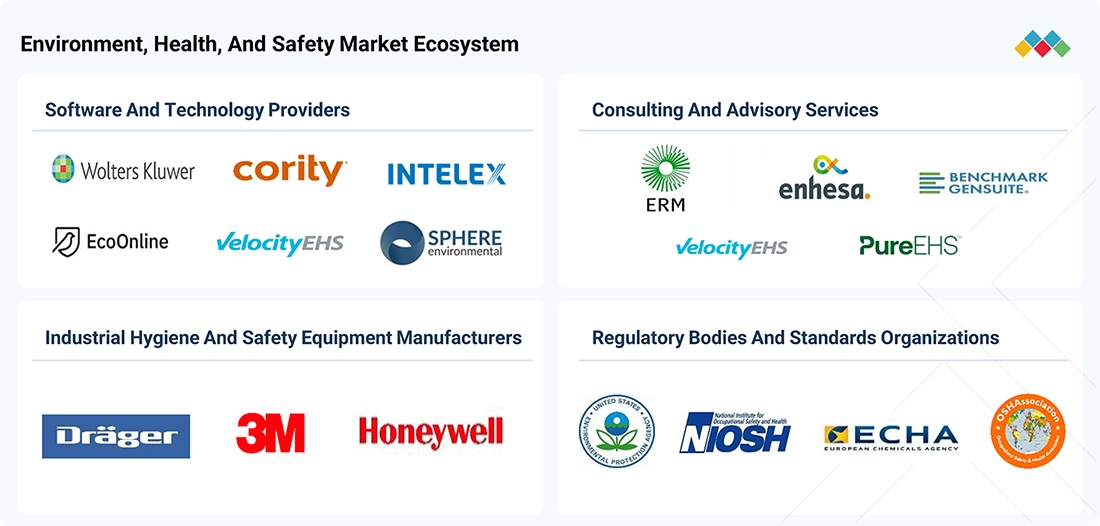
The EHS market ecosystem comprises software and technology providers, consulting and advisory service providers, industrial hygiene and safety equipment manufacturers, and regulatory bodies and standards organizations. Software providers such as Wolters Kluwer, Cority, EcoOnline, Intelex, VelocityEHS, SAP, Sphera, and Honeywell support organizations with EHS management, compliance, risk, and sustainability solutions. Consulting firms, including ERM, Enhesa, Benchmark ESG, VelocityEHS, and PureEHS, provide compliance, auditing, and advisory services. Equipment manufacturers such as Dräger, Honeywell, and 3M supply workplace safety and monitoring solutions. Regulatory bodies, including EPA, OSHA, ECHA, and IOHA, establish safety, environmental, and occupational health standards that shape market requirements.
Logos and trademarks shown above are the property of their respective owners. Their use here is for informational and illustrative purposes only.
MARKET SEGMENTS
Source: Secondary Research, Interviews with Experts, MarketsandMarkets Analysis
EHS Market, By Offering
Software accounts for the largest share of the EHS market as organizations increasingly adopt centralized digital platforms to manage environmental, health, and safety processes. EHS software integrates incident management, risk assessment, inspections, audits, compliance management, occupational health, environmental monitoring, and reporting within a unified platform. Organizations are replacing manual spreadsheets and fragmented systems with cloud-based solutions that improve data visibility, standardize workflows, automate compliance activities, and support real-time decision-making. Integration with IoT devices, mobile applications, analytics, and AI is further strengthening software adoption by enabling predictive risk identification and automated corrective actions. As organizations prioritize operational resilience, regulatory compliance, worker safety, and data-driven EHS management, demand for integrated EHS software is expected to remain strong throughout the forecast period.
EHS Market, By Vertical
Energy & utilities account for the largest share of the EHS market because the sector faces complex operational hazards, hazardous materials, environmental risks, and stringent regulatory requirements. Organizations across power generation, oil and gas, utilities, and renewable energy operations use EHS platforms to manage workplace safety, environmental compliance, incident reporting, inspections, risk assessments, and contractor activities. Digital EHS systems provide centralized visibility across geographically distributed facilities while supporting standardized safety procedures and regulatory reporting. Increasing investments in renewable energy, grid modernization, infrastructure development, and operational efficiency are further increasing the need for effective EHS management. As energy and utility companies continue to strengthen worker protection, environmental performance, and compliance management, adoption of integrated EHS solutions is expected to remain strong throughout the forecast period.
REGION
Environment, Health, and Safety Market: Asia Pacific Overview
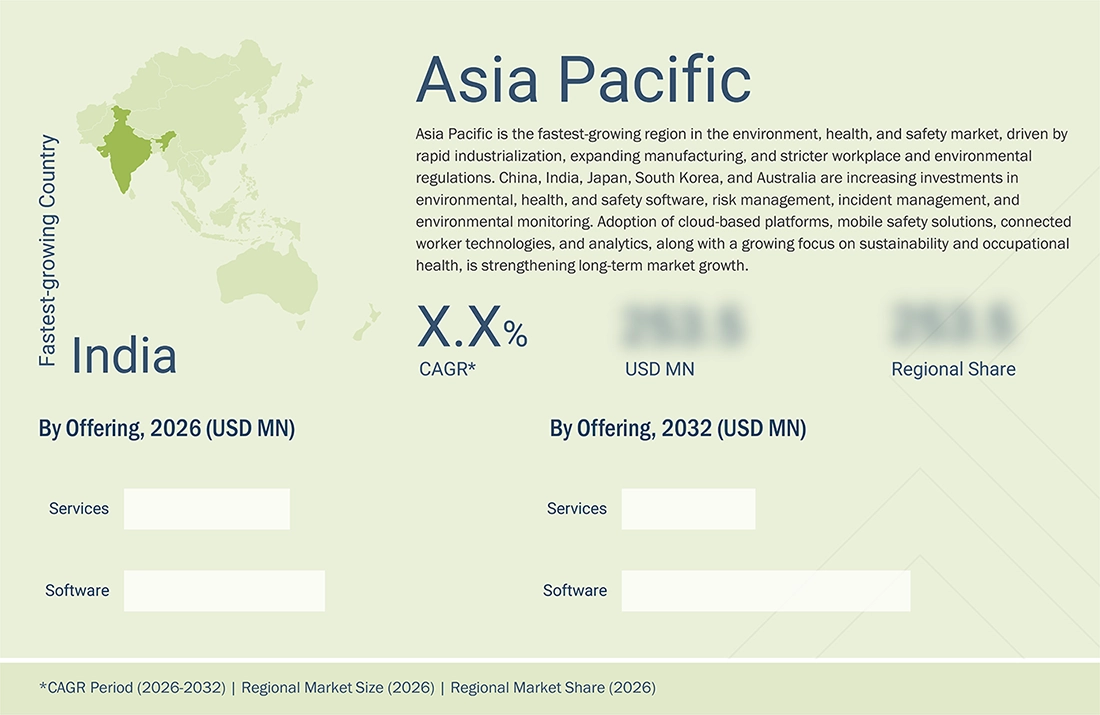
Asia Pacific is the fastest-growing region in the Environment, Health, and Safety (EHS) market as organizations across manufacturing, energy, construction, healthcare, and other industries strengthen their focus on workplace safety, environmental compliance, and operational risk management. Rapid industrialization, expanding infrastructure development, and increasing regulatory requirements are encouraging enterprises to adopt digital EHS solutions for monitoring, reporting, and compliance management. Governments across countries such as China, Japan, India, South Korea, and Australia are also emphasizing occupational health, worker safety, emissions control, and sustainable business practices. Organizations are increasingly integrating cloud-based EHS platforms, mobile applications, analytics, and automation to improve incident management, risk assessment, inspections, and regulatory reporting. Reducing workplace incidents, improving compliance visibility, managing environmental risks, and enhancing employee safety are becoming increasingly important across both developed and emerging markets. EHS solutions provide centralized data, real-time monitoring, automated workflows, and actionable insights, supporting more proactive and efficient safety and environmental management. Together, industrial expansion, strengthening regulations, digital transformation, and growing sustainability initiatives are driving strong EHS market growth across Asia Pacific.
ENVIRONMENT, HEALTH, AND SAFETY MARKET: COMPANY EVALUATION MATRIX
The EHS market company evaluation matrix assesses vendors based on product footprint and market share/rank, categorizing them into Stars, Emerging Leaders, Pervasive Players, and Participants. Wolters Kluwer demonstrates a strong market position and broad EHS product portfolio, placing it among the Stars. Sphera also maintains a strong position, supported by its comprehensive environmental, health, safety, and sustainability capabilities. Other established vendors occupy positions across the Emerging Leaders and Pervasive Players categories, reflecting varying levels of product breadth and market presence. The matrix highlights a competitive market comprising established technology providers, specialized EHS platforms, and emerging companies, with opportunities for vendors to strengthen their positioning through innovation and expanded solution portfolios.
Source: Secondary Research, Interviews with Experts, MarketsandMarkets Analysis
KEY MARKET PLAYERS
- Wolters Kluwer (Netherlands)
- VelocityEHS (US)
- Intelex (Canada)
- Benchmark ESG (US)
- Cority (Canada)
- Intertek (UK)
- Sphera (US)
- Quentic (Germany)
- PureEHS (US)
- Ideagen (UK)
- SAP (Germany)
- IBM (US)
- Evotix (UK)
- EcoOnline (UK)
- Diligent Corporation (US)
- Octave Reliance (US)
- 3E (US)
- Dakota Software (US)
- IsoMetrix (South Africa)
- Enhesa (Belgium)
- VisiumKMS (US)
- SafetyCulture (Australia)
- TrueContext (Canada)
- ComplianceQuest (US)
- Pro-Sapien (UK)
- XGRC Software (South Africa)
- Mitratech (US)
- Indus Environmental Services (India)
- Inicia (Japan)
- Core-EHS (India)
- EHS Brasil (Brazil)
MARKET SCOPE
| REPORT METRIC | DETAILS |
|---|---|
| Market Size in 2025 (Value) | USD 8.62 Billion |
| Market Size in 2026 (Value) | USD 9.28 Billion |
| Market Forecast in 2032 (Value) | USD 13.97 Billion |
| Growth Rate | 7.00% |
| Years Considered | 2020-2032 |
| Base Year | 2025 |
| Forecast Period | 2026-2032 |
| Units Considered | Value (USD Billion) |
| Report Coverage | Revenue forecast, company ranking, competitive landscape, growth factors, and trends |
| Segments Covered |
|
| Regions Covered | North America, Europe, Asia Pacific, Middle East & Africa, Latin America |
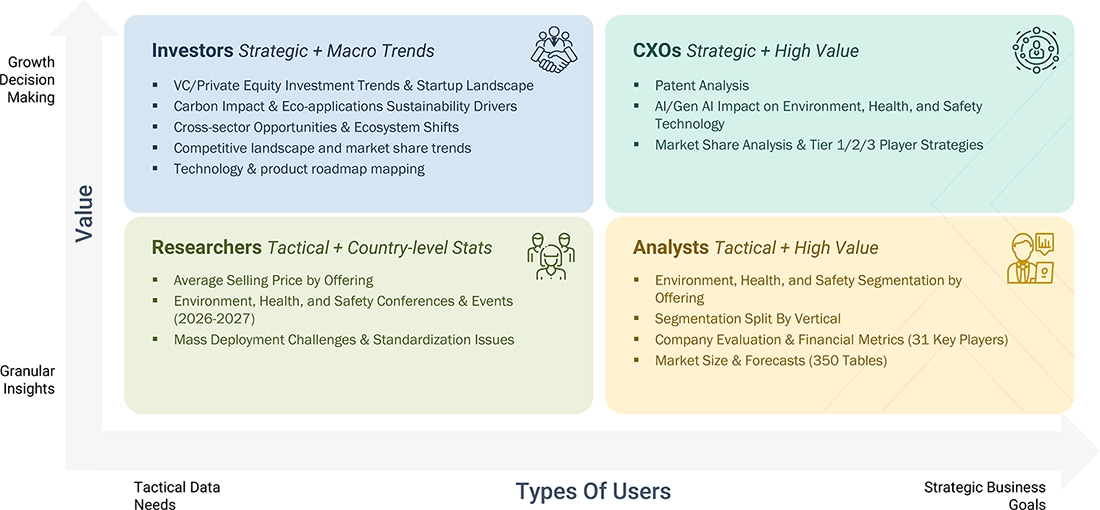
WHAT IS IN IT FOR YOU: ENVIRONMENT, HEALTH, AND SAFETY MARKET REPORT CONTENT GUIDE
DELIVERED CUSTOMIZATIONS
We have successfully delivered the following deep-dive customizations:
| CLIENT REQUEST | CUSTOMIZATION DELIVERED | VALUE ADDS |
|---|---|---|
| Leading Service Provider (US) | Regional Analysis: • Further breakdown of the North American environment, health, and safety market • Further breakdown of the European environment, health, and safety market • Further breakdown of the Asia Pacific environment, health, and safety market • Further breakdown of the Middle East & African environment, health, and safety market • Further breakdown of the Latin American environment, health, and safety market | • Identifies high-growth regional opportunities, enabling tailored market entry strategies. • Optimizes resource allocation and investment based on region-specific demand and trends. |
| Company Information | Detailed analysis and profiling of additional market players (up to 5) | • Broadens competitive insights, helping clients make informed strategic and investment decisions. • Reveals market gaps and opportunities, supporting differentiation and targeted growth initiatives. |
RECENT DEVELOPMENTS
- September 2026 : Wolters Kluwer released new analysis from its Safety Shift: EHS Readiness in 2026 research, highlighting the increasing adoption of AI across environment, health, and safety programs. The analysis found that organizations are increasingly using AI for incident prediction, hazard identification, compliance, analytics, and reporting, while data quality, digitalization, governance, and human oversight remain important barriers. The development highlights the growing shift toward AI-enabled EHS management and the need for organizations to strengthen digital foundations before scaling advanced AI capabilities.
- September 2026 : Ideagen partnered with Carahsoft to expand access to its environmental, health, safety and quality (EHSQ) and governance, risk and compliance (GRC) solutions across the U.S. public sector. Under the agreement, Carahsoft will make Ideagen’s AI-enabled EHSQ and GRC technologies available to federal, state, and local government organizations through its reseller network. The partnership demonstrates the growing adoption of cloud-based EHSQ and AI technologies across government agencies to strengthen compliance, risk management, and workplace safety.
- July 2026 : Cority demonstrated more than 30 AI workflows operating within its CorityOne platform, supported by 13 AI agents and a centralized control center. The capabilities include applications such as medical documentation, environmental permit analysis, compliance support, and automated insights across EHS and operational risk data. The development demonstrates the increasing use of AI agents and intelligent workflows to automate administrative activities, improve compliance, and shift EHS management from reactive incident response toward proactive risk prevention.
Table of Contents
 Exclusive indicates content/data unique to MarketsandMarkets and not available with any competitors.
Methodology
The research study involved four major activities in estimating the Environment, Health, and Safety market size. Exhaustive secondary research has been done to collect important information about the market and peer markets. The next step was to validate these findings and assumptions and size the market using primary research with industry experts across the value chain. Both top-down and bottom-up approaches have been used to estimate the market size. Afterward, the market breakdown and data triangulation have been adopted to estimate the market sizes of segments and subsegments.
Secondary Research
The market size of companies offering environment, health, and safety software and services for various subscribers is arrived at based on the secondary data available through paid and unpaid sources and by analyzing the different offerings (software and services) of major companies in the ecosystem and rating them based on their performance and quality. In the secondary research process, various sources were referred to for identifying and collecting information for this study. The secondary sources included annual reports, press releases and investor presentations of companies, white papers, journals, and certified publications and articles from recognized authors, directories, and databases.
Secondary research was mainly used to obtain key information about the industry’s supply chain, the total pool of key players, market classification, and segmentation according to the industry trends to the bottommost level, regional markets, and key developments from both market- and technology-oriented perspectives, all of which were further validated by primary sources.
Primary Research
In the primary research process, various primary sources from both the supply and demand sides were interviewed to obtain qualitative and quantitative information for the report. Supply-side primary sources include industry experts such as Chief Executive Officers (CEOs), Vice Presidents (VPs), marketing directors, technology and innovation directors, and other key executives from companies and organizations providing Environment, Health, and Safety solutions. Primary demand-side sources include end users such as Chief Information Officers (CIOs), consultants, service professionals, technicians and technologists, and managers at public and investor-owned utilities.
In the market engineering process, top-down and bottom-up approaches have been extensively used, along with several data triangulation methods, to perform market estimation and market forecasting for the overall market segments and subsegments listed in the report. We conducted extensive qualitative and quantitative analyses across the entire market engineering process to identify key information/insights throughout the report.
After completing the market engineering (including calculations for market statistics, market breakup, market size estimations, market forecasting, and data triangulation), we conducted extensive primary research to gather information. Primary research has been conducted to identify the segmentation, industry trends, key players, competitive landscape, and key market dynamics, such as drivers, restraints, opportunities, challenges, industry trends, and key strategies.
Breakdown Of The Primaries
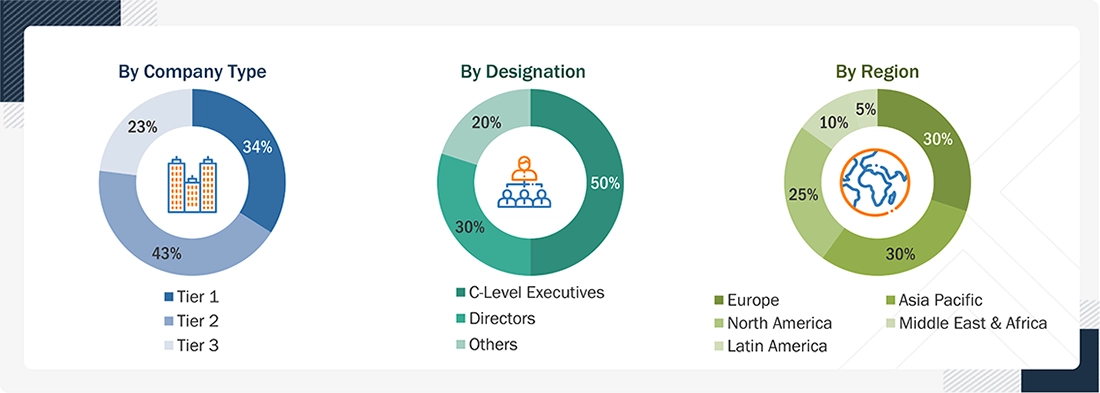
Note 1: Tier 1 companies have revenues of more than USD 10 billion; tier 2 companies’ revenue ranges from USD 1 billion to USD 10 billion; and tier 3 companies’ revenue ranges from USD 500 million to USD 1 billion
Source: Secondary Literature, Interviews with Experts, and MarketsandMarkets Analysis
To know about the assumptions considered for the study, download the pdf brochure
Market Size Estimation
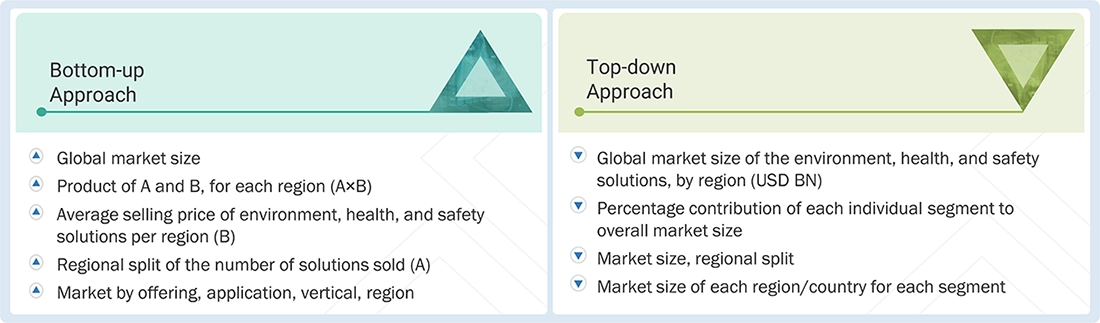
In the market engineering process, we used top-down and bottom-up approaches, along with multiple data triangulation methods, to estimate and validate the size of the Environment, Health, and Safety market and other dependent submarkets. The research methodology used to estimate the market sizes includes the following:
- Initially, MarketsandMarkets focuses on top-line investments and spending in the ecosystems. Further, significant developments in the critical market area have been considered.
- Tracking the recent and upcoming developments in the Environment, Health, and Safety market that include investments, R&D activities, product launches, collaborations, mergers and acquisitions, and partnerships, as well as forecasting the market size based on these developments and other critical parameters.
- Conduct multiple discussions with key opinion leaders to learn about the diverse types of authentications and brand protection offerings used and the applications for which they are used to analyze the breakdown of the scope of work carried out by major companies.
- Segmenting the market based on technology types concerning applications wherein the types are to be used and deriving the size of the global Environment, Health, and Safety market.
- Segmenting the overall market into various market segments
- Validating the estimates at every level through discussions with key opinion leaders, such as chief executives (CXOs), directors, and operations managers, and finally with the domain experts at MarketsandMarkets
Environment, Health, and Safety Market: Top-Down and Bottom-Up Approach
Data Triangulation
After arriving at the overall market size from the above estimation process, the Environment, Health, and Safety market has been split into several segments and subsegments. To complete the overall market engineering process and arrive at the exact statistics for all segments and subsegments, data triangulation and market breakdown procedures have been used, wherever applicable. The data were triangulated by analyzing factors and trends from both the demand and supply sides.
The environment, health, and safety market size has been validated using top-down and bottom-up approaches.
Market Definition
An EHS system streamlines EHS management by automating safety program management and simplifying government regulatory compliance. It prioritizes user engagement and collaboration to reduce operational risks, improve health and safety performance, and achieve corporate sustainability goals. The EHS market includes software and services that reduce environmental pollution (including air, water, and soil) and protect workers' health, improving ergonomics and ensuring a risk-free workplace. This EHS software includes features such as environmental and sustainability management, waste management, health and safety management, industrial hygiene management, energy and water management, incident and risk management, and air quality and compliance management.
According to ComplianceQuest, EHS management is an all-in-one term that focuses on improving a business's EHS performance. EHS management refers to implementing procedures that ensure and improve the safety of workers and their surroundings. These processes play a significant role in achieving and maintaining the overall environmental goals of the organization. EHS management is a crucial aspect of an enterprise’s operations. It not only helps minimize environmental impact and improve worker safety and well-being, but can also improve employee retention and productivity and enhance the company's brand image, spurring customer and corporate growth.
Key Stakeholders
- EHS Software Providers
- EHS Service Providers
- System Integrators
- Consultancy and Advisory Firms
- Certification and Training Firms
- Regulatory Agencies
- Governments
- Chief Technology and Data Officers
- Workplace Safety Service Professionals
- Business Analysts
- Information Technology (IT) Professionals
- Investors and Venture Capitalists
- Third-party Providers
- Managed and Professional Service Providers
Report Objectives
- To determine, segment, and forecast the environment, health, and safety market by offering (software and services), application, vertical, and region, in terms of value
- To forecast the size of the market segments across five main regions: North America, Europe, Asia Pacific, Middle East & Africa, and Latin America
- To provide detailed information on the major factors (drivers, restraints, opportunities, and challenges) influencing market growth
- To study the complete value chain and related industry segments and perform a value chain analysis of the market landscape
- To strategically analyze the macro and micromarkets with respect to individual growth trends, prospects, and contributions to the total market
- To analyze the industry trends, pricing data, patents, and innovations related to the market
- To analyze stakeholder opportunities by identifying high-growth market segments
- To profile the key players in the market and comprehensively analyze their market share/ranking and core competencies
- To track and analyze competitive developments, such as mergers & acquisitions, product launches & developments, partnerships, agreements, collaborations, business expansions, and R&D activities
Available customizations:
Based on the provided market data, MarketsandMarkets offers customizations to meet the company’s specific needs. The following customization options are available for the report:
Geographic Analysis
- Further breakdown of the Asia Pacific market into countries contributing 75% to the regional market size
- Further breakdown of the North American market into countries contributing 75% to the regional market size
- Further breakdown of the Latin American market into countries contributing 75% to the regional market size
- Further breakdown of the Middle East & African market into countries contributing 75% to the regional market size
- Further breakdown of the European market into countries contributing 75% to the regional market size
Company Information
- Detailed analysis and profiling of additional market players (up to 5)
Key Questions Addressed by the Report
What is the projected size of the Environment, Health, and Safety market by 2032?
The global Environment, Health, and Safety (EHS) market is projected to grow from USD 9.28 billion in 2026 to USD 13.97 billion by 2032, registering a CAGR of 7.0% during the forecast period.
What are the key factors driving the growth of the Environment, Health, and Safety market?
The key growth drivers include stricter government regulations for workplace safety and environmental protection, increasing adoption of digital EHS solutions, and growing emphasis on sustainability and operational risk management. The need to improve regulatory compliance, monitor environmental performance, and protect workers is also driving market growth.
Which segment is expected to grow the fastest in the Environment, Health, and Safety market?
By offering, the services segment is expected to register the highest CAGR of 9.8% during 2026–2032. By vertical, the energy and utilities segment is projected to grow at the fastest rate over the same period.
What are the major applications of Environment, Health, and Safety solutions?
Major applications include health and safety management, environmental and sustainability management, waste management, energy and water management, air quality and compliance management, and incident and risk management. These solutions help organizations streamline EHS processes and improve workplace safety and environmental compliance.
Which region is expected to grow the fastest in the Environment, Health, and Safety market?
Asia Pacific is projected to be the fastest-growing region in the EHS market. Growth is supported by industrial expansion, infrastructure development, increasing regulatory requirements, and rising adoption of digital solutions for workplace safety, environmental monitoring, and compliance management.
Who are the key players in the Environment, Health, and Safety market?
Key players include Wolters Kluwer, VelocityEHS, Intelex, Benchmark ESG, Cority, Intertek, Sphera, Quentic, PureEHS, Ideagen, SAP, IBM, Evotix, and EcoOnline. These companies offer EHS software and services that support safety management, risk assessment, environmental compliance, and sustainability initiatives.


Personalize This Research
- Triangulate with your Own Data
- Get Data as per your Format and Definition
- Gain a Deeper Dive on a Specific Application, Geography, Customer or Competitor
- Any level of Personalization
Let Us Help You
- What are the Known and Unknown Adjacencies Impacting the Environment, Health, and Safety Market
- What will your New Revenue Sources be?
- Who will be your Top Customer; what will make them switch?
- Defend your Market Share or Win Competitors
- Get a Scorecard for Target Partners

Custom Market Research Services
We Will Customise The Research For You, In Case The Report Listed Above Does Not Meet With Your Requirements
Get 10% Free CustomisationTESTIMONIALS
- Canada Environment, Health, and Safety Market
- US Environment, Health, and Safety Market
- UK Environment, Health, and Safety Market
- Germany Environment, Health, and Safety Market
- China Environment, Health, and Safety Market
- India Environment, Health, and Safety Market
- Brazil Environment, Health, and Safety Market
- France Environment, Health, and Safety Market
- Italy Environment, Health, and Safety Market
- Nordic Countries Environment, Health, and Safety Market
- Rest Of Europe Environment, Health, and Safety Market
- Spain Environment, Health, and Safety Market
- Japan Environment, Health, and Safety Market
- Rest Of Asia Pacific Environment, Health, and Safety Market
- South Korea Environment, Health, and Safety Market
- Southeast Asia Environment, Health, and Safety Market
- Mexico Environment, Health, and Safety Market
- Rest Of Latin America Environment, Health, and Safety Market
- GCC Countries Environment, Health, and Safety Market
- South Africa Environment, Health, and Safety Market



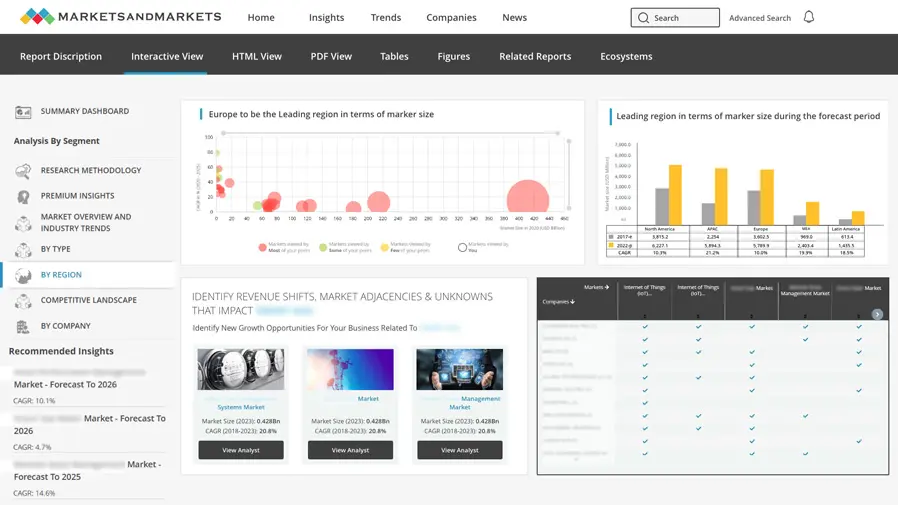
Growth opportunities and latent adjacency in Environment, Health, and Safety Market