Environmental DNA Market Size, Share, Growth Trends & Forecast to 2031

Environmental DNA Market by Type of Solution (Services, Products, Instruments & Platforms, Software & Data Analytics), Sample Type (Water, Soil, Sediment, Air, Biological Waste), Detection method, Application, and Region – Global Forecast to 2031




OVERVIEW
Source: Secondary Research, Interviews with Experts, MarketsandMarkets Analysis
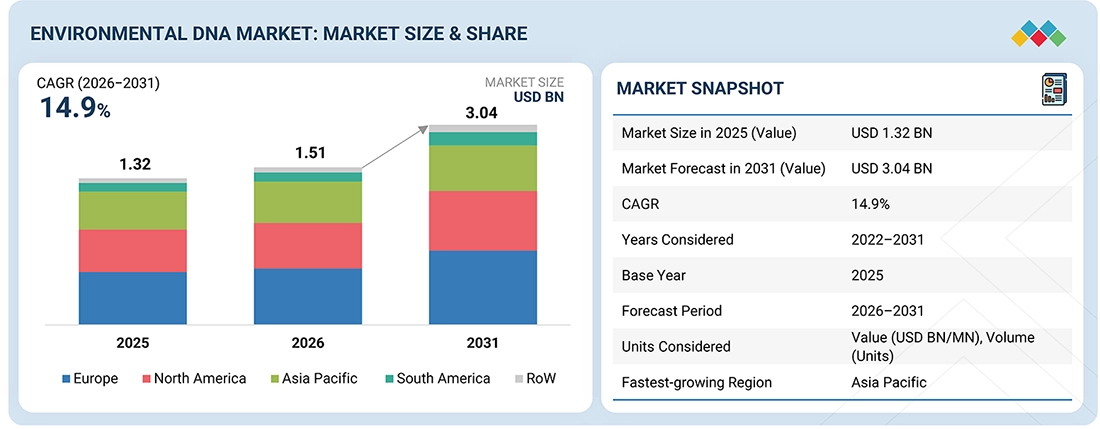
The environmental DNA market is projected to reach USD 3.04 billion by 2031, from USD 1.51 billion in 2026, with a CAGR of 14.9%. The market is growing as monitoring programs shift toward non-invasive approaches. These methods reduce field impact and make data collection easier across different environments. At the same time, there is a higher demand for precise species identification, especially in conservation and regulatory studies. The steady expansion of ecological research programs is also contributing to wider use. Recent advances in sequencing and PCR-based techniques have improved overall performance. Detection is more sensitive, and processing times are shorter than before. This has increased confidence in results and made environmental DNA suitable for routine use. The methods now work reliably across common sample types, including water, soil, and air. Collaboration has also increased across the sector. Research institutes, environmental agencies, and private laboratories are working more closely than in the past. These partnerships help move environmental DNA analysis from research settings into regular monitoring and compliance work, supporting broader adoption.
Market Size and Forecast:
- Market Size Value in 2025: USD 1.32 Billion
- Market Size Value in 2026: USD 1.51 Billion
- Revenue Forecast in 2031: USD 3.04 Billion
- Growth Rate: CAGR of 14.9% from 2026 to 2031
- Data available from 2022 to 2031
- Base year: 2025
- Forecast period: 2026–2031
-
North America accounted for 57.07% revenue share in 2025.
-
The qPCR segment accounted for 42.08% of the environmental DNA market in 2025.
Key Market Trends and Insights
- By Application: Increasing adoption of environmental DNA (eDNA) technologies for biodiversity monitoring, species detection, ecosystem assessment, invasive species management, and conservation research is driving significant growth in the environmental DNA market.
-
Key Advantages: eDNA analysis enables non-invasive and highly sensitive detection of species from environmental samples such as water, soil, and air. It improves monitoring efficiency, reduces field survey costs, minimizes disturbance to ecosystems, and supports faster, data-driven environmental decision-making.
- Growing Trends: Researchers, government agencies, and environmental organizations are increasingly integrating advanced DNA sequencing technologies, metabarcoding techniques, AI-driven data analytics, and real-time environmental monitoring solutions to enhance biodiversity assessment and ecological surveillance capabilities.
- Growth Opportunities: Rising investments in conservation programs, increasing regulatory emphasis on environmental monitoring, growing adoption of molecular diagnostic technologies, expanding applications in aquatic ecosystem management, and advancements in next-generation sequencing (NGS) platforms are creating substantial growth opportunities for the environmental DNA market.
KEY TAKEAWAYS
-
BY REGIONNorth America accounted for 57.07% revenue share in 2025.
-
BY TYPE OF SOLUTIONThe instruments & platforms segment is expected to lead the environmental DNA market during the forecast period.
-
BY SAMPLE TYPEThe air segment is expected to record the highest CAGR of 11.0% during the forecast period.
-
BY DETECTION METHODThe qPCR segment accounted for 42.08% of the environmental DNA market in 2025.
-
BY APPLICATIONThe biodiversity monitoring segment is expected to capture a large share during the forecast period.
-
COMPETITIVE LANDSCAPE (Key Players)Key market leaders like Grupo Bimbo, ARYZTA AG, General Mills, and Europastry dominate the frozen bakery market through extensive product portfolios, strong global distribution, and deep expertise in solutions. These players are heavily investing in automation, rapid technologies, high-quality products, and product innovation, while strategic partnerships, acquisitions, and expansion into foodservice channels remain core competitive strategies.
-
COMPETITIVE LANDSCAPE (SME)Wilderlab NZ Ltd, SimplexDNA, Biome Makers Inc., Metagenom Bio Life Science Inc., and Biomeme have distinguished themselves within the SME landscape by building strong footholds in niche segments, leveraging localized distribution networks, and focusing on biodiversity monitoring and regional demand pockets, underscoring their growing role in the fragmented fro market.
Environmental DNA makes it possible to identify species without direct contact. Samples can be collected from water, soil, sediment, and even air. This supports practical uses such as biodiversity surveys, monitoring invasive species, and checking water quality. Recent progress in sequencing and PCR-based testing has improved how well these methods perform. Detection is now more sensitive and remains reliable even when DNA levels are very low. This has reduced uncertainty in results and expanded the scope of the method. As the need for efficient and scalable environmental monitoring grows, the use of environmental DNA continues to increase. It is now applied across research projects, conservation programs, and regulatory activities, where consistent and repeatable data is required.
TRENDS & DISRUPTIONS IMPACTING CUSTOMERS' CUSTOMERS
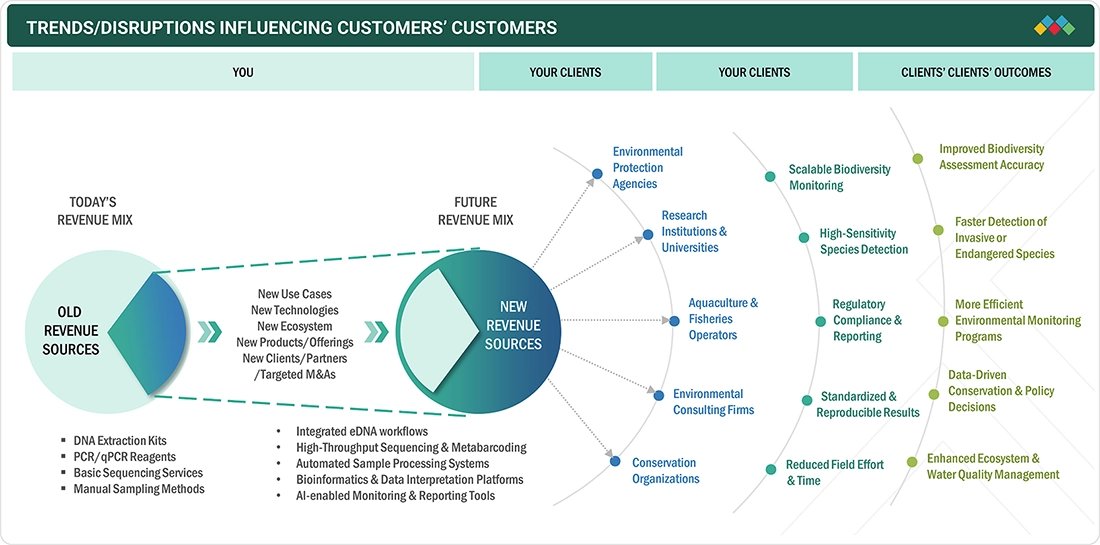
The impact on customers’ customers in the environmental DNA market is largely tied to the need for dependable and timely environmental information. Organizations that use eDNA, such as environmental agencies, research institutions, aquaculture operators, and consulting firms, depend on these results to deliver accurate species detection, consistent outputs, and reduced reliance on intensive fieldwork. These expectations influence how monitoring programs are planned and executed. There is a growing emphasis on methods that can scale efficiently while maintaining data quality. As a result, customers are adopting more advanced eDNA workflows to meet performance and reporting requirements. Improved data quality at this level supports clearer biodiversity assessment, faster identification of target species, and stronger alignment with regulatory standards. It also enables better-informed decisions in conservation planning and ecosystem management, where reliable evidence is essential.
Source: Secondary Research, Interviews with Experts, MarketsandMarkets Analysis
MARKET DYNAMICS

Level
-
• Rising focus on biodiversity conservation

-
• Technological advancements in sequencing and molecular biology


Level
-
• High initial cost and infrastructure requirements

-
• Lack of standardization and protocol variability


Level
-
• Integration into environmental regulations and compliance frameworks

-
• Adoption in biodiversity credits and natural capital marke+++


Level
-
• Fragmented regulatory and data-governance landscape

-
• Limited awareness and technical understanding among end users

Source: Secondary Research, Interviews with Experts, MarketsandMarkets Analysis
Driver: Rising focus on biodiversity conservation
The increasing global emphasis on biodiversity conservation is a key factor driving the growth of the environmental DNA market, as the demand for accurate and scalable ecosystem monitoring solutions continues to rise. According to the World Wildlife Fund, ~ 8.7 million species exist globally, of which nearly 86% of terrestrial and 91% of marine species remain undiscovered, underscoring substantial gaps in biodiversity data and the limitations of conventional monitoring approaches. This lack of comprehensive visibility, combined with ongoing biodiversity decline, is intensifying the need for more efficient and sensitive detection technologies. eDNA is increasingly recognized as a viable solution to these challenges due to its ability to enable non-invasive, high-throughput biodiversity assessment. eDNA facilitates the detection of multiple species from a single environmental sample, significantly improving monitoring efficiency while reducing time, cost, and ecological disturbance. This capability supports broader geographic coverage and repeated monitoring, which are critical for conservation planning and ecosystem management.
Restraint: High initial cost and infrastructure requirements
High initial cost and infrastructure requirements remain a key restraint in the environmental DNA market, as the use of these methods depends on access to specialized equipment, laboratory facilities, and technical expertise. Although sequencing costs have declined over time, the overall process, including sample collection, processing, sequencing, and data analysis, still involves considerable expense. According to a 2026 study published on the National Center for Biotechnology Information, “the most prevalent concern across all stages of the workflow was affordability,” with costs related to sampling, reagents, analysis, and equipment identified as key barriers. This highlights that cost challenges are not limited to a single step but affect the entire workflow, making it difficult for many organizations to adopt these methods at scale. In addition to cost, infrastructure limitations further restrict adoption. The same study points to a lack of suitable laboratories and limited access to sequencing facilities and bioinformatics capabilities as ongoing constraints, particularly in regions with limited technical resources.
Opportunity: Integration into environmental regulations and compliance frameworks
The integration of environmental DNA into environmental regulations and compliance frameworks presents a significant growth opportunity, as governments and regulatory bodies increasingly require reliable and scalable tools for environmental monitoring. Traditional monitoring approaches are often resource-intensive and limited in coverage, creating a need for methods that can support large-scale and repeatable data collection. Environmental DNA is already beginning to be incorporated into monitoring programs and regulatory contexts. A 2025 publication from the eDNA Collaborative notes that federal and state agencies have begun using environmental DNA to help make management and regulatory decisions, and that such data is influencing the implementation of environmental laws. These developments indicate a clear transition of environmental DNA from a research-focused tool toward integration into formal regulatory workflows.
Challenge: Fragmented regulatory and data-governance landscape
The environmental DNA market faces a significant challenge due to the fragmented regulatory and data-governance landscape, as policies, standards, and data handling practices vary across regions and institutions. While interest in environmental DNA is increasing, there is no unified global framework governing its use, validation, or data interpretation, leading to inconsistencies in how results are accepted and applied. From a market perspective, this fragmented landscape creates uncertainty for industry participants. Differences in regulatory acceptance across regions can slow market entry and limit scalability, while unclear data governance frameworks may create risks related to data use and compliance. Companies may need to adapt their solutions to multiple regulatory environments, increasing complexity and operational costs.
ENVIRONMENTAL DNA MARKET SIZE, SHARE, GROWTH TRENDS & FORECAST TO 2031: COMMERCIAL USE CASES ACROSS INDUSTRIES
| COMPANY | USE CASE DESCRIPTION | BENEFITS |
|---|---|---|
 |
Provides qPCR, NGS workflows, microbial profiling assays, and environmental sample analysis tools for water, soil, and ecosystem monitoring using eDNA | Enables high-sensitivity detection of microbial contaminants and biodiversity signals, supports regulatory environmental testing workflows, and improves scalability of environmental monitoring programs |
 |
Supplies end-to-end eDNA extraction, purification, and inhibitor-removal kits for wastewater surveillance, biodiversity monitoring, mining-site environmental testing, and microbiome analysis | Improves DNA yield from inhibitor-rich environmental samples, increases reproducibility across large monitoring programs, and enables reliable detection in low-biomass ecosystems |
 |
Provides next-generation sequencing (NGS) platforms for eDNA metabarcoding, shotgun metagenomics, and biodiversity profiling across aquatic, soil, and airborne environments | Allows simultaneous detection of thousands of species from a single environmental sample, supports large-scale ecosystem monitoring, and enables high-resolution taxonomic identification for conservation and compliance programs |
 |
Offers contract eDNA sequencing and biodiversity monitoring services (e.g., species detection, invasive species tracking, microbial contamination mapping) using NGS-based environmental DNA analytics | Enables outsourced turnkey biodiversity surveillance, supports long-term environmental monitoring programs, and provides regulatory-grade species detection for conservation and industrial compliance |
Logos and trademarks shown above are the property of their respective owners. Their use here is for informational and illustrative purposes only.
MARKET ECOSYSTEM
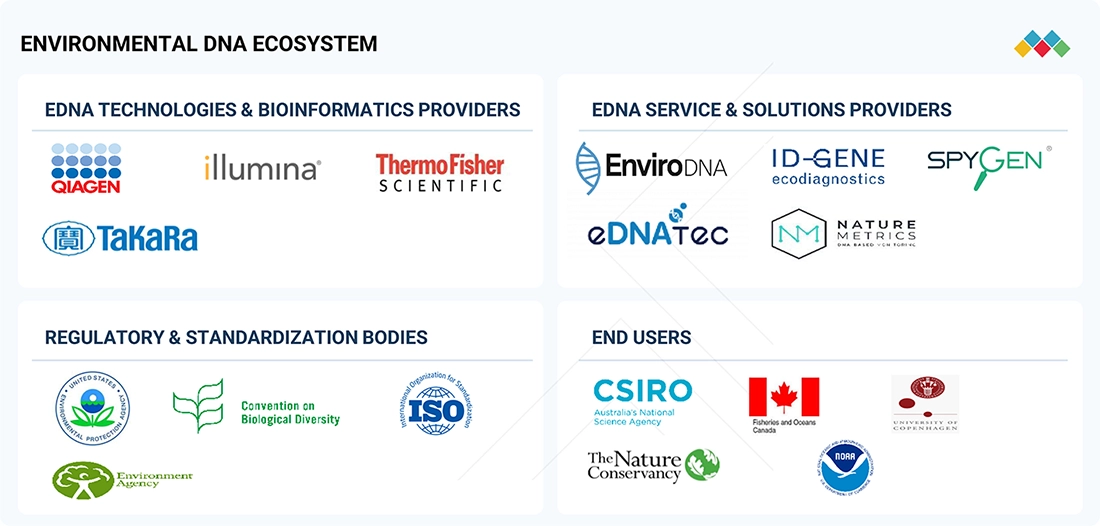
The environmental DNA market ecosystem comprises sample collection providers, molecular reagents, sequencing technologies, bioinformatics solutions, contract testing labs, regulatory authorities, and end users, including environmental monitoring agencies, conservation organizations, research organizations, and infrastructure builders. Reagents provide kits that can extract DNA from low-biomass environmental samples, filtration tools, and amplification reactions designed to work with eDNA samples. Sequencing technologies facilitate the processing of large volumes of genetic material to detect species through metabarcoding and metagenomics analysis. Bioinformatics solutions are required to interpret the results, perform species identification, biodiversity assessment, and ecological modeling. Contract testing laboratories offer their services for species detection, biodiversity monitoring, and water quality analysis. The regulatory authorities develop standards for species detection and water quality monitoring processes.
Logos and trademarks shown above are the property of their respective owners. Their use here is for informational and illustrative purposes only.
MARKET SEGMENTS
Source: Secondary Research, Interviews with Experts, MarketsandMarkets Analysis
Enviornmental DNA Market, By Type of Solution
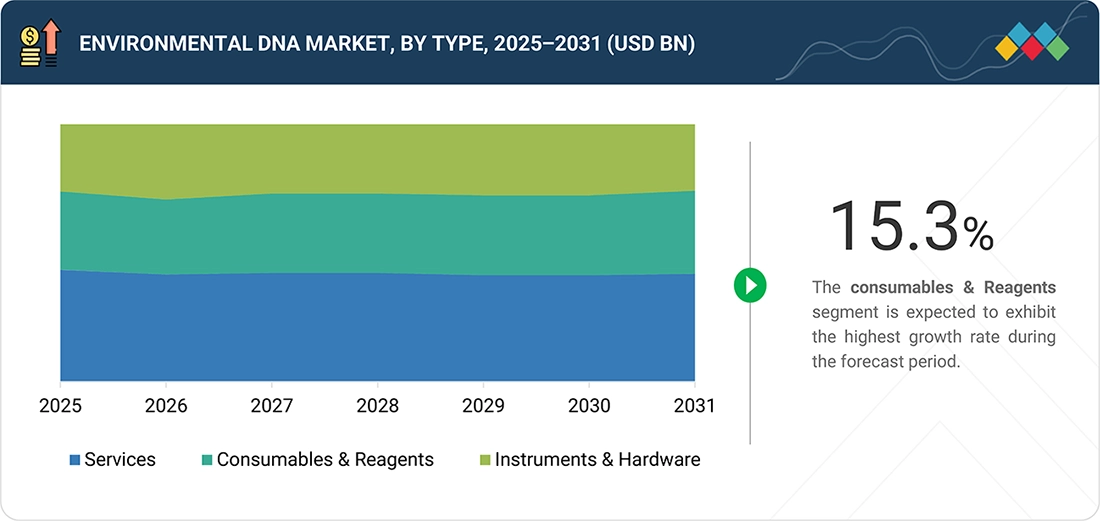
The instruments & platforms category is the major market segment within eDNA, due mainly to the fact that sequencing platforms and PCR platforms constitute the underlying technology foundation necessary for biodiversity monitoring and ecological monitoring activities. The capital-intensive technologies are vital in all areas of application, including governmental monitoring organizations, academic research organizations, third-party laboratories, and environmental consulting services, and hence account for the significant market share held by these segments. With increasing deployment of eDNA technology beyond research purposes and into regulation and ecosystem monitoring, demand for sequencing and analytical instruments will continue to underpin market expenditure.
Environmental DNA Market, By Sample Type
Water is the leading segment due to the extensive adoption of water bodies as the most developed field of application for eDNA analysis. The detection of aquatic organisms, including fish, invasive species, amphibians, pathogens, and bio-indicators via water sampling can be performed effectively, and the DNA yield in water samples is higher than in other media. Therefore, the use of water samples in eDNA analysis is widespread among environmental protection authorities, fisheries, conservation initiatives, hydroelectric power plants, and water suppliers. Water samples are integral to biodiversity monitoring programs, which enhances their share in the total market value.
Environmental DNA Market, By Detection Method
Metabarcoding is currently the fastest-growing method, since it allows for the identification of many species from one sample at once, thus being extremely useful in studying biodiversity on an ecosystem scale. Metabarcoding is rapidly growing because there is a great demand for landscape-scale studies, habitat restoration assessment, impacts of construction works, as well as mapping the country's biodiversity. This is caused by the fast growth of next-generation sequencing (NGS) technologies, the decrease in the cost of sequencing, and more reliable reference databases.
Environmental DNA Market, By Application
Biodiversity monitoring remains the leading application in terms of market share as a result of widespread adoption of eDNA in the form of non-invasive tests to confirm the presence of species in various ecosystems. Government departments, conservation groups, and developers of infrastructure projects find applications for eDNA in the process of mapping ecosystems based on their economic viability and ability to track down species that may otherwise not be seen. Biodiversity monitoring accounts for most of the overall market value.
REGION
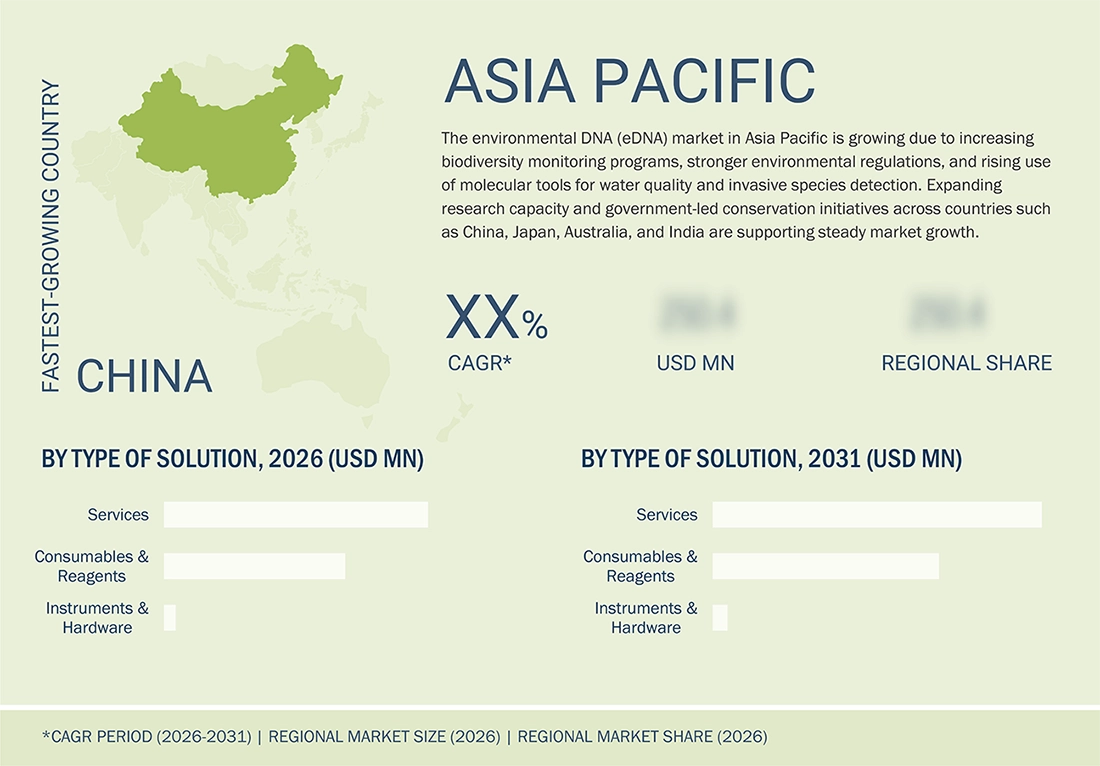
Asia-Pacific is projected to be the fastest region in the environmental DNA market
The Asia Pacific is the fastest-growing market for the environmental DNA market. The rapid growth of this market can be attributed to several factors, such as increased government investment in biodiversity monitoring projects, the development of aquaculture and fisheries management programs, rapid adoption of environmental surveillance technology, and strong regulations that ensure conservation of ecosystems. Apart from this, there has been an increase in demand owing to extensive projects being undertaken to monitor river basins, analyze marine biodiversity, and undertake environmental impact studies associated with infrastructure development. Additionally, developments in the field of genomics, along with growing cooperation among research institutions and environmental authorities, have led to widespread adoption of eDNA in both aquatic and terrestrial environments.
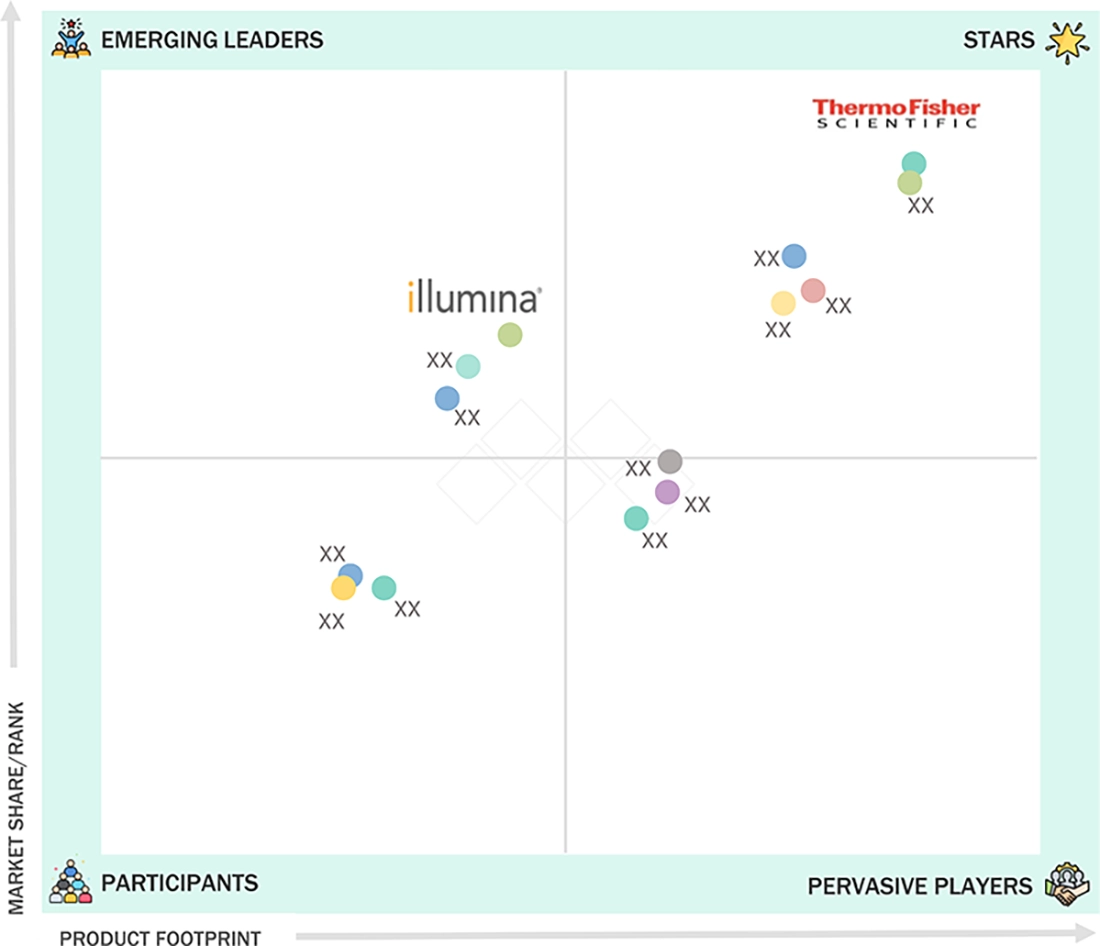
ENVIRONMENTAL DNA MARKET SIZE, SHARE, GROWTH TRENDS & FORECAST TO 2031: COMPANY EVALUATION MATRIX
In the environmental DNA market, key companies profiled include Thermo Fisher Scientific, QIAGEN, Illumina Inc., Eurofins Genomics, Bio-Rad Laboratories, Inc., Agilent Technologies, Inc., DNATeC, PacBio, NatureMetrics, and EnviroDNA.
Source: Secondary Research, Interviews with Experts, MarketsandMarkets Analysis
KEY MARKET PLAYERS
- Thermo Fisher Scientific (US)
- QIAGEN (Netherlands)
- Illumina Inc. (US)
- Eurofins Genomics (Germany)
- Bio-Rad Laboratories, Inc. (US)
- Agilent Technologies, Inc. (US)
- eDNATeC (Canada)
- PacBio (US)
- NatureMetrics (UK)
- EnviroDNA (Australia)
- Cramer Fish Sciences (US)
- Psygen (Canada)
- Takara Bio Inc. (Japan)
- Smith Root Inc. (US)
- Stantec (Canada)
MARKET SCOPE
| REPORT METRIC | DETAILS |
|---|---|
| Market Size in 2025 (Value) | USD 1.32 BN |
| Market Forecast in 2030 (Value) | USD 3.04 BN |
| Growth Rate | CAGR of 14.9% from 2026 to 2031 |
| Years Considered | 2021–2031 |
| Base Year | 2025 |
| Forecast Period | 2026–2031 |
| Units Considered | Value (USD BN/MN), Volume (Metric Tons) |
| Report Coverage | Revenue forecast, company ranking, competitive landscape, growth factors, and trends |
| Segments Covered |
|
| Regions Covered | North America, Europe, Asia Pacific, South America, Rest of the World |
WHAT IS IN IT FOR YOU: ENVIRONMENTAL DNA MARKET SIZE, SHARE, GROWTH TRENDS & FORECAST TO 2031 REPORT CONTENT GUIDE
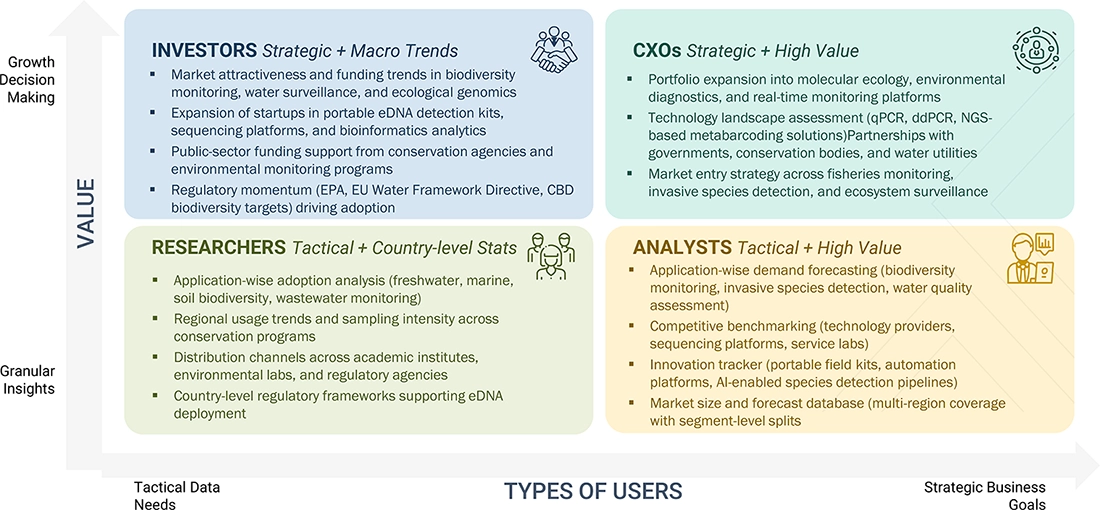
DELIVERED CUSTOMIZATIONS
We have successfully delivered the following deep-dive customizations:
| CLIENT REQUEST | CUSTOMIZATION DELIVERED | VALUE ADDS |
|---|---|---|
| Environmental DNA market sizing | Conducted market sizing across key eDNA solution segments (services, products, instruments & platforms, software & data analytics) and sample types (water, soil, sediment, air, biological waste) | Identified high-growth solution segments supporting investment prioritization |
| Detection technology assessment | Evaluated detection methods including qPCR, ddPCR, metabarcoding, metagenomics, CRISPR-based detection, and hybrid workflows across environmental monitoring applications | Identified transition from single-species detection toward multi-species ecosystem intelligence platforms |
| Application-level opportunity mapping | Assessed demand across biodiversity monitoring, invasive species detection, conservation biology, aquaculture & fisheries, water quality assessment, climate change impact assessment, and regulatory compliance | Identified priority application areas with strongest regulatory adoption and funding support |
RECENT DEVELOPMENTS
- February 2026 : Illumina partnered with the San Diego Zoo Wildlife Alliance to sequence thousands of samples from its Frozen Zoo biobank, enabling genomic analysis of endangered species and supporting global biodiversity conservation efforts.
- February 2026 : SGS announced the launch of its environmental DNA biodiversity monitoring services in the UK, expanding its environmental testing capabilities in the region. The offering includes structured service packages such as QuickScan, BioScan, FullScan, and InsectScan, enabling non-invasive species detection across environmental samples. This expansion strengthens SGS’s positioning in the Environmental DNA market by enhancing its service availability in a key regulatory and biodiversity-focused geography.
- October 2025 : NatureMetrics expanded into Brazil by launching local laboratory services through a partnership with Firjan SENAI, enabling in-country biodiversity monitoring and reporting using eDNA technology. This expansion establishes local analytical capabilities in one of the world’s most biodiverse regions, improving data accessibility and turnaround times. The move strengthens NatureMetrics’ presence in the Environmental DNA market by enabling scalable, region-specific biodiversity intelligence and supporting wider adoption of eDNA-based monitoring solutions.
Table of Contents
 Exclusive indicates content/data unique to MarketsandMarkets and not available with any competitors.
Methodology
The study employed two primary approaches to estimate the current size of the environmental DNA market. Exhaustive secondary research was conducted to gather information on the market, peer markets, and parent markets. The next step was to validate these findings, assumptions, and sizing with industry experts across the value chain through primary research. Both top-down and bottom-up approaches were employed to estimate the complete market size. After that, market breakdown and data triangulation were used to estimate the market size of segments and subsegments.
Secondary Research
This research study involved the extensive use of secondary sources—directories and databases such as Web of Science, Scopus, PubMed, GenBank, EMBL-EBI, and GBIF—to identify and collect information useful for a technical, market-oriented, and commercial study of the market. In the secondary research process, various sources such as annual reports, press releases & investor presentations of companies, white papers, food journals, certified publications, articles from recognized authors, directories, and databases were referred to to identify and collect information. Secondary research was mainly used to obtain key information about the industry’s supply chain, the total pool of key players, and market classification and segmentation as per the industry trends to the bottom-most level, regional markets, and key developments from both market- and technology-oriented perspectives.
Primary Research
Extensive primary research was conducted after obtaining information regarding the environmental DNA market scenario through secondary research. Several primary interviews were conducted with market experts from both the demand and supply sides across major countries of North America, Europe, Asia Pacific, South America, and RoW. Primary data was collected through questionnaires, emails, and telephonic interviews. The primary sources from the supply side included various industry experts, such as CXOs, VPs, directors from business development, marketing, research, and development teams, and key opinion leaders. Primary interviews were conducted to gather insights such as market statistics, data on revenue collected from the products and services, market breakdowns, market size estimations, market forecasting, and data triangulation. Primary research also helped in understanding the various trends related to eDNA sample type, type of solution, detection methods, and application. Stakeholders from the demand side, such as research institutions and universities, and third-party vendors, were interviewed to understand the users’ perspective on the service, and their current usage of eDNA and the outlook of their business, which will affect the overall market.
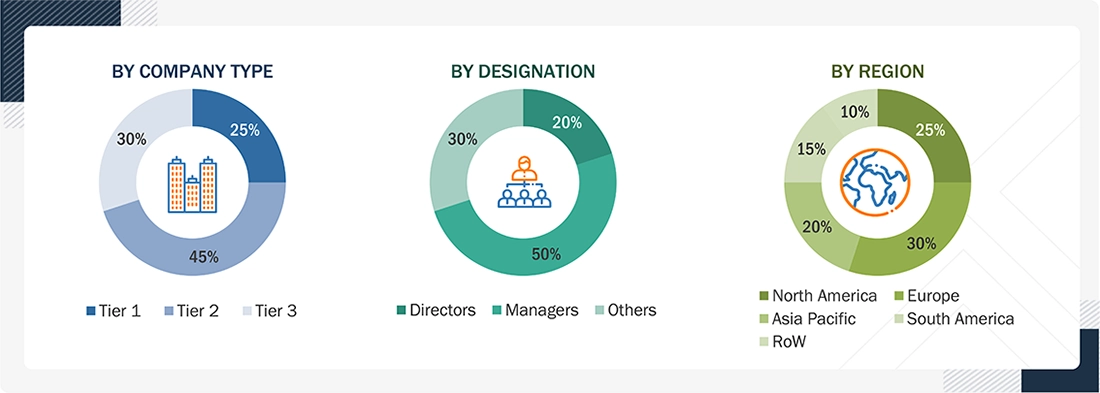
Note: The tiers of the companies are defined based on their total revenues in 2024 or 2025, as per the availability of financial data: Tier 1: Revenue >USD 1 billion; Tier 2: USD 100 million ≤ Revenue ≤ USD 1 billion; Tier 3: Revenue <USD 100 million.
|
COMPANY |
DESIGNATION |
|
Thermo Fisher |
R&D Expert |
|
EnviroDNA |
Sales Manager |
|
Illumina, Inc. |
Manager |
|
NatureMetrics |
Sales Manager |
|
Eurofins Scientific |
Marketing Manager |
To know about the assumptions considered for the study, download the pdf brochure
Market Size Estimation
Both the top-down and bottom-up approaches were used to estimate and validate the total size of the environmental DNA market. These approaches were also used extensively to determine the size of various subsegments in the market. The research methodology used to estimate the market size includes the following details:
- The key players in the industry and the overall markets were identified through extensive secondary research.
- All shares, splits, and breakdowns were determined using secondary sources and verified through primary sources.
- All possible parameters that affect the market covered in this research study were accounted for, viewed in extensive detail, verified through primary research, and analyzed to obtain final quantitative and qualitative data.
- The research included the study of reports, reviews, and newsletters of top market players, along with extensive interviews for opinions from leaders, such as CEOs, directors, and marketing executives
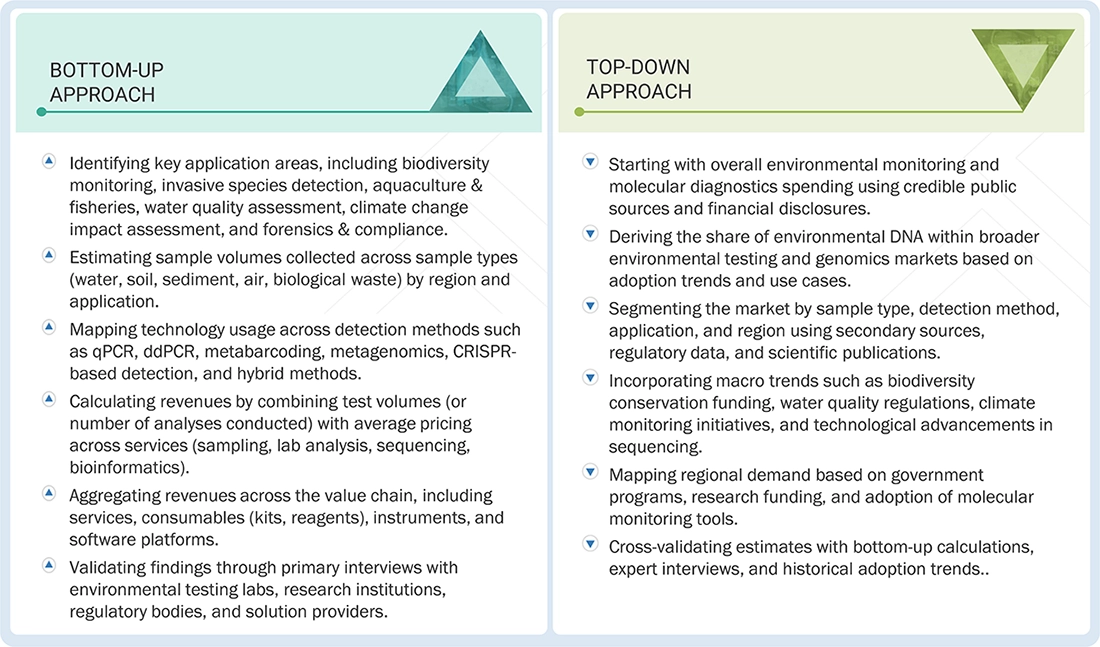
Data Triangulation
After arriving at the overall market size from the estimation process explained above, the total market was split into several segments and subsegments. The data triangulation and market breakdown procedures were employed, wherever applicable, to estimate the overall environmental DNA market and arrive at the exact statistics for all segments and subsegments. The data was triangulated by studying various factors and trends from the demand and supply sides. The market size was also validated using both the top-down and bottom-up approaches.
Market Definition
The environmental DNA market comprises products and services used to collect, analyze, and interpret genetic material obtained from environmental samples such as water, soil, sediment, and air.
According to the European Commission Joint Research Center, environmental DNA refers to genetic material extracted directly from environmental samples without the need to capture or observe organisms, enabling the detection and monitoring of species and ecosystems.
Similarly, the International Organization for Standardization recognizes environmental DNA-based methods as molecular approaches for biodiversity assessment and environmental monitoring, supporting standardized and reproducible detection of species from environmental samples.
Key Stakeholders
- Sample collection kit and consumables providers
- Molecular reagent and assay developers
- Sequencing technology providers (NGS platforms, PCR systems)
- Bioinformatics and data analysis solution providers
- Environmental testing laboratories and service providers
- Academic institutions and research organizations
- Aquaculture, fisheries, and environmental consulting firms
- Water utilities and environmental monitoring agencies
- Conservation organizations and biodiversity monitoring groups
- Government and regulatory authorities
- Associations, regulatory bodies, and other industry-related bodies
- Convention on Biological Diversity
- International Organization for Standardization
- European Commission (including Joint Research Center)
- United States Environmental Protection Agency
- National Oceanic and Atmospheric Administration
- Food and Agriculture Organization
- United Nations Environment Programme
- Research institutes and universities
- Industry and trade associations
Report Objectives
- To determine, define, and project the size of the environmental DNA market, with respect to sample type, detection method, type of solution application, and regional markets, over five years, ranging from 2026 to 2031
- To identify the attractive opportunities in the market by determining the largest and fastest-growing segments across regions
- To provide detailed information about the key factors influencing the growth of the market (drivers, restraints, opportunities, and challenges)
- To analyze the micro markets with respect to individual growth trends, prospects, and their contribution to the total market
- To strategically profile key market players and comprehensively analyze their core competencies in each segment
- To track and analyze competitive developments, such as alliances, joint ventures, new product developments, mergers, and acquisitions, in the environmental DNA market.
Available customizations:
With the given market data, MarketsandMarkets offers customizations according to company-specific scientific needs.
The following customization options are available for the report:
PRODUCTS ANALYSIS
- Products Matrix, which gives a detailed comparison of the service portfolio of each company.
GEOGRAPHIC ANALYSIS
With the given market data, MarketsandMarkets offers customizations according to company-specific scientific needs.
- Further breakdown of the Rest of Europe environmental DNA market into key countries.
- Further breakdown of the Rest of Asia Pacific environmental DNA market into key countries.
- Further breakdown of the Rest of South America environmental DNA market into key countries.
COMPANY INFORMATION
- Detailed analyses and profiling of additional market players (up to five)
Key Questions Addressed by the Report
What is the current size of the Environmental DNA Market?
The global Environmental DNA (eDNA) market is projected to grow from approximately USD 1.63 billion in 2026 to USD 5.61 billion by 2031, at a CAGR of 10.2% during the forecast period.
What factors are driving the growth of the Environmental DNA Market?
Key growth drivers include increasing biodiversity conservation efforts, stricter environmental regulations, advancements in PCR and sequencing technologies, rising demand for non-invasive monitoring techniques, and growing investments in ecological research programs.
Which applications are fueling demand in the Environmental DNA Market?
Major applications include biodiversity monitoring, invasive species detection, water quality assessment, fisheries management, ecosystem restoration, climate change studies, and environmental impact assessments.
What are the major technologies used in environmental DNA analysis?
The primary technologies used in eDNA analysis include quantitative PCR (qPCR), metabarcoding, and next-generation sequencing (NGS). Among these, metabarcoding is expected to witness strong growth due to its ability to detect multiple species from a single sample.
Which region holds the largest share in the Environmental DNA Market?
Europe currently holds a significant market share due to strict environmental regulations, strong biodiversity protection initiatives, and widespread adoption of eDNA technologies across environmental monitoring agencies and research institutions.
Which region is expected to witness the fastest growth in the Environmental DNA Market?
The Asia-Pacific region is projected to experience the fastest growth owing to increasing government investments in biodiversity monitoring, rapid expansion of aquaculture industries, and growing environmental awareness.
What challenges does the Environmental DNA Market face?
Major challenges include high initial setup costs, limited laboratory infrastructure, lack of standardized protocols, data governance issues, and fragmented regulatory frameworks across regions.
What is the future outlook for the Environmental DNA Market?
The market is expected to witness strong long-term growth driven by increasing adoption of automated sequencing systems, real-time environmental monitoring technologies, regulatory integration, and expanding applications in conservation and ecological risk assessment.
Who are the leading companies in the Environmental DNA Market?
Key players in the Environmental DNA Market include Thermo Fisher Scientific, QIAGEN, Illumina, Eurofins Scientific, NatureMetrics, and Takara Bio.


Personalize This Research
- Triangulate with your Own Data
- Get Data as per your Format and Definition
- Gain a Deeper Dive on a Specific Application, Geography, Customer or Competitor
- Any level of Personalization
Let Us Help You
- What are the Known and Unknown Adjacencies Impacting the Environmental DNA Market
- What will your New Revenue Sources be?
- Who will be your Top Customer; what will make them switch?
- Defend your Market Share or Win Competitors
- Get a Scorecard for Target Partners

Custom Market Research Services
We Will Customise The Research For You, In Case The Report Listed Above Does Not Meet With Your Requirements
Get 10% Free CustomisationTESTIMONIALS

Business Innovation Director
US Based Leading Agribusiness,
Food and Ingredients ManufacturerI highly appreciate the team's efficiency for a well conducted study that helped us clarify some blind spots in food and agricultural niche markets. Although compiling information for B2B markets is very difficult, the MnM team pulled out the task successfully. The quality of research, level of insights, and responsiveness of team were commendable.
- Canada Environmental DNA Market
- Mexico Environmental DNA Market
- US Environmental DNA Market
- UK Environmental DNA Market
- Germany Environmental DNA Market
- France Environmental DNA Market
- Italy Environmental DNA Market
- Spain Environmental DNA Market
- China Environmental DNA Market
- India Environmental DNA Market
- Japan Environmental DNA Market
- Brazil Environmental DNA Market
- Argentina Environmental DNA Market
- Rest Of Europe Environmental DNA Market
- Rest Of Asia Pacific Environmental DNA Market






Growth opportunities and latent adjacency in Environmental DNA Market