Europe Advanced Ceramics Market

Europe Advanced Ceramics Market by Material (Alumina, Zirconia, Titanate, Silicon Carbide, Piezo Ceramic, Others), Application (Monolithic Ceramics, Ceramic Matrix Composites, Ceramic Coatings, Ceramic Filters, Others), End-use Industry (Electrical & Electronics, Transportation, Medical, defense & Security, Environmental, Chemical, Others), Region – Forecast to 2030




OVERVIEW
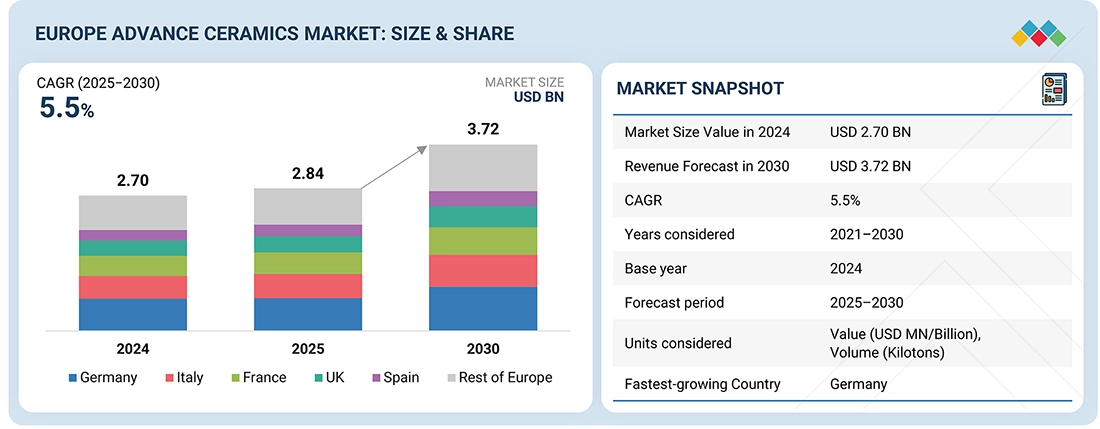
Source: Secondary Research, Interviews with Experts, MarketsandMarkets Analysis
The advanced ceramics market in Europe is driven by the strong industrial base and technological leadership of the region, as well as the growing demand for high-performance materials across various sectors like electronics, automotive, aerospace, medical, energy, etc. Advanced ceramics such as alumina, zirconia, and silicon carbide are used for making substrates, insulators, sensors, cutting tools, implants, and high-temperature components. These advanced ceramics have high thermal stability, dielectric strength, corrosion resistance, and mechanical strength. The expanding semiconductor manufacturing ecosystem in Europe, the increasing uptake of electric vehicles and power electronics, and the widespread automation of industrial processes are continuing to drive demand.
KEY TAKEAWAYS
-
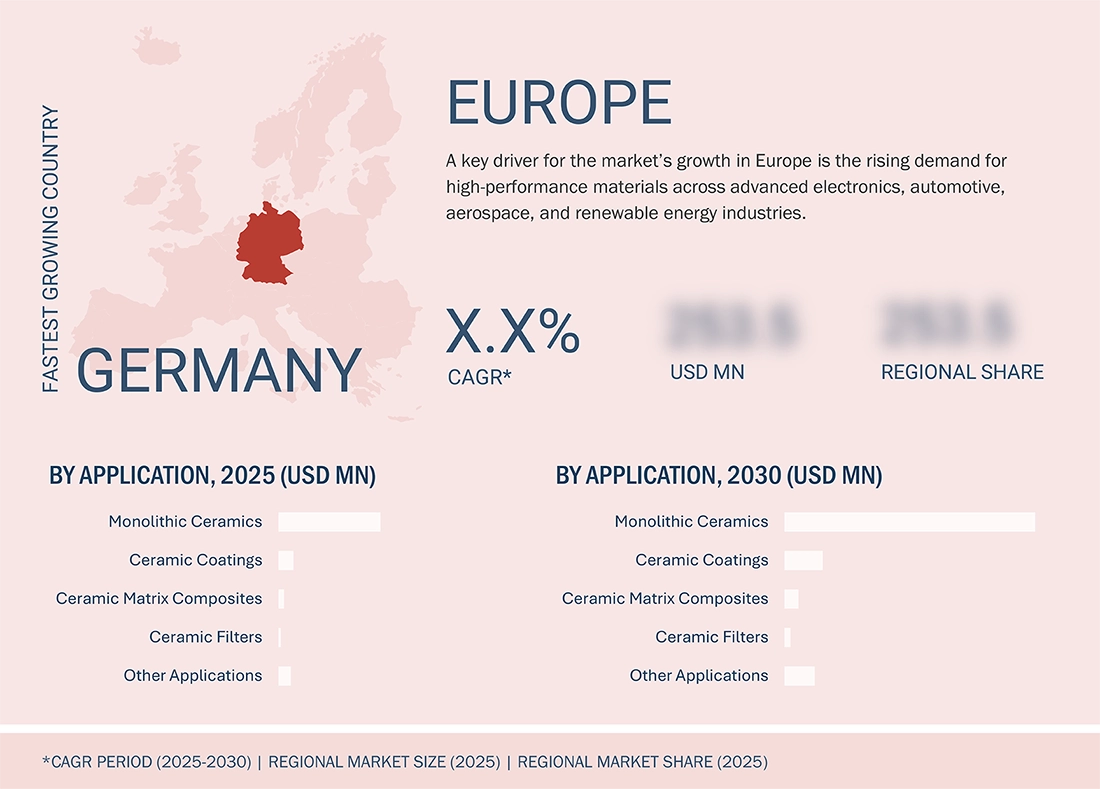
BY COUNTRYGermany is expected to register the highest growth in Europe with a CAGR of 6.1% during the forecast period.
-
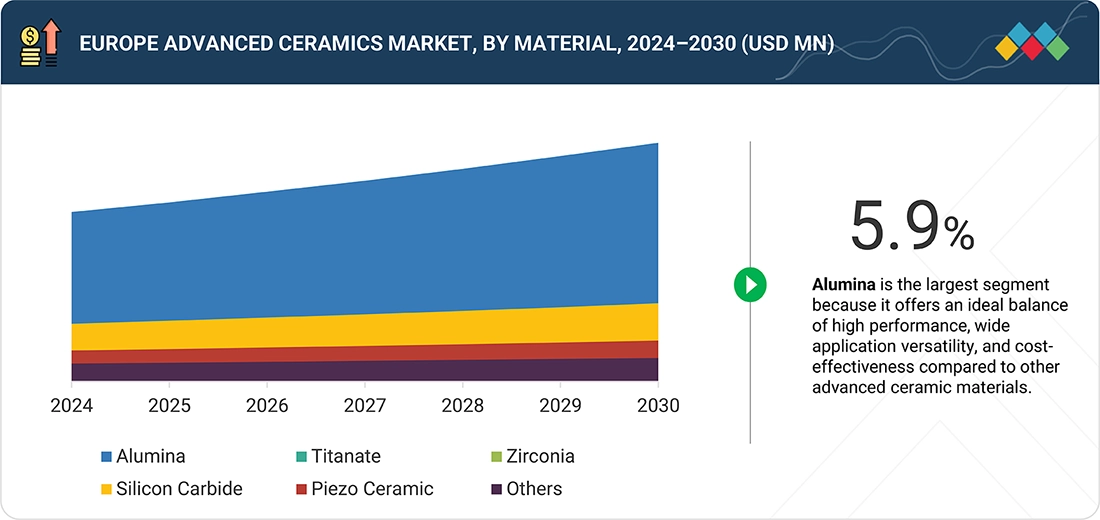
BY MATERIALBy material, alumina is expected to register the highest CAGR of 5.9% during the forecast period.
-
BY APPLICATIONBy application, the ceramic coatings segment is estimated to be the fastest-growing with a CAGR of 6.2% during the forecast period.
-
BY END-USE INDUSTRYBy end-use industry, the medical segment is expected to be the fastest-growing during the forecast period.
-
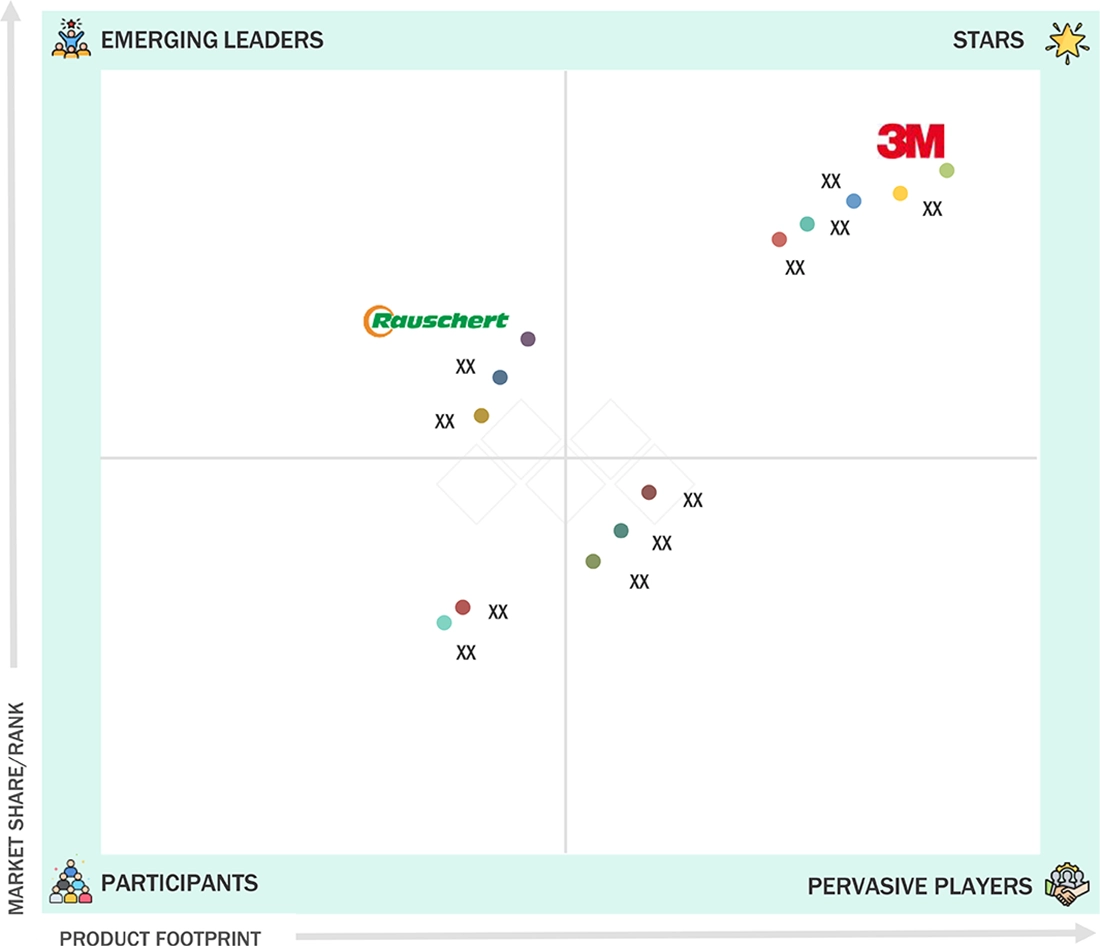
COMPETITIVE LANDSCAPE- KEY PLAYERSKYOCERA Fineceramics Europe GmbH, 3M, and Morgan Advanced Materials were identified as some star players in the Europe advanced ceramics market, given their strong market share and product footprint.
-
COMPETITIVE LANDSCAPE- STARTUPSFinal Advanced Materials, Vesuvius, and Dyson Technical Ceramics have distinguished themselves among startups and SMEs by securing strong footholds in specialized niche areas, underscoring their potential as responsive companies.
The demand from the high-tech sectors such as electronics, automotive, aerospace, medical devices, and clean energy is the main reason for the gradual growth of the Europe advanced ceramics market. The market includes materials like alumina, zirconia, and silicon carbide, known for their enhanced features like thermal stability, mechanical strength, corrosion resistance, and electrical insulation, which are widely used in various applications. The developing European semiconductor industry, rapid electric vehicle (EV) adoption, and the emphasis on automation are factors that directly increase the need for advanced ceramic substrates, insulators, sensors, and components that can withstand high temperatures. The industrial landscape of Europe is innovation-driven, helping the market achieve long-term growth.
TRENDS & DISRUPTIONS IMPACTING CUSTOMERS' CUSTOMERS
The Europe advanced ceramics market is being significantly disrupted by technological innovation, sustainability demands, and performance requirements across the main industries. Advanced ceramics are becoming widely used in electric vehicles, power electronics, and renewable energy systems, where their properties, such as thermal stability and high dielectric strength, are indispensable. One significant technological breakthrough is the application of 3D printing techniques to ceramics, which allows for intricate designs and quick prototypes, besides the usual benefit of reduced material wastage. Simultaneously, the research and development efforts in ceramic matrix composites (CMCs) and ultra-high-temperature ceramics that are being applied in aerospace and defense are all on the cutting edge. Furthermore, the adoption of digital tools and the shift to Industry 4.0, AI-enhanced quality control, and computer-operated ceramic machining have become new parameters of competitiveness in the manufacturing sector. Thus, the coexistence of these disruptions and trends is not only marking the rapid evolution of the market but also presenting challenges to producers to be innovative and flexible to the rapidly changing industrial landscape of Europe.
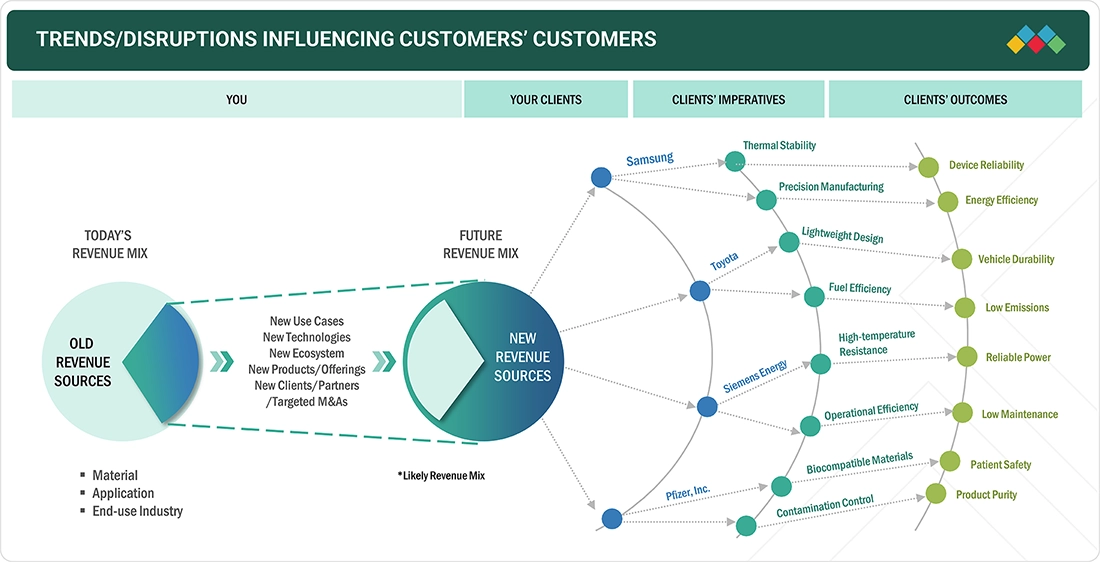
Source: Secondary Research, Interviews with Experts, MarketsandMarkets Analysis
MARKET DYNAMICS

Level
-
Strong demand from Europe’s high-tech industries like automotive, aerospace, electronics, medical, and industrial machinery


Level
-
High production costs due to expensive raw materials and energy-intensive sintering processes


Level
-
Growing investment in hydrogen technologies, fuel cells, and clean energy systems requiring ceramic membranes and electrolytes


Level
-
Difficulty in integrating ceramics with metals and polymers due to advanced joining and bonding requirements

Source: Secondary Research, Interviews with Experts, MarketsandMarkets Analysis
DRIVER: Strong demand from Europe’s high-tech industries like automotive, aerospace, electronics, medical, and industrial machinery
The advanced ceramics market in Europe is primarily driven by the strong demand from high-tech industries. These include automotive, aerospace, electronics, medical devices, and industrial machinery, which are heavily reliant on materials that can endure extreme operating conditions. The characteristics of advanced ceramics perfectly match Europe's innovation-based industries as they provide enhanced thermal resistance, mechanical strength, dielectric stability, and biocompatibility. They are essential for reducing the weight of components and thus emissions in the automotive and aerospace industries. In electronics, ceramics are utilized to manufacture substrates, sensors, insulators, and power electronics, which are required for EVs, 5G networks, and semiconductor production. The region's advanced medical sector also increases the demand through the use of ceramics in implants, prosthetics, dental systems, and surgical tools. The electric vehicle revolution, coupled with the rise of automation, renewable energy, and precision engineering in Europe, further increases the demand for advanced ceramics. As a result, these materials are becoming indispensable in the pursuit of performance, reliability, and sustainability across various high-value industries.
RESTRAINT: High production costs due to expensive raw materials and energy-intensive sintering processes
The biggest drawback of the advanced ceramics market in Europe is the high production cost, which is a result of expensive raw materials and energy-consuming sintering processes. The main ceramic materials like zirconia, alumina, and silicon carbide often have to deal with supply restrictions, prices going up and down, and being imported, and all of these factors compound the cost and make it harder for the manufacturers in Europe. The sintering and firing processes, which are very energy-intensive, are needed to give the advanced ceramics their excellent mechanical and thermal properties, and this is very critical in Europe, where the energy costs are among the highest in the world because of the environmental regulations and the shift to renewable energy sources. These high production costs make advanced ceramics less attractive in various applications where alternatives like metals or polymers can perform just as well at lower costs.
OPPORTUNITY: Growing investment in hydrogen technologies, fuel cells, and clean energy systems requiring ceramic membranes and electrolytes
The European advanced ceramics market has a big opportunity for growth because of the high investment in hydrogen technologies, fuel cells, and clean energy systems. All these rely on ceramics for membranes, electrolytes, and high-temperature parts. The European Green Deal, hydrogen strategies by Germany, France, and the EU, and the rapid installation of solid oxide fuel cells (SOFCs) and electrolyzers are convincing more and more people to use the advanced ceramics, which are capable of working in corrosive and high-temperature environments. As Europe continues to promote its decarbonization, renewable integration, and energy storage policies, advanced ceramics will be needed more and more to take care of the issues of power efficiency, durability, and environmental resilience. This also means that big opportunities are opened up for the manufacturers to come up with new designs and produce larger-scale ceramic components that are specifically for clean-energy applications.
CHALLENGE: Difficulty in integrating ceramics with metals and polymers due to advanced joining and bonding requirements
The complexity of the joining and bonding of ceramics with metals and polymers is a major issue for this market. Advanced ceramics have properties as high hardness, brittleness, and thermal stability, which make them suitable for future applications in the semiconductor and electronics industries, but also create serious incompatibility problems during the assembly of multi-material systems. Automotive, aerospace, and electronics manufacturers are more often looking for hybrid parts, where ceramics and their different combinations with metal housings, polymer insulators, or composite structures should be joined together in the most reliable way. The differences in thermal expansion, bonding behavior, and chemical properties greatly increase the risk of cracking, delamination, or performance failure during the operation. New methods like brazing, diffusion bonding, and advanced adhesives are developing very slowly and are still very expensive and technically demanding, despite being better than traditional ones. As a result, these challenges slow down the adoption of ceramics.
EUROPE ADVANCED CERAMICS MARKET: COMMERCIAL USE CASES ACROSS INDUSTRIES
| COMPANY | USE CASE DESCRIPTION | BENEFITS |
|---|---|---|
 |
Development of advanced technical ceramics for industrial machinery, semiconductor fabrication, medical implants, defense armor, and energy applications. Specializes in ceramic components requiring extreme wear resistance, thermal stability, and chemical inertness. | Improved component lifespan, reduced maintenance cycles, higher mechanical reliability under extreme workloads, and enhanced operational efficiency for OEMs and industrial users across Europe. |
 |
Integration of advanced ceramic materials into medical devices, automotive sensors, and electronic insulation systems. Provides high-performance bioceramics, piezoceramics, and ceramic composites for precision applications. | Higher device accuracy, improved biocompatibility in implants, lower electrical losses, and long-term durability, supporting innovation across healthcare and automotive sectors. |
 |
Manufacturing of ceramic substrates, cutting tools, semiconductor packaging materials, and thermal management solutions for electronics and telecommunications in Europe. | Enhanced heat dissipation, increased tool productivity, reduced equipment wear, and improved performance of high-frequency electronic systems. |
 |
Production of ceramic insulation, ceramic seals, thermal components, and engineered ceramic assemblies for aerospace, energy, defense, and industrial heating systems. | Superior thermal shock resistance, higher energy efficiency, extended service life under high temperatures, and reduced operational downtime for critical applications. |
Logos and trademarks shown above are the property of their respective owners. Their use here is for informational and illustrative purposes only.
MARKET ECOSYSTEM
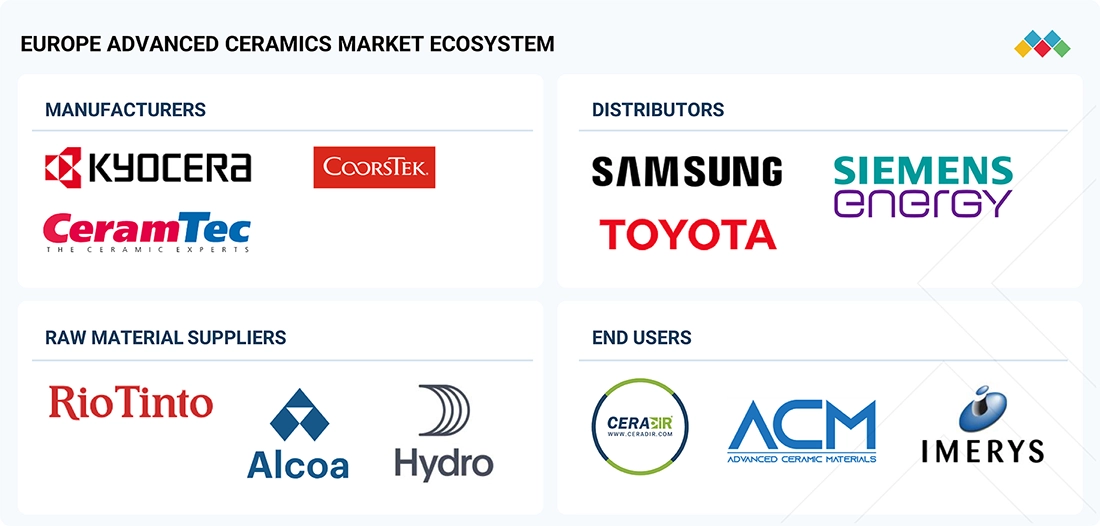
The ecosystem of the Europe advanced ceramics market resembles a well-structured network around which the various parties, like raw material suppliers, component manufacturers, technology providers, distributors, and end-use industries, revolve, and thus, the market is continuously driven towards innovations and commercialization. The main suppliers of raw materials deliver high-purity alumina, zirconia, silicon nitride, and carbides to the manufacturers for use in high-performance applications, while the manufacturers use precision forming, sintering, and additive manufacturing technologies to turn these materials into advanced ceramic components like substrates, coatings, seals, and insulators. Distributors, specialized suppliers, and manufacturers connect with end users in the automotive, aerospace, electronics, medical, and energy industries. The cooperative effort of research organizations, academic institutions, and industrial players not only continues to provide the market with new R&D but also contributes to the development of lightweight materials, thermal management solutions, and bioceramics. Regulatory authorities and sustainability regulations have a say in determining the production standards, waste management techniques, and material safety that the market will adopt in the long run.
Logos and trademarks shown above are the property of their respective owners. Their use here is for informational and illustrative purposes only.
MARKET SEGMENTS
Source: Secondary Research, Interviews with Experts, MarketsandMarkets Analysis
Europe Advanced Ceramics Market, by Material
Alumina is the leading material owing to its remarkable blend of mechanical, thermal, and chemical properties. It possesses high hardness, wear resistance, excellent electrical insulation, and good thermal stability, which are the characteristics required for applications in the electronics, automotive, aerospace, and medical fields. The price of alumina, in comparison with other technical ceramics, is another reason for its increased acceptance. Moreover, the demand for alumina-based components in Europe is supported by the continent’s high-performance manufacturing, renewable energy technologies, and industrial automation areas of priority. The material’s use in substrates, insulators, cutting tools, and protective coatings further strengthens its position as the largest segment of the ceramics market within the region.
Europe Advanced Ceramics Market, by Application
Monolithic ceramics dominate the European advanced ceramics market due to their simplicity, versatility, and cost-effectiveness. Monolithic ceramics are not like composite or coated ceramics that consist of multiple layers; they are used as single, solid parts that possess high mechanical strength, wear resistance, thermal stability, and chemical inertness, attributing to their applications in electronics, automotive, aerospace, medical devices, and industrial machinery. Continually increasing the region's demand is Europe’s growing focus on precision manufacturing, renewable energy, and high-performance electronics. Moreover, the feed of monolithic ceramics as the largest section of the region’s advanced ceramics market is further supported by their easy fabrication, dependable performance in extreme conditions, and compatibility with mass production processes.
Europe Advanced Ceramics Market, by End-use Industry
The electrical and electronics industries are the most significant consumers of advanced ceramics in Europe due to the region's major role in semiconductor production, industrial automation, telecommunications, and consumer electronics. Among the various applications, one of the main ones is in substrates, insulators, sensors, capacitors, and chip packaging, where alumina, zirconia, and silicon nitride are the most common ceramics used due to their excellent dielectric properties, thermal stability, and durability. Miniaturization, high-performance, and energy efficiency in electronic devices have been the principal factors inducing more and more adoption of such materials. Furthermore, Europe’s focus on innovation, smart manufacturing, and renewable energy applications in electronics always guarantees steady growth, thereby placing electrical and electronics as the top end-use segment for advanced ceramics.
REGION
Germany to be fastest-growing country in Europe Advanced ceramics market during forecast period
Germany stands as the strongest force in the Europe advanced ceramics market with its fast growth, boasting a solid industrial base, technological innovation, and quick utilization of high-performance materials in major sectors. The nation holds the title of a global manufacturer of automotive, aerospace, industrial, medical, and renewable energy technology—all the industries that highly depend on advanced ceramics due to their superior mechanical strength, thermal stability, electrical insulation, and durability. Besides, the country is the main player in Europe as far as R&D is concerned, and this is recognized by the large-scale cooperation between research institutes, universities, and industry players that enables innovations in ceramic materials, additive manufacturing, and advanced composites. Likewise, Germany's strong focus on sustainability, energy efficiency, and green technologies is also a plus for the use of ceramics in hydrogen systems, fuel cells, and clean-energy applications. With a strong manufacturing infrastructure, skilled and continuous technological advancements, Germany firmly holds the position of the most dynamic and rapidly expanding market for advanced ceramics in Europe.
EUROPE ADVANCED CERAMICS MARKET: COMPANY EVALUATION MATRIX
3M (Star) is a top player in the market for advanced ceramics in Europe, as its extensive range of high-performance ceramic materials and continuous innovations in the electronic, automotive, aerospace, and industrial applications have made it a favorite. Paul Rauschert GmbH and Co., KGAA is an emerging leader for the Europe advanced ceramic market due to its growing product portfolio and geographical presence across Europe and other regions.
Source: Secondary Research, Interviews with Experts, MarketsandMarkets Analysis
KEY MARKET PLAYERS
- KYOCERA Fineceramics Europe GmbH (Germany)
- CeramTec GmbH (Germany)
- CoorsTek Inc. (US)
- Morgan Advanced Materials (UK)
- 3M (US)
- MARUWA Co., Ltd. (Japan)
- NGK CERAMICS EUROPE S.A.(Belgium)
- Saint-Gobain Performance Ceramics & Refractories (France)
- Paul Rauschert GmbH & Co. KG. (Germany)
- AGC Inc. (Japan)
MARKET SCOPE
| REPORT METRIC | DETAILS |
|---|---|
| Market Size in 2025 (Value) | USD 2.84 Billion |
| Market Forecast in 2030 (Value) | USD 3.72 Billion |
| Growth Rate | CAGR of 5.5% from 2025–2030 |
| Years Considered | 2021–2030 |
| Base Year | 2024 |
| Forecast Period | 2025–2030 |
| Units Considered | Value (USD Million/Billion), Volume (Kilotons) |
| Report Coverage | Revenue Forecast, Company Ranking, Competitive Landscape, Growth Factors, and Trends |
| Segments Covered |
|
| Countries Covered | Germany, France, Italy, Spain, UK, Rest of Europe |
WHAT IS IN IT FOR YOU: EUROPE ADVANCED CERAMICS MARKET REPORT CONTENT GUIDE
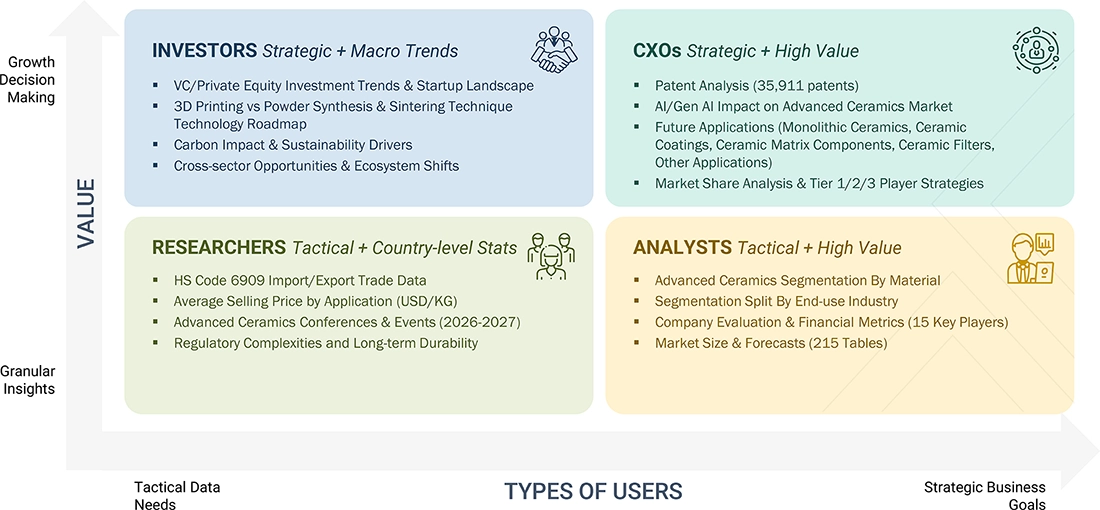
DELIVERED CUSTOMIZATIONS
We have successfully delivered the following deep-dive customizations:
| CLIENT REQUEST | CUSTOMIZATION DELIVERED | VALUE ADDS |
|---|---|---|
| Country-level Breakdown | Provides detailed country-specific insights for major European markets such as Germany, France, Italy, Spain, and the UK, including demand distribution across electronics, automotive, aerospace, medical, and energy sectors. Covers installed manufacturing capacities, supply chain availability for alumina, zirconia, silicon carbide, and silicon nitride, import–export flows, OEM presence, domestic fabrication strengths, and government policies related to industrial modernization, clean energy, and advanced manufacturing. | Helps clients identify high-growth countries in Europe, evaluate domestic production and expansion opportunities, understand EU and national incentives, assess reshoring potential, and align market-entry strategies based on demand concentration and technological readiness. |
| Application-specific Deep Dive | Offers segmentation of monolithic ceramics, ceramic coatings, ceramic matrix composites (CMCs), and ceramic filters across key applications such as electronic substrates, sensors, fuel cells, implants & prosthetics, aerospace engine components, automotive emission systems, and industrial machinery. Includes performance benchmarking, process compatibility, thermal/mechanical property evaluation, and real-world adoption case studies in the European context. | Enables stakeholders to focus on fast-growing application clusters, optimize R&D for high-performance materials (e.g., CMCs for aerospace, alumina substrates for electronics), enhance product positioning, and develop Europe-specific innovation roadmaps aligned with OEM requirements. |
| Material Based Customization | Comparative assessment of alumina, zirconia, silicon carbide, silicon nitride, and piezoelectric ceramics across performance metrics, cost structures, processing technologies, and end-use suitability in Europe. Includes material substitution trends, design considerations for miniaturized electronics, and lifecycle performance under European industrial conditions. | Supports OEMs and material suppliers in selecting optimal ceramics for durability, thermal performance, electrical insulation, biocompatibility, or wear resistance. Helps balance performance vs. cost, identify high-volume material opportunities, and design tailored solutions for electronics, medical implants, and aerospace systems in Europe. |
| End-use Industry Customization | Breakdown of consumption patterns across electronics, automotive, aerospace & defense, energy, medical devices, and industrial equipment, with Europe-specific data on demand drivers, technology integration, investment trends, and adoption potential. Includes mapping of key end-user clusters, procurement behavior, and certification requirements (e.g., CE marking, ISO, EN standards). | Assists clients in targeting high-revenue verticals, aligning production capability with industry-specific standards, and developing strategic partnerships across Europe. Helps identify sectors with stable long-term demand such as semiconductors, implants, aerospace engine components, and renewable energy applications. |
RECENT DEVELOPMENTS
- June 2024 : KYOCERA Corporation opened a new production facility at the Minami Isahaya Industrial Park in Isahaya City, Nagasaki Prefecture. The company opened this factory to produce fine ceramic components for semiconductor-related applications and packages. This helped the company to strengthen its manufacturing capacity to meet the rising market demand for its products.
- May 2024 : Morgan Advanced Materials and Penn State University have signed a five-year Memorandum of Understanding (MOU) to drive research and development in silicon carbide (SiC) crystal growth in the semiconductor industry. This collaboration is part of a multimillion-dollar initiative that highlights both organizations' commitment to advancing innovation in semiconductor materials.
- April 2024 : KYOCERA Corporation merged its Shiga Yohkaichi Plant and Shiga Gamo Plant to form the newly named "Shiga Higashiomi Plant" in order to improve operational efficiency. The plant produces fine ceramic components, semiconductor components, electronic components, industrial tools, and medical products.
- May 2022 : CeramTec GmbH developed a new product under the name AIN HP. It is a high-performance substrate made of aluminum nitride. The newly launched AIN HP substrate offers 40 percent more flexural strength than the previous generation of AIN substrates.
Table of Contents
 Exclusive indicates content/data unique to MarketsandMarkets and not available with any competitors.
Methodology
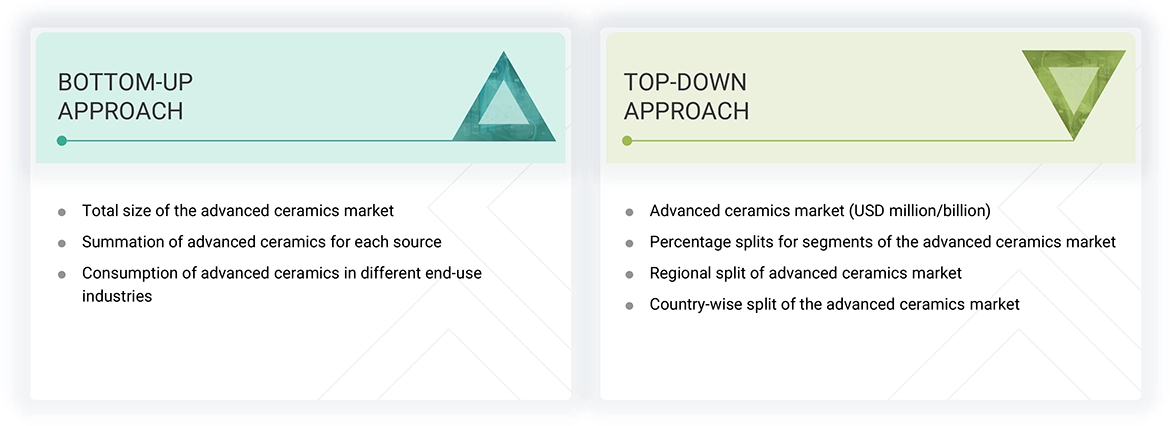
The study involved four major activities for estimating the current size of the Europe Advanced Ceramics market. Exhaustive secondary research was conducted to collect information on the market, the peer product market, and the parent product group market. The next step was to validate these findings, assumptions, and sizes with the industry experts across the value chain of Europe Advanced Ceramics through primary research. Both the top-down and bottom-up approaches were employed to estimate the overall size of the Europe Advanced Ceramics market. After that, market breakdown and data triangulation procedures were used to determine the size of different segments and sub-segments of the market.
Secondary Research
In the secondary research process, various secondary sources such as Hoovers, Factiva, Bloomberg BusinessWeek, and Dun & Bradstreet were referred, to identify and collect information for this study on the Europe Advanced Ceramics market. These secondary sources included annual reports, press releases & investor presentations of companies; white papers; certified publications; articles by recognized authors; regulatory bodies, trade directories, and databases.
Primary Research
The Europe Advanced Ceramics market comprises several stakeholders in the supply chain, which include raw material suppliers, distributors, end-product manufacturers, buyers, and regulatory organizations. Various primary sources from the supply and demand sides of the markets have been interviewed to obtain qualitative and quantitative information. The primary participants from the demand side include key opinion leaders, executives, vice presidents, and CEOs of companies in the Europe Advanced Ceramics market. Primary sources from the supply side include associations and institutions involved in the Europe Advanced Ceramics market, key opinion leaders, and processing players.
To know about the assumptions considered for the study, download the pdf brochure
Market Size Estimation
The bottom-up and top-down approaches have been used to estimate the Europe Advanced Ceramics market by material, application, end-use industry, and region. The research methodology used to calculate the market size includes the following steps:
- The key players in the industry and markets were identified through extensive secondary research.
- In terms of value, the industry’s supply chain and market size were determined through primary and secondary research processes.
- All percentage shares, splits, and breakdowns were determined using secondary sources and verified through primary sources.
- All possible parameters that affect the markets covered in this research study were accounted for, viewed in extensive detail, verified through primary research, and analyzed to obtain the final quantitative and qualitative data.
- The research included studying reports, reviews, and newsletters of top market players and extensive interviews with leaders such as directors and marketing executives to obtain opinions.
The following figure illustrates the overall market size estimation process employed for this study.
Data Triangulation
After arriving at the overall size of the Europe Advanced Ceramics market from the estimation process explained above, the total market was split into several segments and sub-segments. The data triangulation and market breakdown procedures were employed, wherever applicable, to complete the overall market engineering process and arrive at the exact statistics for all segments and subsegments. The data was triangulated by studying various factors and trends from both the demand and supply sides. Along with this, the market size was validated using both the top-down and bottom-up approaches.
Market Definition
Advanced Ceramics are a group of engineered ceramic materials with high strength, thermal resistance, electrical conductivity, and chemical stability. They are generally manufactured using advanced processing methods and are intended for high-performance applications in the aerospace, automotive, electronics, healthcare, and defense industries. Advanced Ceramics comprise alumina, zirconia, and silicon carbide, which are applied in electronic substrates, medical equipment, cutting tools, and armor systems. The Advanced Ceramics market is fueled by continuous technological improvements, miniaturization needs, and the demand for high-performance, long-life materials in hostile environments.
Stakeholders
- Europe Advanced Ceramics Manufacturers
- Raw Material Suppliers
- Regulatory Bodies and Government Agencies
- Distributors and Suppliers
- End-Use Industries
- Associations and Industrial Bodies
- Market Research and Consulting Firms
Report Objectives
- To define, describe, and forecast the size of the Europe Advanced Ceramics market in terms of value and volume.
- To provide detailed information regarding the key factors influencing the growth of the market (drivers, restraints, opportunities, and challenges).
- To forecast the market size based on material, application, end-use industry, and region.
- To strategically analyze micro markets with respect to individual growth trends, prospects, and contributions to the total market.
- To analyze the opportunities in the market for stakeholders and provide details of the competitive landscape for the market leaders.
- To strategically profile leading players and comprehensively analyze their key developments such as new product launches, expansions, and deals in the Europe Advanced Ceramics market.
- To strategically profile key players and comprehensively analyze their market shares and core competencies.
- To study the impact of AI/Gen AI on the market under study, along with the macroeconomic outlook.


Personalize This Research
- Triangulate with your Own Data
- Get Data as per your Format and Definition
- Gain a Deeper Dive on a Specific Application, Geography, Customer or Competitor
- Any level of Personalization
Let Us Help You
- What are the Known and Unknown Adjacencies Impacting the Europe Advanced Ceramics Market
- What will your New Revenue Sources be?
- Who will be your Top Customer; what will make them switch?
- Defend your Market Share or Win Competitors
- Get a Scorecard for Target Partners

Custom Market Research Services
We Will Customise The Research For You, In Case The Report Listed Above Does Not Meet With Your Requirements
Get 10% Free CustomisationTESTIMONIALS
We at Nissan Chemicals Corporation have been clients of MarketsandMarkets for more than a year now. We recently consulted MarketsandMarkets for a study, the team at MarketsandMarkets was extremely professional and organized. The business insights were very detailed and aligned well with our expectations that really helped us formulate the Business Plans and device new strategies for development themes. MarketsandMarkets offers a unique combination of expertise and dedicated engagement model. Their research findings have helped us in designing our Pricing Strategy which will make it easier for us to predict the future sales and profits for the next ten years. We look forward to working with MarketsandMarkets in the future.
VP of Strategy & New Business Development
Leading Specialty Chemical Company
The MarketsandMarkets Engagement Model, composed of both the Knowledge Store and advisory custom research, has greatly helped us in understanding our markets and making strategic decisions. The Knowledge Store is a fast way to allow everyone in our organization to understand more about most any market they are interested in. The ability to then get custom research done and get answers to specific strategic questions and market insight has been spectacular. The Markets and Markets team feel more like colleagues than vendors and their services have helped us change our culture where statements of things like growth opportunities and competitive position are always backed by industry research.

Rich Gibson,
Director, Corporate Strategy
Milliken & Company,
Leading Industrial Manufacturer of specialty chemical, floor covering, performance and protective textile materials, and healthcaremilliken.com
MarketsandMarkets is a trusted resource that helps us to better understand markets that are near-adjacencies-whether its technology, value chain or geography. Their Knowledge Store platform provides a dashboard of markets and their characteristics which is easy to use and saves us time.
Adam Shaw,
Market Development and Strategy Manager
AdvanSix Inc. USA,
An American Leader in Chemicalswww.advansix.com
The Knowledge Store from MarketsandMarkets is a valuable tool which has helped my team acquire greater insight in to the end markets that our business serves. This has enabled us to help our company build stronger strategies throughout our planning process.
TOSHIO KINOSHITA
Senior Chif Consultion Research & Consulting Division
Mitsubishi Chemical Research Corporation,
Leading Manufacturer of Chemical Productswww.mitsubishichem-res.co.jp/en/

We recently engaged with MarketsandMarkets for a study, the team not only clearly understood our business objectives but was also extremely professional in the way they handled the entire project. The study was efficiently conducted in a phase-wise manner, and the engagement model furnished us with high-quality business insights that far exceeded our expectations at each phase. We were especially happy that MarketsandMarkets could provide us with both, an English as well as a Japanese version of the study. A special thanks to the Analyst Team and Client Services Team, whose fluency in Japanese enhanced our comfort level, as we could converse with them in our preferred language.
Independent entrepreneurs
Arrow Precision
We approached MarketsandMarkets for study on Proppants Market, and their work exceeded our expectations. The study conducted was comprehensive and enabled us to view the market through the various dimensions. In addition, the team was extraordinarily responsive throughout the process and resolved our queries on time. I strongly recommend MarketsandMarkets and will certainly consider them for additional market assessments we will need in the future.
Global engineering company, Japan
Deputy Manager,
Strategic Planning OfficeThe high-quality insights shared by the MarketsandMarkets team helped us understand the pharmaceutical plant designers in a specific geography. It also captured the risks that we may likely face in communicating with our potential partners. The study would enable us identify partners, which would impact our future growth.






Growth opportunities and latent adjacency in Europe Advanced Ceramics Market