Europe Livestock Monitoring Market

Europe Livestock Monitoring Market by Smart Tags (Ear, Leg, Neck), Sensors, Livestock Type [Cattle (Dairy, Beef), Poultry, Swine, Equine], Health Monitoring, Feeding Management, Milk Harvesting Management, and Heat Detection - Forecast to 2031




OVERVIEW
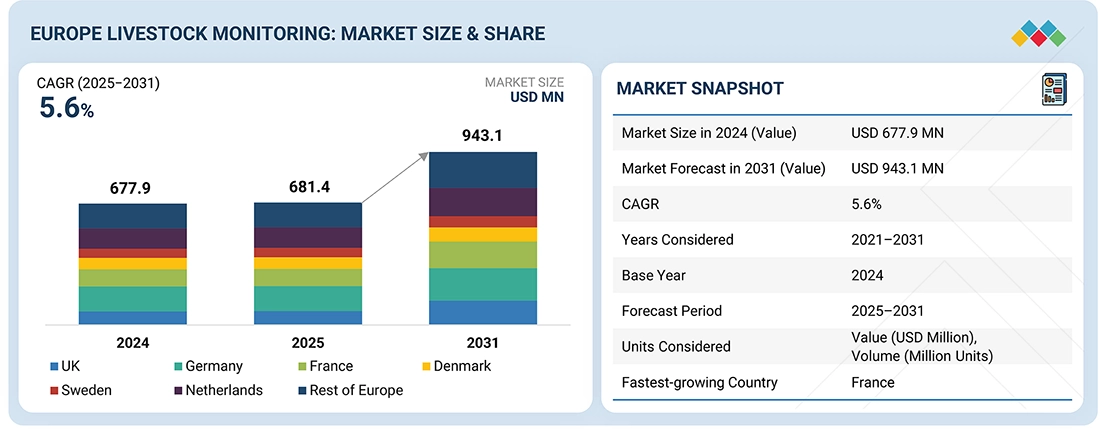
Source: Secondary Research, Interviews with Experts, MarketsandMarkets Analysis
The Europe livestock monitoring market is projected to reach USD 943.1 million by 2031 from USD 681.4 million in 2025, at a CAGR of 5.6% from 2025 to 2031. A strong regulatory push for animal welfare and traceability, combined with increasing dairy and meat production in Europe, is driving market growth. Increasing precision livestock farming initiatives in Europe, along with the growing adoption of smart wearables and biosensors, are further providing opportunities for market players.
Market Size & Forecast
KEY TAKEAWAYS
-
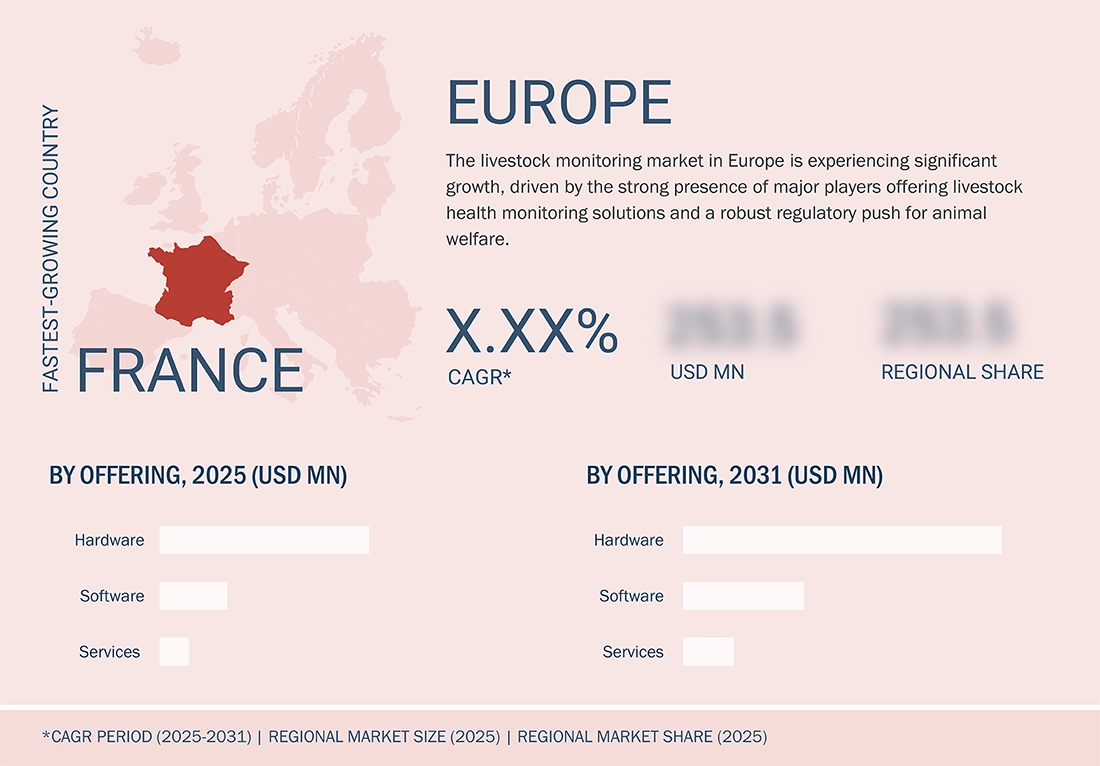
BY COUNTRYBy country, France is expected to dominate the market, growing at a CAGR of 7.3% during the forecast period.
-
BY OFFERINGBy offering, the hardware segment is expected to register the highest share during the forecast period.
-
BY LIVESTOCK TYPEBy livestock type, the poultry segment is expected to register the highest CAGR of ~8.5-9.5% during the forecast period.
-
BY FARM SIZEBy farm size, the large farms segment is expected to dominate the market in terms of market share.
-
BY APPLICATIONBy application, the feeding management segment is expected to register the highest CAGR of 7.4% during the forecast period.
-
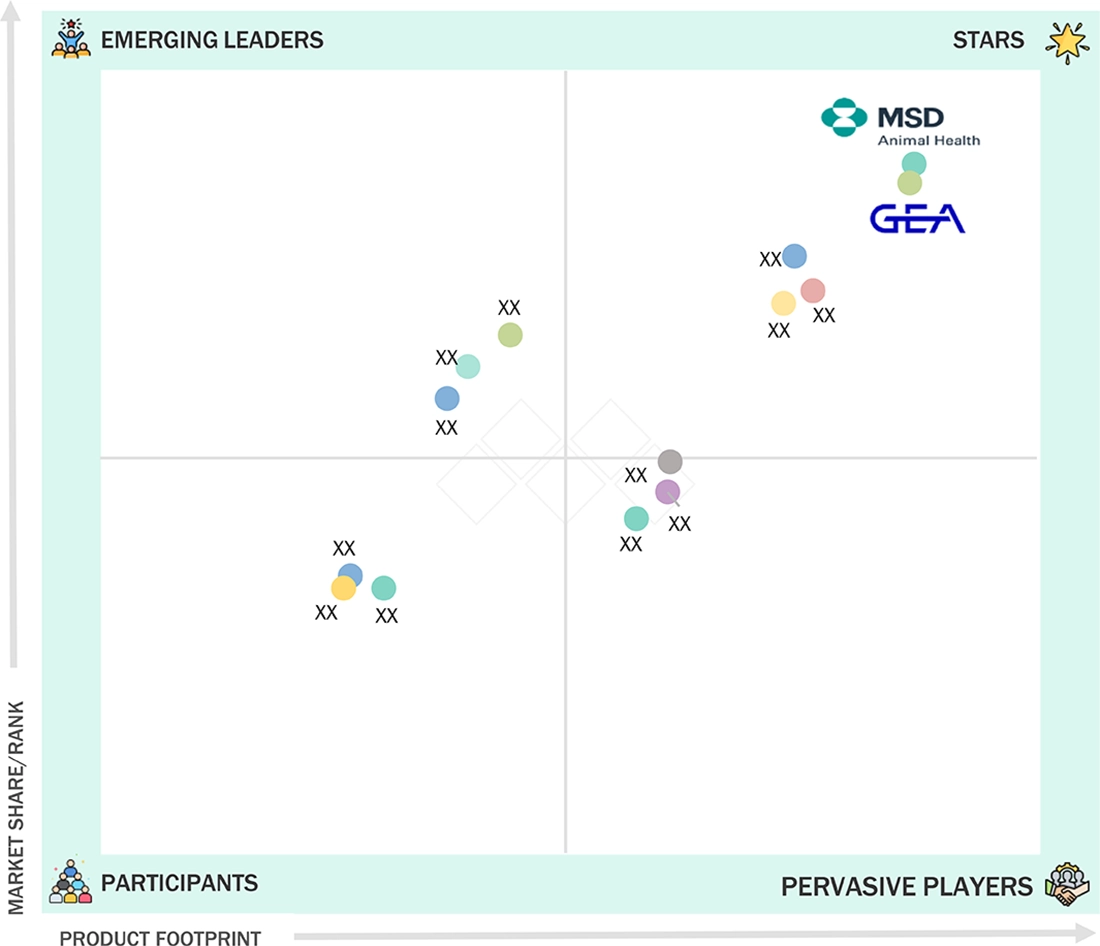
COMPETITIVE LANDSCAPE - KEY PLAYERSMSD Animal Health, GEA Group, and DeLaval were identified as some of the star players in the Europe livestock monitoring market, given their strong market share and product footprint.
-
COMPETITIVE LANDSCAPE - STARTUPS/SMESConnecterra, Serket, among others, have distinguished themselves among SMEs by securing strong footholds in specialized niche areas, underscoring their potential as emerging market leaders.
Countries such as Germany, the Netherlands, and France are significant contributors to the growth of the European market. A strong presence of major players offering livestock health monitoring solutions in the region and a significant regulatory push for animal welfare in Europe are the major factors contributing to the market growth.
TRENDS & DISRUPTIONS IMPACTING CUSTOMERS' CUSTOMERS
The livestock monitoring market is undergoing a transformation from hardware-driven revenues toward data-centric, analytics-enabled value propositions. Traditional revenue streams based on smart tags, basic sensors, and camera/GPS systems are being replaced by advanced platforms that deliver continuous, real-time data on livestock. New technologies such as AI-based behavior analytics, automated sorting and weighing, and integrated health-monitoring platforms are redefining how farms operate. As customers adopt these systems, the ecosystem is shifting toward higher-value software, services, and partnerships rather than standalone devices.
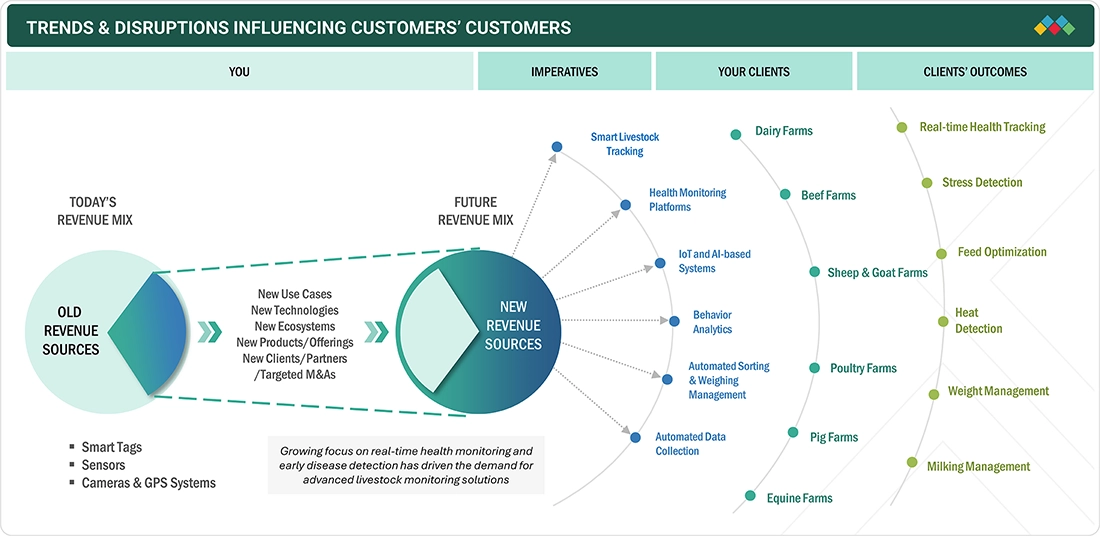
Source: Secondary Research, Interviews with Experts, MarketsandMarkets Analysis
MARKET DYNAMICS

Level
-
Strong Regulatory Push For Animal Welfare and Traceability

-
Increasing Dairy and Meat Production


Level
-
Fragmented Farm Structures Across Europe

-
High Capital Investment and Integration Costs


Level
-
Increasing Precision Livestock Farming Initiatives in Europe

-
Growing Adoption of Smart Wearables and Biosensors


Level
-
Limited Interoperability Standards

-
Handling and Interpreting Large Volumes of Real-time Data

Source: Secondary Research, Interviews with Experts, MarketsandMarkets Analysis
Driver: Strong Regulatory Push for Animal Welfare and Traceability
European legislation, such as the EU Animal Health Law and welfare mandates, is driving farms to adopt monitoring systems that ensure compliance and improve transparency. Farmers increasingly rely on connected sensors, wearables, and vision systems to maintain continuous oversight of animal health and behavior. These technologies help streamline the documentation required for audits and certifications. As a result, regulatory pressure is accelerating digital transformation across both small and large livestock operations.
Restraint: Fragmented Farm Structures Across Europe
Europe consists largely of small and medium-sized farms, which lack the economies of scale needed for smooth technology adoption. These fragmented structures make it difficult to justify investment in sophisticated livestock monitoring platforms. Smaller farms often prioritize short-term cost savings over digital transformation. This limits overall market penetration, despite clear long-term efficiency benefits.
Opportunity: Increasing Precision Livestock Farming Initiatives in Europe
Governments and agricultural bodies across Europe are promoting precision livestock farming as a pathway to sustainability and productivity. These initiatives encourage the use of automated health monitoring, behavior analytics, and digital record-keeping tools. Funding programs and innovation grants are helping to reduce the financial burden for farmers who adopt new technologies. This momentum is opening significant commercial opportunities for technology providers.
Challenge: Limited Interoperability Standards
Different vendors use proprietary technologies, making it difficult for farms to integrate multiple monitoring systems. This lack of standardization reduces the overall value of digital solutions. Farmers often require additional middleware or custom integrations, which increases deployment complexity.
EUROPE LIVESTOCK MONITORING MARKET: COMMERCIAL USE CASES ACROSS INDUSTRIES
| COMPANY | USE CASE DESCRIPTION | BENEFITS |
|---|---|---|
 |
Serket partnered with Kanters Special Products to deploy an AI-driven livestock monitoring solution on a commercial pig farm in the Netherlands. The system included cameras across six pens, an edge GPU server (NVIDIA T4), and environmental sensors to analyze behavior, detect heat-stress patterns, and track feeding and drinking events for 72 finishing pigs. The objective was to combine real-time behavior and nutrition insights to reduce heat stress and improve pig welfare. | The AI solution achieved 90–95% accuracy for eating and drinking behaviors, 80–85% accuracy for movement patterns, and 80–90% accuracy for detecting heat stress. The farm gained enhanced early-warning capabilities, improved management of heat-stress-related risks, and the potential to increase productivity. |
 |
CattleEye’s camera-based AI lameness detection system was installed to continuously monitor cow mobility at the Moreton Farm, a 440-cow dairy in Wrexham, Wales (UK). The solution enabled early detection of lameness. | The farm achieved a 75% reduction in sole ulcers between two consecutive calving seasons. This resulted in lower treatment costs, improved cow longevity, enhanced reproductive performance, and enabled the farm to maintain high milk yields. |
 |
On a 340-cow dairy farm in Rheine, Germany (owned by a farm-manager/consultant), GEA’s integrated barn design and dairy equipment were deployed. The setup includes a free-stall barn with good lighting, ventilation, and ample space; a rotary milking parlor equipped with automatic barn hygiene systems; and digital herd-management capabilities. | After one year of operation, the farm's average milk production increased significantly, reaching 11,000 liters per cow/year. |
Logos and trademarks shown above are the property of their respective owners. Their use here is for informational and illustrative purposes only.
MARKET ECOSYSTEM
The Europe livestock monitoring market ecosystem comprises OEMs and system integrators, technology providers, suppliers and distributors, and end users. The end users of livestock monitoring solutions include dairy farms, beef farms, sheep & goat farms, poultry farms, pig farms, and equine farms.
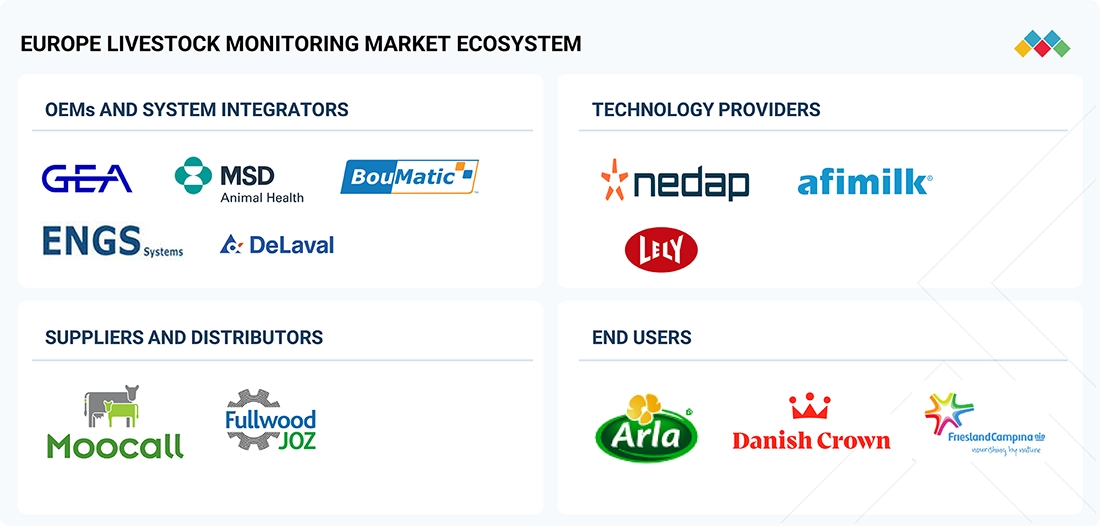
Logos and trademarks shown above are the property of their respective owners. Their use here is for informational and illustrative purposes only.
MARKET SEGMENTS
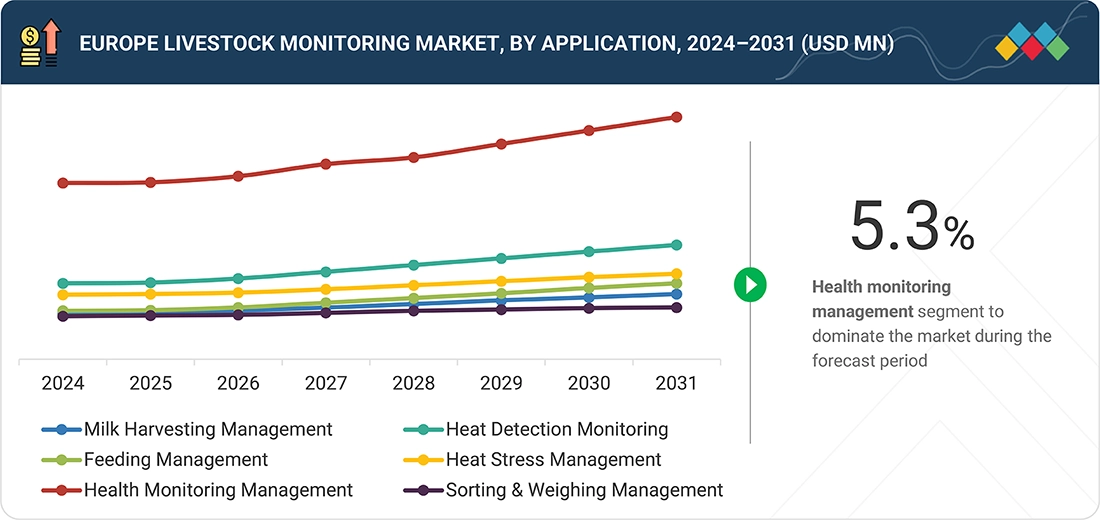
Source: Secondary Research, Interviews with Experts, MarketsandMarkets Analysis
Europe Livestock Monitoring Market, By Offering
Feeding management is emerging as one of the fastest-growing segments in Europe’s livestock monitoring market, driven by the region’s strong push toward precision farming and sustainable food production. European dairy farms rely heavily on precise nutrient management to maximize milk yield, making automated feeding systems such as DeLaval’s Optimat increasingly essential.
Europe Livestock Monitoring Market, By Application
Health monitoring holds the largest share of the Europe livestock monitoring market because the region faces strong regulatory pressures around animal welfare, disease prevention, and food safety. Increasing incidences of infectious livestock diseases and the high cost of herd health issues are pushing European farmers to adopt real-time monitoring solutions that can detect abnormalities early and reduce veterinary expenses.
Europe Livestock Monitoring Market, By Farm Size
In Europe, large farms are expected to capture the biggest share of the livestock monitoring market, driven by strong adoption of IoT-based health management systems, automated feeding solutions, and advanced AI analytics to optimize large-scale operations. These technologies enable European farms to meet stringent animal welfare and sustainability regulations while enhancing productivity and reducing labor dependence. Medium-sized farms, however, are likely to grow at the fastest rate as smart monitoring tools become more affordable and awareness of precision livestock management increases across the region.
Europe Livestock Monitoring Market, By Livestock Type
In Europe, the cattle segment is expected to hold the largest share of the livestock monitoring market due to strong demand for improved herd management, disease prevention, and productivity enhancement in both dairy and beef operations. Dairy farms increasingly rely on monitoring systems to optimize milk yield, manage reproductive cycles, and maintain animal welfare through real-time tracking of feeding and health parameters. Beef producers also utilize weight, movement, and health monitoring tools to enhance meat quality, expedite growth cycles, and boost profitability.
REGION
France is expected to be the fastest-growing country across the Europe livestock monitoring market during the forecast period
France is expected to register the highest CAGR in the Europe livestock monitoring market due to its strong national emphasis on animal welfare, biosecurity, and traceability across dairy, beef, and swine sectors. The country’s rapid shift toward precision livestock farming supported by government initiatives, subsidies, and digital agriculture programs is accelerating the adoption of smart sensors, automated health systems, and data-driven herd management tools.
EUROPE LIVESTOCK MONITORING MARKET: COMPANY EVALUATION MATRIX
In the Europe livestock monitoring market matrix, MSD Animal Health (Star) and GEA Group (Star) lead with a strong market presence and a wide product portfolio, driving large-scale adoption across smaller and larger livestock farms.
Source: Secondary Research, Interviews with Experts, MarketsandMarkets Analysis
KEY MARKET PLAYERS
- MSD Animal Health (US)
- GEA Group (Germany)
- DeLaval (Sweden)
- Nedap N.V. (Netherlands)
- Afimilk Ltd. (Israel)
- Datamars (Switzerland)
- BouMatic (US)
- CowManager (Netherlands)
- Dairymaster (Ireland)
- smaXtec animal care GmbH (Austria)
MARKET SCOPE
| REPORT METRIC | DETAILS |
|---|---|
| Market Size in 2024 (Value) | USD 677.9 Million |
| Market Forecast in 2030 (Value) | USD 943.1 Million |
| Growth Rate | CAGR of 5.6% from 2025–2031 |
| Years Considered | 2021–2031 |
| Base Year | 2024 |
| Forecast Period | 2025–2031 |
| Units Considered | Value (USD Million) and Volume (Million Units) |
| Report Coverage | Revenue forecast, company ranking, competitive landscape, growth factors, and trends |
| Segments Covered |
|
| Regional Scope | Europe |
WHAT IS IN IT FOR YOU: EUROPE LIVESTOCK MONITORING MARKET REPORT CONTENT GUIDE
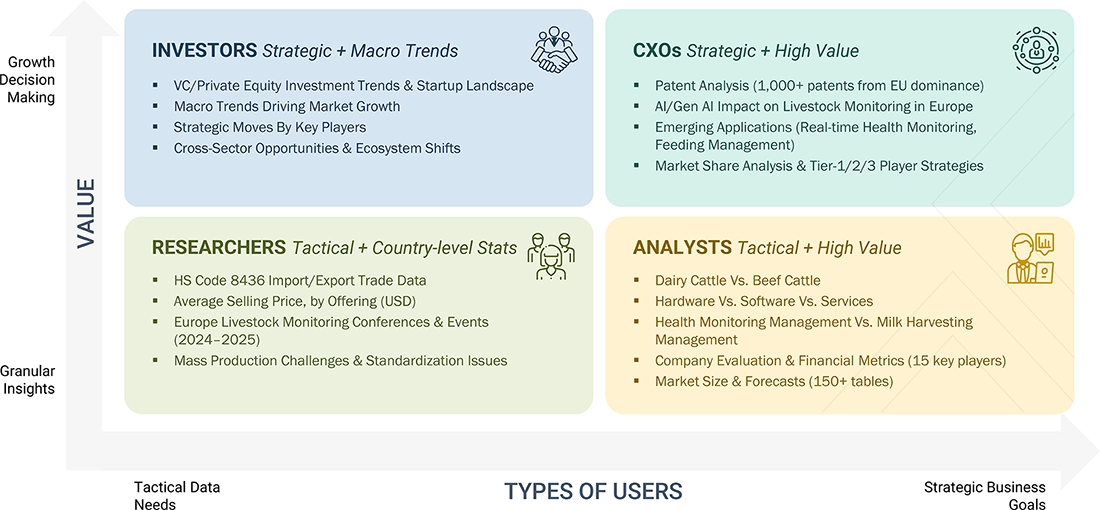
DELIVERED CUSTOMIZATIONS
We have successfully delivered the following deep-dive customizations:
| CLIENT REQUEST | CUSTOMIZATION DELIVERED | VALUE ADDS |
|---|---|---|
| France-Based Dairy Cooperative |
|
|
| Germany-Based Precision Livestock Tech Startup |
|
|
| Netherlands-Based System Integrator (Poultry & Swine) |
|
|
| Europe-Focused Agricultural Investment Fund |
|
|
RECENT DEVELOPMENTS
- June 2025 : smaXtec released an upgraded version of its digital health-management platform for dairy cows, delivering AI-driven mastitis, ketosis, and milk-fever detection using bolus sensors, enabling earlier detection of diseases and automated herd-health workflows.
- February 2025 : DeLaval launched its upgraded DeLaval Plus Herd Navigator 2.0, integrating improved biosensor technology for early disease detection, ketosis prediction, and milk quality monitoring. The 2025 version offers higher sampling precision and full compatibility with DeLaval’s automated milking systems.
- December 2024 : CowManager launched the Youngstock Monitor, an innovative solution for monitoring calf behavior. Powered by Al, the system provides real-time alerts for early disease detection and helps optimize calf health management, reducing treatment intensity and mortality rates while enhancing future herd productivity.
Table of Contents
 Exclusive indicates content/data unique to MarketsandMarkets and not available with any competitors.
Methodology
The research study involved 4 major activities in estimating the size of the Europe livestock monitoring market. Exhaustive secondary research has been done to collect important information about the market and peer markets. The validation of these findings, assumptions, and sizing with the help of primary research with industry experts across the value chain has been the next step. Both top-down and bottom-up approaches have been used to estimate the market size. Post which the market breakdown and data triangulation have been adopted to estimate the market sizes of segments and sub-segments.
Secondary Research
In the secondary research process, various secondary sources have been referred to for identifying and collecting information required for this study. The secondary sources include annual reports, press releases, investor presentations of companies, white papers, and articles from recognized authors. Secondary research has been mainly done to obtain key information about the market’s value chain, the pool of key market players, market segmentation according to industry trends, regional outlook, and developments from both market and technology perspectives.
In the Europe livestock monitoring market report, the market size has been estimated using both the top-down and bottom-up approaches, along with several other dependent submarkets. The major players in the market were identified using extensive secondary research, and their presence in the market was determined using secondary and primary research. All the percentage shares splits, and breakdowns have been determined using secondary sources and verified through primary sources.
Primary Research
Extensive primary research has been conducted after understanding the Europe livestock monitoring market scenario through secondary research. Several primary interviews have been conducted with key opinion leaders from both demand- and supply-side vendors across Europe. Approximately 25% of the primary interviews have been conducted with the demand-side vendors and 75% with the supply-side vendors. Primary data has been collected mainly through telephonic interviews, which consist of 80% of the total primary interviews; questionnaires and emails have also been used to collect the data.
After successful interaction with industry experts, brief sessions were conducted with highly experienced independent consultants to reinforce the findings of our primary research. This, along with the in-house subject matter experts’ opinions, has led us to the findings as described in the report.
Market Size Estimation
In the market engineering process, both top-down and bottom-up approaches, along with data triangulation methods, have been used to estimate and validate the size of the livestock monitoring solutions and services and other dependent submarkets. The research methodology used to estimate the market sizes includes the following:
- Identifying top-line investments and spending in the ecosystem and considering segment-level splits and major market developments
- Identifying different stakeholders in the Europe livestock monitoring market that influence the entire market, along with participants across the supply chain
- Analyzing major manufacturers and service providers in the market and studying their solutions
- Analyzing trends related to the adoption of livestock monitoring solutions and services
- Tracking recent and upcoming market developments, including investments, R&D activities, product launches, expansions, acquisitions, partnerships, collaborations, agreements, and investments, as well as forecasting the market size based on these developments and other critical parameters
- Carrying out multiple discussions with key opinion leaders to identify the adoption trends of livestock monitoring solutions and services
- Segmenting the overall market into various other market segments
- Validating the estimates at every level through discussions with key opinion leaders, such as chief executives (CXOs), directors, and operation managers, and finally with the domain experts at MarketsandMarkets
Data Triangulation
After arriving at the overall market size by the market size estimation process explained in the earlier section, the overall Europe livestock monitoring market has been divided into several segments and subsegments. To complete the overall market engineering process and arrive at the exact statistics for all segments, the data triangulation and market breakdown procedures have been used, wherever applicable. The data has been triangulated by studying various factors and trends from both the demand and supply side perspectives. Along with data triangulation and market breakdown, the market has been validated by top-down and bottom-up approaches.
Market Definition
Livestock monitoring market tracks and monitors the health, behavior, and location of livestock using advanced technologies. Such systems have huge benefits in farm management, including real-time data about health, movement, and activity tracking using IoT sensors, GPS tracking, RFID tags, and wearable devices. Sensors, tracking devices, data transmission networks, and software platforms for data analysis and decision-making are some of the key components of a livestock monitoring system. These technologies help farmers improve herd management, optimize feed usage, monitor animal well-being, and enhance overall productivity. Such technology is applied to various sectors, such as dairy, beef, and poultry. It assists with the tracking of milk production in the dairy industries; it helps detect heat cycles and diseases. For the beef farming sector, it provides insights into weight gain, growth patterns, and overall health of the animal. In poultry rearing, this technology monitors the feed efficiency and health status of the flock. Also, it aids in improving animal welfare as it enables early detection of health issues and prevents disease outbreaks with more efficiency in productivity. Major applications of livestock monitoring technology include milk harvesting management, which optimizes the entire process of milk production, and heat detection monitoring to improve breeding efficiency by monitoring the heat cycles. Feeding management ensures the proper nutrition and growth of animals; heat stress management helps in mitigating adverse effects of heat stress, keeping the welfare status of animals in check. Also, health monitoring systems provide an early warning of disease so that it is prevented from spreading further; with sorting and weighing management, automation of sorting and weighing of animals is achieved that boosts operational efficiency. Increasing demand in sustainable farming methods and precision agriculture will lead to a high increase in livestock monitoring.
Key Stakeholders
- Raw Material Supplier
- Device Manufacturers
- Software Developers
- System Integrators
- Distributors and Resellers
- Consultants and Service Providers
- Regulatory Bodies
- Government and Agricultural Agencies
- Research and Development Institutes
- End Users
Report Objectives
- To define, describe, and forecast the size of the Europe livestock monitoring market, by offering, livestock type, farm size, application, and region, in terms of value
- To forecast the market of hardware segment for smart tags and GPS systems, in terms of volume
- To identify and analyze key drivers, restraints, opportunities, and challenges influencing the growth of the market
- To study the value chain and related industry segments of the Europe livestock monitoring market
- To strategically analyze the micromarkets concerning individual growth trends, prospects, and contributions to the overall market
- To assess the trends and disruptions impacting customers’ businesses’ pricing trends, patents and innovations, trade data, regulatory landscape, Porter’s five forces, case studies, key stakeholders and buying criteria, technology trends, market ecosystem, key conferences and events, and impact of AI/Gen AI related to the market
- To analyze opportunities for various stakeholders by identifying the high-growth segments of the market
- To strategically profile the key players and comprehensively analyze their market position in terms of revenue, market share, and core competencies, along with detailing the competitive landscape for the market leaders
- To analyze competitive developments such as product launches, expansions, acquisitions, partnerships, collaborations, agreements, and investments carried out by players in the Europe livestock monitoring market
Available Customizations
With the given market data, MarketsandMarkets offers customizations according to the specific requirements of companies. The following customization options are available for the report:
Country-wise Information:
- Country-wise breakdown for North America, Europe, Asia Pacific, and Rest of the World
Company Information:
- Detailed analysis and profiling of additional market players (up to five)
Key Questions Addressed by the Report
What is the expected CAGR of the market?
The market is projected to grow at a CAGR of 5.6% during 2025–2031, driven by increasing adoption of precision farming technologies.
What are the key drivers of the market?
Strong regulatory push for animal welfare and traceability, along with rising dairy and meat production, are key growth drivers.
Which segment holds the largest share by offering?
The hardware segment dominates the market due to widespread use of smart tags, sensors, and monitoring devices.
Which livestock type is driving market growth?
The cattle segment holds the largest share, supported by demand for improved herd management, productivity, and disease monitoring.
What are the major trends in the market?
Adoption of AI-based analytics, IoT-enabled sensors, and real-time data platforms is transforming livestock monitoring solutions.


Personalize This Research
- Triangulate with your Own Data
- Get Data as per your Format and Definition
- Gain a Deeper Dive on a Specific Application, Geography, Customer or Competitor
- Any level of Personalization
Let Us Help You
- What are the Known and Unknown Adjacencies Impacting the Europe Livestock Monitoring Market
- What will your New Revenue Sources be?
- Who will be your Top Customer; what will make them switch?
- Defend your Market Share or Win Competitors
- Get a Scorecard for Target Partners

Custom Market Research Services
We Will Customise The Research For You, In Case The Report Listed Above Does Not Meet With Your Requirements
Get 10% Free CustomisationTESTIMONIALS

Tetsuya Ohhira
Business Development Manager-Technology Business
Nikon Corporation,
Leading Japanese MNC specializing in optics and imaging productswww.nikon.com
MarketsandMarkets™ response
is quick. Their attitude is flexible and positive. Analyst Insights are globally considered and
significant. Client Services quickly respond to our inquiry and demand. Their wide range of global
surveys help us make our strategic plan.
We hope Knowledge Store will be easier to search
for a report.
VP - Marketing & Business Development
Leading Provider of Process Control Solutions
We engaged with MarketsandMarkets on a study to perform an analysis and recommend a Go-To-Market strategy for metrology and process control in the semiconductor market. The study was tailored to our targets and needs with well-defined milestones. Our overall experience with the MarketsandMarkets team was very good throughout the project in all aspects including the analysis methodologies used, the quality and depth of primary and secondary data sets, the professionalism and flexibility of the team and the ability to meet the target schedule and milestones. We want to thank MarketsandMarkets team for a job well done.






Growth opportunities and latent adjacency in Europe Livestock Monitoring Market